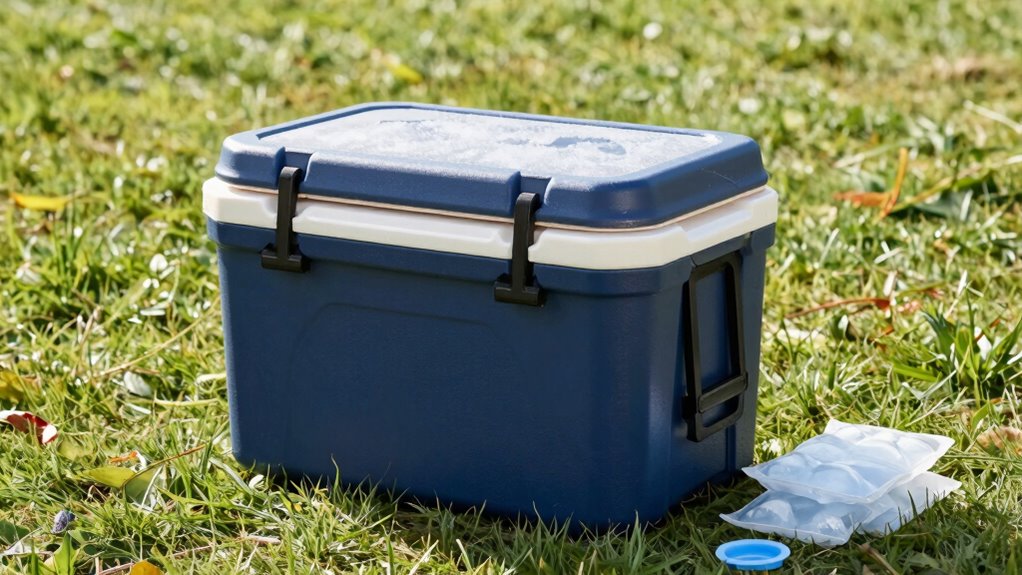

To make ice last longer in your rotomolded cooler, start by pre-chilling it with ice or ice packs before use, and fill it completely to reduce air gaps. Use a mix of block and crushed ice for better coverage, and seal the lid tightly to prevent warm air entry. Place the cooler in a shaded, well-ventilated spot, and keep it closed as much as possible. For more helpful tips, see how positioning and maintenance can boost your ice retention.
Key Takeaways
- Pre-chill the cooler with ice or ice packs before use to lower internal temperatures.
- Fill the cooler completely with ice, blocking gaps to improve insulation and slow melting.
- Keep the lid tightly closed and minimize opening to reduce warm air entry.
- Place the cooler in shaded, well-ventilated areas away from direct sunlight or heat sources.
- Elevate the cooler off hot surfaces and use insulating liners or reflective materials to enhance thermal protection.
Why Does Ice Drop Quickly in Coolers?
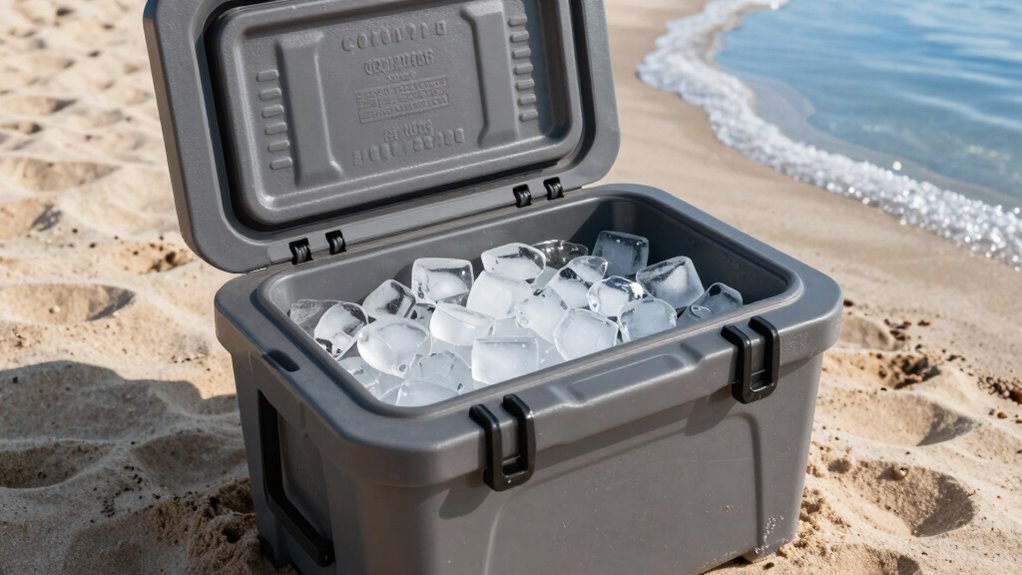
Ice drops quickly in coolers mainly because heat from the surrounding environment transfers rapidly through the cooler’s walls, causing the ice to melt faster. When warm air contacts the cooler’s surface, heat transfer accelerates, leading to ice sublimation—where ice turns directly into vapor without becoming liquid. Evaporative cooling can help slow this process by reducing temperature through moisture evaporation, but if your cooler isn’t well-insulated, heat transfer dominates. This rapid heat exchange shortens ice lifespan. Additionally, exposure to sunlight can intensify heat transfer, increasing ice loss. To keep ice longer, minimizing heat transfer through Proper insulation and reducing exposure to warm air and sunlight are vital. Effective insulation plays a crucial role in slowing heat transfer and extending the life of your ice. Properly managing ambient temperature around your cooler can also significantly impact how long your ice lasts. Understanding the importance of insulation materials can help you choose the best cooler for longer ice retention, especially those with high-quality thermal insulation designed to resist external heat.
How to Pre-Chill Your Cooler for Maximum Ice Retention
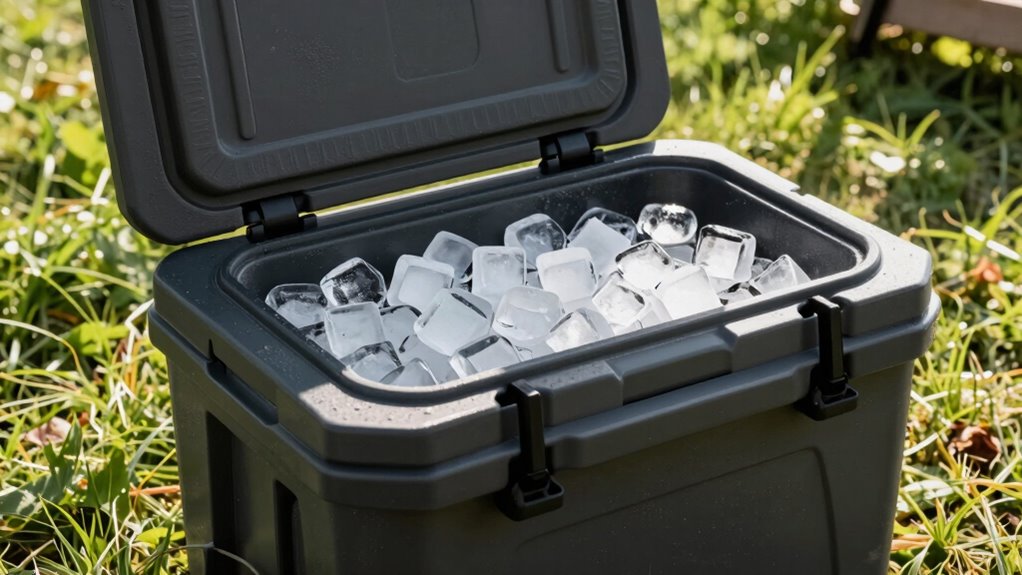
Pre-chilling your cooler before use is one of the most effective ways to maximize ice retention. Start by filling it with ice or ice packs and close the cooler lid to cool down the interior. This step reduces the initial temperature difference between the cooler’s inside and the ambient temperature, preventing rapid ice melt when you add your supplies. Keep in mind that the ambient temperature influences how quickly your cooler warms up. For ideal results, place your pre-chilled cooler in a shaded area away from direct sunlight. Avoid opening the cooler lid during the pre-chill process to maintain the low temperature. Additionally, understanding contrast ratio and how it affects image quality can help you select the right home cinema projector for your space and viewing preferences. Ensuring proper insulation of your cooler can further extend the duration of your ice. Using landscaping techniques to provide natural shade around your cooler can also help keep it colder longer. Implementing cooler positioning strategies by placing your cooler in a shaded, sheltered spot can significantly improve ice retention. Additionally, adding insulating materials around your cooler can enhance its ability to retain cold temperatures.
How to Pack Your Cooler to Minimize Air Gaps
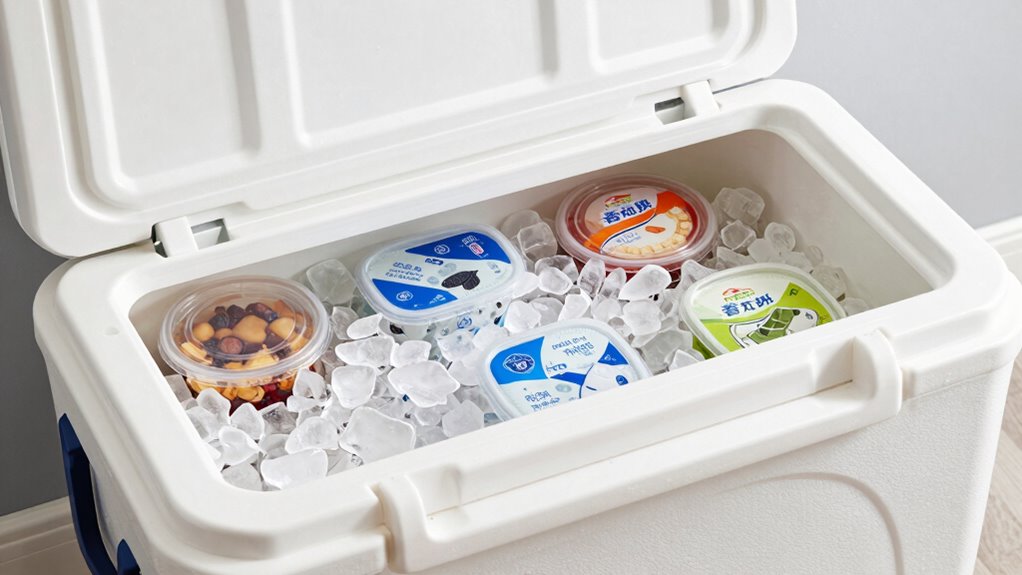
Properly packing your cooler helps maintain the low temperatures you’ve worked to achieve through pre-chilling. Focus on good cooler organization by placing ice and heavy items at the bottom and organizing food and drinks efficiently. This insulation effect minimizes the air gaps that can cause temperature fluctuations. When packing, apply consistent packing pressure to eliminate empty spaces, ensuring items fit snugly together. Use smaller items or crumpled paper to fill gaps and prevent shifting during transport. The tighter the pack, the less air circulates, which helps keep the interior cold longer. Additionally, understanding the thermal insulation properties of your cooler materials can guide you in choosing the best packing techniques. Properly sealed lids and tight closures further enhance cooler efficiency, preventing warm air from entering. Selecting a cooler with superior material insulation can significantly extend ice retention. Good air barrier techniques by sealing all openings and gaps also contribute to maintaining low temperatures inside. Avoid overpacking or leaving large air pockets, as these areas can act as insulators, raising the overall temperature. A well-organized, tightly packed cooler maximizes ice retention and keeps your contents colder, longer.
Why Filling Your Cooler and Using the Right Ice Matters
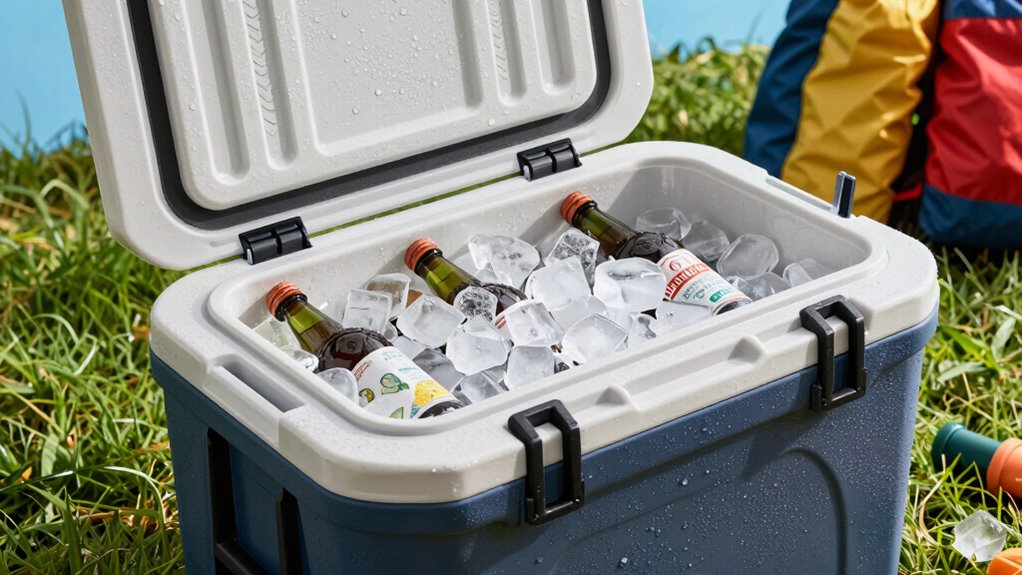
Filling your cooler helps improve insulation, guaranteeing your items colder longer. Choosing the right ice, like block or crushed, can make a big difference in cooling efficiency. Proper packing techniques ensure minimal air gaps, maximizing your cooler’s performance. Additionally, using proper insulation materials can further enhance heat retention. To further optimize your cooler’s effectiveness, consider insulation techniques that reduce heat transfer and keep your contents cold for extended periods. Incorporating thermal mass into your packing strategy can also help maintain low temperatures over time, especially when combined with effective cooler design that minimizes heat exchange. Using insulation barriers, such as foam or reflective liners, can provide an extra layer of protection against heat transfer.
Insulation Benefits of Filling
When you fill your rotomolded cooler completely with the right type of ice, you create a more effective barrier against heat transfer. A fully packed cooler minimizes air gaps, which helps maintain a consistent cold environment and slows down warm air from seeping in. This not only extends the life of your ice but also reduces the need for frequent cooler maintenance. Using the best insulation materials in your cooler enhances this effect, as they trap cold air more effectively. Filling your cooler ensures better insulation, preventing heat from penetrating and keeping your contents colder longer. Remember, a well-filled cooler acts like a thermal shield, conserving energy and making your ice last considerably longer. Proper planning frameworks can help you optimize your cooler packing strategies for maximum efficiency. Additionally, choosing the right insulation materials can further improve the overall thermal performance of your cooler. Incorporating these effective strategies can maximize your cooler’s performance and significantly extend the lifespan of your ice. Understanding the principles of heat transfer and selecting the appropriate cooler design can help you fine-tune your packing and insulation techniques.
Optimal Ice Choices
Have you ever considered how the type of ice you use can impact your cooler’s efficiency? Choosing the right ice cube types, like small cubes or crushed ice, can help cool your cooler faster and keep items colder longer. Larger blocks of ice melt slower, providing a steady chill. Your ice storage methods also matter—using insulated ice bags or stacking ice properly minimizes exposure to warm air, reducing melt rate. Filling your cooler with enough ice helps create a cold environment and limits air gaps that speed up melting. Avoid using bags of regular cubed ice when possible, since they tend to melt quickly. Opt for large blocks or crushed ice, and use effective storage methods to maximize ice longevity and keep your contents cold longer.
Proper Packing Techniques
To keep your cooler cold for longer, ensuring proper packing by filling it completely and choosing the right ice is vital. Proper packing improves ice retention and packing efficiency, keeping contents cold longer. Fill gaps with ice or insulation materials to minimize air pockets that cause temperature fluctuations. Use a mix of block and crushed ice for ideal coverage, as shown below:
| Block Ice | Crushed Ice | Insulation Material |
|---|---|---|
| Large chunks fill space | Spreads evenly around items | Adds extra insulation |
| Melts slower | Cools quickly | Maintains coldness longer |
| Provides structural support | Ensures full packing | Reduces heat transfer |
This approach maximizes ice contact with contents, prolonging ice retention and keeping your cooler colder, longer.
How to Check and Maintain Your Cooler’s Seal and Insulation
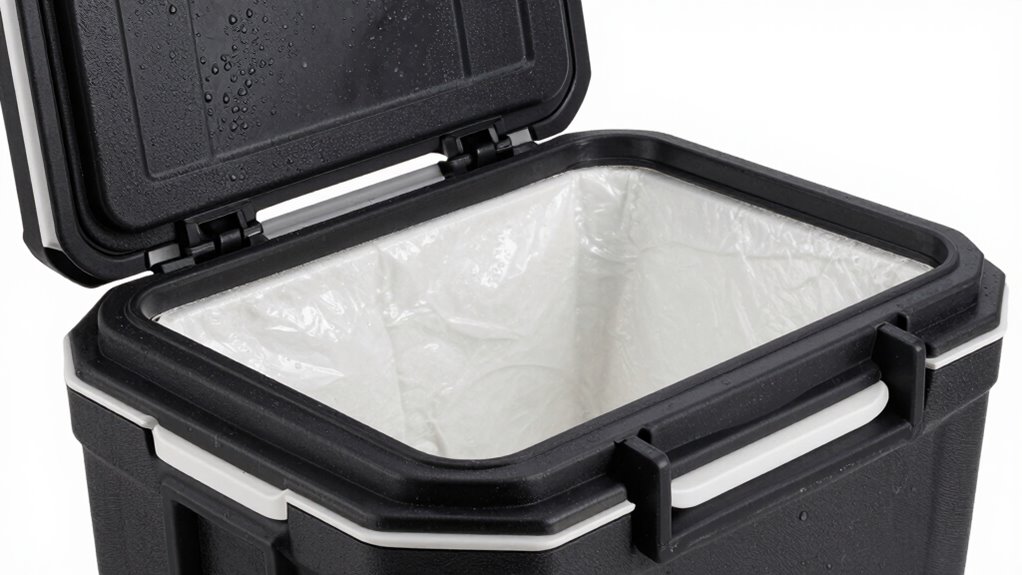
To keep your cooler performing at its best, you should regularly check the seal for cracks or gaps. Good placement also helps maintain insulation by avoiding direct sunlight or uneven surfaces. When you stay attentive to these details, you’ll guarantee your cooler stays cold longer and stays in top shape.
Inspect Seal Integrity Regularly
Regularly inspecting your cooler’s seal is essential to guarantee it stays airtight and effective. Perform regular seal maintenance by examining the gasket for cracks, tears, or hardening. Gasket inspection helps identify signs of wear that could compromise insulation. Make certain the seal sits evenly around the lid and forms a tight closure when closed. If you notice any damage or gaps, replace or repair the gasket promptly to maintain best insulation. Keeping the seal clean and free of debris also enhances its effectiveness. By routinely checking the gasket and overall seal integrity, you prevent warm air from entering and cold air from escaping, which keeps your ice longer. Consistent maintenance saves you time and money while prolonging your cooler’s performance.
Optimize Cooler Placement
Proper placement of your cooler plays a significant role in maintaining its seal and insulation. Position your cooler away from direct sunlight and heat sources to prevent it from absorbing ambient temperature. Keeping it in a shaded area or inside a shaded shelter helps reduce external heat transfer, keeping the interior colder longer. Avoid placing your cooler directly on hot surfaces like asphalt or concrete, which can transfer heat upward. Elevating the cooler minimizes contact with warm ground and improves insulation effectiveness. Also, make sure the cooler isn’t in a drafty location, as airflow can affect temperature stability. By carefully choosing its position, you support the cooler’s seal and insulation, making it more efficient at preserving ice and extending your cold storage.
Tips for Positioning Your Cooler for Better Cooling
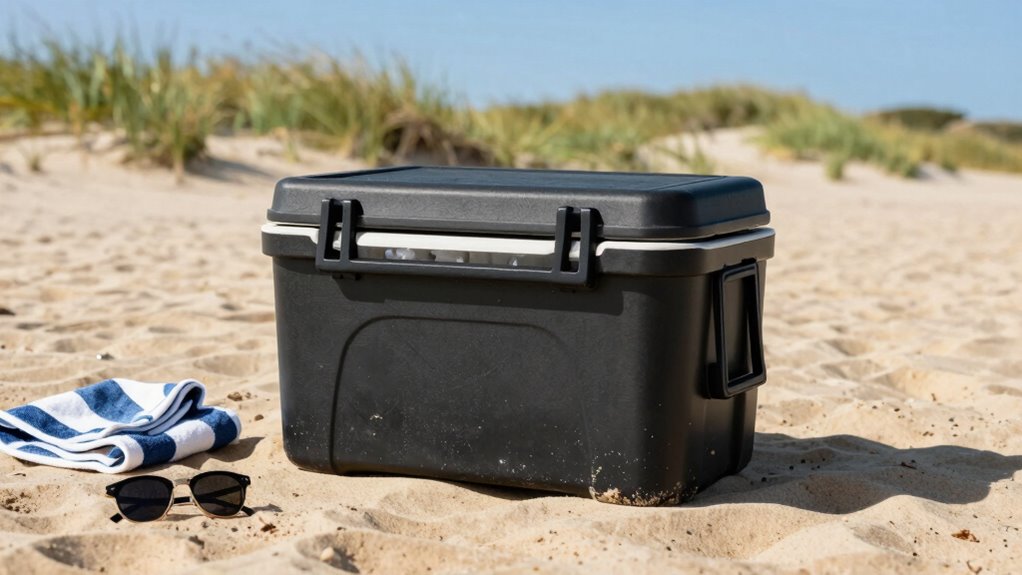
Positioning your cooler correctly can substantially improve its cooling performance. Place it in a shaded spot away from direct sunlight to reduce exposure to ambient temperature, which can cause the cooler to work harder. Ensure there’s good cooler ventilation around it; avoid tight spaces that trap heat. Elevate the cooler slightly off hot ground surfaces to prevent heat transfer from below. Keep the lid closed as much as possible to maintain low internal temperatures and prevent warm air from entering. If you’re outdoors, position the cooler away from heat sources like grills or heaters. Proper placement minimizes heat transfer and maximizes insulation efficiency, helping your ice last longer. Remember, cooler ventilation and controlling ambient temperature are key to keeping your contents cold for extended periods.
How Often and How Long Should You Open Your Cooler?
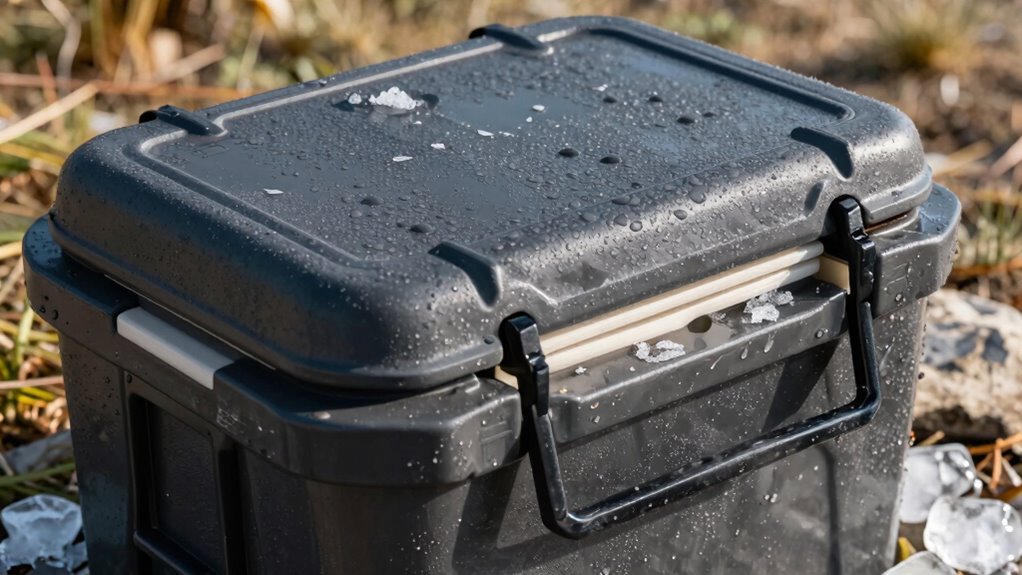
Opening your cooler frequently or leaving it open for long periods can greatly impact its ability to keep items cold. Every time you open it, warm air enters, causing the internal temperature to rise and speeding up ice melt. To optimize cooler maintenance and extend ice longevity, limit how often and how long you open your cooler:
- Keep it closed until you’re ready to grab items.
- Plan your access to minimize door openings.
- Use ice alternatives like gel packs or dry ice to reduce dependency on melting ice.
- Avoid leaving the lid ajar for extended periods.
- Store the cooler in a shaded, cool spot to help maintain internal temperature.
Extra Tips to Keep Your Ice Longer and Cool Your Drinks
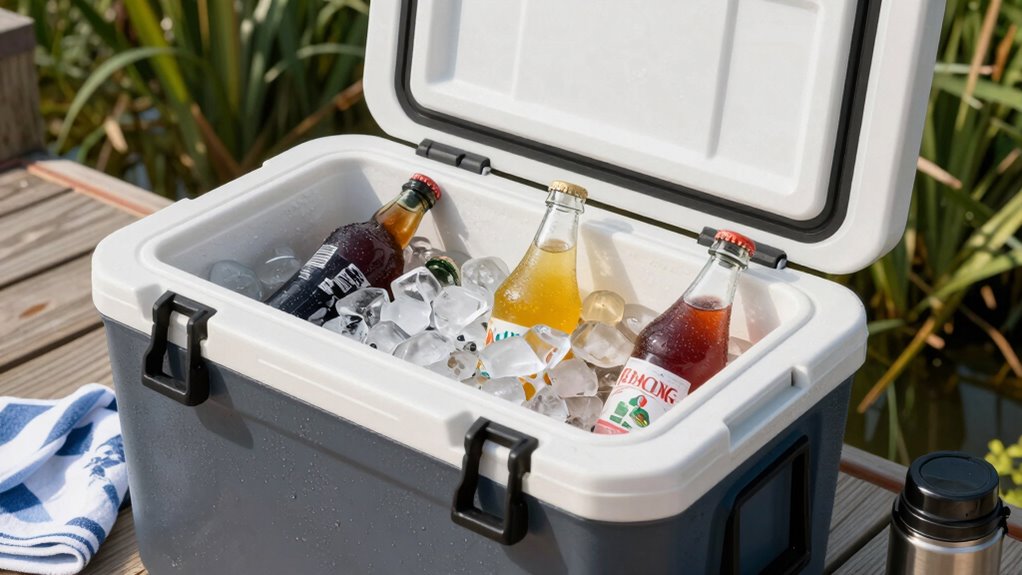
To keep your ice lasting longer and your drinks cooler, consider adding a layer of salt to your ice. Salt lowers the melting point, enhancing ice preservation and slowing the melt rate. Keep your cooler well-organized by layering ice at the top, then placing drinks underneath, so you minimize opening it frequently. Use airtight containers or sealed bags for food to prevent condensation and reduce internal moisture that can speed up ice melt. Pre-chill beverages before packing, and avoid unnecessary opening, as each time you do, warm air enters, accelerating melting. Maintaining a tight seal and strategic cooler organization helps preserve ice longer, ensuring your drinks stay cold and invigorating throughout your trip.
Quick Summary: Best Practices for Long-Lasting Ice
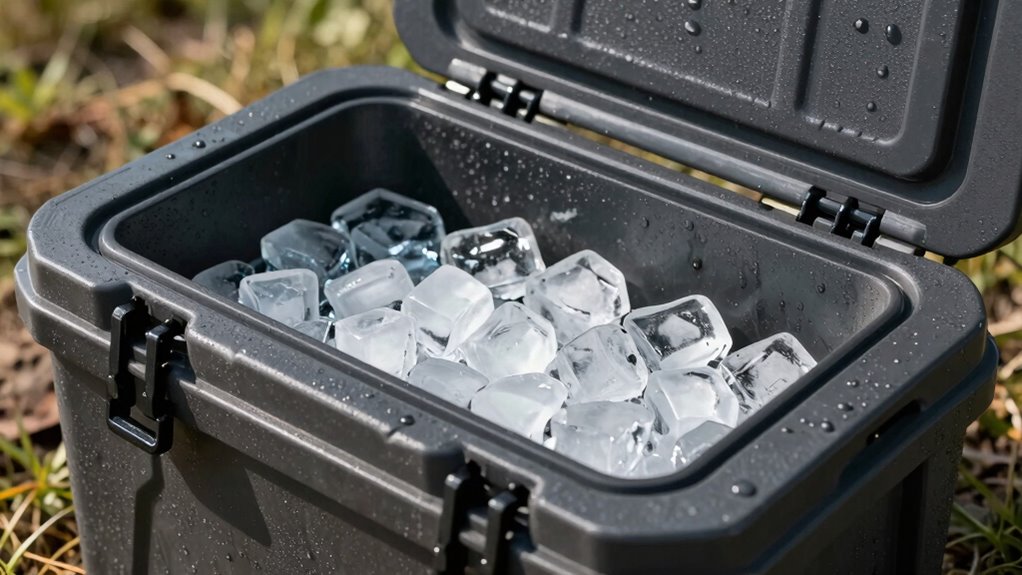
Maximizing ice longevity in your cooler requires implementing some simple yet effective strategies. To slow down ice formation and keep your drinks cold longer, pay attention to your cooler’s materials and packing techniques. Using a high-quality rotomolded cooler provides superior insulation, which is vital for long-lasting ice. Proper pre-cooling, such as chilling your cooler beforehand, helps maintain low temperatures. Keep the cooler in a shaded area to reduce heat transfer and avoid frequent opening, which accelerates ice melting. Additionally, layering ice with frozen bottles or blocks extends the cold life. Here are key practices to remember:
- Choose a cooler made from dense, insulated materials
- Pre-cool your cooler before use
- Minimize opening frequency
- Use larger ice blocks or frozen bottles
- Store in a shaded, cool spot
Frequently Asked Questions
What Materials Are Best for Insulating Rotomolded Coolers?
You should choose rotomolded coolers with high-quality foam insulation for the best heat resistance. Look for models that feature dense, closed-cell foam, which minimizes heat transfer. Additionally, vacuum sealing the cooler’s lid can further improve insulation by reducing air gaps, keeping the cold in and the warm out. Combining these materials and techniques guarantees your ice stays colder longer, making your cooler more effective.
How Does Ambient Temperature Affect Ice Longevity?
Higher ambient temperatures increase thermal transfer, causing your ice to melt faster. When it’s hot outside, your cooler struggles to maintain low internal temperatures, shortening ice longevity. Additionally, high ambient humidity can accelerate melting by promoting condensation inside the cooler, which speeds up thermal transfer. To extend ice life, keep your cooler in a shaded area, minimize opening it, and reduce exposure to direct sunlight and humid conditions.
Can Adding Salt to Ice Extend Its Melting Time?
Adding salt to ice can extend its melting time by lowering the melting point, which is a common ice preservation trick. When you introduce salt, it causes the ice to cool further before melting, keeping your cooler contents colder longer. Just be cautious, as too much salt can cause the ice to melt faster initially. Use a moderate amount to maximize ice preservation without speeding up melting.
What Is the Ideal Number of Times to Open the Cooler Daily?
You should open your cooler no more than 2-3 times a day to keep the ice cold longer. When you do, guarantee proper cooler ventilation by opening it quickly and only for essentials. Place ice packs strategically, near the cooler’s core or in areas with good airflow, to maintain a consistent temperature. Limiting openings and optimizing ice pack placement helps extend the ice’s lifespan effectively.
How Often Should You Replace or Upgrade Cooler Seals?
You should replace or upgrade cooler seals whenever you notice leaks, cracks, or deterioration during your routine cooler maintenance. Typically, seal replacement frequency depends on usage and conditions but check seals at least once a season to guarantee maximum insulation. Maintaining good seals prevents warm air from entering, helping your ice last longer. Regularly inspecting and replacing seals keeps your cooler performing efficiently and extends its lifespan.
Conclusion
By following these simple tricks, you’ll turn your cooler into a fortress that keeps ice icy and drinks cold longer. Think of it like a cozy fortress, guarding your refreshments from the heat. With a little prep and smart packing, you’ll enjoy chilled drinks all day without constantly restocking. So, gear up and master these tips—your cooler will thank you, and your summer adventures will stay invigoratingly cool from sunrise to sunset.