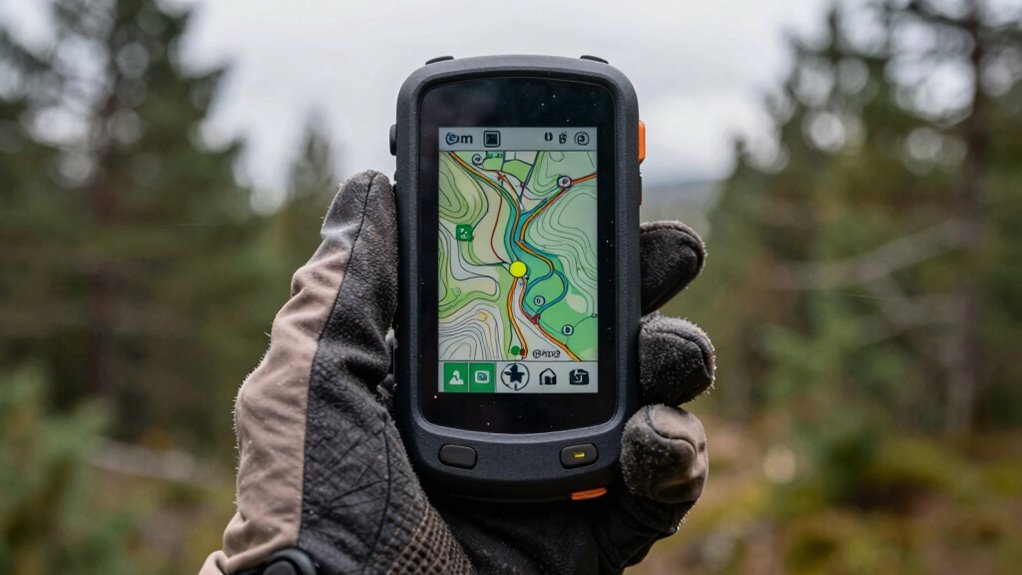

If you rely on a handheld GPS for outdoor adventures, you’ll find it offers longer battery life, detailed maps, and better durability than smartphones. Smartphones often fail in remote areas due to limited signal, poor weather resistance, and quick battery drain. Handheld GPS devices are designed for rugged conditions, with features like extended battery life and specialized map options. Keep exploring to discover how to choose the right device and maximize its performance on your hikes.
Key Takeaways
- Handheld GPS devices generally offer longer battery life than smartphones, essential for extended outdoor navigation.
- They provide detailed, preloaded maps and customizable features designed for rugged environments.
- Handheld GPS units have dedicated antennas, ensuring more reliable signal reception and higher accuracy in remote areas.
- Smartphones are prone to signal loss, battery drain, and hardware damage, making them less reliable for wilderness navigation.
- Combining handheld GPS with physical maps and backup tools enhances navigation reliability when phones fail.
Why Long Battery Life Is Critical for Outdoor Navigation
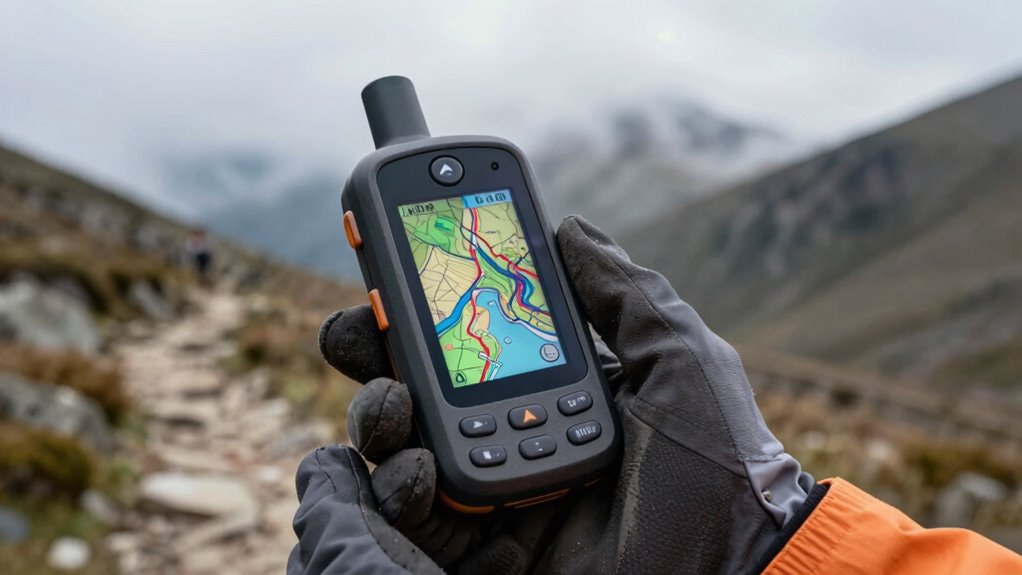
Have you ever been in the middle of a hike or outdoor adventure only to find your GPS device running out of battery? Long battery life is essential because you don’t want to lose navigation when you’re far from help. Relying on solar charging options can extend your device’s power, especially on sunny days. Power banks are also a smart backup, allowing you to recharge on the go and keep your GPS operational longer. Without sufficient battery life, you risk getting lost or unable to access critical maps and data. A reliable handheld GPS with extended battery life ensures you stay connected to your route, no matter how long your adventure lasts. Portable power solutions such as portable solar panels or extra batteries can help keep your device powered during extended outdoor activities. Prioritize devices with long-lasting batteries and versatile charging options for safer, worry-free outdoor navigation. Having a long-lasting battery can make all the difference in completing your journey successfully, especially when you incorporate power management techniques to optimize energy use. Additionally, choosing devices with efficient power consumption features can further extend your navigation time.
Why Handheld GPS Devices Offer Better Maps Than Smartphones
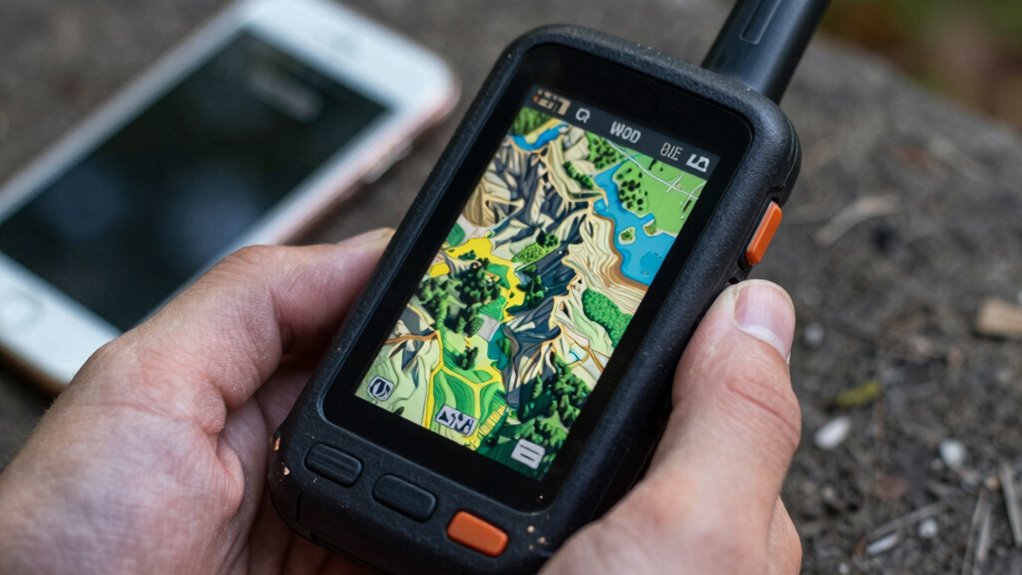
While smartphones are convenient, handheld GPS devices generally provide more detailed and accurate maps tailored for outdoor navigation. These devices often feature advanced map customization options, allowing you to select layers, points of interest, and topographic details that suit your activity. These customization options help users optimize map details for their specific needs, ensuring better navigation in complex terrains. The user interface on handheld GPS units is designed for ease of use in rugged conditions, with simple menus and large, responsive buttons that are easy to operate even with gloves. Unlike smartphones, which may rely on limited data or require constant internet connections, handheld GPS devices come preloaded with detailed maps and can be updated with specialized map layers. This combination of map customization and an optimized user interface ensures you get reliable, clear, and precise maps in challenging outdoor environments. Additionally, maintenance costs for handheld GPS units are often lower than those associated with smartphones, making them a more durable choice for outdoor adventures. Moreover, battery life is typically superior in handheld GPS devices, ensuring longer usage during extended outdoor activities. Furthermore, handheld GPS units are designed with rugged durability, allowing them to withstand harsh conditions that might damage a smartphone.
How Accurate and Reliable Is GPS in Remote Areas?
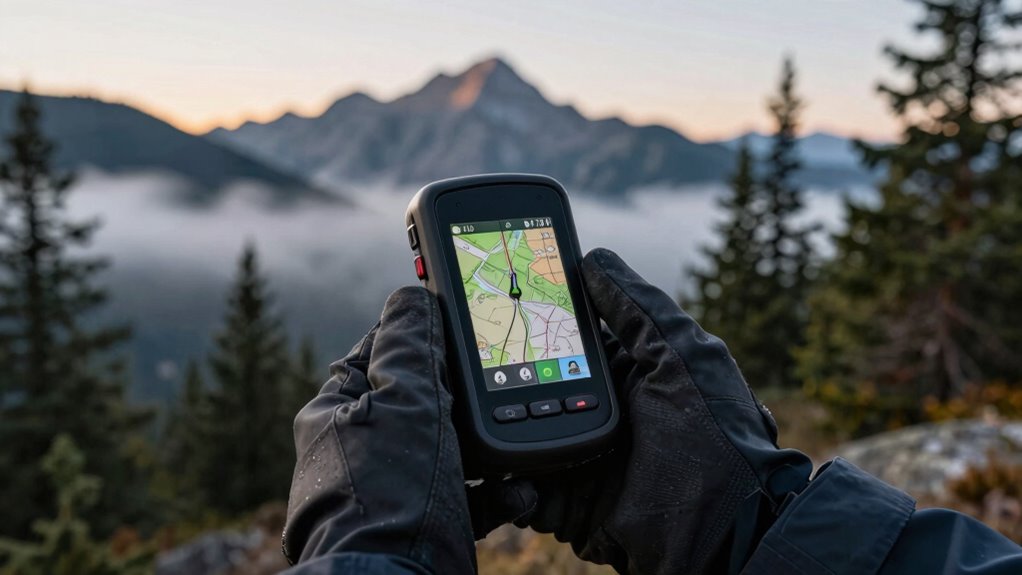
In remote areas, your GPS signal can weaken or drop due to obstacles and vast distances from satellites. Gaps in satellite coverage and device sensitivity limits can also affect your accuracy. These challenges make it essential to understand how reliable your GPS really is in such environments. Additionally, satellite coverage varies depending on your location and the time of day, further impacting reliability. Factors such as device sensitivity and environmental conditions can also play significant roles in GPS performance. Understanding cryptid sightings and folklore can also influence how users interpret unusual GPS signals or anomalies in remote regions. Moreover, connectivity issues in remote areas can exacerbate these challenges, making it harder to maintain a consistent GPS connection. Recognizing how signal interference from natural or man-made sources can disrupt GPS signals is also crucial for accurate navigation.
Signal Strength Challenges
Signal strength can profoundly impact the accuracy and reliability of handheld GPS devices, especially in remote areas where signals often weaken or drop entirely. Weak signals lead to increased signal interference, reducing positional accuracy. To conserve power, your device may lower its signal sensitivity, further risking dropped signals. This creates a challenge: maintaining reliable navigation without draining battery life. Understanding this, some devices include features like adaptive power conservation to balance signal strength and battery use. Keep in mind: Battery management features can help optimize performance during such conditions. Additionally, signal interference caused by obstacles can further diminish GPS effectiveness in challenging environments. External factors like atmospheric conditions can also temporarily disrupt signal quality, complicating navigation. Recognizing how signal strength variability impacts device performance can help users better prepare for these challenges.
Satellite Coverage Gaps
Satellite coverage gaps pose a significant challenge for handheld GPS devices in remote areas, where the availability of satellite signals can be inconsistent or limited. In such places, signal gaps occur when your device can’t connect to enough satellites for an accurate fix. These gaps stem from terrain, dense foliage, or weather conditions that block or weaken satellite signals. As a result, your GPS accuracy decreases, and you may experience intermittent or unreliable positioning. In remote regions, satellite coverage can be patchy, making it harder to trust your device’s readings. While modern GPS receivers try to compensate for these signal gaps, they aren’t foolproof. To stay safe, always carry backup navigation tools and be aware that satellite coverage isn’t always guaranteed in the most remote or rugged environments. Understanding satellite availability can help you better plan for navigation in challenging areas, especially by considering satellite signal reliability. Additionally, satellite constellations are continuously expanding to improve coverage, but gaps still remain in certain terrains. Recognizing the limitations of satellite signals is crucial for effective navigation when venturing into remote or rugged landscapes. Furthermore, understanding satellite coverage gaps can help you anticipate potential issues before they arise, ensuring safer navigation.
Device Sensitivity Limits
While modern GPS technology has improved considerably, its accuracy and reliability in remote areas still face limitations due to device sensitivity. Your handheld GPS’s antenna sensitivity can struggle in challenging environments, reducing signal reception. Signal attenuation caused by dense foliage, mountains, or weather further hampers performance. To understand these limits, consider:
- Reduced signal strength in deep forests or canyons.
- Increased difficulty maintaining satellite lock due to antenna sensitivity.
- Variability in positioning accuracy caused by signal attenuation.
- Dependence on clear sky views for ideal reliability.
- Device sensitivity limitations can also be affected by the quality of internal components, which vary between models and impact overall performance. Additionally, environmental factors such as temperature fluctuations can influence GPS signal reception and device responsiveness. These factors mean that in remote areas, your device might not provide pinpoint accuracy or consistent reliability. Knowing these limitations helps you plan better and avoid over-reliance on GPS in challenging conditions.
Top Features of Handheld GPS Devices That Outperform Smartphones

When choosing a handheld GPS, you’ll notice it’s built to withstand tough conditions and last longer on a single charge. Its precision and strong signal guarantee you stay on course, even in remote areas. These features often outperform smartphones, making them reliable tools for navigation when it matters most.
Durability and Battery Life
Durability and battery life are vital advantages of handheld GPS devices, especially when compared to smartphones. These devices are built to withstand tough conditions and keep going longer in the field. Here’s what sets them apart:
- Water resistance ensures your device survives rain, splashes, or accidental drops in water.
- Robust build quality with rugged shells protects against drops, shocks, and rough handling.
- Longer battery life means you can use your GPS for hours without recharging, essential during extended outdoor adventures.
- Power-efficient design helps conserve energy, extending usage time even in demanding environments.
With these features, handheld GPS units offer unmatched durability and endurance, making them reliable tools for outdoor explorers and professionals alike.
Precision and Signal Strength
Handheld GPS devices are designed to deliver superior accuracy and reliable signal reception, setting them apart from smartphones. Their advanced signal accuracy ensures you get precise location data, even in challenging environments. This is achieved through meticulous GPS calibration, which fine-tunes the device for peak performance. Unlike phones, handheld GPS units often have dedicated antennas and receivers that improve signal strength, reducing errors caused by interference or obstructions. This means you can trust your device to pinpoint your position accurately, whether you’re navigating dense forests or rugged terrains. Enhanced signal strength and proper calibration are essential for consistent tracking, helping you stay on course without interruptions. Overall, these features ensure your navigation remains precise and dependable, no matter the conditions.
Limitations of Smartphone GPS for Serious Wilderness Navigation
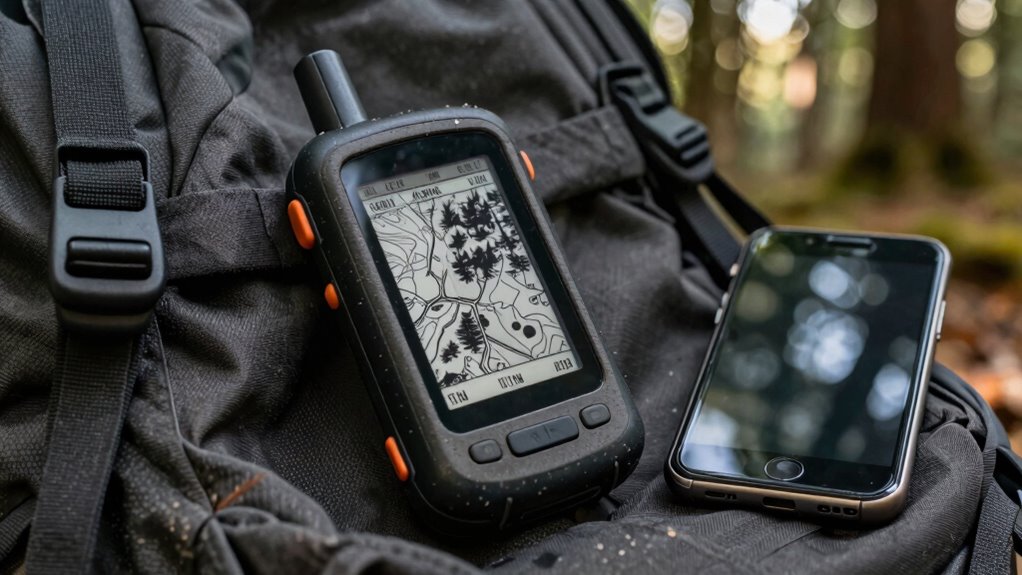
Smartphone GPS devices often fall short in serious wilderness conditions because they rely heavily on a stable signal and sufficient battery life. You can’t always depend on your phone to provide accurate positioning when signals weaken or die. Here are key limitations:
- Signal Loss: Dense forests or deep canyons can block signals, rendering smartphone apps useless.
- Battery Drain: GPS and screen use drain batteries quickly, leaving you stranded without power.
- Dependence on Cloud Mapping: Relying on cloud maps requires internet access, which is often unavailable off-grid.
- Hardware Constraints: Smartphones are not built for rugged outdoor use, risking damage from weather or drops.
These factors highlight why smartphones, despite their convenience, often can’t replace dedicated handheld GPS units for serious wilderness navigation.
How Handheld GPS Units Provide Superior Topo and Trail Maps

Unlike generic mapping apps, dedicated handheld GPS units deliver detailed topographic and trail maps that are specifically designed for outdoor navigation. These maps feature superior terrain accuracy and map detail, giving you reliable information in rugged environments. You can easily identify elevation changes, terrain features, and trail paths with precision. Here’s a quick comparison:
| Feature | Handheld GPS | Smartphone App |
|---|---|---|
| Terrain Accuracy | High | Varies, often limited |
| Map Detail | Extensive, topographic | Basic, street-focused |
| Trail Information | Up-to-date, detailed | Sometimes outdated |
| Customization | Yes | Limited |
| Offline Access | Fully accessible | Often dependent on signal |
This detailed mapping helps you navigate confidently, especially where smartphone signals fade.
What Factors Affect Battery Life in Handheld GPS Devices?

Your GPS’s battery life depends on several factors, including how much power the device consumes during use. The display and brightness settings play a big role, as brighter screens drain batteries faster. Managing these settings can help you extend your device’s operational time in the field.
Battery Drain Factors
Several factors can considerably impact the battery life of a handheld GPS device. Your device’s power consumption varies based on several elements, mainly related to hardware and usage patterns. First, the type of battery technology used influences how efficiently energy is stored and delivered. Second, continuous GPS tracking demands high power consumption, draining the battery faster. Third, frequent updates or data downloads increase energy use, especially if the device runs multiple functions simultaneously. Lastly, environmental conditions like extreme temperatures can affect battery performance, reducing overall lifespan. To maximize battery life, understanding these factors helps you manage device settings and usage habits more effectively. Being aware of how power consumption interacts with battery technology allows you to extend your GPS’s operational time during adventures.
Display and Brightness
The display and brightness settings of a handheld GPS substantially influence its battery life. A higher screen resolution provides clearer images but consumes more power, especially on detailed maps. Reducing resolution can extend battery life without sacrificing essential readability. Backlight technology also plays an essential role; LED backlights are energy-efficient, but maintaining maximum brightness drains power quickly. Dimming the backlight or setting it to turn off when not needed can greatly conserve energy. Additionally, using automatic brightness adjustment helps optimize power use based on ambient light conditions. Keep in mind that vibrant colors and high contrast settings demand more energy, so adjusting these features based on your environment can help prolong your device’s battery life during your outdoor adventures.
How to Choose the Best Handheld GPS for Your Hiking Adventures
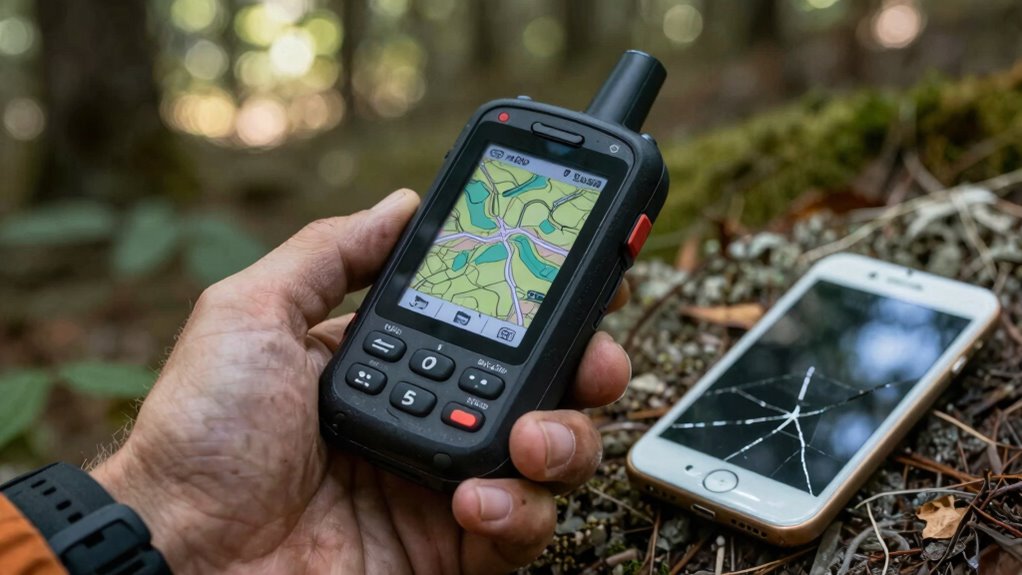
Choosing the right handheld GPS for your hiking adventures can make a significant difference in staying safe and on track. To find the best fit, consider these factors:
- Map accuracy: Ensure the device offers reliable, detailed maps to prevent navigation errors.
- Device ergonomics: Pick a GPS that feels comfortable in your hand and is easy to operate with gloves or one-handed use.
- Battery life: Longer battery life means less worry about losing power during extended hikes.
- Durability: Look for rugged, waterproof models that withstand rough conditions.
Real-World Examples of Smartphone Failures in Remote Wilderness
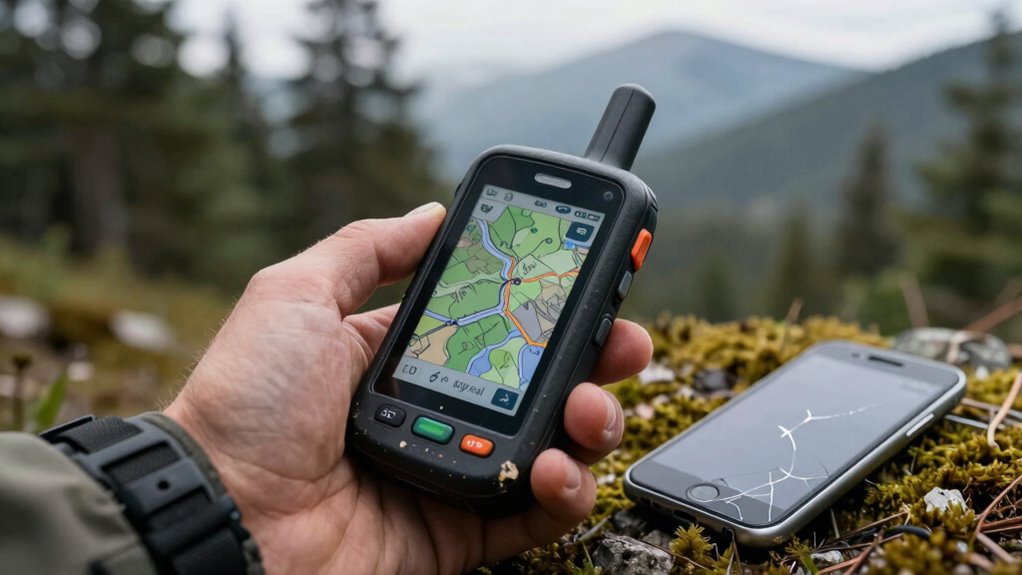
Have you ever relied solely on your smartphone for navigation in the wilderness? If so, you might have experienced failures firsthand. When your phone’s battery dies or it loses signal, you’re left stranded without reliable maps or GPS. Solar charging can help extend battery life, but it’s not foolproof in overcast conditions or dense forest cover. Additionally, outdated maps pose a problem—without regular map updates, your device may not reflect trail changes or new obstacles. Several hikers have found themselves lost or off-route because their smartphones failed to keep up with real-time navigation. These failures highlight the risks of depending solely on phones in remote wilderness, where backup navigation tools like a handheld GPS or physical maps are critical.
Tips to Maximize Battery Life and Map Use on Your Hike
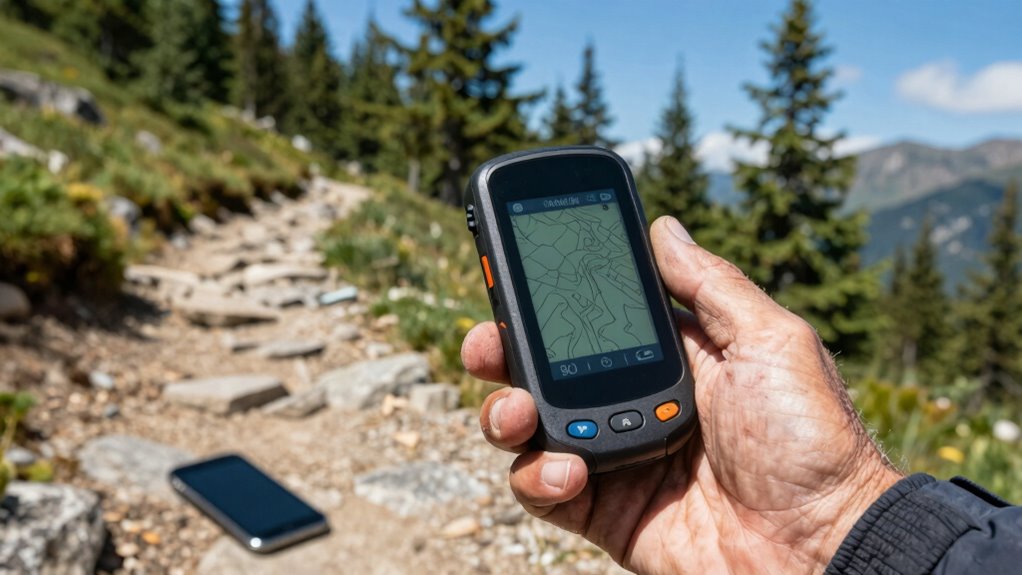
Smartphones can fail when you need them most, but you can take steps to extend their battery life and use maps more effectively during your hike. To maximize power conservation and optimize your map usage, try these tips:
- Reduce screen brightness and enable battery saver mode to extend your device’s runtime.
- Turn off unnecessary wireless features like Bluetooth, Wi-Fi, and mobile data when not in use.
- Download offline maps beforehand to avoid constant GPS reliance and improve map optimization.
- Close background apps to conserve power and prevent unnecessary data usage.
Frequently Asked Questions
How Do Different Battery Types Affect GPS Device Performance?
Different battery types, like lithium-ion and alkaline, directly impact your GPS device’s performance through their battery chemistry and power consumption. Lithium-ion batteries offer higher energy density, so your device lasts longer and is more reliable during long trips. In contrast, alkaline batteries may drain faster, increasing power consumption and reducing overall battery life. Selecting the right battery type guarantees your GPS stays powered, accurate, and ready when you need it most.
Can Handheld GPS Devices Connect to External Power Sources?
Yes, most handheld GPS devices can connect to external power sources, enhancing their battery life during extended use. You should check the device’s external power compatibility to guarantee it supports your preferred power sources, like portable batteries or car chargers. Many models also offer rechargeable battery options, allowing you to swap or recharge batteries on the go, making them reliable for long outdoor adventures without worrying about losing power.
What Are the Best Practices for Updating GPS Maps?
Think of updating your GPS maps like tending to a garden; regular care keeps it thriving. To do this, follow map update procedures carefully, ensuring your device is connected to power and has ample storage. For firmware upgrade tips, always back up data first, then download updates from trusted sources. Keep your device’s software current, and you’ll navigate smoothly, avoiding the weeds of outdated maps.
How Do Weather Conditions Impact GPS Signal Accuracy?
Weather conditions can profoundly impact your GPS signal accuracy. Satellite interference caused by heavy rain, snow, or thick cloud cover disrupts signal transmission, making your device less reliable. Atmospheric conditions like ionospheric disturbances or solar storms also weaken GPS signals. When these factors occur, your GPS may experience delays, inaccuracies, or even signal loss, so it’s wise to check weather forecasts before relying heavily on your device in severe weather.
Are There Eco-Friendly Options for Replacing GPS Batteries?
You can explore eco-friendly options like solar charging accessories or biodegradable batteries to replace traditional GPS batteries. Solar chargers harness sunlight, reducing reliance on disposable power sources, while biodegradable batteries break down naturally, minimizing environmental impact. These innovations not only sustain your device longer but also protect the planet. As you seek greener solutions, remember that embracing sustainable tech can be a game-changer, revealing a future where adventure and ecology go hand in hand.
Conclusion
While smartphones are convenient, they can’t match the battery life and reliability of dedicated handheld GPS devices in remote wilderness. Don’t rely solely on your phone—you might find yourself lost or stranded when it dies. Investing in a quality GPS guarantees you stay connected to accurate maps and navigation tools, giving you peace of mind on every adventure. Remember, preparedness beats convenience—your safety depends on it.