To get the best traction on your fat tire e-bike in sand and snow, lowering your tire pressure is key—reduce it by 2-4 PSI from your regular setting to spread the tire’s surface and improve grip. In soft terrain, softer tires prevent sinkage and enhance control, but avoid going too low to prevent flats. For more tips on mastering this pressure trick and riding safely in extreme conditions, keep exploring how to optimize your ride.
Key Takeaways
- Lower tire pressure (by 2-4 psi) on sand and snow to increase surface contact and improve traction.
- Gradually reduce pressure to avoid pinch flats and maintain control on loose or icy terrains.
- Use calibrated digital pressure gauges to accurately monitor and adjust tire pressure before rides.
- Regularly check and fine-tune tire pressure based on terrain conditions for optimal grip and safety.
- Softer tires distribute weight better, maximizing traction and ride comfort in challenging sandy or snowy environments.
Why Tire Pressure Matters on Your Fat Tire E-Bike
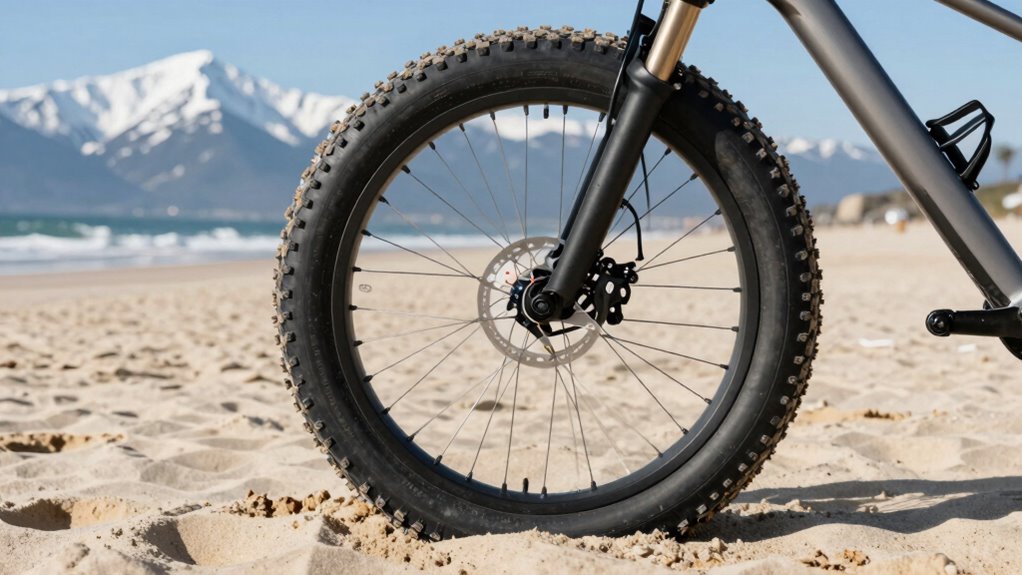
Proper tire pressure is essential for getting the best performance and safety from your fat tire e-bike. Many tire pressure myths circulate, leading riders to guess or stick to default pressures. But correct tire pressure directly impacts riding comfort and control. Under-inflated tires might seem softer but can cause sluggish handling and increased risk of punctures. Over-inflated tires reduce grip and make your ride harsh, especially on rough terrain. Maintaining the right pressure ensures your tires absorb shocks effectively and stay stable, making every ride smoother. Adjusting tire pressure based on terrain conditions helps optimize performance and safety. For instance, terrain-specific pressures can improve traction and comfort depending on whether you’re riding on sand, snow, or pavement. Don’t fall for myths that suggest you should always inflate tires to maximum pressure; instead, adjust based on your weight, terrain, and riding style. Proper tire pressure can also help prevent uneven tire wear and extend the lifespan of your tires. Ensuring your tires are at the correct pressure is a key aspect of riding safety and can significantly improve your overall riding experience. Proper pressure boosts comfort, safety, and overall performance on your fat tire e-bike, especially considering the cosmic connections that influence rider preferences and perceptions.
How to Tweak Your Tire Pressure for Snow and Ice

When riding your fat tire e-bike on snow and ice, adjusting your tire pressure can make a significant difference in traction and safety. Lowering pressure increases the tire’s surface contact, enhancing grip. Use tire pressure sensors to monitor your settings accurately. Employ proper inflation techniques by gradually reducing pressure, checking for even distribution, and avoiding pinch flats. Consider these tips:
| Tire Pressure Level | Effect on Traction | Recommended Use |
|---|---|---|
| High | Less grip | Dry conditions |
| Moderate | Balanced grip | Mild snow or ice |
| Low | Maximum traction | Icy or deep snow |
Adjust pressure based on conditions, and always double-check with sensors for ideal safety. Additionally, incorporating smart tire pressure monitoring can help you maintain optimal settings during your ride. Proper traction control techniques, such as adjusting pressure, are essential for safe riding in varying winter conditions. Understanding how tire pressure affects grip can further improve your riding experience and safety. Recognizing the impact of pressure adjustments can lead to better handling in diverse terrains.
Adjusting Tire Pressure for Better Traction on Sand
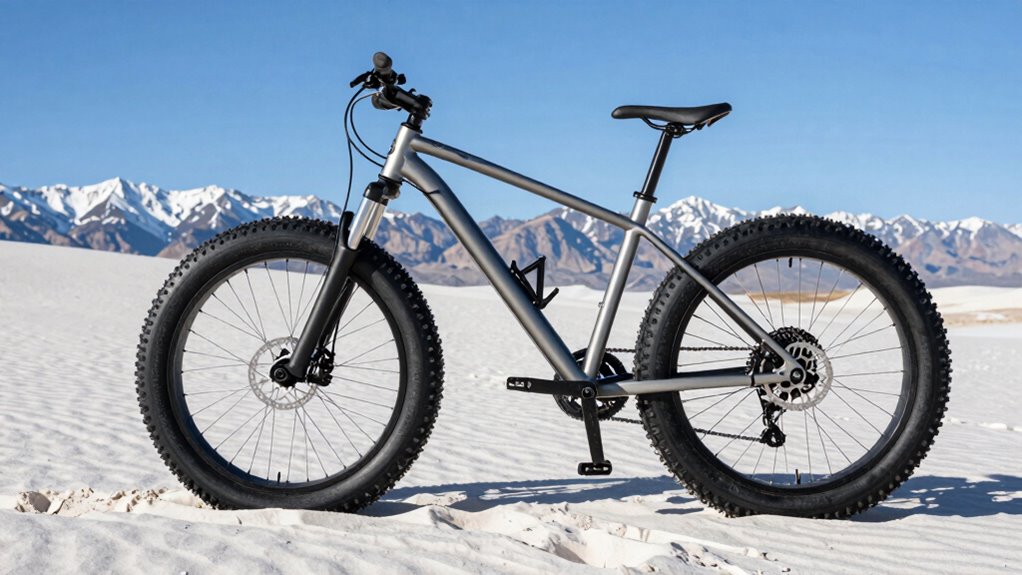
Riding your fat tire e-bike on sandy terrain requires adjusting your tire pressure to maximize traction. Lowering your tire pressure increases the contact patch, helping you glide more smoothly over loose sand. Use tire pressure adjustment techniques like reducing pressure by 2-4 psi from your regular ride setting, but avoid going too low to prevent pinch flats. For sand riding techniques, keep your tire pressure slightly lower than on firm ground, and maintain a steady, relaxed pace to prevent digging in. Remember, softer tires distribute your weight better and improve grip. Testing different pressures helps you find your ideal level, as precious metal investments can fluctuate and affect your overall riding strategy. Keep in mind that sand conditions vary, so adjusting your tire pressure accordingly will give you better control and a more enjoyable ride. Additionally, understanding air pressure and traction can help you optimize your riding experience on challenging terrains.
Essential Tools and Tips for Accurate Tire Pressure Checks
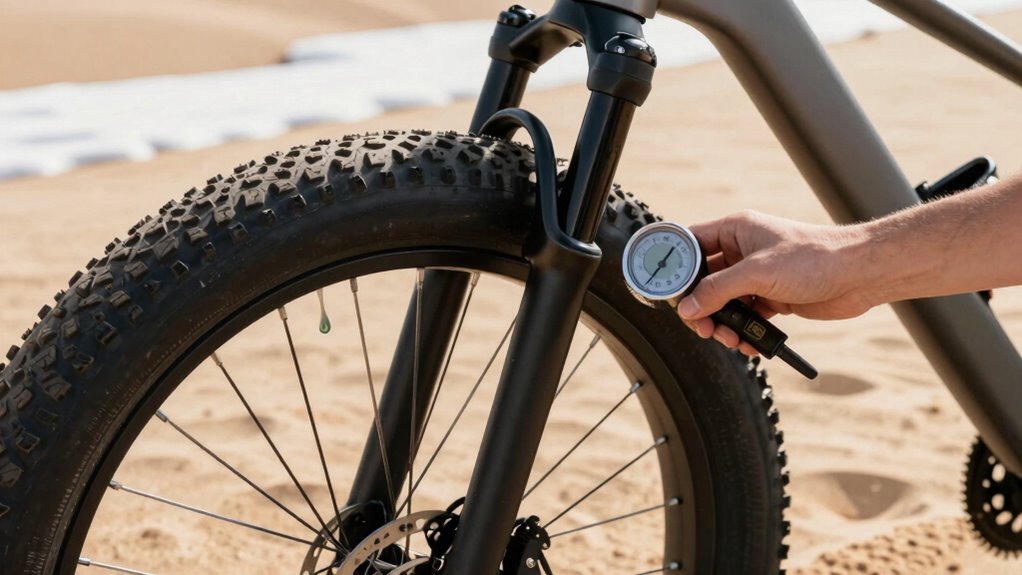
To keep your fat tire e-bike performing its best, you need to measure tire pressure accurately. Using the right tools guarantees your readings are reliable and consistent. Here’s what you need to know about proper measurement and the essential tools for precise checks. Additionally, using digital pressure gauges can provide more precise readings compared to traditional analog tools, making your maintenance more accurate. To ensure your breakfast choices support your active lifestyle, consider incorporating support breakfast options that fuel your rides and adventures. Additionally, understanding the contrast ratio of your accessories can help optimize your visual environment during maintenance or planning routes. Regularly checking tire pressure also helps prevent costly automotive repairs by maintaining optimal performance and safety. Incorporating modern measurement techniques can further enhance the accuracy of your tire pressure checks and extend the lifespan of your e-bike tires.
Proper Tire Pressure Measurement
Accurately measuring your tire pressure is essential for ideal performance and safety on your Fat Tire E-Bike. To do this, verify your pressure gauge is properly calibrated for reliable readings. Regularly check the gauge’s accuracy by comparing it against a known standard or using a calibration tool. When measuring, follow these tips:
- Always use a high-quality pressure gauge designed for bicycle tires.
- Check the gauge’s calibration periodically to maintain pressure gauge accuracy.
- Take multiple readings to confirm your tire’s pressure, especially if the gauge shows inconsistent results.
- Consult resources like Soul Sanctuaries to understand the importance of proper maintenance and safety practices for your e-bike.
Tools for Accurate Checks
Having the right tools is essential for guaranteeing your tire pressure checks are precise and reliable. Invest in a quality tire pressure gauge, preferably a digital measurement device, for the most accurate readings. Digital gauges are quick, easy to read, and reduce human error compared to analog options. Before each ride, use your gauge to check the tire pressure, making sure it matches the manufacturer’s recommended PSI. Keep your gauge calibrated regularly to maintain accuracy. Store it in a safe, accessible place so you can quickly perform checks before hitting sand, snow, or rough terrain. Proper tools and routine checks help prevent flats, improve ride quality, and extend your e-bike’s lifespan. Accurate tire pressure ensures you get the best performance from your fat tire e-bike in any condition, and understanding the measurement units helps ensure your readings are correct. Regularly inspecting your tires for wear and tear can also prevent unexpected issues during rides.
Common Mistakes to Avoid When Tuning Your Tire Pressure
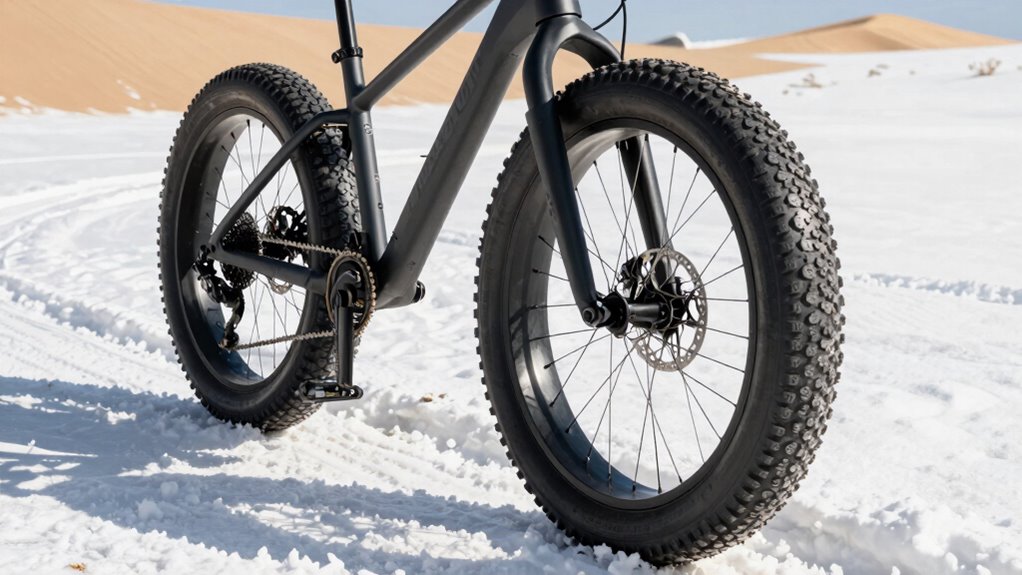
When tuning your tire pressure, one common mistake is relying solely on guesswork rather than using a proper pressure gauge. This approach can reinforce tire pressure myths and lead to common tuning errors that affect performance. Instead, always check your tire pressure with a reliable gauge before riding. Accurate pressure adjustments are essential for optimal performance and safety. Avoid these pitfalls:
- Ignoring recommended PSI ranges for different terrains
- Overinflating to reduce flats but sacrificing grip
- Underinflating, causing excessive tire wear and handling issues
These mistakes often stem from misconceptions rather than actual needs. Remember, Proper tire tuning enhances efficiency and extends your tire’s lifespan. Using a pressure gauge can help you maintain the correct PSI and prevent these common errors. Taking the time to verify pressure prevents common tuning errors and ensures your fat tire e-bike performs at its best across sand, snow, or rugged trails. Incorporating correct pressure measurement techniques is crucial for consistent results.
Maintaining Your Fat Tire E-Bike for Extreme Conditions
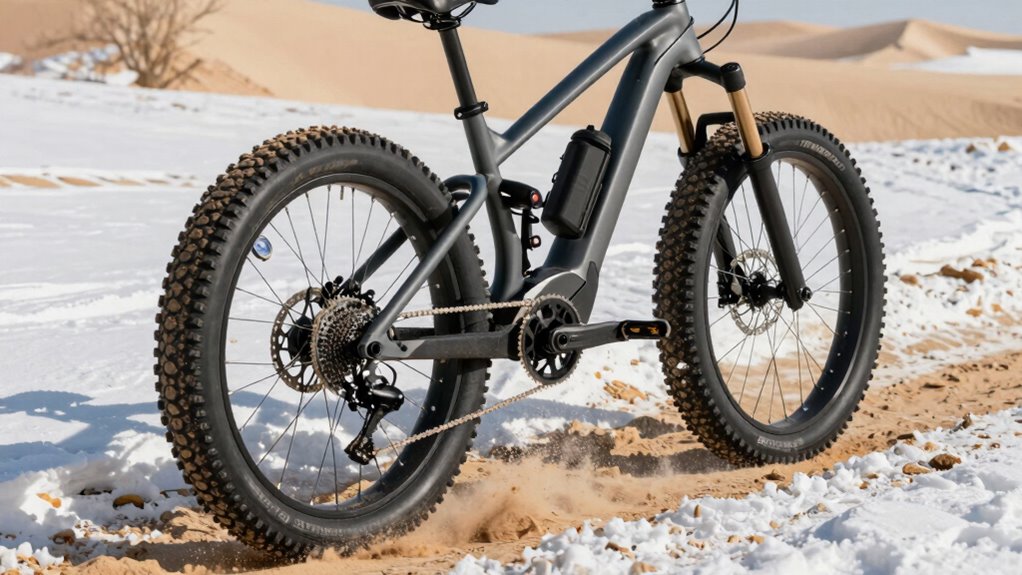
Extending your fat tire e-bike’s performance in extreme conditions requires proactive maintenance that addresses the unique challenges posed by sand, snow, and rugged terrains. Start by inspecting your tire tread patterns; deeper, aggressive treads help grip loose surfaces better. Regularly check and clean your tires to prevent debris buildup that can reduce traction. Battery maintenance is equally crucial—keep it charged and store it in a cool, dry place to avoid performance drops. Use the table below to compare key maintenance areas:
| Maintenance Focus | Specific Actions |
|---|---|
| Tire Tread Patterns | Inspect, clean, replace if worn |
| Battery Maintenance | Charge, store properly, monitor health |
| General Upkeep | Check tire pressure, lubricate moving parts |
Additionally, consulting ventilation considerations can help ensure your e-bike components stay cool during extended rides. Proper natural materials can also enhance the longevity and performance of your bike components in extreme environments.
Wrapping Up: Get the Most From Your Fat Tire E-Bike in Challenging Terrains

To get the most out of your fat tire e-bike in challenging terrains, it’s essential to stay proactive with maintenance and riding habits. Whether you’re tackling rugged mountain trails or orchestrating urban commuting routes, proper preparation makes a difference. Regularly check tire pressure to maximize grip and reduce wear, and adjust your riding style based on the terrain. Use the pressure trick to adapt quickly, especially on sand or snow. Additionally, keep your chain clean and brakes responsive to prevent surprises. Remember these key tips:
- Regularly inspect and maintain tires for ideal traction
- Adjust pressure based on terrain and conditions
- Practice smooth, controlled riding to conserve battery and control
Staying attentive ensures you enjoy your fat tire e-bike’s performance in any environment.
Frequently Asked Questions
How Often Should I Check My Fat Tire E-Bike’s Tire Pressure?
You should check your fat tire e-bike’s tire pressure at least once a month to guarantee peak performance. Regular tire pressure maintenance helps prevent flats and improves ride quality. Additionally, do seasonal tire checks, especially before riding in different terrains like sand or snow, to adjust pressure accordingly. Keep a reliable gauge handy, and remember that maintaining proper pressure extends your tires’ lifespan and keeps you safe on every ride.
What Are the Signs My Tire Pressure Is Too Low or High?
Think of your tire pressure indicators as your bike’s heartbeat—beating too fast or too slow signals trouble. If your tires look bulging or feel soft, the pressure’s too low; if they’re hard and rigid, it’s too high. Use pressure adjustment tips like checking with a gauge and adjusting to manufacturer specs. Keep an eye on these signs, and your ride will stay smooth, steady, and true.
Can Adjusting Tire Pressure Improve Battery Efficiency?
Adjusting your tire pressure can indeed improve battery performance enhancement. Proper tire pressure fine-tuning reduces rolling resistance, meaning your e-bike uses less energy to move forward. When your tires are correctly inflated, your motor doesn’t work as hard, conserving battery life. Regularly check and maintain ideal tire pressure to maximize efficiency, especially when riding on different terrains like sand or snow. This simple step helps you extend your rides and get the most out of your battery.
What Safety Precautions Should I Take When Changing Tire Pressure?
When changing tire pressure, you should always wear gloves to protect against sudden blowouts and use pressure gauges for accuracy. Before starting, verify your tire is properly sealed to prevent air leaks. Be cautious of sudden releases of air, which can cause injury. Check your bike’s stability and avoid over-inflating, which increases the risk of tire damage. Taking these safety precautions keeps you safe and your ride smooth.
How Does Tire Pressure Affect Ride Comfort on Rough Terrains?
Lowering your tire pressure on rough terrains improves ride comfort by absorbing shocks and increasing traction. Don’t fall for tire pressure myths that suggest higher pressure always equals better performance; proper inflation techniques involve adjusting pressure based on terrain and rider weight. By customizing your tire pressure, you’ll experience a smoother ride, better control, and less fatigue. Always check and adjust your pressure to match terrain conditions for ideal comfort and safety.
Conclusion
Did you know that the right tire pressure can improve traction by up to 30%? By tweaking your fat tire e-bike’s pressure for sand, snow, or ice, you’ll ride more confidently and efficiently. Remember, a simple pressure check can make all the difference in tough terrains. Keep your tools handy, avoid common mistakes, and stay proactive with maintenance. With these tips, you’ll get the most out of your e-bike, no matter where the trail takes you.