Rice cooker capacity labels in “cups” can easily cause confusion because these measurements often don’t match standard measuring cups, leading to mistaken portion sizes and cooking results. Most rice cooker cups hold about 5 to 6 ounces of uncooked rice, roughly 3/4 of a standard cup, depending on the brand. Understanding what these labels really mean helps you cook the right amount every time. To fine-tune your cooking and avoid common mistakes, you’ll want to explore more details below.
Key Takeaways
- Rice cooker “cups” are typically 5-6 ounces, not standard 8-ounce cups, causing measurement confusion.
- Size labels (e.g., 3-cup, 6-cup) refer to these non-standard measurements, not actual volume.
- Always check the rice cooker manual for specific cup-to-volume conversions.
- Using standard measuring cups ensures accurate rice-to-water ratios and portion control.
- Recognizing the difference helps in recipe accuracy, meal planning, and avoiding waste.
How Do Rice Cookers Show Their Capacity?

Rice cookers typically display their capacity through a measurement marked inside or on the lid, indicating the maximum amount of uncooked rice they can hold. These measurement standards vary between brands and models, which can make capacity comparison confusing. Some cookers use standard cup measurements, while others have their own system, often leading to misunderstandings about actual serving sizes. The markings usually specify a certain number of cups, but these cups aren’t always equivalent to standard measuring cups. To accurately compare capacities, you should pay attention to how each rice cooker measures its cups and consider the total cooked rice output. Additionally, measurement standards can differ significantly, so it’s important to understand how each model defines its capacity to ensure it meets your needs. Being aware of measurement conversions helps prevent overestimating or underestimating the rice cooker’s capacity, ensuring you select the right size for your household. Furthermore, understanding the cooking process and how rice expands during cooking can help you better gauge the actual yield you’ll get from a given capacity. Understanding these measurement standards helps you choose the right size for your needs, avoiding over- or underestimating what a rice cooker can handle.
Why Size Labels Matter When Choosing a Rice Cooker

When selecting a rice cooker, size labels are essential because they directly influence how much you can cook at once. Accurate measurement guarantees you get the right amount without waste or shortfall. Misleading labels can cause confusion and affect your meal planning. Consider these points:
- Measurement accuracy impacts portion control and recipe success.
- Understanding size labels helps optimize kitchen ergonomics, preventing overcrowding.
- Choosing the right size ensures efficient use of space and energy.
- Proper labeling reduces errors, saving time and frustration.
- The cups labeling system can vary between brands, so understanding what each size truly represents is crucial for consistent results. Recognizing the capacity differences helps you select the most suitable cooker for your household needs. Additionally, knowing the SWIFT/BIC codes of your bank can ensure smooth financial transactions when purchasing kitchen appliances online, providing an extra layer of security. Being aware of the standardization practices within the industry helps consumers make more informed choices and avoid misinterpretations. Furthermore, the industry standardization efforts aim to create more uniform measurements, reducing consumer confusion across different brands and models.
Knowing what the size label truly means helps you match the cooker to your needs, making cooking simpler and more predictable. Clear labels mean better measurement accuracy and a more functional kitchen setup.
What Does a ‘Rice Cooker Cup’ Actually Mean?
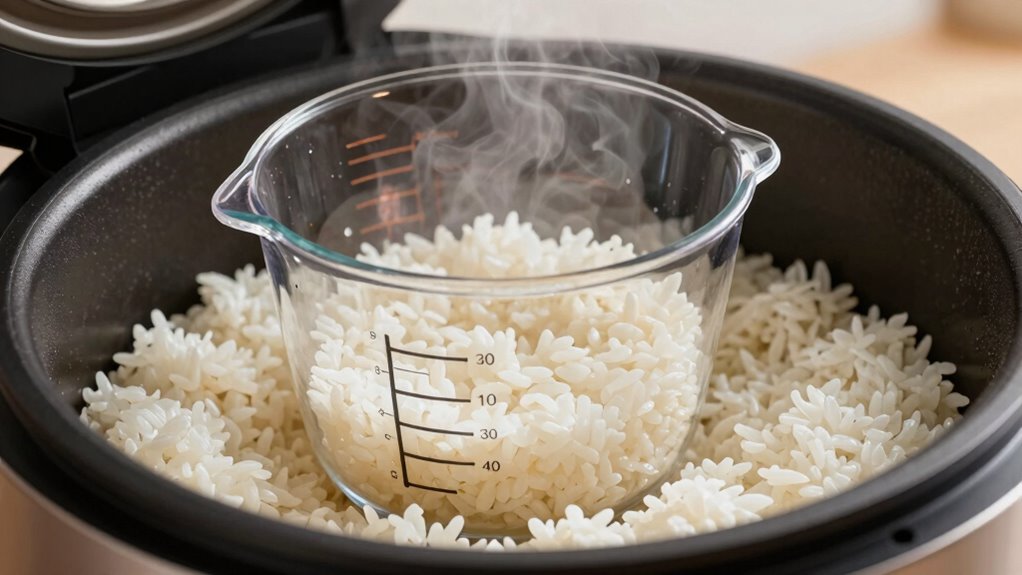
Understanding what a ‘rice cooker cup’ truly measures is key to making accurate portions and avoiding confusion. Measurement standards for rice cooker cups vary by brand, but most are based on a marketing label rather than a standard measuring cup. Unlike the typical 8-ounce cup used in recipes, a rice cooker cup usually holds about 5 to 6 ounces of uncooked rice. This discrepancy can lead to over- or underestimating portion sizes if you’re not aware of it. Many manufacturers use their own measurement standards on packaging and instructions, which can be confusing. Recognizing that a rice cooker cup is a marketing label helps you better gauge how much rice you’re preparing, ensuring consistent results and proper portion control every time. Being aware of this variation is especially helpful for accurate meal planning and maintaining dietary goals. Additionally, understanding the measurement differences can help you adapt recipes and cooking times more effectively. Knowing the typical rice cooker cup measurement can also assist in meal prep and when cooking larger quantities for family or gatherings. Being familiar with these differences enables you to adjust recipes more precisely and achieve better culinary results.
How ‘Cup’ Sizes Compare to Standard Measuring Cups
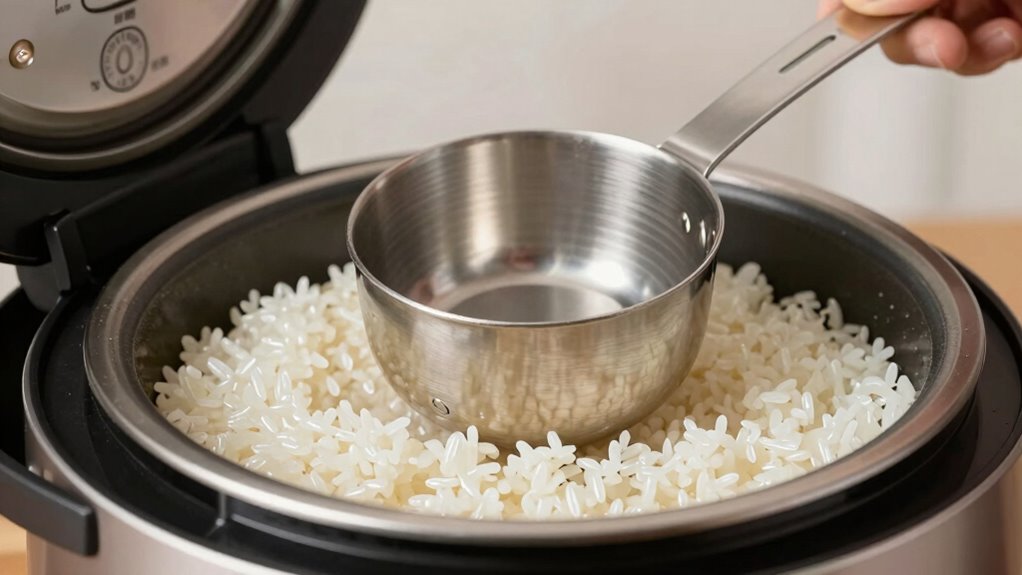
You might notice that a rice cooker cup isn’t always the same size as a standard measuring cup. While a standard cup holds about 240 milliliters, rice cooker cups can vary from 180 to 200 milliliters. Understanding these differences helps you measure rice more accurately and avoid leftovers or undercooked grains. Measuring accuracy is important when using different cup sizes to ensure proper measurement and cooking results. Additionally, cup size variations can affect cooking times and water ratios, so being aware of your specific rice cooker’s cup measurement can improve your overall results. Recognizing standardized measurements can also help you compare recipes and results across different rice cookers and brands. Being mindful of measurement differences ensures consistent and tasty outcomes every time.
Standard Cup Volume
Have you ever wondered how the standard rice cooker cup compares to your typical measuring cup? The answer lies in understanding measuring standards and kitchen measurements. A standard rice cooker cup is generally about 180 milliliters, which is roughly 3/4 of a US customary cup. To clarify, here’s what you should remember:
- Most rice cooker cups measure approximately 180 ml.
- A standard US measuring cup holds 240 ml.
- This means rice cooker cups are about 75% of a standard measuring cup.
- Always check your rice cooker’s manual for specific measurements, as standards can vary.
- Measurement accuracy is essential for consistent cooking results and proper portioning, especially when considering appliance-specific measurements. Being aware of measurement differences helps prevent errors in recipes and ensures your rice turns out just right.
Knowing these differences helps you measure rice accurately and prevents confusion caused by varying cup sizes in recipes and appliances.
Variations in Rice Cups
Ever wondered why rice cup sizes can vary so much between brands and recipes? It’s because rice cups don’t follow a universal measurement standard. Some rice bowls hold about 180 ml, while others are closer to 200 ml or more. This inconsistency can lead to confusion when measuring rice for different recipes or rice cookers. Many brands use their own “rice cup,” which may not match a standard measuring cup. To avoid errors, always check what measurement standard the rice cooker or recipe recommends. Keep in mind that a typical rice bowl may not equate to the standard 240 ml cup used in cooking. Being aware of these variations helps you better gauge how much rice you’re preparing, ensuring consistent results every time. Additionally, understanding measurement standards can help you compare and select the right rice cooker for your needs. Recognizing measurement discrepancies is key to achieving perfect rice every time. For precise cooking, some users opt for a measuring cup that aligns with the specific rice cooker’s instructions.
How to Convert Rice Cooker Cups Into Actual Cooked Rice
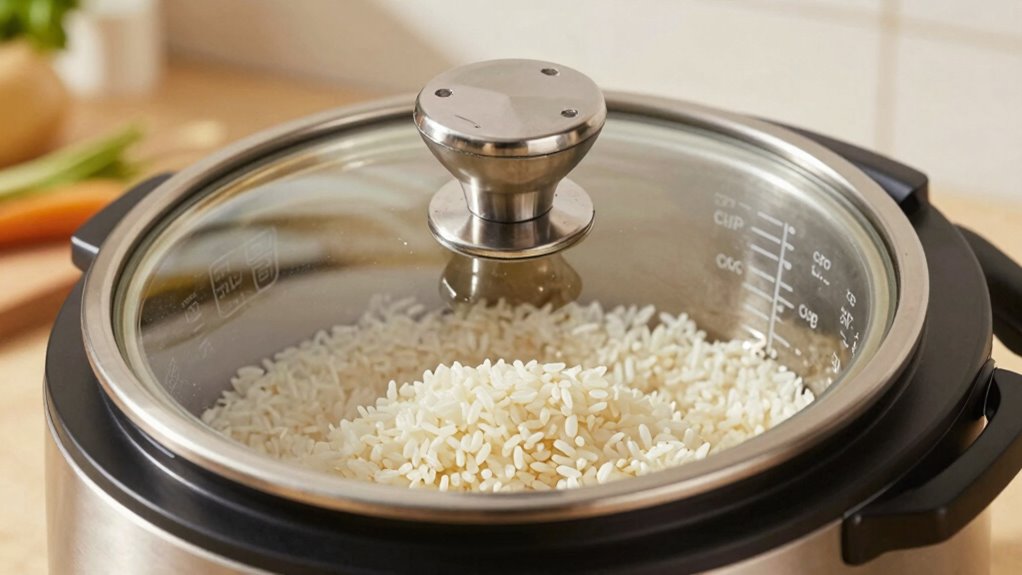
To convert rice cooker cups into actual cooked rice, you need to understand how much cooked rice each cup yields. Keep in mind that different rice types, like jasmine or brown rice, can modify the amount of cooked rice you get from a cup. Adjust your measurements accordingly to ensure your servings are accurate. For precise results, consider consulting standard rice cooking measurements to better estimate cooked rice yields.
Understanding Cooked Rice Yield
Understanding how rice cooker cups translate to actual cooked rice can be confusing at first, but once you know the typical yield, it becomes much easier to plan your meals. Usually, 1 rice cooker cup yields about 3 cups of cooked rice, depending on the grain texture and cooking time. To help you estimate accurately, consider these points:
- A single cup of dry rice generally doubles or triples in volume after cooking.
- Grain type affects yield; some grains expand more, altering cooked amounts.
- Longer cooking times may slightly reduce yield due to evaporation.
- Adjust portions based on whether you prefer firmer or softer rice, influencing final volume.
Knowing these factors helps you better predict how much cooked rice you’ll get from your rice cooker cups.
Adjusting for Rice Types
Different rice varieties expand differently during cooking, so converting rice cooker cups to cooked rice isn’t one-size-fits-all. For example, long-grain rice tends to yield fluffier, less sticky cooked rice, while short-grain rice produces stickier, denser results. When cooking rice, consider the specific rice types you’re using, as each absorbs water uniquely. Adjust your water-to-rice ratio accordingly—more water for certain rice types, less for others—to get the desired texture. Keep in mind that a rice cooker cup measures a different volume than a standard cup, so understanding how your rice type behaves helps you better estimate cooked rice yield. By tailoring your approach based on rice types, you’ll improve your cooking rice results and avoid surprises.
Picking the Right Rice Cooker Size for Your Household

Choosing the right rice cooker size makes sure you cook just the right amount without waste or hassle. To select the best size, consider your household’s needs:
Selecting the perfect rice cooker size ensures hassle-free meals with minimal waste.
- For singles or couples, a 3-cup cooker is ideal for daily meals.
- For small families of 3-4, opt for a 5- or 6-cup model to handle regular cooking.
- Larger families or entertaining guests benefit from 8 cups or more.
- If you meal plan or batch cook, choose a bigger capacity to save time and effort.
Matching your household size helps streamline household meal planning and keeps your rice cooker maintenance simple. Picking the right size prevents overuse or underuse, ensuring efficient operation and consistent results.
Common Mistakes When Using Rice Cooker Cups: and How to Avoid Them
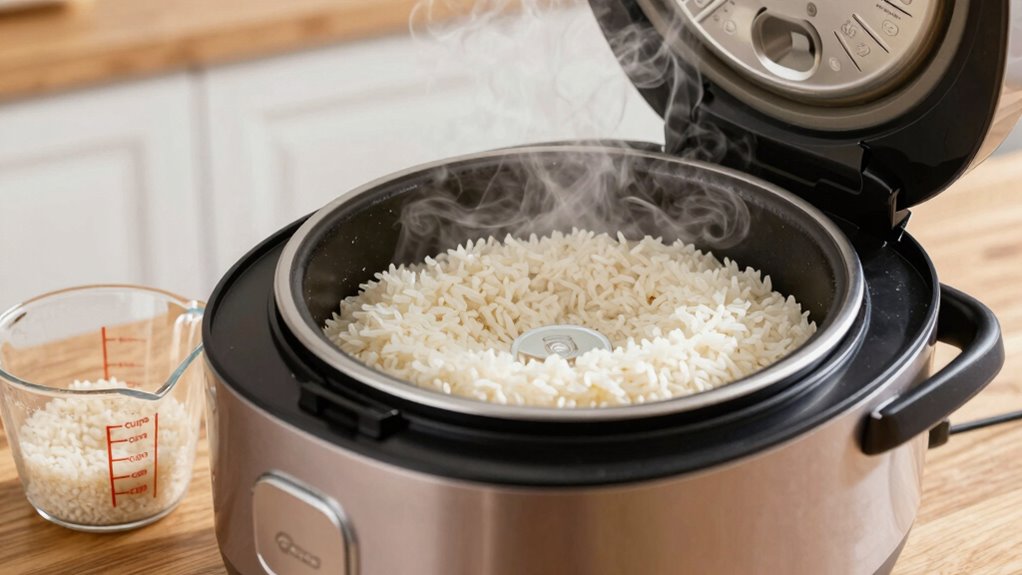
Many people make mistakes by using standard cups incorrectly or ignoring proper rice-to-water ratios. Overfilling or underfilling the rice cooker can also lead to poor results. To get the best rice every time, pay attention to cup measurements and fill levels.
Using Standard Cups Incorrectly
Are you accidentally measuring rice with the wrong cup? Using standard cups can lead to inconsistent results if you don’t follow proper measuring techniques. Here are common mistakes to avoid:
- Using kitchen cups instead of rice cooker cups, which vary in size.
- Packing rice tightly into the cup, resulting in more rice than intended.
- Not leveling off the rice, causing inaccurate measurements.
- Ignoring the need to adjust recipes based on cup size differences.
To get consistent results, always measure rice carefully and stick to the rice cooker’s cup size. This helps with accurate recipe adjustments and ensures your rice turns out just right every time. Proper measuring techniques are key to perfect rice.
Ignoring Rice-to-Water Ratios
Even if you measure your rice carefully, neglecting the correct rice-to-water ratio is a common mistake that can ruin your results. Using too much or too little cooking water affects the rice texture—too much makes it mushy, too little leaves it dry and undercooked. Many assume the rice cooker automatically adjusts water, but precise ratios are key for consistent results. Check your rice type’s recommended water amount, and don’t guess. Remember, different rice varieties need different amounts of cooking water for ideal texture. Ignoring these ratios can lead to unevenly cooked rice or undesirable stickiness. To avoid this, follow the guidelines closely and measure water accurately. This simple step ensures your rice turns out perfectly tender and fluffy every time.
Overfilling or Underfilling
Using the correct rice-to-water ratio is essential, but equally important is filling your rice cooker to the right level. Overfilling issues can cause rice to spill and uneven cooking, while underfilling pitfalls may result in burnt rice or undercooked grains. To avoid these mistakes, keep these points in mind:
- Never fill beyond the maximum fill line — it can lead to overflows.
- Don’t underfill; too little rice can cause it to burn or stick.
- Use the rice cooker’s measuring cup for consistency.
- Check the water level markers and adjust based on the amount of rice you’re cooking.
Proper filling guarantees even cooking and prevents messy overflows or undercooked rice, making your meal perfect every time.
Adjusting Recipes and Cooking Times for Different Sizes

When adjusting recipes and cooking times for different rice cooker sizes, it’s important to remember that larger or smaller models may require you to modify ingredient quantities and cooking durations. With recipe scaling, you should increase or decrease the amount of rice and water proportionally to match your cooker’s capacity. Keep in mind that cooking time can vary; smaller models often cook faster, so reduce the time slightly to prevent overcooking. Conversely, larger cookers may need a bit extra time for even cooking. Always monitor the first few attempts when adjusting recipes, and make small tweaks to achieve perfect results. Proper scaling ensures your rice turns out fluffy and well-cooked, regardless of your rice cooker’s size.
When to Choose a Larger or Smaller Rice Cooker

Choosing the right rice cooker size depends on your cooking needs and household size. If you often cook large meals or batch cook rice, a larger cooker can handle more rice grain and water absorption without overflowing. Conversely, if you only prepare small portions, a smaller model prevents waste and saves space. Consider these when deciding:
- How many people you serve regularly
- Frequency of cooking rice
- Storage space in your kitchen
- Desire for versatility with other dishes
A bigger cooker is ideal for family meals, ensuring enough rice grain and water absorption without overfilling. A smaller cooker suits singles or couples, where water absorption needs are lower and precise portioning matters. Choose wisely for efficiency and convenience.
FAQs About Rice Cooker Cups and Capacity
Have you ever wondered how rice cooker cups translate to real measuring cups? It’s a common question that affects measurement accuracy and your cooking results. Typically, a rice cooker cup equals about 3/4 of a standard measuring cup, but this can vary by brand. This discrepancy makes capacity comparison tricky, especially when following recipes or adjusting portion sizes. To guarantee accuracy, always check your rice cooker’s manual or label for specific details. Remember, relying solely on the “cup” measurement can lead to inconsistent results, so consider using standard measuring cups for precision. Understanding these differences helps you better plan portions and avoid over- or under-cooking rice. Clarifying these FAQs can improve your overall rice cooking experience.
Frequently Asked Questions
Can I Use a Different Measuring Cup Than the One Provided?
Yes, you can use a different measuring cup than the one provided, but be aware it may affect measuring accuracy. To guarantee consistent results, stick to standardization by using a cup with the same volume as the one recommended in your rice cooker’s instructions. This helps you maintain accurate measurements and cook rice perfectly every time. Always double-check the cup’s volume to avoid confusion and ensure reliable results.
Does Rice Cooker Capacity Include Cooked or Uncooked Rice?
Your rice cooker capacity is based on uncooked measurement standards, meaning it refers to the amount of dry rice you put in. When cooked, rice volume increases, typically doubling or tripling. So, if your cooker’s capacity is 4 cups, it can handle about 4 cups of uncooked rice, which will yield roughly 8 to 12 cups of cooked rice. Always measure uncooked rice for accurate capacity and serving sizes.
Are All Rice Cooker Cups Standardized Across Brands?
Don’t assume all rice cooker cups are created equal—brand differences mean measurement accuracy varies. While many brands use a standard ¾ cup measurement, some may differ, making it tricky to compare. It’s like comparing apples to oranges. To avoid surprises, always check your rice cooker’s manual for specific cup sizes. Relying solely on the “cup” label can lead to cooking mishaps, so measure carefully for perfect rice every time.
How Do I Adjust Cooking Times for Different Rice Cooker Sizes?
To modify cooking times for different rice cooker sizes, you should consider the rice-to-water ratio and the cooker’s capacity. For larger rice cookers, add a few extra minutes to guarantee even cooking, especially if you’re cooking a full load. Smaller cookers may need slightly less time. Always monitor the first few uses and note how your specific rice cooker size variations affect cooking time, then adjust accordingly for perfect results.
Is There a Universal Conversion Chart for Rice Cooker Cups?
Think of it like trying to find a universal remote in a cluttered drawer—you won’t find a perfect fit. There isn’t a universal conversion chart for rice cooker cups because measurement variations and brand inconsistencies exist. To get accurate results, always check your rice cooker’s manual. Use the provided measuring cup, and avoid relying solely on generic conversions, which can lead to overcooked or undercooked rice.
Conclusion
Understanding rice cooker capacity might seem confusing at first, but once you get the hang of the “cup” measurement, it’s simple to choose the right size for your needs. Don’t worry about the small differences in cup sizes—they won’t drastically affect your cooked rice if you follow the guidelines. With a little practice, you’ll confidently select the perfect rice cooker and cook perfect rice every time, no matter the size.