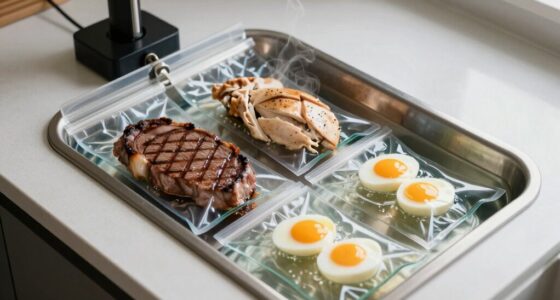
Many dislike induction cooking because they often use incompatible cookware, which leads to poor heating and frustration. Not understanding how to control temperature or safety features can cause accidents or overcooking. If you overlook proper prep or ignore energy-saving tips, it might seem inefficient. Additionally, unfamiliarity with the controls can make the experience feel inconvenient. Keep exploring these common mistakes, and you’ll discover how to improve your induction cooking experience and avoid unnecessary frustrations.
Key Takeaways
- Using incompatible cookware results in poor heating, causing frustration and misconceptions about induction’s effectiveness.
- Neglecting safety features or electrical precautions can lead to hazards, making users perceive induction as unsafe.
- Difficulty adjusting temperature controls without proper familiarity leads to overcooking or undercooking food.
- Assuming induction is inefficient due to improper cookware or operation diminishes perceived energy savings.
- Ignoring the need to verify cookware compatibility and safety guidelines causes dissatisfaction and negative opinions.

Induction cooking offers fast, efficient heat, but it also comes with some common pitfalls that can hinder your culinary experience. One of the biggest issues people face is misunderstanding how induction works. Unlike traditional stoves, induction requires compatible cookware—typically ferrous metal pots and pans. Using the wrong cookware can lead to poor heating, uneven cooking, or even no heat at all, making you think induction isn’t effective. It’s important to check that your cookware is induction-compatible to maximize energy efficiency, which means the heat is directed precisely where you want it without wasting energy. When you use the right pots and pans, induction cooking becomes incredibly energy efficient, saving you money on utility bills and reducing your environmental impact. If you’re not aware of this, you might blame the stove for sluggish performance or inconsistency, which leads to frustration. Additionally, understanding induction cookware compatibility is crucial for ensuring your stove functions correctly and efficiently. Safety precautions are essential when using induction cooktops, but many people overlook them. The surface of an induction stove heats only when compatible cookware is in contact with it, which means the cooktop itself stays relatively cool. This reduces the risk of burns, but it also means you might accidentally touch a hot pan or surface if you’re not cautious. Additionally, because induction stoves heat so quickly, you can easily overcook or burn your food if you don’t keep an eye on your cooking process. It’s vital to stay attentive and avoid distractions, especially when adjusting heat levels. Proper cooking techniques can help you prevent common mistakes and make your experience more enjoyable. Being familiar with the power control settings can also help you fine-tune your cooking and avoid overdoing it. Also, since induction cooktops are sensitive to electrical issues, you should always guarantee your power source is stable and properly grounded. Neglecting these safety precautions can lead to shocks or other hazards, and that’s a common reason people develop a negative view of induction cooking. Another mistake that makes people think they hate induction is not understanding how to control heat properly. Unlike gas stoves, which give you immediate visual cues through flame size, induction relies on digital controls. If you don’t familiarize yourself with how to set and adjust the temperature, you might find it difficult to achieve the desired cooking results. This can lead to frustration, especially if you’re used to traditional methods. Learning how to operate your induction cooktop efficiently, including the safety features like child locks or automatic shut-offs, can greatly improve your experience. When you don’t take these precautions or don’t understand how to optimize energy efficiency, it’s easy to see induction as a hassle rather than a convenience. Once you get past the initial learning curve and follow safety guidelines, induction can become your favorite way to cook, offering quick, precise, and energy-efficient results. In addition, becoming familiar with induction cooktop controls can help you unlock its full potential and make your cooking process smoother. Recognizing common induction cooking mistakes and how to avoid them can significantly enhance your overall satisfaction with this modern cooking method.

CAROTE Nonstick Pots and Pans, Induction Titanium Cookware Set 16pcs Kitchen Cooking Sets, Pot and Pan Non Stick w/Frying pan (PFOS, PFOA Free)
Superior Nonstick Performance: Featuring a titanium nonstick coating, our pots and pans set offers exceptional durability and effortless…
As an affiliate, we earn on qualifying purchases.
As an affiliate, we earn on qualifying purchases.
Frequently Asked Questions
Can Induction Cooktops Be Used With All Types of Cookware?
You can’t use all types of cookware on induction cooktops. It depends on the cookware materials and magnetic compatibility. Only pots and pans made from ferromagnetic metals like cast iron or magnetic stainless steel work well. Non-magnetic materials like aluminum, copper, or glass won’t work unless they have a magnetic layer. To guarantee compatibility, test your cookware with a magnet—if it sticks, it should work on your induction cooktop.
Do Induction Stoves Require Special Cleaning Methods?
Induction stoves do require special cleaning routines to maintain their efficiency. You should avoid abrasive cleaners and use a soft cloth with mild soap or specialized cooktop cleaner. Regular maintenance tips include wiping spills immediately and avoiding dragging cookware across the surface. This prevents scratches and keeps the surface looking new. Proper cleaning guarantees your induction cooktop functions well, prolongs its lifespan, and makes cooking a more enjoyable experience.
Are Induction Cooktops Energy-Efficient Compared to Traditional Stoves?
You’ll find induction cooktops are more energy-efficient than traditional stoves because they focus heat directly on the pot, reducing wasted energy. Their power consumption is generally lower for the same cooking tasks, leading to significant energy savings over time. While some worry about initial costs, the energy efficiency means you save on electricity bills in the long run. Overall, induction cooking offers a smarter, more efficient way to cook.
How Safe Are Induction Cooking Appliances for Children?
Induction cooking appliances are generally safe for children because they don’t get hot surfaces like traditional stoves, reducing burn risks. For child safety, always use child locks and keep small children away from the cooktop while in use. Appliance safety is maintained when you follow manufacturer instructions, guarantee the cooktop is properly installed, and never leave cooking unattended. These precautions help make induction cooking a safe option for families.
What Are Common Compatibility Issues With Induction Cookware?
Think of induction cookware compatibility like fitting puzzle pieces together — if they don’t match, nothing clicks. You’ll face magnetic compatibility issues if your pots and pans aren’t magnetic, often made of aluminum or glass. Material limitations mean only ferromagnetic metals work, so avoid non-magnetic cookware. To prevent frustration, test your pots with a magnet before cooking. Properly compatible cookware guarantees your induction stove works smoothly, saving you time and headaches.

WAATFEET 1700W Portable Induction Cooktop,Electric Induction Cooker and Burner,Countertop Hot Plate with 10-Level Adjustment,3-Hour Timer,Smart Touch Cooktop,and Safety Lock Feature,Black
【Minimalist Design】 This 1700W induction cooktop delivers the right power for your needs, whether you're brewing tea, boiling…
As an affiliate, we earn on qualifying purchases.
As an affiliate, we earn on qualifying purchases.
Conclusion
If you’re ready to dance with induction cooking, don’t let small missteps trip you up. Think of it as learning a new song—you might hit a few wrong notes at first, but with patience, you’ll find your rhythm. Embrace the learning curve, and soon, this sleek, efficient method will feel like second nature. Before long, you’ll be cooking up a storm, turning what once felt like a foe into your favorite culinary partner.
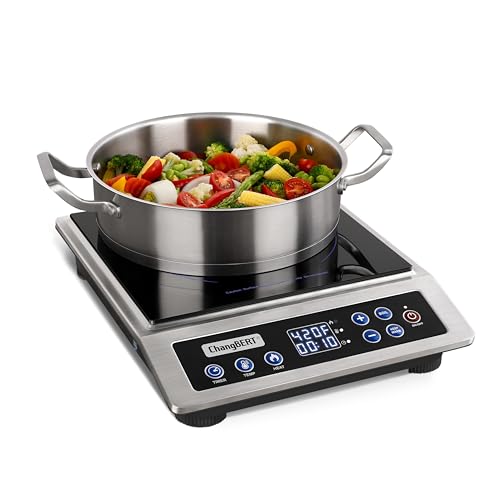
ChangBERT Portable Induction Cooktop Enhanced Version, One-Click Max Power 1800W Large Heating Coil Burner, Precise Temperature Control, NSF Certified Commercial Grade Low Noise Hot Plate
HIGH EFFICIENTY AND NO HOT KITCHEN – ChangBERT induction cooktop offers 9 preset power levels (200-1800W) and 18…
As an affiliate, we earn on qualifying purchases.
As an affiliate, we earn on qualifying purchases.
CAROTE Nonstick Pots and Pans, Induction Titanium Cookware Set 16pcs Kitchen Cooking Sets, Pot and Pan Non Stick w/Frying pan (PFOS, PFOA Free)
Superior Nonstick Performance: Featuring a titanium nonstick coating, our pots and pans set offers exceptional durability and effortless…
As an affiliate, we earn on qualifying purchases.
As an affiliate, we earn on qualifying purchases.