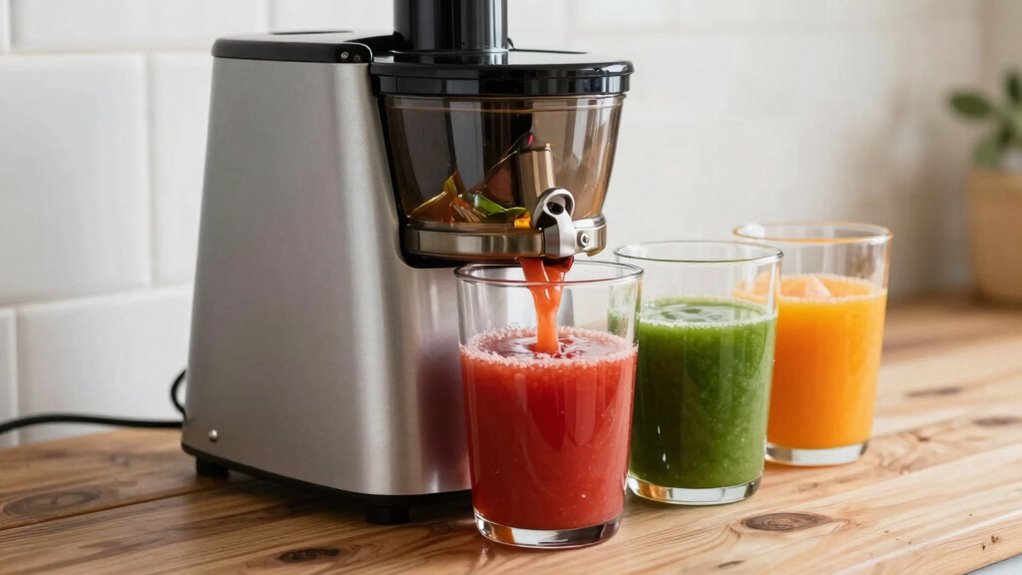

A “slow” cold press juicer gently crushes and presses fruits and vegetables at low speeds—around 80-100 RPM—to extract juice. This gentle process minimizes heat and oxidation, which helps preserve nutrients, enzymes, and flavor. Unlike fast blenders, slow juicers produce richer, nutrient-dense juice with less foam and oxidation. Want to discover how to get the best results and maintain your juicer? Keep exploring for more insights.
Key Takeaways
- “Slow” refers to operating speeds around 80-100 RPM, reducing heat and oxidation during juice extraction.
- Slower speeds help preserve nutrients, enzymes, and natural flavors by minimizing heat buildup.
- Gentle crushing and pressing ensure thorough extraction with minimal pulp and higher juice quality.
- Reduced speed prevents nutrient degradation and extends juice shelf life.
- Slow juicing enhances flavor, color, and nutrient retention compared to high-speed methods.
What Is a Slow Juicer and How Does It Work?
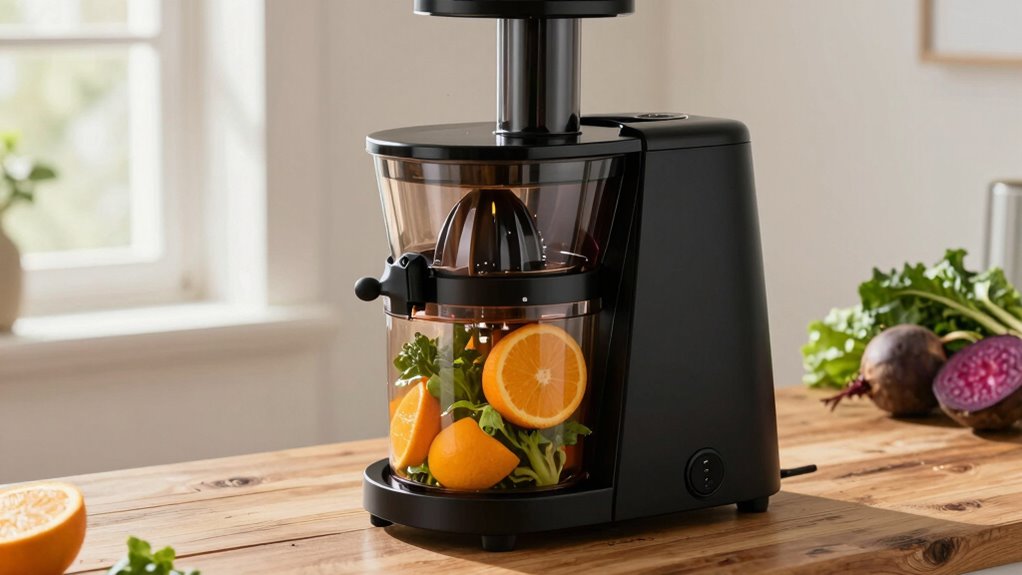
A slow juicer, also known as a masticating juicer, works by gently crushing and pressing fruits and vegetables to extract juice. As you operate it, you’ll notice it produces a thick juice pulp, which is a sign of thorough extraction. Unlike high-speed blenders, this process minimizes heat buildup, preserving nutrients. You might also notice the motor noise is relatively low, making it more peaceful to run in your kitchen. The motor turns slowly, typically around 80-100 RPM, reducing heat and oxidation. This gentle method ensures you get more juice from your produce and less waste. Additionally, energy-efficient operation aligns with sustainable practices and reduces overall power consumption. The design often incorporates natural materials that are environmentally friendly and durable. This method is especially beneficial for preserving nutrients, which can be lost during faster juicing processes. Moreover, the slow juicing process is favored for maintaining the natural flavors and enzyme activity in the juice. This technique also supports nutrient retention, making it a popular choice among health-conscious consumers who seek maximum health benefits. Overall, a slow juicer’s quiet operation and efficient juice pulp extraction make it ideal for health-conscious users who value quality over speed.
How Do Cold Press Juicers Differ From Fast Blenders?
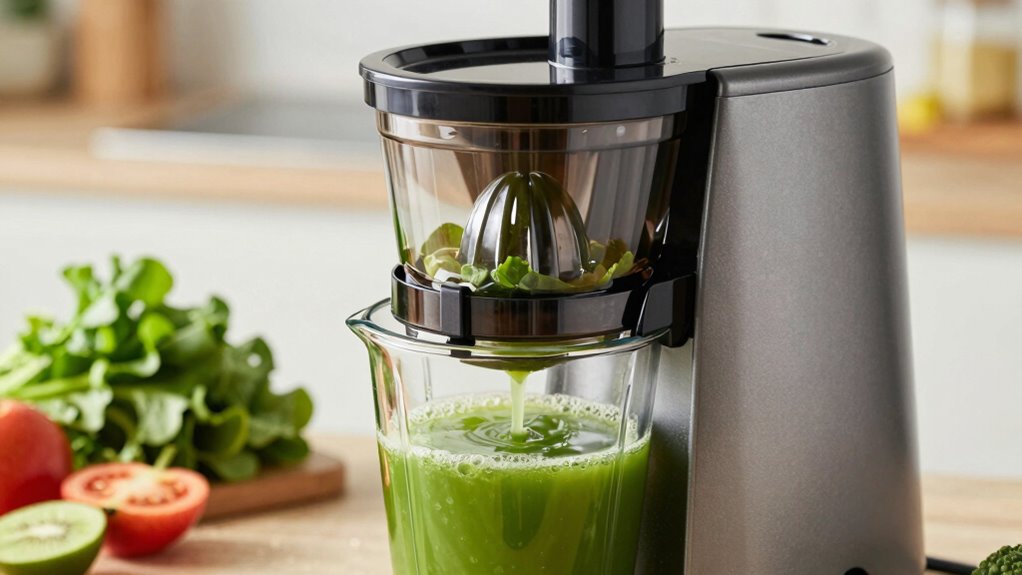
Cold press juicers and fast blenders serve different purposes and operate through distinct mechanisms. A cold press juicer gently extracts juice by crushing and pressing produce, which helps preserve nutrients and enzymes. In contrast, a fast blender pulverizes ingredients quickly with high-speed blades, creating smoothies and purees. When comparing nutrition, cold press juicers typically produce juice with a higher concentration of vitamins and enzymes because they minimize heat and oxidation. Regarding appliance versatility, blenders offer more options—they can make smoothies, soups, sauces, and even nut butters. Cold press juicers are specialized for juice extraction, which means they excel at producing pure juice but aren’t as versatile for other recipes. Your choice depends on whether you prioritize nutrient preservation or appliance versatility.
Why Does Slow Juicing Preserve More Nutrients and Enzymes?
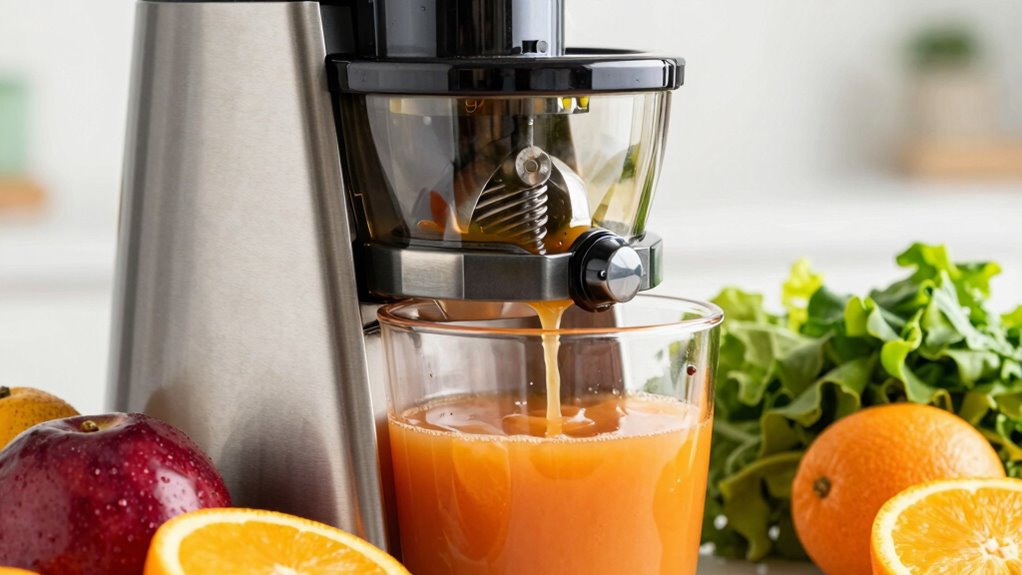
When you use a slow juicer, it gently extracts juice without applying harsh pressure, helping to keep more nutrients intact. This process also reduces oxidation, which can degrade vitamins and enzymes over time. Plus, minimal heat is generated, so delicate enzymes remain active and effective in your juice.
Gentle Extraction Process
Have you ever wondered why slow juicing retains more nutrients and enzymes? It’s because the gentle extraction process minimizes mechanical stress on the produce. Unlike fast juicers that spin rapidly, cold press juicers crush and press fruits and vegetables slowly, preserving nutrient retention. This method prevents heat buildup and reduces oxidation, which can degrade sensitive enzymes. Additionally, the oxidation process is significantly reduced, helping to prevent nutrient loss and spoilage. As a result, the juice maintains better nutrient content and vibrant juice clarity. The gentle pressing ensures you get the maximum nutritional benefits from your ingredients without sacrificing quality. You’ll notice a richer flavor and a smoother texture, making your juice more enjoyable and healthier. This careful process highlights why slow juicing is superior for extracting the full nutritional potential of your produce. Additionally, the minimized oxidation helps extend the shelf life of your juice while maintaining its freshness. Moreover, proper cleaning and maintenance of your juicer are essential to preserve its efficiency and ensure safe, healthy juice production. Proper juice storage techniques also play a crucial role in maintaining the quality and nutritional value of your juice over time.
Reduced Oxidation Levels
Because slow juicing involves a gentle pressing method, it considerably reduces oxidation during the extraction process. This lower oxidation impact helps preserve the natural enzymes and nutrients in your juice. When enzymes stay intact, your body can better absorb essential vitamins, improving health benefits. The slower process minimizes air exposure, which is a key factor in enzyme preservation. As a result, your juice stays fresher longer and retains more of its original nutritional value. Additionally, slow juicing supports preserving nutrients, ensuring you get the maximum health benefits from your fresh juice. Moreover, the gentle extraction technique helps maintain enzyme activity, further enhancing the health-promoting properties of your juice.
Minimal Heat Generation
Slow juicing generates minimal heat during extraction, which helps preserve delicate nutrients and enzymes in your juice. Because these compounds are sensitive to heat transfer, high temperatures can degrade their nutritional value. Cold press juicers operate at lower speeds, reducing the heat generated by the motor and preventing nutrient loss. Their motor efficiency ensures that energy is used effectively, producing less heat and more nutrient-rich juice. Unlike high-speed juicers, which can create friction and heat, slow juicers maintain the integrity of vitamins, enzymes, and antioxidants. This gentle process means you get more health benefits from each glass. By minimizing heat, slow juicers deliver fresher, more nutritious juice that retains its natural flavor and beneficial properties.
What Features Make a Great Slow Juicer?
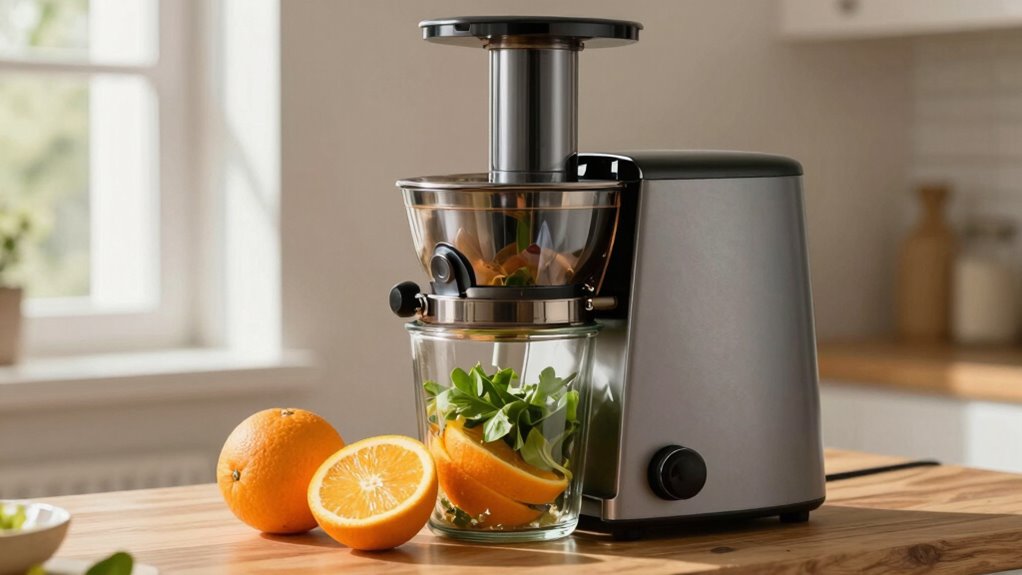
A great slow juicer should operate efficiently without wasting time, so you get your juice quickly and with minimal effort. Cleaning should be straightforward, letting you enjoy healthy drinks without hassle. Most importantly, it must produce high-quality juice rich in nutrients and enzymes to maximize health benefits. Additionally, motor strength is crucial for effectively extracting juice from various produce without overworking the machine. A motor’s durability also ensures consistent performance over time, reducing the need for frequent repairs or replacements. Ensuring that the juice extraction process is gentle helps preserve the maximum nutrients and enzymes in your juice.
Juicing Speed and Efficiency
When choosing a slow juicer, you want a model that maximizes juice extraction while minimizing processing time. Efficient juicing means less waiting and more fresh juice. Look for a machine with a powerful motor that quickly crushes fruits and vegetables, reducing overall juicing time. Keep in mind that a quieter machine, with low juicing noise, makes the process more pleasant, especially if you juice frequently. Features to consider include:
- Fast, consistent processing speeds that cut down on time spent.
- Low machine noise to ensure a quieter juicing experience.
- High juice yield, which indicates efficient extraction and less waste.
Choosing a juicer with these features helps you enjoy fresh juice faster and more quietly, making your juicing routine smoother and more enjoyable.
Ease of Cleaning
Ease of cleaning is a key factor that can make your juicing routine more convenient and less time-consuming. When choosing a slow juicer, look for features that enhance cleaning convenience, such as removable parts that are dishwasher safe or easy to disassemble. A design with minimal components reduces the effort needed for maintenance simplicity, allowing you to quickly rinse or wipe down the parts after each use. Smooth surfaces and fewer nooks prevent pulp buildup, making cleanup straightforward. A juicer with clear instructions on cleaning and maintenance helps you keep it in ideal condition without hassle. Incorporating local automation features can also streamline the cleaning process by scheduling routine maintenance or alerts for cleaning tasks. Additionally, selecting a model with self-cleaning features can significantly reduce the time spent on cleanup. Recognizing the importance of ease of maintenance ensures your juicer stays hygienic and functional over time. Furthermore, choosing a model with removable filters makes it easier to clean hard-to-reach areas and maintains optimal juice quality. A well-designed juicer with simple disassembly can further simplify the process, saving you time and effort. Overall, a model that prioritizes cleaning convenience and maintenance simplicity saves you time, keeps your juicer hygienic, and encourages regular use without the frustration of difficult cleanup.
Juice Quality and Nutrition
To guarantee you get the most out of your juicer, focus on features that preserve nutrients and deliver high-quality juice. A great slow juicer minimizes oxidation, which helps extend juice shelf life and maintain fresh flavor. Look for models with efficient extraction systems that maximize nutrient retention and reduce foam. These features ensure your juice is rich in vitamins and enzymes, providing ideal health benefits. Additionally, good juicers enhance flavor by preserving natural tastes and reducing bitterness. Using Mad Tasting techniques can also help you identify the freshest produce to optimize juice quality. – Use stainless steel or BPA-free components to prevent leaching. – Ensure slow rotation speeds to limit heat buildup and oxidation. – Opt for powerful motors that extract more juice with less separation. Focusing on these features guarantees you enjoy fresher, tastier, and more nutritious juice every time.
Does Speed Impact Juice Quality and Yield?
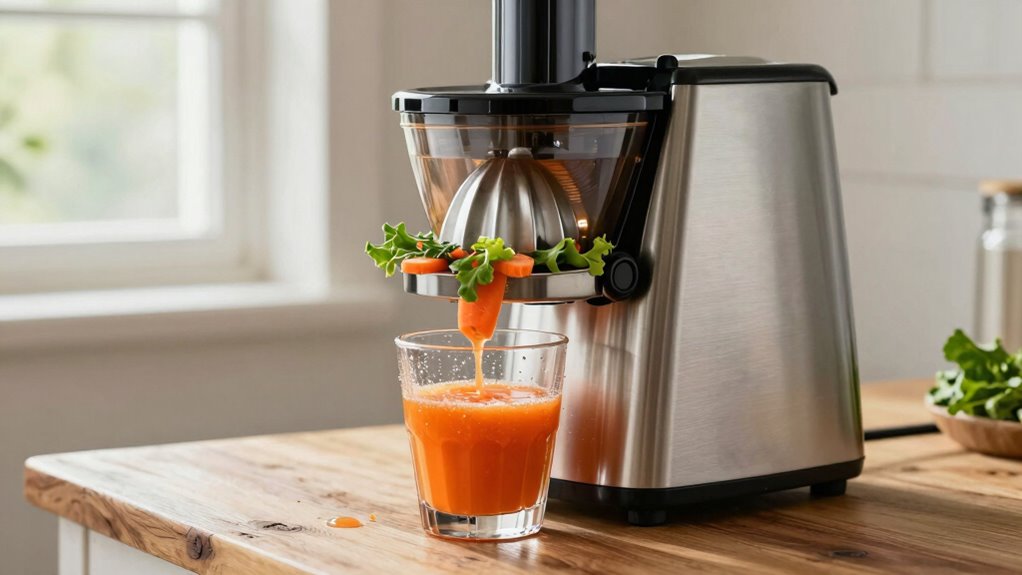
Speed settings on cold press juicers can substantially influence both the quality and quantity of your juice. When you operate at slower speeds, you typically achieve better juice preservation, which means nutrients stay intact longer. Slower speeds also promote a more uniform pulp consistency, resulting in smoother juice with fewer fibrous bits. Higher speeds can increase the yield slightly but may generate more heat, risking nutrient degradation and reducing overall juice quality. Additionally, faster settings can cause the pulp to become more watery, affecting texture and taste. If you want ideal juice preservation and a desirable pulp consistency, sticking to the recommended slow speeds is best. Ultimately, slower operation helps you produce higher-quality juice with better flavor, nutrients, and shelf life.
How to Use and Maintain Your Slow Juicer for Best Results?
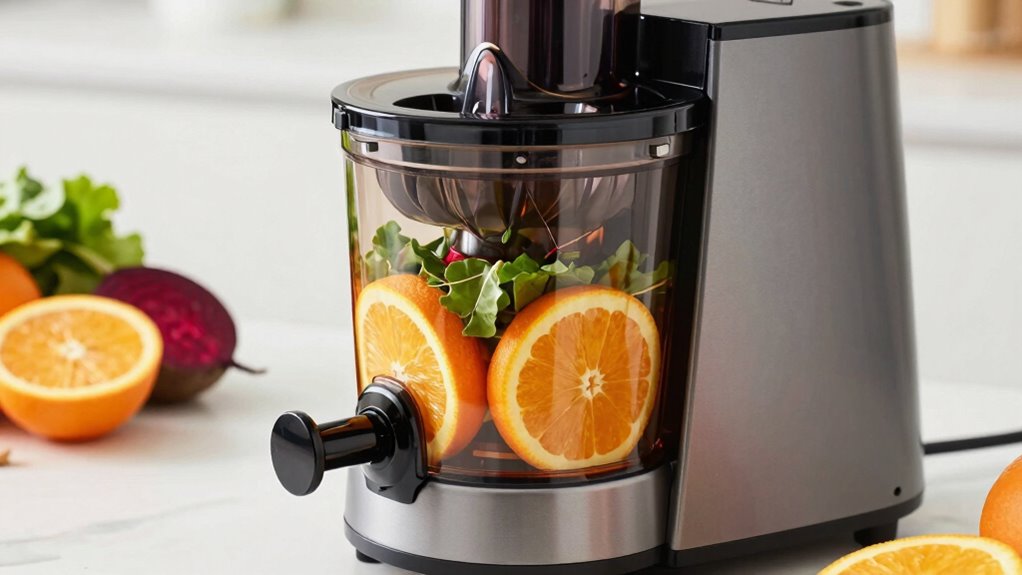
For your slow juicer to perform at its best and last longer, proper use and regular maintenance are essential. Pay attention to fruit softness—harder fruits may need to be pre-cut, while softer ones process smoothly. To guarantee optimal pulp consistency, avoid overloading the hopper, which can clog or strain the motor. Clean the juicer immediately after use to prevent pulp buildup and residue that can affect performance. Regular inspection of machine components helps identify wear and tear early. Rinse all parts thoroughly with warm water after juicing and check and tighten screws or fittings regularly. Use a brush to remove pulp from filters and screens. Additionally, maintaining the juicer’s operational performance is crucial for consistent results and longevity. Proper care includes understanding slow juicing principles, which help preserve nutrients and juice quality. Following these steps helps maintain smooth operation, preserves juice quality, and prolongs your juicer’s lifespan. Proper care keeps your juice fresh and your machine working efficiently.
Is Investing in a Slow Juicer Worth It for Your Health?
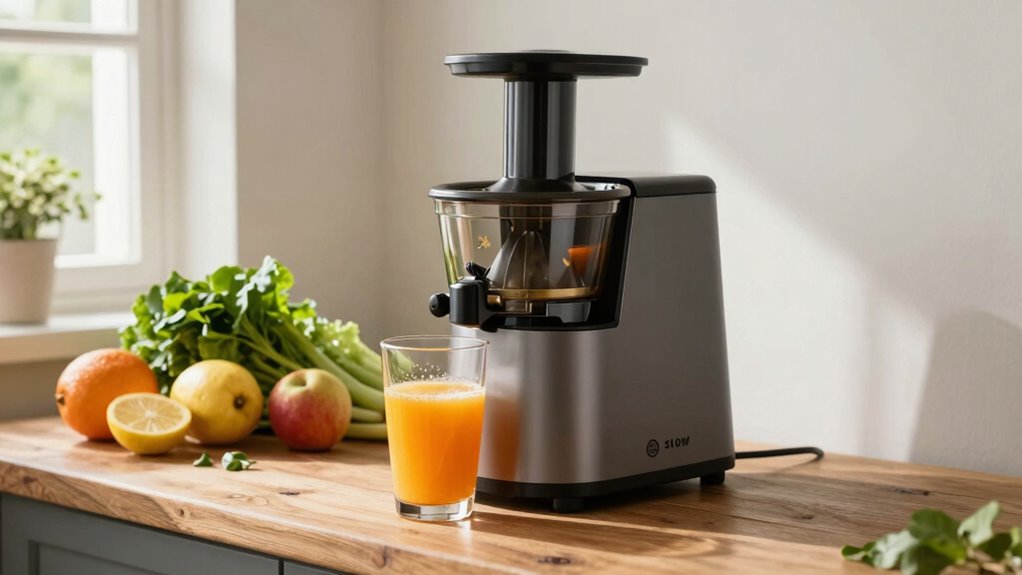
Investing in a slow juicer can be a worthwhile choice if you’re serious about improving your health. When considering the cost comparison, keep in mind that slow juicers often have a higher upfront price, but their ability to preserve nutrients and enzymes makes them a smart long-term investment. Brand reputation matters, as reputable brands tend to produce more durable and efficient machines, ensuring better juice quality and reliability. Although cheaper models exist, they may not offer the same benefits or longevity. If you prioritize fresh, nutrient-rich juice for your well-being, spending more on a quality slow juicer is justified. Proper water management in juicing can enhance the preservation of nutrients and ensure a cleaner process. Ultimately, the health benefits gained from better juice preservation can outweigh the initial expense, making it a worthwhile decision for your wellness journey.
Frequently Asked Questions
Can Slow Juicers Handle Leafy Greens Effectively?
Yes, slow juicers handle leafy greens effectively. Their gentle pressing process maximizes juicing efficiency, extracting more nutrients and juice from leafy greens than high-speed blenders. You’ll notice less foaming and oxidation, preserving the greens’ natural flavor and health benefits. Using a slow juicer guarantees you get maximum juice yield and nutrients from leafy greens, making your juicing experience healthier and more satisfying.
How Noisy Are Slow Juicers During Operation?
Slow juicers generally operate quietly, producing low noise levels during operation. You’ll notice that their operation sounds are much softer compared to traditional high-speed blenders or centrifugal juicers. This quiet performance makes them ideal for early mornings or late nights when noise might disturb others. While some minor sounds are unavoidable, most users find slow juicers’ operation sounds pleasant and unobtrusive, allowing you to enjoy fresh juice without noise fatigue.
Are Slow Juicers Easier to Clean Than Fast Blenders?
Yes, slow juicers are generally easier to clean than fast blenders. Their cleaning ease comes from fewer parts and less splatter during operation, making maintenance simplicity straightforward. You typically disassemble the juicer quickly, rinse or wash the components, and reassemble without hassle. This simplicity saves you time and effort, ensuring your juicing routine stays smooth and hygienic, with minimal cleanup compared to more complex blender parts.
What Is the Typical Lifespan of a Cold Press Juicer?
A cold press juicer typically lasts about 10 to 15 years, like a trusty old friend that keeps on giving. Its motor durability is key, but with proper care, it can withstand the test of time. Your juice’s shelf life depends on how fresh the ingredients are, but a well-maintained juicer ensures you get the most out of every squeeze, making it worth every penny.
Do Slow Juicers Require Special Storage Considerations?
You don’t need special storage for your slow juicer, but good storage tips help keep it in top shape. Store it in a dry, cool place, and if countertop space is limited, consider storing it in a cabinet. Make sure to clean it thoroughly after use and keep all parts dry. Proper storage guarantees your cold press juicer stays ready, lasts longer, and maintains ideal performance.
Conclusion
Choosing a slow juicer transforms your health journey into an epic adventure. With every drop, you’re revealing nature’s secret treasure chest, preserving nutrients that could otherwise vanish like magic. It’s not just about juice; it’s about fueling your body with the power of purity and energy. Invest in a slow juicer today—you’re not just making juice, you’re releasing a force so mighty, it could turn your wellness story into legend.