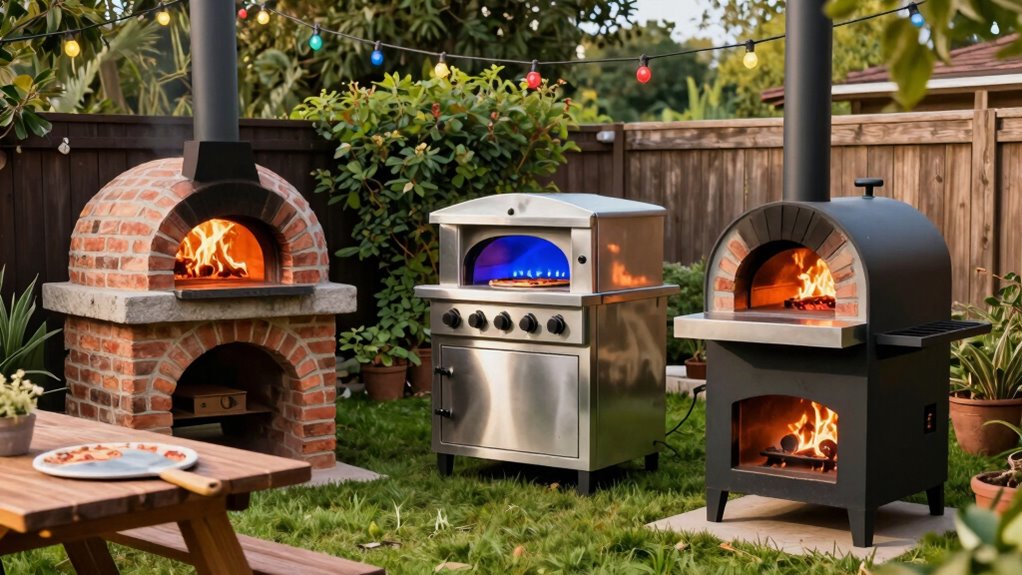

Choosing between wood, gas, and pellet backyard pizza ovens depends on your flavor and convenience priorities. Wood-fired ovens give you that authentic smoky taste but require more effort. Gas ovens are quick and easy to operate, offering consistent heat with milder flavor. Pellet ovens balance convenience with a subtle smoky flavor, making them versatile. Want to find the best fit for your outdoor space and taste? Keep exploring to discover more about each option.
Key Takeaways
- Wood-fired ovens offer authentic smoky flavor but require more tending and complex setup.
- Gas ovens provide quick, consistent heat with milder flavor profiles and easier operation.
- Pellet ovens deliver a balance of convenience and smoky taste, using compressed wood pellets.
- Consider flavor preferences: smoky and traditional for wood, milder for gas, and subtle smoky for pellets.
- Insulation, size, and maintenance affect performance and suitability for your outdoor space.
What Are the Main Differences Between Wood, Gas, and Pellet Pizza Ovens?
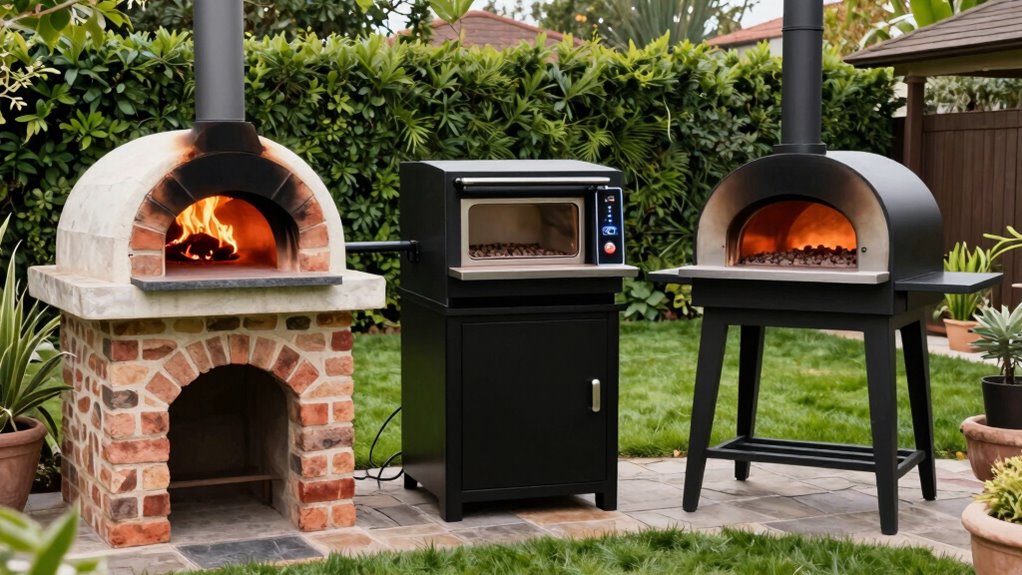
Have you ever wondered how wood, gas, and pellet pizza ovens differ in performance and convenience? The key lies in their fuel types and resulting flavor profiles. Wood-fired ovens use natural wood, providing a traditional smoky flavor that many pizza enthusiasts crave. They require more effort to start and maintain, but the taste is unmatched. Gas ovens run on propane or natural gas, offering quick heating and easy temperature control—perfect for convenience. Their flavor profiles are milder, lacking the smoky depth of wood but still delivering a good pizza. Pellet ovens combine aspects of both; they use compressed wood pellets, making them simple to operate while imparting a subtle smoky taste. Additionally, the energy efficiency of pellet ovens makes them an appealing choice for those seeking sustainable options while enjoying flavorful pizzas. The fuel source can significantly influence not only the flavor but also the overall ease of use and maintenance of your pizza oven. Understanding the fuel efficiency can help you make a more informed choice based on your specific needs and preferences. For example, ignition methods can affect how quickly and easily your oven reaches optimal cooking temperature, impacting overall convenience. Moreover, considering the maintenance requirements can help ensure your oven remains in top condition for years to come. Your choice depends on whether you prioritize flavor richness or ease of use.
How to Pick the Best Backyard Pizza Oven for Your Flavor and Lifestyle
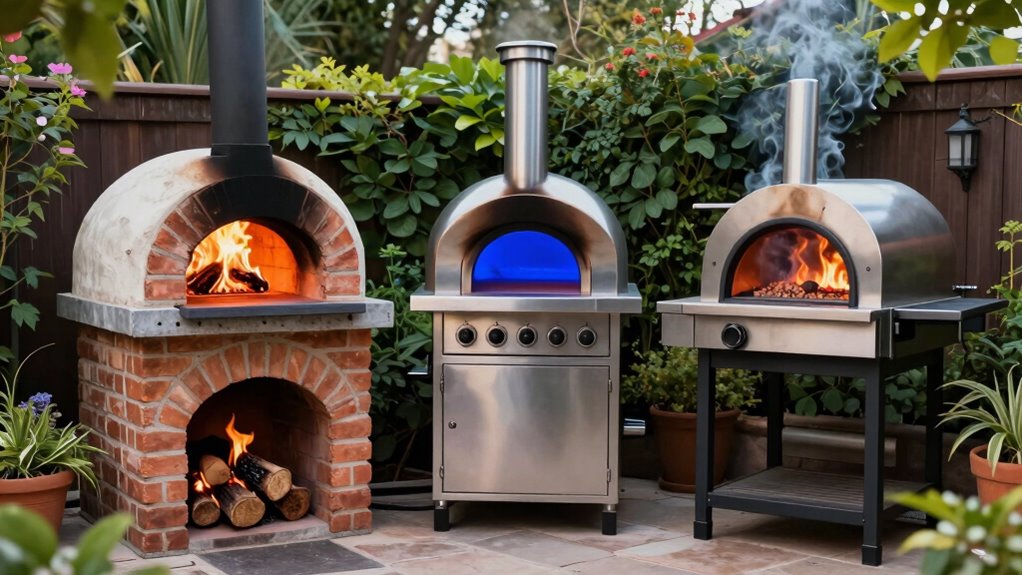
Choosing the right backyard pizza oven depends on your personal flavor preferences and lifestyle. Think about how often you’ll use it, your cooking style, and the flavors you crave. For authentic, crispy pies, look for an oven with a thick pizza stone that retains heat well. Consider oven insulation to guarantee consistent cooking and energy efficiency. If you love quick, convenient meals, a gas oven might suit you best; for a smoky, traditional flavor, go for wood-fired. Pellet ovens offer a balance of ease and flavor. Also, consider space—some ovens are compact, while others are larger and more elaborate. Your choice should match your culinary goals and available outdoor space, ensuring you’ll enjoy creating delicious pizzas regularly. Understanding heat distribution can help you select an oven that cooks evenly and delivers professional-quality results. Additionally, evaluating the market options for specialty ovens can guide you toward the best fit for your needs. Exploring different fuel types can further refine your decision based on ease of use and flavor outcomes. Moreover, researching oven insulation techniques can enhance your cooking experience by improving heat retention and efficiency. Being aware of cooking techniques specific to each fuel type can also help you maximize your oven’s potential and achieve optimal pizza results.
Why Choose a Wood-Fired Oven? Pros, Cons, and What to Know
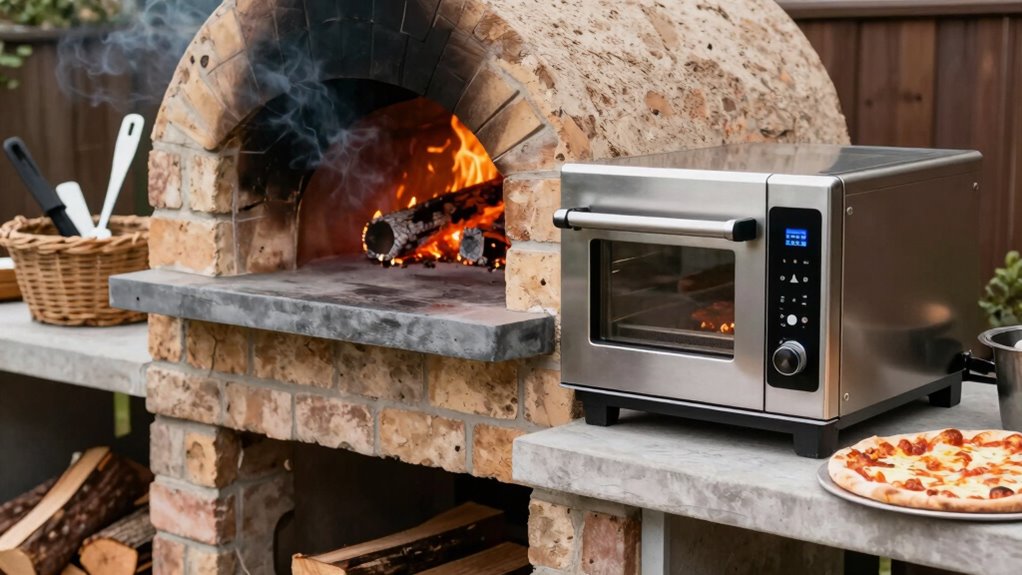
A wood-fired oven gives your pizza an authentic, smoky flavor that’s hard to match with other methods. However, it’s important to understand proper maintenance and safety tips to keep your backyard setup safe and enjoyable. Knowing both the benefits and challenges helps you make the best choice for your outdoor cooking space. Additionally, being aware of AI safety concerns can help you better manage any automation or smart features in modern outdoor equipment. For instance, understanding hydrotherapy benefits can inspire you to incorporate water-based relaxation features into your outdoor area, enhancing your overall experience. Considering setup and placement tips can also ensure your oven operates efficiently and safely in your backyard. Proper ventilation and clearance are crucial for safe operation and to prevent fire hazards.
Authentic Flavor Experience
Nothing compares to the smoky, charred flavor that a wood-fired oven imparts to your pizza, making it a top choice for those seeking an authentic taste experience. The high heat and unique firewood combustion develop a complex flavor profile that enhances your pizza dough’s natural taste. Proper oven insulation guarantees consistent heat, allowing the smoky aroma to develop fully without losing temperature. Using wood as fuel creates a distinct, rich flavor that gas or pellet options can’t replicate. You’ll notice the difference in the crust’s texture and the depth of flavor in each bite. The process of managing the fire also adds a traditional, hands-on aspect that many pizza enthusiasts cherish. For an authentic experience, nothing beats the flavor that only a wood-fired oven can deliver.
- Rich, smoky flavor enhances pizza dough
- Consistent heat relies on good oven insulation
- Unique fire management creates authentic taste
Maintenance and Safety Tips
Maintaining a wood-fired pizza oven requires regular cleaning and inspection to guarantee safety and peak performance. Establish cleaning routines that include removing ash and soot after each use to prevent buildup and ensure proper airflow. Check the chimney and flue for obstructions or damage to reduce fire hazards. Always inspect the oven’s exterior for cracks or loose bricks, which could compromise safety. Fire safety is essential; keep a fire extinguisher nearby, and never leave the oven unattended while in use. Use proper fire-starting techniques and avoid overloading with wood to minimize smoke and uncontrolled flames. Additionally, it’s beneficial to familiarize yourself with local regulations and water safety guidelines, especially if your backyard setup is near a pool or water feature, to ensure a safe environment. Incorporating sauna ventilation considerations can also help maintain safe indoor air quality if your setup includes integrated heating elements. By following these maintenance and safety tips, you’ll enjoy your backyard pizza oven worry-free, creating delicious pies while keeping your family and property safe.
Are Gas Pizza Ovens the Most Convenient Option? Benefits and Drawbacks

Are gas pizza ovens the most convenient choice for backyard enthusiasts? They often top the convenience comparison due to quick setup and consistent heat. With gas, you don’t need to gather wood or manage pellets, making cooking faster and simpler. Plus, fuel efficiency is typically higher, meaning you use less fuel for more pizzas. Additionally, many models can be integrated with smart home automation systems for remote control and monitoring. This integration can enhance the overall user experience by allowing precise temperature adjustments and status checks from anywhere. Furthermore, modern gas ovens often feature automatic ignition systems that eliminate the hassle of manual lighting, streamlining the cooking process. Some models also include temperature sensors that help maintain consistent heat levels, improving cooking results. On top of that, the maintenance requirements for gas ovens tend to be lower compared to other types, making them easier to care for over time. However, there are drawbacks to weigh.
Gas pizza ovens offer quick setup, consistent heat, and greater fuel efficiency—making backyard pizza easy and convenient.
- They may require an external gas hookup or propane tank.
- Some models can be pricey upfront.
- They lack the authentic smoky flavor that wood or pellet ovens provide.
While gas ovens score high on ease of use and fuel efficiency, they might not suit those seeking traditional flavors. Overall, they’re a solid, convenient option but with some flavor tradeoffs.
Are Pellet Ovens Easy to Use and Flavorful? What You Should Know
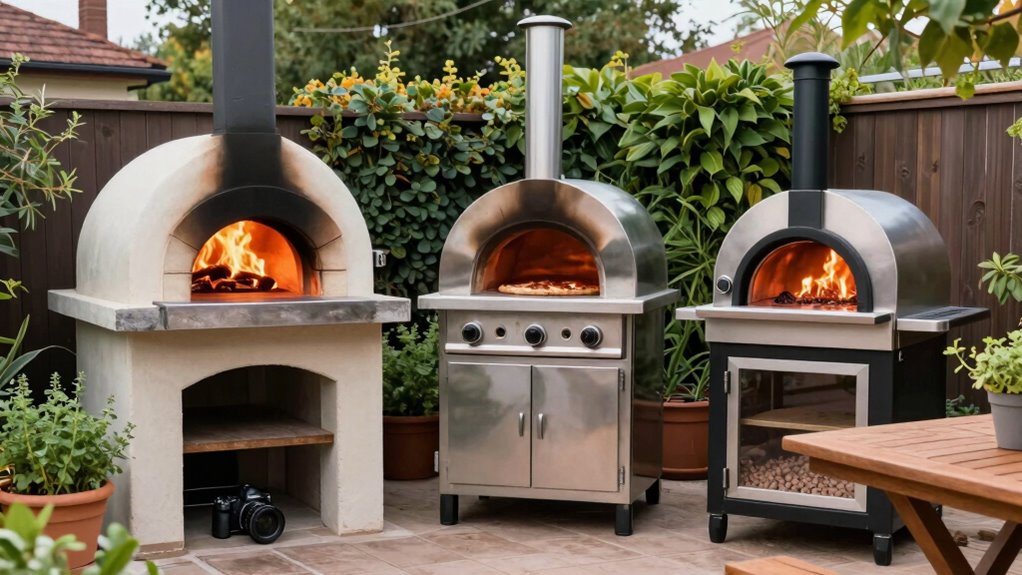
Pellet ovens combine some of the convenience of gas models with the rich, smoky flavors that traditional wood-fired ovens offer. They’re quite easy to operate—simply load the pellets, set the temperature, and let the oven do the work. Pellet oven operation is straightforward, often controlled via digital panels, making it accessible even for beginners. Plus, these ovens excel at flavor enhancement, as the pellets burn cleanly and release subtle smoky notes that deepen your pizza’s taste. Unlike wood burning, pellet ovens don’t require constant tending, so you can focus more on your toppings and less on managing flames. Ease of use is one of the key advantages that make pellet ovens popular among backyard pizza enthusiasts. Many models also feature retro-inspired designs that complement vintage-style outdoor spaces, blending form and function seamlessly. Overall, they provide a user-friendly experience with impressive flavor profiles, making them a popular choice for backyard pizza enthusiasts seeking simplicity without sacrificing taste.
Which Backyard Pizza Oven Fits Your Budget and Style? Your Decision Guide
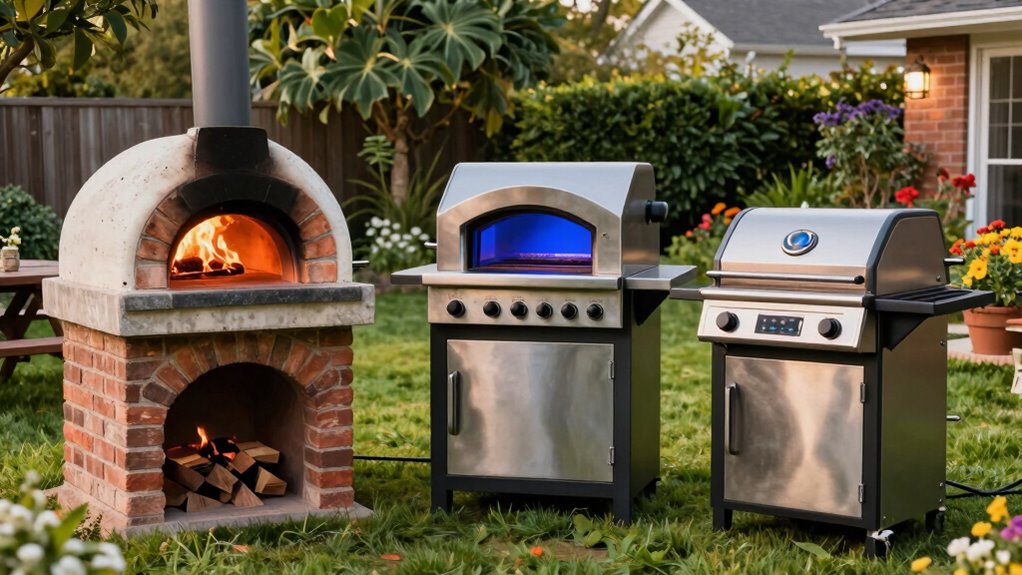
Choosing the right backyard pizza oven depends on your budget, style, and what features matter most to you. You’ll want to contemplate how much you’re willing to spend, the oven’s design, and its cooking capabilities. This guide will help you find the perfect fit for your outdoor space and culinary preferences. Additionally, considering the fuel type can influence your cooking experience and maintenance needs. Being aware of reliable backup power options for your outdoor setup can ensure consistent performance and safety during use.
Budget Considerations
Selecting the right backyard pizza oven depends largely on your budget and style preferences. When evaluating options, consider the cost comparison and installation expenses involved. Gas ovens tend to be more affordable upfront and easier to install, making them a budget-friendly choice. Wood-fired ovens usually have higher initial costs and installation requirements, which can add to your expenses. Pellet ovens often fall in between, with moderate costs and simpler setup. To help you decide, keep these points in mind:
- Gas ovens: lower initial cost, minimal installation
- Wood-fired ovens: higher cost, more complex setup
- Pellet ovens: moderate cost, easier installation
Your choice should balance your budget constraints with long-term maintenance and setup costs.
Style and Design
When it comes to finding the perfect backyard pizza oven, your style and design preferences play a key role in narrowing down options. Material options vary from traditional brick and stone to sleek metal or stucco finishes, allowing you to match your outdoor aesthetic. Consider how the material complements your existing patio or garden decor. Color choices also matter—whether you prefer a rustic earthy tone, a modern neutral, or a bold accent, there are ovens available to suit your taste. The design style can range from classic domes to contemporary boxy shapes, so think about what fits your space and personal vibe. Ultimately, selecting an oven that aligns with your style makes your outdoor culinary space feel inviting and cohesive.
Cooking Features
Your budget and desired cooking features are key factors in finding the right backyard pizza oven. Consider how different models help you control dough consistency and heat retention through oven insulation. Some ovens offer adjustable temperature controls, giving you flexibility for various recipes. Others feature built-in tools for monitoring heat and managing cooking times. You might prefer a pizza oven with precise heat distribution for crispy crusts or one with a quick heat-up time. Insulation quality impacts how long your oven maintains consistent temperatures, influencing the quality of your pizzas.
- Adjustable temperature settings for versatile cooking
- Superior oven insulation for consistent heat
- Built-in tools to monitor and control cooking conditions
Frequently Asked Questions
Can I Use Different Types of Wood or Pellets in the Same Oven?
Yes, you can use different types of wood or pellets in the same oven, but it’s best to do so carefully. Mixing woods can create unique wood flavor profiles, enhancing your pizza’s taste. Just guarantee pellet compatibility and avoid combining woods that produce harsh or overpowering flavors. Always monitor your oven’s temperature and smoke levels, and clean it regularly to prevent flavor cross-contamination and maintain ideal performance.
How Do I Maintain Consistent Temperatures Across Different Oven Types?
To maintain consistent temperatures across different oven types, focus on effective temperature regulation and even heat distribution. Use a reliable thermometer to monitor internal temps regularly. For wood and pellet ovens, adjust the fuel amount and airflow; for gas ovens, control the gas flow. Preheat your oven thoroughly, and avoid opening the door too often, which can cause temperature fluctuations. Consistent heat distribution guarantees your pizza cooks evenly every time.
Are There Safety Concerns Specific to Each Oven Fuel Type?
You should be aware of potential fire hazards and gas leaks with each oven type. Wood ovens pose a risk of uncontrolled flames if not monitored, while gas ovens can leak if connections aren’t secure, risking explosions. Pellet ovens, though safer, still require proper maintenance to prevent blockages or malfunctions. Always check for leaks, keep fire safety tools nearby, and follow manufacturer instructions to keep your pizza nights safe and enjoyable.
What Are the Environmental Impacts of Wood, Gas, and Pellet Ovens?
You should consider sustainability comparisons and emission considerations when choosing an oven fuel. Wood ovens are renewable but produce more particulate matter, impacting air quality. Gas ovens emit fewer pollutants and offer cleaner combustion but rely on fossil fuels. Pellet ovens strike a balance, using compressed wood pellets that are renewable and produce lower emissions. Your choice depends on prioritizing eco-friendliness, with pellets often being the most sustainable option overall.
Can I Convert One Type of Oven to Another Later?
You can convert your pizza oven to a different fuel type, but it’s not always straightforward. About 60% of owners find conversions cost less than installing a new oven, mainly due to installation costs and fuel efficiency differences. Before starting, check if your oven’s design allows for safe modifications, and be prepared for potential extra expenses. Converting can be a smart choice if you want flexibility without buying a new oven.
Conclusion
Choosing the right backyard pizza oven depends on your flavor preferences, lifestyle, and budget. Did you know that gas ovens are used by 60% of home chefs for their convenience? Whether you crave the authentic smoky taste of a wood-fired oven or the ease of gas and pellet options, there’s a perfect fit for you. Pick what excites your culinary spirit, and get ready to impress friends and family with delicious, homemade pizzas anytime.