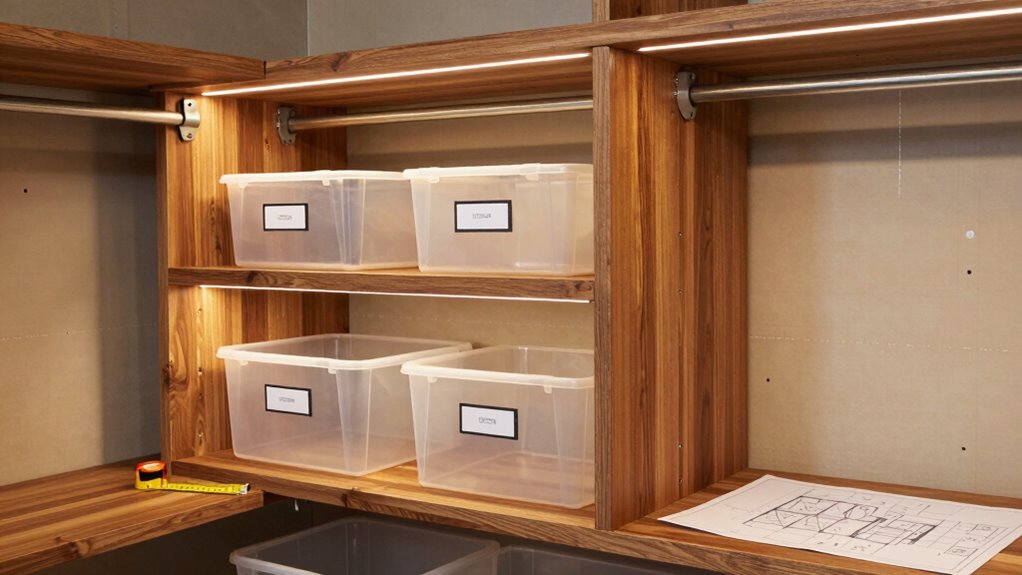

Start by measuring your closet’s width, height, and depth, noting any obstructions like pipes or vents. Assess your clothing and organizational needs to plan zones for different items. Sketch out a layout that uses vertical space and allows clearance for doors. Set a budget and choose quality components that fit your measurements. Carefully finalize your design before buying parts, ensuring everything maximizes space and accessibility. If you keep exploring, you’ll discover how to create a truly efficient closet system.

Turn the school run and nap time into listening time
- Thousands of audiobooks, podcasts and originals
- Listen on your phone, tablet or Echo — also offline
- Cancel anytime
Key Takeaways
- Measure the closet space accurately, noting obstructions and dimensions to determine feasible configurations.
- Assess your clothing and organizational needs to create designated zones and storage solutions.
- Sketch a layout plan that maximizes vertical space, includes modular components, and considers door clearance.
- Set a budget and select quality, space-appropriate components, making a detailed shopping list beforehand.
- Confirm measurements and finalize a functional, accessible design tailored to your specific storage requirements.
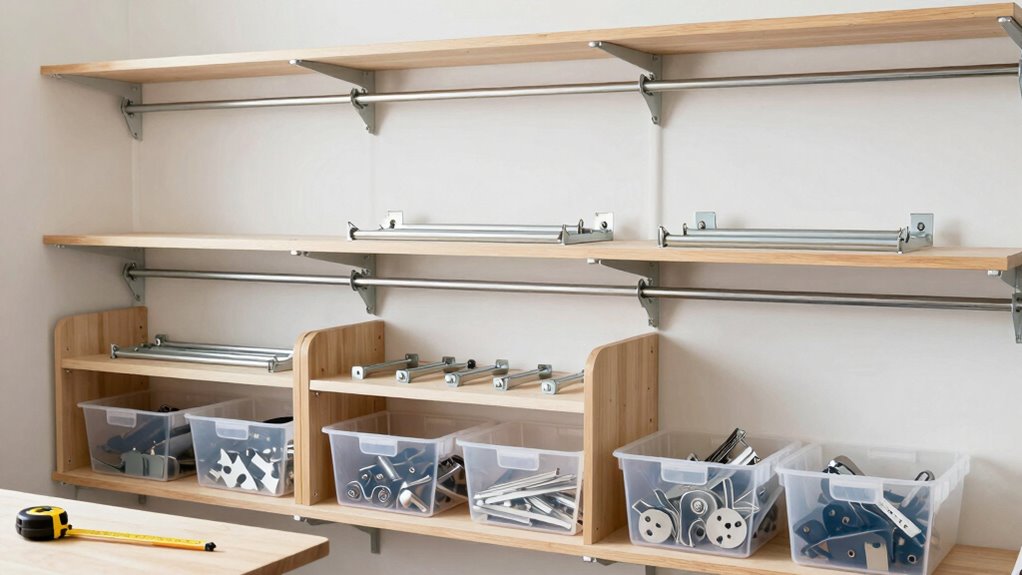
Creating a custom closet doesn’t have to be expensive or complicated. With a little planning, you can design a DIY closet system that improves your clothing organization and maximizes your space optimization. The key is to start with a clear plan before you buy any parts. First, assess your current closet’s layout. Measure the width, height, and depth of your space carefully. Take note of any obstructions like pipes or vents that could interfere with shelving or hanging rods. This initial step helps you understand what’s feasible and how to best utilize your available space.
Start your DIY closet by measuring space and identifying obstructions for a tailored, efficient organization plan.
Next, think about your clothing collection. Consider how much you own and what types of items you need to store. Do you have a lot of longer dresses or coats? That might mean installing a dedicated hanging space. Do you also need shelves for folded sweaters or shoes? Mapping out your clothing organization needs ensures you’ll build a system that’s both functional and tailored to your lifestyle. Decide on specific zones within your closet: a section for everyday wear, one for seasonal items, and maybe a place for accessories or jewelry. Clear zoning helps you keep everything orderly and makes it easier to find what you need.
Once you understand your space and organizational needs, sketch a rough layout. Break your closet into zones, and plan where each type of storage will go. Think about how you can improve space optimization—using vertical space for shelves or hooks can free up room for hanging clothes. Modular components like adjustable shelves or stackable drawers give you flexibility to change your closet’s configuration over time. When planning, consider how much clearance you need for doors or drawers to open comfortably. This prevents clutter and ensures accessibility. Incorporating storage solutions that fit your space can also help you make the most of limited room. Additionally, understanding biodiversity can inspire eco-friendly choices for sustainable materials in your DIY project. Moreover, selecting eco-friendly materials can contribute to a more sustainable and environmentally conscious closet design.
Before purchasing parts, set a budget. DIY closet systems can be simple or sophisticated, but knowing your limit helps prevent overspending. Browse options like pre-made kits or components that you can assemble yourself. Focus on quality materials that will hold up over time, especially if you plan to store heavy or bulky items. Conducting a space assessment prior to shopping ensures your selections will fit perfectly and serve your organizational needs. Once you have your plan, measure again to confirm your dimensions, and make a detailed shopping list. This way, you avoid impulse buys and ensure everything fits perfectly.
In essence, planning your DIY closet system is about understanding your space, your clothing needs, and how to best use each square inch. With careful forethought, you’ll create a closet that’s not only organized but also a joy to use—transforming chaos into a neat, efficient space.
As an affiliate, we earn on qualifying purchases.
Frequently Asked Questions
What Is the Average Cost of a DIY Closet System?
The average cost of a DIY closet system ranges from $100 to $1,000, depending on your budget options and material choices. If you opt for budget-friendly materials like wire or plastic, expect lower costs, but they may lack durability. For more durable materials like wood or melamine, prices increase. You can tailor your project to your budget while ensuring the materials meet your needs for longevity and style.
How Long Does It Typically Take to Install a DIY Closet?
You can typically expect the installation timeline for a DIY closet system to be between a few hours and a full day. The exact duration depends on the complexity considerations of your design and your experience level. If your plan involves intricate features or customizations, it might take longer. To speed up the process, prepare all tools and parts beforehand, and follow the step-by-step instructions carefully.
Can I Customize My Closet System for Specific Clothing Types?
Yes, you can customize your closet system for specific clothing types. You’ll want to incorporate storage customization options like adjustable shelves, dedicated drawers, or hanging sections for delicate items. Consider adding compartments for shoes, accessories, or folded clothing to improve clothing organization. Tailoring your closet to your wardrobe guarantees everything has a designated space, making it easier to find and maintain your clothing, while maximizing your storage capacity.
What Tools Are Necessary for Installing a DIY Closet?
You’ll need just a few essential tools for a successful DIY closet install—your measuring tape is your best friend, ensuring everything fits perfectly, while mounting hardware secures your system firmly, preventing it from collapsing like a house of cards. A drill, level, screwdriver, and maybe a stud finder are also crucial. With these tools, you’ll transform your closet into an organized haven faster than you can say “clutter be gone!”
How Do I Ensure the Closet System Fits My Space Perfectly?
To guarantee your closet system fits perfectly, start with precise space measurement, including height, width, and depth. Use a tape measure and note any irregularities like moldings or slopes. Plan for ideal storage by considering your needs—adding shelves, drawers, or hanging space where most needed. Double-check measurements before purchasing parts. This approach guarantees a tailored fit, maximizing storage and avoiding costly mistakes.
adjustable closet rods and shelves
As an affiliate, we earn on qualifying purchases.
As an affiliate, we earn on qualifying purchases.
Conclusion
So, you’ve planned your perfect closet, carefully selecting every shelf and rod—only to realize it’s a disaster the moment you start building. Irony at its finest, right? But hey, don’t sweat it. With a little patience and a dash of humor, you’ll be laughing when your DIY masterpiece actually holds everything you throw at it. After all, what’s a closet without a little chaos to keep things interesting? Happy building!
modular closet organization system
As an affiliate, we earn on qualifying purchases.
As an affiliate, we earn on qualifying purchases.
closet measurement and planning tools
As an affiliate, we earn on qualifying purchases.
As an affiliate, we earn on qualifying purchases.
Fall Picks
fall essentials
As an affiliate, we earn on qualifying purchases.