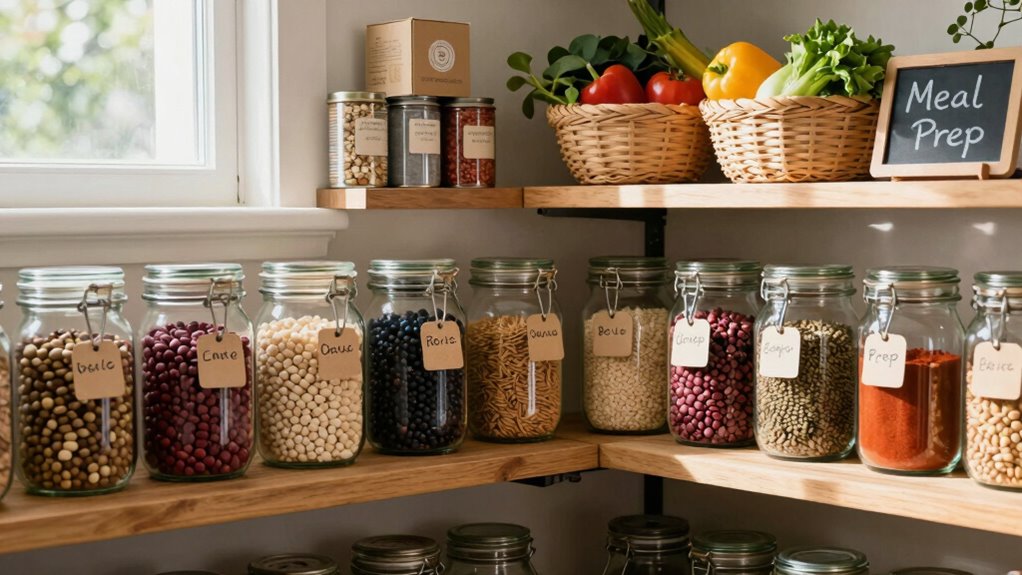

To waste less food, organize your pantry with clear categories like canned goods, snacks, and grains. Use transparent containers and label everything with contents and expiry dates for quick identification. Store items properly to maximize space and keep perishables fresh longer. Regularly check for nearing expiration dates and plan meals around what you already have. This setup makes it easy to see what you need and prevents duplicate purchases. Keep exploring for more tips on smarter pantry organization.

Turn the school run and nap time into listening time
- Thousands of audiobooks, podcasts and originals
- Listen on your phone, tablet or Echo — also offline
- Cancel anytime
Key Takeaways
- Use clear, labeled containers to monitor contents and expiration dates easily.
- Organize pantry items by category for quick assessment and meal planning.
- Rotate stock regularly, placing newer items at the back and older ones in front.
- Store perishable items in airtight containers to extend freshness and prevent spoilage.
- Plan meals around existing pantry supplies to minimize unnecessary purchases and waste.
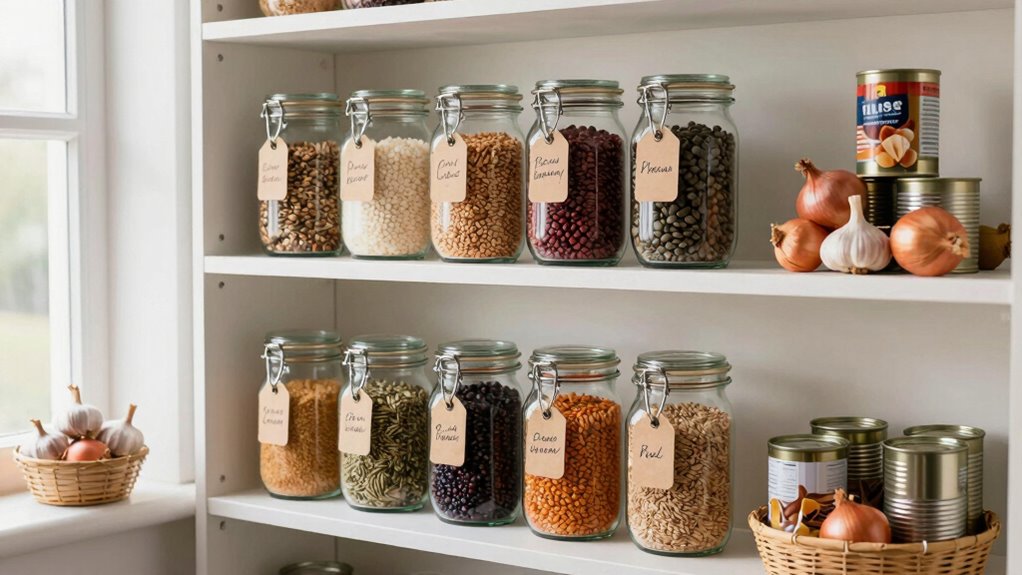
Setting up your pantry might seem simple, but a well-organized space can make a big difference in your daily routine. When your pantry is thoughtfully arranged, meal planning becomes easier, and you’re less likely to forget ingredients or buy duplicates. Start by categorizing your items—group canned goods, snacks, baking supplies, and grains together. This way, you can see at a glance what you have and what you need, helping you plan meals more efficiently and reduce waste from unused or expired food.
Using clear storage containers is key to maintaining an organized pantry. Transparent containers not only keep items fresh longer but also allow you to quickly identify what’s inside without rummaging through bags or boxes. Invest in different sizes to accommodate everything from small spices to large bags of rice. Label each container clearly with the contents and purchase or expiration date. This habit encourages you to use items before they spoil and keeps your pantry tidy, so you’re less likely to overlook something that could go bad. Incorporating proper storage techniques can also help you maximize space and keep everything accessible, especially when combined with effective organization strategies.
Use clear, labeled containers of various sizes to keep your pantry organized and prevent food waste.
Meal planning becomes much smoother when your pantry is set up with these storage solutions. When you know exactly what’s available, you can plan your weekly meals around what you already have, minimizing last-minute trips to the store. Make it a routine to check your pantry before grocery shopping, noting what needs restocking and what’s nearing its expiration date. Not only does this help you avoid buying duplicates, but it also ensures that leftovers or perishable goods are used up in time, cutting down on food waste. Additionally, understanding the importance of food storage methods can significantly extend the lifespan of your food and reduce waste.
In the end, a well-thought-out pantry setup directly impacts your ability to meal plan effectively and reduce food waste. When you use storage containers strategically, label everything clearly, and keep your space organized, you’ll find it easier to use what you have and avoid unnecessary purchases. This not only saves you money but also helps you make more sustainable choices, reducing food waste and ensuring your pantry remains a helpful tool rather than a source of clutter or waste.
transparent food storage containers with lids
As an affiliate, we earn on qualifying purchases.
As an affiliate, we earn on qualifying purchases.
Frequently Asked Questions
How Often Should I Reorganize My Pantry for Optimal Waste Reduction?
You should reorganize your pantry every month or so to keep your meal prep on track and minimize waste. Regularly checking for expired items helps you spot what’s unused, preventing spoilage. Keep your pantry organized by grouping similar items, making it easier to see what you have. This routine guarantees you use ingredients efficiently, reduces waste, and keeps your meal prep smooth and clutter-free.
What Are the Best Labels to Use for Expiration Dates?
You should use clear, easy-to-read expiration labels for effective date labeling. Bright, contrasting colors like red or orange catch your eye, reminding you to check items often. Waterproof and tear-resistant labels withstand kitchen conditions. Stick with straightforward wording such as “Use By” or “Best Before” to avoid confusion. These labels help you stay organized, reduce waste, and guarantee you consume food at its freshest, saving money and reducing waste effortlessly.
How Can I Prevent Overbuying During Grocery Shopping?
To prevent overbuying during grocery shopping, start with meal planning to identify what you really need. Create a detailed shopping list based on your meal plan, and stick to it strictly. Avoid impulse buys by shopping with a clear list, and consider shopping smaller amounts more often. This approach helps you buy only what you’ll use, reducing waste and saving money while keeping your pantry organized and efficient.
Are There Eco-Friendly Storage Options for Pantry Items?
Think of your pantry as a garden; eco-friendly storage options help it flourish. You can use reusable containers to keep snacks fresh and reduce waste, or opt for biodegradable bags for dry goods. I once switched to glass jars, and not only did I reduce plastic use, but I also found it easier to see what I had—preventing overbuying. These choices make your pantry greener and more sustainable.
How Do I Track Pantry Inventory Effectively?
To track your pantry inventory effectively, start with regular checks and update your list as you use items. Incorporate meal planning to anticipate what you’ll need, reducing overbuying. Practice portion control to prevent excess stock. Use a digital app or a simple spreadsheet to organize your inventory, set reminders for expiry dates, and keep everything up-to-date. This approach minimizes waste and guarantees you always know what’s available.
As an affiliate, we earn on qualifying purchases.
Conclusion
With this pantry setup, you’ll waste less food and save money, all while enjoying fresher ingredients. Some might think it’s too much effort to reorganize, but once you get into the habit, it becomes second nature. Plus, you’ll feel good knowing you’re reducing waste and being more sustainable. Just start small—your future self will thank you for making this simple change. Ready to transform your pantry and cut down on waste? Let’s do it!
airtight food storage containers set
As an affiliate, we earn on qualifying purchases.
As an affiliate, we earn on qualifying purchases.
meal planning containers for pantry
As an affiliate, we earn on qualifying purchases.
As an affiliate, we earn on qualifying purchases.
Fall Picks
fall essentials
As an affiliate, we earn on qualifying purchases.