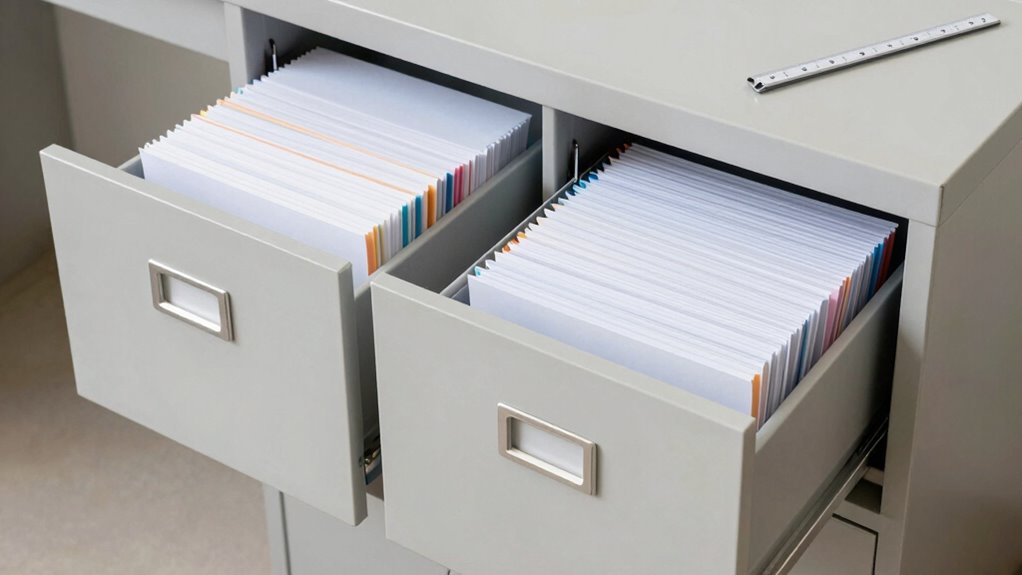
Choosing between letter and legal lateral filing cabinets depends on your document size. Letter files are about 8.5×11 inches, while legal files are larger, around 8.5×14 inches. To guarantee your folders fit perfectly, measure their height, width, and tab position carefully, then compare these with your cabinet’s interior dimensions. Getting this right helps keep your files organized and easily accessible. Learn more about fitting your folders and choosing the right cabinet by exploring further.

Turn the school run and nap time into listening time
- Thousands of audiobooks, podcasts and originals
- Listen on your phone, tablet or Echo — also offline
- Cancel anytime
Key Takeaways
- Understand the size differences: letter files are about 11″ high, legal files around 14″ high; choose cabinets accordingly.
- Use a ruler or tape measure to verify folder dimensions, including height, width, and tab position, for proper fit.
- Match folder sizes with cabinet depth, width, and height to prevent jams and ensure smooth sliding.
- Select legal or letter lateral cabinets based on your folder size requirements and document volume.
- Double-check interior cabinet measurements before organizing to ensure folders fit securely and maintain accessibility.
What Are the Sizes of Letter and Legal Files?
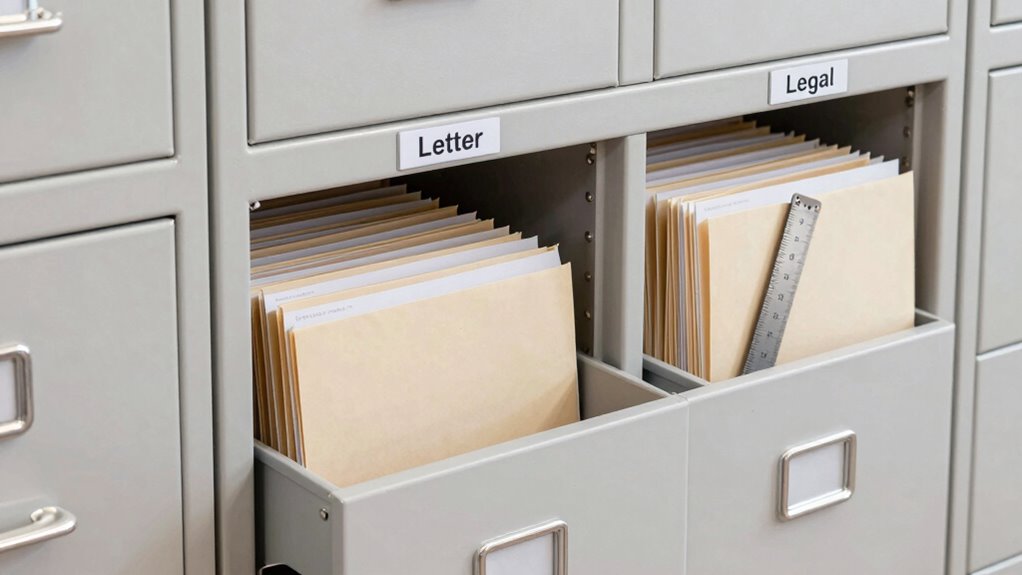
Have you ever wondered what distinguishes letter and legal files in size? The key difference lies in their dimensions, affecting how they fit into your filing system. Letter-sized files typically measure about 11 inches in folder height and 8.5 inches in file width. Legal files are slightly larger, usually around 14 inches in folder height with a similar width of 8.5 inches. The folder height determines how much paper each file can hold vertically, while the file width ensures compatibility with your filing cabinet drawers. Knowing these measurements helps you select the right size for your needs, avoiding misfits or wasted space. Whether you’re organizing legal documents or everyday correspondence, understanding these size differences guarantees your files slide smoothly into your lateral cabinet. Being aware of standard folder sizes can also assist in optimizing your storage solutions effectively.
Why Does Choosing the Right Folder Size Matter?
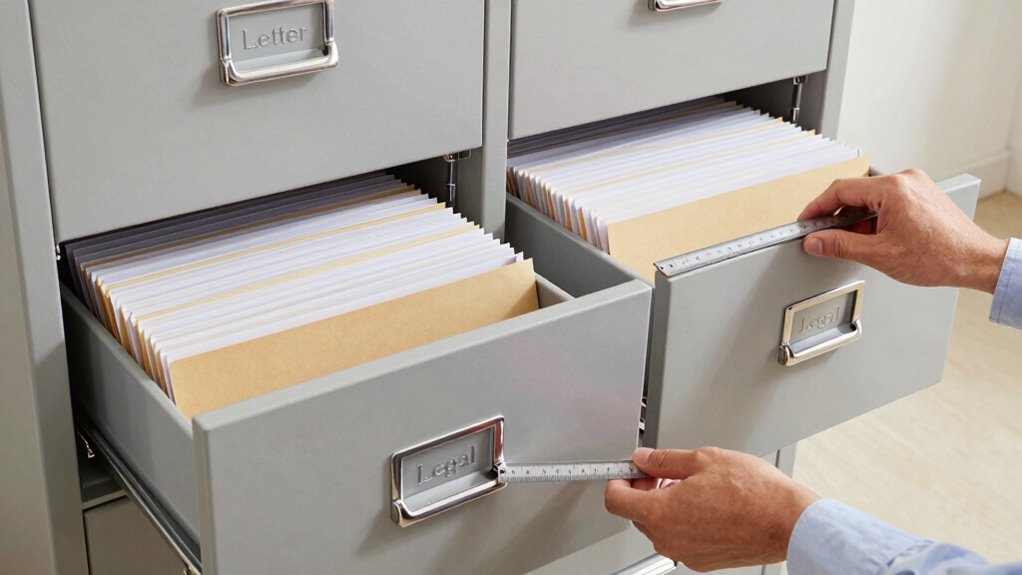
Choosing the right folder size is essential because it guarantees your documents stay organized and easily accessible. Using appropriately sized folders ensures your filing system remains efficient, preventing overcrowding or wasted space. When folders fit well, you can easily locate files and keep your labelings clear. Proper sizing also simplifies folder labeling, making your system intuitive. Additionally, selecting the correct folder size contributes to file system organization, which is crucial for maintaining a tidy workspace. Understanding folder dimensions and how they relate to document sizes helps optimize your storage solutions. Being aware of the for sale 100 options available can also assist in selecting the most suitable folders for your needs. Proper category classification of folders ensures better management and easier retrieval of documents. This attention to sound organizational practices can significantly streamline your workflow and reduce frustration. Here’s a visual reminder of the importance:
| Folder Size | Benefits | Consequences of Mismatch |
|---|---|---|
| Letter | Easy access, clear labels | Misfiled, cluttered |
| Legal | Fits legal documents neatly | Damage, lost files |
| Oversized | Extra space for documents | Wasted space |
| Undersized | Compact, saves space | Overstuffed, torn |
| Correct fit | Organized, efficient system | Streamlined workflow |
How to Measure Your Folders for a Perfect Fit in a Lateral Filing Cabinet
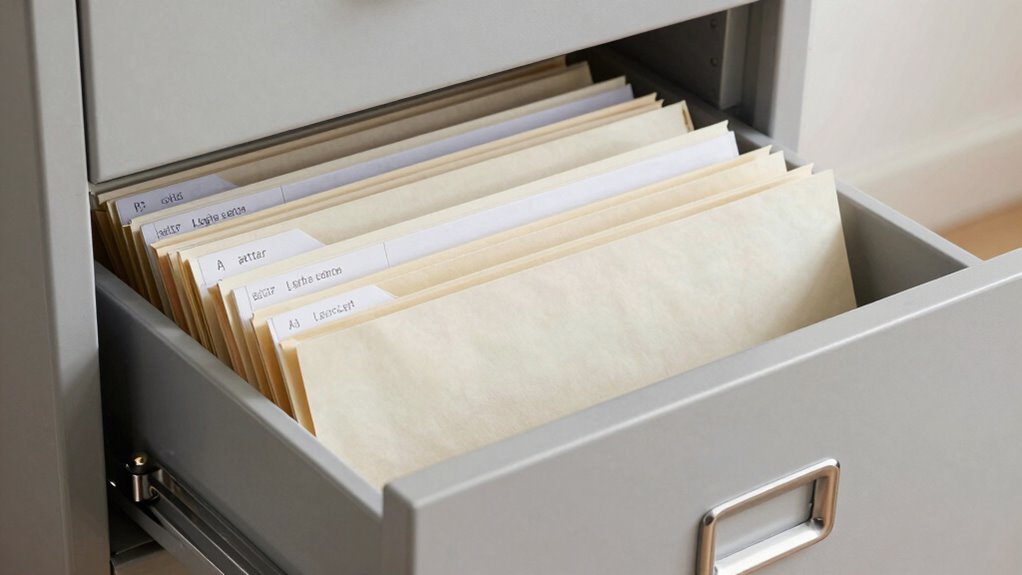
To guarantee your folders fit perfectly in a lateral filing cabinet, you need to measure them accurately. Start by checking the folder height, which determines how much space it occupies vertically. Use a ruler or tape measure to find the full height of your folder, including the tab. Next, consider the tab position—whether it’s positioned at the top, side, or back of the folder—as this affects how the folder sits in the drawer and how much clearance you need. For a precise fit, measure from the bottom of the folder to the top edge, ensuring your cabinet drawers can accommodate this height comfortably. Also, note the tab’s location to confirm it won’t interfere with the drawer’s structure or other folders. Accurate measurements help avoid fitting issues and ensure smooth filing. Remember, understanding free floating design features can also influence how your folders sit and move within the cabinet. Additionally, considering the different size options available for folders can help you select the best fit for your storage needs. Being aware of folder size variations can further enhance your organizational system and improve accessibility. Knowing how adjustable shelving functions can also help optimize space and organization within your cabinet. Properly measuring your folders and understanding their size variations can significantly improve your organization system and ease of access.
What Are the Key Features of Letter vs. Legal Lateral Filing Cabinets?
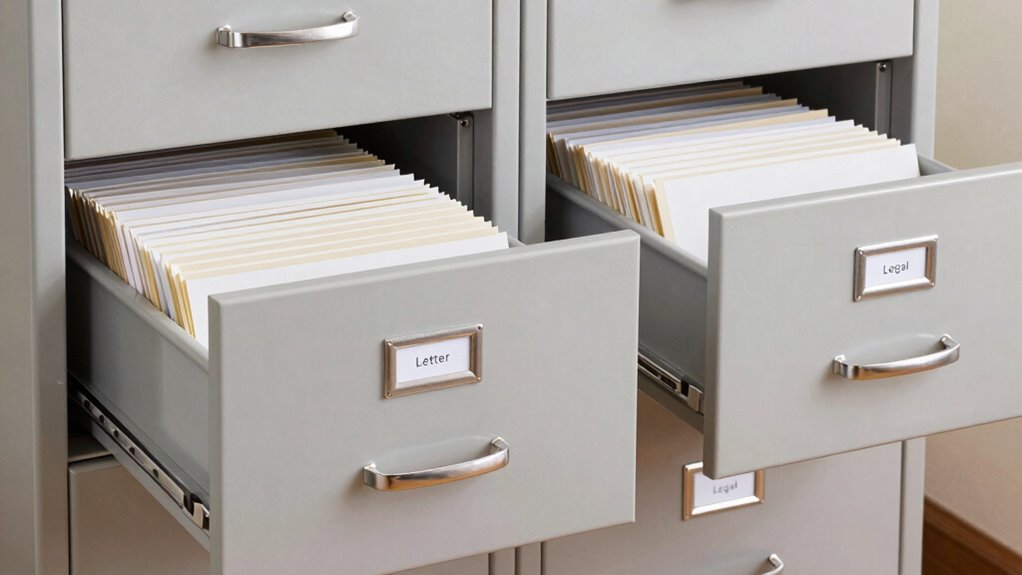
Letter and legal lateral filing cabinets differ primarily in their size and capacity, making each suitable for specific organizational needs. Letter cabinets are narrower, typically 15 inches deep, and fit letter-sized folders, while legal cabinets are wider, usually 18 inches deep, accommodating legal-sized folders. Both types come in various color options to match your office decor and personal style. Material durability is also key; many are made from sturdy steel or high-quality laminate, ensuring longevity and resistance to wear. Some models feature lockable drawers for added security. Understanding these key features helps you select a cabinet that not only fits your document sizes but also complements your workspace’s aesthetic and durability requirements.
How to Choose the Best Lateral Filing Cabinet for Your Documents
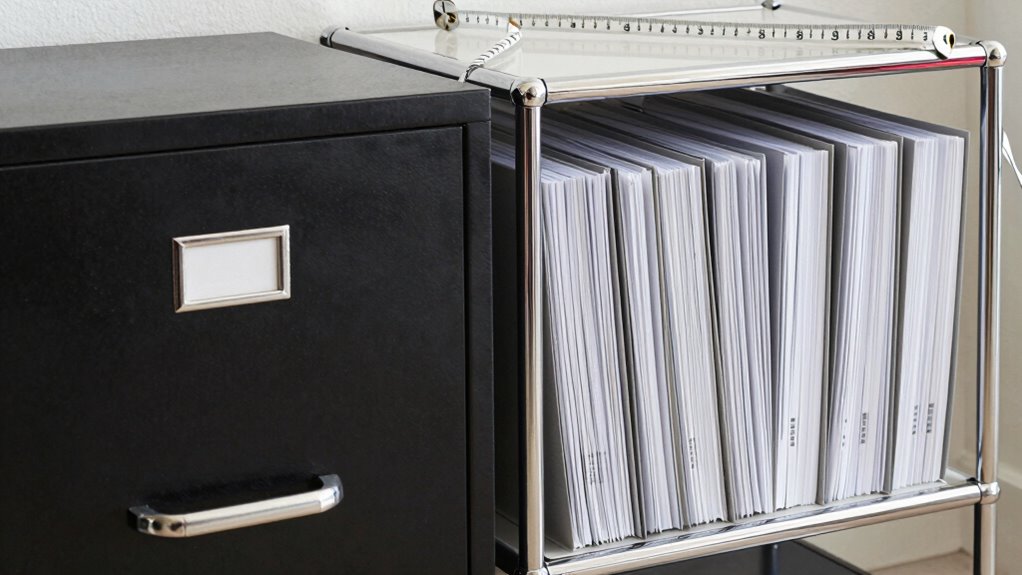
When selecting a lateral filing cabinet, consider your space and size needs to guarantee it fits comfortably in your office. Pay attention to folder compatibility so your documents stay organized and accessible. Don’t forget to evaluate locking and security features to keep sensitive files protected.
Space and Size Needs
Choosing the right lateral filing cabinet starts with understanding your space and size needs. Consider the amount of documents you’ll store and your workspace layout. An ergonomic workspace benefits from a cabinet that fits comfortably without cluttering your area. Think about the cabinet’s dimensions and how it complements your aesthetic design. To visualize, here’s a simple guide:
| Document Type | Cabinet Width | Height (inches) |
|---|---|---|
| Letter | 36-48 inches | 29-30 inches |
| Legal | 48-60 inches | 29-30 inches |
| Both | 60+ inches | 29-30 inches |
| Compact | Under 36 inches | 24-28 inches |
Matching your needs guarantees efficient storage and a sleek, functional space. Also, ensure the cabinet’s materials and construction quality align with your durability requirements and budget. Considering storage capacity can help you select a cabinet that accommodates current and future document volumes without overcrowding your workspace. Additionally, understanding document size compatibility ensures your files will fit properly within the chosen cabinet.
Folder Compatibility Tips
Ever wonder how to guarantee your documents fit perfectly in your lateral filing cabinet? Start by measuring your folders’ height and width to match the cabinet’s inner dimensions. This ensures smooth sliding and easy access. Consider folder labeling options—clear labels help you organize and locate files quickly, especially when combined with color coding. Using different colors for categories or priorities can streamline your filing system and reduce search time. Check if the cabinet supports standard letter or legal-sized folders, depending on your needs. Additionally, choose a cabinet with adjustable or removable file supports to accommodate various folder sizes. Properly selected folders and labels will keep your documents organized, accessible, and protected, making your filing system efficient and effective.
Locking and Security Features
Security is a crucial factor to consider when selecting a lateral filing cabinet, especially if your documents contain sensitive or confidential information. Look for cabinets with reliable lock mechanisms to prevent unauthorized access. Some cabinets feature keyed locks, while others have combination or electronic locks for enhanced digital security. Choose a locking system that matches your security needs and ease of use. Additionally, considering security features can provide extra protection for especially valuable or sensitive documents. For optimal protection, evaluate the lock durability and how resistant it is to tampering or forced entry.
Common Mistakes When Measuring Folders and Picking a Filing Cabinet
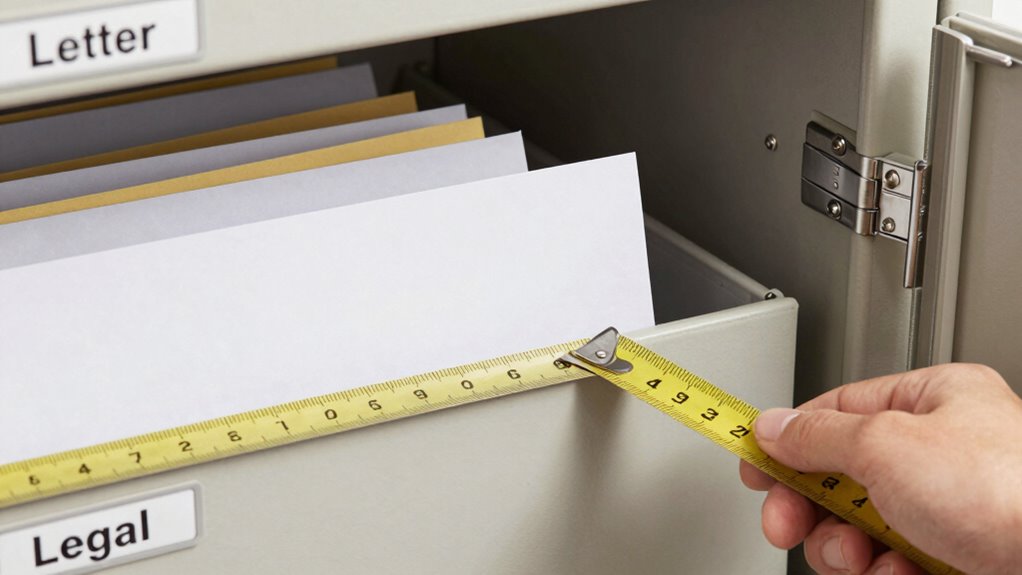
Many people make mistakes by not measuring folders accurately, which can lead to fitting issues later. Overlooking the compatibility between your folders and the filing cabinet is a common error too. To avoid these pitfalls, double-check your folder dimensions and verify the cabinet you choose can accommodate them properly.
Incorrect Folder Dimensions
Choosing the wrong folder dimensions can lead to frustrating mismatches and inefficient filing. Folder dimension discrepancies often occur when measurements aren’t accurate or when assumptions are made without verifying exact sizes. This can result in folders that don’t fit properly in your lateral filing cabinet, causing jams or difficulty accessing files. To guarantee filing system compatibility, always measure your folders carefully and compare those measurements to your cabinet’s specifications. Relying on generic sizes or estimating can cause issues later on, so double-check your folder dimensions before purchasing. Properly measured folders will slide smoothly and fit securely, keeping your filing system organized and functional. Avoid common mistakes by being precise to prevent costly errors and wasted time.
Overlooking Cabinet Compatibility
Failing to contemplate the compatibility between your folders and the filing cabinet can cause significant issues, even if individual measurements are accurate. Overlooking cabinet compatibility means your folders might not fit properly, leading to frustration and wasted time. Always consider the folder dimensions in relation to the cabinet’s interior space. For example, a cabinet designed for letter-sized folders may not accommodate legal-sized folders comfortably. Measure the cabinet’s available height, width, and depth to ensure your folders will slide in smoothly without forcing or bending. Ignoring these details can result in folders that are too tight or too loose, reducing organization efficiency. Confirming cabinet compatibility upfront helps you select the right filing system, avoiding costly mistakes and ensuring your folders fit perfectly inside the cabinet.
How to Organize Your Files in Letter and Legal Cabinets Effectively
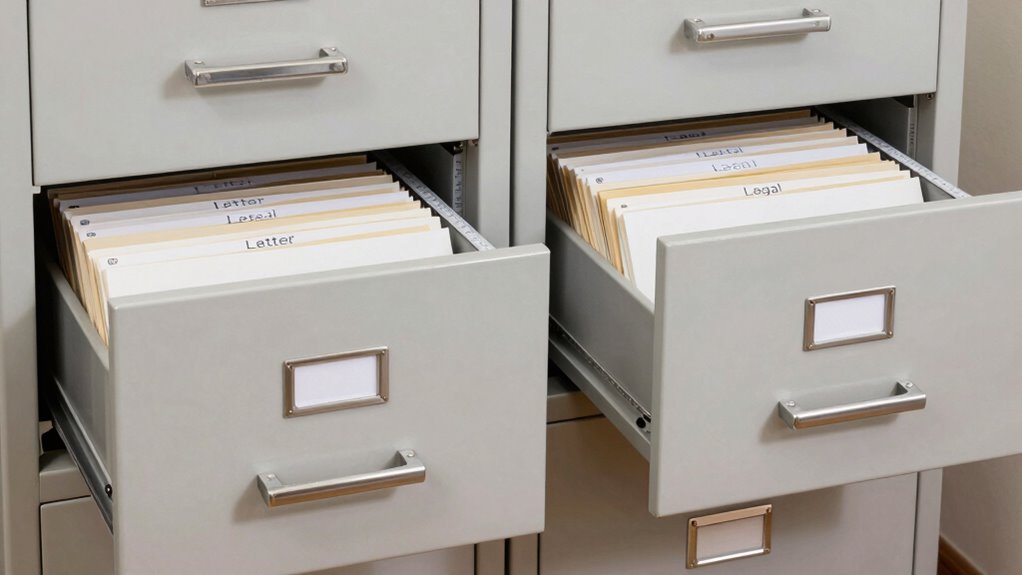
Organizing your files in letter and legal filing cabinets becomes much easier when you establish a clear system that suits your needs. Start by creating a logical filing system based on categories, dates, or projects, making retrieval simple. Use labeled folders for quick identification, and consider color-coding to enhance visual organization. Group related documents together, and avoid overstuffing folders to prevent damage and difficulty in retrieval. Consistently maintain your storage organization by filing documents immediately after use and regularly reviewing files to discard outdated papers. This approach keeps your filing system efficient and prevents clutter. Proper organization saves time, reduces frustration, and ensures your important documents remain accessible whenever needed.
FAQs About Folder Sizes and Filing Cabinets
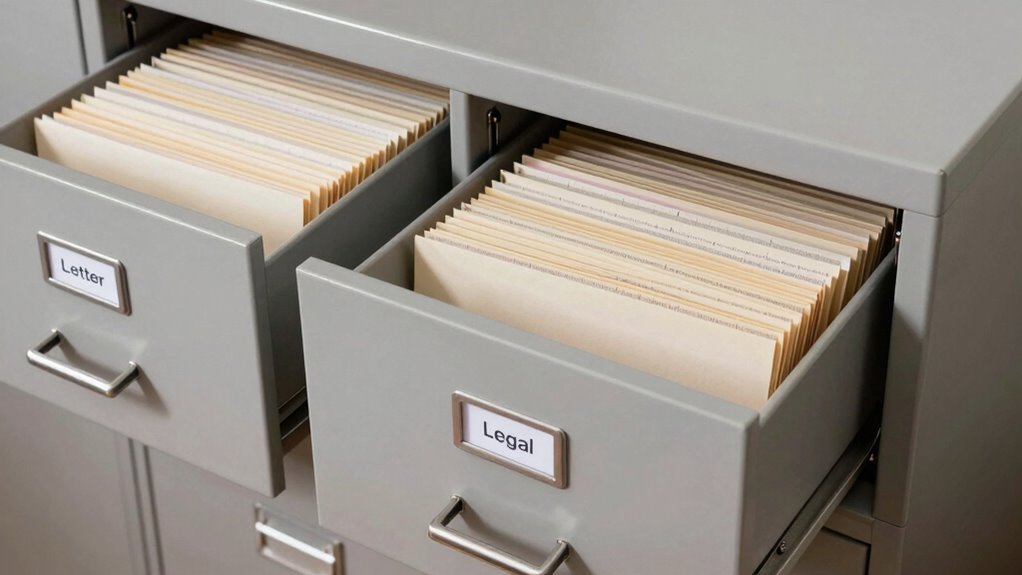
Have you ever wondered what folder size is best for your filing cabinet or how to guarantee your folders fit properly? Understanding standard folder sizes helps improve your storage organization and ensures easy access. Legal-sized folders are wider and longer, fitting comfortably in legal cabinets, while letter-sized folders work best in letter cabinets. To maximize ergonomic design, measure your cabinet’s interior dimensions before purchasing folders. This step is crucial because standard folder dimensions can vary slightly between manufacturers, affecting fit. This variation underscores the importance of precise measurements in creating an efficient filing system. Additionally, folder capacity and compatibility are important considerations when selecting appropriate storage solutions. Checking manufacturer specifications can help prevent issues with too-tight or loose fits, which can hinder organization. Variations in folder dimensions make it essential to verify compatibility to ensure smooth operation. FAQs often involve questions about compatibility and capacity; always verify your cabinet type and folder dimensions. By paying attention to these details, you’ll create an efficient, user-friendly filing system tailored to your needs.
Final Tips for Ensuring Your Folders Fit Your Lateral Cabinet
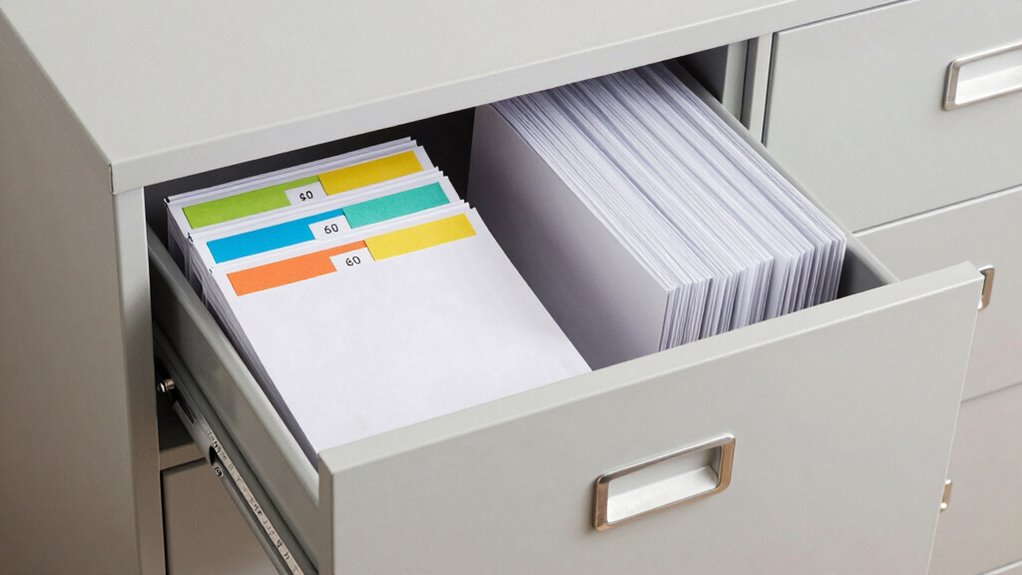
To guarantee your folders fit perfectly in your lateral cabinet, start by measuring the interior dimensions carefully. Knowing the exact height, width, and depth ensures you choose folders that align with your cabinet’s space. Consider how custom labeling can help you organize effectively, making it easier to locate files without unnecessary rummaging. Prioritize folders that match the cabinet’s ergonomic design to reduce strain and improve accessibility. If your cabinet has adjustable dividers, make sure to measure their positions to optimize space. Always double-check your measurements before purchasing or organizing. This attention to detail minimizes the risk of folders being too tight or too loose, helping you maintain a neat, efficient filing system tailored to your needs.
Frequently Asked Questions
Can I Use Legal-Sized Folders in a Letter-Sized Lateral Filing Cabinet?
You can’t use legal-sized folders in a letter-sized lateral filing cabinet because of folder compatibility. Legal folders are wider and won’t fit into a cabinet designed for letter-sized files. If you need to store both, consider cabinet customization or choosing a cabinet that accommodates both folder sizes. This guarantees your files stay organized and accessible without damaging folders or risking misfit. Always measure your folders before purchasing to avoid issues.
Are There Adjustable or Customizable Lateral Filing Cabinets for Different Folder Sizes?
Yes, you can find adjustable lateral filing cabinets with modular configurations and customizable dividers. These features let you tailor the interior to fit various folder sizes, including letter and legal. You simply adjust the dividers or reconfigure the compartments to match your needs, making them versatile for different storage requirements. Look for models that emphasize flexibility and customization to guarantee your cabinet adapts perfectly to your filing system.
How Do Weight Capacities Vary Between Letter and Legal Lateral Cabinets?
You’re curious about weight capacities? They can surprise you—letter lateral cabinets often hold less weight than legal ones, due to their design and ergonomic features. Higher capacity models incorporate security features and sturdy construction, making them ideal for heavy files. Always check the manufacturer’s specifications to make certain your cabinet meets your storage needs, especially if you handle bulky or numerous files. Don’t compromise safety or security—choose wisely based on your file weight demands.
What Are the Best Practices for Transitioning Between Letter and Legal Files?
To move smoothly between letter and legal files, first organize your files by category or date for better retrieval. Use adjustable dividers or separate sections within your cabinet to maintain file integrity. Regularly assess your storage efficiency by removing outdated documents and consolidating files. Label folders clearly, ensuring easy access. This approach improves file organization and maximizes storage space, making your filing system more efficient and accessible.
Are There Specific Brands Known for Better Compatibility With Both Folder Sizes?
Some brands are better known for their compatibility with both letter and legal folders, offering superior folder flexibility. Look for brands like HON, Bisley, or Sauder, which are praised for their consistent brand compatibility and adaptable drawer designs. These brands typically provide lateral filing cabinets that easily accommodate various folder sizes, reducing the need for separate storage solutions and ensuring you can switch between letter and legal folders effortlessly.
Conclusion
Choosing the right folder size for your lateral filing cabinet makes organizing effortless. By understanding your needs and measuring accurately, you’ll guarantee your documents fit perfectly and stay accessible. Isn’t it worth taking a few minutes now to save headaches later? Remember, the right fit can make all the difference in keeping your workspace tidy and efficient. So, why settle for less when you can have the perfect storage solution tailored just for you?
Columbus Day / Indigenous Peoples' Day Picks
long weekend sales
As an affiliate, we earn on qualifying purchases.