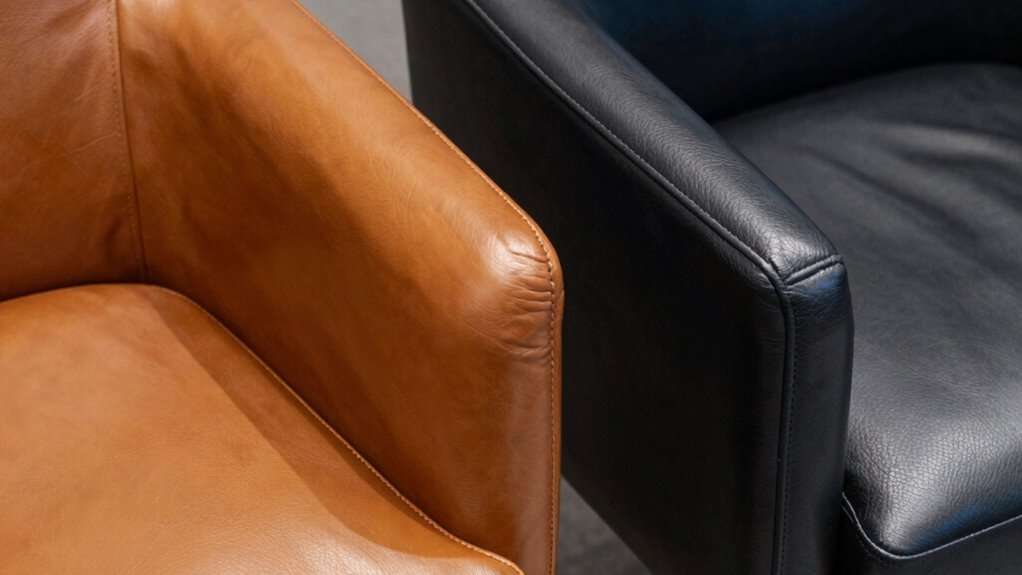

When choosing between real and bonded leather chairs, you’ll find genuine leather offers durability, a natural feel, and ages beautifully, making it a smart long-term investment. Bonded leather is more affordable but tends to wear faster and doesn’t develop the same character over time. Understanding these differences, along with cost, eco-friendliness, and maintenance needs, can help you pick the right option for your lifestyle—if you’re curious, there’s more to explore below.

Turn the school run and nap time into listening time
- Thousands of audiobooks, podcasts and originals
- Listen on your phone, tablet or Echo — also offline
- Cancel anytime
Key Takeaways
- Genuine leather is more durable, ages beautifully, and offers a natural feel, making it a better long-term investment.
- Bonded leather is cheaper but tends to crack, peel, and wear out within 3-5 years.
- Real leather develops a patina over time, enhancing its appearance, unlike bonded leather which remains static.
- Genuine leather is eco-friendlier, crafted from full hides, whereas bonded leather uses scraps bonded with adhesives.
- Proper maintenance extends the lifespan of real leather, while bonded leather requires more frequent replacements.
As an affiliate, we earn on qualifying purchases.
What’s the Main Difference Between Real Leather and Bonded Leather?
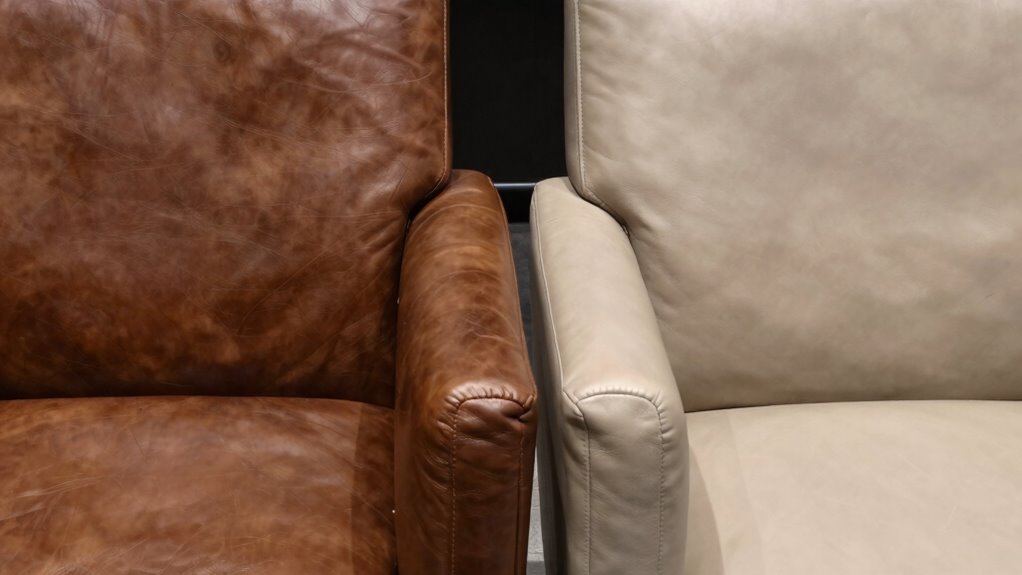
The main difference between real leather and bonded leather lies in their composition and quality. Genuine leather is crafted through expert leather craftsmanship, where animal hides are carefully processed to create durable, high-quality material. This process often emphasizes eco conscious materials, reducing environmental impact by using sustainable practices. Bonded leather, on the other hand, is made from scraps of leather bonded together with adhesives, resulting in a material that looks like genuine leather but lacks the same durability and authenticity. While bonded leather can be more affordable, it doesn’t match the natural feel or longevity of real leather. Understanding this key difference helps you make a more informed choice based on your priorities for quality, eco friendliness, and craftsmanship. Additionally, the manufacturing process of genuine leather typically results in a more luxurious texture and appearance compared to bonded leather. Furthermore, durability is a significant factor to consider, as genuine leather tends to age better and develop a unique patina over time, whereas bonded leather may deteriorate more quickly. A deeper understanding of material composition can help consumers assess the long-term value of their purchase.
As an affiliate, we earn on qualifying purchases.
How Are Bonded Leather and Genuine Leather Made?
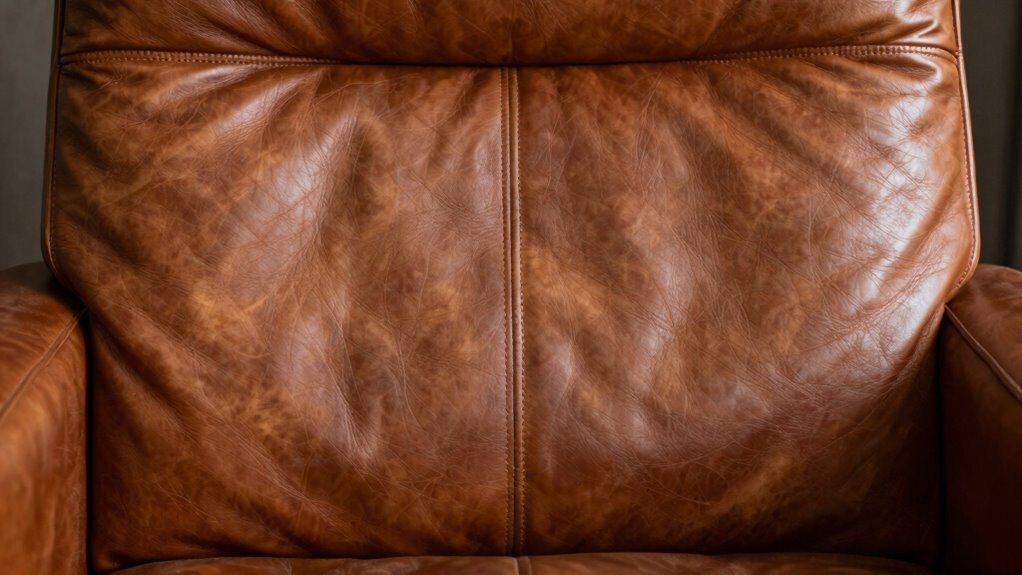
Genuine leather is created through a detailed process that starts with selecting high-quality animal hides, usually from cows, goats, or sheep. The hides undergo leather tanning, a chemical process that stabilizes the material and prevents decay. Tanning transforms raw hides into durable, flexible leather suitable for furniture and accessories. In contrast, bonded leather production involves shredding leftover leather scraps and fibers, then bonding them with adhesives and a polyurethane coating. This creates a surface that resembles real leather but uses a small percentage of genuine material. Bonded leather is mass-produced for affordability, while genuine leather requires more craftsmanship and time. Understanding these manufacturing processes helps you see why genuine leather offers superior quality and longevity compared to bonded leather. leather tanning is a crucial step that significantly impacts the durability and appearance of the finished product. Additionally, material composition plays a vital role in determining the overall quality and lifespan of the leather furniture.
real leather vs bonded leather chair
As an affiliate, we earn on qualifying purchases.
As an affiliate, we earn on qualifying purchases.
Do Bonded Leather and Real Leather Look and Feel Similar?
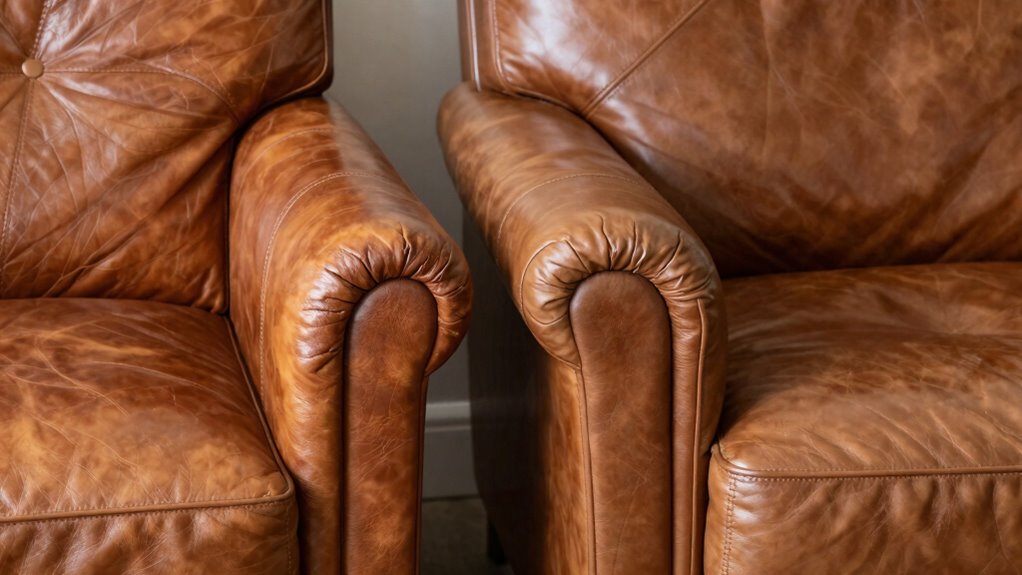
While bonded leather mimics the appearance of real leather, subtle differences can reveal which is which upon closer inspection. When comparing texture, bonded leather tends to feel smoother and less supple, lacking the natural grain of genuine leather. For visual similarity, bonded leather often looks convincing from a distance but may show inconsistent patterns or surface sheen up close. To distinguish them, consider these points:
Bonded leather looks convincing from afar but reveals uneven patterns and smoother feel upon close inspection.
- Texture comparison: Real leather feels soft and warm, with natural imperfections.
- Surface grain: Genuine leather displays unique, irregular patterns, while bonded leather has uniformity.
- Feel and flexibility: Real leather is more flexible and molds to your touch, unlike the stiffer bonded option.
These differences help you identify whether you’re dealing with authentic leather or bonded material.
As an affiliate, we earn on qualifying purchases.
Which Leather Lasts Longer: Bonded or Genuine Leather?
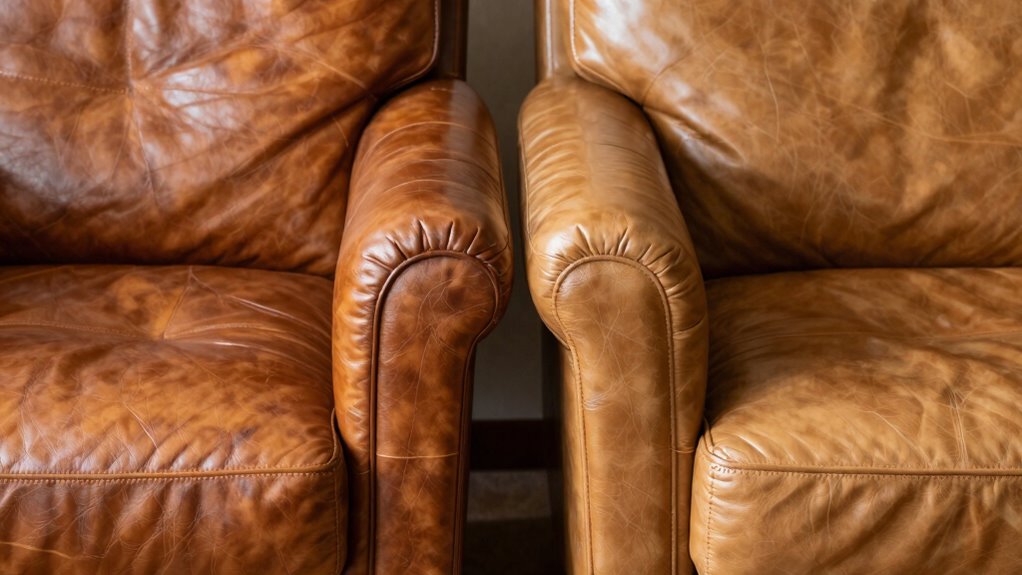
When it comes to durability, genuine leather generally outlasts bonded leather because of its natural strength and ability to develop a rich patina over time. Genuine leather ages gracefully, making it a smarter choice for long-term leather preservation. Bonded leather, on the other hand, tends to wear faster and may peel or crack sooner. If eco conscious choices matter to you, genuine leather is more sustainable since it’s made from full hides, often using less waste. To visualize durability differences:
| Feature | Genuine Leather | Bonded Leather |
|---|---|---|
| Longevity | Lasts decades | Lasts 3-5 years |
| Wear & Tear | Develops patina, ages well | Cracks, peels quickly |
| Eco conscious | More sustainable | Less eco-friendly |
| Maintenance | Easy to preserve | Less durable, harder to maintain |
Additionally, the ability of genuine leather to develop a unique patina over time can enhance its aesthetic appeal, making it a timeless investment. Using natural materials in its production further supports eco-friendly practices. For those seeking a long-lasting option, genuine leather often provides better value over time compared to bonded leather.
How Much Do Bonded Leather and Real Leather Chairs Cost?
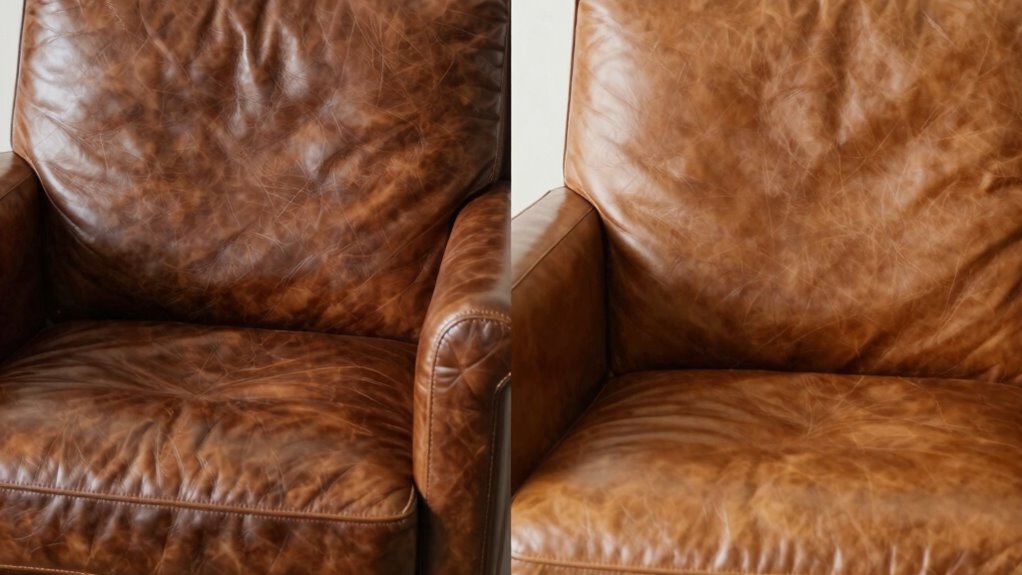
Are you curious about how the prices of bonded leather and real leather chairs compare? Typically, genuine leather chairs cost considerably more due to material sourcing and craftsmanship. Here’s a quick price comparison:
- Genuine leather chairs usually range from $500 to $2,000, reflecting the quality of material sourcing.
- Bonded leather chairs are more budget-friendly, often costing between $150 and $600.
- Mid-range options can blend both materials, with prices around $300 to $900.
- The durability and material quality of each type significantly influence their price points.
The price difference largely stems from the quality and sourcing of the material. Real leather involves full-grain or top-grain sourcing, which drives up costs. Bonded leather, made from leftovers and synthetic layers, keeps prices low but sacrifices durability.
How Easy Is It to Maintain and Clean Leather Chairs?
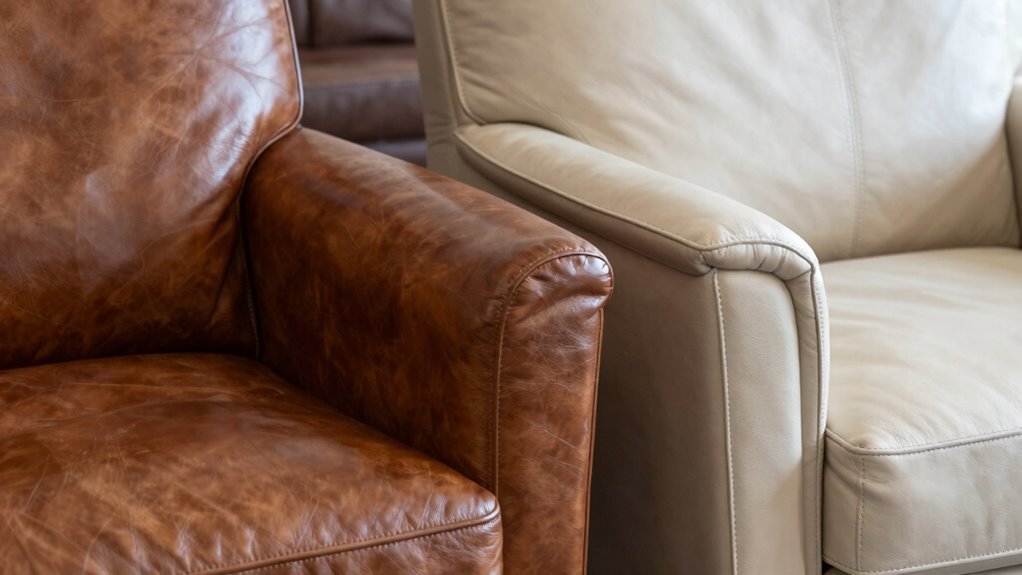
Leather chairs are generally easy to clean and maintain, but the level of effort depends on the type of leather. Genuine leather is durable and responds well to simple cleaning tips, like wiping with a damp cloth regularly. Bonded leather, while similar, may require more careful stain removal, as its surface can be more susceptible to damage. For both types, prompt stain removal is key—blot spills immediately and avoid harsh chemicals. Use a gentle leather cleaner or a mixture of water and mild soap for routine cleaning. Avoid excessive moisture and direct sunlight, which can cause cracking or fading. Regular maintenance keeps your chair looking good and prolongs its lifespan, making leather furniture a practical choice if you follow these cleaning tips. Additionally, understanding the types of leather can help you choose the best cleaning method for your specific chair. Proper maintenance techniques can also prevent premature wear and tear, ensuring your investment lasts longer. Incorporating protective treatments can further enhance the durability and appearance of your leather furniture over time. Being aware of leather aging processes can help you anticipate and address issues before they become major problems. Moreover, choosing the right cleaning products designed specifically for leather furniture can make maintenance easier and more effective.
Is Bonded Leather More Eco-Friendly Than Genuine Leather?
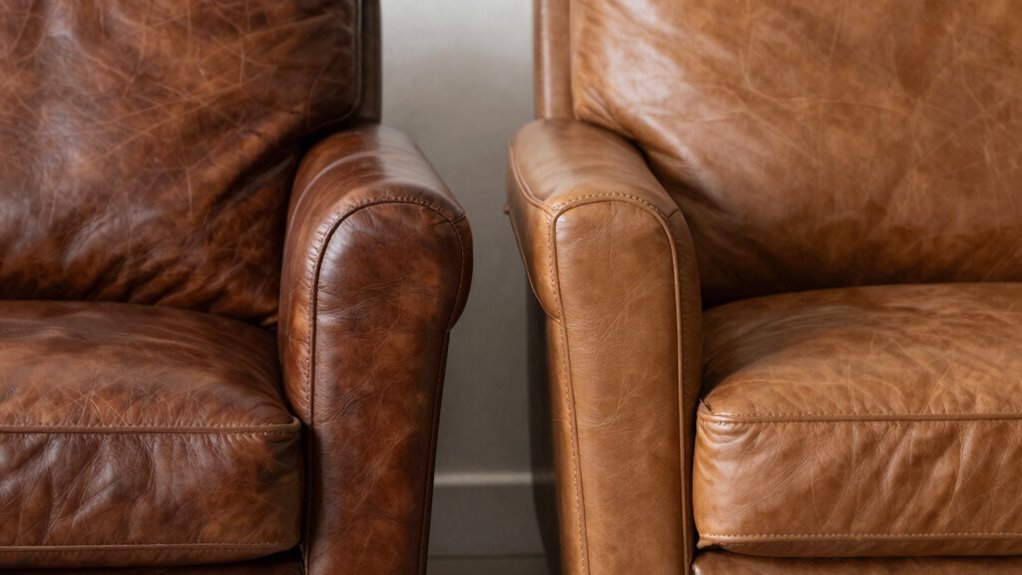
Although bonded leather is often promoted as a more eco-friendly option, its environmental benefits are complex. It’s made from scraps and fibers bonded with adhesives, which can impact eco friendly materials and sustainable sourcing. To understand its eco footprint:
- It utilizes leftover leather scraps, reducing waste.
- Manufacturing consumes less water and energy compared to full-grain leather.
- However, adhesives and synthetic binders may contain volatile organic compounds (VOCs), harming indoor air quality and complicating recycling efforts.
- Manufacturing processes in bonding leather also influence the overall environmental impact of bonded leather.
- Additionally, the recyclability of bonded leather is limited due to its composite nature, which can hinder sustainable disposal options.
- The durability and lifespan of bonded leather can affect its long-term environmental impact, as shorter-lasting materials may need more frequent replacement.
- The chemical composition of bonded leather can also affect indoor air quality over time, especially in poorly ventilated spaces.
While bonded leather might seem greener due to its waste reduction, the use of synthetic chemicals can offset these benefits. Your choice depends on whether minimizing waste or avoiding synthetic materials aligns more with your eco-conscious values.
Which Leather Is a Better Long-Term Investment?
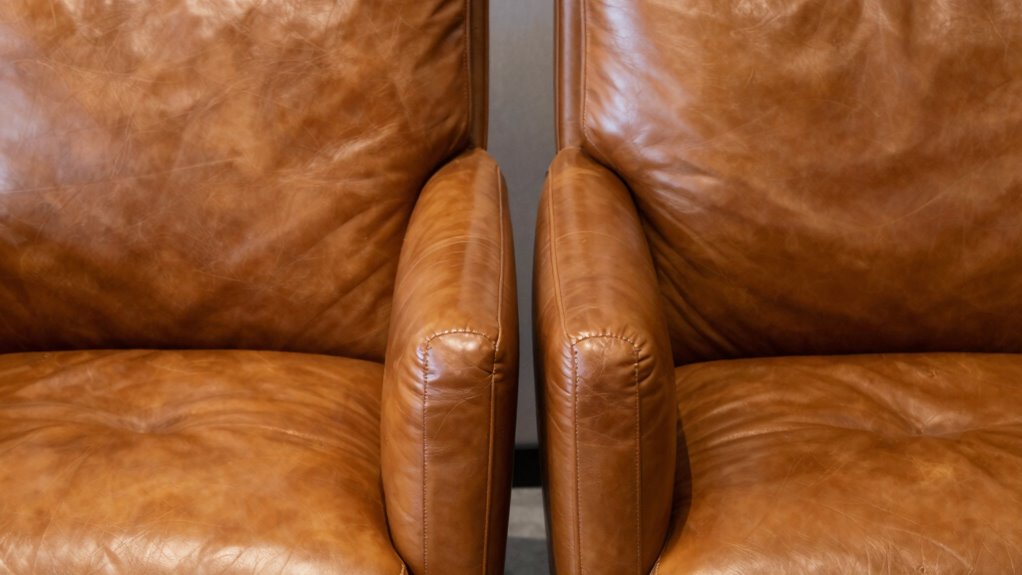
When choosing a leather chair for long-term value, you should consider durability and wear resistance to guarantee it holds up over time. Cost over time matters too, as initial prices can vary considerably, but maintenance and replacement may add up. Ultimately, aesthetic longevity is key—selecting a leather that ages well keeps your investment looking great for years.
Durability and Wear Resistance
Bonded leather often falls short when it comes to longevity, as the glued layers tend to crack and peel over time with regular use. Its surface finish can degrade quickly, revealing the underlying fabric. Real leather, on the other hand, offers superior durability thanks to its natural leather texture and resilient surface finish. To compare:
- Leather texture: Real leather develops a patina, increasing character and strength over time, while bonded leather’s surface remains flat and prone to cracking.
- Surface finish: Genuine leather has a natural, protective coat that resists wear better than bonded leather, which often wears thin and exposes the backing material.
- Wear resistance: Real leather withstands daily use more effectively, making it a better long-term investment despite higher initial costs.
Cost Over Time
Over time, real leather tends to be more cost-effective than bonded leather because its durability reduces the need for frequent replacements or repairs. When doing a price comparison, real leather may appear more expensive upfront, but its long-lasting nature makes it a better investment. The material composition of genuine leather—full-grain or top-grain—ensures it ages well and maintains its integrity, saving you money over the years. Bonded leather, made from shredded leather scraps bonded with polyurethane, tends to wear out faster and show signs of aging sooner. While initial costs for bonded leather may be lower, you’ll likely spend more on repairs or replacements over time. Choosing real leather ultimately offers better value, especially when considering longevity and overall durability. Durability is a key factor that influences the long-term cost-effectiveness of leather furniture. Additionally, proper care and maintenance can significantly extend the lifespan of real leather, enhancing its overall value. Incorporating protective treatments can further help preserve the appearance and integrity of the leather over time, especially since material composition influences how well it ages. Moreover, understanding how leather reacts to environmental factors can help in planning appropriate care routines.
Aesthetic Longevity
Real leather generally maintains its appearance and appeal much longer than bonded leather, making it a smarter long-term investment. When comparing texture, real leather develops a rich, natural patina that adds character over time, whereas bonded leather tends to stay uniform and flat. For color retention, genuine leather resists fading better, keeping its vibrant look for years, while bonded leather may crack or peel, losing its color vibrancy.
Consider these points:
- Texture comparison: real leather’s natural grain ages gracefully, bonded leather’s surface can crack or peel.
- Color retention: genuine leather preserves its hue longer, bonded leather is prone to fading.
- Overall aesthetic: real leather offers a timeless, evolving look, bonded leather’s appearance remains static.
How Can You Tell Real Leather From Bonded Leather in Stores?
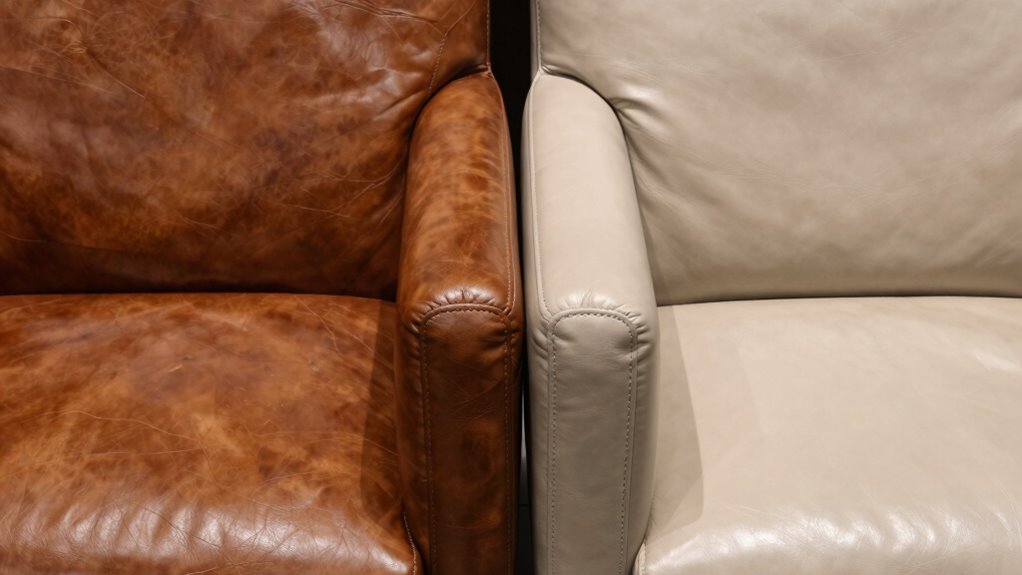
To distinguish between real leather and bonded leather in stores, start by examining the surface closely. Look for a natural texture comparison: real leather typically has an uneven, grainy surface with unique imperfections, while bonded leather often appears uniform and smooth. Next, perform a scent test—real leather usually has a rich, natural smell, whereas bonded leather might smell like chemicals or adhesives. Feel the material’s thickness and flexibility; genuine leather tends to be thicker and more supple, while bonded leather is often thinner and stiffer. Check the edges of the material as well—real leather’s edges are rougher and more irregular, whereas bonded leather’s edges look clean and consistent. Additionally, material quality is a key factor, as genuine leather generally exhibits higher durability and aging characteristics, helping you identify authentic from the synthetic in store.
Which Leather Option Fits Your Budget and Lifestyle?
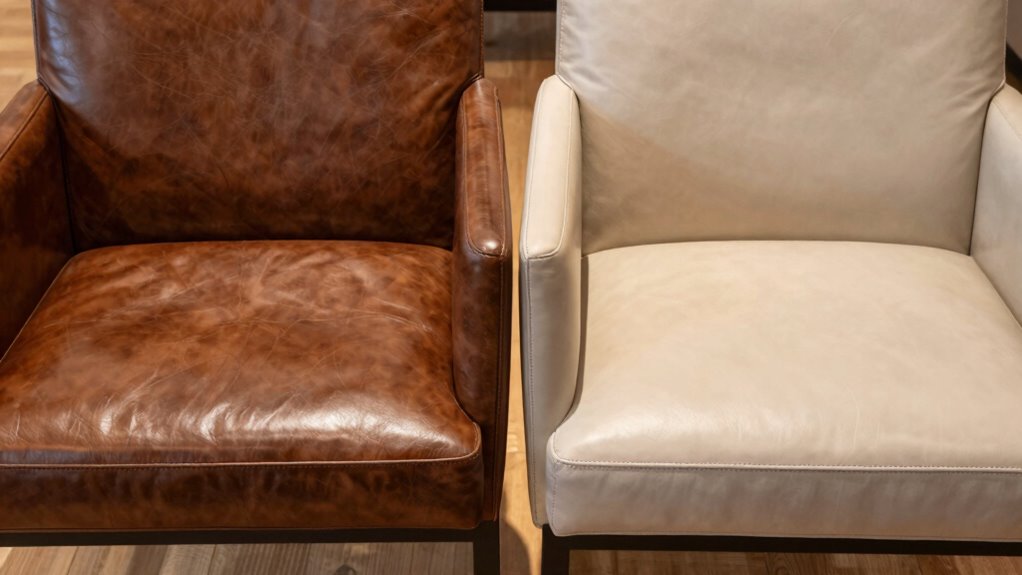
If you’re looking for an affordable option, bonded leather might be the right choice, especially if you’re on a tight budget. Consider how much maintenance and durability you need—real leather typically lasts longer and ages better, but it requires more care. Think about your lifestyle to decide which leather fits your needs and wallet best.
Affordable Options for Budget Buyers
For budget-conscious shoppers, finding a leather chair that balances cost and quality can be challenging. Luckily, there are some budget friendly options that deliver style without breaking the bank. Consider these affordable leather chairs:
- Bonded leather chairs – These are usually the most affordable leather options, offering a leather-like appearance at a lower price.
- Faux leather chairs – Made from synthetic materials, they mimic real leather and are easy to maintain.
- Secondhand leather chairs – Shopping used can save you money while still providing genuine leather, if you inspect quality carefully.
These choices let you enjoy the look and feel of leather without overspending. Just keep in mind, while affordable leather chairs fit your budget, they may have different longevity and maintenance needs.
Durability and Maintenance Needs
Choosing the right leather chair depends heavily on how much time and effort you’re willing to invest in its upkeep. Real leather offers excellent leather stain resistance, making it easier to clean spills and stains quickly. It’s generally more durable and can last many years with proper maintenance, which means less frequent cleaning and conditioning. Bonded leather, on the other hand, tends to have lower durability and may show signs of wear faster. Its surface can be more prone to scratches and peeling, requiring more frequent maintenance to keep it looking decent. If you prefer a low-maintenance option that resists stains and lasts longer, real leather is your best bet. But if you’re on a budget and don’t mind regular upkeep, bonded leather might fit your lifestyle better.
Frequently Asked Questions
Can Bonded Leather Be Repaired if Damaged?
Yes, bonded leather can be repaired if damaged, but your options depend on the extent of the damage. You might try leather maintenance products or repair kits to fix small scratches or tears. Keep in mind, repair costs for bonded leather are usually lower than real leather, but severe damage might require professional help, which can be costly. Regular care helps prolong its appearance and minimizes repair needs over time.
Does Genuine Leather Develop a Patina Over Time?
Yes, genuine leather develops a beautiful patina over time. As leather ages, you’ll notice surface discoloration and subtle changes that add character. This natural aging process enhances its appearance, giving your chair a unique, vintage look. The more you use it, the richer the leather becomes. Embrace these signs of aging, as they reflect the quality and authenticity of genuine leather, making your chair truly one-of-a-kind.
Are There Health Concerns With Bonded Leather?
Bonded leather can pose health risks, especially if you’re sensitive to chemical fumes or allergens. Its manufacturing involves gluing scraps together, releasing volatile organic compounds that can irritate your lungs or trigger allergies. Think of it as a cloud of unseen trouble settling into your space. If you’re prone to respiratory issues or allergic reactions, bonded leather might not be the safest choice for your health and well-being.
How Do Warranties Differ Between Leather Types?
You’ll find that warranties differ between leather types, impacting your care longevity and coverage. Real leather chairs often come with longer, more extensive warranties, reflecting their durability and quality. Bonded leather typically has shorter warranties, focusing on basic coverage due to its less durable nature. When choosing, consider how the warranty matches your expected care and longevity needs, ensuring you get the right protection for your investment.
Is Bonded Leather Resistant to Spills and Stains?
Bonded leather offers some spill resistance, making it easier to wipe away minor spills. However, it’s not entirely stain-proof, so you should act quickly to prevent stains from setting. Bonded leather’s surface is less durable than genuine leather, so consistent spill prevention is key to maintaining its appearance. Keep a cloth nearby, and clean spills promptly to preserve its look and prolong its lifespan.
Conclusion
Now that you know the key differences, imagine walking into a store and running your fingers over each chair’s surface. Will you feel the rich, supple texture of genuine leather or the smoother, patterned feel of bonded leather? The choice awaits—will you prioritize durability, cost, or eco-friendliness? The decision could transform your space, but only if you choose wisely. Are you ready to make that final, confident call?
Fall Picks
fall essentials
As an affiliate, we earn on qualifying purchases.