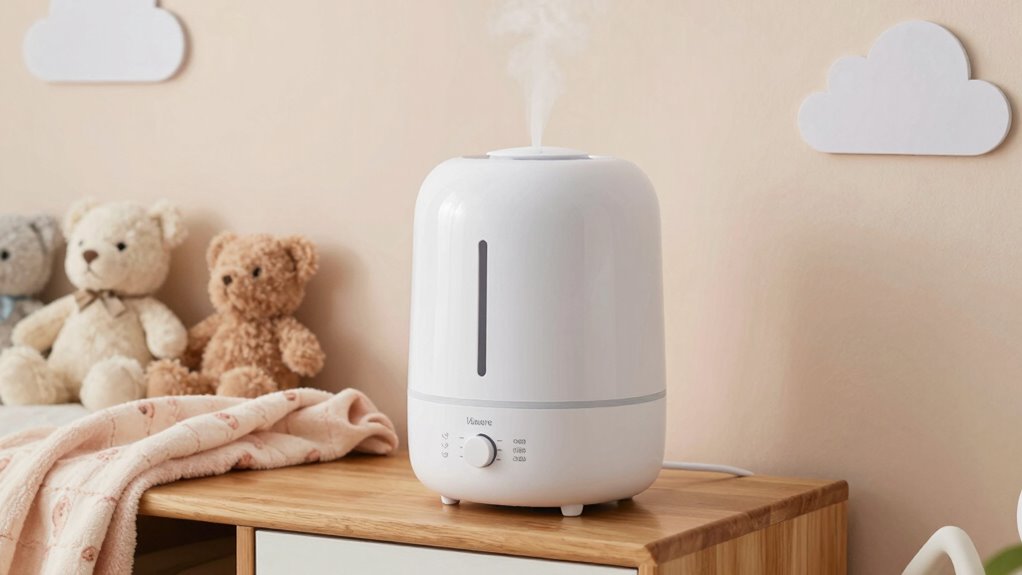

To keep your nursery humidifier from getting gross, choose models with easy-to-clean, dishwasher-safe water tanks and accessible parts like filters and reservoirs. Look for units with antimicrobial coatings or self-cleaning features, and maintain regular cleaning routines with vinegar. Select a humidifier with quiet operation and simple controls to guarantee consistent, hygienic moisture without mold or bacteria buildup. Keep your baby’s air fresh and safe—more tips ahead can help you pick the best clean-friendly options.
Key Takeaways
- Look for models with removable, dishwasher-safe water tanks for quick, thorough cleaning.
- Choose humidifiers with antimicrobial coatings or filters that inhibit mold and bacteria growth.
- Prioritize devices with accessible, minimal crevice designs for easy maintenance and cleaning routines.
- Opt for units with indicator lights for water level and filter status to ensure timely upkeep.
- Select quiet, sealed models with self-cleaning features to maintain hygiene without disturbing sleep.
What Features Make a Nursery Humidifier Easy to Clean?

When choosing a nursery humidifier, it’s important to think about how easy it is to clean. A model with accessible parts makes maintenance simpler, especially when it comes to filter replacement. Look for units with removable water tanks and straightforward filter access—these features reduce buildup and make cleaning quicker. Additionally, consider noise levels; a quiet humidifier minimizes disturbance during naps or bedtime, and easier-to-clean models often produce less noise. Clear instructions and minimal crevices also help prevent mold and bacteria growth. Choosing a humidifier with simple design elements and user-friendly features ensures you spend less time on cleaning and more time caring for your baby’s comfort. Proper hygienic maintenance is essential for preventing mold and bacteria buildup, which is crucial in a nursery setting. Regular cleaning with appropriate sanitation methods helps maintain a safe environment for your little one. Incorporating models with easy-to-clean components can significantly streamline this process and promote better indoor air quality, especially when selecting units with antimicrobial surfaces that inhibit microbial growth. To further support a healthy nursery environment, opt for humidifiers with automatic shut-off features, which help prevent over-humidification and reduce the frequency of manual cleaning.
How to Choose a Hygienic Nursery Humidifier for Your Baby?
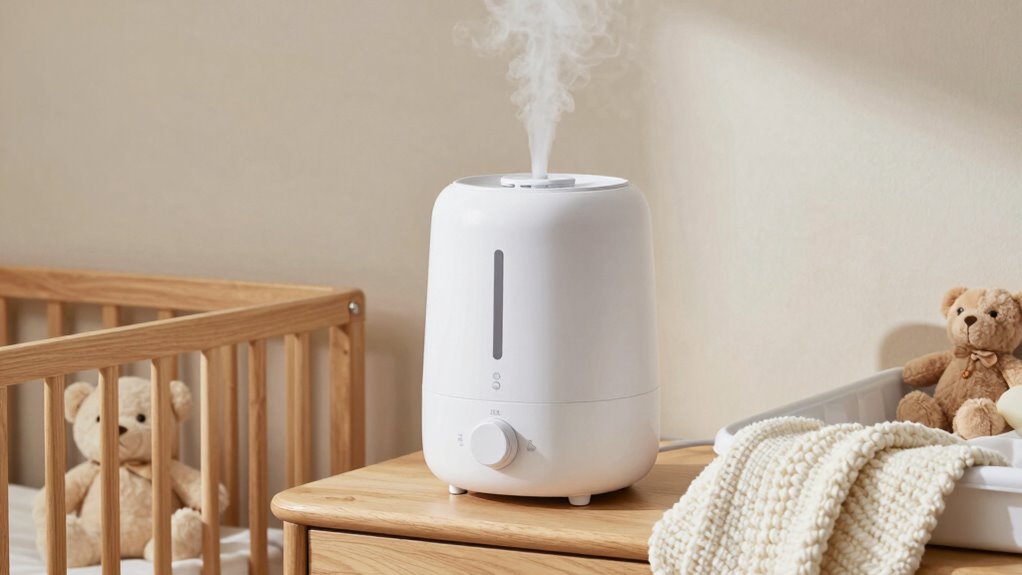
Choosing a hygienic nursery humidifier is essential for your baby’s health, and it starts with selecting a model that prioritizes cleanliness. To do this, consider these factors:
- Air quality: Look for units with antimicrobial features or filters that reduce bacteria and mold growth. Incorporating hygienic design features can further prevent microbial buildup inside the device. Additionally, regular replacement of filters can significantly improve overall air quality in your nursery. Maintaining good air circulation can also help prevent stagnant air and microbial growth. Ensuring proper ventilation systems can further enhance the overall cleanliness of the environment.
- Ease of cleaning: Pick models with simple, accessible parts to prevent buildup.
- Noise levels: Opt for quiet humidifiers to avoid disturbing your baby’s sleep.
- Material safety: Ensure the device is made of non-toxic, BPA-free materials to prevent any chemical leaching. Regular maintenance and understanding filtration systems help keep your humidifier hygienic and effective in maintaining a healthy nursery environment.
Best Nursery Humidifiers to Prevent Mold and Bacteria
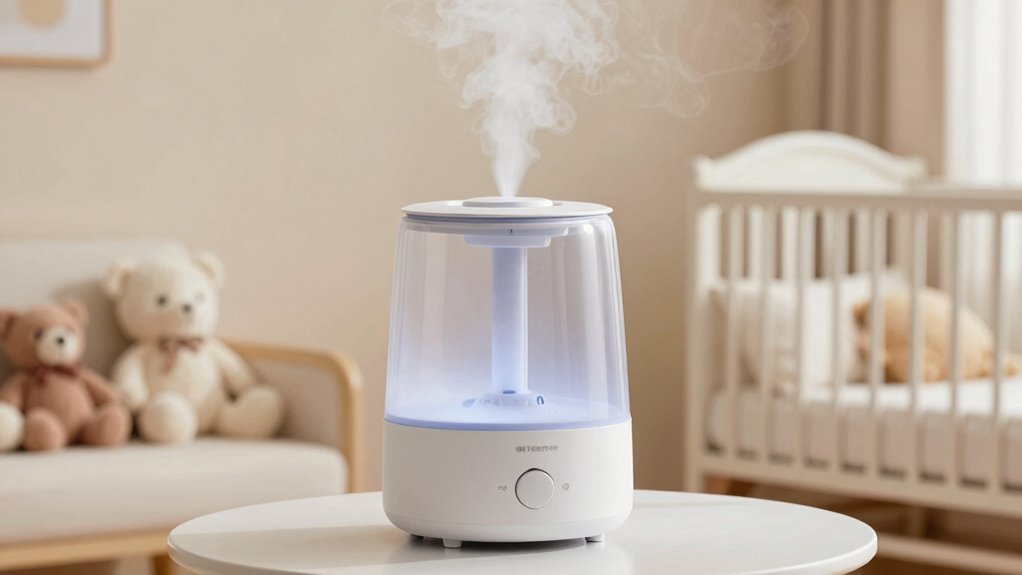
Choosing the right nursery humidifier means prioritizing antimicrobial materials, which help prevent bacteria growth. Look for models with easy-clean designs that make regular maintenance simple. Additionally, hygienic water reservoirs ensure your baby’s air stays fresh and free from mold. Regularly inspecting jewelry and maintaining proper piercing care can also prevent infections that might compromise your overall health. To further reduce the risk of bacterial contamination, select humidifiers with antimicrobial coatings or materials that inhibit microbial growth. Incorporating proper cleaning routines can significantly extend the lifespan of your device and maintain a healthier environment. Moreover, choosing models with UV filtration can provide extra protection against microbial buildup and ensure cleaner mist output. Selecting units with weather adaptability features can keep humidity levels consistent, further supporting your baby’s health.
Antimicrobial Material Benefits
Using antimicrobial materials in nursery humidifiers offers significant advantages by actively resisting mold and bacterial growth. An antimicrobial coating enhances bacteria resistance, making it harder for germs to settle and multiply. This helps keep your baby’s environment safer and cleaner. Here are some benefits:
- Reduced mold buildup — Prevents mold spores from thriving on surfaces.
- Enhanced bacteria resistance — Limits bacterial growth, lowering infection risk.
- Less frequent cleaning needed — Maintains hygiene with minimal effort.
- Longer device lifespan — Protects internal components from microbial damage.
Easy-Clean Design Features
To effectively prevent mold and bacteria buildup, many nursery humidifiers now feature easy-clean design elements that simplify maintenance. These models often have removable filters that are quick to replace, reducing the risk of mold growth and ensuring consistent humidity. Look for units with accessible water tanks that can be rinsed or wiped down easily, minimizing crevices where bacteria can grow. Additionally, quieter noise levels are a key feature, making it easier to run the humidifier continuously without disturbing your child’s sleep or your peace of mind. Some designs incorporate smooth surfaces and minimal parts, so cleaning becomes straightforward and less time-consuming. Choosing a humidifier with easy-clean features ensures you maintain a healthy, mold-free environment for your nursery. Incorporating smart home automation can also help monitor humidity levels remotely, further supporting a safe nursery environment. Implementing antimicrobial materials in the design can provide an extra layer of protection against bacteria buildup, and selecting models with self-cleaning functions can further simplify ongoing maintenance. Additionally, selecting units with antimicrobial coatings can enhance their resistance to bacterial growth over time.
Hygienic Water Reservoirs
Hygienic water reservoirs are essential in preventing mold and bacteria buildup, guaranteeing your nursery stays safe and healthy. To achieve this, look for humidifiers with features like advanced water filtration systems that reduce contaminants. Additionally, consider models with sealed reservoirs to prevent mold growth. Pay attention to noise levels, as quieter units help create a peaceful environment for your baby. Here are four key features to prioritize:
- Removable, antimicrobial water tanks for easy cleaning and mold prevention
- Integrated water filtration to eliminate bacteria and impurities
- Designs with tight seals to prevent air leaks and bacterial entry
- Low noise operation to avoid disturbance during sleep
Choosing humidifiers with these features ensures a hygienic, safe nursery environment.
How to Clean and Maintain Your Nursery Humidifier for Fresh Air
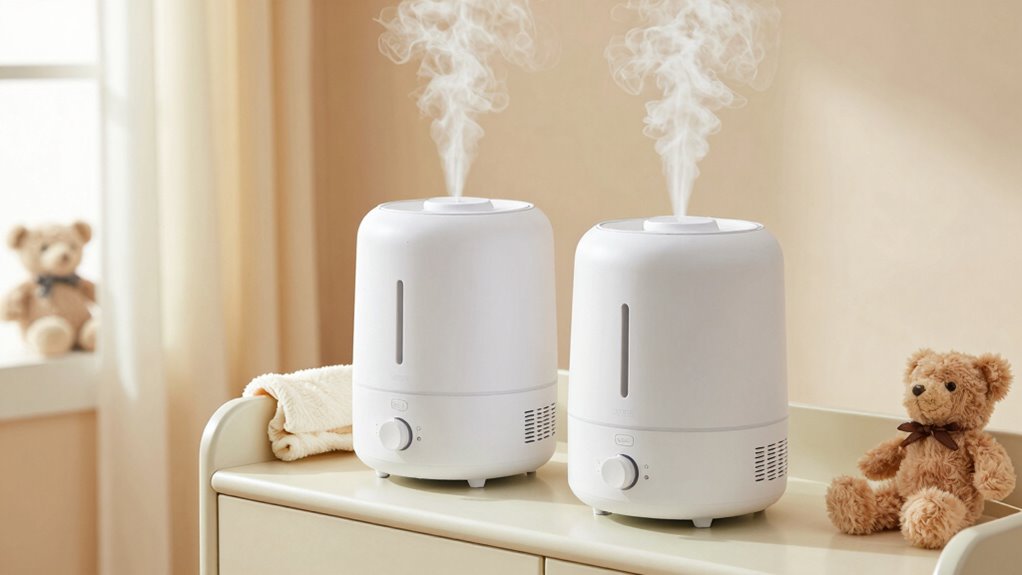
Regularly cleaning and maintaining your nursery humidifier is vital to guarantee the air remains fresh and safe for your baby. Start by rinsing the water tank daily and replacing the water to prevent mold buildup. Use a gentle brush to clean humidifier filters, especially if they’re reusable, and make certain they’re free of mineral deposits. Ultrasonic technology models produce fine mist, so keeping the water clean is essential to prevent mineral dust. Replace filters as recommended by the manufacturer to maintain efficiency. Here’s a quick maintenance guide:
| Task | Frequency | Tips |
|---|---|---|
| Clean water tank | Weekly | Use vinegar to remove scale |
| Replace filters | Every 1-2 months | Follow manufacturer instructions |
| Check ultrasonic parts | Monthly | Wipe with a soft cloth |
Additionally, regularly inspecting the humidifier for water quality issues can help prevent buildup and ensure optimal performance of your device. Proper water quality management is crucial to avoid mineral buildup and ensure the air purification remains effective.
Top Easy-Clean Nursery Humidifiers: Pros and Cons

Choosing a nursery humidifier that’s easy to clean can save you time and effort, making maintenance simpler. Additionally, you want one that effectively improves air quality and keeps your baby comfortable. Let’s look at the pros and cons of popular models based on their ease of maintenance and overall performance. Moreover, selecting a device with trustworthy information and proven safety features can help ensure healthier indoor air for your little one. Being aware of hygienic design principles can further guide you in choosing a model that resists mold and bacteria buildup, reducing cleaning frequency and promoting a safer environment. Incorporating easy-clean technology into your choice can also make ongoing upkeep more manageable. Considering models that meet industry safety standards can give you extra peace of mind regarding your baby’s health. Furthermore, choosing a humidifier with antimicrobial coatings can further reduce microbial growth and simplify cleaning routines.
Easy Maintenance Factors
When it comes to nursery humidifiers, easy maintenance is essential for keeping your child’s environment safe and healthy. A model with simple cleaning routines helps maintain ideal air quality and minimizes mold or bacteria buildup. Look for humidifiers that feature:
- Removable, dishwasher-safe water tanks for quick cleaning.
- Fewer crevices or complex parts where mold can grow.
- Clear indicator lights for water level and filter status.
- Quiet operation to avoid disrupting sleep, especially when cleaning or refilling.
These factors ensure you can keep the humidifier hygienic without hassle. Maintaining low noise levels also prevents added stress or disturbance for your little one. Overall, choosing a unit with straightforward maintenance helps sustain air quality and a peaceful nursery environment.
Humidifier Effectiveness
While easy maintenance is essential, you also need a humidifier that effectively improves air quality without sacrificing performance. A top-quality humidifier should reliably add moisture to the nursery air, reducing dryness and preventing irritation. Look for models that maintain ideal humidity levels consistently, ensuring your baby’s comfort and health. Noise levels matter too—choose a unit that operates quietly so it won’t disturb sleep or playtime. An effective humidifier should have a good reach, evenly distributing moisture without creating excess humidity or mold. Clear, adjustable settings help you control performance easily. Ultimately, a reliable, easy-to-clean humidifier that balances air quality benefits with low noise levels ensures your nursery stays comfortable and safe for your little one.
Tips for Picking the Right Humidifier for Your Baby’s Nursery

Selecting the right humidifier for your baby’s nursery involves considering several key factors to guarantee a safe and comfortable environment. First, prioritize models that improve air quality by filtering bacteria and minerals, reducing potential irritants. Second, choose a device with adjustable humidity settings to maintain ideal levels for sleep improvement and overall comfort. Third, look for easy-to-clean features or antimicrobial components to prevent mold and bacteria buildup. Fourth, consider noise levels—quiet operation supports better sleep for both baby and parents. Additionally, verify the humidifier’s size fits your nursery space, and ensure it has safety features like auto shut-off. By focusing on these factors, you’ll create a healthier, more restful environment that promotes your baby’s well-being.
Common Mistakes to Avoid When Using Nursery Humidifiers
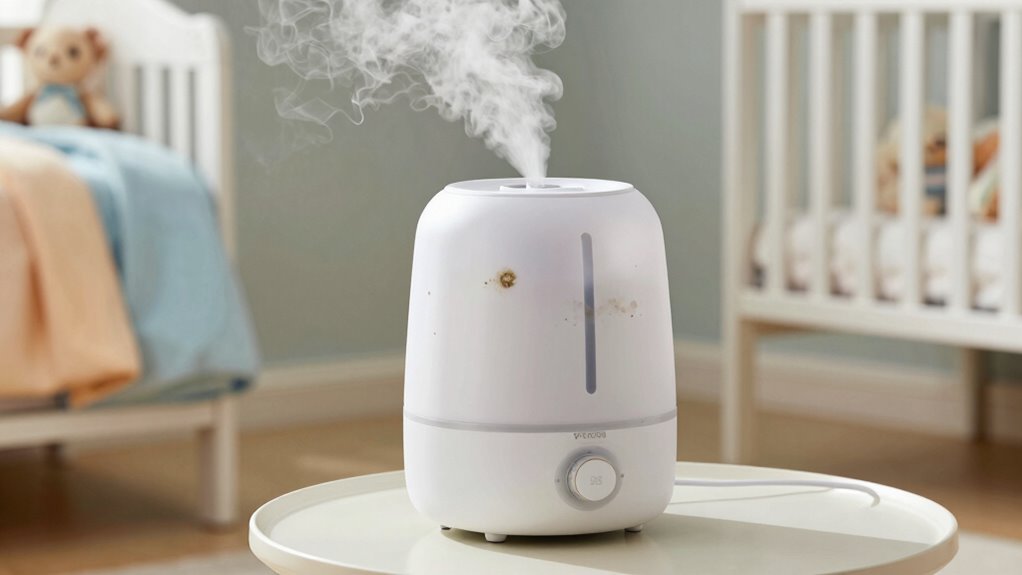
Using a humidifier without proper maintenance can lead to mold, bacteria growth, and poor air quality in your baby’s nursery. One common mistake is neglecting regular cleaning, which causes bacteria to thrive and compromises air quality. Additionally, failing to monitor noise levels can disturb your baby’s sleep; some humidifiers are noisier than others, so choose a low-noise model if your baby is sensitive. Overfilling the tank or setting the humidity too high can also cause excess moisture, leading to mold growth and further air quality issues. Remember to clean the humidifier frequently and keep humidity levels in check. Avoiding these mistakes ensures your nursery remains a safe, comfortable environment for your little one.
Frequently Asked Questions About Nursery Humidifier Maintenance
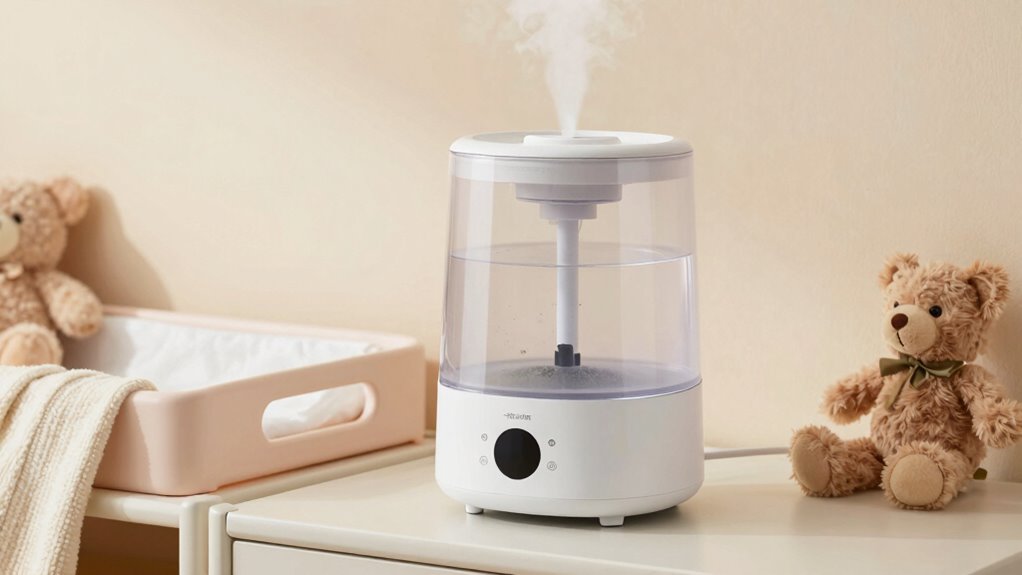
Have questions about how to properly maintain your nursery humidifier? Regular upkeep ensures it runs efficiently and quietly. Here are common concerns:
- How often should I clean the humidifier to prevent mold and bacteria buildup?
- Does cleaning reduce humidifier noise?
- How can I minimize power consumption while keeping it effective?
- What maintenance tips improve longevity and performance?
Cleaning regularly prevents gross buildup and keeps noise levels low. Using distilled water can reduce mineral deposits that cause louder operation and excess energy use. Replacing filters as recommended maintains efficiency and prevents mold growth. Properly maintaining your humidifier not only reduces noise but also conserves power, saving energy and extending device life. Staying on top of these tasks keeps your nursery healthy, quiet, and safe.
Frequently Asked Questions
How Often Should I Replace the Filter in My Nursery Humidifier?
You should replace the filter in your nursery humidifier every 1 to 3 months to guarantee optimal filter maintenance and extend your humidifier’s lifespan. Regularly checking the filter for dirt, mold, or mineral buildup helps prevent germs and keeps the air healthy for your little one. Remember, a clean filter maintains proper humidity and reduces the risk of bacteria growth, making your humidifier safer and more effective over time.
Can I Use Essential Oils in My Nursery Humidifier Safely?
You shouldn’t use essential oils in your nursery humidifier, as they can interfere with essential oil safety and damage the device. Many humidifiers aren’t designed for oils, and doing so can cause mold or bacteria buildup, making humidifier maintenance harder. To keep your baby safe and healthy, stick to plain water and clean the humidifier regularly. Always follow manufacturer instructions for proper use and maintenance.
Are Ultrasonic Humidifiers Better Than Evaporative Models for Nurseries?
You’ll find ultrasonic humidifiers often better for nurseries because they’re quieter, creating a peaceful space for your little one. Compared to evaporative models, ultrasonic units produce less noise, making bedtime more calming. They also tend to be easier to clean and maintain. While evaporative models work well, ultrasonic humidifiers offer a gentle, whisper-quiet experience that soothes your baby without disturbances, helping everyone sleep more soundly.
What Is the Ideal Humidity Level for a Baby’s Room?
You should aim for an ideal humidity level of 40-50% in your baby’s room. Maintaining this range improves air quality, reducing allergens and germs, and enhances sleep quality by preventing dryness or congestion. Use a reliable humidifier to monitor and adjust humidity levels easily. Keeping the air comfortably moist helps your baby breathe easier, sleep soundly, and stay healthy, creating a cozy environment for their growth and development.
How Do I Know if My Humidifier Is Mold-Free and Safe?
You can tell if your humidifier is mold-free and safe by regularly checking for visible mold, musty odors, or any slimy buildup. Prioritize mold prevention by following a consistent cleaning schedule, ideally once a week, using vinegar or mild soap. Make certain you dry all parts thoroughly after cleaning and use distilled water. This routine helps keep your humidifier clean, safe, and free of mold for your baby’s health.
Conclusion
Choosing a nursery humidifier that’s easy to clean means you’ll enjoy fresh, mold-free air for your baby without the hassle. Keep maintenance simple, look for user-friendly features, and avoid common pitfalls. When you stay on top of cleaning, you prevent germs from lurking and ensure a healthier environment. Remember, a stitch in time saves nine—investing a little effort now keeps your nursery safe and spotless in the long run.