

To avoid back strain, choose ergonomic baby carriers with adjustable straps, wide padded waistbands, and structured support panels that promote proper hip and spine alignment. Look for options with breathable fabrics and lightweight construction for comfort. Proper fit, including even weight distribution and correct positioning, is key. Wraps, structured carriers, and slings designed with back-friendly features can make a huge difference. Keep your carrier snug and use it correctly—more tips on selecting and adjusting the best back-safe carriers are ahead.
Key Takeaways
- Choose carriers with adjustable, padded straps and wide waistbands to evenly distribute weight and reduce back strain.
- Opt for ergonomic seats that support proper hip positioning and maintain an upright, straight back for the wearer.
- Look for breathable, lightweight fabrics and cushioned support panels to enhance comfort during extended use.
- Ensure the carrier offers customizable fit options to adapt to your body and your baby’s growth, promoting better posture.
- Follow proper wearing techniques, such as keeping the back straight and engaging core muscles, to prevent back injury.
Why Ergonomic Design Matters in Baby Carriers
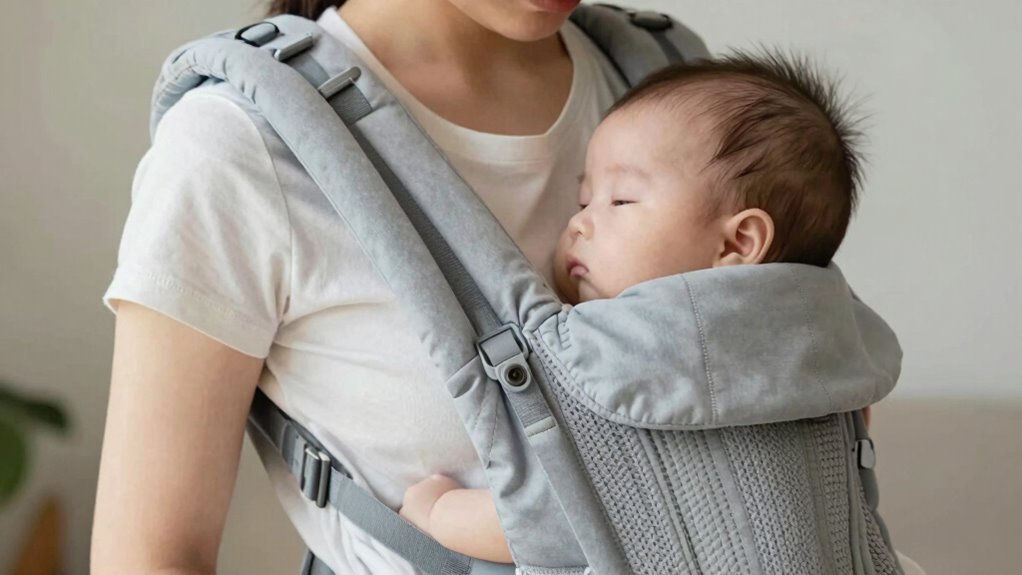
When choosing a baby carrier, understanding why ergonomic design matters can make a significant difference in both your comfort and your baby’s safety. The ergonomic design history shows how carriers have evolved to support healthy hip development and reduce strain. The materials used in baby carriers, such as breathable fabrics and supportive padding, also play a critical role in comfort and durability. An ergonomic design aligns the baby’s hips and spine properly, minimizing pressure points for you and ensuring your little one stays secure and comfortable. Proper fit not only enhances comfort but also promotes better posture for the wearer. Selecting carriers with ergonomic features that follow safety standards can further ensure your baby’s well-being and your comfort. Recognizing the importance of these design principles ensures you select a carrier that supports both your needs and your baby’s well-being. Additionally, choosing carriers with adjustable straps allows for a more precise fit, which can further improve ergonomic support and comfort.
What Features Make a Baby Carrier Back-Friendly?
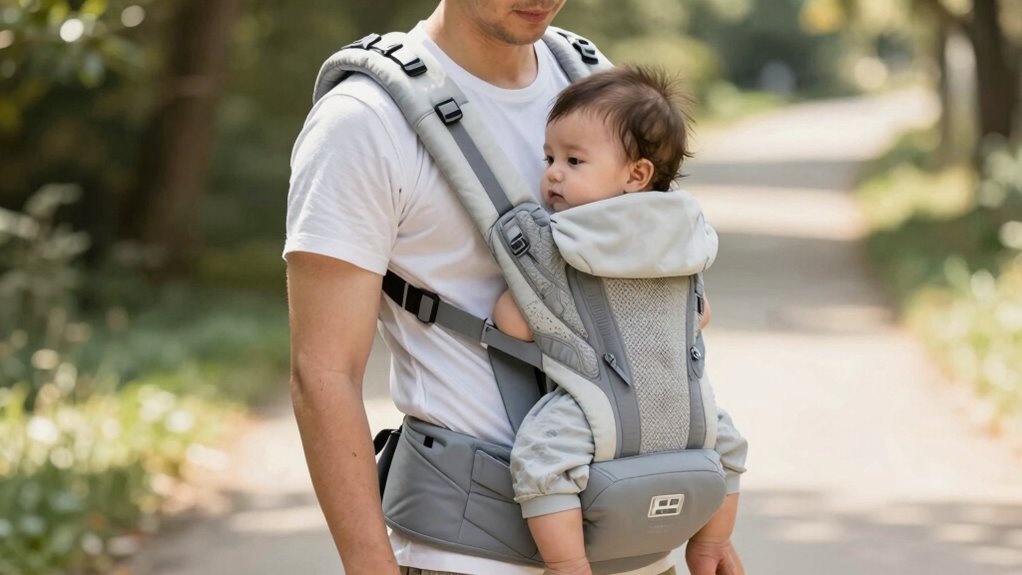
To keep your back comfortable, look for a baby carrier with an ergonomic seat design that supports proper posture. Make sure the straps are adjustable to fit your body snugly, reducing strain. Additionally, choose carriers made from breathable, supportive materials to prevent overheating and provide lasting comfort. Incorporating modern ergonomic design features can further enhance comfort and reduce fatigue during extended wear. Selecting a carrier with appropriate weight distribution can also help minimize back stress and improve overall comfort during prolonged use, especially when considering innovative support structures that distribute weight more evenly. Using carriers with customizable fit options can ensure optimal adjustment for your body shape and activity level, promoting better back health. Being aware of adjustable features is essential for customizing the fit and maintaining comfort over time.
Ergonomic Seat Design
A well-designed ergonomic seat is essential for keeping both you and your baby comfortable during long carries. It supports proper hip development and reduces strain on your back. Look for a seat that distributes weight evenly and keeps your baby’s hips in a healthy, spread-squat position. This promotes babywearing safety and prevents discomfort. To maintain your carrier’s longevity and hygiene, follow carrier cleaning tips such as hand washing or gentle machine cycles, and avoid harsh chemicals. Here’s a quick comparison:
| Feature | Benefit |
|---|---|
| Wide seat base | Supports hips in healthy position |
| Adjustable leg openings | Allows customization for baby’s size |
| Padded seat area | Adds comfort for baby and wearer |
| Firm yet flexible material | Maintains shape, ensures safety |
| Easy-to-clean fabric | Simplifies carrier cleaning tips |
Adjustable Straps and Fit
Adjustable straps are essential for ensuring a comfortable and back-friendly fit, allowing you to customize the carrier to your body shape and size. Proper adjustment helps distribute your baby’s weight evenly and reduces strain. Look for carriers with:
- Padded shoulder straps for added comfort during longer wear.
- Easily adjustable strap length to suit your torso and preferences.
- Multiple adjustment points to fine-tune fit quickly.
- Secure buckles that stay in place once adjusted, preventing slips.
- Incorporate Free Floating design elements that adapt to your movements for greater comfort.
Adding adjustment ease features can make a significant difference in achieving a perfect fit with less effort. These features help you achieve a snug, supportive fit without pressure points. When straps are adjustable, you can adapt the carrier as your baby grows or if your body changes, ensuring consistent support and minimizing back pain. Additionally, body-mapping technology can enhance fit by conforming to your unique shape, providing even better weight distribution. Incorporating ergonomic design principles can further improve comfort and support during extended wear.
Breathable and Supportive Materials
What makes a baby carrier truly back-friendly? It all comes down to fabric breathability and padding support. Breathable fabrics, like mesh or lightweight cotton, let air circulate, preventing overheating for both you and your little one. This keeps you comfortable during longer wears. Supportive padding in the shoulder straps and waistband helps distribute weight evenly, reducing strain on your back and shoulders. Look for carriers with cushioned areas that contour to your body, providing stability without sacrificing airflow. A well-designed blend of breathable material and supportive padding ensures you stay cool and comfortable, even during extended use. Incorporating ergonomic design principles can further enhance comfort and reduce fatigue. Using a proper fit is essential to prevent unnecessary strain and promote healthy posture while carrying. Paying attention to material selection can also significantly impact back support and overall comfort. Additionally, choosing carriers with adjustable features allows for a more customized fit, enhancing support and stability. Prioritizing these features helps protect your back while keeping your baby snug and secure, and selecting Breathable fabrics can further improve overall comfort during extended wear.
How Do I Find a Baby Carrier That Fits Me?
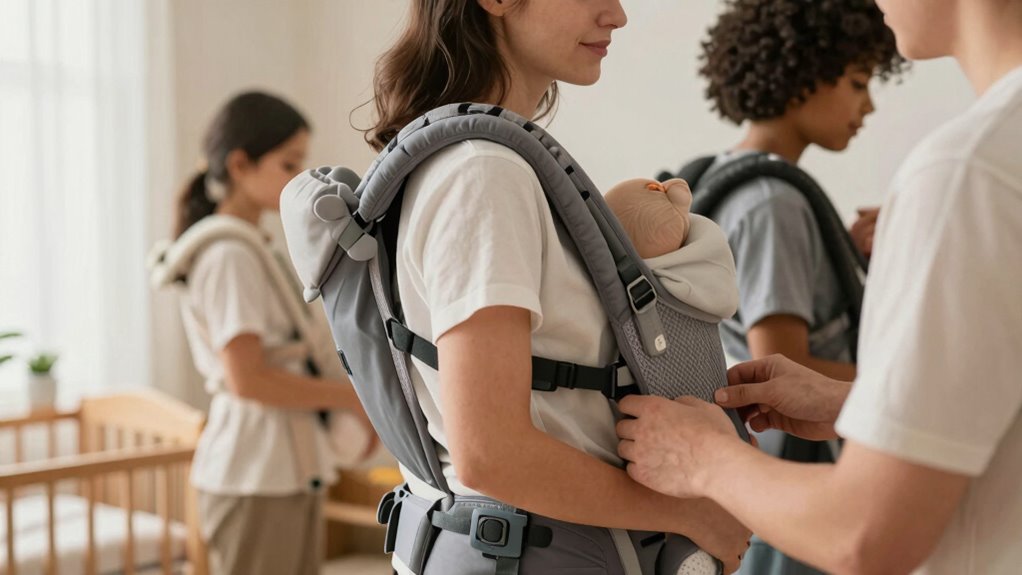
Finding a baby carrier that fits you well is essential for both comfort and safety. To do this, consider your body type and preferences. First, check the fabric breathability to prevent overheating during extended wear. Second, evaluate the carrier weight—lighter carriers are easier to handle and more comfortable for long periods. Third, try different styles to see what fits your torso length and shoulder width best. Fourth, adjust straps and buckles for a snug, yet comfortable fit that supports your back and distributes weight evenly. Remember, a well-fitting carrier reduces strain and allows you to comfortably carry your baby for longer. Ensuring the carrier’s proper fit helps prevent back injuries and enhances overall comfort. Additionally, understanding your body type can guide you toward the most suitable carrier style and features. Being aware of ergonomic design principles can further improve comfort and safety. Incorporating adjustability features into your choice ensures a more personalized and supportive experience. Paying attention to fit assessment techniques can help you select the best carrier for your needs. Taking these steps ensures you choose a carrier that’s both supportive and tailored to your body.
Which Baby Carriers Provide Good Back Support?
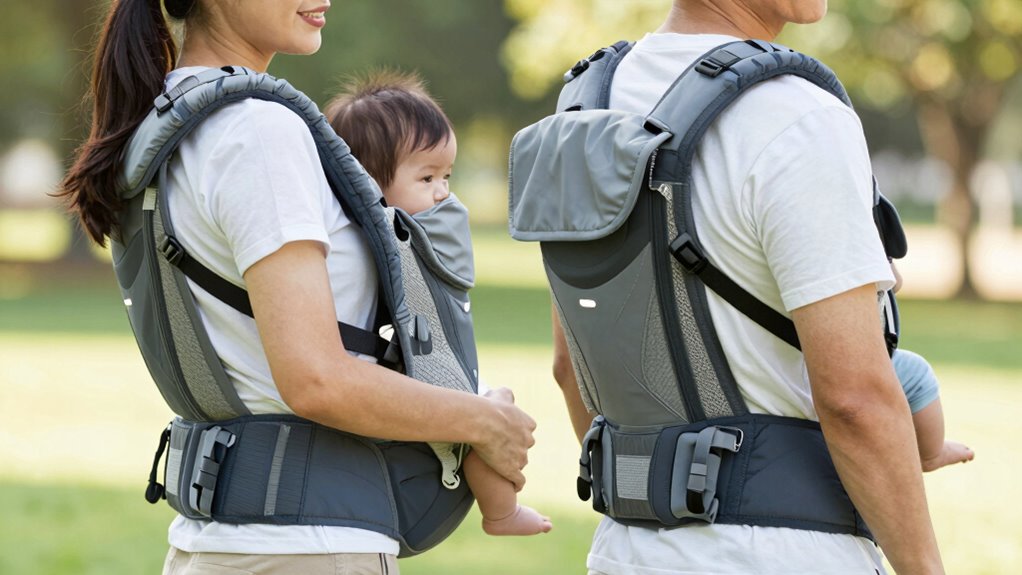
To find a baby carrier that offers good back support, look for ergonomic designs that promote proper posture. Adjustable straps help guarantee a snug fit, distributing weight evenly across your back. Keep in mind that effective weight distribution reduces strain and makes carrying your baby more comfortable.
Ergonomic Design Features
When choosing a baby carrier, guaranteeing good back support is essential for your comfort and your baby’s safety. Ergonomic design features play a key role in this. Look for carriers that include:
- Wide, padded waistbands to distribute weight evenly and reduce back strain
- Structured support panels that promote proper spine alignment
- Breathable fabric breathability to prevent overheating and keep you comfortable
- Lightweight carrier weight to avoid unnecessary fatigue during extended wear
These features help maintain proper posture, prevent back pain, and ensure your carrier is comfortable for both of you. An ergonomic design that considers fabric breathability and carrier weight makes all the difference in achieving long-term comfort while carrying your baby. Proper ergonomic support is also crucial for reducing the risk of musculoskeletal issues over time.
Adjustable Straps and Fits
Adjustable straps and fits are key to guaranteeing your baby carrier provides ideal back support. When straps are customizable, you can fine-tune hipbelt comfort and achieve a snug, supportive fit that distributes weight evenly. Look for carriers with ample strap padding, especially on shoulder straps, to prevent pressure points and reduce fatigue. A well-adjusted hipbelt helps stabilize your lower back and aligns the carrier properly, minimizing strain. Make sure the straps are easy to tighten or loosen as needed, so you can adapt the fit as your baby grows or if you change positions. Proper adjustability ensures the carrier stays secure and comfortable, supporting your back and making carrying less stressful. The right fit makes all the difference in maintaining good posture for longer periods.
Weight Distribution Effect
Proper weight distribution is essential for back support in baby carriers, as it prevents strain and fatigue during extended wear. When your carrier offers good load distribution, your back feels less burdened, and your posture stays aligned. Look for carriers that focus on weight balance, ensuring the baby’s weight is evenly spread across your hips and shoulders.
Here are four key features to consider:
- Wide, padded waist belts that transfer load to your hips.
- Adjustable shoulder straps for even weight distribution.
- Structured panels that support your baby’s weight close to your body.
- Reinforced seams that help maintain ideal load balance over time.
Choosing a carrier with effective weight balance helps protect your back and makes carrying more comfortable.
How Can I Wear My Carrier Correctly to Avoid Back Strain?
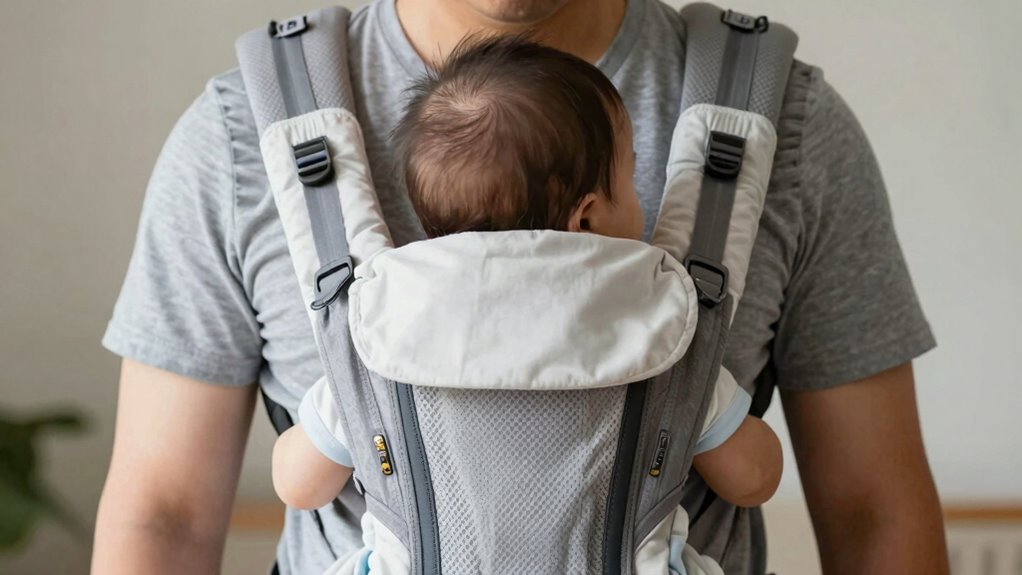
Wearing your carrier correctly is essential to prevent back strain and keep your little one comfortable. Ensure the carrier supports proper hip alignment by positioning your baby so their hips are bent and knees are higher than their bottom. Engage your core muscles to maintain stability and reduce strain on your back. Adjust the carrier’s straps so weight is evenly distributed across your shoulders and hips. Keep the carrier snug but not tight, allowing free movement and proper support. Regularly check that your baby’s back is straight and close to your chest. Proper fit and alignment not only protect your back but also promote comfort for your baby. Use the table below to remember key points for correct wearing:
| Aspect | Tip | Benefit |
|---|---|---|
| Hip alignment | Keep hips bent, knees higher | Prevent hip dysplasia |
| Core engagement | Tighten abdominal muscles | Reduce back strain |
| Strap adjustment | Evenly distribute weight | Greater comfort |
| Carrier fit | Snug but not restrictive | Better support |
| Baby position | Close to chest, straight back | Comfort and safety |
Wraps, Slings & Carriers: Which Is Most Comfortable for Your Back?
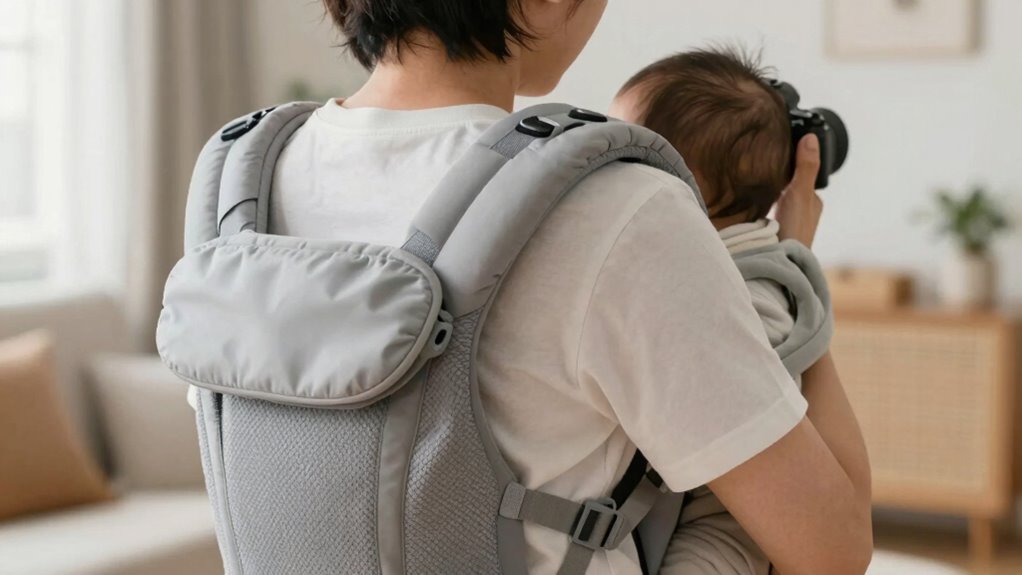
Choosing the right baby carrier, wrap, or sling can make a significant difference in how comfortable your back feels throughout the day. When comparing options, consider fabric choices and carrier weight. Heavier carriers may strain your back if made from stiff or thick fabrics. Lightweight, breathable materials like cotton or linen distribute weight better. Wraps often mold to your body, providing even support, while slings may focus pressure on one shoulder. Carriers with padded straps and ergonomic designs help reduce discomfort.
- Look for soft, flexible fabrics that conform to your body.
- Choose lightweight carriers to prevent added strain.
- Opt for carriers with adjustable straps for a custom fit.
- Prioritize ergonomic designs that evenly distribute weight.
How Do I Adjust My Carrier for Maximum Support?
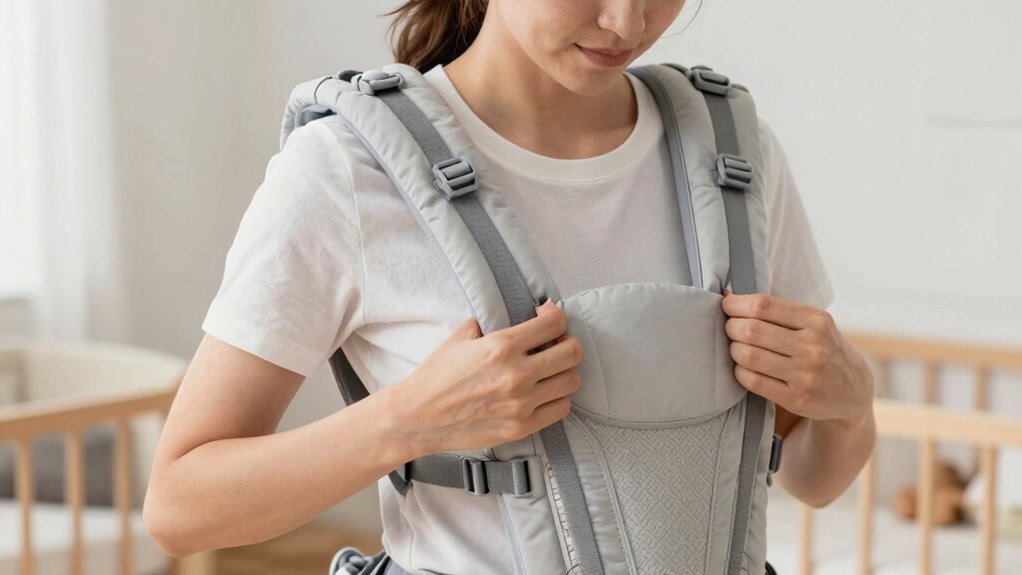
To get the most support from your baby carrier, you need to make sure it’s adjusted correctly. Start by checking the hip angle; your baby’s hips should form an ergonomic M-shape, with knees higher than the bottom. Adjust the carrier’s seat or panel to maintain this natural position. Next, focus on belt tension—tighten the waistband so it snugly supports your lower back without causing discomfort. The belt should distribute weight evenly across your hips and pelvis, reducing strain on your back. Ensure the straps are secure but not too tight, allowing your baby to stay close without restricting movement. Proper adjustments keep your baby’s weight well-supported, align your spine, and prevent back pain during extended wear.
Common Mistakes That Wreck Your Back and How to Avoid Them
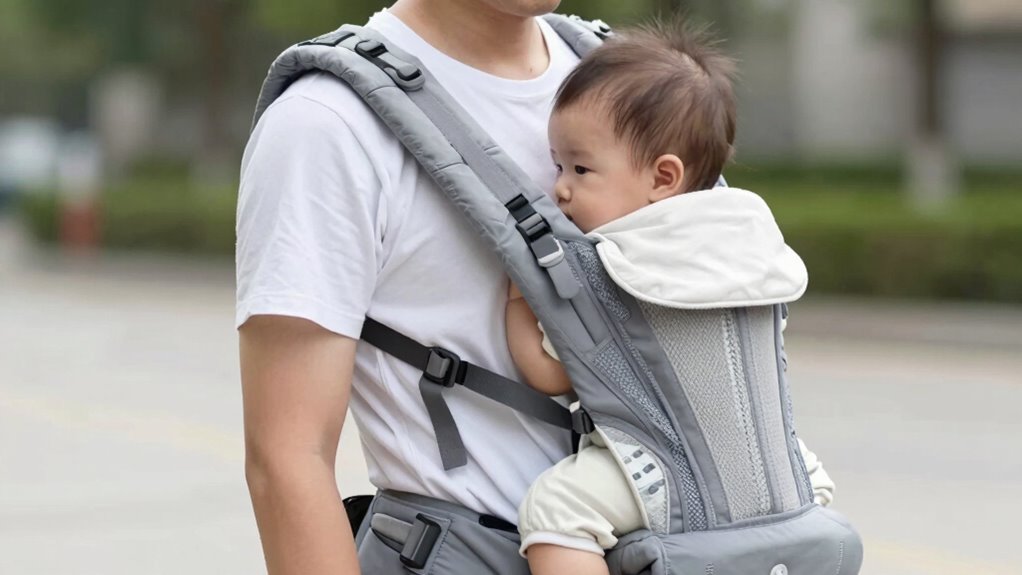
Many common mistakes in baby carrier use can lead to back pain and discomfort if you’re not careful. Poor posture correction and improper positioning increase muscle strain and cause long-term issues. To avoid this:
Avoid back pain by maintaining proper posture and correct carrier positioning.
- Neglecting to keep your back straight, which worsens muscle strain.
- Carrying the baby too low or unevenly, disrupting your posture correction.
- Using a carrier that doesn’t distribute weight evenly, causing unnecessary back tension.
- Not adjusting straps properly, leading to poor support and added muscle strain.
FAQs: Choosing and Using Baby Carriers Without Hurting Your Back
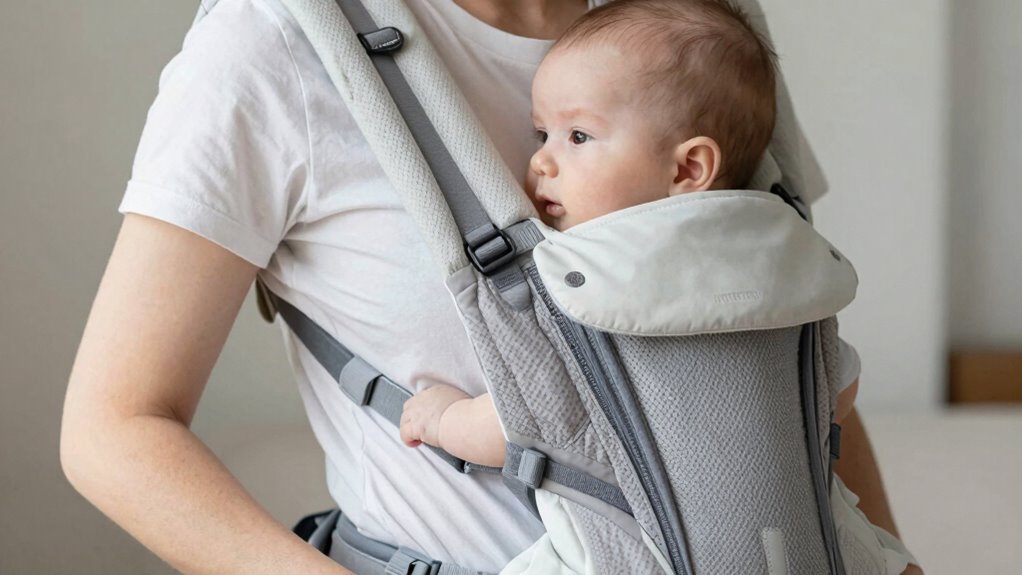
Selecting the right baby carrier is essential to prevent back pain and guarantee comfort for both you and your baby. To assure baby carrier safety, choose a carrier that supports your child’s hips properly and distributes weight evenly. Always follow the manufacturer’s instructions for correct positioning, adjusting straps for a secure fit. Proper placement keeps your baby comfortable and prevents strain on your back. Keep in mind that a well-fitted carrier reduces pressure points and improves posture, minimizing discomfort. Regularly check for signs of improper fit or discomfort in your child, and adjust as needed. Using a carrier that prioritizes both safety and comfort helps you enjoy hands-free bonding without risking back injuries. Remember, a supportive, ergonomic carrier is key to a pain-free carrying experience.
Frequently Asked Questions
Can I Wear a Baby Carrier When Recovering From Back Injury?
You should be cautious about wearing a baby carrier while recovering from a back injury, especially if you experience hip tension or ergonomic issues. It’s best to consult your healthcare provider first, as improper support can worsen your condition. If cleared, choose an ergonomic carrier that distributes weight evenly and provides proper lumbar support. Always listen to your body and avoid carriers that cause discomfort or strain during use.
Are There Specific Baby Carriers for Taller or Shorter Parents?
You’ll find there are baby carriers designed specifically for taller or shorter parents, making your life so much easier, it feels like magic. Look for adjustable straps and an ergonomic design to tailor the fit perfectly to your height. These carriers distribute weight evenly, reducing strain on your back and shoulders. Whether you’re petite or tall, choosing a carrier with these features ensures comfort and support for both you and your baby.
How Long Can I Safely Wear My Baby Carrier Without Back Fatigue?
You can typically wear your baby carrier safely for about 1 to 2 hours at a time, depending on your comfort. To prevent back fatigue, focus on a carrier with good weight distribution and ergonomic design, which helps support your back evenly. Take regular breaks, switch sides if possible, and listen to your body. This way, you stay comfortable and protect your back during extended wear.
Do Carrier Materials Affect Back Comfort and Support?
Yes, carrier materials markedly influence back comfort and support. Flexible materials like stretchy fabrics adapt better to your body, reducing strain, while breathable fabrics help prevent overheating and discomfort. Choosing a carrier with the right combination of material flexibility and fabric breathability guarantees better weight distribution and support, making it easier to wear your baby comfortably for longer periods without back fatigue. Always prioritize high-quality, supportive materials for maximum comfort.
What Are Signs My Baby Carrier Is Causing Back Strain?
If your baby carrier causes posture issues or shoulder pain, you’re likely experiencing signs of back strain. You might notice discomfort or soreness in your shoulders, neck, or lower back after wearing it. Also, if you find yourself adjusting your posture constantly or feeling tired quickly, these are clues that your carrier isn’t providing proper support. It’s important to switch to a better-fitting carrier to protect your back and keep you comfortable.
Conclusion
Choosing the right baby carrier can reduce back strain considerably—did you know that improper carrying positions can cause up to 80% of back pain in parents? By prioritizing ergonomic design, proper fit, and correct wearing techniques, you can keep your back healthy while keeping your little one close. Investing in a supportive carrier isn’t just comfy—it’s essential for your long-term comfort and well-being. So, pick wisely and carry confidently!