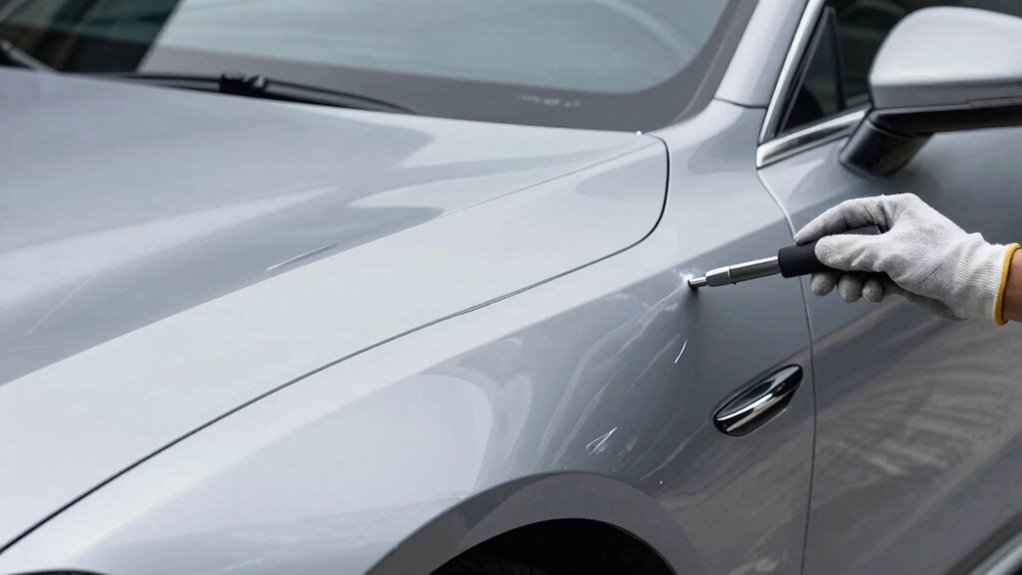

Paintless Dent Repair (PDR) works best on minor to moderate dents that haven’t cracked or chipped the paint. If your dent is small, shallow, and located on an accessible, flat panel, chances are it can be fixed with PDR. However, if the damage involves large, deep, creased dents or broken paint, traditional repair methods are needed. Want to know more about how to assess your dents and save time and money? Keep exploring for details.
Key Takeaways
- PDR works best on small to medium dents with intact paint and accessible, flat panels.
- Dents involving cracked, chipped, or stretched paint are unsuitable for PDR.
- Deep, creased, or sharp-edged dents typically require traditional repair methods.
- Large dents over 3 inches or in hard-to-reach areas may exceed PDR capabilities.
- Proper inspection helps determine if PDR is appropriate or if conventional repairs are needed.
What Is Paintless Dent Repair and How Does It Work?
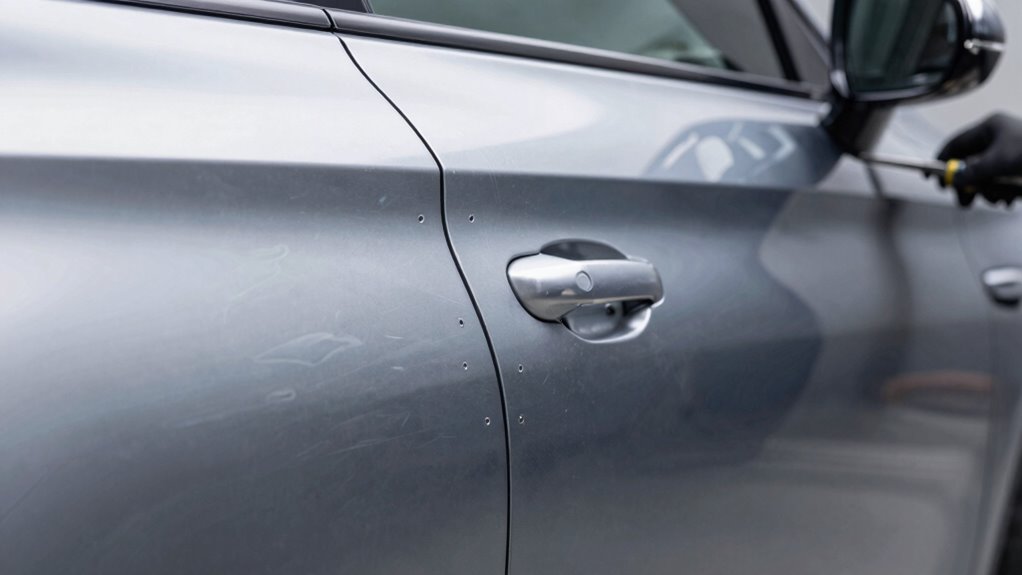
Paintless Dent Repair (PDR) is a technique used to fix dents and dings without harming your vehicle’s paint. It involves specialized tools that gently manipulate the metal from behind the panel, restoring its original shape. This process is a form of paintless dent removal, which preserves your vehicle’s factory finish. Dent removal techniques in PDR are precise and rely on skilled technicians who can access the damage area through small openings or gaps. Unlike traditional repair methods, PDR doesn’t require sanding, filling, or repainting, making it quicker and more cost-effective. By carefully massaging the metal back into place, this method restores your car’s appearance without the need for extensive bodywork. It’s a smart choice for minor dents and dings that haven’t broken the paint surface. Additionally, smart tools and techniques enhance the accuracy and efficiency of the repair process. Because PDR avoids invasive procedures, it also helps maintain the vehicle’s resale value, which is an important consideration for many owners. The success of PDR largely depends on the skilled technicians who execute the process with precision and care. Moreover, the ability to access hard-to-reach areas is crucial for achieving a seamless repair, highlighting the importance of specialized training for technicians. Furthermore, understanding the contrast ratio and other technical factors can help determine the best approach for different types of dents and damage.
Which Dents Are Good Candidates for PDR?

Most dents are suitable for PDR if they haven’t cracked or chipped the paint. These dents usually have clean, smooth surfaces that allow the technician to access the backside of the panel easily. If the paint remains intact, there’s less concern about color matching or paint blending, making repairs more straightforward. Minor to moderate dents caused by hail, door dings, or small impacts are typically good candidates. When the paint is undamaged, PDR can restore the panel’s original shape without needing repainting. This process ensures the color match stays perfect, and paint blending isn’t necessary. Dents with sharp creases or extensive paint damage, however, may not be suitable for PDR, as the repair could affect the original finish. Additionally, understanding the physical properties of the dent and the panel can help determine if PDR is feasible.
How to Identify Dents Suitable or Unsuitable for PDR

To determine if a dent is suitable for PDR, consider its size, as small to medium dents usually respond best. The location matters too—dents on flat panels are easier to fix than those in hard-to-reach areas. Additionally, assess the shape and depth; shallow, smooth dents are ideal, while deep or creased dents may not be suitable. Free Floating techniques can also be effective in certain cases, depending on the dent’s characteristics.
Dent Size Limitations
Understanding dent size is essential when determining if PDR is a viable repair option, as not all dents can be effectively addressed this way. Generally, small to medium dents respond best to paintless techniques, especially if the paint hasn’t been damaged. Larger dents or those with creases often exceed PDR capabilities. Additionally, industry recognition as a top repair method depends on adherence to specific standards and limitations. Recognizing repair limitations can help set realistic expectations and ensure proper repair decisions. Moreover, knowing the dent size limitations is crucial because attempting to repair dents outside these parameters may result in inadequate results or further damage. The ability to accurately assess dent size can prevent unnecessary repairs or additional damage during the process. | Dent Size | Suitable for PDR | Not Suitable for PDR |
| —————————- | —————— | ———————— |
|---|---|---|
| Small (less than 1 inch) | Yes | |
| Medium (1-3 inches) | Yes | |
| Large (over 3 inches) | No | Yes |
| Very large or multiple dents | No | Yes |
| Dents with paint damage | No |
Knowing these limits helps you decide if PDR is worth pursuing or if traditional repair methods are needed.
Location of Dent
The location of a dent plays a essential role in determining whether PDR is a suitable repair method. Dents on flat, accessible panels like doors, fenders, or hoods are usually ideal candidates. If you notice a door ding caused by a minor scrape or impact in a parking lot, PDR can often restore it easily. However, dents located near the edges or in hard-to-reach areas, such as inside door cavities or near the window frame, may be more challenging. Dents on areas with complex curves or reinforced structures might also be unsuitable for PDR. Evaluating the dent’s position helps you decide if it’s worth pursuing paintless repair or if other methods are necessary. Proper location understanding is essential for a successful, cost-effective fix.
Shape and Depth
Evaluating a dent’s shape and depth is key to determining if PDR will work effectively. The paint shape reveals the dent’s profile—smooth, uniform shapes are easier to repair, while jagged or creased dents may pose problems. Dent depth is equally important; shallow dents usually respond well to PDR since they don’t affect the paint’s integrity. Deep dents, especially those with sharp edges or stretching paint, are less suitable because they risk cracking or paint damage during repair. To assess, gently run your fingers over the dent to feel its contours and measure its depth if possible. If the dent is shallow and has a smooth, rounded shape, PDR is likely a good option. Conversely, deep or sharply shaped dents may require traditional repair methods. Additionally, the accessories you use with your smartphone can sometimes interfere with your ability to evaluate and repair dents effectively. Using proper lighting during inspection can also improve your ability to accurately assess the dent’s shape and depth. Understanding the limitations of PDR helps ensure you choose the right repair method for each dent. Recognizing the types of dents that respond well to PDR can save time and money. Being aware of the dent’s shape and depth can also help you better communicate with professional repair technicians when needed.
Signs That a Dent Can’t Be Fixed With PDR?
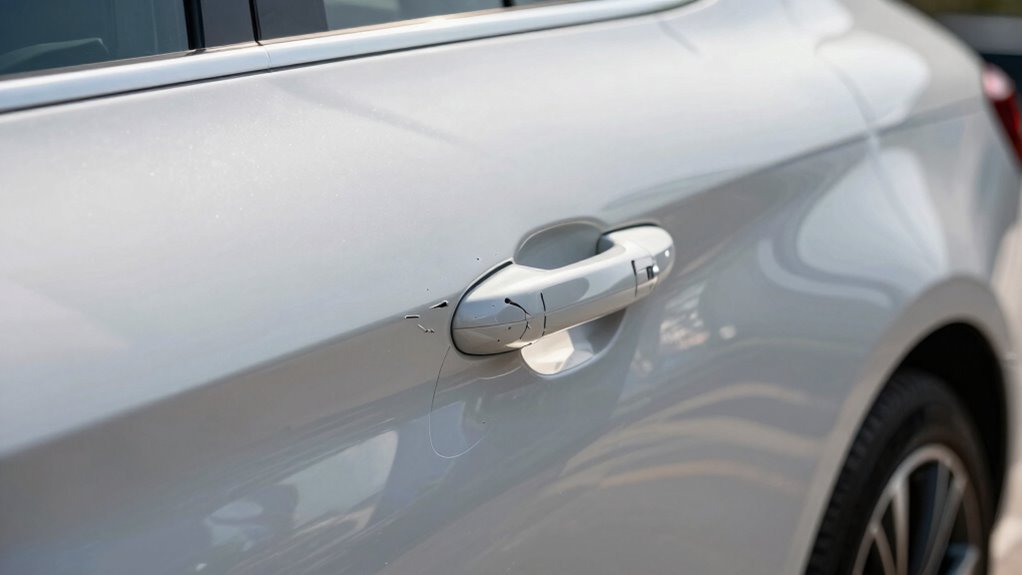
Not all dents are suitable for paintless dent repair (PDR). If the damage has caused the metal to stretch or crack, PDR isn’t an option. Deep, sharp, or creased dents often require panel replacement instead of PDR, since the technique relies on the metal’s elasticity. Additionally, dents with paint damage, such as cracking or chipping, can’t be fixed with paintless dent repair because the process doesn’t address surface imperfections. If you notice the dent is located near the edge of a panel or has sharp angles, it’s likely beyond PDR’s scope. In these cases, traditional repairs or panel replacement are necessary to guarantee proper restoration and safety.
Key Factors That Determine PDR Repairability
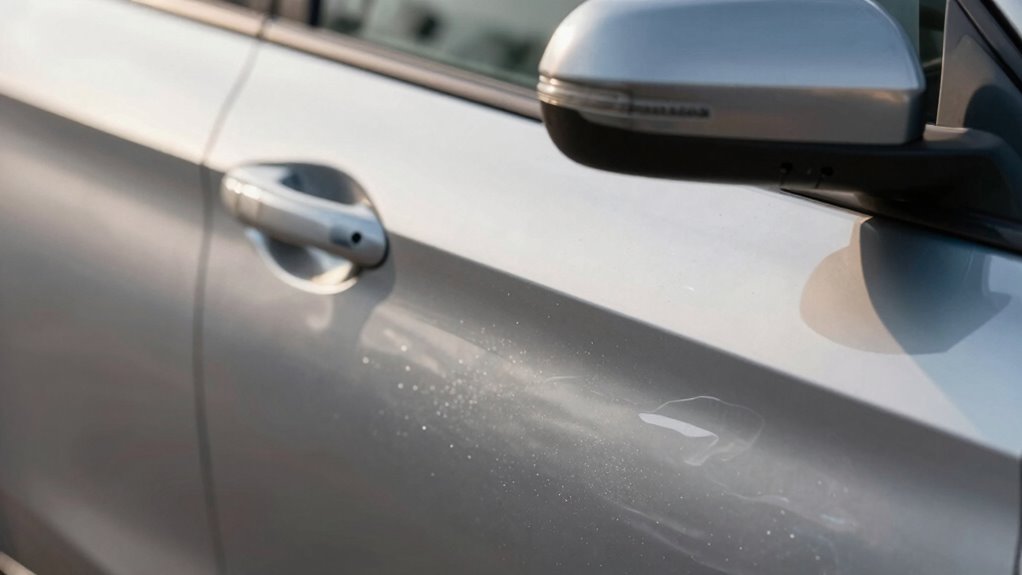
Your car’s damage location and how easily a technician can access it play a big role in PDR repairability. The size and depth of the dent also matter—smaller, shallow dents are typically easier to fix. Understanding these factors helps determine if PDR is a good option for your vehicle. Additionally, field-of-view considerations, such as the angle and accessibility of the dent, can influence repair success. Proper damage assessment ensures the most effective repair approach. Evaluating the material type of your vehicle’s panels can also affect the feasibility of a paintless repair, since some materials respond better to PDR techniques. Being aware of repairability factors and how they relate to at-home repair options can help you make a more informed decision about your repair options.
Damage Location and Accessibility
The location and accessibility of a dent play a crucial role in determining whether PDR can effectively fix it. If a dent is in a hard-to-reach area or obstructed by components like trim, internal panels, or braces, accessibility challenges arise. These obstacles can prevent the technician from applying the necessary tools or force to realign the metal properly. As a result, repair limitations become apparent, and some dents may not be suitable for PDR. Dents that are easily accessible, on flat panels, or near the surface tend to be more repairable. Conversely, deep, recessed, or tightly tucked dents often require alternative methods. Evaluating accessibility upfront helps ensure you choose the right repair approach and avoid unnecessary costs or unsuccessful attempts. Additionally, understanding the damage location and accessibility can help you better assess the possible outcomes and limitations of PDR before starting repairs.
Dent Size and Depth
Dent size and depth are critical factors in determining whether Paintless Dent Repair can successfully restore your vehicle. Smaller, shallow paintless dents are usually easier to fix because the repair process involves gently massaging the metal back into shape without damaging the paint. If the dent is large or deep, it can stretch or crack the metal, making the repair process more complicated or even impossible. Deep dents may also weaken the vehicle’s structural integrity, which PDR can’t address. The extent of the damage also influences the likelihood of a successful repair, as extensive deformation can surpass the repairable criteria for PDR. Additionally, understanding metal stretching and how it affects repairability helps technicians determine if PDR is suitable. For example, if the dent causes significant paint damage, traditional repair methods might be necessary. Ultimately, the size and depth of the dent help technicians assess if the paintless dent repair is a viable option or if traditional methods are needed. The goal is to restore your vehicle without unnecessary invasiveness, but not all dents fall within these parameters.
When Should You Consider Traditional Dent Repair Methods?

While paintless dent repair offers a quick and cost-effective solution for many minor dents, there are times when traditional repair methods become necessary. If the dent is large, deep, or has caused the metal to stretch or crack, paintless removal isn’t enough. In such cases, metal shaping and panel restoration are required to return your car to its original form. Consider traditional methods if the dent involves creases, sharp edges, or damage near the panel’s edge. These techniques allow for precise reshaping, filling, and repainting that PDR can’t handle.
| Dent Type | Recommended Repair Method | Why |
|---|---|---|
| Large dents | Traditional repair | Needs metal shaping |
| Deep dents | Traditional repair | Requires filling |
| Sharp creases | Traditional repair | Difficult for PDR |
| Edge damage | Traditional repair | Needs panel realignment |
| Cracks or tears | Traditional repair | Structural integrity |
How to Assess Your Car’s Dents for PDR Compatibility

Evaluating whether your car’s dent is suitable for paintless dent repair begins with inspecting its size, depth, and location. Small to medium dents on flat surfaces are usually ideal, especially if they haven’t caused paint damage. Consider the material type—steel or aluminum—as PDR works best on metal panels. For dents that involve multiple panels or severe creases, PDR might not be effective. Color matching isn’t a concern because PDR doesn’t involve repainting; it’s all about reshaping the existing panel. Also, check if the dent is easily accessible from behind; if you can reach it with tools, chances are good for successful repair. Proper assessment helps you determine if PDR will restore your car without repainting or additional repairs.
Why Choosing the Right Repair Method Saves Time and Money
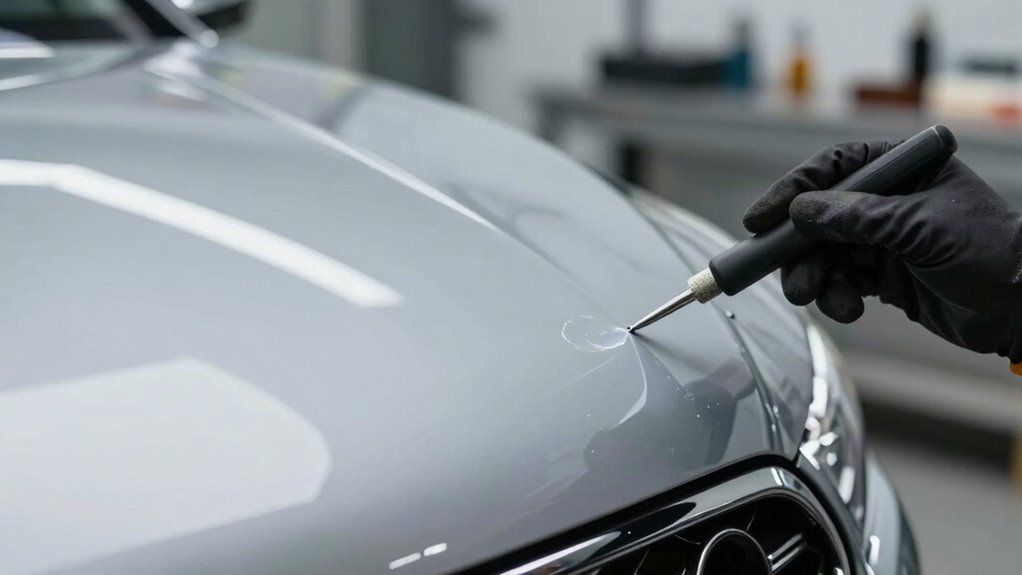
Choosing the right repair method can considerably impact both your time and money. When you perform a proper dent assessment, you determine whether paintless removal is suitable, avoiding unnecessary repairs. Using the correct approach prevents costly mistakes, like trying to fix a dent that’s beyond PDR’s scope, which could lead to more damage or repainting. By selecting appropriate methods early, you save time since paintless removal is typically quicker than traditional repairs. Additionally, you reduce costs by avoiding unnecessary parts, paint, or labor. Knowing which dents qualify for PDR ensures you don’t waste resources on ineffective solutions. Ultimately, a proper dent assessment guides you toward the most efficient, affordable repair, ensuring your vehicle’s appearance is restored quickly and cost-effectively.
Frequently Asked Questions
Can PDR Fix All Types of Paint Damage?
No, PDR can’t fix all types of paint damage. If your car has scratches, chips, or extensive paint damage, PDR isn’t suitable since it doesn’t involve repainting or color matching. This method focuses on gently massaging dents back into place, leaving the paint intact. For severe paint issues, you’ll need traditional repairs that include repainting, where color matching becomes essential to restore your car’s original look.
How Long Does a Typical PDR Repair Take?
PDR processes typically take from 30 minutes to a few hours, depending on damage severity. During this time, your technician swiftly works to smooth out dents through skillful manipulation, avoiding paint matching issues and metal stretching. Light, minor dents often get fixed in under an hour, while larger or more complex damage may need more time. Rest assured, efficient, effective repairs keep you on the road faster.
Is PDR More Cost-Effective Than Traditional Methods?
Yes, PDR is generally more cost-effective than traditional methods. You’ll find a favorable cost comparison because PDR usually costs less due to less labor and no need for repainting. Plus, many insurance coverage plans prefer PDR for minor dents, making the process smoother and cheaper for you. Overall, choosing PDR can save you money and time while maintaining your vehicle’s original finish.
Are There Any Warranties for PDR Repairs?
Imagine you’re in the Wild West, and PDR offers you a trusty sidekick with solid warranty coverage. Yes, many reputable shops provide repair guarantees that cover issues like incomplete dents or surface imperfections. These warranties vary by provider but often last several months to a year. Always ask about the specific warranty coverage before your repair, so you know you’re protected in case of any post-repair surprises.
Can PDR Be Used on Older or Vintage Vehicles?
Yes, you can use PDR on vintage vehicles, but it depends on the age-related damage and condition of the metal. If the dents are shallow and the paint isn’t cracked or severely deteriorated, PDR is a good option. However, for older or more delicate vintage cars with rust or deep damage, traditional repairs might be better. Always consult with a professional to assess if PDR suits your vintage vehicle’s specific needs.
Conclusion
If you notice a small dent on your car’s door, PDR could be a quick fix—saving you time and money. For instance, a minor hailstorm dent was easily restored without paint, leaving your car looking new. But remember, larger or creased dents may need traditional repairs. Assess your dent carefully and choose wisely. When in doubt, consult a professional to guarantee you get the best repair method for your vehicle’s health and your wallet.