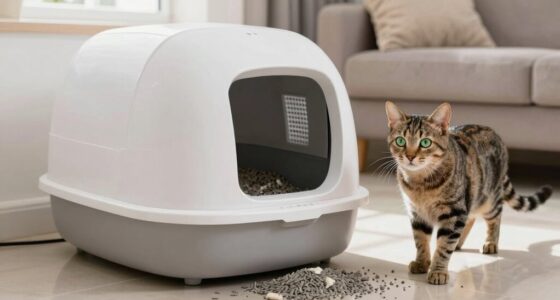

To keep your pet supplies organized without constant rebuying, designate specific storage spots for toys, bowls, and essentials, and regularly sort and discard worn-out items. Label containers to stay on top of inventory and monitor usage to avoid shortages. Cleaning and rotating toys or supplies prolongs their life and keeps things fresh. Developing a routine for tidying and inventory checks helps save money and prevents clutter. Keep exploring to uncover more helpful tips for stress-free pet care.
Listen free for 30 days with Audible
Thousands of audiobooks and originals — cancel anytime.
As an affiliate, we earn on qualifying purchases.
Key Takeaways
- Regularly inventory and monitor supplies to identify needs early and prevent unnecessary repurchases.
- Use labeled, dedicated storage containers for toys, food, and accessories to maintain order and easy access.
- Rotate pet toys and supplies to keep them engaging and extend their usability, reducing the need for frequent replacements.
- Establish consistent routines for tidying up and returning items to designated spots after use.
- Clean and maintain supplies regularly to prolong their lifespan and avoid premature replacement.
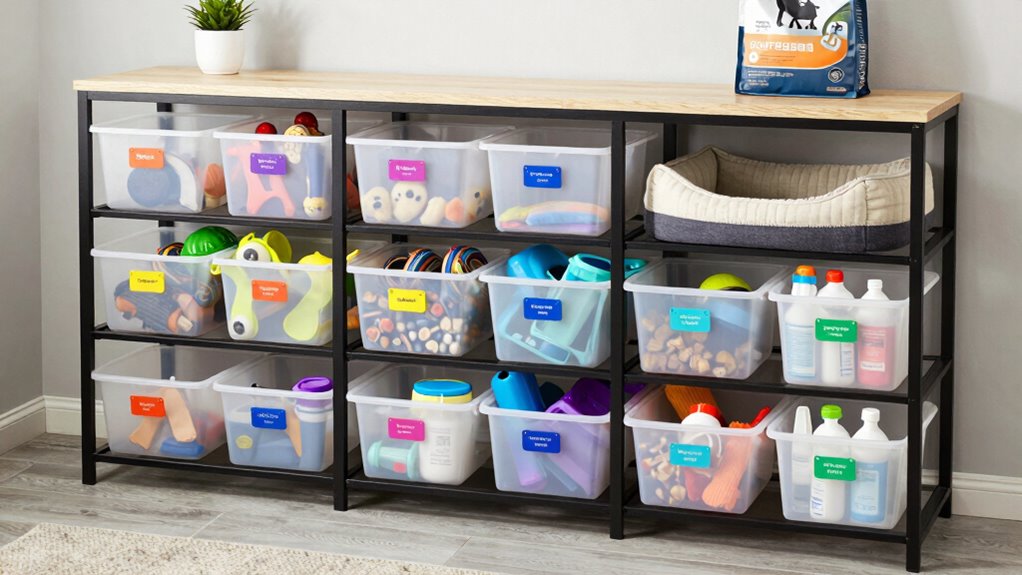
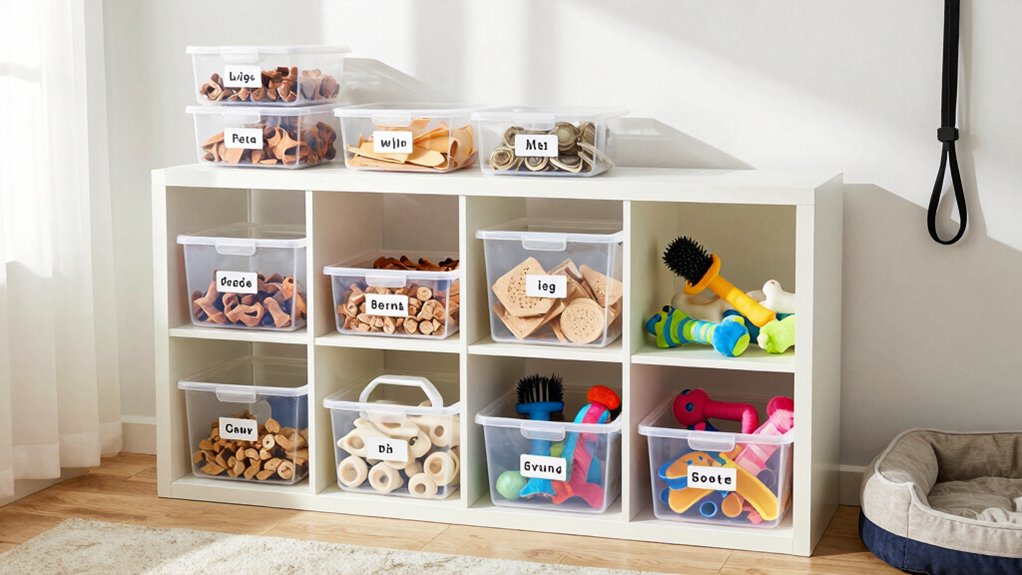
Keeping pet supplies organized can seem like a challenge, especially if your furry friend has a lot of needs. But with some strategic planning and a few simple habits, you can keep everything neat and accessible, preventing the constant need to rebuy essentials. One of the first things to tackle is pet toy storage. When toys are scattered across the house, it’s easy to lose track of what your pet has and to end up repeatedly purchasing new items. To avoid this, designate a specific bin or basket for all toys. Choose a container with a lid or a soft-sided bin that’s easy to open and close, making cleanup quick and simple. Regularly sort through the toys, discarding worn-out or unused ones, and rotate the remaining toys to keep your pet interested. This not only reduces clutter but also prolongs the life of the toys, saving you money in the long run. Establishing a consistent organization system can further help maintain order and prevent unnecessary repurchases. Additionally, labeling storage containers can streamline finding supplies and reinforce organization habits.
Next, focus on setting up a proper feeding station. A cluttered or poorly organized feeding area can lead to messes, waste, and even the need for frequent replacements of bowls or bedding. Invest in sturdy, easy-to-clean bowls placed on a mat or tray to contain spills. Position the feeding station in a consistent spot, ideally away from high-traffic areas, so your pet gets used to it. Keep extra supplies like food, treats, and cleaning supplies nearby in labeled containers or bins, so you always know what you have and what needs replenishing. Regularly check and clean the bowls to prevent buildup of bacteria, which can lead to more frequent replacements. Keeping track of supply usage can help you identify when it’s time to restock or replace items before they run out or become unusable. Incorporating a dedicated storage space can further reduce clutter and make it easier to locate what you need quickly. Implementing a systematic inventory check can also help you stay on top of your pet’s needs and avoid last-minute shopping trips. As part of this process, consider implementing a regular inventory check, which can help you stay ahead of supply needs and avoid last-minute shopping trips.
To keep everything organized over time, develop a routine of tidying up after each use. When your pet finishes playing or eating, put toys and bowls back in their designated spots. This habit prevents clutter from piling up and makes it easier to spot when supplies are running low. Additionally, keep a list or inventory of your pet supplies so you can monitor what needs restocking before it runs out. This proactive approach helps you avoid last-minute trips to the store or unnecessary repurchases. Over time, you’ll find that a little organization goes a long way in reducing waste, saving money, and making life with your pet more enjoyable and stress-free.
As an affiliate, we earn on qualifying purchases.
Frequently Asked Questions
How Often Should I Review and Reorganize Pet Supplies?
You should review and reorganize your pet supplies every three to six months. Regular inventory management helps you stay on top of what you have and what’s running low. Incorporate seasonal rotation to guarantee supplies suit the weather and your pet’s needs, preventing wastage. This routine keeps everything accessible, saves money, and avoids constant rebuying, making your pet’s care more efficient and stress-free.
What Are Eco-Friendly Storage Options for Pet Supplies?
You can choose eco-friendly storage options like recycling pet containers for reuse or repurposing, which keeps waste out of landfills. Biodegradable storage solutions made from natural materials, such as bamboo or cornstarch-based containers, are also great choices. These options help reduce your environmental impact while keeping your pet supplies organized. By selecting sustainable storage, you support eco-conscious living and guarantee your pet’s essentials stay tidy without harming the planet.
How Can I Prevent Pet Supplies From Getting Damaged or Spoiled?
To prevent pet supplies from getting damaged or spoiled, store pet food in airtight containers to preserve freshness. Keep supplies in a cool, dry place away from direct sunlight and moisture, which can cause spoilage. Regularly check for signs of damage or mold and rotate stock to use older items first. By maintaining proper storage conditions, you’ll guarantee pet food stays fresh, and supply damage prevention is effective.
What’s the Best Way to Label Pet Supply Containers?
The best way to label pet supply containers is using clear, waterproof labels or masking tape with a permanent marker. For container types, choose stackable plastic bins or glass jars for durability and visibility. Incorporate simple labeling techniques like color coding for different supplies or categories. This way, you can quickly identify items, prevent mix-ups, and guarantee your labels stay intact even with frequent handling or exposure to moisture.
How Do I Handle Excess or Unused Pet Supplies?
Don’t let excess pet supplies gather dust—think outside the box. You can donate unused items to local shelters or rescue groups, giving them a second chance. Use seasonal storage tips to keep supplies organized, separating items you’re not currently using. This way, you free up space and help others. Regularly review and rotate supplies, ensuring you’re not overwhelmed by unused products, and your storage remains neat and functional.
As an affiliate, we earn on qualifying purchases.
Conclusion
Staying organized with your pet supplies keeps your home tidy and your furry friend happy. With a bit of effort, you can avoid the chaos of constant rebuys—imagine you’re living in a well-kept 18th-century estate, not a jungle of clutter! Regularly declutter, use clear containers, and assign designated spots. Soon, you’ll be the master of pet supply organization, and your pet will thank you for the cozy, clutter-free life.
As an affiliate, we earn on qualifying purchases.
As an affiliate, we earn on qualifying purchases.
NFL season / tailgating Picks
team gear
As an affiliate, we earn on qualifying purchases.