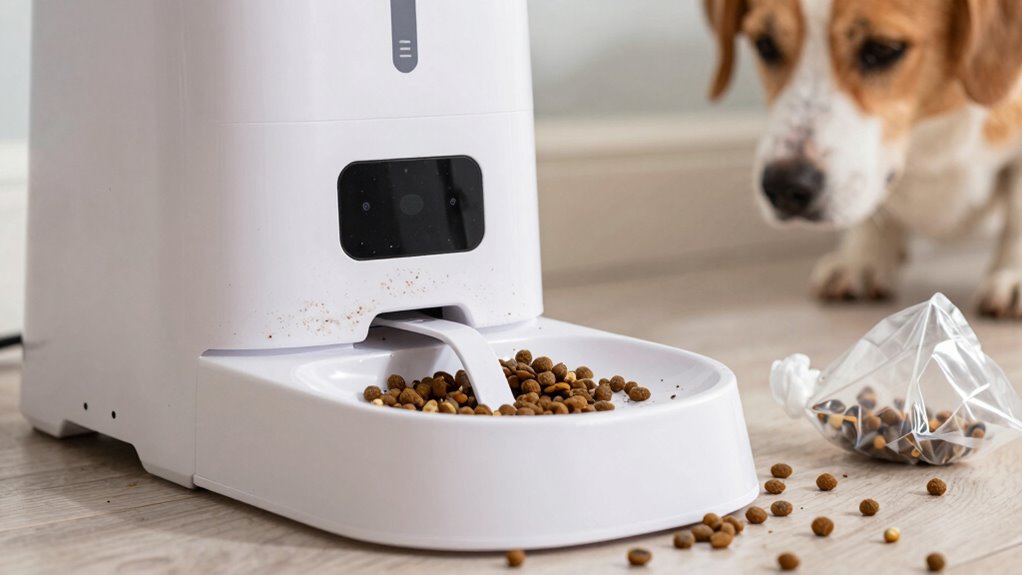

Neglecting regular cleaning and proper food management can make your automated pet feeder useless quickly. If you overlook routine maintenance, mold, bacteria, and malfunctions can develop, disrupting your pet’s feeding routine. Choosing inappropriate food or setting incorrect portions can lead to health issues or device jams. Failing to monitor food levels or update schedules also risks waste and missed meals. Keep your device in top shape and guarantee proper nutrition for your pet’s safety—more tips await if you keep exploring.
Key Takeaways
- Failing to clean the device regularly causes mold, bacteria buildup, and feeding malfunctions.
- Using inappropriate or spoiled food can lead to clumping, spoilage, and health issues.
- Neglecting to update portion sizes and schedules disrupts pet nutrition and feeding routines.
- Overfilling or underfilling the feeder hampers operation and causes food waste.
- Ignoring routine inspections and maintenance shortens device lifespan and increases malfunction risk.
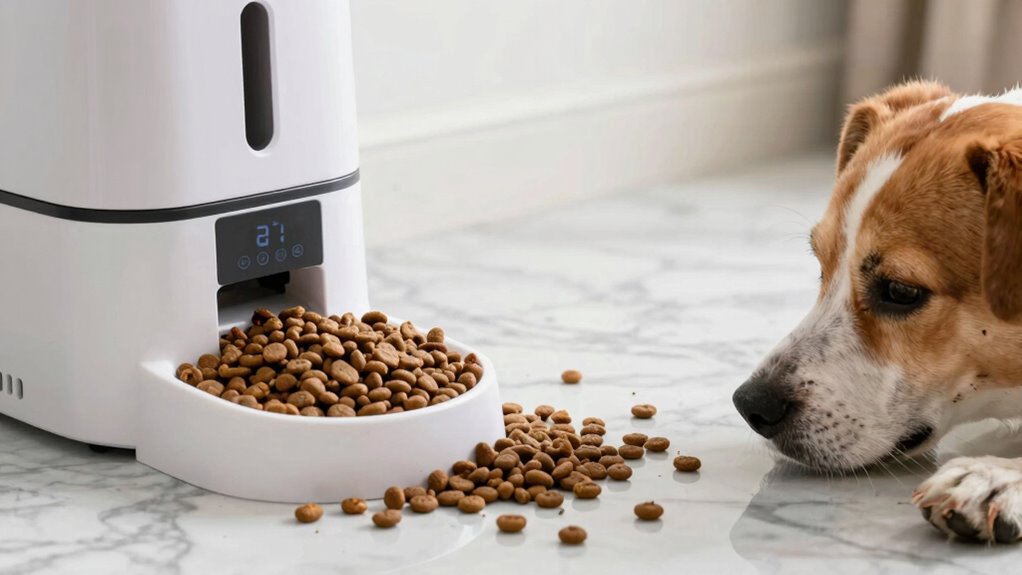
Automated pet feeding devices offer convenience, but if you’re not careful, they can also lead to common feeding mistakes that impact your pet’s health. One of the biggest errors is neglecting proper gear maintenance. Over time, food residue can build up inside the device, leading to mold or bacteria growth that can make your pet sick. Regular cleaning isn’t just about keeping things neat—it’s essential for guaranteeing your pet’s safety and maintaining the device’s functionality. If you ignore routine maintenance, the gear can jam or malfunction, which means your pet might not get fed on time or might receive inconsistent portions. This can disrupt their routine and potentially cause weight issues or nutritional deficiencies. Proper cleaning techniques are crucial for preventing bacterial growth and ensuring the device remains in optimal condition. Additionally, understanding the importance of device longevity can help pet owners invest in proper maintenance practices.
Neglecting regular cleaning of automated feeders can lead to mold, bacteria growth, and feeding malfunctions risking your pet’s health.
Another mistake revolves around mismanaging pet nutrition. Automated feeders are designed to distribute precise portions, but if you don’t program them correctly or choose inappropriate food, you risk feeding your pet an unbalanced diet. For instance, some devices aren’t suitable for wet or raw foods, which require specific handling to prevent spoilage or clumping. Feeding your pet the wrong type of food through an automated device can lead to digestive problems or nutrient imbalances. It’s essential to understand your pet’s unique dietary needs and guarantee the gear is compatible with their diet. Otherwise, the device becomes useless, and your pet’s health suffers. Understanding pet nutrition is key to ensuring your pet receives the proper diet through automated feeding.
You also need to be mindful of how often you refill the feeder. Overfilling or underfilling can cause operational issues or lead to food wastage. If you don’t keep the hopper adequately filled, your pet might go hungry or, conversely, overeat if the device dispenses more than intended. Properly managing the food levels ensures consistent feeding times and portions, supporting your pet’s health and wellbeing. Additionally, it’s important to check the settings periodically. If you forget to update portion sizes or feeding schedules, your pet might not receive the proper amount of food, which can affect their weight and overall health. Routine maintenance is also crucial for identifying potential device issues early and preventing malfunctions before they impact your pet’s feeding schedule. Regularly inspecting the device can help catch problems before they become serious. Moreover, keeping a schedule for cleaning and maintenance can help extend the lifespan of the equipment and ensure it functions reliably when needed.
In essence, automated pet gear can be a lifesaver when used correctly, but neglecting gear maintenance and pet nutrition can turn it into a useless tool. Regular cleaning, understanding your pet’s dietary needs, and managing the device’s settings are key to making sure your automated feeder truly benefits your pet. Otherwise, it’s just another piece of equipment that fails to serve its purpose, leaving your pet hungry or at risk of health issues. Remember, automation doesn’t replace your responsibility—it enhances it. Proper care and attention keep your pet safe, healthy, and well-fed.
Taking the time to properly care for your automated pet gear ensures its longevity and effectiveness, making it a reliable tool for your pet’s wellbeing.
automatic pet feeder cleaning brush
As an affiliate, we earn on qualifying purchases.
As an affiliate, we earn on qualifying purchases.
Frequently Asked Questions
How Often Should I Clean My Automated Pet Feeder?
You should clean your automated pet feeder at least once a week to guarantee proper hygiene and functionality. Regular cleaning prevents mold, bacteria, and leftover food buildup. Follow maintenance tips like unplugging the device before cleaning, using gentle soap and water, and drying all parts thoroughly. Consistent cleaning and maintenance help keep your pet’s food fresh, your feeder working smoothly, and avoid costly repairs or malfunctions down the line.
What Are the Signs of a Malfunctioning Pet Feeder?
You notice your pet isn’t eating, and suddenly, your automated pet feeder isn’t dispensing food—signs of malfunction. Check if the Pet feeder calibration is off or if there’s a jam blocking food flow. If problems persist, use manual feeding options to guarantee your pet’s needs are met. Unusual noises or inconsistent portions often indicate a malfunction, so regularly inspect and troubleshoot to keep everything running smoothly.
Can Automated Feeders Accommodate Special Dietary Needs?
Yes, automated feeders can accommodate special dietary needs if you choose models with dietary customization features. You need to guarantee ingredient compatibility by selecting a feeder that allows precise portion control and supports specific ingredients or supplements your pet requires. Always verify the feeder’s capabilities and consult your vet to match the device with your pet’s unique dietary restrictions, ensuring they get the right nutrition without risking health issues.
Are There Safety Features to Prevent Overfeeding?
Yes, many automated feeders include safety features like safety sensors and portion control settings. These sensors detect if your pet is near or trying to access food prematurely, preventing overfeeding or spills. Portion control guarantees your pet gets the right amount of food without overloading the bowl. By choosing a feeder with these safety features, you can confidently manage your pet’s diet and avoid potential health problems caused by overfeeding.
How Do I Troubleshoot Connectivity Issues With Smart Feeders?
If you’re experiencing connectivity issues with your smart feeder, start by checking for wireless interference from other devices, like microwaves or Wi-Fi routers. Make certain your power supply is steady and the charger is functioning properly, as power disruptions can cause disconnects. Restart your Wi-Fi router and the feeder, then reconnect the device through the app. Keep your firmware updated to reduce glitches and improve overall connectivity.
pet food storage containers for automated feeders
As an affiliate, we earn on qualifying purchases.
As an affiliate, we earn on qualifying purchases.
Conclusion
Avoiding feeding mistakes keeps your automated pet gear effective, ensuring your pet’s needs are met effortlessly. But neglecting these details turns convenience into chaos, making the technology useless. It’s a reminder that even the smartest gadgets depend on your attentiveness. Just like love and care, technology works best when paired with mindful actions. So, stay vigilant—your pet’s happiness and your peace of mind depend on it. In the end, simplicity and care make all the difference.
As an affiliate, we earn on qualifying purchases.
wet and dry pet food compatible feeder
As an affiliate, we earn on qualifying purchases.
As an affiliate, we earn on qualifying purchases.