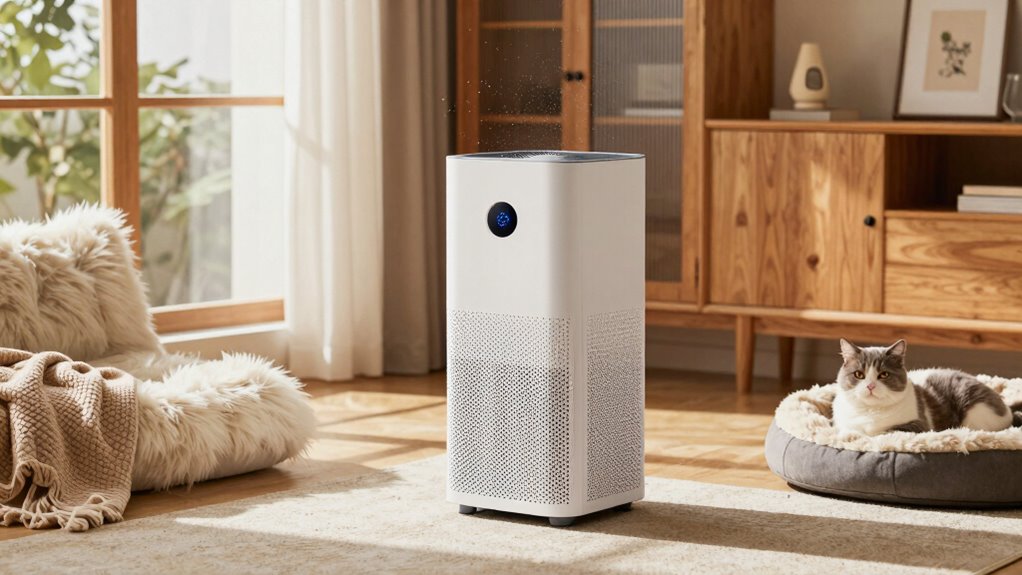

Whole-home pet dander air purifiers continuously filter your entire living space, markedly improving indoor air quality and reducing allergy symptoms like sneezing and itchy eyes. They use advanced multi-stage filters, including HEPA and activated carbon, to trap tiny particles and neutralize pet odors. These systems automatically adjust based on air quality and require regular maintenance to stay effective. If you want to discover how these systems can transform your home environment, keep exploring the options available.

Turn the school run and nap time into listening time
- Thousands of audiobooks, podcasts and originals
- Listen on your phone, tablet or Echo — also offline
- Cancel anytime
Key Takeaways
- Whole-home systems effectively reduce pet dander, allergens, and odors throughout the entire living space.
- They utilize advanced filtration, including HEPA and activated carbon, to capture tiny particles and neutralize odors.
- Continuous operation and sensor technology ensure optimal air quality and allergen removal.
- Regular maintenance, such as filter replacements, is essential for sustained performance and efficiency.
- These systems can significantly improve allergy symptoms and create a healthier environment for pets and humans.
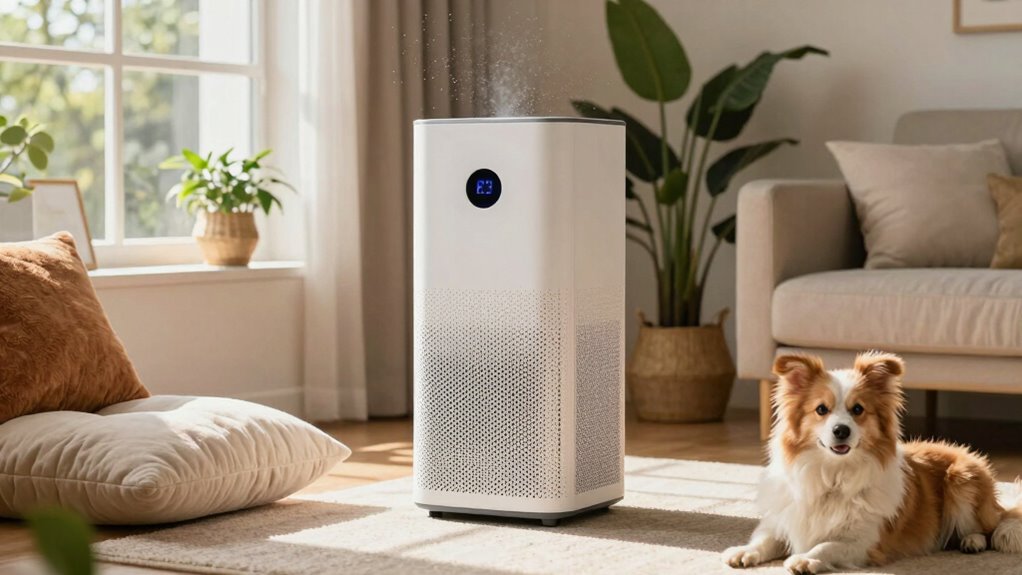
If you’re a pet owner, you know how pet dander can quickly turn your indoor air into a source of allergens. This tiny but persistent issue can make breathing uncomfortable and cause allergy symptoms to flare up, especially if you’re sensitive to pet allergens. That’s where pet dander air purifiers come into play, particularly whole-home systems designed to improve indoor air quality. These systems aren’t just about filtering out pet hair; they’re engineered to target microscopic dander particles and other airborne irritants, providing you with much-needed allergy relief.
Whole-home air purification systems use advanced air filtration technology to ensure your entire living space benefits from cleaner air. Unlike portable units, these systems are integrated into your home’s HVAC system, allowing them to continuously circulate and filter the air throughout your house. This means your living room, bedroom, and even the basement get consistent protection against pet dander, reducing airborne allergens that trigger allergy symptoms. With regular operation, you’ll notice a significant decrease in sneezing, coughing, and itchy eyes caused by pet allergens.
Whole-home systems continuously circulate and filter air, reducing pet dander and allergy symptoms throughout your house.
These systems often feature multi-stage filters, combining HEPA filters with activated carbon or other media that trap tiny particles and neutralize odors. HEPA filters are essential because they can capture at least 99.97% of airborne particles as small as 0.3 microns, including pet dander. The air filtration technology used in whole-home systems is designed to not only trap allergens but also to prevent them from recirculating, maintaining a fresher, healthier environment. Additionally, understanding air filtration technology can help you make better choices when selecting a system for your home. Regular maintenance of these systems also ensures that the filter efficiency remains high and continues to provide effective allergen removal. Properly maintained systems can also contribute to the overall energy efficiency of your home, reducing operational costs. Moreover, choosing systems with sensor technology can help optimize performance by automatically adjusting filtration levels based on air quality.
Expect your home’s air quality to improve steadily as the system runs continuously. Over time, you’ll notice a reduction in allergy symptoms, cleaner indoor air, and even fewer pet odors lingering around. These systems are built to be low-maintenance, requiring only periodic filter replacements to keep them functioning at peak performance. Regularly maintaining the filters ensures optimal operation and maximizes the air cleaning effectiveness. With regular upkeep, you’ll sustain allergy relief and enjoy a healthier space for both you and your pets.
whole-home pet dander air purifier
As an affiliate, we earn on qualifying purchases.
As an affiliate, we earn on qualifying purchases.
Frequently Asked Questions
How Often Should I Replace the Filters in a Pet Dander Air Purifier?
You should replace the filters in your pet dander air purifier every 3 to 6 months, depending on the filter lifespan and your home’s pet activity. Regular replacement guarantees ideal air quality. Check your device’s manual for specific guidance, as some filters may need more frequent changes if you have multiple pets or high dander levels. Staying consistent with replacement frequency keeps your purifier working efficiently and maintains healthier indoor air.
Are Whole-Home Systems Suitable for Small Apartments?
Yes, whole-home systems can work in small apartments, but space considerations matter. If your apartment is compact, a smaller or wall-mounted system might be more practical, ensuring you don’t sacrifice space or airflow. While whole-home systems are effective for air purification, assess your apartment size first. You want to make sure the system fits comfortably without overwhelming your living area, providing cleaner air without clutter.
Do Pet Dander Air Purifiers Remove Odors Effectively?
Pet dander air purifiers are like a welcome change when it comes to odor removal and scent elimination. They effectively reduce pet smells, capturing airborne particles and neutralizing odors with HEPA filters and activated carbon. While they won’t completely eliminate every scent, they greatly improve indoor air quality, making your space smell fresher and cleaner. For best results, choose a purifier designed specifically for odor and pet dander control.
Can Air Purifiers Eliminate All Pet Allergens Completely?
Air purifiers can’t eliminate all pet allergens completely, but they considerably reduce pet allergy symptoms. With effective air filtration, these systems capture pet dander, pollen, and other airborne particles, helping you breathe easier. Regular maintenance and choosing a purifier with HEPA filters improve results. While they won’t remove every allergen, consistent use creates a cleaner environment, easing allergy discomfort and improving overall air quality in your home.
What Maintenance Is Required for Long-Term Operation?
Ironically, maintaining your air purifier is simple—just follow the maintenance schedule. You’ll need to regularly check the filter lifespan and replace filters when they’re saturated. Typically, filters last 6 to 12 months, but this varies. Keep the system clean and make sure vents are clear. Ignoring these steps can turn your whole-home system into just fancy decor, defeating its purpose of reducing pet allergens effectively.
HEPA and activated carbon air purifier system
As an affiliate, we earn on qualifying purchases.
As an affiliate, we earn on qualifying purchases.
Conclusion
A whole-home pet dander air purifier is like a vigilant guardian, constantly patrolling your space to keep allergens at bay. While it can considerably improve your indoor air quality, remember it’s not a magic wand. Regular cleaning and maintenance are your allies in this battle. Think of your system as a trusted partner, working tirelessly to create a healthier, more comfortable home—your sanctuary where pet love and fresh air coexist harmoniously.
HVAC integrated air purifier for pet allergies
As an affiliate, we earn on qualifying purchases.
As an affiliate, we earn on qualifying purchases.
automatic air quality sensor air purifier
As an affiliate, we earn on qualifying purchases.
As an affiliate, we earn on qualifying purchases.
Halloween Picks
halloween
As an affiliate, we earn on qualifying purchases.