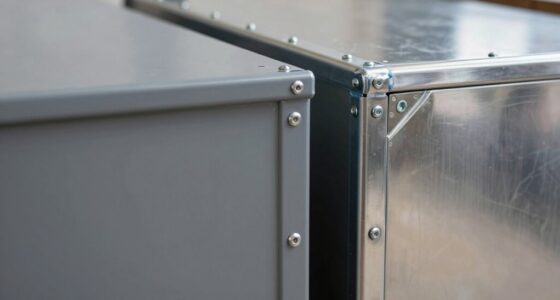

When selecting heavy-duty basement shelving, it’s important to understand that weight ratings are guidelines provided by manufacturers based on controlled tests. These ratings assume even weight distribution and don’t guarantee indefinite capacity. Overloading or concentrating heavy items can weaken shelves or cause failure. To stay safe, always stick below the maximum ratings and distribute weight evenly. Want to learn how proper installation and materials can boost shelf longevity? Keep exploring for useful tips.
Listen free for 30 days with Audible
Thousands of audiobooks and originals — cancel anytime.
As an affiliate, we earn on qualifying purchases.
Key Takeaways
- Weight ratings indicate the maximum safe load under ideal, evenly distributed conditions, not guaranteed limits.
- Real-world factors, like uneven weight distribution and installation quality, can reduce actual shelf capacity.
- Proper installation and even load placement are crucial for maintaining shelf safety and longevity.
- Materials and environment influence durability; rust-resistant steel or treated wood are recommended for longevity.
- Staying below the rated weight capacity and understanding its limitations enhances safety and shelf lifespan.
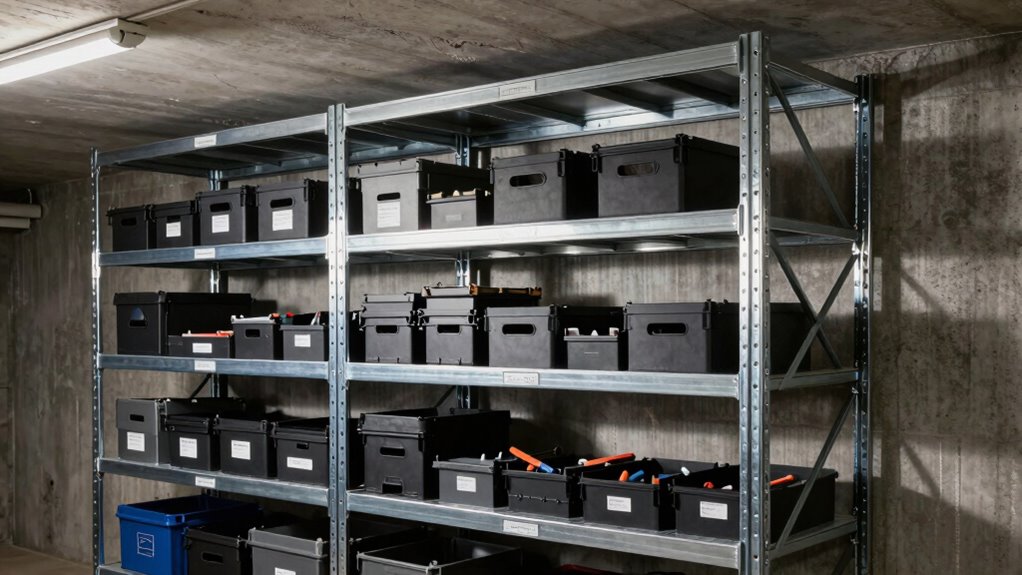
Heavy-duty shelves must withstand frequent use and bear significant weight without warping or collapsing. Steel is a common choice because of its strength and resilience, especially when coated with rust-resistant finishes for longevity. Solid wood or composite materials might look appealing, but they often lack the strength needed for heavy loads over time. When evaluating material durability, think about the environment of your basement—moisture, temperature fluctuations, and potential exposure to water can influence your choice. Shelving made from corrosion-resistant metals or treated wood can help prevent deterioration, ensuring your investment lasts. Additionally, understanding the weight ratings provided by manufacturers is crucial, but it’s equally important to recognize their limitations in real-world scenarios. weight ratings are typically provided by manufacturers based on controlled testing, but they don’t always account for real-world conditions. For example, the stated weight capacity might assume a uniform distribution of weight across the entire shelf. If you concentrate heavy items in one spot, you could exceed the safe limit, even if the total weight is within the specified rating. To stay safe, always distribute weight evenly and leave some margin below the maximum rating. Recognizing the limitations of weight ratings can help you make safer and more informed decisions about your shelving setup. It’s also helpful to consider proper installation techniques, as they can significantly impact the overall stability and load-bearing capacity of your shelves. Proper installation methods, along with understanding weight distribution, are key factors in ensuring your shelves remain safe and durable over time. Remember, the rating isn’t a guarantee that the shelf can hold that weight indefinitely; it’s a guideline that should be respected to maintain safety and durability.

JOJUOU 71"H x 35"W Heavy Duty Garage Shelving, 5-Tier Adjustable Metal Storage Shelves, Utility Steel Storage Rack for Garage, Warehouse, Pantry, Basement, Industrial & Workshop Organization,15.7"D
- Heavy Duty Capacity: Supports up to 2050 lbs total
- Quick Tool-Free Assembly: Assembles in approximately 10 minutes
- Adjustable Shelf Heights: Customizable to fit various items
As an affiliate, we earn on qualifying purchases.
As an affiliate, we earn on qualifying purchases.
Frequently Asked Questions
How Is Weight Capacity Determined for Basement Shelving Units?
You determine a basement shelving unit’s weight capacity by considering material durability and proper installation techniques. Strong materials like steel or reinforced wood support heavier loads, but if installation isn’t secure, the capacity drops. Always follow manufacturer guidelines, ensuring shelves are properly anchored and evenly loaded. By combining sturdy materials with correct installation, you optimize the shelving’s weight capacity, preventing damage and ensuring safety in your basement storage.
Can Weight Ratings Vary Between Different Brands or Models?
Yes, weight ratings can vary between brands and models due to differences in material durability and construction quality. Some brands use sturdier materials or reinforced designs, allowing for higher weight capacities. Additionally, aesthetic options may influence design choices, but they typically don’t affect weight ratings. Always check the manufacturer’s specifications for each model to make certain it meets your needs and that you’re getting reliable, durable shelving that fits your style.
What Safety Precautions Should I Take With Heavy-Duty Shelving?
Think of your heavy-duty shelves as the backbone of your storage; safety starts with proper precautions. You should regularly check the material durability and guarantee all shelves are securely anchored to the wall. Avoid overloading beyond the weight ratings, and use safety brackets if necessary. Always follow manufacturer instructions, and periodically inspect for signs of wear or instability. Taking these steps keeps your shelving sturdy and your belongings safe.
How Often Should I Inspect Shelving for Safety and Stability?
You should inspect your shelving at least quarterly to guarantee safety and stability. During each check, focus on shelf maintenance by looking for signs of wear, damage, or uneven load distribution. Regular inspections help catch issues early, preventing accidents. Pay attention to any sagging, loose brackets, or wobbling, and address problems promptly. Consistent monitoring keeps your heavy-duty shelving secure and ensures it continues to support your storage needs safely.
Do Weight Ratings Account for Dynamic Loads or Only Static Loads?
Sure, your heavy-duty shelving’s weight ratings mostly cover static loads, not the wild, unpredictable dance of dynamic loads. When you toss in uneven load distribution or sudden jolts, the material strength gets tested beyond the static rating. So, don’t assume those numbers are a free pass for reckless loading. Think of it as a polite limit — static loads are the guest list, dynamic loads crash the party.

Amazon Basics 5-Shelf Adjustable Heavy Duty Steel Wire Rack, Space Saving Storage Shelving Organizer for Kitchen, Garage, No-Tool Assembly, 350 lbs Weight Capacity, 36" x 14" x 72", Chrome
- Number of Shelves: 5 shelves for storage
- Material: Heavy-duty steel with chrome finish
- Weight Capacity: 350 lbs per shelf, 1750 lbs total
As an affiliate, we earn on qualifying purchases.
As an affiliate, we earn on qualifying purchases.
Conclusion
Think of your basement shelves like a trusty bridge—if you overload it, the structure weakens. I once saw a shelf buckle under weight, reminding me that understanding weight ratings isn’t just about numbers; it’s about safety and peace of mind. Whether you’re storing tools or boxes, knowing what those ratings mean helps you avoid surprises. So, load wisely, and keep your basement safe—your shelves are only as strong as the weight they carry.

JOJUOU Heavy Duty Garage Shelving, 5-Tier Adjustable All Metal Storage Rack for Tools, Storage Bins & Bulk Items, Utility Steel Shelf for Garage,Warehouse, Workshop,Basement&Pantry,71"H x 46"W x 20"D
- 【2500LBS Heavy Duty Strength for Large Storage Projects】…
- 【Extra-Large 71"H x 46"W x 20"D Design for…
- 【Adjustable Shelves Designed Around Real Storage Needs】 Storage…
As an affiliate, we earn on qualifying purchases.
As an affiliate, we earn on qualifying purchases.

Jusgym 4 Pack Wall Mounted Garage Shelving, 2x3ft, 1400lbs Integrated Grid
- Heavy-Duty Load Capacity: Supports up to 1400 lbs total
- Easy Modular Installation: No drilling required, quick setup
- Universal Wall Compatibility: Fits concrete, wood, brick walls
As an affiliate, we earn on qualifying purchases.
As an affiliate, we earn on qualifying purchases.
Baby shower & registry season Picks
baby registry must-haves
As an affiliate, we earn on qualifying purchases.