
For most students and creators, I’d start with the 13-inch MacBook Air with M5, 24GB memory, and 512GB SSD: it balances portability and creative headroom without the storage premium of a 2TB setup. The 15-inch M5 Air is a stronger fit for a larger built-in workspace, while the 13-inch M5 with 32GB memory and 1TB SSD suits heavier multitasking and larger project libraries. The main choice is between a lighter laptop, more screen space, and extra memory or storage; renewed M1 and M2 models can stretch a student budget, but involve older hardware and less room to grow. The MacBook Neo and older Intel Air serve narrower needs rather than matching the current Air’s flexibility. Read on for how I rank all 12 options and which tradeoffs matter for your workload.

Turn the school run and nap time into listening time
- Thousands of audiobooks, podcasts and originals
- Listen on your phone, tablet or Echo — also offline
- Cancel anytime
Complete the kit


Key Takeaways
- The 13-inch M5 with 24GB memory and 512GB storage is the most balanced pick: it gives students and creators more working headroom than the listed 16GB configuration while keeping the portable 13-inch form.
- Screen size changes the daily experience more than the model name suggests: the 15-inch M5 options favor split-screen study and editing, while a 13-inch Air is easier to carry between classes.
- Memory and storage solve different problems: 32GB memory helps with demanding multitasking, while 1TB or 2TB storage holds more local media and project files.
- The M5 configurations lead for longevity and workload flexibility, but the M2 and M1 renewed models may suit lighter student use if their age, condition, and limited memory are acceptable.
- The Intel renewed Air and 8GB MacBook Neo are specialist choices, not direct substitutes for a current M5 Air: prioritize them only when basic tasks or a narrow budget matter more than creative headroom.
| Apple 2026 MacBook Air 13-inch Laptop with M5 Chip, 16GB RAM, 512GB SSD, Liquid Retina Display, Wi-Fi 7, Starlight |  | Best Overall for Most Students | Display: 13.6-inch Liquid Retina | Processor: Apple M5 chip | Memory: 16GB unified memory | VIEW ON AMAZON | See Our Full Breakdown |
| Apple MacBook Air 13-inch Laptop with M5 Chip, 32GB RAM, 1TB SSD, Midnight |  | Best for Multitasking Creators | Display: 13.6-inch Liquid Retina, 2560 × 1664 | Processor: Apple M5 chip with 10-core CPU | Graphics: 8-core integrated Apple GPU | VIEW ON AMAZON | See Our Full Breakdown |
| Apple 2026 MacBook Neo 13-inch Laptop with A18 Pro Chip, Liquid Retina Display, 8GB RAM, 256GB SSD, FaceTime HD Camera – Silver |  | Best for Everyday Student Basics | Display: 13-inch Liquid Retina, supports 1 billion colors | Processor: A18 Pro chip | Memory: 8GB unified memory | VIEW ON AMAZON | See Our Full Breakdown |
| Apple MacBook Air (Late 2020, M1 Chip, 13-inch, 8GB RAM, 256GB SSD) Silver (Renewed) |  | Best Renewed Entry Pick | Display: 13.3-inch Retina, 2560 × 1600 | Processor: Apple M1 chip, maximum 3.2 GHz | Memory: 8GB DDR3 SDRAM | VIEW ON AMAZON | See Our Full Breakdown |
| Apple 2025 MacBook Air 15-inch Laptop with M4 Chip, Sky Blue | 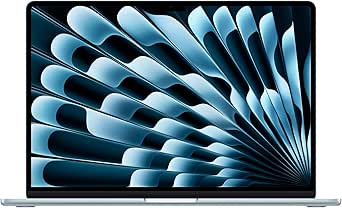 | Best for a Bigger Built-In Workspace | Display: 15.3-inch Liquid Retina | Processor: Apple M4 chip | Memory: 16GB unified memory | VIEW ON AMAZON | See Our Full Breakdown |
| Apple MacBook Air 13-inch Laptop with M5 Chip, 24GB RAM, 2TB SSD, Midnight |  | Best for Large Local Projects | Processor: Apple M5 chip, 10-core CPU and 8-core GPU | Display: 13.6-inch Liquid Retina, 2560 x 1664 | Memory: 24GB unified memory | VIEW ON AMAZON | See Our Full Breakdown |
| Apple MacBook Air (13-inch Retina display, 1.6GHz dual-core Intel Core i5, 128GB) – Space Gray (Renewed) |  | Best for Basic Coursework on a Tight Budget | Processor: 8th-generation Intel Core i5, 1.6GHz dual-core | Display: 13.3-inch Retina, 2560 x 1600 | Memory: 8GB DDR4 | VIEW ON AMAZON | See Our Full Breakdown |
| Apple MacBook Air 15-inch with M5 Chip, 32GB RAM, 512GB SSD – Midnight |  | Best for a Spacious Screen and Heavy Multitasking | Processor: Apple M5 chip, 10-core CPU and 10-core GPU | Display: 15.3-inch Liquid Retina, 2880 x 1864 | Memory: 32GB | VIEW ON AMAZON | See Our Full Breakdown |
| Apple 2022 MacBook Air with M2 Chip, 13-inch, 8GB RAM, 512GB SSD, Starlight (Renewed) |  | Best Renewed Apple Silicon Pick | Processor: Apple M2 chip | Display: 13.6-inch Liquid Retina | Memory: 8GB | VIEW ON AMAZON | See Our Full Breakdown |
| Apple MacBook Air 13-inch Laptop with M5 Chip, 32GB RAM, 1TB SSD, Sky Blue |  | Best Compact Air for Multitasking Creators | Processor: Apple M5 chip, 10-core CPU and 8-core GPU | Display: 13.6-inch Liquid Retina, 2560 x 1664 | Memory: 32GB unified memory | VIEW ON AMAZON | See Our Full Breakdown |
| Apple 2026 MacBook Air 15-inch Laptop with M5 Chip, 24GB RAM, 1TB SSD, Liquid Retina Display, Midnight |  | Best for Big-Screen Creative Work | Display: 15.3-inch Liquid Retina | Processor: M5 chip | Memory: 24GB unified memory | VIEW ON AMAZON | See Our Full Breakdown |
| 13-inch MacBook Air (M5): 24GB Memory, 512GB SSD – Midnight | | Best Compact M5 for Multitasking | Processor: M5 | Memory: 24GB | Storage: 512GB SSD | VIEW ON AMAZON | See Our Full Breakdown |
| macbook air for students and creator | Processor | Memory | Storage | Display |
|---|---|---|---|---|
| Apple 2026 MacBook Air 13-inch | Apple M5 chip | 16GB unified memory | 512GB SSD | 13.6-inch Liquid Retina |
| Apple MacBook Air 13-inch Lapt | Apple M5 chip with 10-core CPU | 32GB unified memory | 1TB SSD | 13.6-inch Liquid Retina, 2560 × 1664 |
| Apple 2026 MacBook Neo 13-inch | A18 Pro chip | 8GB unified memory | 256GB SSD | 13-inch Liquid Retina, supports 1 billion colors |
| Apple MacBook Air | Apple M1 chip, maximum 3.2 GHz | 8GB DDR3 SDRAM | 256GB SSD | 13.3-inch Retina, 2560 × 1600 |
| Apple 2025 MacBook Air 15-inch | Apple M4 chip | 16GB unified memory | 256GB SSD | 15.3-inch Liquid Retina |
| Apple MacBook Air 13-inch Lapt | Apple M5 chip, 10-core CPU and 8-core GPU | 24GB unified memory | 2TB SSD | 13.6-inch Liquid Retina, 2560 x 1664 |
| Apple MacBook Air | 8th-generation Intel Core i5, 1.6GHz dual-core | 8GB DDR4 | 128GB SSD | 13.3-inch Retina, 2560 x 1600 |
| Apple MacBook Air 15-inch with | Apple M5 chip, 10-core CPU and 10-core GPU | 32GB | 512GB SSD | 15.3-inch Liquid Retina, 2880 x 1864 |
| Apple 2022 MacBook Air with M2 | Apple M2 chip | 8GB | 512GB SSD | 13.6-inch Liquid Retina |
| Apple MacBook Air 13-inch Lapt | Apple M5 chip, 10-core CPU and 8-core GPU | 32GB unified memory | 1TB SSD | 13.6-inch Liquid Retina, 2560 x 1664 |
| Apple 2026 MacBook Air 15-inch | M5 chip | 24GB unified memory | 1TB SSD | 15.3-inch Liquid Retina |
| 13-inch MacBook Air | M5 | 24GB | 512GB SSD | — |
More Details on Our Top Picks
Apple 2026 MacBook Air 13-inch Laptop with M5 Chip, 16GB RAM, 512GB SSD, Liquid Retina Display, Wi-Fi 7, Starlight
I rank this as the most balanced pick for students who also edit photos, make presentations, or create lighter video projects. The M5 chip, 16GB of unified memory, and 512GB SSD offer more breathing room for coursework and creative apps than the MacBook Neo’s 8GB of memory and 256GB drive. Its 13.6-inch display and up to 18 hours of battery life suit campus days without making the laptop cumbersome to carry. Wi-Fi 7 and the 12MP Center Stage camera are useful extras for online classes and calls. The tradeoff is that it lacks the larger work area of the 15-inch M4 Air, and its integrated graphics are not aimed at demanding 3D work. I’d skip it if heavy graphics workloads or abundant screen space matter more than portability.
Pros:- M5 chip and 16GB unified memory suit multitasking and everyday creative work.
- 512GB SSD gives projects and course files more room than the MacBook Neo’s 256GB drive.
- Up to 18 hours of battery life supports long study days away from an outlet.
- Wi-Fi 7 and a 12MP Center Stage camera support fast connections and video calls.
Cons:- Integrated graphics are not a substitute for a dedicated GPU in demanding 3D work.
- The 13.6-inch screen offers less workspace than the 15-inch M4 MacBook Air.
- Limited port selection may call for an adapter when connecting accessories.
Best for: College students who carry their laptop daily and use creative apps alongside research, writing, and video calls.
Not ideal for: Students focused on intensive 3D rendering or those who want a large built-in workspace; integrated graphics and the 13.6-inch screen may feel limiting.
- Display:13.6-inch Liquid Retina
- Processor:Apple M5 chip
- Memory:16GB unified memory
- Storage:512GB SSD
- Camera:12MP Center Stage
- Battery life:Up to 18 hours
- Ports:Two Thunderbolt 4, MagSafe, headphone jack
- Wireless:Wi-Fi 7, Bluetooth 6
Our verdict“Choose this M5 Air for a portable, well-rounded student laptop that can handle everyday creative work without the Neo’s memory and storage limits.”
Apple MacBook Air 13-inch Laptop with M5 Chip, 32GB RAM, 1TB SSD, Midnight
This configuration is the strongest fit here for students whose creative workloads regularly overlap: large design files, many open apps, and sizable project libraries. Its 32GB of unified memory and 1TB SSD give it a clear capacity advantage over the 16GB, 512GB M5 Air, while keeping the compact 13.6-inch form. The M5 chip and integrated graphics suit general editing and demanding multitasking, but this remains an Air, not a dedicated-graphics workstation. Compared with the 15-inch M4 Air, it offers more memory and storage in a smaller footprint, though the M4 model gives more screen area for timelines and side-by-side windows. I’d choose this for mobile creators who value headroom over display size; students mainly writing papers may be better served by a less heavily equipped configuration.
Pros:- 32GB unified memory provides more room for demanding multitasking than the 16GB M5 Air.
- 1TB SSD accommodates larger local project libraries than the 512GB M5 configuration.
- M5 chip pairs strong general performance with a portable 13.6-inch design.
- Up to 18 hours of battery life supports work away from a desk.
Cons:- Integrated graphics are less suited to intensive 3D rendering and high-end gaming.
- The 13.6-inch display is smaller for editing timelines than the 15-inch M4 Air.
- Two Thunderbolt ports can mean carrying adapters for several wired accessories.
Best for: Design, media, and computer-science students who keep many demanding apps open and store substantial project files locally.
Not ideal for: Budget-conscious students with basic coursework needs, or creators who need dedicated graphics for intensive 3D or gaming.
- Display:13.6-inch Liquid Retina, 2560 × 1664
- Processor:Apple M5 chip with 10-core CPU
- Graphics:8-core integrated Apple GPU
- Memory:32GB unified memory
- Storage:1TB SSD
- Battery life:Up to 18 hours
- Weight:1.23 kg
- Ports:Two Thunderbolt 4, MagSafe, headphone jack
Our verdict“Pick this M5 Air if your student or creator workload benefits from extra memory and storage more than it benefits from a larger screen.”
Apple 2026 MacBook Neo 13-inch Laptop with A18 Pro Chip, Liquid Retina Display, 8GB RAM, 256GB SSD, FaceTime HD Camera – Silver
The MacBook Neo is the straightforward choice for students whose workload centers on notes, browsing, documents, and video calls. Its 13-inch Liquid Retina display, aluminum construction, and up to 16 hours of battery life cover the basics in a portable format. The tradeoff becomes clearer beside the 13-inch M5 Air: the Neo has 8GB of memory and 256GB of storage, compared with 16GB and 512GB on that Air, leaving less room for simultaneous creative apps and locally stored media. That makes it a sensible fit for lighter coursework, but a less comfortable choice for growing video or design projects. I’d choose the M5 Air instead if creative software is a regular part of schoolwork; the Neo’s limits matter more as workloads and files expand.
Pros:- Compact 13-inch format and recycled-aluminum build suit daily campus carrying.
- Up to 16 hours of battery life supports classes and study sessions away from a charger.
- Liquid Retina display supports 1 billion colors for clear everyday viewing.
- 1080p FaceTime HD camera is suited to remote classes and calls.
Cons:- 8GB of unified memory leaves less headroom for heavy multitasking than the M5 Air’s 16GB.
- 256GB SSD can fill quickly with creative projects and offline media.
- Up to 16 hours of battery life is shorter than the listed 18 hours for the MacBook Air options.
Best for: Students focused on documents, web research, online classes, and light creative tasks who want a compact aluminum laptop.
Not ideal for: Media, design, or engineering students who run memory-hungry applications or keep large files on their laptop.
- Display:13-inch Liquid Retina, supports 1 billion colors
- Processor:A18 Pro chip
- Memory:8GB unified memory
- Storage:256GB SSD
- Camera:1080p FaceTime HD
- Battery life:Up to 16 hours
- Material:Recycled aluminum
- Color options:Silver, Blush, Citrus, Indigo
Our verdict“Choose the Neo for portable everyday coursework, but step up to the 13-inch M5 Air if creative apps or growing storage needs are part of your routine.”
Apple MacBook Air (Late 2020, M1 Chip, 13-inch, 8GB RAM, 256GB SSD) Silver (Renewed)
This renewed M1 Air is the older-generation option for students who want a familiar 13-inch MacBook Air for core school tasks. The M1 chip, 13.3-inch Retina display, and listed battery life of up to 18 hours make it suited to writing, browsing, and video calls. Against the MacBook Neo, it offers an M-series chip and a higher-resolution listed display, but both have 8GB of memory and 256GB of storage. Compared with the newer 13-inch M5 Air, it gives up newer silicon, Wi-Fi 7, and the larger 13.6-inch display. Its renewed condition also means cosmetic wear may be present, so the listing’s condition matters. I’d keep this to basic coursework rather than choose it for a student planning sustained creative work or heavy multitasking.
Pros:- M1 chip is suited to everyday study tasks such as documents and web research.
- 13.3-inch Retina display has a listed resolution of 2560 × 1600.
- Listed battery life of up to 18 hours supports mobile study sessions.
- Compact 13-inch format is easy to carry between classes.
Cons:- 8GB RAM and 256GB SSD limit multitasking headroom and local project space.
- Older M1 platform lacks the newer M5 Air’s Wi-Fi 7 and 13.6-inch display.
- Renewed condition may include cosmetic wear.
Best for: Students seeking a renewed MacBook Air for writing, browsing, online classes, and other light coursework.
Not ideal for: Creators working with large projects, students who need more than 8GB RAM or 256GB storage, and buyers who want a new device.
- Display:13.3-inch Retina, 2560 × 1600
- Processor:Apple M1 chip, maximum 3.2 GHz
- Memory:8GB DDR3 SDRAM
- Storage:256GB SSD
- Graphics:7-core GPU
- Battery life:Up to 18 hours
- Camera:FaceTime HD
- Connectivity:Wi-Fi 6, Bluetooth 5
Our verdict“Choose this renewed M1 Air for basic coursework if its older hardware, limited memory and storage, and renewed condition suit your needs.”
Apple 2025 MacBook Air 15-inch Laptop with M4 Chip, Sky Blue
The 15-inch M4 Air suits students and creators who would rather have more screen area than the smallest carry. Its 15.3-inch Liquid Retina display gives documents, editing timelines, and side-by-side windows more room than either 13-inch M5 Air, while the M4 chip and 16GB of memory support general creative work. The main compromise is storage: its 256GB SSD is half the capacity of the 13-inch M5 Air’s 512GB, so video and design projects may need external or cloud storage sooner. It also uses Wi-Fi 6E rather than the M5 model’s Wi-Fi 7. I’d favor this for desk-based study and visual work; students who commute often or value local storage more should compare it with the smaller M5 Air.
Pros:- 15.3-inch Liquid Retina display provides more workspace than the 13-inch Air models.
- M4 chip and 16GB unified memory suit general creative and student workloads.
- 12MP Center Stage camera supports video calls.
- Up to 18 hours of battery life supports work away from a desk.
Cons:- 256GB SSD offers less local storage than the 512GB 13-inch M5 Air.
- Larger 15-inch body is less compact for daily commuting than a 13-inch model.
- Integrated graphics are not designed for high-end gaming or demanding graphics workloads.
Best for: Students and creators who work with documents, images, or editing timelines and want a larger screen without an external monitor.
Not ideal for: Frequent commuters who prioritize a smaller laptop, or creators who need substantial local storage for large media libraries.
- Display:15.3-inch Liquid Retina
- Processor:Apple M4 chip
- Memory:16GB unified memory
- Storage:256GB SSD
- Camera:12MP Center Stage
- Battery life:Up to 18 hours
- Ports:Two Thunderbolt 4, MagSafe, headphone jack
- Wireless:Wi-Fi 6E, Bluetooth 5.3
Our verdict“Pick the 15-inch M4 Air if a generous built-in workspace matters more to you than compact size or extra SSD capacity.”
Apple MacBook Air 13-inch Laptop with M5 Chip, 24GB RAM, 2TB SSD, Midnight
I’d pick this 13-inch Air for students and creators who want ample memory and unusually roomy storage without carrying a larger laptop. Its 24GB of unified memory gives more headroom for demanding multitasking than the renewed M2 MacBook Air’s 8GB, while the 2TB SSD can hold large photo libraries, video files, and course materials close at hand. The 13.6-inch display and 1.23 kg weight also suit crowded lecture rooms and daily commutes. The tradeoff is that its 8-core GPU and integrated graphics are not a substitute for a dedicated graphics system, and two Thunderbolt 4 ports may mean carrying a hub for accessories. Compared with the 15-inch M5 Air with 32GB RAM, this model is easier to carry and offers far more storage, but less screen space and memory.
Pros:- 2TB SSD provides generous room for media, project files, and coursework
- 24GB unified memory supports heavier multitasking than 8GB configurations
- Compact 13.6-inch design weighs 1.23 kg
- Up to 18 hours of battery life suits long days away from an outlet
Cons:- Integrated graphics are less suited to demanding GPU-heavy workloads
- Two Thunderbolt 4 ports can require a hub for multiple peripherals
- The 13.6-inch workspace is smaller than the 15-inch M5 Air
Best for: Students and mobile creators who keep large media libraries or project files on their laptop and prefer a compact screen.
Not ideal for: Video editors who need a larger workspace or dedicated graphics, and buyers who rarely store files locally and would rather prioritize a bigger display.
- Processor:Apple M5 chip, 10-core CPU and 8-core GPU
- Display:13.6-inch Liquid Retina, 2560 x 1664
- Memory:24GB unified memory
- Storage:2TB SSD
- Battery:53.8-watt-hour lithium-ion; up to 18 hours
- Weight:1.23 kg
- Ports:2 Thunderbolt 4, MagSafe charging, headphone jack
- Connectivity:Wi-Fi 7 and Bluetooth 6
Our verdict“Choose this compact M5 Air if local storage capacity matters more than a larger screen or a 32GB memory configuration.”
Apple MacBook Air (13-inch Retina display, 1.6GHz dual-core Intel Core i5, 128GB) – Space Gray (Renewed)
This renewed Intel Air has a narrow use case: basic schoolwork and everyday browsing for someone who values a Retina screen and a lightweight laptop over current performance. Its 13.3-inch, 2560 x 1600 display remains a useful size for reading and writing, and the backlit keyboard and Touch ID add everyday convenience. But its 8GB of non-upgradeable memory, dual-core 8th-generation processor, and 128GB SSD leave little room for demanding creative apps or growing files. Compared with the renewed 2022 M2 MacBook Air, this model has less storage and an older processor, while the M2 offers a newer chip and 512GB SSD. Renewal condition and warranty coverage can also vary. I’d skip this for video editing or a laptop meant to last through increasingly intensive creative coursework.
Pros:- 13.3-inch Retina display with 2560 x 1600 resolution
- Backlit keyboard and Touch ID support convenient daily use
- 2.8-pound design is portable for classes
- Two USB ports and Thunderbolt connectivity support common peripherals
Cons:- 128GB SSD leaves little space for large media projects
- 8GB memory and an older dual-core processor constrain demanding apps
- Renewed condition and warranty coverage may vary
Best for: Students who mainly write papers, browse the web, and stream video, and who are comfortable buying a renewed older laptop.
Not ideal for: Creators using modern editing or design software, students who store large course files locally, or buyers seeking a long-term performance headroom.
- Processor:8th-generation Intel Core i5, 1.6GHz dual-core
- Display:13.3-inch Retina, 2560 x 1600
- Memory:8GB DDR4
- Storage:128GB SSD
- Graphics:Intel UHD Graphics 617
- Battery life:Up to 12 hours
- Weight:2.8 pounds
- Ports:2 USB ports and Thunderbolt
Our verdict“Consider this renewed Intel Air only for basic coursework if its limited storage and older hardware fit your needs.”
Apple MacBook Air 15-inch with M5 Chip, 32GB RAM, 512GB SSD – Midnight
For creators who want a larger built-in canvas, this 15-inch M5 Air pairs a 15.3-inch Liquid Retina display with 32GB of memory. That extra screen area makes timelines, side-by-side documents, and design panels easier to arrange than on the 13-inch M5 Air with 24GB RAM. The stronger 10-core GPU also gives it an advantage over that compact model’s 8-core GPU for supported graphics tasks, though neither has dedicated graphics. Its 32GB unified memory is useful when juggling large projects and many apps, while 512GB of storage is comparatively modest beside the 13-inch 2TB configuration. At 1.51 kg, it is less convenient to carry every day, and buyers who need more local project space may need external storage. This is the lineup’s screen-first choice, not its most portable one.
Pros:- 15.3-inch display gives more room for timelines and side-by-side work
- 32GB unified memory supports demanding multitasking
- 10-core GPU is a stronger graphics configuration than the 8-core GPU in the 13-inch M5 models listed
- Up to 18 hours of battery life
Cons:- At 1.51 kg, it is heavier than the 13-inch Air options
- 512GB SSD offers less local storage than the 13-inch M5 model with 2TB
- Integrated graphics are not a replacement for a dedicated GPU
Best for: Design students and creators who work across several apps, value a roomy laptop display, and can use external storage for larger projects.
Not ideal for: Commuters prioritizing minimum weight, or creators who need 1TB or more of built-in storage and dedicated graphics.
- Processor:Apple M5 chip, 10-core CPU and 10-core GPU
- Display:15.3-inch Liquid Retina, 2880 x 1864
- Memory:32GB
- Storage:512GB SSD
- Battery life:Up to 18 hours
- Weight:1.51 kg
- Connectivity:Wi-Fi 7 and Bluetooth 6
- Ports:Thunderbolt 4, MagSafe, and headphone jack
Our verdict“Choose this 15-inch Air if screen space and 32GB memory matter more to your work than light carry weight or generous built-in storage.”
Apple 2022 MacBook Air with M2 Chip, 13-inch, 8GB RAM, 512GB SSD, Starlight (Renewed)
This renewed M2 Air is a more appealing older-model option than the Intel MacBook Air in this lineup for students who want a compact machine for documents, research, and lighter creative work. Its 13.6-inch Liquid Retina display, 1080p camera, and Touch ID give it a more current everyday setup, while the 512GB SSD offers four times the listed capacity of the renewed Intel model. The M2 chip also makes this a stronger starting point for creative apps than that dual-core Intel configuration. Still, 8GB of RAM limits how comfortably it can handle large projects and extensive multitasking compared with the 24GB or 32GB M5 Air options. As a renewed product, condition and warranty coverage deserve attention; it is a sensible middle ground, not a future-proof creator workstation.
Pros:- M2 chip is a more capable option for creative tasks than the older dual-core Intel model
- 512GB SSD gives more working space than the renewed Intel Air’s 128GB
- 13.6-inch Liquid Retina display and 1080p camera suit study and video calls
- MagSafe charging leaves Thunderbolt/USB 4 ports available while plugged in
Cons:- 8GB RAM is limiting for demanding creative workloads and heavy multitasking
- Renewed condition and warranty coverage may vary
- Port selection remains limited for users connecting several accessories
Best for: Students seeking a portable renewed Apple Silicon laptop for coursework, video calls, and occasional light photo or video work.
Not ideal for: Creators regularly working with large files or demanding projects, or buyers who want 24GB or more of memory and a new device.
- Processor:Apple M2 chip
- Display:13.6-inch Liquid Retina
- Memory:8GB
- Storage:512GB SSD
- Battery life:All-day, as described
- Camera:1080p FaceTime HD
- Ports:MagSafe 3, Thunderbolt/USB 4, 3.5mm headphone jack
- Audio:Four speakers
Our verdict“Pick this renewed M2 Air for portable everyday study and lighter creative work, but choose an M5 configuration for memory-intensive projects.”
Apple MacBook Air 13-inch Laptop with M5 Chip, 32GB RAM, 1TB SSD, Sky Blue
This 13-inch M5 configuration is my pick for creators who want 32GB of memory in a highly portable Air. Its 1.23 kg build is easier to take to class than the 15-inch M5 Air, while the 13.6-inch Liquid Retina display keeps the overall footprint compact. Compared with the 24GB, 2TB M5 model in this roundup, it trades half the storage for an additional 8GB of memory; that makes more sense for users who keep many apps or larger working files open than for those with extensive local media libraries. The 1TB SSD is a useful middle ground, but integrated graphics and two Thunderbolt 4 ports still impose familiar Air limits. I’d choose it over the 15-inch model for carry comfort, not for screen space.
Pros:- 32GB unified memory offers more multitasking headroom than the 24GB M5 configuration
- 1TB SSD balances project storage with a compact design
- 1.23 kg weight is easier to carry than the 15-inch M5 Air
- Up to 18 hours of battery life supports long study days
Cons:- Smaller 13.6-inch workspace than the 15-inch M5 Air
- Integrated graphics may limit GPU-intensive creative work
- Two Thunderbolt 4 ports may require an adapter or hub
Best for: Mobile design, photography, and content-creation students who need 32GB of memory but want a compact laptop for daily travel.
Not ideal for: Creators who need a large built-in display, dedicated graphics, or more than 1TB of local project storage.
- Processor:Apple M5 chip, 10-core CPU and 8-core GPU
- Display:13.6-inch Liquid Retina, 2560 x 1664
- Memory:32GB unified memory
- Storage:1TB SSD
- Battery life:Up to 18 hours
- Weight:1.23 kg
- Ports:2 Thunderbolt 4, MagSafe, headphone jack
- Color:Sky Blue
Our verdict“Choose this 13-inch M5 Air if you want 32GB memory and a portable build, and can work within its 1TB storage and integrated-graphics limits.”
Apple 2026 MacBook Air 15-inch Laptop with M5 Chip, 24GB RAM, 1TB SSD, Liquid Retina Display, Midnight
I’d pick this configuration for students and creators who want room to work without carrying a separate monitor. Its 15.3-inch Liquid Retina display gives timelines, documents, and split-screen research more breathing room than the 13-inch MacBook Air with M5 and 24GB memory. The M5 chip and 24GB unified memory suit multitasking and creative projects, while the 1TB SSD leaves more space for media files than that smaller model’s 512GB drive. Up to 18 hours of battery life and a 3.32-pound weight make it workable for moving between classes or workspaces. The tradeoff is that the larger screen takes more bag space, and this spec level may be more than students doing mainly notes and browsing need. Its ports are also limited to two Thunderbolt 4 connections, MagSafe, and a headphone jack.
Pros:- 15.3-inch display makes split-screen research and visual editing more comfortable.
- 24GB unified memory supports multitasking and creative workloads.
- 1TB SSD provides more room for project files than the listed 512GB 13-inch M5 option.
- Up to 18 hours of battery life and support for multiple external displays suit flexible study and desk setups.
Cons:- Larger chassis occupies more bag space than a 13-inch MacBook Air.
- Two Thunderbolt 4 ports may require a hub for several wired accessories.
- The high-memory, high-storage configuration may be excessive for basic student tasks.
Best for: Film, design, and media students who want a spacious laptop display, substantial memory, and 1TB of built-in storage for active projects.
Not ideal for: Students prioritizing the smallest everyday carry or those whose coursework is mostly web browsing and documents; the 15.3-inch size and higher-spec configuration may be unnecessary.
- Display:15.3-inch Liquid Retina
- Processor:M5 chip
- Memory:24GB unified memory
- Storage:1TB SSD
- Battery life:Up to 18 hours
- Camera:12MP Center Stage
- Ports:Two Thunderbolt 4, MagSafe, headphone jack
- Wireless:Wi-Fi 7, Bluetooth 6
- Weight:3.32 pounds
Our verdict“Choose this 15-inch Air if a roomy built-in display and 1TB of storage matter more than the most compact student carry.”
13-inch MacBook Air (M5): 24GB Memory, 512GB SSD – Midnight
This M5 Air is the more portable choice for students who want generous memory without stepping up to the 15-inch model. Its 24GB memory gives busy workflows more headroom than the 16GB configuration in the Apple 2026 MacBook Air 13-inch with M5, while the 512GB SSD keeps the configuration focused on everyday coursework and a moderate creative library. The M5 chip, Center Stage camera, and claimed up-to-18-hour battery life fit a schedule that moves between classes, calls, and editing sessions. The listing has a specification conflict: its title says 13-inch, but the supplied display size says 14.2 inches. I would verify the actual size before buying. Compared with the 15-inch, 24GB/1TB Air, it offers less storage and a smaller listed screen, and its port selection remains limited.
Pros:- 24GB memory provides more multitasking headroom than the listed 16GB M5 Air configuration.
- M5 chip and integrated graphics support everyday creative and academic tasks.
- Up to 18 hours of stated battery life suits long days away from a desk.
- Center Stage camera is useful for video classes and remote collaboration.
Cons:- 512GB SSD offers half the listed capacity of the 15-inch, 24GB M5 model.
- The title and supplied display-size specification conflict, so buyers should confirm the size.
- Two Thunderbolt 4 ports may be restrictive for users connecting several accessories.
Best for: Students who keep many apps open, attend frequent video calls, and prefer a more portable M5 laptop over the 15-inch, 1TB configuration.
Not ideal for: Creators who store large video or photo libraries locally, or buyers who need a confirmed screen size before choosing a laptop.
- Processor:M5
- Memory:24GB
- Storage:512GB SSD
- Display size:14.2 inches listed; title identifies a 13-inch model
- Display type:LED; description identifies a Liquid Retina display
- Graphics:Integrated
- Camera:12MP Center Stage
- Battery life:Up to 18 hours
- Ports:Two Thunderbolt 4, MagSafe, headphone jack
Our verdict“Pick this model for M5 performance and 24GB memory in a student-focused configuration, but confirm the display size and check that 512GB is enough.”

How We Picked
I ranked these options for the actual mix of student and creator workloads: carrying a laptop across campus, keeping research and communication apps open, handling photo or video projects, and storing class and creative files. I gave the most weight to chip generation, memory, storage, screen size, and how well each configuration balances everyday portability with room for more demanding work. A 13-inch model can be easier to take everywhere, while a 15-inch display can reduce the need for an external monitor when comparing documents, arranging timelines, or splitting windows.
The ranking favors current M5 Air configurations with enough memory and storage for several years of varied work, then distinguishes them by screen size and capacity rather than treating similar configurations as different kinds of laptop. The M4, M2, and M1 models remain relevant for buyers whose workloads are lighter or who find a suitable renewed unit; their older chips and lower memory place limits on their appeal. I ranked the MacBook Neo and Intel Air lower for this audience because their listed configurations offer less flexibility for creative work. Renewed models also carry added uncertainty around condition and battery history, so I treat them as budget-dependent choices rather than default recommendations.
| macbook air for students and creator | Battery life |
|---|---|
| Apple 2026 MacBook Air 13-inch | Up to 18 hours |
| Apple MacBook Air 13-inch Lapt | Up to 18 hours |
| Apple 2026 MacBook Neo 13-inch | Up to 16 hours |
| Apple MacBook Air | Up to 18 hours |
| Apple 2025 MacBook Air 15-inch | Up to 18 hours |
| Apple MacBook Air 13-inch Lapt | — |
| Apple MacBook Air | Up to 12 hours |
| Apple MacBook Air 15-inch with | Up to 18 hours |
| Apple 2022 MacBook Air with M2 | All-day, as described |
| Apple MacBook Air 13-inch Lapt | Up to 18 hours |
| Apple 2026 MacBook Air 15-inch | Up to 18 hours |
| 13-inch MacBook Air | Up to 18 hours |
Factors to Consider When Choosing Macbook Air For Students And Creators
Choosing a MacBook Air for school and creative work is less about picking the biggest number and more about matching the laptop to the work you do away from a desk. I’d make the decision in this order: workload, memory, screen size, storage, then whether an older or renewed model is a sensible compromise.
Match the chip to the work you actually do
For documents, browsing, video calls, and light photo edits, a newer Air has more than enough room for everyday work, so a higher configuration may not change your routine. Video editing, large photo catalogs, software development, and keeping many demanding apps open make the gap between older and current chips more relevant. Look at the applications and file sizes you expect to use, not just a creator label or a vague promise of future-proofing. A MacBook Air is a thin, fanless laptop, so long periods of sustained heavy rendering are a different workload from occasional edits between classes. If rendering speed is central to your paid work, compare a MacBook Pro as well rather than assuming more Air memory removes every performance limit.
Choose memory for multitasking, not file storage
Memory affects how comfortably your laptop handles several active apps and demanding projects at once; SSD capacity determines how much data you can keep locally. A student who uses a browser, notes, and office apps may be comfortable with less memory than someone editing high-resolution video while running other creative tools. More memory is harder to add later, so I’d prioritize it over excess storage when your workload is likely to grow. But paying for 32GB makes little sense if your work is mostly coursework and lightweight media. Think about the most demanding day you expect to have, not only your typical hour.
Decide whether 13 or 15 inches fits campus life
A 13-inch Air is easier to slip into a bag and use in crowded lecture halls or on small desks. The 15-inch display provides more space for split-screen reading, timelines, spreadsheets, and side-by-side reference material, which can reduce window shuffling. That larger view does not replace an external monitor for every creator, and the larger chassis is less convenient for daily carrying. Consider how often you work away from a desk and whether you already have a monitor at home. If portability wins most days, a smaller screen may be the better creative tool because you will be more likely to bring it along.
Set storage around your files and backup habits
Class documents and cloud-synced notes take less room than video footage, raw photos, audio sessions, or large design libraries. A larger SSD can keep active projects available offline and reduce the need to move files before a deadline. It does not replace a backup: a laptop drive can fail, be lost, or fill unexpectedly, so plan for external storage or a reliable cloud backup as well. Don’t choose 2TB solely because a larger number sounds safer; estimate the size of your current projects and how long you keep them locally. Creators who archive completed work externally may prefer more memory over the largest internal drive.
Treat renewed models as a condition-and-age decision
A renewed M1 or M2 Air can be a practical route for lighter work, but the listed configuration matters as much as the chip. Older options in this lineup include 8GB memory, and the Intel model has a particularly small 128GB drive, which can feel restrictive as files and apps accumulate. Before choosing renewed, check the seller’s return terms, battery condition information, included accessories, and the exact model year. A lower-cost older laptop is less attractive if its battery or storage needs prompt replacement soon after purchase. For a device you expect to use throughout school and creative projects, compare the total ownership risk with a current M5 configuration.
Leave room for the gear your workflow needs
Students and creators often focus on the laptop and overlook the rest of the setup: external drives, adapters, a monitor, headphones, or a drawing tablet can affect how well the system fits daily work. Check that your external displays and accessories connect as expected, especially if your desk setup depends on several devices. Cloud storage can help with access across devices, but it relies on a good connection and does not make a local backup unnecessary. A 15-inch screen may reduce the need for a monitor, while a 13-inch model may make more sense if you already work at a docked desk. Set aside capacity for the complete setup before choosing a higher memory or storage configuration.
Frequently Asked Questions
Is 16GB of memory enough for a student who also edits photos or video?
It can handle coursework and many light creative tasks, but the answer depends on the size of your projects and how many apps you keep open. Photo adjustments and short, modest-resolution edits are different from large catalogs, layered compositions, or long video timelines. The 24GB and 32GB M5 configurations in this lineup leave more room for demanding multitasking and future projects. If you mainly edit occasionally, 16GB may be a sensible balance; if creative work is a regular part of school or income, I’d favor more memory. Remember that memory and SSD capacity serve separate purposes.
Should I choose the 15-inch MacBook Air or a 13-inch model for college?
Choose based on where you do most of your work, not just the display size you prefer at home. A 13-inch Air is easier to carry all day and fits better on small lecture-hall desks, while a 15-inch model makes reading beside notes and arranging creative windows more comfortable. If you use a large monitor at home, the 13-inch version may be the more useful campus companion. If you often work in libraries or shared spaces without a monitor, the larger display can make the laptop itself a more capable workspace. Also account for whether you are willing to carry a larger machine every day.
Is a renewed M1 or M2 MacBook Air a sensible choice for creative coursework?
It can be, especially for lighter photo work, basic editing, and general coursework, but renewed condition and configuration deserve close attention. The listed M1 and M2 options have 8GB of memory, which leaves less headroom for demanding projects and heavy multitasking than the current M5 choices. Ask about battery health, return rights, and what the renewal process covers before buying. The M2 model’s 512GB SSD offers more local room than the listed M1’s 256GB drive, although neither changes the memory limit. For frequent video work or a laptop you need to last through several years of changing workloads, I’d favor a newer configuration if it fits your needs.
Should I spend more on a 2TB SSD or 32GB of memory?
Pick memory if your work regularly involves demanding apps running together, large creative projects, or multitasking that pushes your current computer. Pick storage if you need to keep substantial media libraries and active project files on the laptop without relying on an external drive. These upgrades address different bottlenecks, so neither is automatically the better choice. Many students and creators can use an external SSD to archive finished work, making extra memory the more lasting upgrade. If you frequently travel or work offline with large files, more internal storage may be worth the convenience.
Is the MacBook Neo a good alternative to a MacBook Air for a student creator?
The listed Neo has an A18 Pro chip, 8GB memory, and 256GB storage, which makes it a narrower fit than the M5 Air configurations for sustained creative use. It may suit a student focused on writing, browsing, video calls, and lighter tasks who values a basic laptop setup. The smaller memory and drive leave less room for demanding multitasking and growing media projects. If your creative work is central to your studies, the M5 Air options offer more flexibility in the configurations listed here. Compare your actual software requirements and local storage needs before treating the Neo as an Air substitute.
Conclusion
Best overall: I’d choose the 13-inch M5 Air with 24GB memory and 512GB SSD for the clearest balance of campus portability and creative headroom. Best value: the 2022 M2 Air with 8GB memory and 512GB SSD is a better fit for lighter work when a suitable renewed unit meets your condition requirements. Best premium: the 13-inch M5 with 32GB memory and 1TB SSD serves students and creators who want more multitasking capacity and local project space; pick the 2TB version only if your files justify it. Best for beginners: the 2026 13-inch M5 with 16GB memory and 512GB SSD is a straightforward starting point for general coursework and occasional creative work. Best for a larger built-in workspace: the 15-inch M5 Air is the better match for split-screen study and editing, while the 15-inch M4 offers a previous-generation alternative. I’d skip the older Intel Air for most students and creators, and choose the Neo only for basic workloads that fit its listed memory and storage.