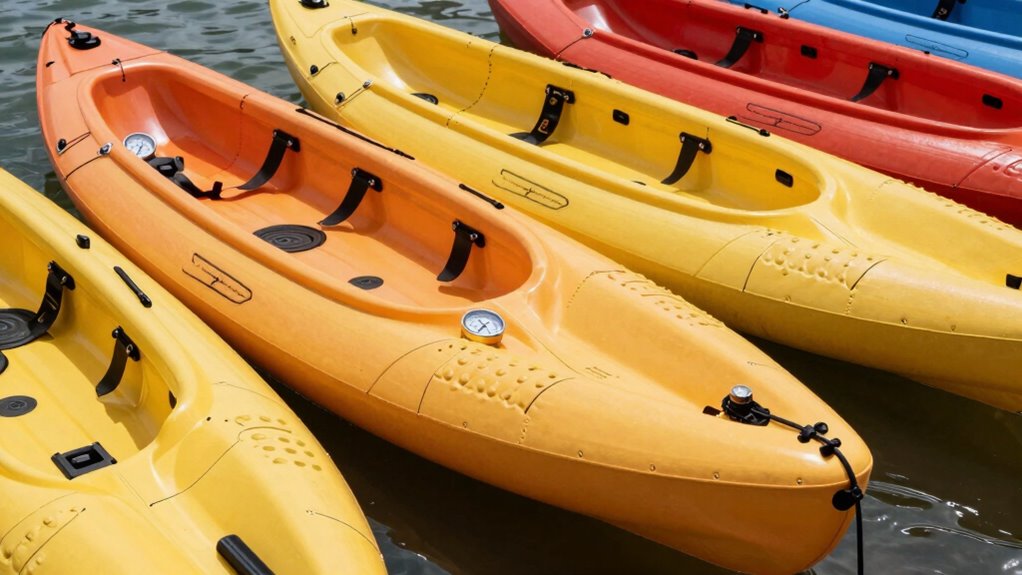

To guarantee your inflatable kayak performs well, you need to understand PSI, drop-stitch technology, and stability testing. Proper PSI maintains durability and performance, with recommended levels varying by water conditions. Drop-stitch construction makes your kayak rigid, stable, and shape-retentive, enhancing speed and maneuverability. Before paddling, conduct stability tests by shifting weight and leaning to confirm balance. Mastering these basics helps you paddle confidently—keep going to learn essential tips to protect your kayak and improve your experience.
Key Takeaways
- Proper PSI ensures optimal performance, durability, and safety; follow manufacturer guidelines and regularly check pressure before paddling.
- Drop-stitch technology creates a rigid, shape-retaining structure that improves stability, speed, and responsiveness on the water.
- Stability tests include shifting weight, entering the kayak, and practicing paddle techniques to assess balance and adjust PSI accordingly.
- Water conditions dictate PSI levels: lower for calm water, higher for rough or choppy conditions to enhance rigidity and safety.
- Regular maintenance, proper storage, and inspection extend the lifespan of inflatable kayaks while maintaining consistent performance.

Paddle Board Pump Electric Portable, KOSMEGAL SUP Pump for Paddleboard, Professional 20PSI Air Compressor with Auto-Off, Deflation Function and 12V DC Car Connector for Inflatables, Kayaks and Boats
PROFESSIONAL AND POWERFUL INFLATION SYSTEM: Rather then two stage patched pump, our electric air pump was born for…
As an affiliate, we earn on qualifying purchases.
As an affiliate, we earn on qualifying purchases.
What Is PSI and Why Does It Matter for Your Inflatable Kayak?
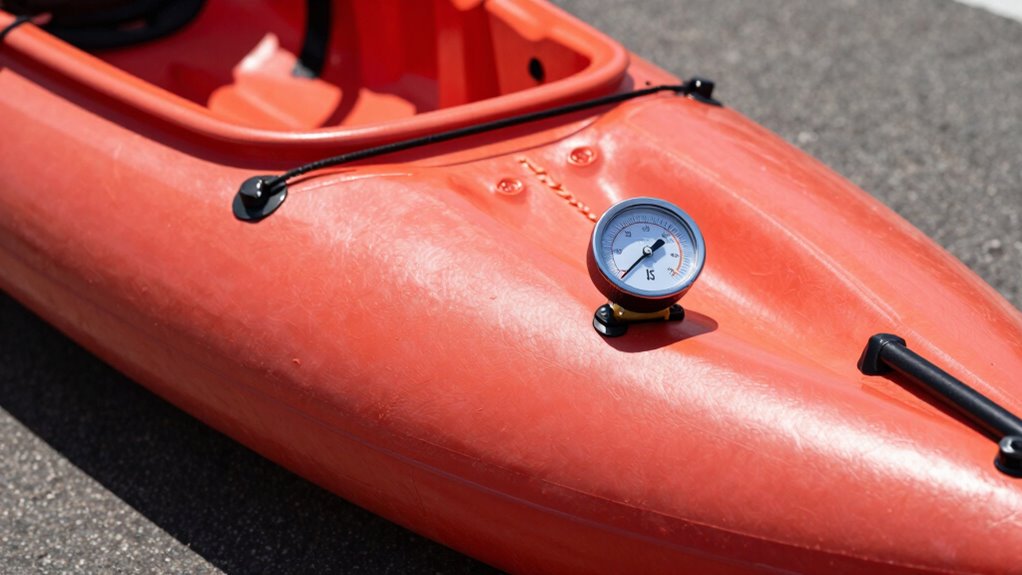
Have you ever wondered why the right PSI level is essential for your inflatable kayak? Proper PSI ensures material durability by maintaining ideal pressure, preventing over-inflation that could stretch or weaken the material. Under-inflation, on the other hand, causes instability and reduces performance. Knowing the correct PSI also makes storage easier; a properly inflated kayak holds its shape and minimizes damage during long-term storage. When you follow storage tips, like deflating and keeping the kayak in a cool, dry place, you protect the material from deterioration. Maintaining the right PSI not only enhances your kayak’s safety and performance but also prolongs its lifespan. Always check the manufacturer’s recommended PSI to ensure your kayak stays in top condition for every adventure. Proper inflation levels are also influenced by material properties, which can vary depending on the construction and design of your kayak. European cloud innovation plays a role in advancing the technology used in these durable, energy-efficient inflatable kayaks.
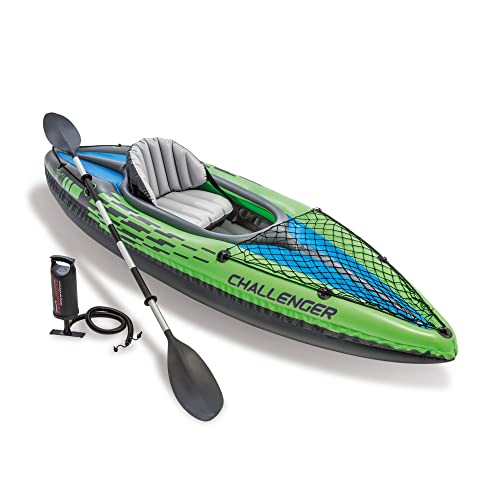
INTEX 68305EP Challenger K1 Inflatable Kayak Set: Includes Deluxe 86in Kayak Paddles and High-Output Pump – Adjustable Seat with Backrest – Removable Skeg – 1-Person – 220lb Weight Capacity
SUPER-STRONG – SuperStrong enhanced molecular formulation PVC provides superior strength and durability, ensuring high impact and abrasion resistance
As an affiliate, we earn on qualifying purchases.
As an affiliate, we earn on qualifying purchases.
How Drop-Stitch Technology Improves Inflatable Kayak Performance
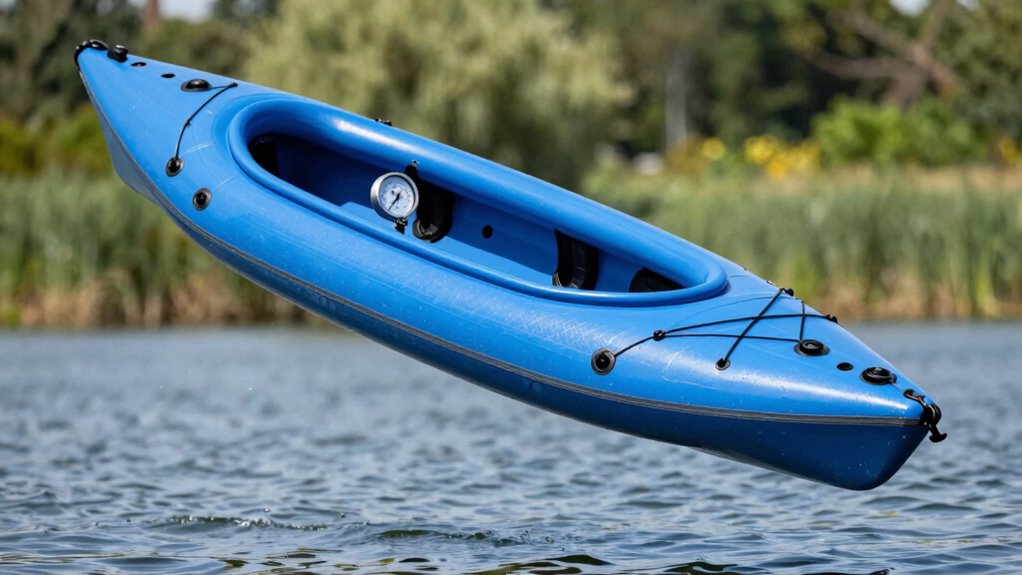
Drop-stitch technology revolutionizes inflatable kayak performance by creating a firm, rigid structure that rivals hard-shell boats. This stiff design enhances hydrodynamic efficiency, allowing you to glide smoothly through water with less drag. It also maintains shape under pressure, so your kayak stays stable and responsive. The material flexibility remains, providing comfort and durability without sacrificing strength. With drop-stitch, you’ll notice:
- Improved speed and maneuverability due to increased rigidity
- Better weight distribution for enhanced stability
- Reduced flexing, leading to consistent performance in various conditions

Milisten Inflatable Boat Air Pressure Gauge Digital Display for Kayaks Paddle Boards and Surfboards Water Sports Equipment Accurate Lightweight Pressure Tester Device
Accurate Pressure Measurement: This inflatable boat air pressure gauge delivers precise readings for kayaks, surfboards, and other inflatable…
As an affiliate, we earn on qualifying purchases.
As an affiliate, we earn on qualifying purchases.
How to Properly Inflate Your Kayak for Safe and Effective Use
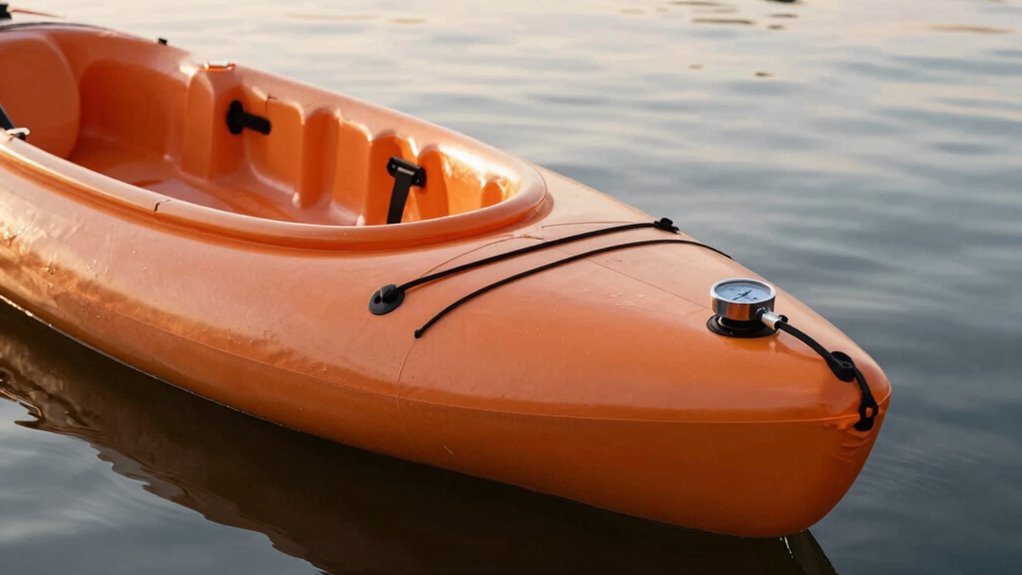
To guarantee your kayak is safe to use, you need to inflate it to the right level, neither too soft nor too firm. Using a reliable pump system makes this process easier and more accurate. Once inflated, perform a stability check to confirm your kayak’s balance before heading out on the water. Understanding the importance of proper inflation ensures you avoid over- or under-inflation, which can compromise safety and performance.
Proper Inflation Levels for Safety
Ensuring your inflatable kayak is inflated to the correct level is vital for safety and ideal performance on the water. Overinflating can make the kayak stiff and less forgiving, while underinflating risks instability and damage. To find the right PSI, always check the manufacturer’s recommended range. Pay attention to weather considerations, as hot conditions can increase internal pressure, so adjust accordingly. Use these tips:
- Regularly monitor PSI with a reliable gauge during inflation.
- Adjust paddle techniques based on your kayak’s stiffness for better control.
- Consider weather conditions to prevent overinflation from heat buildup.
- Proper inflation is essential for maintaining your kayak’s integrity and performance. Additionally, following maintenance guidelines ensures your kayak remains safe and durable over time. Staying informed about market trends in the inflatable kayak industry can also help you select the best equipment for your needs.
Being aware of safe inflation practices can significantly reduce the risk of accidents and prolong the lifespan of your kayak.
Proper inflation ensures stability, safety, and optimal handling, especially when adapting to changing weather and paddle strategies. Always prioritize accuracy over speed to keep your kayaking experience safe and enjoyable.
Using a Reliable Pump System
Ever wondered how to inflate your kayak quickly and accurately? Using a reliable pump system guarantees your kayak reaches the correct PSI safely. Focus on pump accuracy; an accurate pump helps prevent over- or under-inflation. Inflation accessories, like pressure gauges, can further improve your setup. Choose a pump designed for kayaks, whether manual or electric, and always verify its accuracy before use. Keep the following in mind:
| Tool | Purpose |
|---|---|
| Pressure gauge | Measures precise PSI |
| Twin-valve pump | Allows quick, controlled inflation |
| Inflator attachments | Ensures compatibility with your kayak |
| Spare adapters | Useful if your pump doesn’t fit |
Proper inflation accessories and a precise pump make inflating your kayak safe and straightforward. Additionally, understanding the thermal behavior of your kayak’s materials can help prevent damage during inflation. Ensuring your pump has a calibrated pressure gauge is essential for accurate inflation and to maintain the kayak’s durability over time. Regularly checking the pressure stability during inflation can also help achieve optimal results.
Performing a Stability Check
Performing a stability check to confirm your kayak is properly inflated is vital. This ensures safety and maximum performance. To do this effectively:
- Sit in your kayak and gently shift your weight to test balance, adjusting PSI if it feels unstable.
- Consider water temperature, as colder water can make the kayak feel less stable—inflate slightly more if needed.
- Practice your paddle technique, focusing on smooth strokes to maintain balance during the stability test.
- Remember that proper inflation not only improves stability but also helps prevent damage to your kayak’s drop-stitch material.
- Regularly check your air pressure before each trip to maintain optimal stability and avoid over- or under-inflation.
- Understanding heat distribution in your kayak’s material can also help you better gauge the correct PSI for different conditions.
- Being aware of material properties can help you anticipate how your kayak responds under various environmental factors, ensuring consistent performance.
- Monitoring air pressure consistency across your kayak’s surface can help identify potential weak spots or leaks before use.

Kayak Outrigger Stabilizer,Portable PVC Higher Stability Kayak Outrigger Kit,Three Colours to Choose Inflatable Kayak Stabilizer,Easy to Install,for Floating Balancing Boat
OF APPLICATION: Kayak Stabilizer suitable for canoeing, kayaking, rowing, fishing, standing and beginners.The inflatable kayak outrigger stabilizer is…
As an affiliate, we earn on qualifying purchases.
As an affiliate, we earn on qualifying purchases.
How to Test Your Inflatable Kayak’s Stability Before Paddling
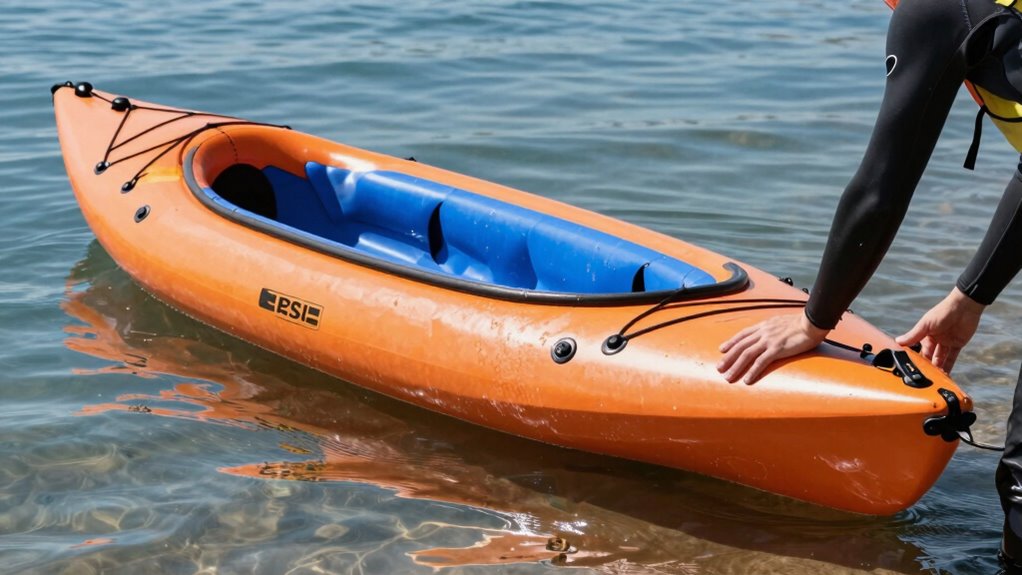
Testing your inflatable kayak’s stability before paddling is essential to guarantee a safe and enjoyable experience on the water. Start by gently getting into the kayak in calm conditions, then lean side to side to assess how well it balances. Use colorful accessories like bright paddles or life jackets to enhance visibility and confidence. Check your storage solutions; ensure gear is secured to prevent shifting that could affect stability. Observe how the kayak responds to your movements, noting any excessive rocking or instability. Remember, a stable kayak feels predictable and steady. To keep your gear organized, consider adding storage solutions that don’t compromise balance. Proper auditory feedback during your testing can help you better understand your kayak’s responses and improve your technique. Incorporate hydrodynamic principles to better anticipate how your kayak will perform on the water. Here’s a quick overview:
| Test Step | Observation | Tip |
|---|---|---|
| Enter kayak | Feel for steadiness | Use water shoes for grip |
| Lean side to side | Check balance | Keep gear low and centered |
| Add accessories | Test stability | Use colorful gear for visibility |
| Secure gear | Prevent shifting | Use waterproof storage |
What Factors Affect the Durability and Lifespan of Inflatable Kayaks
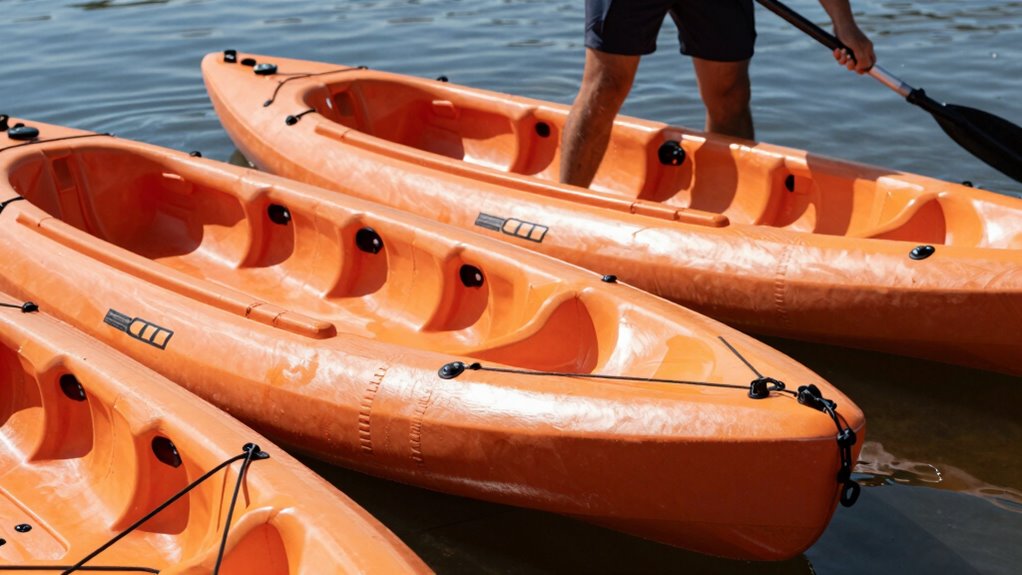
The durability and lifespan of inflatable kayaks depend on several key factors that influence their performance over time. Material degradation can weaken the fabric, making it prone to punctures and tears. UV resistance is also vital, as prolonged sun exposure can cause the material to become brittle and fade. To extend your kayak’s life, consider these factors:
- Regularly inspect for signs of wear and tear, especially after frequent use.
- Choose kayaks with high UV resistance to prevent sun damage.
- Store your kayak in a cool, shaded area when not in use to minimize material degradation.
- Understanding the importance of material properties can help in selecting a more durable kayak.
- Additionally, opting for quality gelato-inspired designs on accessories or promotional items can enhance your kayak’s aesthetic appeal and make it more enjoyable to use.
- Being aware of manufacturing techniques can also contribute to choosing a product with better overall durability and longevity.
- Proper inflation pressure is crucial, as over- or under-inflating can compromise the kayak’s structural integrity and lifespan.
What Is the Ideal PSI for Calm Water and Rough Conditions?

Maintaining the correct PSI is essential for optimizing your inflatable kayak’s performance in different water conditions. For calm water, a PSI around 3-4 ensures comfort and maneuverability, especially with paddle designs that favor agility. In rough conditions, increasing PSI to 4-6 enhances stability and rigidity, preventing deformation. The ideal PSI also depends on your kayak’s color options, as brighter hues often indicate models designed for higher pressure tolerance. Consider this table for quick reference:
| Water Condition | Recommended PSI | Paddle Design Focus |
|---|---|---|
| Calm Water | 3-4 | Lightweight, nimble |
| Slightly Rough | 4-5 | Balanced for control |
| Rough Water | 5-6 | Stability-focused |
| Choppy Conditions | 6+ | Extra rigidity |
| General Use | 4-5 | Versatile |
Additionally, air pressure plays a crucial role in ensuring your kayak performs safely and effectively across various conditions. Proper pressure maintenance can also extend the lifespan of your inflatable kayak by preventing over-inflation or under-inflation issues.
Why Drop-Stitch Construction Keeps Your Kayak Rigid and Shape Retentive
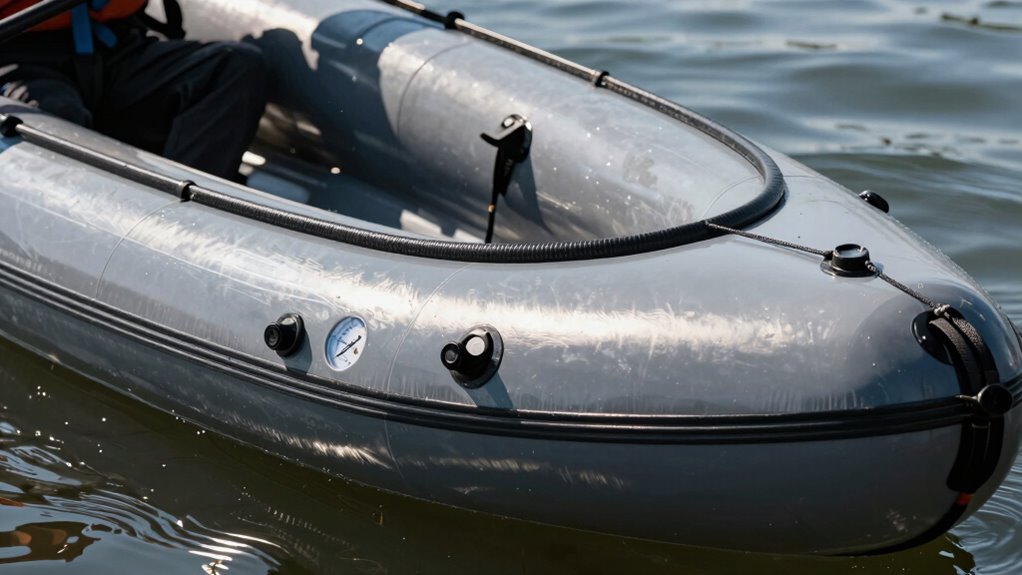
Drop-stitch construction uses reinforced layers that keep your kayak strong and stable. These layers guarantee the shape stays firm even under pressure. As a result, your kayak remains rigid and reliable in various water conditions. Additionally, the Free Floating nature of drop-stitch technology allows for easier deflation and storage when not in use. This innovative design also enhances stability, making it easier for paddlers to maintain balance during their water adventures.
Reinforced Drop-Stitch Layers
Reinforced drop-stitch layers are essential for guaranteeing your inflatable kayak stays rigid and retains its shape under pressure. They involve adding extra fabric reinforcement around the drop-stitch threads, which enhances durability and stability. This reinforcement helps distribute the air pressure evenly, preventing sagging or deformation. When inflated, these layers ensure the kayak maintains its intended shape, even during rigorous use. Key benefits include:
- Increased resistance to punctures and wear
- Better distribution of air pressure for consistent firmness
- Enhanced overall durability and longevity
Maintains Structural Integrity
Because of its unique construction, drop-stitch technology guarantees your inflatable kayak stays rigid and retains its shape even under high pressure. The material durability of the drop-stitch layers ensures long-lasting performance, resisting punctures and stretching over time. This construction maintains structural integrity by evenly distributing pressure across the surface, preventing deformation. To preserve this integrity, you should follow proper storage precautions—deflating the kayak fully, keeping it in a cool, dry place, and avoiding direct sunlight. Proper care prevents material degradation and potential damage to the drop-stitch layers, assure your kayak remains shape-retentive and stable for years. With these measures, your kayak will stay rigid, reliable, and ready for your next adventure.
Step-by-Step: How to Conduct a Stability Test on Your Inflatable Kayak
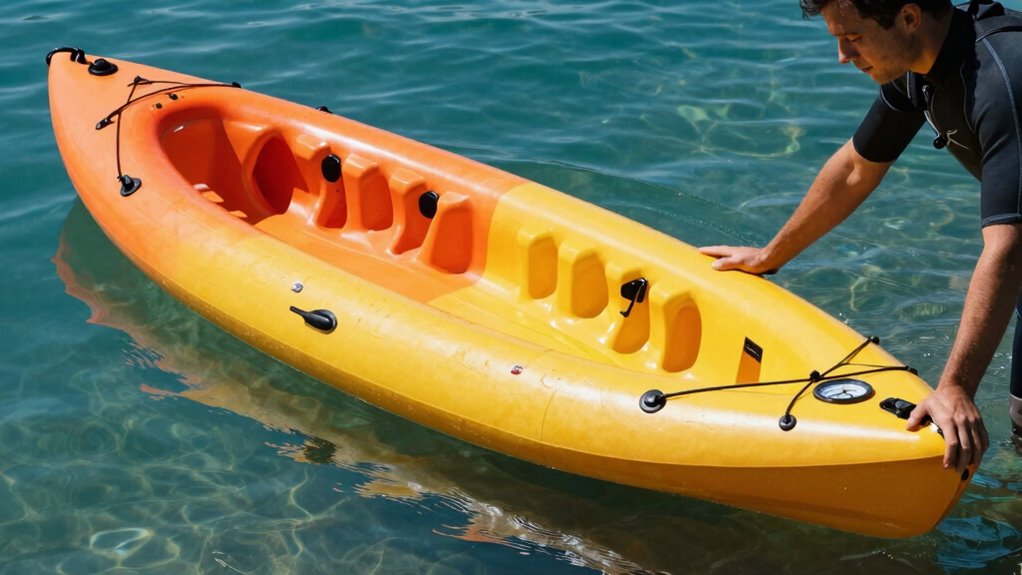
Before hitting the water, making sure to assess your inflatable kayak’s stability is essential for safe and confident paddling. To do this, carefully perform a stability test by placing the kayak in calm water and gently shifting your weight side to side. Focus on how it responds and how steady it feels. Keep these steps in mind:
- Stand or sit in different positions to test balance
- Use kayaking accessories like a paddle leash for safety
- Observe how the kayak reacts during small weight shifts
This process helps you understand its stability, which is critical for marine navigation and overall safety. Conducting a thorough stability test ensures you’re prepared for various conditions and improves your confidence on the water.
Common Mistakes When Inflating and Testing Your Kayak: And How to Avoid Them
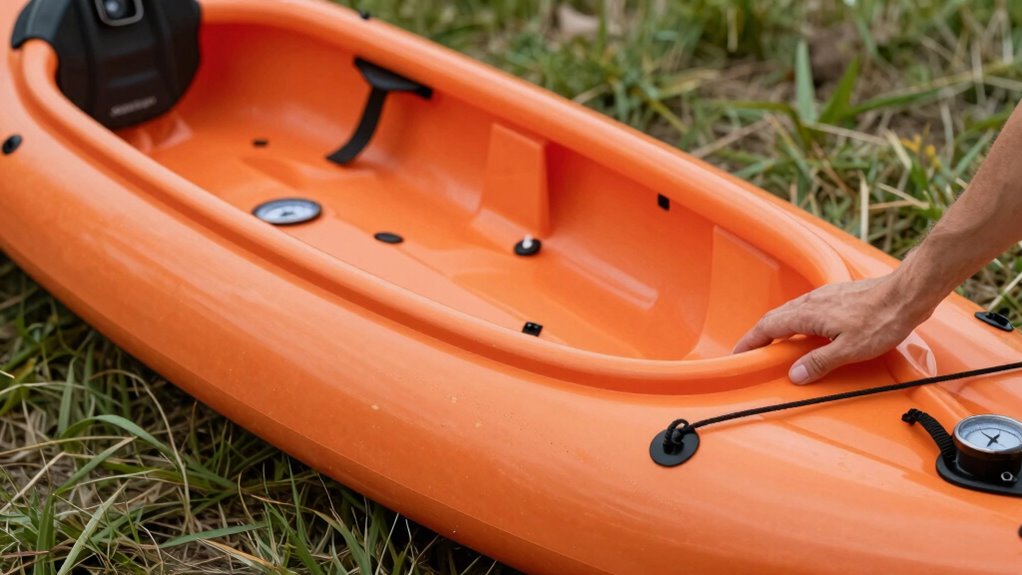
Inflating your kayak correctly is essential for safety and performance, but many paddlers make common mistakes that can compromise stability and durability. One mistake is over-inflating, which stresses seams and risks damage; always follow the manufacturer’s PSI guidelines. Under-inflating can make your kayak unstable, so use a reliable pump with a pressure gauge. Testing your kayak improperly—like rushing the process—can lead to inaccurate assessments of stability. To avoid issues, store your kayak properly in a cool, dry place, and avoid exposing it to sharp objects that require repair techniques later. Proper storage tips help maintain the integrity of the material, preventing leaks. Taking care during inflation and testing ensures your kayak remains safe, durable, and ready for your next adventure.
How to Maintain Your Inflatable Kayak’s Structural Integrity Over Time
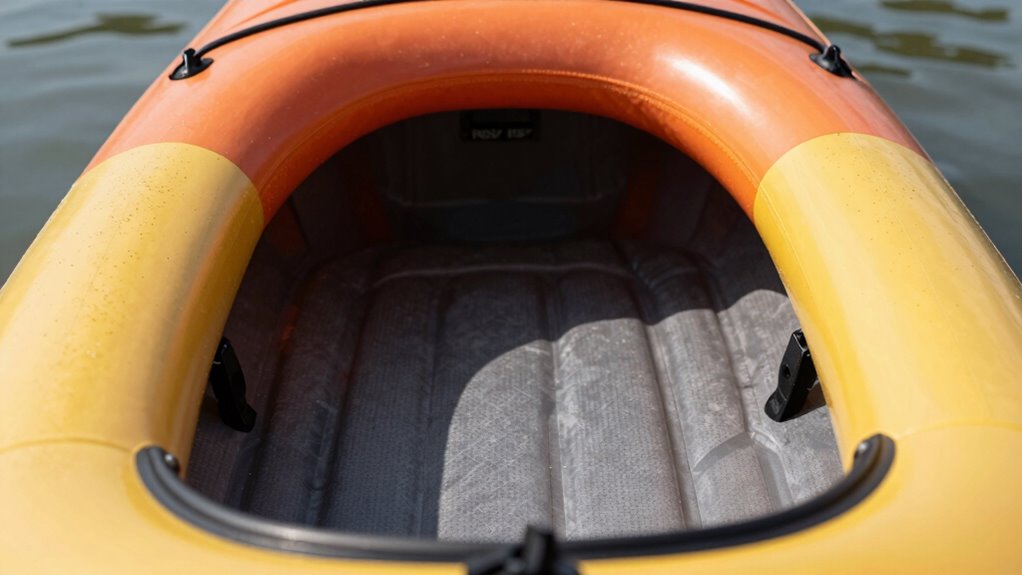
Proper maintenance is key to keeping your inflatable kayak in top shape over time. Regular care helps preserve its structural integrity and appearance, including color options that may fade without proper upkeep. To ensure longevity, consider these tips:
Proper maintenance extends your inflatable kayak’s lifespan and keeps it looking new.
- Store your kayak in a cool, dry place using effective storage solutions to prevent damage.
- Clean it after each use with gentle soap and water, avoiding harsh chemicals that could harm the material.
- Check for leaks or weak spots periodically, repairing them promptly to maintain PSI levels and drop-stitch integrity.
Frequently Asked Questions
How Does Temperature Affect PSI Levels in Inflatable Kayaks?
Temperature effects cause PSI fluctuation in your inflatable kayak. When it gets warmer, the air inside expands, increasing the PSI, so your kayak feels firmer. Conversely, cooler temperatures cause the air to contract, lowering the PSI and making it softer. You should regularly check your kayak’s PSI, especially with temperature changes, to guarantee proper inflation and ideal stability. Being aware of temperature effects helps maintain safety and performance on the water.
Can Over-Inflation Damage My Inflatable Kayak?
Think of over-inflation as over-tightening a screw—you risk stripping the threads. Yes, over-inflating your kayak can cause material damage and weaken the seams, increasing the risk of punctures or leaks. Over-inflation risks stretch the material beyond its designed limits, compromising durability and safety. Always follow the manufacturer’s recommended PSI to make sure your kayak stays sturdy without risking damage.
What Safety Gear Should I Use During Stability Testing?
During stability testing, you should wear a life jacket to stay safe if you lose balance, and keep a safety whistle nearby to alert others if needed. Make sure the area around you is clear of obstacles, and have a partner if possible. These safety gear items guarantee your safety while testing your kayak’s stability, giving you peace of mind and quick ways to get help if necessary.
How Often Should I Perform a Stability Test on My Kayak?
You should perform a stability test on your kayak before every outing to guarantee safety. For example, a kayaker noticed their boat felt less stable after a month of use and performed a quick check, preventing a potential capsize. Regularly conducting stability testing frequency helps identify issues early and keeps your kayak safe. Incorporate routine kayak safety checks into your prep, especially if you’ve had rough trips or stored it for a while.
Are There Specific Brands Known for Superior Drop-Stitch Technology?
You’ll find that brands like Sea Eagle, Advanced Elements, and NRS are known for superior drop-stitch technology, thanks to their strong reputation for innovation. These companies consistently incorporate the latest technological advancements, ensuring durable, stable, and high-performance inflatable kayaks. By choosing these trusted brands, you benefit from their commitment to quality, giving you confidence on the water and a better overall kayaking experience.
Conclusion
By understanding PSI, drop-stitch technology, and proper stability testing, you can turn your inflatable kayak into a reliable, shape-retentive vessel. Think of it like tuning a musical instrument—you’ll get the perfect balance of firmness and flexibility. When you inflate and test carefully, you’re not just preparing for your paddle; you’re forging a sturdy, confident connection with the water. With these tips, every trip feels like gliding on a well-crafted, rock-solid craft.