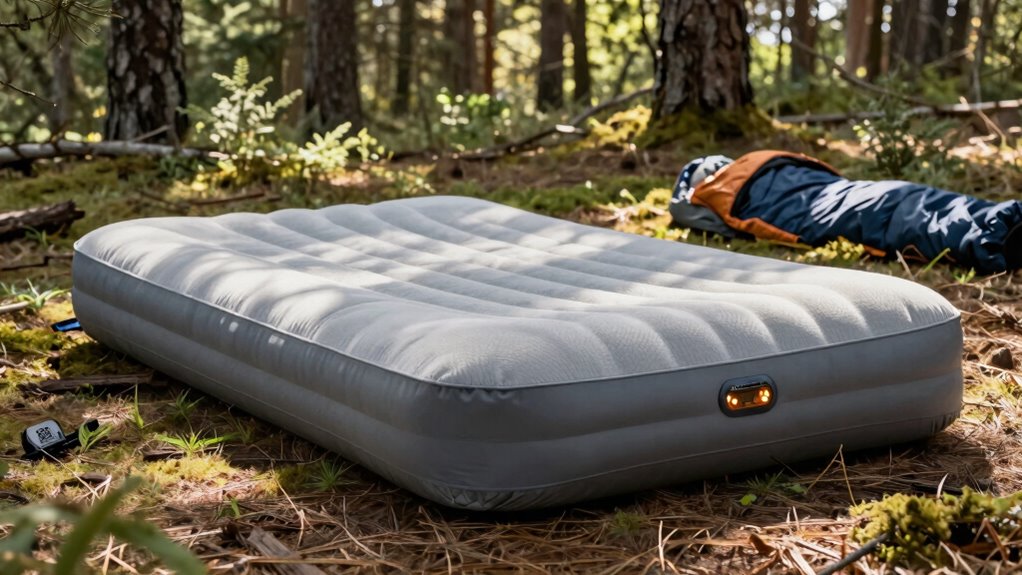

When choosing a camping air mattress, focus on thickness for proper support and insulation—thicker models offer better comfort and warmth by reducing cold transfer and pressure points. Check the R-value; higher ratings (3-4 for mild, 5+ for cold) keep you warm in cooler conditions. To enjoy quiet sleep, select a mattress with quality, layered materials that dampen noise. Continue exploring to discover tips on inflation, maintenance, and selecting the perfect mattress for your outdoor adventures.

Turn the school run and nap time into listening time
- Thousands of audiobooks, podcasts and originals
- Listen on your phone, tablet or Echo — also offline
- Cancel anytime
Key Takeaways
- Choose a thicker air mattress with higher R-value (3-4 for mild weather, 5+ for cold conditions) for better insulation and warmth.
- Opt for models with noise-reducing, durable materials like reinforced PVC to ensure quiet, long-lasting sleep.
- Adjust air pressure carefully to balance firm support and comfort, minimizing movement noise during sleep.
- Consider lightweight, portable designs with quick inflation features for convenience during camping trips.
- Properly store and maintain your mattress after use to preserve insulation, support, and quiet performance over time.
What Makes a Camping Air Mattress Comfortable?
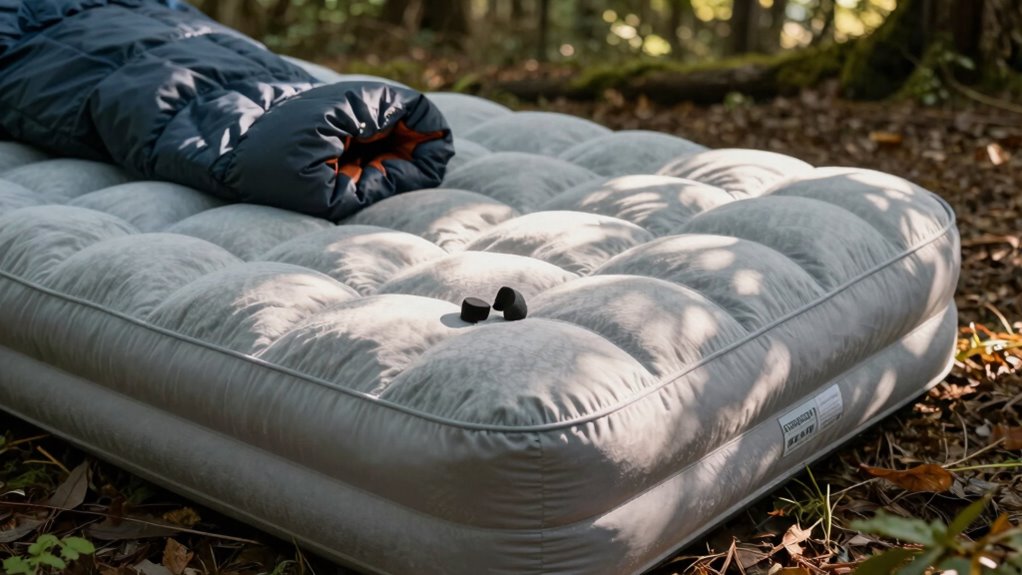
A camping air mattress becomes comfortable when it offers proper support and cushioning. Your sleep posture plays a key role in determining what feels best, whether you’re a back, side, or stomach sleeper. To stay comfortable, choose a mattress with the right firmness—too soft and you’ll sink, too firm and you’ll create pressure points. Adjustable air pressure allows you to customize firmness, ensuring your spine stays aligned and your hips aren’t overly stressed. The goal is to find a balance where the mattress supports your natural sleeping position without feeling too rigid or too soft. When you optimize firmness based on your sleep posture, you’ll wake up feeling rested and ready for your outdoor adventures. Understanding sleep ergonomics can help you select the most supportive camping mattress for your needs. Additionally, considering the thickness and R-value of the mattress can improve insulation and overall comfort in different weather conditions. Being aware of the R-value helps you choose a mattress that maintains warmth in colder environments, enhancing your sleep quality. Incorporating sound absorption qualities into your choice can also reduce noise disturbances during sleep, making your experience even more restful and creating a peaceful sleeping environment.
Why Thickness Matters When Camping
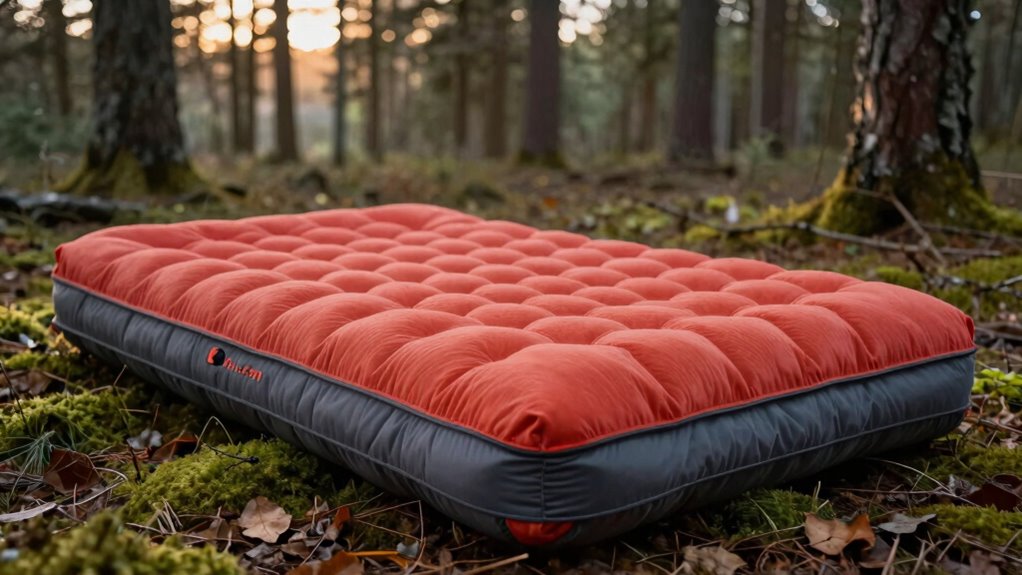
Thicker air mattresses can boost your comfort level, making it easier to rest after a long day. They also provide better insulation, helping you stay warm even on chilly nights. Understanding why thickness matters can help you choose a mattress that keeps you comfortable and cozy during your camping trip. Additionally, selecting a mattress with appropriate R-Value ensures optimal thermal regulation throughout your sleep. For environmentally conscious campers, opting for energy-efficient materials can reduce your ecological footprint while still providing the comfort you need. Incorporating proper sizing and load‑planning tools can further enhance your overall camping comfort and safety. Being aware of thermal insulation properties can guide you in selecting the best mattress for varying weather conditions, especially when considering different insulation levels to match outdoor temperatures.
Enhanced Comfort Levels
When choosing a camping air mattress, thickness plays a crucial role in how comfortable you’ll feel throughout the night. A thicker mattress offers better support and cushioning, helping you wake up less sore. This added comfort is especially important if you’re carrying your gear in a backpack, as you want a mattress that balances comfort with portability. Thicker models tend to be a bit heavier, so consider weight considerations if you’re hiking long distances. However, the extra thickness often translates to a more restful sleep, making it easier to recover for the next day’s adventures. Additionally, understanding material stability can further guide you in choosing a mattress that maintains its shape and comfort over time. Recognizing wood movement and how it applies to your gear can help you select a more durable and stable mattress. Being aware of thermal insulation helps ensure your mattress provides adequate warmth in colder conditions, enhancing overall sleep quality. Moreover, selecting a mattress with appropriate thickness can also influence noise levels, contributing to a quieter and more peaceful sleep environment. A thicker mattress can also help mitigate pressure points, reducing discomfort on uneven ground. Ultimately, selecting the right thickness enhances your overall camping experience by providing better comfort without sacrificing too much backpack compatibility.
Better Insulation Properties
Choosing the right camping air mattress isn’t just about comfort—it also impacts your warmth during chilly nights. A thicker mattress typically has a better insulation layer, which helps trap heat and prevent cold from seeping through the sleep surface. When selecting a mattress, consider how its thickness influences insulation properties, especially if you camp in colder weather. A mattress with adequate thickness creates a more effective barrier between you and the cold ground, keeping your sleep surface warmer. The insulation layer’s quality and thickness directly affect how well heat is retained, making your sleep more comfortable. Additionally, proper insulation helps protect against moisture and wind chill, further enhancing warmth. Incorporating insulation materials into your sleeping setup can significantly improve your overall sleep quality. So, don’t overlook thickness; it’s essential for better insulation properties that ensure you stay warm and cozy throughout the night. For optimal warmth, look for mattresses with thermal reflective layers that boost heat retention. Moreover, selecting an air mattress with adequate thickness can also contribute to reducing heat loss through conduction, ensuring a more restful night. Understanding how thermal insulation works can help you make smarter choices for cold-weather camping.
What Is R-Value and Why Does It Matter?

Ever wonder why some camping air mattresses keep you warmer than others? That’s where R-value comes in. R-value significance measures a material’s thermal resistance, indicating how well it insulates. A higher R-value means better insulation, helping your body retain heat during cold nights. This concept is especially important in outdoor gear insulation, as it directly impacts your comfort and safety while camping. Here’s a quick comparison:
| R-Value | Insulation Level | Best For |
|---|---|---|
| 1-2 | Minimal insulation | Summer camping |
| 3-4 | Moderate insulation | Mild to cool weather |
| 5+ | Excellent insulation | Cold weather camping |
Understanding R-value helps you pick the right mattress for your needs, ensuring a warmer, more comfortable sleep. peer-reviewed studies and primary sources support the importance of proper insulation in outdoor gear. Additionally, knowing the thermal resistance of your mattress can guide you in selecting the most suitable option for varying outdoor conditions, especially when considering sleep comfort in chilly environments. Recognizing the wave and wind conditions of your camping site can further enhance your choice of insulation level to stay cozy.
How to Choose a Quiet Air Mattress for Better Sleep?
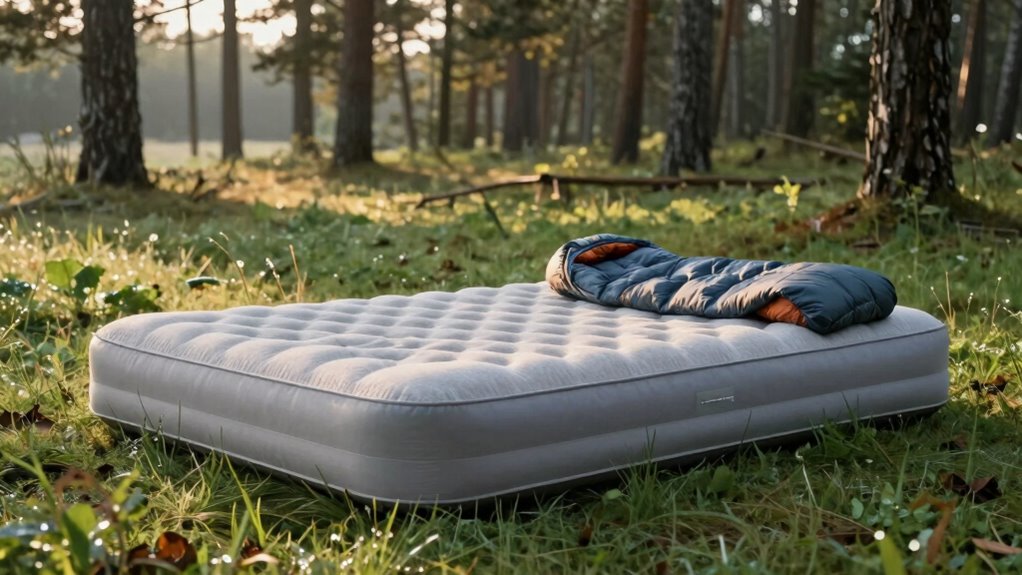
A quiet air mattress can considerably improve your camping experience by ensuring restful sleep without disruptive noises. To achieve noise reduction, look for models with thicker, high-quality materials that dampen sounds when you move or shift. Durable materials, like reinforced PVC or layered fabrics, not only last longer but also help minimize creaking or squeaking sounds during the night. Avoid mattresses with thin or flimsy construction, as these tend to produce more noise and wear out quickly. Check customer reviews for feedback on noise levels and material quality. A well-constructed, durable mattress with soundproofing features enhances comfort and peace, so you can wake up refreshed and ready for your outdoor adventures.
Key Features to Look for in a Camping Air Mattress

When selecting a camping air mattress, focusing on key features guarantees you get the best comfort and durability for your outdoor adventures. First, check the sleep surface—look for a design that offers a comfortable, stable area that supports your body and minimizes pressure points. A well-constructed sleep surface ensures restful sleep after a long day of hiking or exploring. Portability is equally important; choose an air mattress that’s lightweight and easy to pack, so it won’t weigh you down or take up too much space in your gear. Consider models with quick inflation and deflation features to save time and effort. Overall, prioritizing these features helps you find a camping air mattress that combines comfort, convenience, and durability for a better outdoor sleeping experience.
Comparing Different Types of Camping Mattresses

Choosing the right camping mattress depends on understanding the main types available, each tailored to different outdoor needs. Your sleeping pad options include inflatable air mattresses, foam mattresses, and hybrid designs. Inflatable models offer adjustable firmness and lightweight portability, making them popular for backpackers. Foam mattresses, on the other hand, provide durability and excellent insulation benefits, often with less maintenance. They’re great if you prefer a simple, low-cost option that doesn’t require inflation. Hybrid mattresses combine features of both, offering comfort and convenience. Foam mattress benefits include their robustness and consistent support, especially in cold environments. By comparing these types, you can select the one that best matches your camping style, comfort preferences, and terrain conditions, ensuring a better night’s sleep outdoors.
How to Properly Inflate and Maintain Your Air Mattress
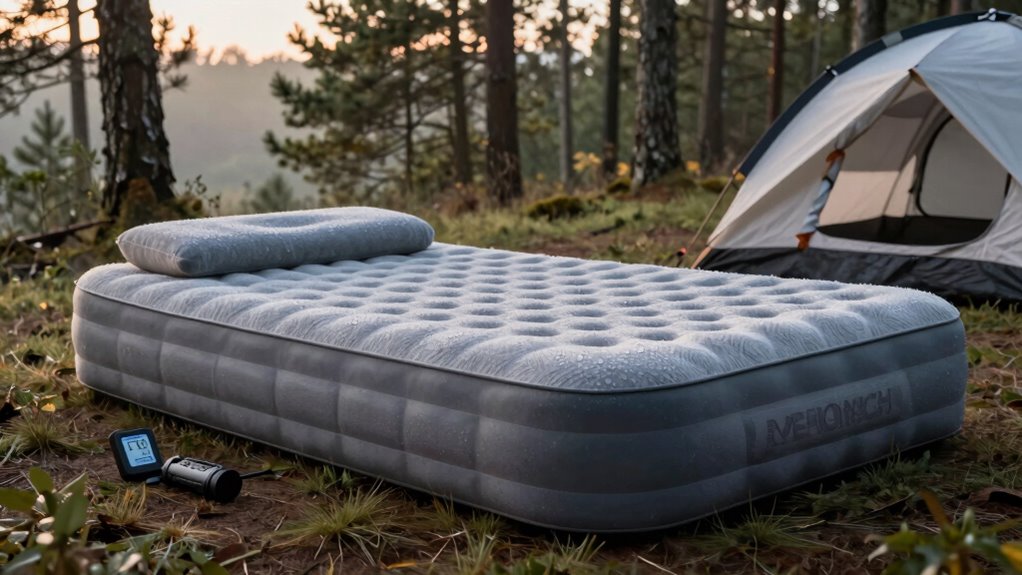
To keep your air mattress comfortable, you need to inflate it correctly and check the pressure regularly. Make sure not to overinflate or underinflate, as both can cause discomfort or damage. Proper storage and maintenance will help your mattress last longer and stay in good shape for future trips.
Proper Inflation Techniques
Properly inflating your air mattress is essential for a comfortable and restful night’s sleep. Use the right pump techniques to avoid overinflation or underinflation. Start by partially filling the mattress, then check the air pressure by lying on it. Your body should sink slightly, but the mattress shouldn’t feel hard or overly soft. Adjust the air pressure by adding or releasing air as needed. For manual pumps, use steady, controlled pushes to maintain even inflation. With electric pumps, set the desired firmness and stop when you reach that point. Remember, overinflating can cause discomfort and damage, while underinflating reduces support. Take your time, and regularly monitor the firmness to ensure a good night’s sleep on your camping trip.
Regular Pressure Checks
Regularly checking the air pressure throughout your trip guarantees your mattress stays comfortable and supportive. Over time, temperature changes and shifting sleep posture can cause the air to settle or expand, affecting comfort. Keep an eye on your mattress’s firmness by testing it before sleeping and adjusting as needed. This ensures proper support for your sleep posture and prevents discomfort. Different mattress materials respond differently to pressure changes, so regular checks help maintain ideal firmness. Use these tips for consistent comfort:
- Check pressure in the morning and evening
- Adjust air to maintain desired firmness
- Use a reliable pump for quick refills
- Listen for any hissing sounds indicating leaks
Consistent maintenance prolongs your mattress’s lifespan and guarantees restful nights.
Storage and Maintenance
Maintaining your air mattress involves more than just inflating it correctly; storing it properly is essential for long-term durability. After your trip, deflate the mattress completely and clean off any dirt or moisture before folding it. Store it in a cool, dry place away from direct sunlight, which can damage the material over time. When setting up your tent, consider weather conditions—protect your mattress from extreme heat, cold, or humidity that could weaken the seams. Avoid leaving it inflated for extended periods, as this can stretch the material. Use a storage bag or a dedicated space to prevent punctures or tears. Proper storage and maintenance guarantee your air mattress stays comfortable and reliable for your next camping adventure.
Common Mistakes to Avoid When Picking a Camping Mattress
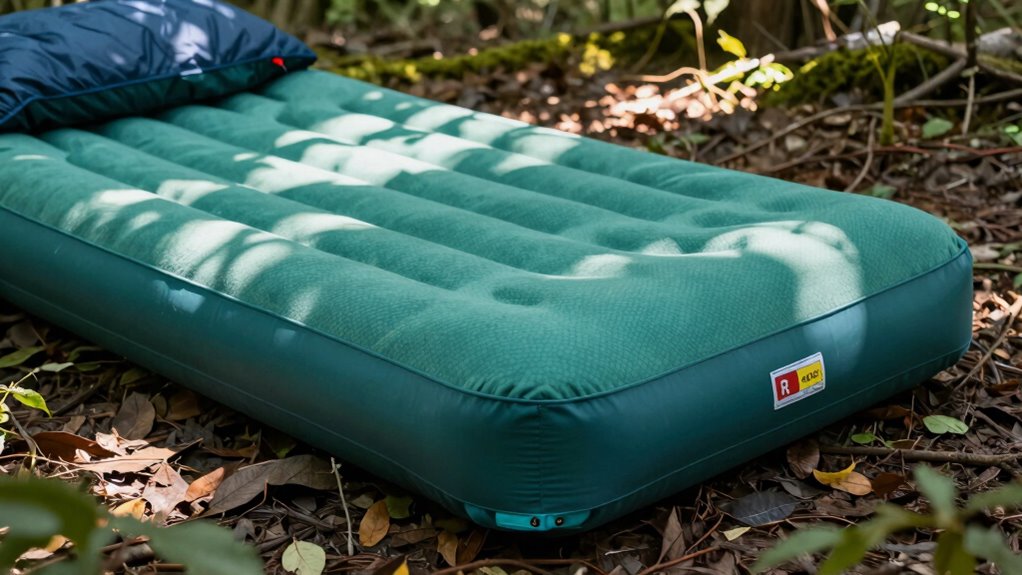
Choosing the right camping air mattress can make or break your outdoor experience, but many campers make common mistakes that compromise comfort and safety. One mistake is ignoring sleep hygiene, which can lead to restless nights; select a mattress that supports restful sleep. Overlooking mattress portability is another error—pick a lightweight, easy-to-carry option for convenience. Additionally, choosing a mattress with insufficient thickness or R-value can result in cold and uncomfortable nights. _Finally_, rushing the selection without considering your specific needs might lead to poor sleep quality.
- Ignoring mattress thickness and R-value
- Overlooking portability for easy transport
- Neglecting sleep hygiene considerations
- Not testing comfort before purchase
Final Tips for Selecting the Best Camping Air Mattress

To guarantee you select the best camping air mattress, start by evaluating your specific needs and preferences. Consider the type of camping gear you’ll use and how much space you have in your tent. Think about your preferred firmness and whether you need features like built-in pumps or extra thickness for added outdoor comfort. Prioritize durability and ease of inflation, especially if you plan to camp frequently. Look for a model that balances R-value for insulation with portability. Don’t forget to check reviews for noise levels and customer satisfaction. Ultimately, choosing the right air mattress depends on matching its features to your camping style and comfort expectations. By doing so, you’ll enjoy restful, outdoor comfort on every trip.
Frequently Asked Questions
How Do I Prevent My Air Mattress From Deflating Overnight?
To prevent your air mattress from deflating overnight, start by checking for punctures and repairing any you find. Use a patch kit to seal small holes and avoid sharp objects. Also, maintain the valve by ensuring it’s closed tightly and free of debris before sleeping. Consider adding a mattress topper for extra support and comfort, which can also help keep the air inside longer.
What Is the Best Way to Store My Camping Air Mattress?
You should fold your camping air mattress loosely and store it in a cool, dry place to prevent damage. For example, Sarah kept hers in a breathable storage bag, avoiding sharp objects and extreme temperatures. Proper storage solutions help maintain mattress integrity and extend its lifespan. Always deflate fully, clean, and fold gently to guarantee your mattress stays comfortable and ready for your next adventure, making mattress maintenance simple and effective.
Can I Use a Regular Household Air Pump for Camping Mattresses?
Yes, you can use a regular household air pump for camping mattresses, but pump compatibility is key. Check if your pump has the right nozzle size or adapters to fit your mattress’s valve. Using your household pump for inflation methods is convenient, but it might be slower than a pump designed for camping. Make certain the pump is portable and easy to carry, making setup quick and hassle-free.
How Does Outdoor Temperature Affect Air Mattress Insulation?
A stitch in time saves nine, so understanding how outdoor temperatures affect your air mattress’s insulation is key. When it’s cold outside, lower temperatures reduce thermal regulation, making your mattress less effective at keeping heat in. Insulation materials like foam or R-value ratings help, but you should also consider adding a sleeping pad or using a higher R-value mattress to stay warm. Keep your mattress insulated, and you’ll sleep soundly no matter the weather.
Are There Eco-Friendly Options for Camping Air Mattresses?
Yes, eco-friendly camping air mattresses are available. You can choose options made from biodegradable materials that break down naturally, reducing environmental impact. Look for mattresses produced through sustainable manufacturing processes, which use eco-conscious practices and reduce waste. These options help you enjoy your camping trip while minimizing your carbon footprint. Switching to eco-friendly mattresses supports environmental conservation and guarantees you sleep comfortably with a greener conscience.
Conclusion
Choosing the right camping air mattress is like finding a cozy cloud in the woods. By considering thickness, R-value, noise levels, and key features, you’ll guarantee restful nights under the stars. Remember, the perfect mattress isn’t just about comfort—it’s about turning outdoor sleep into a peaceful escape. So, pick wisely, inflate confidently, and let your camping adventures be filled with sweet dreams, not sleepless nights. After all, the best memories start with a good night’s sleep.
Fall Picks
fall essentials
As an affiliate, we earn on qualifying purchases.