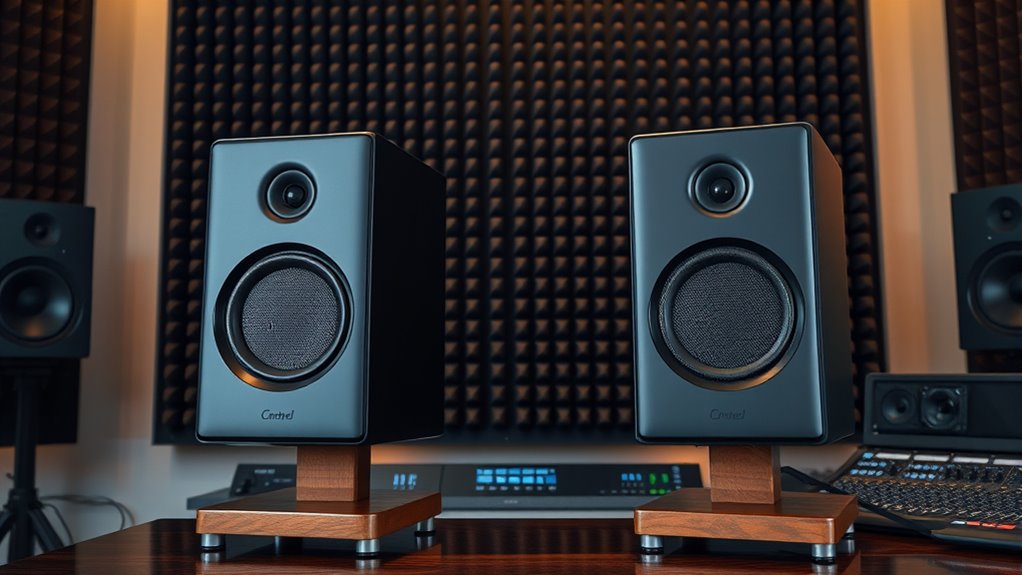

When searching for a studio monitor speakers pair, the key considerations are sound accuracy, build quality, and suitability for your space. The Yamaha HS5 stands out as the best overall choice for its balanced sound and reliable performance. For those on a budget, the Mackie CR3.5 offers solid clarity at a lower price, though it sacrifices some depth. Meanwhile, the JBL 305P MkII excels in delivering wide soundstage and detailed imaging for professional use. These options highlight the common tradeoffs: higher fidelity often comes with a larger size and cost, while compact models may lack low-end richness. Keep reading for a detailed breakdown of each option and what to consider when choosing your perfect pair.

Get baby and family essentials delivered free — and shop member deals
- Fast, free delivery on millions of items
- Access to Prime Big Deal Days deals on October 6–7
- Prime Video, Amazon Music and more included
Complete the kit


Key Takeaways
- The most accurate sound reproduction often comes from 5-inch woofer models like the JBL 305P MkII and Yamaha HS5.
- Budget options like Mackie CR3.5 deliver decent clarity but may lack full bass response for mixing purposes.
- Bluetooth-enabled monitors, such as PreSonus Eris 3.5 BT, add convenience but might compromise sound purity slightly.
- Size and power output should match your workspace; larger speakers generally handle more volume and bass but take up more space.
- Build quality varies; investing in well-made monitors can improve longevity and reduce unwanted vibrations or distortion.
| Mackie CR3.5 Studio Monitors (Pair), 3.5″ Woofers, Tone Knob, Black |  | Best Compact Desktop Monitors for Versatility | Speaker Size: 3.5 inches | Woofer Diameter: 3.5 inches | Tweeter Diameter: 1 inches | VIEW ON AMAZON | See Our Full Breakdown |
| PreSonus Eris 3.5 Powered Studio Monitors, Pair |  | Best Value Compact Monitors with Tuning Controls | Speaker Type: Active Near-Field Studio Monitors | Driver Size: 3.5 inches | Power: 50 watts | VIEW ON AMAZON | See Our Full Breakdown |
| PreSonus Eris E4.5 2-Way 4.5-Inch Near Field Studio Monitor (Pair) |  | Best Balanced Sound with Room Tuning and Subwoofer Option | Speaker Size: 4.5 inches | Power: 50 Watts (25W per speaker) | Inputs: ¼-inch TRS, RCA, ⅛-inch aux | VIEW ON AMAZON | See Our Full Breakdown |
| Yamaha HS5 Powered Studio Monitor, Pair |  | Best for Critical Listening and Mixing | Speaker Type: Woofer | Additional Features: Bi amplification | Power Output: 70 watts | VIEW ON AMAZON | See Our Full Breakdown |
| PreSonus Eris 3.5 Bluetooth Powered Desktop Studio Monitors Pair – 50W, Black |  | Best Wireless Monitors for Streaming and Casual Use | Power: 50W | Speaker Size: 3.5 inches | Connectivity: Bluetooth 5.0, TRS, RCA, Aux | VIEW ON AMAZON | See Our Full Breakdown |
| M-AUDIO BX3 3.5-inch Wired Studio Monitors Pair |  | Best Compact Studio Monitors for Versatility | Driver Size: 3.5 inches | Woofer Material: Kevlar | Tweeter Type: Silk Dome | VIEW ON AMAZON | See Our Full Breakdown |
| PreSonus Eris E5 Pair 2-Way 5.25” Near Field Studio Monitors |  | Best Professional-Grade Monitoring for Accurate Mixing | Speaker Size: 5.25 inches | Woofer Diameter: 5.25 inches | Power Output: 80 watts | VIEW ON AMAZON | See Our Full Breakdown |
| Yamaha HS4 Powered Studio Monitor (Pair) |  | Best Compact Power for Entry-Level Professionals | Type: 2-way bass-reflex powered speaker | Woofer: 4.5 inches | Tweeter: 1 inch dome | VIEW ON AMAZON | See Our Full Breakdown |
| JBL 305P MkII 5″ 2-Way Active Studio Monitors (Pair) |  | Best for Precise Imaging and Wide Sweet Spot | Size: 5-inch woofer | Amplifier Power: 2 x 41 Watts | Inputs: XLR, TRS | VIEW ON AMAZON | See Our Full Breakdown |
| M-AUDIO BX4 4.5-inch Wired Studio Monitors Pair |  | Best for Balanced Sound with Deep Bass | Driver Size: 4.5 inches | Power: 120W | Connectivity: 1/4-inch, 1/8-inch, RCA | VIEW ON AMAZON | See Our Full Breakdown |
| Pioneer DJ DM-50D-BT 5-inch Active Monitor Speakers, Bluetooth, Pair |  | Best for Compact DJ and Mobile Setups | Speaker Type: Monitor | Mounting Type: Tabletop | Enclosure Material: Paper or paper-based composite | VIEW ON AMAZON | See Our Full Breakdown |
More Details on Our Top Picks
Mackie CR3.5 Studio Monitors (Pair), 3.5″ Woofers, Tone Knob, Black
The Mackie CR3.5 stands out for its ultra-compact design, making it ideal for small desks and multimedia setups where space is limited. Unlike the larger Yamaha HS5, which offers a more neutral frequency response suited for critical mixing, the CR3.5 prioritizes convenience and flexible connectivity, including RCA and TRS inputs, for quick setup with multiple devices. The inclusion of a tone control knob allows users to tailor the sound to their environment, but its small 3.5-inch woofers mean bass depth is modest—less suitable for those needing deep low-end for music production. This model is perfect for casual creators or students who need reliable sound without occupying too much space, but it may fall short for professionals requiring more bass and higher volume capacity.
Pros:- Compact size ideal for small desks and multimedia setups
- Versatile input options including RCA and TRS for broad device compatibility
- Adjustable tone control allows for sound customization
- Includes all necessary cables and isolation pads
Cons:- Limited bass response due to 3.5-inch woofers, less suited for deep low-end needs
- No wireless connectivity, restricting convenience for streaming devices
Best for: Small-space content creators, students, or multimedia enthusiasts needing versatile, space-saving monitors
Not ideal for: Professional music producers or engineers requiring deep bass and high-volume output for critical mixing
- Speaker Size:3.5 inches
- Woofer Diameter:3.5 inches
- Tweeter Diameter:1 inches
- Enclosure Material:Metal, Plastic
- Color:Black Vinyl Wrap
- Connectivity:RCA, TRS
Our verdict“This pick makes the most sense for users needing space-efficient monitors with flexible connectivity and basic sound tuning.”
PreSonus Eris 3.5 Powered Studio Monitors, Pair
The PreSonus Eris 3.5 delivers studio-quality sound in a small form factor, making it an excellent choice for budget-conscious creators who still want precise audio. Compared with the Mackie CR3.5, it offers more refined sound clarity and a slightly more powerful 50W output, along with adjustable high- and low-frequency controls for tuning to your space. However, it lacks wireless connectivity and has a smaller driver size, which limits bass depth for music enthusiasts. This monitor is best for desktop users, musicians, or streamers who need reliable, customizable sound without taking up much room, but it’s less suitable for those needing deep bass for mixing or large-room production.
Pros:- Compact and space-efficient design
- Powerful 50W output with clear, detailed sound
- Multiple input options including TRS, RCA, and aux
- Built-in high- and low-frequency controls for precise tuning
Cons:- No wireless or Bluetooth connectivity
- Limited driver size restricts deep bass reproduction
Best for: Budget-conscious musicians, streamers, or content creators looking for accurate sound with basic tuning options
Not ideal for: Professionals requiring deep bass response or large-room monitoring for critical mixing
- Speaker Type:Active Near-Field Studio Monitors
- Driver Size:3.5 inches
- Power:50 watts
- Frequency Range:80 Hz–20 kHz
- Features:Headphone output, adjustable high/low controls
- Mounting Type:Desktop, Bookshelf
Our verdict“This monitor offers excellent value for users who want adjustable, studio-quality sound within a small footprint.”
PreSonus Eris E4.5 2-Way 4.5-Inch Near Field Studio Monitor (Pair)
The PreSonus Eris E4.5 offers a step up in size and sound accuracy, making it suitable for more detailed music production and multimedia listening. Its larger 4.5-inch woofers provide richer bass compared to smaller monitors like the PreSonus Eris 3.5, but it still benefits from an included subwoofer, such as the Eris Sub 8BT, for full-range sound. Compared to the Yamaha HS5, it provides more room tuning options and a user-friendly interface for customizing sound. However, some users find the controls somewhat complex and the setup requires external components for deep bass. This model is ideal for intermediate producers or serious hobbyists who want accurate sound with room for expansion, but it may be overkill for casual use or small spaces.
Pros:- Accurate, studio-grade sound reproduction
- Versatile connectivity including TRS, RCA, and aux
- Room tuning controls for tailored sound
- Includes a compatible subwoofer for extended bass
Cons:- Requires external subwoofer for deep bass extension
- Controls can be complex for beginners
Best for: Intermediate producers or multimedia enthusiasts seeking accurate, tunable sound with optional subwoofer support
Not ideal for: Beginners or users with very limited space who don’t want to add external subwoofers or deal with complex controls
- Speaker Size:4.5 inches
- Power:50 Watts (25W per speaker)
- Inputs:¼-inch TRS, RCA, ⅛-inch aux
- Tweeter:1-inch silk-dome
- Woofer:Woven-composite
- Additional:Includes Eris Sub 8BT subwoofer
Our verdict“This monitor set suits those who want precise sound with room tuning flexibility and potential for bass expansion.”
Yamaha HS5 Powered Studio Monitor, Pair
The Yamaha HS5 is designed for professionals who need flat, transparent sound for mixing and mastering. Its 5-inch woofer and 1-inch dome tweeter deliver a broad frequency response from 54Hz to 30kHz, rivaling larger monitors like the JBL 305P MkII but with a focus on accuracy. Bi-amplification ensures clean, distortion-free output, but the size and power may be less suitable for very large rooms. Compared with the PreSonus Eris E4.5, the HS5 offers a more neutral sound profile, making it a better choice for critical listening. The tradeoff is its larger footprint and higher cost, which may be overkill for casual or multimedia users. It’s best for those prioritizing precision over convenience.
Pros:- Flat, transparent frequency response ideal for mixing
- Bi-amplification for high clarity and power
- Broad frequency range up to 30kHz for detailed high-end
- Balanced XLR and TRS inputs for professional setup
Cons:- Larger size demands more space
- Higher price point compared to smaller monitors
Best for: Sound engineers or producers needing accurate, flat response monitors for mixing and mastering
Not ideal for: Casual content creators or users with limited space seeking more colorful or bass-heavy sound
- Speaker Type:Woofer
- Additional Features:Bi amplification
- Power Output:70 watts
- Frequency Response:54Hz – 30kHz
- Woofer Diameter:5 inches
- Input Types:XLR and TRS
Our verdict“This monitor set is best suited for professionals requiring precise, uncolored sound for critical audio work.”
PreSonus Eris 3.5 Bluetooth Powered Desktop Studio Monitors Pair – 50W, Black
The PreSonus Eris 3.5BT combines studio-quality sound with the convenience of Bluetooth streaming, making it ideal for users who want wireless flexibility. Its 50W power output ensures clear, distortion-free sound for casual listening, gaming, or streaming. Compared to the wired PreSonus Eris 3.5, the Bluetooth feature offers effortless connection to smartphones, tablets, and computers, but it sacrifices some control over sound tuning and may introduce latency. The 3.5-inch driver size limits bass depth, which is less suitable for music production requiring deep low-end, but perfect for casual or multimedia use. This model is great for users who prioritize simplicity and wireless connectivity over professional-grade sound tuning.
Pros:- Powerful 50W output with clear, distortion-free audio
- Wireless Bluetooth 5.0 connectivity for easy streaming
- Built-in tuning controls for customizable sound
- Multiple wired input options for flexibility
Cons:- Limited driver size affects bass performance
- No built-in battery, requiring a power outlet
Best for: Casual users, streamers, or gamers who want wireless convenience in a compact monitor
Not ideal for: Professional audio engineers or serious musicians needing detailed sound accuracy and deep bass
- Power:50W
- Speaker Size:3.5 inches
- Connectivity:Bluetooth 5.0, TRS, RCA, Aux
- Frequency Response:80 Hz–20 kHz
- Mounting Type:Tabletop
- Features:Integrated headphone output, adjustable controls
Our verdict“This monitor is best for wireless convenience and casual listening rather than critical audio work or deep bass needs.”
M-AUDIO BX3 3.5-inch Wired Studio Monitors Pair
The M-AUDIO BX3 pair stands out for delivering studio-grade clarity in a compact form, making them ideal for small spaces or desktop setups. Compared with the larger PreSonus Eris E5, these monitors sacrifice some low-end depth for portability, but they compensate with customizable EQ controls and multiple input options. They are perfect for creators needing precise sound without overwhelming their workspace. The main tradeoff involves their limited driver size—at just 3.5 inches—meaning they can’t match the bass response of bigger monitors. Additionally, they require an external power source, which adds to setup complexity. This pick makes the most sense for users seeking high-quality sound in tight spaces, such as bedroom studios or streaming stations.
Pros:- Studio-grade clarity with crisp highs and punchy bass
- Versatile input options for various devices
- Durable MDF cabinet minimizes vibrations
- Customizable EQ controls for tailored sound
Cons:- Requires external power, adding setup steps
- Limited to 3.5-inch drivers, restricting bass response
Best for: Music producers, streamers, or gamers working in small or desktop environments who need accurate sound reproduction without space constraints.
Not ideal for: Large-room setups or those requiring deep bass performance, since the small drivers limit low-frequency extension.
- Driver Size:3.5 inches
- Woofer Material:Kevlar
- Tweeter Type:Silk Dome
- Cabinet Material:Acoustically-Inert MDF
- Inputs:1/4-inch, 1/8-inch, RCA
- Included Accessories:Passive speaker, active speaker, foam feet, interconnect cable, aux cable, RCA cable, software
Our verdict“Ideal for small spaces where accurate, versatile sound is needed, but less suitable for bass-heavy applications.”
PreSonus Eris E5 Pair 2-Way 5.25” Near Field Studio Monitors
The PreSonus Eris E5 monitors offer a balanced, detailed sound with a focus on accuracy, making them a favorite among audio engineers. Compared to the smaller Yamaha HS4, the E5’s larger 5.25-inch woofer provides deeper low-end response, which is crucial for mixing bass-heavy tracks. Their acoustic tuning controls allow precise room calibration, a feature less emphasized on Yamaha’s HS4. However, their bulkier size can be unwieldy for tight desktop setups, and proper placement is essential to unlock their full potential. The tradeoff involves a slightly higher price point and space requirement for the benefit of more accurate sound reproduction. This makes them a solid choice for serious home or professional studios focused on critical listening and mixing accuracy.
Pros:- Accurate bass and treble for precise mixing
- Professional acoustic tuning controls
- RF shielding and thermal protection for durability
- Good value for high-end studio monitoring
Cons:- Bulky size may not fit small desks
- Requires proper placement for optimal sound
Best for: Professional or serious hobbyist sound engineers needing accurate, detailed monitoring in a dedicated studio space.
Not ideal for: Casual listeners or those with limited space, as their size and need for proper placement may cause inconvenience.
- Speaker Size:5.25 inches
- Woofer Diameter:5.25 inches
- Power Output:80 watts
- Mounting Type:Desktop
- Color:Black
- Item Dimensions:7.7″D x 7″W x 10.2″H
Our verdict“Best suited for those prioritizing fidelity and detailed sound in a dedicated studio environment, accepting the larger footprint.”
Yamaha HS4 Powered Studio Monitor (Pair)
The Yamaha HS4 offers a reliable, balanced sound with a compact footprint, making it suitable for small studios or beginners. Compared to the larger JBL 305P MkII, the HS4’s 4.5-inch woofer and 60 Hz–22 kHz frequency response deliver clear sound but may lack deep bass, which could be a limitation for bass-heavy genres. Its multiple input options add versatility, and the included accessories make setup straightforward. However, with only 26 W of power, it might not fill larger rooms with sound, and its smaller bass extension could be a drawback for some users. This monitor makes sense for entry-level users or those with space constraints who need decent sound clarity without high volume demands.
Pros:- Clear, balanced sound with good high and mid-range clarity
- Multiple input options for versatile connectivity
- Includes accessories like cables and anti-slip pads
- Compact size fits small spaces
Cons:- Limited power output may not suit large rooms
- Bass response starts at 60 Hz, lacking deep lows
Best for: Beginners or small studio setups where space is limited and detailed, balanced sound is preferred over deep bass or high volume.
Not ideal for: Large rooms or bass-centric music production, as its power and bass response are limited.
- Type:2-way bass-reflex powered speaker
- Woofer:4.5 inches
- Tweeter:1 inch dome
- Frequency Response:60 Hz – 22 kHz
- Output Power:26 W
- Inputs:XLR/TRS, RCA, Stereo Mini
Our verdict“A solid choice for beginners or small studios seeking clear, balanced sound in a compact design, with some bass limitations.”
JBL 305P MkII 5″ 2-Way Active Studio Monitors (Pair)
The JBL 305P MkII monitors excel at delivering a wide, detailed stereo image with a generous sweet spot, making them ideal for mixing and sound design. Compared to the Yamaha HS4, the 305P MkII’s larger 5-inch woofer and 108 dB peak SPL provide more punch and clarity at higher volumes. The dual 41-watt amplifiers and room controls give users the ability to tailor sound to their environment, a feature less prominent in Yamaha’s model. However, their size demands more space and careful placement to avoid imaging issues, and they may be overkill for casual listening or small setups. These monitors suit professionals or enthusiasts focusing on detailed stereo imaging and dynamic range.
Pros:- Exceptional stereo imaging with a wide sweet spot
- Powerful, clear sound with deep bass
- Room adjustment controls for tailored listening
- Reliable build quality with MDF enclosure
Cons:- Requires space for optimal placement
- May be overkill for casual or beginner use
Best for: Sound engineers and producers needing precise stereo imaging and room tuning capabilities in a dedicated studio space.
Not ideal for: Casual users or those with limited room space, as their size and room control features require proper setup.
- Size:5-inch woofer
- Amplifier Power:2 x 41 Watts
- Inputs:XLR, TRS
- Enclosure Material:MDF
- Dimensions:11.7 x 7.3 x 9.1 inches
- Peak SPL:108 dB
Our verdict“Perfect for detailed mixing and production work where imaging and room tuning are priorities, accepting a larger footprint.”
M-AUDIO BX4 4.5-inch Wired Studio Monitors Pair
The M-AUDIO BX4 monitors are designed to deliver professional sound in a slightly larger form factor, with a 4.5-inch Kevlar woofer offering deeper low-end than the BX3 while maintaining clarity in highs via silk dome tweeters. Compared to the PreSonus Eris E5, the BX4’s slightly smaller size makes it more suitable for desktop use, yet it still provides robust sound with 120W of power. The adjustable EQ controls let users customize their response, but the larger footprint requires more space and the price may be a consideration for budget-conscious buyers. This model targets users seeking a balance between size and bass response, ideal for music production, streaming, and gaming.
Pros:- Deep bass with clear highs and mids
- Versatile wired connections for multiple devices
- Adjustable EQ for tailored sound
- Includes software for creative use
Cons:- Requires more space due to larger size
- Price may be higher for budget buyers
Best for: Music producers and streamers who want more bass response than smaller monitors but still need manageable space and versatile connections.
Not ideal for: Casual listeners or those with very limited space, as the larger size demands more room and the price might be higher than entry-level options.
- Driver Size:4.5 inches
- Power:120W
- Connectivity:1/4-inch, 1/8-inch, RCA
- Includes:Passive and active speakers, foam feet, interconnect cables, software
Our verdict“Best for users seeking a versatile monitor with enhanced bass and adjustable sound, suitable for production and gaming in medium-sized spaces.”
Pioneer DJ DM-50D-BT 5-inch Active Monitor Speakers, Bluetooth, Pair
The Pioneer DJ DM-50D-BT stands out for its compact size combined with surprisingly punchy bass, making it an excellent choice for DJs and mobile producers who need a versatile yet space-efficient monitor. Unlike the Yamaha HS5, which prioritizes flat response for accurate mixing, the DM-50D-BT offers DSP tuning and a bass boost, emphasizing energetic sound suited for DJing and casual listening. Its Bluetooth connectivity adds a layer of convenience that the PreSonus Eris 3.5 Bluetooth can’t match for wireless streaming. However, the limited battery life of about an hour restricts outdoor or mobile use, and its size might demand dedicated space in smaller studios or setups. This pick makes the most sense for DJs or producers who need a portable, feature-rich monitor with wireless capabilities, but not for those seeking long-term outdoor reliability or ultra-flat response for critical mixing.Pros:- Compact and punchy sound with strong bass response
- Wireless Bluetooth streaming for quick connection
- Multiple input options including RCA and mini-jack
- DSP tuning for optimized sound in various environments
Cons:- Limited battery life restricts portable use
- Size may be bulky for very tight spaces
- Not water resistant, unsuitable for outdoor environments
Best for: DJs, mobile producers, or setup owners who prioritize wireless convenience and a compact footprint.
Not ideal for: Audio engineers who require precise, flat frequency response for critical mixing or outdoor use, due to lack of waterproofing and limited battery life.
- Speaker Type:Monitor
- Mounting Type:Tabletop
- Enclosure Material:Paper or paper-based composite
- Audio Output Mode:Stereo
- Color:Black
- Water Resistance Level:Not Water Resistant
- Speaker Size:5 inches
- Woofer Diameter:4 inches
- Tweeter Diameter:0.75 inches
Our verdict“This monitor is ideal for mobile DJs and producers needing a versatile, wireless setup in a compact form factor.”

How We Picked
I evaluated these studio monitor speakers pair based on several key criteria: audio fidelity, build quality, usability features, connectivity options, and value for money. Each product was compared against these factors to assess how well they balance performance with affordability. The ranking reflects a combination of sound accuracy, versatility, durability, and user-friendliness, ensuring that each pick serves a specific type of buyer—whether a beginner, home studio owner, or professional. Products with clear tradeoffs were included to demonstrate where compromises may be necessary, helping readers make informed choices aligned with their priorities.Factors to Consider When Choosing Studio Monitor Speakers Pair
Choosing the right studio monitor speakers pair involves understanding your space, your project needs, and your budget. Beyond just specs, the decision hinges on how these monitors will integrate into your workflow and environment. Here are some factors to consider that go beyond the technical features and help you avoid common pitfalls.Size and Power Output
Size impacts both the sound coverage and how much space the monitors will occupy. Larger speakers, like 5-inch models, generally produce fuller bass and higher volume levels, making them suitable for larger rooms or more dynamic mixing. Conversely, smaller 3.5-inch monitors are more compact and better suited for desktop setups, but they might struggle with low-frequency detail. Power output also influences how loud and clear the sound remains without distortion. Matching the speaker size and power with your room size and intended use prevents underperformance or overwhelming your space.
Frequency Response and Sound Accuracy
For critical listening, flat frequency response is essential, ensuring the sound you hear is true to your recordings. Monitors like the Yamaha HS5 are designed for accuracy, making them ideal for mixing and mastering. Cheaper models might color the sound or emphasize certain frequencies, which could mislead your mixing decisions. Consider your primary use—if you’re editing audio or mixing, prioritize monitors with a neutral response. For casual listening or reference, some coloration might be acceptable, but clarity should still be a priority.
Connectivity Options
Modern monitors come with various connection types—XLR, TRS, RCA, and even Bluetooth. Evaluate what your audio interface or device supports to avoid extra adapters or cables. Bluetooth-enabled monitors, like the PreSonus Eris BT, offer convenience but often sacrifice some fidelity compared to wired connections. Wired options tend to provide more consistent, higher-quality audio, which is vital in a professional setting. Think about future upgrades and whether your setup might require flexible connectivity.
Build Quality and Durability
Durability matters, especially if your workspace is active or your monitors will be moved frequently. Sturdy cabinets and vibration-resistant designs help prevent unwanted resonances that distort sound. Cheaper models may use lower-quality materials that degrade faster or produce rattling. Investing in well-constructed monitors can improve longevity and maintain sound integrity over time. Additionally, consider features like isolation pads or stands to further improve sound clarity and reduce vibrations.
Budget vs. Features Tradeoff
Higher-end monitors tend to deliver superior sound fidelity, better build quality, and more features like room calibration or multiple inputs. However, they often come at a significant cost, which might not be justified for all users. Budget monitors are tempting for their affordability but can fall short in accuracy or durability. The key is to identify your core needs—if you’re a professional or serious hobbyist, investing more can pay off with better results. For casual or entry-level use, balancing cost and essential features is often the smarter choice.
Frequently Asked Questions
Can I use bookshelf speakers as studio monitors?
While bookshelf speakers may seem similar, they are generally designed for casual listening and lack the flat frequency response critical for accurate mixing. Studio monitors are engineered to provide a neutral sound profile, allowing you to hear your recordings without coloration. Using bookshelf speakers might lead to misjudging bass or treble, resulting in mixes that don’t translate well to other systems. For serious audio work, dedicated studio monitors are a better investment, even if they look similar at a glance.
Is Bluetooth connectivity suitable for professional studio work?
Bluetooth monitors offer convenience and ease of setup, but they often compromise sound quality through compression and latency issues. For critical listening, wired connections like XLR or TRS are preferable because they provide a more stable, high-fidelity signal. Bluetooth can be useful for casual listening or secondary references, but relying on it for professional mixing risks misjudging your audio. If accuracy is your goal, prioritize wired options over Bluetooth.
How important is room size when choosing studio monitors?
Room size significantly influences your choice of monitors. Larger rooms benefit from bigger speakers with higher power and larger drivers to fill the space with sound, while small rooms or desktop setups are better served by smaller, near-field monitors. Proper placement and acoustic treatment also matter, as even the best monitors can produce inaccurate sound if the room introduces reflections or resonances. Match your monitor size to your room dimensions to achieve the most accurate sound reproduction.
Should I prioritize build quality or sound quality?
Both factors are important, but the primary focus should be on sound quality if your goal is accurate mixing and mastering. A well-built monitor can last longer and resist physical damage, but if it doesn’t deliver a flat, transparent sound, your mixes will suffer. Conversely, a cheaper monitor with poor build quality might degrade over time or produce unwanted vibrations that color the sound. Ideally, choose a monitor that balances durability with the necessary audio performance for your intended use.
When is it worth investing in a higher-end studio monitor?
If you’re a professional or serious hobbyist working on critical audio projects, investing in higher-end monitors can significantly improve your workflow. They provide more accurate sound reproduction, better build quality, and additional features like room calibration. If your budget allows, a quality monitor like the Yamaha HS5 or JBL 305P MkII can deliver consistent, reliable results that justify the higher cost. For casual use or learning, more affordable options often suffice, but as your skills grow, upgrading can be a smart move.
Conclusion
For most users, the Yamaha HS5 offers an excellent balance of accuracy, build quality, and affordability, making it the best overall choice. Budget-conscious buyers should consider the Mackie CR3.5 for decent sound at a lower price, while professionals needing precise imaging might prefer the JBL 305P MkII. Beginners or home studio owners who value ease of use might find Bluetooth options like the PreSonus Eris BT appealing. Ultimately, your decision should reflect your space, budget, and how critical accurate sound reproduction is to your projects.
Halloween Picks
halloween
As an affiliate, we earn on qualifying purchases.