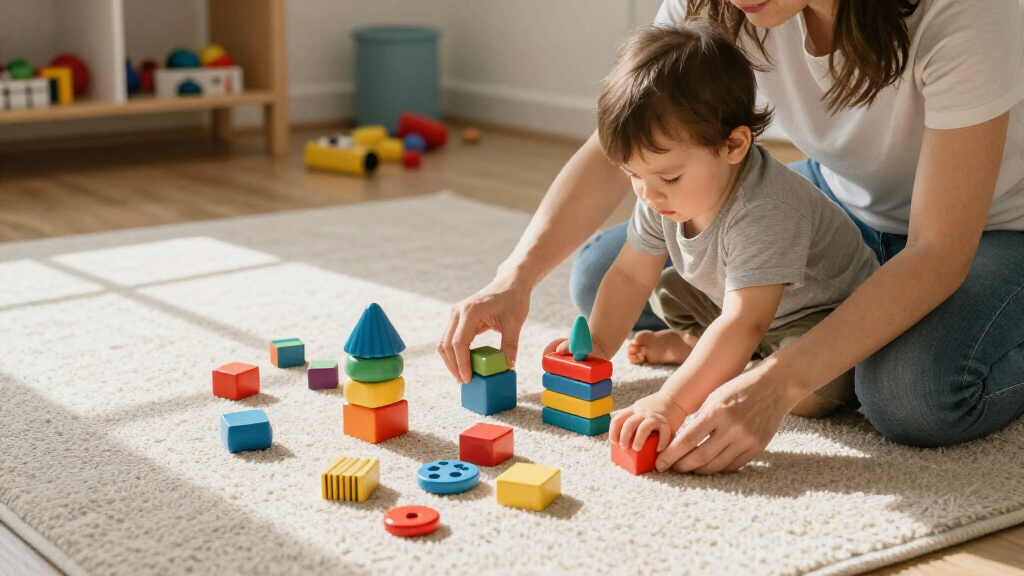

The best children’s sensory blocks balance tactile stimulation, safe materials, and genuine play value — and after comparing nine popular sets, the Infantino Press & Stay Sensory Blocks earn the top spot for their frustration-free design that even one-year-olds can succeed with. For families who want open-ended building that grows with the child, the Apluses 42-Piece Magnetic Building Blocks and the Toylogy 48-Piece Magnetic Building Cubes offer more ambitious construction play. The main tradeoff in this category is between safety and simplicity for infants versus creative complexity for preschoolers — magnetic sets demand more supervision, while soft and press-together sets limit what older kids can build. Price also splits the field, with premium wooden sets like the Dinhon Montessori blocks justifying their cost through durability rather than piece count. Read on for the full breakdown of all nine sets and which one fits your child’s age and play style.

Turn the school run and nap time into listening time
- Thousands of audiobooks, podcasts and originals
- Listen on your phone, tablet or Echo — also offline
- Cancel anytime
Complete the kit


Key Takeaways
- Age fit separated the winners more than price did: the Infantino Press & Stay and VEAIS soft blocks succeeded with babies and toddlers, while magnetic sets from Apluses and Toylogy frustrated children under three but excelled for ages four and up.
- Piece count proved misleading — the Jelly Blox Creative Kit with only 20 blocks delivered richer sensory feedback (squishy, tearable textures) than larger sets with more repetitive pieces.
- Two Apluses magnetic sets made the lineup, but the 45-piece version only makes sense if you specifically need the extra tiles; the 42-piece set offers the better starting balance of cost and building options.
- Safety warnings on magnetic sets were the biggest hidden differentiator: several sets require strict supervision around younger siblings, which effectively rules them out for mixed-age households.
- Wooden options (EVERSMART and Dinhon) lasted the longest under rough play but offered the least sensory variety — a real tradeoff for buyers prioritizing tactile exploration over durability.


| children’s sensory block | Brand | Piece count | Recommended age | Model |
|---|---|---|---|---|
| EVERSMART 36-Piece Wooden Stac | EVERSMART | 36 | 6 months–8 years | — |
| Apluses 42-Piece Magnetic Buil | Apluses | 42 | — | — |
| Magnetic Building Blocks | Pairez Toys | 24 | — | — |
| Infantino Press & Stay Sensory | Infantino | 24 | — | Press & Stay |
| Apluses 45-Piece Magnetic Buil | Apluses | 45 | 3 years and up | Apluses-E |
| Jelly Blox Creative Kit | Jelly Blox | — | 2 years and up | Creative Kit |
| Dinhon 23-Piece Sensory Block | Dinhon | 23 | 36 months–6 years | DH-25830 |
| Toylogy 48-Piece Magnetic Buil | Toylogy | — | 36 months–6 years | Toylogy-B |
| VEAIS Sensory Soft Building Bl | VEAIS | — | 36 months–8 years | Soft Building Blocks |
More Details on Our Top Picks
EVERSMART 36-Piece Wooden Stacking Blocks for Kids
Wood, weight, and balance make this set distinct from the magnetic cube options in this roundup. Its 36 large wooden pieces invite children to stack, sort, and invent their own structures, with the resistance of wood giving each placement a different feel from the click-together Apluses 42-Piece Magnetic Building Blocks. Water-based paint and responsibly sourced wood are useful material details for families choosing a tactile, non-plastic play set. The tradeoff is that these blocks rely on balancing rather than connectors, so builds can topple and may call for adult help with younger children. The listed specifications also describe them for indoor use, limiting where play can happen. This is a strong fit for open-ended stacking, though it offers less guided construction than the magnetic sets.
Pros:- 36 large wooden pieces support stacking and balancing
- Water-based paint and responsibly sourced wood
- Encourages color recognition, sorting, and fine motor practice
- Storage box is included
Cons:- Unconnected stacks can topple and may need adult supervision for younger children
- Listed specifications limit use to indoors
Best for: Families seeking large wooden pieces for indoor stacking, balancing, and color-sorting play
Not ideal for: Caregivers who want magnetic connections, guided builds, or a set specifically suited to outdoor play
- Brand:EVERSMART
- Material:Wood
- Piece count:36
- Color:Multicolor
- Dimensions:9.84 x 7.87 x 2.36 inches
- Item weight:1.9 pounds
- Recommended age:6 months–8 years
- Paint:Water-based
- Additional feature:Non-toxic
Our verdict“Choose this set for tactile wooden balance play; pick magnetic cubes if you want structures that connect and hold together.”
Apluses 42-Piece Magnetic Building Blocks for Kids
Compact magnetic cubes make this Apluses set a better match for children ready to plan small constructions than for toddlers who need larger pieces. It supplies 42 one-inch cubes in six colors, plus an idea booklet and storage bag, giving families a tidy starting point for color sorting and hands-on building. Compared with Pairez Toys’ 1.65-inch magnetic cubes, these pieces are smaller and more numerous, which may suit detailed arrangements but can be harder for younger children to handle. The smooth, rounded ABS cubes are designed for ages 3 and up. One limitation is that the booklet’s project details are not specified, so buyers cannot tell how much guidance it offers. Choose it for compact, repeatable builds, not oversized toddler-friendly structures.
Pros:- 42 magnetic cubes provide many pieces for small constructions
- Six colors support color sorting and recognition
- Smooth surfaces and rounded edges
- Includes an idea booklet and storage bag
Cons:- One-inch cubes may be less manageable for younger children than Pairez Toys’ larger blocks
- The listed information does not describe the booklet’s projects
Best for: Families with children ages 3 and up who want compact magnetic cubes for sorting and small builds
Not ideal for: Caregivers of younger toddlers or anyone prioritizing larger blocks that are easier to grasp
- Brand:Apluses
- Piece count:42
- Colors:6
- Block size:1 inch
- Material:ABS plastic
- Age range:3 years and up
- Included:Idea booklet and storage bag
Our verdict“Pick these for compact magnetic play with a preschooler; choose Pairez Toys if larger cubes matter more.”
Magnetic Building Blocks, 1.65 inch Large Stacking Cubes for Toddlers
Larger magnetic cubes set Pairez Toys apart from Apluses’ one-inch cubes: at 1.65 inches per side, these blocks are designed for easier handling and more visible color play. The 24-piece set targets children from 12 months, and its sealed magnets keep the connectors inside the blocks while allowing builds to stick together. A booklet with ideas for animals, vehicles, and structures gives families a more directed starting point than the Apluses 42-Piece set, whose booklet projects are unspecified. There is a tradeoff in capacity: 24 pieces leave less room for expansive constructions, and the product information still advises supervision because small pieces can pose a choking hazard. Its described bath-toy use adds another play setting, but buyers wanting a larger build set may prefer a higher piece count.
Pros:- 1.65-inch cubes are larger than Apluses’ one-inch blocks
- Magnets are sealed inside each block
- Six vibrant colors support visual sorting and creative play
- Includes a booklet with animal, vehicle, and structure ideas
Cons:- 24 pieces offer less capacity for large projects than the 42- and 45-piece magnetic sets
- Small-piece choking risk means children need supervision
Best for: Families with toddlers who want larger magnetic cubes and a booklet to prompt early building play
Not ideal for: Buyers seeking a high piece count for large structures or a set for children who play without close supervision
- Brand:Pairez Toys
- Model number:PT3011
- Age range:12 months and up
- Piece count:24
- Block size:1.65 inches per side
- Colors:6 vibrant rainbow colors
- Set name:Magnetic Building Blocks 24 PCS
- Model year:2023
Our verdict“Choose these for larger magnetic cubes and guided toddler play, provided an adult can supervise.”
Infantino Press & Stay Sensory Blocks, 24-Piece Building Toy
Press-to-connect play gives Infantino’s set a different purpose from the magnetic cubes: toddlers can join pieces with a simple push, without carefully lining up magnets. Its varied textures and colorful pieces add tactile exploration alongside stacking, while connections in vertical and sideways directions let children experiment with how shapes fit. Compared with Pairez Toys’ magnetic set, the Infantino blocks are aimed at a younger age range and emphasize pressing and interlocking over larger magnetic constructions. The 24-piece count keeps the set focused, but some builds may tumble and need to be rebuilt; that can interrupt play for children expecting every structure to stay upright. Listed for ages 12 months to 2 years, it is a specific early-play choice rather than a set for older children seeking more complex builds.
Pros:- Simple press connection reduces the need for precise alignment
- Pieces connect vertically and sideways
- Varied textures and colors encourage sensory exploration
- Supports cause-and-effect play and fine motor practice
Cons:- Some builds may tumble and need to be rebuilt
- The listed age range is limited to 12 months–2 years
Best for: Caregivers of children ages 12 months to 2 years seeking textured pieces that connect with a simple press
Not ideal for: Families wanting larger magnetic structures, a higher piece count, or builds that reliably stay upright
- Brand:Infantino
- Model:Press & Stay
- Model number:516051-06
- Piece count:24
- Age range:12 months–2 years
- Target audience:Unisex baby
- Set name:Press & Stay Sensory Blocks
- Model year:2021
Our verdict“Pick Infantino for textured press-and-connect play with a young toddler; choose magnetic cubes for taller building projects.”
Apluses 45-Piece Magnetic Building Blocks for Kids
Nine translucent rainbow colors give this Apluses set a color-sorting focus that the 42-piece Apluses set, with six colors, does not match. It also includes 45 magnetic cubes, a storage bag, an idea booklet, and an instruction manual, making it the more fully accessorized option for families who want to organize pieces and start with prompts. The blocks are listed for ages 3 and up and use smooth ABS with rounded edges. Compared with Pairez Toys’ larger 1.65-inch cubes, the listed details do not provide a block size here, so buyers cannot judge how easy they will be for small hands to grasp. The extra colors and pieces support varied arrangements, but the set’s stated under-three supervision note and its age guidance make it a preschool choice, not an infant sensory toy.
Pros:- 45 pieces in nine rainbow colors offer more color variety than the 42-piece Apluses set
- Translucent cubes add a distinct visual quality
- Includes storage bag, idea booklet, and instruction manual
- Smooth ABS material and rounded edges
Cons:- Listed for ages 3 and up, with parental supervision advised for younger children
- Block dimensions are not provided, making size comparison difficult
Best for: Families with children ages 3 and up who enjoy color sorting and want a magnetic set with storage and build prompts
Not ideal for: Caregivers looking for a toddler set with specified larger block dimensions or play intended for children under 3
- Brand:Apluses
- Piece count:45
- Colors:9 rainbow colors
- Material:ABS
- Recommended age:3 years and up
- Included components:Storage bag, idea booklet, instruction manual, packaging box
- Model:Apluses-E
Our verdict“Choose this Apluses set for preschool color sorting and included build aids; choose Pairez Toys for specified larger cubes.”
Jelly Blox Creative Kit, 20 Blocks
The Jelly Blox Creative Kit is the sensory-first choice here: its 20 soft, squeezable blocks include varied fillings such as sand, foam beads, stars, and mini bricks, giving children different textures to explore as they build. Compared with the VEAIS Sensory Soft Building Blocks, which emphasize a larger set of flexible pieces for stacking and connecting, Jelly Blox offers more variety inside the blocks themselves. Compatibility with other Jelly Blox kits can also extend play for families who already own the range. The tradeoff is a smaller piece count, and the product data says block and filling colors may vary, so the set may not match a particular color preference. It is designed for ages 2 and up and can be cleaned with gentle soap and water.
Pros:- Soft blocks offer a squeezable tactile play experience.
- Different fillings provide varied textures within one kit.
- Compatible with other Jelly Blox kits.
- Gentle soap and water cleaning is specified.
Cons:- Includes 20 blocks, fewer than the 40-piece VEAIS set.
- Block and filling colors may vary.
Best for: Families with children aged 2 and up who want squeezable blocks with multiple tactile fillings.
Not ideal for: Buyers seeking a large set of uniform blocks or specific colors and fillings, since the assortment may vary.
- Brand:Jelly Blox
- Model:Creative Kit
- Number of blocks:20
- Recommended age:2 years and up
- Compatibility:Compatible with other Jelly Blox kits
- Cleaning:Gentle soap and water
- Safety:Safety tested
- Accreditation:MESH Accredited
Our verdict“Choose Jelly Blox for varied textures and squeezable play, especially if you may add other kits from the same range.”
Dinhon 23-Piece Sensory Block Set – Large Montessori Wooden Building Blocks with Rainbow Colors for Toddlers and Kids
The Dinhon 23-piece set brings visual exploration into building: its pine wood frames hold translucent rainbow acrylic cores that let color and light become part of play. That gives it a different sensory emphasis from the Toylogy 48-Piece Magnetic Building Cubes, whose magnetic connections and larger quantity favor joining many pieces into structures. Dinhon’s oversized blocks are described as easy to grip, which may suit younger builders who are learning to stack and arrange shapes. The tradeoff is that the acrylic pieces may be fragile if dropped, so this set is a weaker fit for rough play. It also has no included storage solution, and the listed recommended age is 36 months to 6 years despite broader age claims in its description.
Pros:- Translucent rainbow acrylic adds visual color play.
- Pine wood frames provide a distinct feel from all-plastic sets.
- Oversized design is described as easy for small hands to grip.
- Open-ended pieces support arranging and building.
Cons:- Acrylic pieces may be damaged if dropped.
- No storage solution is included.
- The stated recommended age is 36 months to 6 years.
Best for: Caregivers seeking chunky, translucent blocks for supervised color exploration and open-ended building.
Not ideal for: Families looking for a rough-play set or an included way to store pieces, since acrylic may be fragile and storage is not listed.
- Brand:Dinhon
- Model:DH-25830
- Piece count:23
- Materials:Pine wood outer frame with high-transparency acrylic core
- Recommended age:36 months–6 years
- Included components:Rainbow blocks
- Target audience:Boys and girls
Our verdict“Pick Dinhon for visual color exploration and chunky framed blocks when play can be supervised and careful.”
Toylogy 48-Piece Magnetic Building Cubes for Kids
For children who enjoy joining pieces into larger structures, the Toylogy 48-Piece Magnetic Building Cubes offer the most pieces in this batch, with seven colors and magnetic connections. That makes them a more structure-focused pick than the Jelly Blox Creative Kit, whose soft blocks put more emphasis on squeezing and exploring different fillings. Toylogy also includes a storage bag and idea booklet, giving families a place to gather the cubes and prompts for getting started. The sealed ABS cubes are described as waterproof and washable with soapy water, which can help with cleanup after play. Their main age limitation is clear: they are recommended for ages 3 to 6, so they are not the choice for younger toddlers.
Pros:- 48 magnetic cubes support connected construction.
- Seven colors add variety to sorting and building.
- Storage bag and idea booklet are included.
- Sealed ABS cubes can be washed with soapy water.
Cons:- Recommended only for ages 3 to 6.
- Hard ABS cubes do not offer the squeezable feel of Jelly Blox.
Best for: Families with children aged 3 to 6 who want many magnetic cubes, basic building prompts, and included storage.
Not ideal for: Households buying for children under 3 or seeking soft, squeezable blocks with varied textures.
- Brand:Toylogy
- Model:Toylogy-B
- Pieces:48 magnetic cubes
- Colors:7
- Material:ABS plastic
- Included:Storage bag and idea booklet
- Recommended age:36 months–6 years
- UPC:747301320054
Our verdict“Choose Toylogy when connected construction and a large, washable cube set matter more than soft tactile textures.”
VEAIS Sensory Soft Building Blocks for Toddlers, 40 Pieces
The VEAIS Sensory Soft Building Blocks offer a sizable set of 40 lightweight, flexible pieces in four colors, suited to squeezing, connecting, and stacking at home or on the go. Compared with the Jelly Blox Creative Kit, VEAIS gives buyers twice as many pieces, while Jelly Blox adds varied fillings inside some blocks for a more varied tactile experience. VEAIS instead keeps the sensory play focused on soft material, color, and handling, with a waterproof surface that can be wiped or rinsed clean. The product is listed for ages 36 months to 8 years, so it covers older preschool and early school-age children too. That age floor means it is not intended for younger toddlers, despite the title’s broad toddler wording.
Pros:- 40 soft, lightweight pieces offer plenty to handle and stack.
- Flexible blocks support squeezing, connecting, and building.
- Waterproof surface can be wiped or rinsed clean.
- Four colors support simple color recognition activities.
Cons:- Recommended age starts at 36 months.
- Four listed colors offer less color variety than Toylogy’s seven.
- No storage container is listed among the included components.
Best for: Families and preschool classrooms wanting a portable 40-piece soft set for children aged 3 and up.
Not ideal for: Caregivers shopping for children under 3 or seeking blocks with different internal sensory fillings.
- Brand:VEAIS
- Model:Soft Building Blocks
- Quantity:40 pieces
- Colors:Red, yellow, blue, and green
- Material:TPEE
- Recommended age:36 months–8 years
- Target audience:Toddlers and preschool children
- Included components:Instruction manual
Our verdict“Choose VEAIS for a portable, higher-count soft block set for children aged 3 and up who value easy cleanup.”

How We Picked
I evaluated each set against five criteria that actually matter at home: safety and age appropriateness (magnet security, choking hazards, material certifications), sensory richness (textures, colors, sounds, and tactile variety), play longevity (whether the set still engages a child six months later), build quality (how pieces survive drops, chewing, and sibling tug-of-war), and value per play session rather than value per piece. A cheap set with 48 pieces that sits in a bin loses to a pricier 20-piece set that gets played with daily.
The ranking reflects a simple philosophy: the best sensory blocks match the child’s developmental stage first and wow-factor second. That’s why the Infantino Press & Stay set leads despite being one of the least technically ambitious products here — it does its one job extremely well for the right age. Magnetic sets ranked highly but were penalized for supervision requirements, and wooden sets were judged on a durability-versus-stimulation curve rather than against magnetic sets head-to-head.
| children’s sensory block | Material | Model |
|---|---|---|
| EVERSMART 36-Piece Wooden Stac | Wood | — |
| Apluses 42-Piece Magnetic Buil | ABS plastic | — |
| Magnetic Building Blocks | — | — |
| Infantino Press & Stay Sensory | — | Press & Stay |
| Apluses 45-Piece Magnetic Buil | ABS | Apluses-E |
| Jelly Blox Creative Kit | — | Creative Kit |
| Dinhon 23-Piece Sensory Block | — | DH-25830 |
| Toylogy 48-Piece Magnetic Buil | ABS plastic | Toylogy-B |
| VEAIS Sensory Soft Building Bl | TPEE | Soft Building Blocks |
Factors to Consider When Choosing Best Children’s Sensory Blocks
Before choosing a set, it helps to understand what actually drives satisfaction with sensory blocks — and where buyers most often go wrong.Match the Set to the Age, Not the Age Range on the Box
Manufacturers print broad age ranges to widen their market, but the practical range is usually much narrower. A magnetic set labeled “3+” often doesn’t click with a child until four or five, when spatial reasoning matures enough to plan structures. Conversely, press-together and soft blocks lose their appeal quickly after age three, when kids want taller towers and more complex designs. The most common mistake I see is buying “ahead” — parents purchase a magnetic set for a two-year-old thinking it will last longer, then watch the child abandon it out of frustration. If you have multiple children, either buy for the youngest child’s safety first, or plan to keep magnetic sets stored away during unsupervised play.
Sensory Variety Matters More Than Piece Count
A 48-piece set of identical cubes provides less sensory input than a 20-piece set with varied textures, firmness, and sounds. Look for sets that engage multiple senses: squishy surfaces, ridges for tactile exploration, rattles or crinkles, and high-contrast or rainbow colors for visual stimulation. This is where sets like the Jelly Blox and VEAIS outperform their piece counts. The mistake to avoid is comparing sets by quantity — doubling the pieces of a repetitive set just doubles the clutter. Ask what each piece does differently, not how many there are.
Magnet Safety Is Non-Negotiable
Magnetic building blocks are among the most engaging options in this category, but they carry a real safety burden in households with children under three or with siblings who still mouth objects. Loose magnets that escape cracked tiles are a medical emergency if swallowed, particularly if two or more are ingested. Check that tiles are fully sealed rather than glued at seams, inspect them regularly for cracks, and buy from brands that publish safety testing rather than vague compliance claims. If supervision isn’t realistic in your home, soft blocks or oversized wooden sets deliver peace of mind with far less risk. This single factor should override every other feature for families with crawlers and toddlers sharing a play space.
Durability Versus Stimulation: The Core Tradeoff
Wooden sets like the EVERSMART and Dinhon will outlast every plastic and foam option here — they can be handed down, survive water exposure, and never lose their shape. But wood offers limited tactile variety compared with squishy foam or magnetic connections. Plastic magnetic sets sit in the middle: durable tiles, but seams and internal magnets represent failure points over years of aggressive play. Soft foam blocks are the least durable but often the most developmentally valuable for infants. Decide whether you’re buying for one child’s current stage or as a multi-year, multi-child investment — the answer changes the right choice completely.
Storage and Cleanup Are Part of the Purchase
A set that scatters across a living room creates friction that shortens its usable life, because parents quietly stop offering it. Magnetic sets have an advantage here — tiles clump together and sweep up fast. Loose wooden blocks and foam pieces end up under furniture. Check whether the set includes a storage bag or case, and factor the missing one into the real cost. Also consider play surface requirements: magnetic tiles work best on a hard floor or table, while soft blocks are fine on any surface including hardwood without scratching. Small practical factors like these often decide whether a set gets daily use or monthly use.
When to Pay More — and When It’s Wasted Money
Premium pricing in this category usually buys one of three things: certified safe materials, better magnet strength, or Montessori-aligned design quality. For infants who chew everything, paying more for certified, non-toxic materials is money well spent. For magnetic sets, stronger magnets genuinely change the building experience — weak tiles that collapse mid-build cause meltdowns. Where extra money is wasted: elaborate themed sets for children under two, who can’t yet engage with the theme, and upgrading piece counts beyond what your child will actually use in a single play session. Most children max out constructively around 30 to 50 pieces; beyond that, you’re buying for yourself.
Frequently Asked Questions
Are magnetic building blocks safe for a 2-year-old?
Officially, most magnetic building sets carry a 3+ recommendation, and I’d treat that as a firm line rather than a suggestion. The risk isn’t the blocks in normal use — it’s the failure scenario where a tile cracks and releases loose magnets, which are dangerous if swallowed, especially in pairs. A determined two-year-old with teeth can damage cheaper tiles over time. If your two-year-old is drawn to building, oversized magnetic cubes (like the 1.65-inch stacking cubes in this lineup) are the safer bridge option because the larger pieces are harder to break and don’t fit in a mouth. Otherwise, press-together or soft blocks deliver similar cause-and-effect play without the supervision burden.
Which type of sensory block is best for a child who gets frustrated easily?
Low-frustration design is exactly why the Infantino Press & Stay blocks lead this roundup. Traditional stacking blocks fall with any wobble, but press-together blocks hold their position, so a imperfect stack doesn’t collapse and erase a child’s work. Magnetic tiles are surprisingly middle-of-the-road here: connections are forgiving, but structures can still collapse if magnet placement is off, which bothers some sensitive builders. Soft foam blocks like the VEAIS set are another low-frustration choice because nothing can fall and hurt or startle. If meltdowns over collapsed towers are a pattern in your house, prioritize connection-based building over balance-based building.
Should I buy the 42-piece or 45-piece Apluses magnetic set?
The two sets overlap heavily, and the honest answer is that most families won’t notice the difference in play. The decision should come down to what the extra pieces add: if the 45-piece version includes shapes or accessories the 42-piece set lacks, that composition matters more than the raw count. Buying both to combine them is a legitimate strategy only if your child has already maxed out one set — merged collections genuinely unlock bigger builds. But if this is a first magnetic set, the 42-piece version is the more sensible entry point, and I’d spend the difference on a storage container instead. First-time buyers consistently overestimate how many pieces their child will use in one sitting.
Are wooden sensory blocks worth it if my child already has plastic blocks?
Yes, if you’re buying them for the right reasons. Wood offers weight, natural texture, and a satisfying tactile difference from plastic that supports sensory discrimination — feeling the contrast between materials is itself developmental. Wooden sets also tend to support more balanced, deliberate stacking because the weight demands slower movements. What wood won’t give you is the squish, click, and connection play of foam or magnetic sets. If your child’s plastic blocks are magnetic, wooden blocks make a strong complementary purchase rather than a replacement, covering the sensory experiences magnets skip. If your child is still under two, I’d complete the soft-and-connecting bases first.
How many sensory blocks does a toddler actually need?
Fewer than most sets contain. For children under two, roughly 12 to 20 pieces is plenty — beyond that, extra pieces become scattered clutter while the child focuses on the same handful anyway. Between ages three and five, 30 to 50 pieces becomes useful because children start building enclosures, towers, and multi-part structures that genuinely require more material. The sets in this lineup that look “small,” like the 20-piece Jelly Blox kit, are actually sized correctly for toddlers. Resist the bulk-buy instinct at younger ages; you can always add a second set later once you’ve observed how your child actually plays with the first one.
Conclusion
The right pick here depends almost entirely on who’s playing. For best overall, the Infantino Press & Stay Sensory Blocks deliver the most reliable developmental payoff for the widest age window with the least frustration. For best value, the VEAIS Sensory Soft Building Blocks cover the infant-to-toddler years at a low cost per use. For best premium, the Dinhon Montessori Wooden Blocks justify their price through rainbow-finished hardwood that outlives every plastic set in this lineup.
For beginners and very young children — babies through early toddlers — soft and press-together sets beat everything else; skip magnetic tiles until age three or four. For specific needs, the Jelly Blox Creative Kit is the standout choice for sensory-seeking children who crave squishy, manipulable textures, while the Toylogy 48-Piece Magnetic Cubes suit families with school-age builders ready for ambitious structures. If you’re still torn, buy for your youngest child’s safety first and their current developmental stage second — you can always add a second set as they grow.
Fall Picks
fall essentials
As an affiliate, we earn on qualifying purchases.