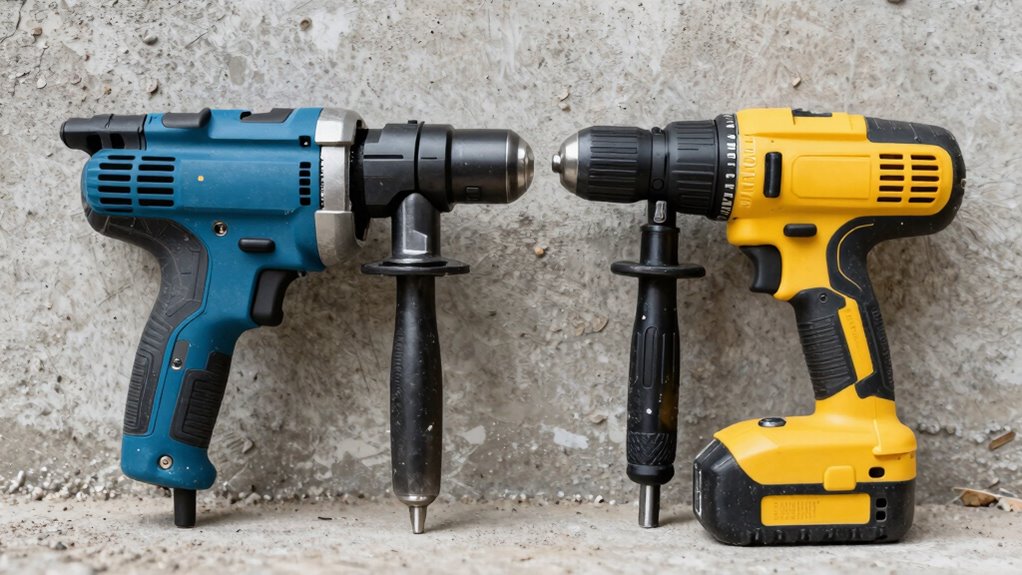

When choosing between a rotary hammer and a hammer drill for concrete, consider the size and toughness of your task. Rotary hammers deliver powerful impact for large holes, breaking, and chiseling in tough materials, making them ideal for heavy-duty projects. Hammer drills suit lighter masonry tasks like installing anchors or small drill holes in brick or light concrete. To find the right tool for your needs and maximize safety and efficiency, explore the key features and scenarios in detail.
Key Takeaways
- Rotary hammers deliver higher impact energy, making them ideal for heavy-duty concrete breaking and large hole drilling.
- Hammer drills are versatile tools suitable for lighter masonry tasks and smaller holes in brick or concrete.
- Rotary hammers operate with percussive hammering and require masonry bits, while hammer drills offer adjustable speed for varied materials.
- For demanding concrete work, rotary hammers provide efficiency and power; for less intense tasks, hammer drills suffice.
- Proper tool selection depends on project scope, material hardness, and whether heavy-duty or lightweight drilling is needed.
How Do Rotary Hammers and Hammer Drills Differ?
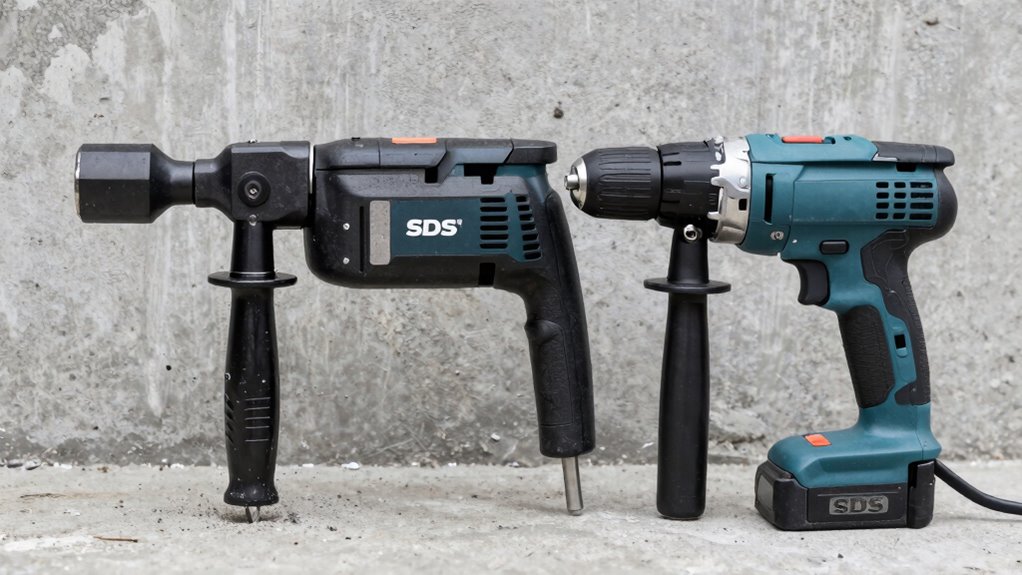
While both rotary hammers and hammer drills are powerful tools for drilling into tough materials, they have distinct differences in design and function. Rotary hammers typically accept larger bit sizes, making them ideal for heavy-duty tasks like breaking through concrete. They deliver a percussive hammering action that increases drilling efficiency in hard materials. Hammer drills, on the other hand, are better suited for smaller bits and lighter jobs, with a focus on adjustable drill speed for precision. Their design emphasizes versatility, allowing you to switch between drilling and hammering modes. The drill speed on a hammer drill is often adjustable, giving you more control for delicate or varied tasks. Understanding these differences helps you choose the right tool based on the bit size and the specific drilling requirements.
When Should You Use a Rotary Hammer for Concrete?
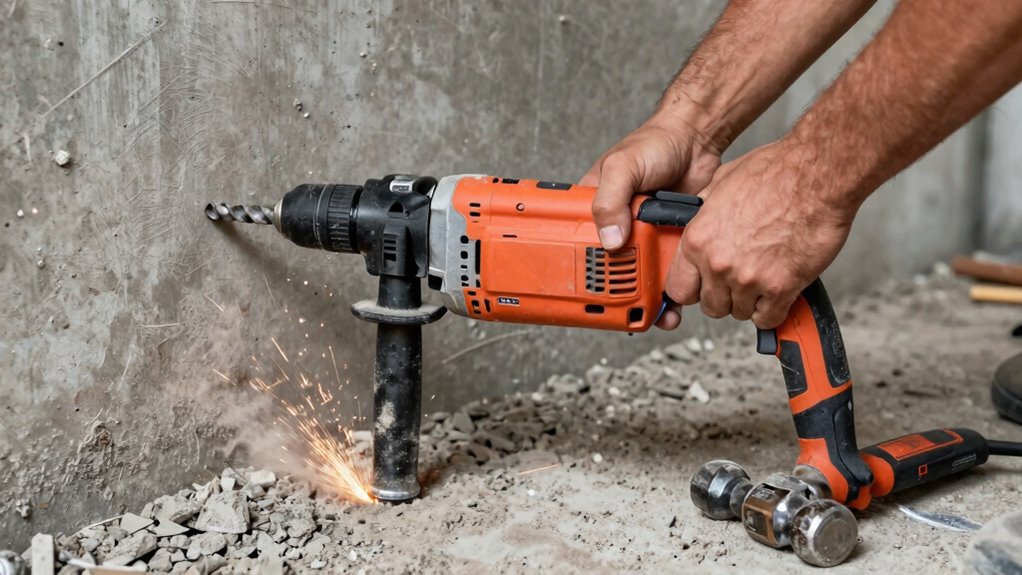
You should use a rotary hammer for concrete when you need to drill large holes or break through tough, dense materials efficiently. This tool is ideal for tasks like creating holes in a masonry wall or a concrete slab, where power and durability matter. Use it when working on substantial projects that require heavy-duty performance. A rotary hammer is also perfect for chiseling away or demolishing sections of concrete or masonry, saving you time and effort. Its powerful impact mechanism makes it suitable for breaking through thick materials that a standard drill can’t handle. Whether installing anchors, running plumbing, or framing, a rotary hammer provides the strength you need for demanding concrete work. Additionally, European cloud innovation emphasizes the importance of energy-efficient tools in sustainable construction practices, highlighting the need for energy-efficient tools that reduce environmental impact. Incorporating ergonomic design features can also help reduce operator fatigue during extended use. When selecting a rotary hammer, considering impact energy can help match the tool’s power to your specific needs for optimal efficiency. Understanding power-to-weight ratio can further assist in choosing a model that balances performance with user comfort.
Best Scenarios for Using a Hammer Drill on Masonry
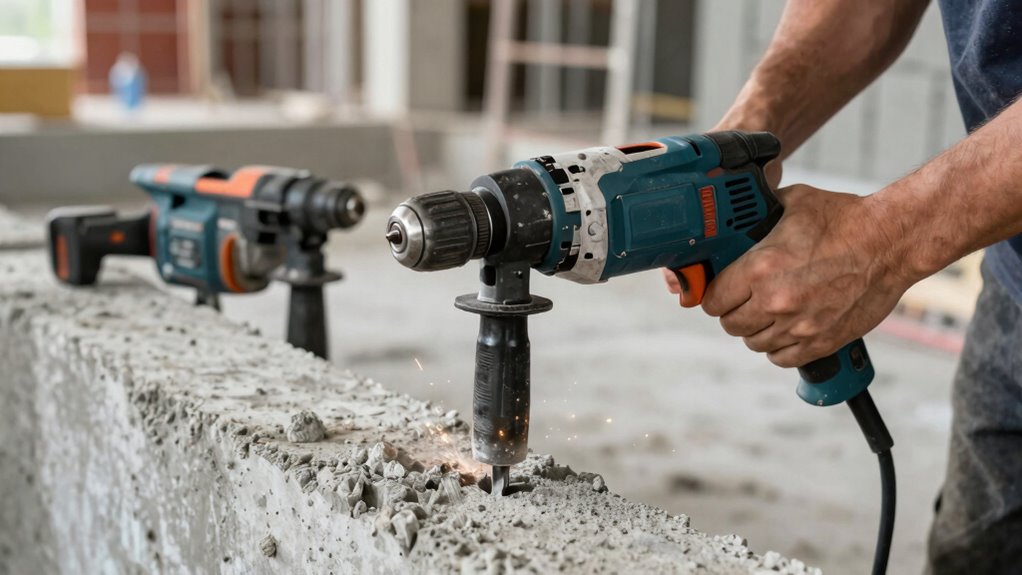
A hammer drill is the right choice for masonry projects that require moderate drilling and fastening tasks. If you’re installing masonry anchors or fixing fixtures, it provides enough power without overkill. Use it for drilling holes in brick, block, or concrete where precision is key. When working with diamond blades on small cutting tasks, a hammer drill can handle these jobs, especially if you’re making shallow cuts. It’s also suitable for drilling holes where you plan to insert masonry anchors, ensuring secure fastening. For lighter tasks like installing shelves or fixtures, a hammer drill offers control and efficiency. Keep in mind, for deeper or more demanding cuts, a rotary hammer might be more appropriate, but for everyday masonry work, this tool is versatile and reliable. Additionally, understanding field‑of‑view and imaging‑scale can help you select the right tool size for specific tasks. Recognizing power and torque requirements can also ensure you choose the most effective drill for various materials and job complexities. Moreover, considering ergonomics and user comfort can make prolonged work sessions more manageable and reduce fatigue. Proper tool maintenance and safety practices are essential to ensure longevity and safe operation. Selecting the correct drill type based on project scope and complexity can further improve your efficiency and results.
What Features Matter Most in a Rotary Hammer?
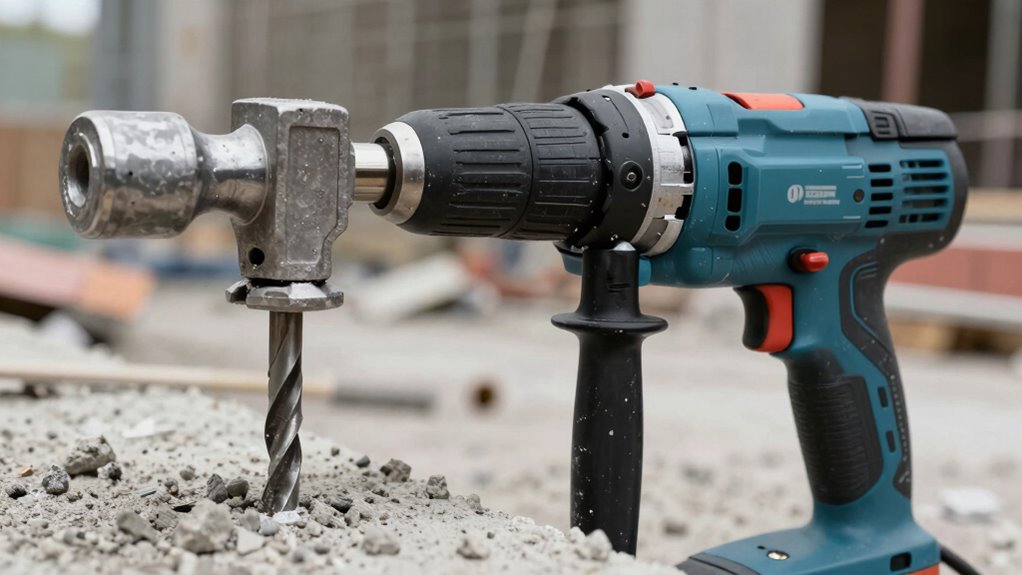
Choosing the right rotary hammer depends on several key features that guarantee it meets your specific needs. First, consider ergonomic design, which ensures comfort during extended use and reduces fatigue. Noise reduction is also essential, especially if you’ll be working in noise-sensitive environments. Power and impact energy determine how efficiently it handles tough concrete. Variable speed controls give you better control for different tasks. Additionally, look for durability features like sturdy construction and tool longevity. Furthermore, understanding power tool safety features can help prevent accidents and ensure proper operation over time. When selecting a rotary hammer, it’s also beneficial to assess the availability of replacement parts and maintenance requirements, as these factors influence the long-term performance and cost-effectiveness of the tool. Incorporating ergonomic features can significantly enhance user comfort and productivity during prolonged projects. Considering user feedback and expert reviews can also help identify the most reliable options for your needs. Moreover, paying attention to ergonomic design can improve handling and reduce user fatigue during intensive tasks.
What Makes a Good Hammer Drill for Light to Medium Tasks?
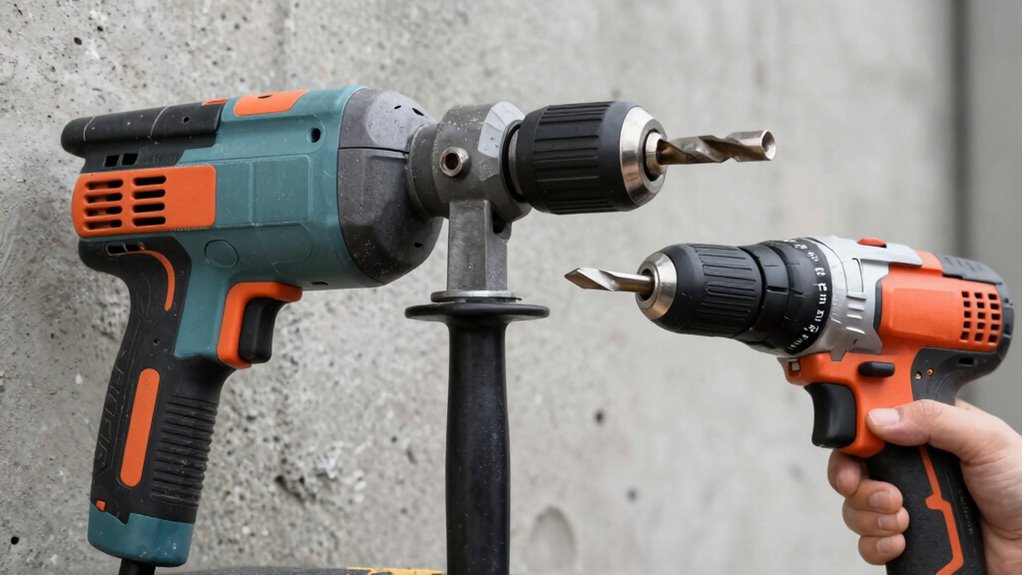
A good hammer drill for light to medium tasks combines power, versatility, and ease of use. You want a model with solid battery life so you won’t constantly recharge it during projects. This allows for uninterrupted work and improved efficiency. An ergonomic design is equally important; it reduces fatigue and provides better control, especially during extended use. Look for a hammer drill with a comfortable grip, balanced weight, and intuitive controls. These features make handling easier and help you maintain accuracy. While the power doesn’t need to rival heavy-duty tools, it should be enough to handle tasks like drilling into wood, plastic, or light masonry. Additionally, considering safety features can help prevent accidents and ensure a safer working environment. Incorporating ergonomic design principles can further enhance user comfort and reduce strain during prolonged use. Paying attention to battery performance ensures consistent operation throughout your projects. Proper filtration and pump protection can also contribute to the longevity and reliability of your tools, especially when working with materials that may cause debris buildup. To maximize your drill’s lifespan, selecting models with durable components is advisable. Ultimately, a well-designed, portable, and reliable hammer drill makes your light to medium projects smoother and more enjoyable.
Rotary Hammer vs Hammer Drill: Power, Size, and Ease of Use Comparison

When comparing rotary hammers and hammer drills, understanding their differences in power, size, and ease of use helps you select the right tool for your projects. Rotary hammers generally pack more power, making them ideal for heavy-duty tasks like concrete demolition, while hammer drills are lighter and better suited for lighter drilling. Battery technology has improved both tools, offering longer runtime and portability without sacrificing performance. Noise levels also vary; rotary hammers tend to be louder due to their increased power and impact mechanism, while hammer drills operate more quietly. Additionally, the impact force of rotary hammers makes them more effective for breaking through tough materials. The safety considerations for each tool should also be taken into account to prevent accidents during use. Proper handling techniques can significantly reduce the risk of injury and ensure more precise results. Furthermore, understanding the thermal behavior of these tools can help prevent overheating during extended operation. Key differences include: – Power output and impact force – Size and weight for maneuverability – Ease of use for extended periods – Battery efficiency and runtime – Noise levels during operation
How to Choose the Right Drilling Tool for Your Project
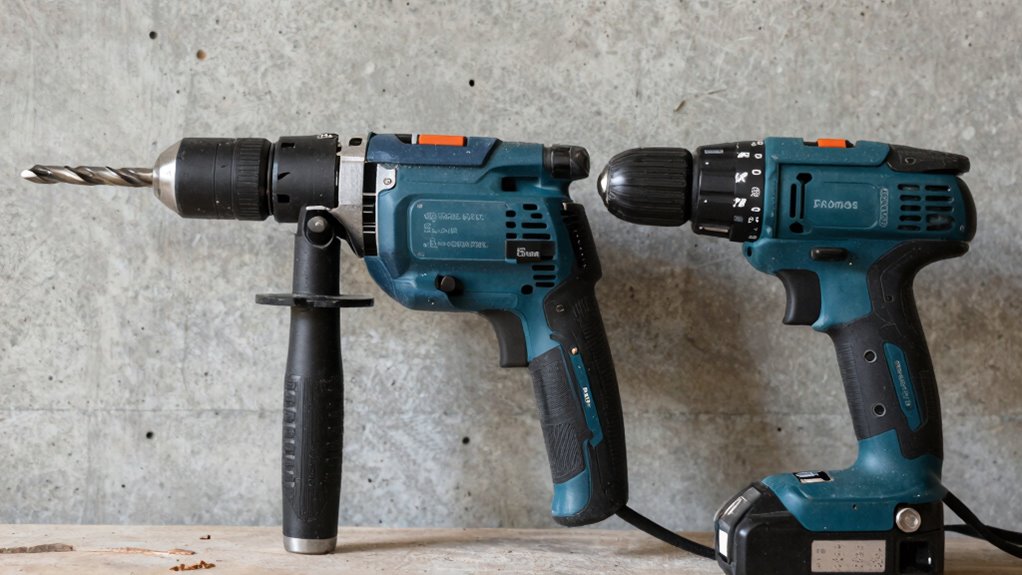
Choosing the right drilling tool depends on what materials you’ll work with and how portable you need your setup to be. Consider whether your project requires handling tough surfaces or lighter tasks, as this impacts power needs. Additionally, understanding the wall surface material is crucial for selecting the appropriate drill type. Ultimately, matching your tool to your project’s material and portability demands guarantees efficient and safe drilling.
Project Material Compatibility
Selecting the right drilling tool depends heavily on the material you’re working with. Different material types require specific tools and drill bit compatibility to guarantee efficiency and safety. For example, concrete demands a rotary hammer with a masonry bit, while wood or drywall works best with a standard drill and wood bits. Consider these points:
- Material hardness and density
- The size and depth of the hole needed
- Compatibility between drill bits and your tool
- Whether the material is brittle or tough
- The need for precision versus speed
Matching your tool to the material type assures effective drilling without damaging either the surface or your equipment. Proper material compatibility prevents frustration and extends the life of your drill bits and tools, making your project smoother and more successful.
Power and Portability
The power and portability of your drilling tool directly impact how efficiently you can complete your project. An ergonomic design ensures you can work comfortably for extended periods, reducing fatigue. If you’re choosing a cordless model, consider battery life; longer-lasting batteries allow for uninterrupted work, especially on large projects. A lightweight, well-balanced tool improves maneuverability, making it easier to handle in tight spaces. For heavy-duty tasks, a more powerful rotary hammer provides the necessary force, but it may sacrifice some portability. Conversely, a compact hammer drill offers greater ease of movement but might lack the raw power needed for tougher materials. Ultimately, balancing power with portability ensures you pick a tool that fits your project’s scope and your comfort level.
Common Mistakes to Avoid When Drilling Into Concrete
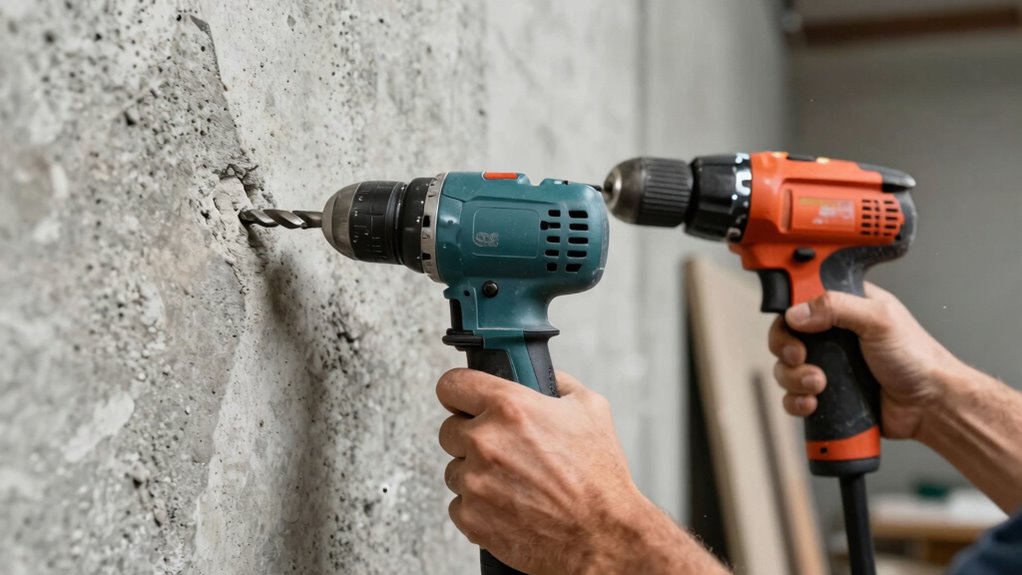
One common mistake is using the wrong drill bits, which can damage the concrete or make the job harder. Applying too much force can cause the bit to slip or break, so let the tool do the work. Additionally, failing to secure your workpiece can lead to inaccuracies or accidents during drilling.
Using Wrong Drill Bits
Using the wrong drill bits is a common mistake that can lead to frustrating results and equipment damage when drilling into concrete. Proper bit selection and ensuring drill bit compatibility are vital for successful drilling. When you choose the wrong bit, you risk damaging your drill, wasting time, and ruining the material.
Be mindful of these pitfalls:
- Using masonry bits that aren’t designed for concrete
- Ignoring the size and type specified for your drill
- Overlooking the bit’s suitability for the drill’s power
- Failing to match the bit type to the task (e.g., SDS bits for rotary hammers)
- Not checking if the bit is in good condition before use
Always verify drill bit compatibility and select the right bit to make your project safer and more efficient.
Applying Excessive Force
Applying excessive force while drilling into concrete is a common mistake that can quickly damage your equipment and compromise safety. When you press too hard, you increase excessive pressure on the drill bit and motor, risking overheating and premature wear. Force application should be controlled; let the tool do the work. Using too much force doesn’t speed up the process and can cause the bit to bind or break. Instead, apply steady, moderate pressure, allowing the drill’s power to handle the workload. Proper technique involves maintaining a firm grip and letting the drill’s motor generate the necessary force. Remember, patience and correct force application lead to cleaner, safer, and more efficient drilling results. Avoid the temptation to push harder—focus on controlled, consistent pressure.
Not Securing Workpiece
If you don’t secure the workpiece properly before drilling, it can shift or vibrate, making the process unsafe and leading to inaccurate holes. To avoid this, always clamp securely to keep the material steady. Before drilling, mark accurately to ensure precision and prevent mistakes. Failing to secure your workpiece can cause the drill to slip, damage the surface, or create uneven holes.
Remember these tips:
- Clamp the workpiece tightly to a stable surface
- Use a vise or clamps for extra support
- Double-check your markings before drilling
- Avoid applying excessive force that could loosen the workpiece
- Always inspect the setup for stability before starting
Securing your workpiece ensures safety, accuracy, and a cleaner drilling process.
Frequently Asked Questions
Can a Rotary Hammer Replace a Regular Hammer Drill for All Tasks?
A rotary hammer can’t substitute a regular hammer drill for all tasks because of tool versatility and power efficiency. While a rotary hammer excels at heavy-duty jobs like concrete drilling, it’s too bulky and powerful for lighter tasks such as woodworking or small fastenings. You need both tools to maximize efficiency and make sure you use the right tool for each job, preventing damage and reducing fatigue.
What Safety Precautions Should I Take When Using These Tools?
You absolutely must prioritize safety when using these tools—think of it as protecting your hands and eyes from flying debris at all costs. Always wear personal protective equipment like goggles, gloves, and ear protection. Follow safe handling techniques, such as securing the workpiece and keeping a firm grip. Never bypass safety features or rush the process, as accidents can happen faster than you can blink. Stay alert and cautious to prevent injuries.
Are Corded or Cordless Models Better for Concrete Drilling?
Corded models are generally better for concrete drilling because they offer consistent power and no battery concerns. However, if you want more mobility and less weight, a cordless model might suit you better, especially with improved battery performance. Keep in mind, cordless tools tend to be heavier as batteries drain and may have limited runtime. Choose based on your project’s needs, balancing power, weight, and convenience.
How Does the Noise Level Compare Between Rotary Hammers and Hammer Drills?
You’ll notice that rotary hammers are generally louder than hammer drills, creating more significant noise level differences during use. This noise comparison stems from their powerful percussion mechanisms, which generate higher sound levels. If you work in noise-sensitive environments, you might prefer a hammer drill for quieter operation. However, if your task demands the heavy-duty impact of a rotary hammer, be prepared for increased sound levels and consider hearing protection.
What Maintenance Is Required to Keep These Tools in Optimal Condition?
To keep your rotary hammer or hammer drill in top shape, regularly perform tool lubrication on moving parts to prevent wear. Also, monitor your battery management closely; charge batteries properly and avoid complete discharges. Clean dust and debris from vents and bits after each use. These simple steps guarantee efficient operation, extend your tools’ lifespan, and maintain ideal performance during concrete drilling tasks.
Conclusion
Choosing between a rotary hammer and a hammer drill is like selecting the right brush for a masterpiece—each tool paints a different stroke. Your project’s size, material, and precision needs guide your hand. By understanding their dance of power and finesse, you’ll wield your tool like a seasoned artist, turning stubborn concrete into a canvas of achievement. Remember, the right choice transforms effort into effortless mastery, making your drilling endeavors truly strike a chord.