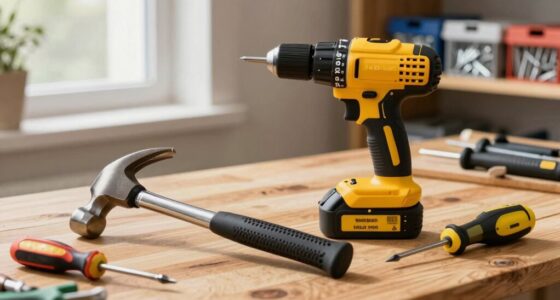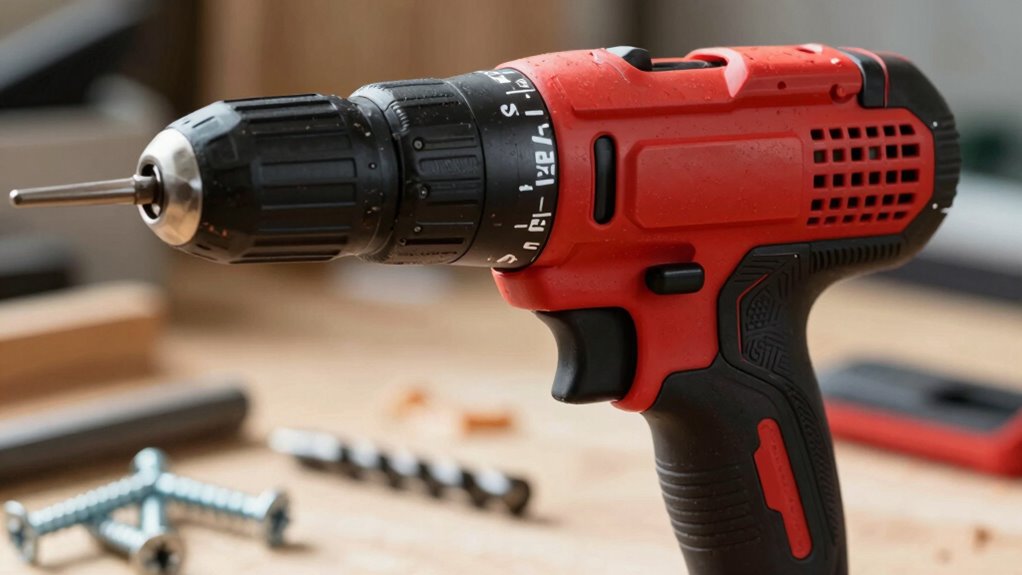

When choosing between a cordless drill and an impact driver, consider what tasks you’ll tackle most. If you need versatility for drilling and light screwdriving, go for a drill with adjustable speed. For heavy-duty fastening or working with dense materials, an impact driver delivers more torque and efficiency. The decision can seem complicated, but understanding their differences helps you pick what fits your projects best—if you want to discover more, keep exploring.
Key Takeaways
- Choose a cordless drill for versatility, precision, and light to medium tasks; opt for an impact driver for heavy-duty fastening and dense materials.
- Consider torque needs: impact drivers deliver higher torque for tough jobs, while drills offer adjustable speed for delicate or varied tasks.
- Evaluate ergonomics and size: lighter, ergonomic tools reduce fatigue, especially during prolonged use or tight-space projects.
- Check battery compatibility and platform: shared batteries save costs and simplify storage, influencing your long-term tool investment.
- Match your skill level and project requirements to ensure safe, efficient use of the appropriate tool type.
What’s the Difference Between a Cordless Drill and an Impact Driver?
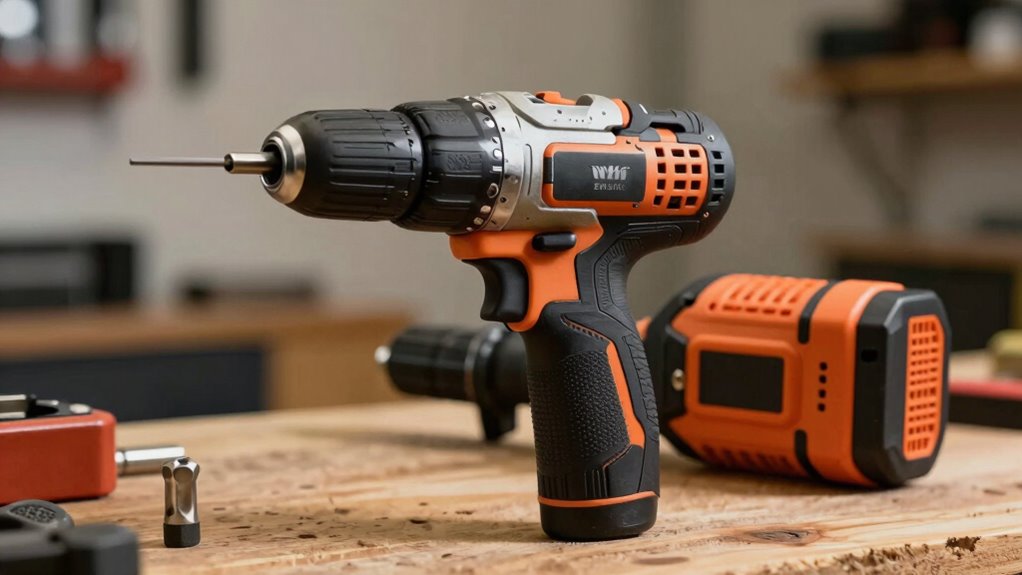
If you’re trying to decide between a cordless drill and an impact driver, understanding their differences is essential. One key difference is how they handle power and user comfort. Impact drivers typically have a shorter battery lifespan per charge, but they deliver more torque for tough tasks. Cordless drills often come with an ergonomic design that reduces fatigue during prolonged use, making them versatile for various projects. Impact drivers focus on quick, high-torque fastening, while drills excel at drilling holes and light screw driving. Your choice depends on the tasks you’ll tackle most often. If comfort and longer battery life matter, a cordless drill might be better. But if you need powerful fastening, an impact driver’s design will serve you well. Additionally, considering battery technology can help you select tools with longer-lasting power sources for extended projects, especially since advancements in cordless power systems continue to improve overall tool performance.
When Is It Best to Use a Cordless Drill at Home?
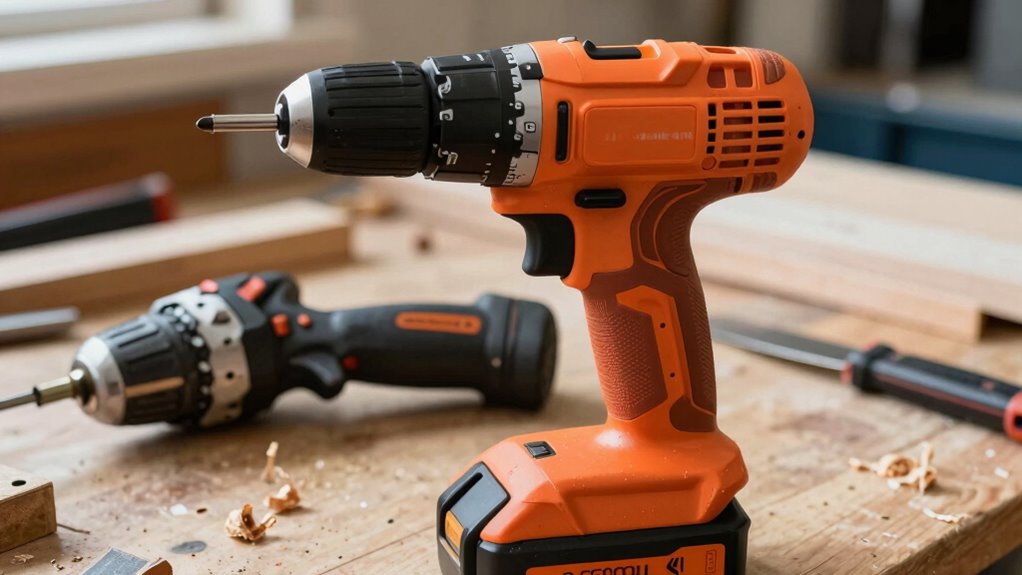
A cordless drill is most useful at home when you need a versatile tool for a variety of light to medium tasks. It’s perfect for DIY projects like assembling furniture, drilling holes for shelves, or hanging pictures. When tackling home repairs, you’ll find it invaluable for drilling into wood, plastic, or drywall. Its adjustable speed and multiple drill bits make it adaptable for different materials and tasks. Use it for tasks that don’t require high torque or impact, where precision and control are more important. A cordless drill’s portability allows you to move freely around your home, making it ideal for quick fixes and ongoing projects. In short, it’s your go-to tool for most casual home tasks that need drilling or screwdriving. Additionally, understanding the different types of drills can help you choose the right tool for your specific needs.
Which Tasks Are Impact Drivers Best Suited For?
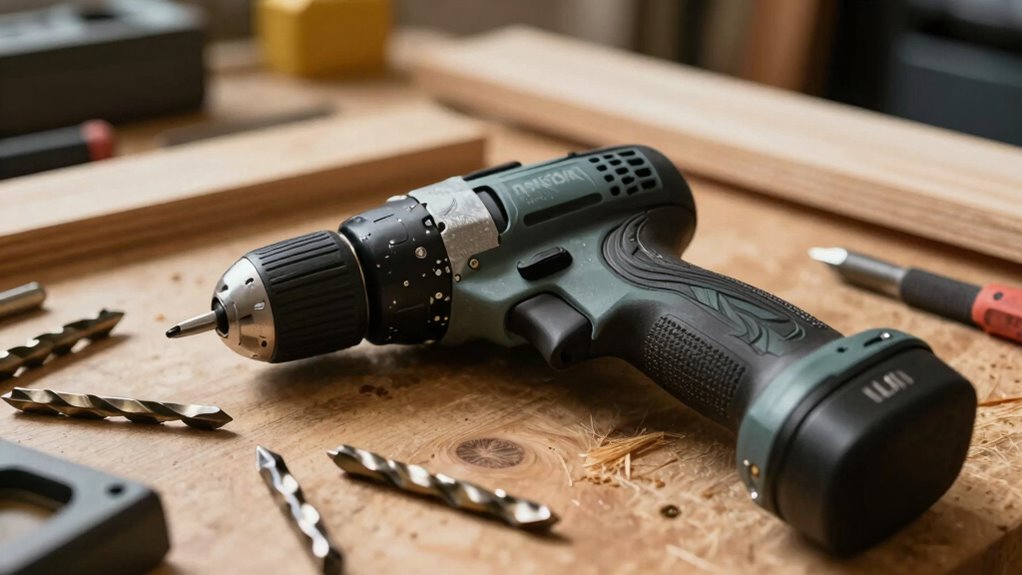
Impact drivers excel when you need high torque and fast fastening. They’re perfect for driving large screws, bolts, and heavy-duty fasteners into tough materials like hardwood, metal, or dense composites. Because they deliver powerful rotational force quickly, tasks that require quick, repetitive tightening benefit most from an impact driver. Their ergonomic design helps reduce fatigue during extended use, making them ideal for projects involving many fasteners. Battery life is vital here; choosing one with a long-lasting charge ensures you won’t be interrupted mid-task. Impact drivers are less suited for delicate tasks or driving small screws into drywall, where precision matters more than brute force. Overall, impact drivers shine in demanding fastening jobs where speed, torque, and ergonomic comfort are priorities. Understanding tool capabilities can help you select the right tool for specific applications. Additionally, knowing the benefits of ergonomic design can improve comfort during prolonged use and help prevent fatigue. Recognizing the importance of power output is essential for handling tougher projects efficiently.
How to Choose the Right Power Tool for Your Needs
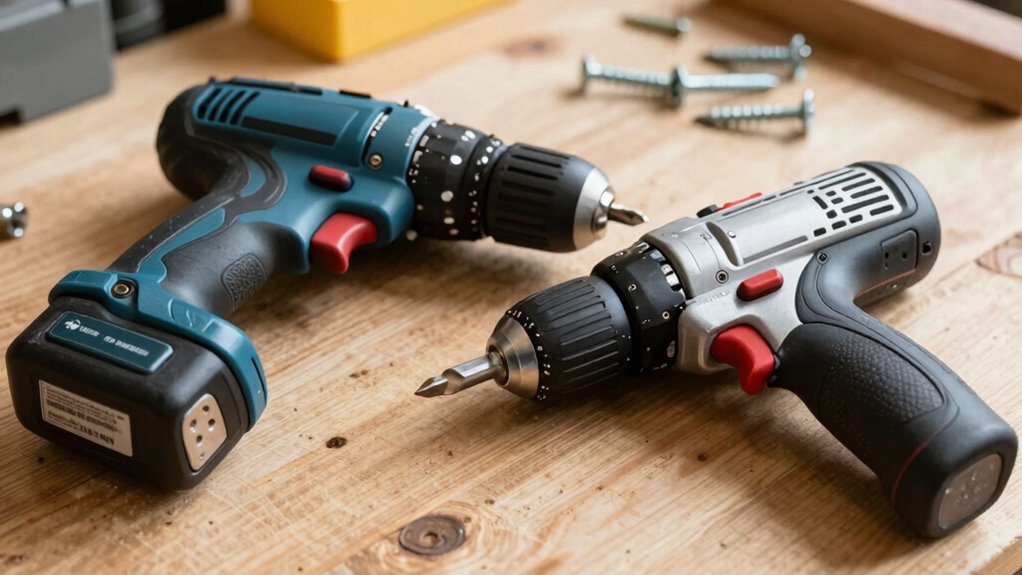
Choosing the right power tool depends on understanding the specific tasks you’ll tackle and the features that matter most to you. Focus on ergonomic design to guarantee comfort during prolonged use, reducing fatigue and increasing control. A well-designed grip and balanced weight make handling easier and safer. Safety features, like overload protection and secure bit locks, protect you from accidents and improve precision. Consider how often you’ll use the tool and for what projects, as some features are more relevant for heavy-duty work, while others suit occasional tasks. Think about the environment you’ll work in—compact, lightweight tools are ideal for tight spaces. Additionally, evaluating power tool versatility can help ensure you select a device that adapts to a variety of tasks, maximizing your investment. Understanding tool maintenance can also extend the lifespan and performance of your tools, ensuring safety and efficiency over time. Incorporating user-friendly controls can further enhance your experience by making operation more intuitive and reducing the learning curve. Staying aware of ergonomic design principles can significantly enhance your comfort and reduce strain during prolonged use. Analyzing brand reputation and customer reviews can also provide valuable insights into a tool’s durability and performance. By evaluating these factors, you’ll select a tool that not only meets your needs but also provides safety and comfort during every use.
Cost, Size, and Compatibility: What Matters Most?
Cost, Size, and Compatibility: What Matters Most?
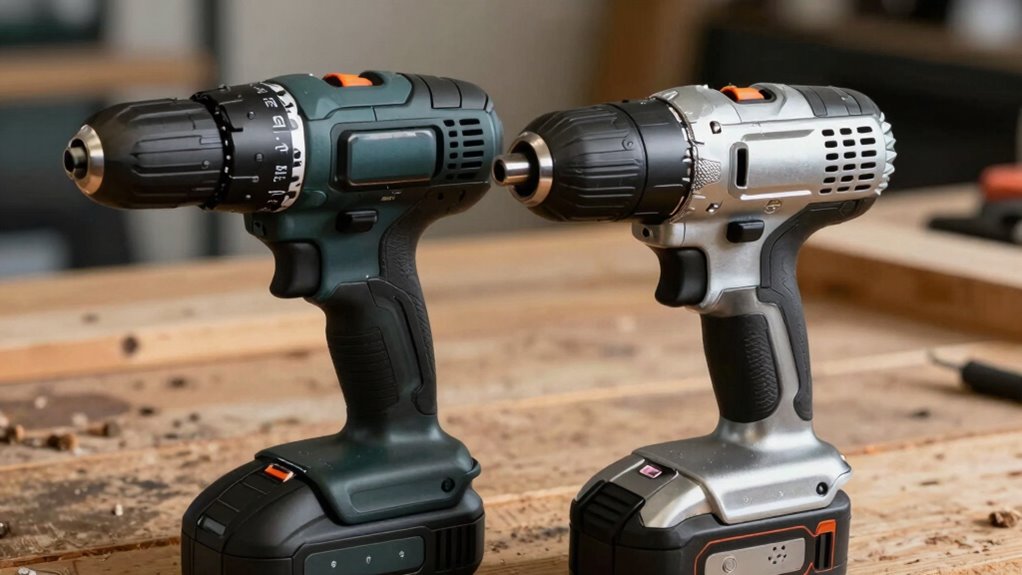
When choosing between a cordless drill and impact driver, size and weight can influence how comfortable you are during extended use. Compatibility with your existing tools and batteries can also save you money and hassle. Considering these factors helps you pick a tool that fits your needs and setup best. Additionally, understanding battery compatibility can make maintaining your tools easier and more effective over time.
Size and Weight Matters
Size and weight are crucial factors when selecting between a cordless drill and an impact driver because they directly affect comfort and ease of use. An ergonomic design ensures you can handle the tool comfortably during extended projects, reducing fatigue. Lighter tools are easier to maneuver in tight spaces, making tasks more manageable. Consider storage solutions that keep your tools organized and accessible without adding bulk. Impact drivers tend to be more compact and lightweight, ideal for one-handed use, while drills can be slightly bulkier but offer more versatility. Choosing the right size and weight helps prevent strain and improves efficiency, especially if you’ll be using your tools frequently. Prioritize ergonomic features and smart storage options to make your work smoother and less tiring.
Compatibility With Tools
Compatibility with your existing tools and budget plays a significant role in selecting between a cordless drill and an impact driver. Battery compatibility is essential—if both tools use the same battery platform, you save money and storage space. Accessory interchangeability also matters; many impact drivers and drills share bits and attachments, making switching easier. Consider whether your current toolkit includes batteries and accessories that fit either tool, which can reduce upfront costs. If you already own a drill with a compatible battery system, investing in an impact driver with the same setup might be smarter. Conversely, if your tools aren’t interchangeable, you might need to buy additional batteries or accessories, increasing overall costs. Choosing tools that align with your existing equipment ensures better efficiency and fewer extra expenses.
Top Tips to Get the Most Out of Your Cordless Drill and Impact Driver

To get the best performance from your tools, focus on maintaining your batteries properly and choosing the right tool for each job. Regularly charge and store batteries in a cool, dry place to extend their lifespan. Also, select the appropriate drill or impact driver for specific tasks to maximize efficiency and prevent damage. Paying attention to body jewelry measurements and materials can also help ensure your tools are compatible with your tasks and accessories. Additionally, understanding power tool maintenance can significantly prolong the lifespan of your equipment and improve overall safety during use. Recognizing urban myths and their origins can help you differentiate between genuine hazards and exaggerated stories, ensuring safer work practices. Furthermore, considering individual skill levels can help you choose the most suitable tool and avoid unnecessary frustration or accidents. Being aware of safety precautions and common misconceptions can further enhance your overall tool handling and safety awareness.
Optimal Battery Maintenance
Proper battery maintenance is essential to guarantee your cordless drill and impact driver perform at their best and last longer. To maximize battery longevity, follow good charging practices. Avoid letting batteries completely discharge before recharging; instead, recharge them when they’re roughly 20-30% drained. Store batteries in a cool, dry place to prevent overheating and degradation. When not in use for extended periods, remove the batteries from the tools and charge them to about 50% every few months. Using the charger recommended by the manufacturer ensures safe and efficient charging. Also, don’t overcharge; unplug once fully charged to prevent stress on the battery cells. Consistent, proper charging practices help maintain ideal performance and extend the lifespan of your cordless tools’ batteries. Additionally, understanding battery types and specifications can further optimize maintenance and performance. Knowing proper storage techniques can also help prevent battery capacity loss over time. To further protect your batteries, consider monitoring temperature during charging and storage to avoid damage caused by extreme heat or cold.
Proper Tool Selection
Choosing the right cordless drill or impact driver is essential to getting the most out of your tools. Start by considering the ergonomic grip, which guarantees comfort during prolonged use and reduces fatigue. A well-designed grip makes handling easier and improves control, leading to better results. Additionally, pay attention to brand reputation; reputable brands often deliver higher quality, durability, and reliable performance. Investing in trusted brands can save you money in the long run by minimizing repairs and replacements. Think about your specific project needs—whether power, precision, or versatility—and select a tool that matches those requirements. Proper tool selection isn’t just about features; it’s about choosing a tool you can handle comfortably and trust to perform consistently.
Frequently Asked Questions
Can I Use a Cordless Drill as an Impact Driver?
You can’t really use a cordless drill as an impact driver because they serve different purposes. Impact drivers have a more ergonomic design and deliver higher torque, making them ideal for driving long screws. While some models share battery compatibility, the impact driver’s specialized mechanism isn’t built for drilling, so don’t rely on your drill for tasks that need the high torque and fast impact features of an impact driver.
Are Impact Drivers Safe for Beginner DIYERS?
Impact drivers are safe for beginner DIYers when you follow safety concerns and proper use. They’re designed for ease and efficiency, making them beginner-friendly if you wear eye protection and keep a firm grip. While they deliver more torque, handling them carefully minimizes risks. Start with light projects, practice safe techniques, and you’ll quickly gain confidence. Impact drivers can be a safe, powerful tool for new DIYers when used responsibly.
How Long Does Battery Life Typically Last for Each Tool?
On average, cordless drill batteries last about 2-3 years with proper care, while impact driver batteries tend to hold their charge for 1.5-2.5 years. Battery longevity depends heavily on power consumption and usage patterns. If you use your tools frequently, expect to recharge or replace batteries more often. To maximize their lifespan, avoid overloading the batteries and store them in cool, dry places.
Can I Interchange Drill and Impact Driver Bits?
You can’t interchange drill and impact driver bits because they have different bit compatibility. Impact drivers use hex-shank bits designed to withstand higher torque, while drills often accommodate a wider range of bit types. This limits accessory versatility. Always choose the right bit for your tool to guarantee proper fit and avoid damage. Using the correct bit maximizes performance and prolongs your tools’ lifespan.
What Maintenance Is Required to Keep These Tools in Optimal Condition?
Maintaining your tools is like tending a garden—you need to nurture them regularly. To keep your cordless drill and impact driver in top shape, regularly clean the vents and exterior, check and charge the batteries, and store them in a cool, dry place. Proper battery maintenance ensures longevity, while cleaning prevents dirt buildup. Proper storage avoids damage, so you’ll always have reliable tools ready when you need them.
Conclusion
Choosing between a cordless drill and an impact driver might feel overwhelming, but it’s really about understanding your needs. Think of them as your trusty sidekicks—each with a unique strength. When you pick the right tool, you’re not just completing tasks; you’re building confidence and transforming your space. Don’t let overthinking hold you back—embrace the power in your hands and turn your DIY dreams into reality. Your next project awaits—go conquer it.