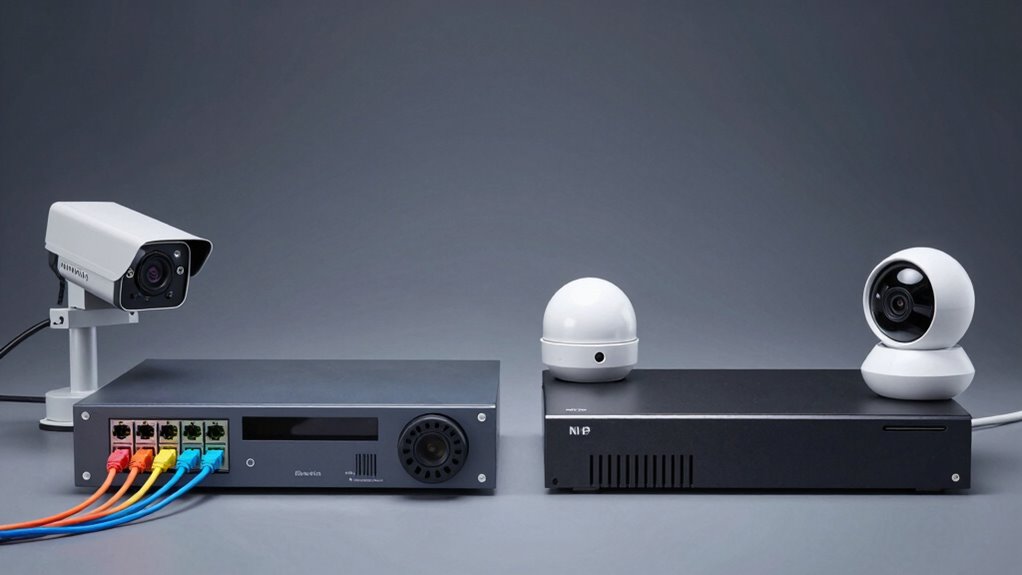

Choosing between a DVR and an NVR depends on your security needs. DVRs use analog signals via coaxial cables and are often more affordable, but they offer lower resolution and less flexibility. NVRs transmit digital signals over Ethernet cables, supporting higher resolution, remote access, and easier system expansion. If you want a scalable, future-proof setup, an NVR is generally better. Keep exploring to find out which system suits your specific surveillance requirements.
Key Takeaways
- NVRs support higher resolutions and advanced features through digital IP cameras, while DVRs use analog signals with lower resolution.
- DVR systems use coaxial cables; NVR systems connect via Ethernet cables, supporting easier installation and scalability.
- NVRs offer better remote access, flexible network topologies, and easier system expansion compared to DVRs.
- DVRs tend to be more affordable upfront but have limited features and scalability than NVRs.
- Choose a recorder based on your existing infrastructure, desired resolution, future expansion needs, and budget.
Which Wired Recorder Is Best for Your Security System?

Choosing the right wired recorder is essential for ensuring your security system runs smoothly. When selecting a recorder, consider how well it supports your camera lenses, especially if they’re outdoor models. Look for weatherproof features that protect against rain, dust, and extreme temperatures, ensuring your cameras stay functional in all conditions. A durable recorder with reliable connectivity minimizes downtime and maintains footage quality. Think about the number of channels you need to connect all your cameras seamlessly. Easy setup and user-friendly interfaces also matter, making it simple to monitor and manage your system. Ultimately, a recorder with high-quality weatherproofing and compatibility with your camera lenses guarantees your security setup stays operational, providing peace of mind knowing your property is protected around the clock. Additionally, selecting a European cloud-enabled recorder can enhance data security and facilitate remote management of your security footage. Ensuring your recorder has robust connectivity is crucial for continuous monitoring and data transmission, especially in demanding environments. Moreover, choosing a recorder with advanced compression technology can significantly optimize storage capacity and improve video playback quality. Incorporating remote access capabilities can further improve your ability to oversee your property from anywhere at any time. Furthermore, paying attention to compatible accessories can help expand and customize your security system as needed.
What Are DVR and NVR Systems : and How Do They Differ?

DVR and NVR systems differ mainly in their architecture and how they handle video signals. DVRs process analog signals through coaxial cables, while NVRs work with digital signals over network connections. These differences also impact how easy it is to install and expand your security system. Additionally, understanding body jewelry measurements can be crucial when selecting compatible components for your setup. Furthermore, the integration of video compression technology affects the storage capacity and quality of recorded footage, making it an important consideration when choosing between DVR and NVR systems. For example, system scalability can be a significant factor when planning for future system expansion or upgrades.
System Architecture Differences
Understanding the differences between DVR and NVR systems is essential to selecting the right security setup. Your choice affects the network topology and data flow. DVR systems process analog signals and record directly on a DVR device, with cameras connected via coaxial cables, creating a point-to-point network. In contrast, NVR systems handle digital signals, with IP cameras transmitting data over your network’s Ethernet, allowing for a more flexible topology. Data flow in DVR setups is straightforward, with signals traveling from cameras to the recorder. NVR systems enable remote access and scalability, with data flowing seamlessly through your network. These architecture differences influence installation, expandability, and the overall security performance of your surveillance system. Understanding network topology is crucial for optimizing your system’s design and ensuring reliable security coverage. Additionally, considering system scalability can help future-proof your setup as your security needs evolve, especially since digital signal processing in NVR systems supports easier integration of new cameras and features. Moreover, network bandwidth management plays a vital role in maintaining system performance as your setup grows.
Video Signal Transmission Methods
The way video signals are transmitted plays a key role in how DVR and NVR systems operate. DVR systems typically rely on coaxial cables to transmit analog signals from cameras to the recorder, offering a wired, stable connection. NVR systems, on the other hand, usually process digital signals sent over Ethernet cables, providing clearer images and easier integration. Both systems can support wireless alternatives, allowing you to access footage remotely without physical connections. This remote access feature makes monitoring more flexible and convenient. The choice of transmission method impacts installation, reliability, and video quality. While wired connections tend to be more stable, wireless options can simplify setup and enable remote viewing. Understanding these differences helps you select the right system to meet your security and convenience needs.
Installation and Scalability
Choosing between DVR and NVR systems depends largely on your installation needs and future scalability. DVR systems often require extensive wiring and are less flexible, making upgrades or adding cameras challenging. NVR systems, on the other hand, typically support wireless compatibility, simplifying installation and expansion. Both systems offer various power supply options, such as PoE (Power over Ethernet) for streamlined setup or traditional adapters for flexibility. When considering scalability, NVRs usually make it easier to add cameras without significant rewiring, especially if you choose wireless or PoE-compatible models. DVRs may be limited to wired connections, which can hinder future growth. Ultimately, your choice hinges on your current setup, desired expansion, and whether you prioritize wired reliability or wireless convenience.
How Do DVRs and NVRs Connect to Wired Cameras?
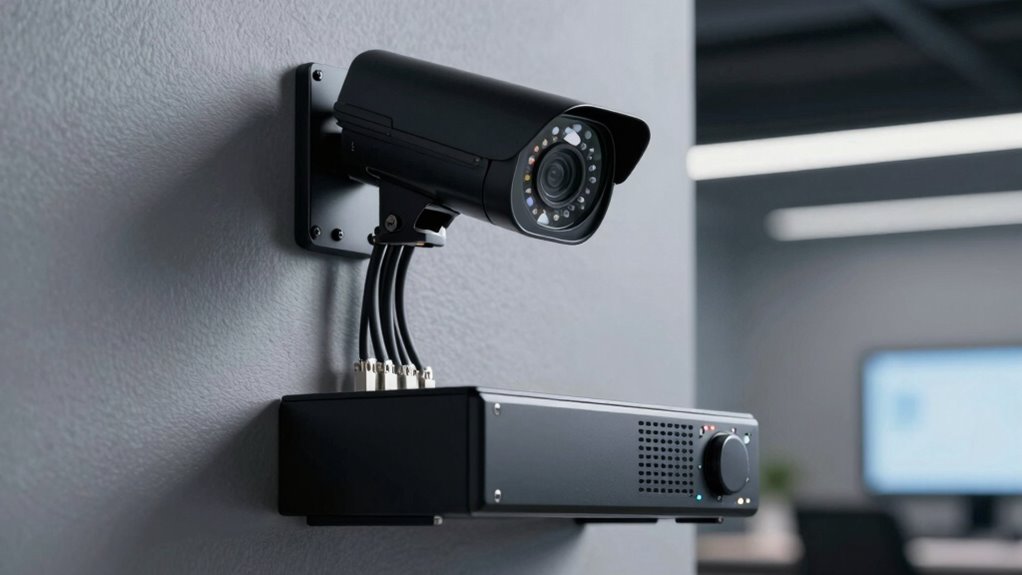
DVRs (Digital Video Recorders) and NVRs (Network Video Recorders) connect to wired cameras through different methods depending on their design. DVRs typically use coaxial cables, such as RG59 or RG6, to establish a direct connection with analog cameras. NVRs, on the other hand, connect via Ethernet cables, like Cat5e or Cat6, which transmit digital video signals from IP cameras. This setup allows for wireless integration, where cameras can connect to the network wirelessly and still be managed through the NVR. Both systems support remote access, enabling you to view live footage or recordings from anywhere with an internet connection. The choice depends on your camera type and setup preferences, ensuring seamless connectivity and control. Additionally, understanding the evolution of arcade games can help you appreciate how modern security systems have advanced from basic connections to sophisticated network setups. As technology continues to develop, network infrastructure plays a crucial role in optimizing performance and scalability of these security solutions. Recognizing the importance of system compatibility can ensure that your cameras and recorders work together effectively, preventing potential connectivity issues. Moreover, considering the future advancements in security tech can help you plan for scalable and more secure surveillance systems as new innovations emerge. Staying informed about wireless network standards can also improve your system’s reliability and ease of installation.
What Features Should You Look for in a Wired Recorder?
When choosing a wired recorder, you should consider the video resolution options to guarantee clear footage. Flexibility in storage capacity allows you to handle more recordings without worry. These features help you build a reliable and effective security system tailored to your needs. Additionally, integrating connected equipment can enhance monitoring capabilities and overall system performance. Ensuring your system supports remote access can also provide greater convenience and control over your surveillance setup. Understanding industry trends can help you select a recorder that remains compatible with future technology upgrades. Moreover, paying attention to privacy and security features ensures your system maintains data protection standards.
Video Resolution Options
Video resolution is a critical factor to contemplate because it directly impacts the clarity and detail of your surveillance footage. Higher resolutions like 4K provide sharper images, which help identify faces or license plates more easily. When choosing a wired recorder, look for options supporting various resolution settings to adapt to your needs. Additionally, consider how video compression affects quality and storage efficiency, especially if you plan on remote access; efficient compression reduces bandwidth use without sacrificing clarity. Some recorders offer flexible resolution choices, allowing you to balance image quality and storage. Here’s a quick overview:
| Resolution | Best Use | Storage Impact |
|---|---|---|
| 720p | Basic monitoring, small areas | Low |
| 1080p | General surveillance, detailed images | Moderate |
| 4K | High-detail monitoring, large areas | High |
| Custom | Adjust for specific needs | Varies |
| Auto | Dynamic resolution based on activity | Optimized |
A good understanding of video resolution options can help ensure your surveillance setup meets both your clarity and storage needs effectively, especially considering performance ratings like suction power and durability if you are also interested in supporting equipment such as vacuums.
Storage Capacity Flexibility
Choosing a wired recorder with flexible storage capacity guarantees your surveillance system can adapt to your monitoring needs. Look for models that offer multiple storage options, such as expandability via external drives or network storage. This ensures you can increase capacity as your footage requirements grow. Additionally, prioritize systems that support data redundancy features like RAID configurations or automatic backups. These features protect your footage from data loss due to hardware failure, providing peace of mind. Flexible storage options allow you to customize your setup without constantly replacing equipment, saving both time and money. Herbal infusion machines with advanced features can enhance the customization and scalability of your storage solutions. By selecting a recorder with these capabilities, you ensure your surveillance remains reliable, scalable, and prepared for future demands.
How Do DVRs and NVRs Compare in Performance and Cost?

DVRs (Digital Video Recorders) and NVRs (Network Video Recorders) are both essential for managing security footage, but they differ considerably in performance and cost. DVRs typically require analog cameras, which may limit video quality and advanced features like high-resolution video compression. NVRs, on the other hand, work with IP cameras, offering better resolution and more efficient video compression, which reduces storage needs. When it comes to remote access, NVRs usually provide easier and more seamless connectivity through network integration. Cost-wise, DVRs tend to be more affordable upfront, but NVRs often offer better scalability and future-proofing, making them a more cost-effective option over time. Your choice depends on your specific security needs and budget. Additionally, compatibility with cameras is a key factor to consider when selecting between DVR and NVR systems.
Setting up and Expanding Your Wired Camera System With the Right Recorder
Selecting the right recorder is key to guaranteeing your wired camera system operates smoothly and can grow with your needs. Whether you choose a DVR or NVR, make sure it supports wireless integration to simplify setup and future expansion. Wireless integration allows you to connect cameras without extensive cabling, making installation easier and more flexible. Additionally, choose a recorder with remote access capabilities, so you can view live footage or playback recordings from anywhere. This flexibility is essential for ongoing security management. When expanding your system, ensure your recorder can handle additional cameras and storage requirements. By selecting a recorder that offers seamless wireless integration and remote access, you’ll set a solid foundation for a scalable, user-friendly wired camera system.
Frequently Asked Questions
Can DVR and NVR Systems Be Integrated Into Existing Setups?
Yes, you can integrate DVR and NVR systems into existing setups, but it depends on system compatibility. You might face integration challenges if the systems use different protocols or connections. To guarantee smooth integration, verify compatibility beforehand, update firmware if needed, and consider professional assistance. This way, you can expand your security setup without replacing everything, saving time and money while maintaining effective surveillance.
What Are the Maintenance Requirements for Each System Type?
Your system’s maintenance is vital for peak performance. You’ll need to regularly clean the system to prevent dust buildup, which can cause overheating. Firmware updates are essential, like giving your system a health boost, fixing bugs, and enhancing security. Both DVR and NVR systems require routine checks, but NVRs often need more attention to software updates, while DVRs focus on physical cleaning and hardware upkeep. Stay proactive to keep your system running smoothly!
How Do Remote Viewing Capabilities Differ Between DVR and NVR?
You’ll find that NVR systems generally offer better remote access and mobile compatibility than DVRs. With NVRs, you can easily view footage from your smartphone or tablet through dedicated apps, providing seamless remote viewing capabilities. DVRs often have limited remote access options, making it harder to monitor your cameras remotely. So, if remote viewing is a priority, an NVR system will serve you better with its user-friendly remote access features.
Are There Specific Brands Known for Reliable Wired Recorder Systems?
You’ll find that brands like Hikvision, Dahua, and Bosch are known for reliable wired recorder systems. Interestingly, over 80% of users report satisfaction with their durability and performance. These brands have strong reputations for quality, backed by extensive product warranties that guarantee peace of mind. When choosing, consider brand reputation and warranty coverage, as they’re key indicators of long-term reliability and support for your wired CCTV setup.
What Is the Typical Lifespan of a Wired DVR or NVR Device?
A wired DVR or NVR typically lasts around 5 to 10 years, depending on device durability and usage. You should expect to replace or upgrade your recorder within this interval to guarantee ideal performance and security. Regular maintenance, such as keeping the device cool and updating firmware, can extend its lifespan. Planning for replacement intervals helps you stay ahead of potential failures and maintain reliable surveillance.
Conclusion
Choosing between DVR and NVR depends on your specific security needs and budget. While some believe NVRs are always better due to higher quality and flexibility, recent advancements show that DVRs can still deliver reliable performance at a lower cost. Ultimately, the right choice hinges on your system’s compatibility and future expansion plans. Trust the evidence: matching your recorder to your cameras ensures maximum security, regardless of the technology you pick.