
To guarantee your motorized blinds fit perfectly, start by measuring your window’s width and height at multiple points with a steel tape, noting the shortest measurements. Decide on your mounting style—inside or outside the frame—as this affects how you measure. Add proper overlap and margins to prevent gaps or light leaks. Using accurate tools and double-checking your measurements can make all the difference. Keep going to discover detailed tips for flawless measurements.
Key Takeaways
- Measure window width and height at multiple points to identify the narrowest width and shortest height for accuracy.
- Use a steel tape measure and double-check measurements to ensure precision before ordering motorized blinds.
- Determine your mounting style (inside or outside) to know where and how to measure for proper fit.
- Add appropriate overlap and margins based on window shape and fabric pattern for full coverage and aesthetic appeal.
- Account for irregularities and uneven surfaces by measuring at different spots and confirming measurements for best results.
motorized blinds measuring kit
As an affiliate, we earn on qualifying purchases.
As an affiliate, we earn on qualifying purchases.
Why Accurate Window Measurements Matter for Motorized Blinds
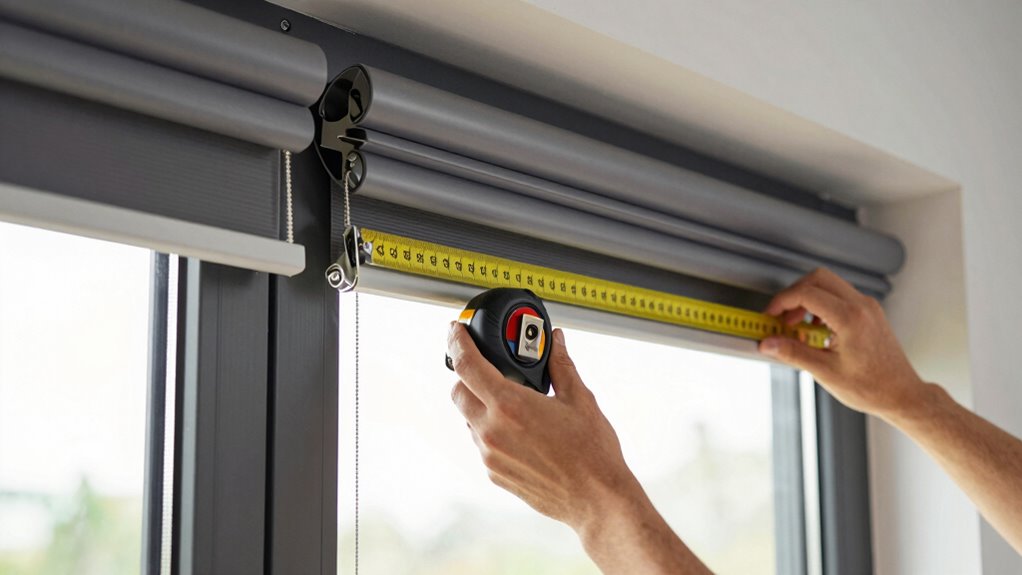
Accurate window measurements are vital when installing motorized blinds because they guarantee a perfect fit and ideal functionality. When measuring, consider your fabric selection, as different materials may require specific mounting options or space allowances. Precise measurements ensure your chosen fabric fits well within the frame, preventing sagging or bunching. Additionally, understanding motor compatibility is essential; a motor that’s too powerful or too weak can affect operation and longevity. Proper measurements help determine the right motor size and type, ensuring smooth and reliable movement. Mistakes in sizing can lead to misaligned blinds, motor strain, or damage. By paying close attention to your window’s dimensions, you set up your motorized blinds for optimal performance, durability, and aesthetic appeal. Accurate window measurements also help prevent electrical issues that could arise from incorrect installation, and considering installation guidelines ensures safety and proper functioning. Being aware of measurement accuracy emphasizes the importance of careful assessment to avoid costly adjustments later. Additionally, understanding hardware compatibility is crucial for seamless integration of components and reliable operation. A thorough understanding of measurement techniques can further streamline the installation process and improve overall results.
window measurement tape for blinds
As an affiliate, we earn on qualifying purchases.
As an affiliate, we earn on qualifying purchases.
How to Measure Your Window Width and Height Precisely
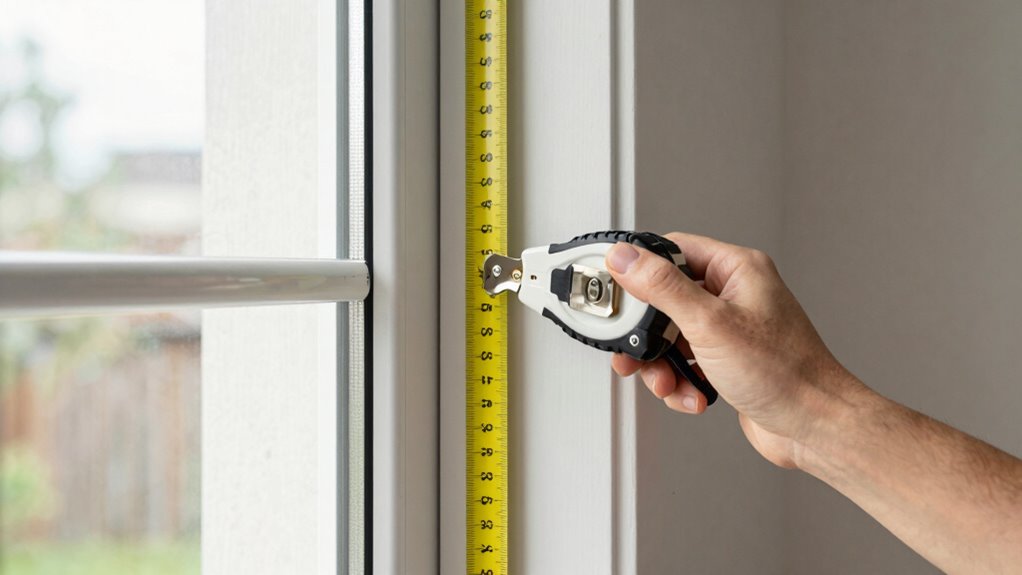
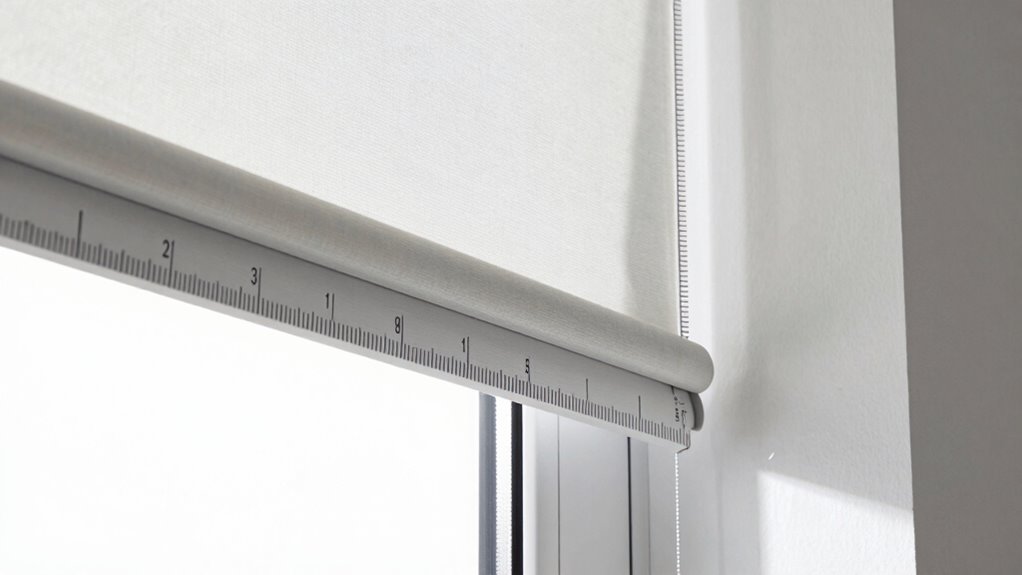
Wondering how to measure your window width and height precisely? Start by measuring for curtains or motorized blinds by noting the window frame dimensions. Use a steel tape measure for accuracy. For width, measure at three points—top, middle, and bottom—and record the narrowest measurement. For height, measure from the top of the window frame to the sill at three points—left, center, and right—and note the shortest. Always measure in multiple spots because walls and frames can be uneven. Avoid relying on a single measurement, as this can lead to ill-fitting blinds. Keep the tape straight and snug but not tight. Write down all measurements clearly, and double-check your numbers before ordering. Accurate window frame dimensions ensure your motorized blinds fit perfectly. Precise measurements are essential for ensuring a seamless fit and optimal operation of your motorized blinds. Additionally, understanding window frame irregularities can help prevent installation issues and ensure your blinds operate smoothly. Being aware of potential wall and frame inconsistencies can also improve your measurement accuracy and final fit. Recognizing common measurement mistakes can save you time and avoid costly errors during installation.
inside mount motorized blinds
As an affiliate, we earn on qualifying purchases.
As an affiliate, we earn on qualifying purchases.
Choosing Your Mounting Style and Its Impact on Measurements
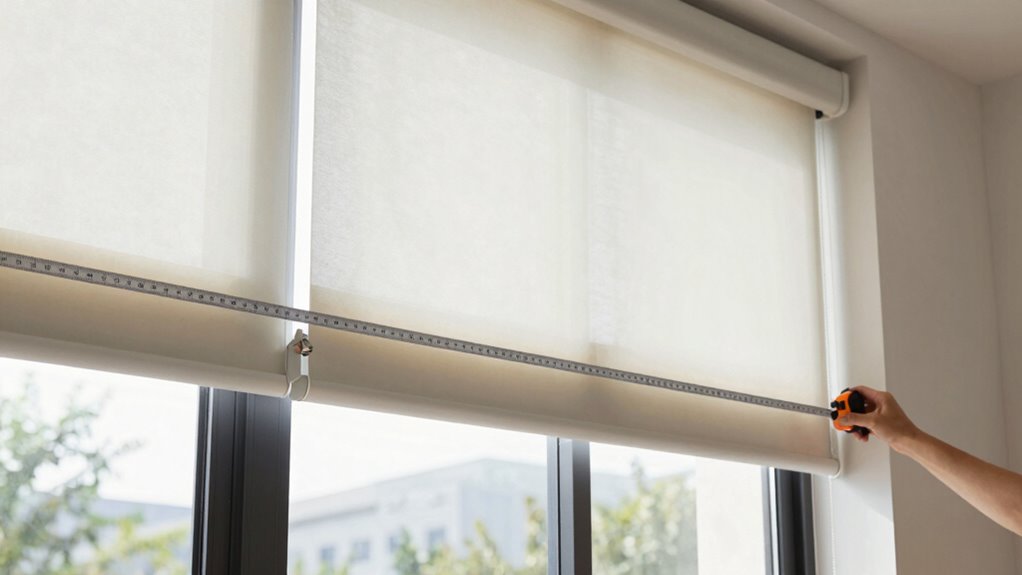
Choosing your mounting style is a crucial step because it directly affects how you measure your window for motorized blinds. Your mounting surface—whether inside or outside the frame—determines the best measurement approach. Inside mounts require precise measurements of width and height within the window frame, ensuring compatibility with the hardware that fits your mounting surface. Outside mounts, on the other hand, involve measuring beyond the frame to allow for overlap, which can enhance light blocking and privacy. Hardware compatibility also influences your choice, as some mounting styles require specific brackets or supports. By understanding your mounting surface and verifying hardware compatibility, you guarantee your motorized blinds fit perfectly, operate smoothly, and look seamless in your space. Accurate measurements are essential for a perfect fit and optimal functionality.
outside mount motorized blinds
As an affiliate, we earn on qualifying purchases.
As an affiliate, we earn on qualifying purchases.
Deciding on Overlap and Margins for a Perfect Fit
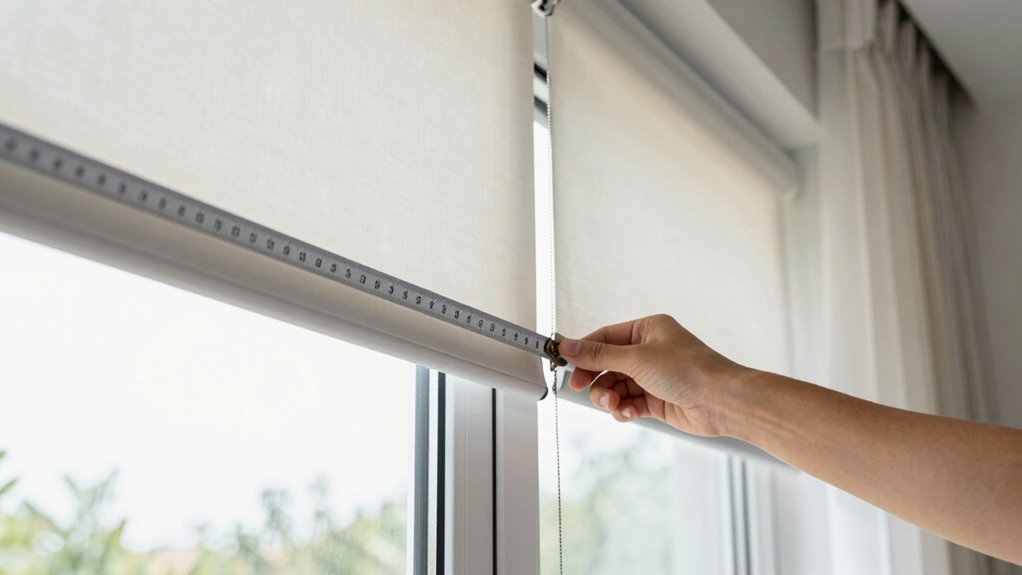
Deciding on the right overlap and margins is essential to achieving a perfect fit for your motorized blinds. Your goal is to guarantee the fabric pattern aligns seamlessly and that the blinds cover the entire window, regardless of its shape. If your window has intricate shapes or unique angles, you might need extra overlap to prevent gaps. For fabric patterns, consider how margins will affect the visual flow; larger overlaps might obscure delicate designs, while smaller margins could leave light in. Measure carefully to determine how much extra width or height to add beyond the window frame. Proper margins also help in reducing light leaks and ensuring smooth operation. Additionally, understanding the importance of color accuracy can aid in selecting fabric patterns that maintain their hues under various lighting conditions, enhancing the overall aesthetic. Ultimately, tailoring overlap and margins to your window shape and fabric pattern assures a clean, professional look.
Tips for Using Tools and Double-Checking Your Measurements
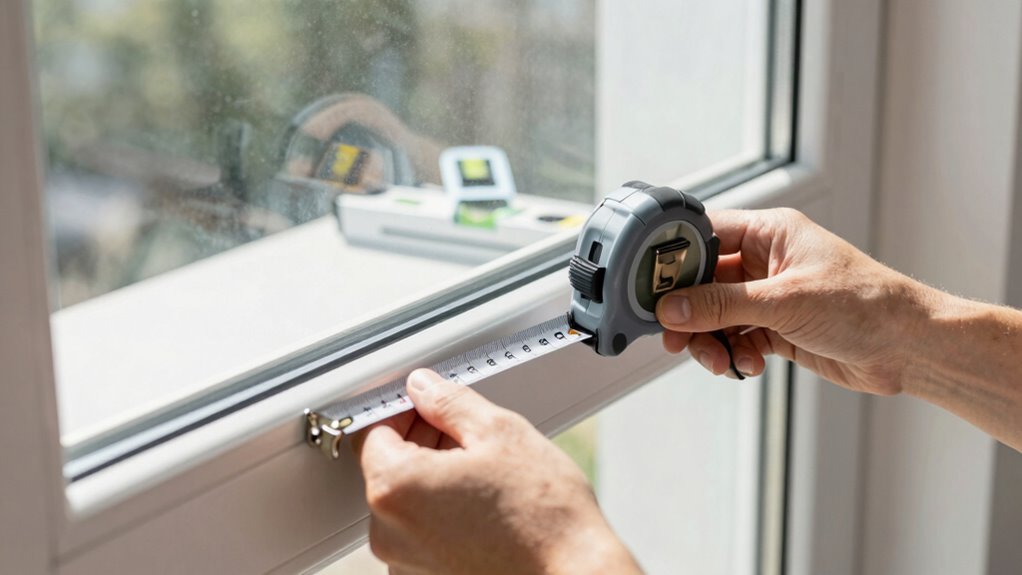
Using the right tools and verifying your measurements can make all the difference in achieving a perfect fit for your motorized blinds. Start with reliable measurement tools like a steel tape measure, a level, and a pencil for marking. Use the tape measure to get accurate width and height readings, ensuring you record measurements at multiple points to catch any irregularities. Double-check your measurements by repeating the process, ideally with another person to confirm accuracy. This helps you avoid measurement mistakes that could lead to blinds that don’t fit properly. Precise measurements are essential, so don’t rush. Taking the time to validate your measurements with good tools reduces errors and ensures your motorized blinds will fit snugly and operate smoothly. Paying attention to window irregularities can also help you account for any uneven surfaces that might affect the fit. Additionally, understanding measurement techniques can further improve your accuracy and confidence, especially when dealing with complex window shapes. Being aware of measurement standards can help you adhere to best practices for consistency and precision, especially when working with specific window features, which can make installation even more precise and hassle-free.
Frequently Asked Questions
Can I Measure Windows With Irregular Shapes for Motorized Blinds?
Yes, you can measure windows with irregular shapes for motorized blinds. Use precise measurement tools like a flexible tape measure or a laser measure to capture the exact dimensions of custom window shapes. Carefully record the width, height, and any unique angles or curves. Accurate measurements guarantee your motorized blinds fit perfectly and function smoothly, even for complex window designs. Always double-check your measurements for the best results.
How Do I Account for Wall Thickness When Measuring for Mounting?
Did you know that the average wall thickness is around 4.5 inches? When measuring for mounting, you should include wall thickness and determine the required mounting depth for your motorized blinds. To do this, measure the wall thickness at the mounting point, then add the depth of the brackets and motor. This guarantees your blinds fit perfectly without obstruction or gaps, providing smooth operation and a sleek look.
What Are Common Mistakes That Lead to Measurement Errors?
You often make common measurement mistakes like not double-checking your measurements or ignoring wall thickness, which can affect accuracy. Rushing through the process or using the wrong tools also leads to errors, compromising measurement accuracy. To prevent these pitfalls, always measure at multiple points, use a reliable tape measure, and confirm your measurements are consistent. Paying attention to detail helps ensure your motorized blinds fit perfectly and function smoothly.
Should I Measure From Inside or Outside the Frame for Motorized Blinds?
You should measure from inside the window frame for motorized blinds to guarantee a perfect fit. Use reliable measurement tools like a tape measure or a laser measure to get accurate dimensions. Measure the width and height at multiple points inside the frame, and record the smallest measurements. This approach guarantees your motorized blinds will fit snugly and operate smoothly without gaps or obstructions.
How Often Should I Re-Measure Windows Before Ordering New Blinds?
You should re-measure your windows before blind installation if your windows have experienced any changes, like settling or warping, or if you’re unsure about previous measurements. Use measurement tools carefully each time to verify accuracy. Typically, re-measure every few years or when you notice differences in window size or shape. This helps guarantee your new motorized blinds fit perfectly and operate smoothly, avoiding costly mistakes.
Conclusion
Accurate measurements aren’t just about fitting blinds—they reflect your attention to detail and care. Some say perfect measurements are a myth, but that’s not true; precision guarantees your motorized blinds work smoothly and look great. Think of it like tuning an instrument: small adjustments make a big difference. Trust your tools, double-check your figures, and remember, a well-measured window is the foundation of a flawless fit. Your effort truly pays off.