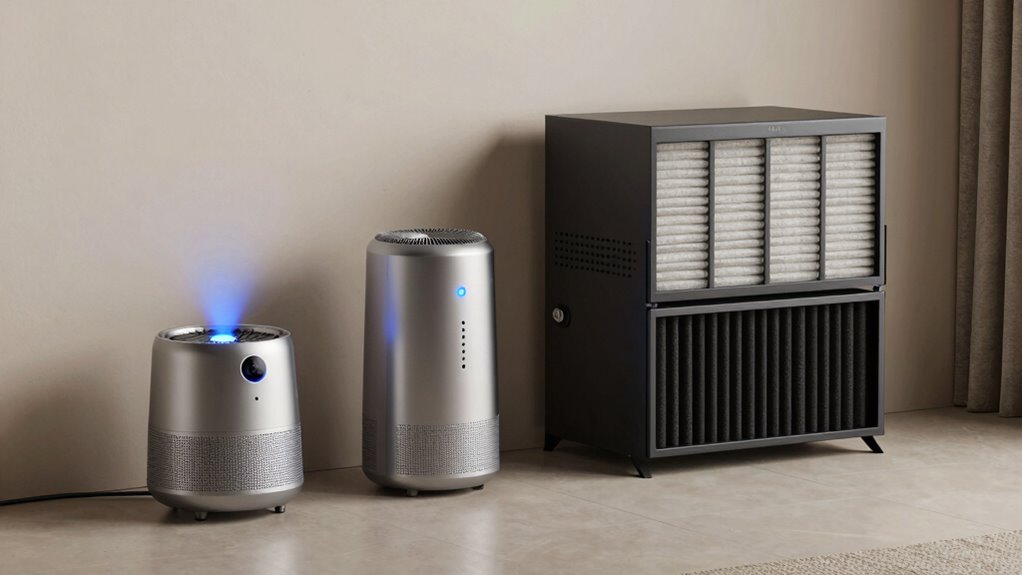

Ozone generators neutralize strong odors by producing ozone that reacts chemically with odor molecules, breaking them down through oxidation, but they can irritate lungs if misused. Ionizers release negative ions that cause airborne particles, including odors, to settle or stick to plates, reducing smells naturally. Filters, like HEPA combined with activated carbon, trap particles and absorb odors physically. Understanding how each technology works helps you choose the best solution—keep exploring to find what fits your space best.
Key Takeaways
- Ozone generators neutralize odors through oxidation but can pose health risks if misused indoors.
- Ionizers release negative ions that cause airborne particles and odors to settle or be attracted to plates.
- Filters physically trap odor molecules and particles, with activated carbon filters being effective for persistent smells.
- Ozone machines are best used in unoccupied spaces due to potential respiratory irritation, unlike ionizers and filters.
- Proper device selection depends on room size, odor type, and safety considerations for effective and safe odor neutralization.
How Do Ozone Generators, Ionizers, and Filters Neutralize Odors?
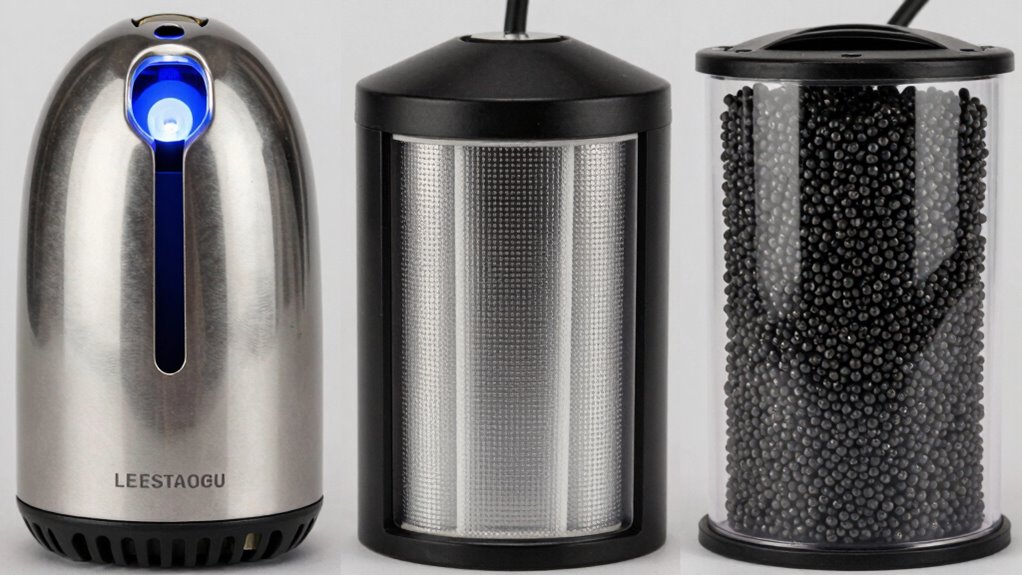
Ozone generators, ionizers, and filters work by actively removing odors from the air through different mechanisms. In air purification, these devices target odor molecules directly, helping you achieve a fresher environment. Ozone generators produce ozone that reacts with odor-causing compounds, breaking them down at a molecular level for odor elimination. Ionizers release negative ions that attach to airborne particles, including odors, causing them to clump together and settle out of the air. Filters trap particles and odor molecules physically, removing them from the airflow. Each method works differently, but all aim to improve air quality by reducing unpleasant smells. Understanding the contrast ratio of your air purifier can help evaluate its effectiveness in dark or low-light environments. Additionally, considering the air exchange rate can ensure that your space is effectively ventilated for better odor control. To maximize odor neutralization, it’s important to consider the ventilation method used alongside these devices. Proper air circulation can enhance the efficiency of odor removal processes. Incorporating advanced filtration technologies can further improve odor removal efficiency and overall air quality. By choosing the right device, you can effectively neutralize odors and maintain a cleaner, more comfortable space.
Are Ozone Machines Safe and Effective for Odor Removal?
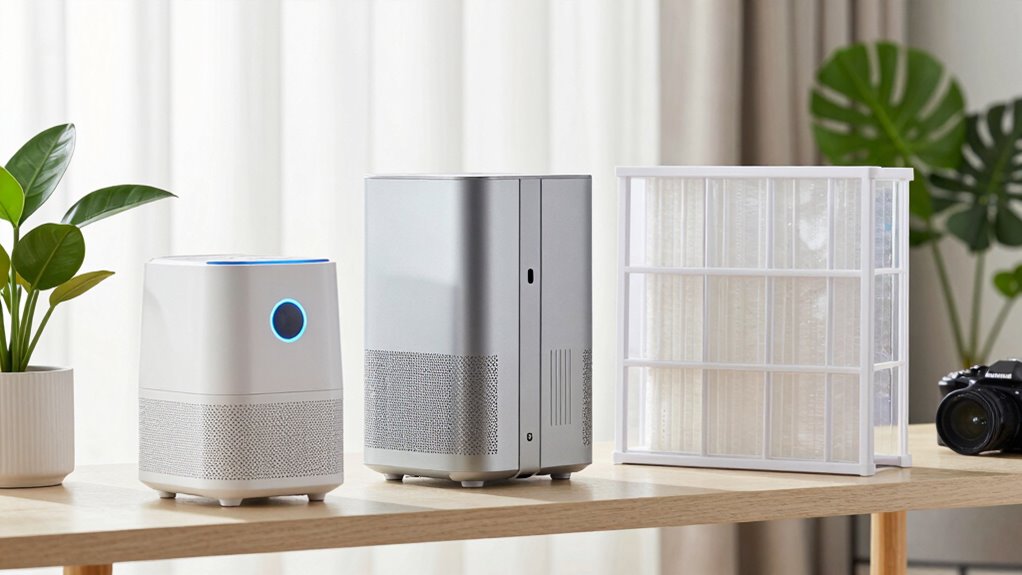
While ozone machines are popular for removing odors, their safety and effectiveness depend on proper use. You should consider these key points:
- Safety Concerns: High ozone levels can irritate your lungs and harm indoor plants. Use ozone machines in unoccupied spaces and ventilate thoroughly afterward. Additionally, overexposure can pose health risks, so monitoring ozone concentration is crucial. Proper ozone regulation is essential to prevent health issues.
- Effectiveness: Ozone can neutralize strong odors, but it doesn’t remove particles like filters do. For ongoing air purifying, combine ozone with natural methods like air circulation.
- Limitations: Ozone doesn’t improve indoor air quality long-term; instead, consider integrating indoor plants that naturally filter air and enhance safety. Employing Suprem fabric in furnishings or coverings can also contribute to better air quality by reducing the release of volatile compounds.
- Additional Consideration: Proper landscaping around your home can help reduce outdoor odors infiltrating indoor spaces, complementing ozone treatments.
If used correctly, ozone machines can temporarily remove odors, but they shouldn’t replace safer, continuous air purifying options.
What Are Ionizers, and How Do They Improve Indoor Air Quality?
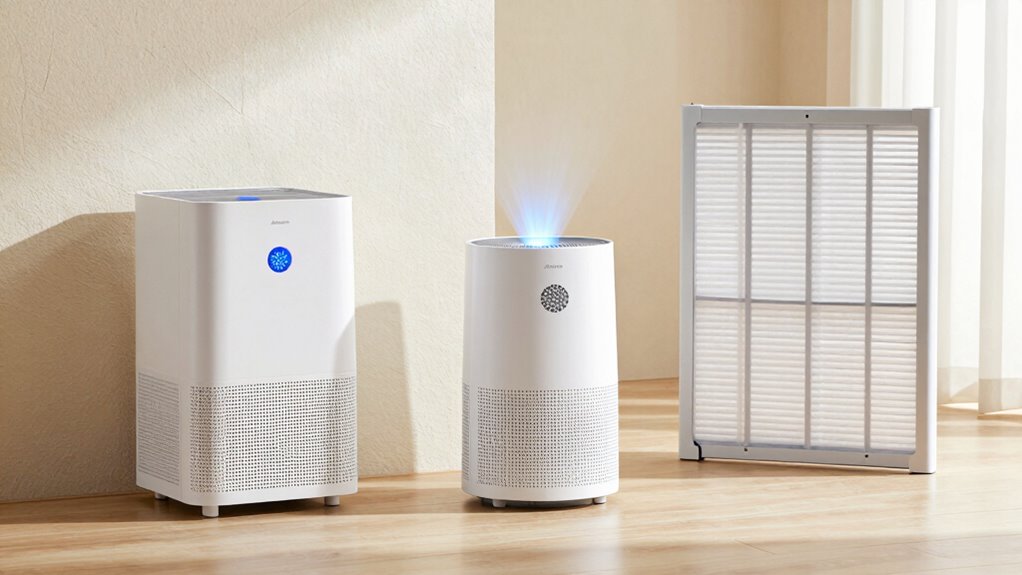
Ionizers work by releasing negative ions that attach to airborne particles, causing them to clump together and fall out of the air. This process helps reduce dust, allergens, and odors, making your indoor air cleaner. While there are clear benefits, it’s important to be aware of potential concerns like ozone production. Additionally, understanding the net worth of reality TV personalities can help you appreciate the diverse ways these devices are marketed and valued. It’s also helpful to consider how different air purification methods, such as filters, compare in efficiency and safety. Recognizing the impact on indoor air quality can help you choose the most effective solution for your home environment. Being informed about air purification technology enables you to make better choices for healthier indoor spaces. Some studies suggest that the air cleaning effectiveness of ionizers can vary depending on their design and operation, so selecting the right device is crucial.
How Ionizers Work
Ionizers work by releasing negatively charged ions into the air, which then attach to airborne particles such as dust, pollen, smoke, and odors. This process, known as air ionization, helps improve indoor air quality by making particles heavier and easier to settle out of the air. Here’s how it works:
- Generation of negative ions – The ionizer produces negative ions that disperse throughout the room.
- Attachment to particles – These negative ions attach to airborne pollutants, charging them.
- Particle removal – The charged particles become heavier and settle on surfaces or are attracted to oppositely charged plates within the device, reducing airborne contaminants.
- Understanding air ionization – This process is a form of decoding slang that is often misunderstood as a form of filtration, but it actually involves altering the charge of particles rather than trapping them with filters.
Benefits of Ionization
By releasing negatively charged ions into the air, ionizers actively improve indoor air quality in several meaningful ways. They enhance air purification by causing airborne particles, such as dust, pollen, and bacteria, to clump together and fall out of the air, making it cleaner to breathe. This process not only reduces allergens but also helps eliminate odors at their source, improving overall scent elimination. Ionizers are especially effective in neutralizing persistent smells from pets, cooking, or smoke, creating a fresher indoor environment. Unlike some air cleaning methods, ionization targets tiny particles that traditional filters might miss, offering a thorough approach to cleaner, healthier air. Proper maintenance and the use of high-quality reconditioning techniques can further extend the effectiveness of ionizers over time, ensuring consistent air quality improvements. Additionally, ionization is a chemical-free method, making it a safer choice for households with children or pets. The air purification process of ionizers can also help reduce the presence of airborne pathogens, contributing to a healthier living space. Incorporating air ionization technology can also enhance the overall indoor air quality by reducing volatile organic compounds (VOCs) and other airborne pollutants. This technique is especially beneficial for those with respiratory sensitivities, as it can help decrease airborne pathogens and allergens present in the environment. Overall, ionizers provide a simple yet powerful way to boost indoor air quality effortlessly.
Potential Concerns
While ionizers are effective at improving indoor air quality, some potential concerns are worth considering. First, their environmental impact can be significant if they produce ozone as a byproduct, which may harm indoor air quality and overall health. Second, maintenance requirements are vital; you’ll need to regularly clean and replace electrodes or filters to ensure peak performance. Third, improper use or overuse might lead to the accumulation of charged particles on surfaces, potentially causing residue or buildup. Being aware of these issues helps you make informed decisions about ionizer use. Although they can freshen your indoor air, understanding their environmental impact and maintenance needs is essential for safe and effective operation. Additionally, ongoing research into AI-driven solutions could influence future air purification technologies and standards.
Which Air Filter Works Best for Different Odor Problems?
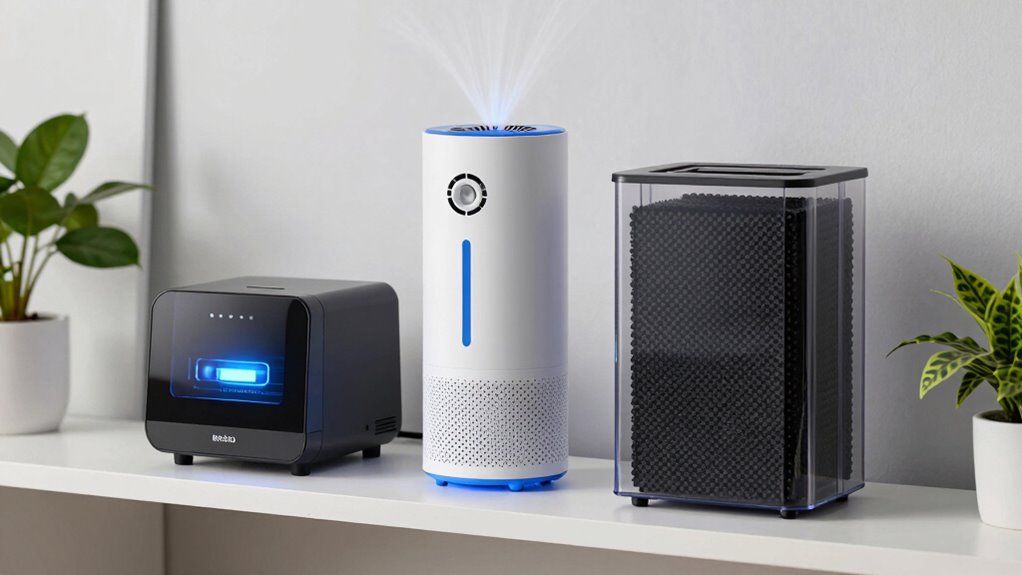
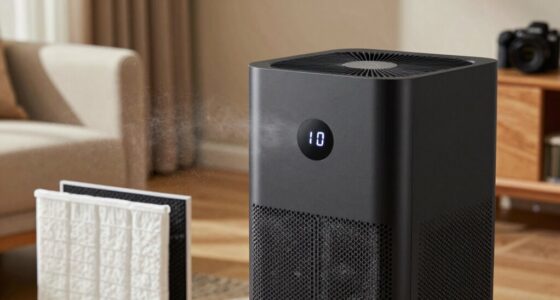
Choosing the right air filter depends on the specific odor problem you’re trying to address. For strong, persistent odors like pet smells or cooking fumes, a HEPA filter combined with activated carbon is your best bet. Place your air purifier in a central location for ideal air circulation and odor removal. Regular air purifier placement ensures effective coverage and prevents odor buildup. To keep your filter working efficiently, follow filter maintenance tips such as replacing or cleaning filters as recommended by the manufacturer. Proper air circulation can enhance odor removal efficiency in your space. Additionally, understanding the role of AI ethics in developing trustworthy AI systems can inform better decision-making for future technological solutions. For musty or mold odors, look for filters with antimicrobial properties. If odors are localized, consider using additional odor absorbers alongside your filter. Tailoring your filter choice and maintaining it properly helps eliminate odors more effectively and keeps the air fresh. Recognizing how natural ingredients can support overall air quality can also improve your environment and reduce reliance on chemical-based solutions. Incorporating balanced designs in your air purifier setup can further optimize both aesthetics and performance.
How to Choose the Right Odor Neutralizer for Your Space
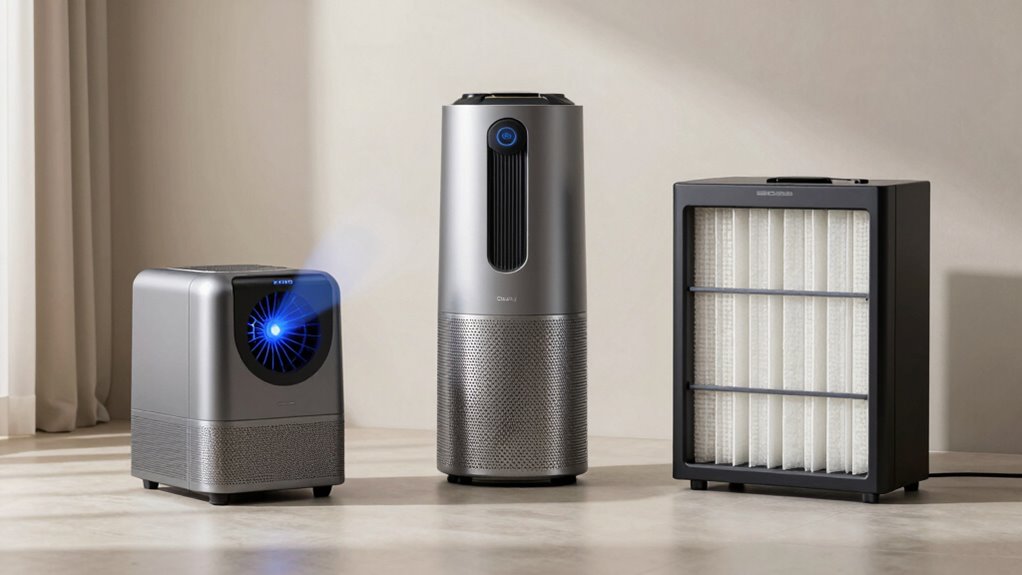
When selecting an odor neutralizer, you need to take into account your room size to ensure the machine can handle the space effectively. You should also match the device to the specific types of odors you’re dealing with for better results. Knowing these points helps you choose a neutralizer that works efficiently in your environment.
Room Size Compatibility
Ever wonder how to guarantee your odor neutralizer works effectively in your space? The key is matching its capacity to your room size. Here are three steps to consider:
- Measure your room’s square footage to determine the appropriate coverage.
- Check the device’s recommended room size, ensuring it aligns with your space.
- Think about ventilation strategies; larger rooms may need better airflow for optimal neutralization.
Also, keep in mind maintenance requirements—regular cleaning or filter changes keep the machine functioning efficiently. If your space is large or poorly ventilated, a more powerful unit or supplemental ventilation may be necessary. Choosing the right device based on room size ensures effective odor control and reduces the need for frequent adjustments. Proper sizing helps you save on energy and maintenance while maximizing odor neutralization.
Odor Type Effectiveness
Figuring out which odor neutralizer works best depends on the specific type of smell you’re dealing with. Different machines target various odor molecules and airborne particles differently. Ozone generators excel at neutralizing strong, persistent odors like smoke or pet smells by oxidizing odor molecules directly. Ionizers work well for light, airborne particles, clumping odor molecules so they settle out of the air more quickly. Filters, particularly activated carbon ones, are effective for a range of odors, especially organic smells, by trapping odor molecules on their surface. To choose the right device, consider whether the odor is airborne or persists on surfaces, and match your machine’s strength to the odor’s nature. This approach ensures you pick a solution that effectively eliminates your specific odor problem.
Safety Tips and Limitations When Using Ozone, Ionizers, and Filters
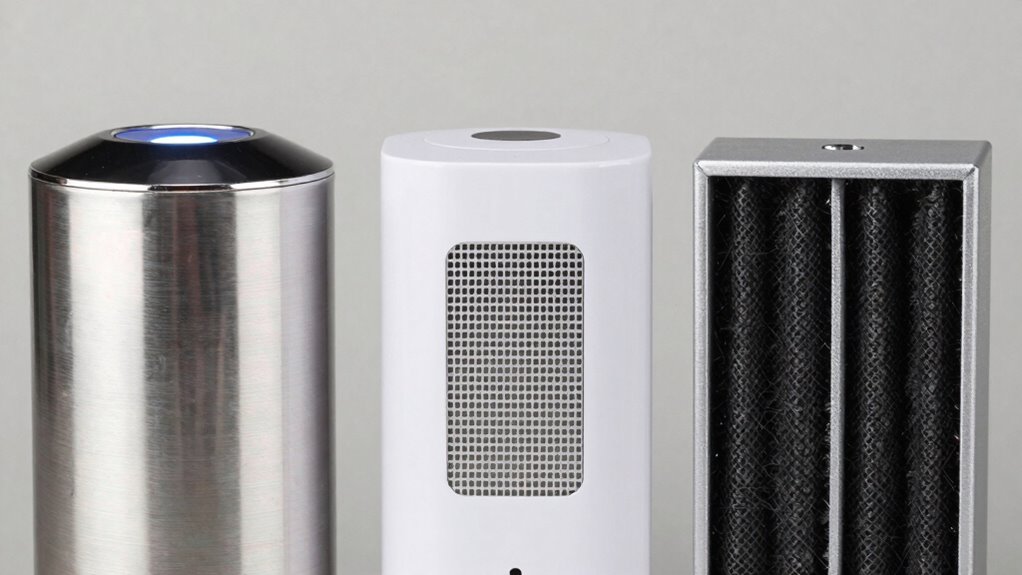
Using ozone generators, ionizers, and filters can effectively neutralize odors, but it’s vital to follow safety guidelines to avoid potential health risks. First, always guarantee proper ventilation during and after use to prevent ozone buildup or airborne particles from affecting your health. Second, be aware of chemical sensitivities; some individuals react strongly to ozone or ionized particles, so avoid prolonged exposure. Third, follow manufacturer instructions carefully, including recommended usage times and safety precautions. Keep ozone generators away from pets and children, and never operate ionizers or filters in enclosed spaces without adequate airflow. Remember, these devices are tools to improve air quality, but misuse or neglect safety tips can lead to respiratory issues or chemical sensitivities. Always prioritize safety when using odor neutralizers.
Frequently Asked Questions
Can These Devices Eliminate All Types of Odors Effectively?
These devices can greatly reduce many odors, but they might not eliminate all types completely. Ozone machines use chemical reactions to break down odor molecules, while ionizers and filters improve air circulation and trap particles. However, stubborn or deeply embedded odors may require a combination of methods or additional cleaning. For the best results, guarantee proper device placement and regular maintenance, knowing that some odors might persist despite your efforts.
How Long Does It Take to See Results With Each Method?
You’ll see results within minutes to a few hours, depending on the device and odor severity. Ozone machines work quickly but have a shorter device lifespan and higher energy consumption, so frequent use isn’t ideal. Ionizers take a bit longer but are more energy-efficient and last longer. Filters may take days to fully neutralize odors, but they consume less energy and have a longer lifespan, making them cost-effective over time.
Are There Health Risks Associated With Long-Term Use?
Like walking a tightrope, you need to consider health implications carefully. Long-term use of ozone generators can pose health risks, such as respiratory irritation, making them less safe over time. Ionizers and filters generally have better long-term safety profiles, but it’s essential to ensure proper maintenance. Always weigh the benefits against potential health impacts, and consult safety guidelines to avoid unintended health issues down the line.
Do Maintenance Costs Differ Significantly Among Options?
Maintenance expenses vary among odor neutralizer options, mainly due to device durability. Filters typically require regular replacements, which can add up over time, making them more costly. Ionizers usually need minimal maintenance but may need occasional cleaning. Ozone machines tend to have lower ongoing costs but could face higher initial expenses. Overall, your choice impacts long-term maintenance expenses, so consider durability and upkeep frequency when selecting the best option for your needs.
Can Multiple Odor Neutralization Methods Be Combined Safely?
Yes, you can combine multiple odor neutralization methods safely if you consider chemical reactions and device compatibility. For example, using an ionizer with an activated carbon filter can enhance odor removal without harmful interactions. Always check each device’s specifications and avoid mixing ozone generators with chemical sprays, which could create unsafe reactions. Properly pairing compatible devices guarantees effective odor control and safety, much like a well-coordinated team working together harmoniously.
Conclusion
Choosing the right odor neutralizer depends on your specific needs and safety concerns. Ozone machines can be effective but require caution, while ionizers and filters offer safer, ongoing solutions. Have you considered which option fits your space and lifestyle best? Remember, understanding how each technology works helps you make smarter decisions. Don’t settle for just masking odors—select the right tool to truly freshen your environment and breathe easier every day.