To keep your dog comfortable during grooming, it’s crucial to match the blade number to your dog’s coat type—lower numbers for longer coats and higher for short, dense hair—and watch for signs of overheating, like hot blades or a burning smell. Regularly clean and sharpen blades, and use cooling sprays to prevent heat buildup. If you follow these tips, you’ll guarantee a safe, effective grooming session every time; more helpful details await if you keep exploring.
Key Takeaways
- Identifying coat types (straight, wavy, curly, wiry) guides the selection of appropriate blade sizes and grooming techniques.
- Blade numbers indicate cut closeness; lower numbers suit longer coats, higher numbers suit short coats.
- Regular blade maintenance, including cleaning and oiling, prevents overheating and ensures effective grooming.
- Using cooling sprays, proper airflow, and appropriate blade sizes helps avoid hot blades during grooming sessions.
- Handling blades carefully, turning off clippers before maintenance, and monitoring for signs of overheating promote safety.
How to Identify Your Dog’s Coat Type for Grooming Success

Understanding your dog’s coat type is essential for effective grooming. Dog coat textures vary widely, including straight, wavy, curly, and wiry coats. Recognizing these textures helps you select the right grooming tools, like specific clipper blades and brushes, to maintain your dog’s coat health. For instance, straight coats often need regular trimming with fine blades, while curly coats require gentle handling to avoid matting. Wavy and wiry coats may demand different blade settings and grooming techniques. Pay attention to how your dog’s hair feels and looks—soft and smooth, coarse, or curly. Proper identification guarantees you use the correct tools, making grooming safer and more comfortable for your dog. Knowing your dog’s coat type is the first step toward a successful grooming routine, especially when selecting the appropriate blade numbers for different coat textures. Additionally, understanding your dog’s coat type can help you choose appropriate grooming techniques that prevent damage and promote healthy hair growth. Being familiar with coat maintenance needs ensures you can keep your dog looking their best with minimal stress.
What Do Blade Numbers Mean and How to Choose the Right One

Have you ever wondered what those numbers on dog clipper blades really mean? They indicate the blade’s size, which determines how close a cut you’ll get. Lower numbers, like #3 or #4, leave more coat intact, ideal for longer or thicker coats, while higher numbers, such as #10 or #15, provide a closer shave, perfect for trimming short coats. Picking the right blade requires understanding your dog’s coat type and grooming needs. Proper blade maintenance is essential to keep your grooming tools sharp and effective. Regular cleaning and oiling prevent overheating and rust, ensuring smooth grooming sessions. Choosing the correct blade not only results in a neat cut but also protects your dog’s skin from irritation, making grooming safer and more comfortable for both of you.
Selecting the Best Clipper Blades for Short, Medium, and Long Coats

Choosing the right clipper blades depends on your dog’s coat length and thickness. You’ll want blades that match both the coat type and density for a smooth cut. Understanding these factors guarantees you select blades that deliver the best grooming results. For optimal performance, consider blade maintenance to extend the lifespan and effectiveness of your blades.
Coat Length Compatibility
Selecting the right clipper blades depends heavily on your dog’s coat length. Understanding coat length compatibility helps you choose blades that suit your grooming styles without causing discomfort or uneven cuts. Short coats require thinner blades for a clean finish, medium coats need versatile blades for shaping, and long coats benefit from wider blades to prevent pulling. Here’s a quick guide:
| Coat Length | Recommended Blade Type | Grooming Styles |
|---|---|---|
| Short | Fine-tooth blades | Clean, smooth trims |
| Medium | Versatile blades | Shaping, thinning |
| Long | Wide, coarse blades | Maintaining length, layering |
Matching blades to coat length ensures efficient grooming and healthy results. Always consider your dog’s specific needs for *suitable* coat health and style.
Blade Size Recommendations
To achieve the best grooming results, choosing the right clipper blade size based on your dog’s coat length is essential. For short coats, use a lower-numbered blade (like #10 or #7) to trim close to the skin, providing a sleek look. Medium coats benefit from a #5 or #7 blade, giving a balanced trim that’s easy to maintain. Long coats require higher-numbered blades such as #10 or #15, which leave more length and help prevent matting. Always remember that selecting the correct blade size guarantees effective grooming and reduces the risk of hot blades. Proper blade maintenance, including cleaning and oiling, keeps your dog grooming tools in top condition, guaranteeing smooth cuts and extending blade life. Properly matched blades make grooming safer and more comfortable for your dog. Additionally, using energy-efficient grooming tools can help reduce overall power consumption and promote sustainable practices in pet grooming.
Coat Density Considerations
Understanding your dog’s coat density is essential for choosing the right clipper blades, as thick, dense coats require more power and larger blades to cut effectively without pulling, while fine or sparse coats need smaller blades to prevent over-trimming. Coat density influences your grooming frequency; dogs with dense coats often need more frequent trims to prevent matting and maintain comfort. If your dog has a high coat density, opt for blades with more teeth or larger sizes to handle the thickness efficiently. Conversely, dogs with lightweight or sparse coats can be groomed with smaller blades to achieve a tidy look without damaging the coat. Evaluating coat density and adjusting your grooming routine accordingly ensures a comfortable grooming experience and ideal blade selection. Consistent grooming practices reinforce the importance of professional guidance in maintaining your dog’s coat health.
How to Attach and Change Your Clippers’ Blades Quickly and Safely
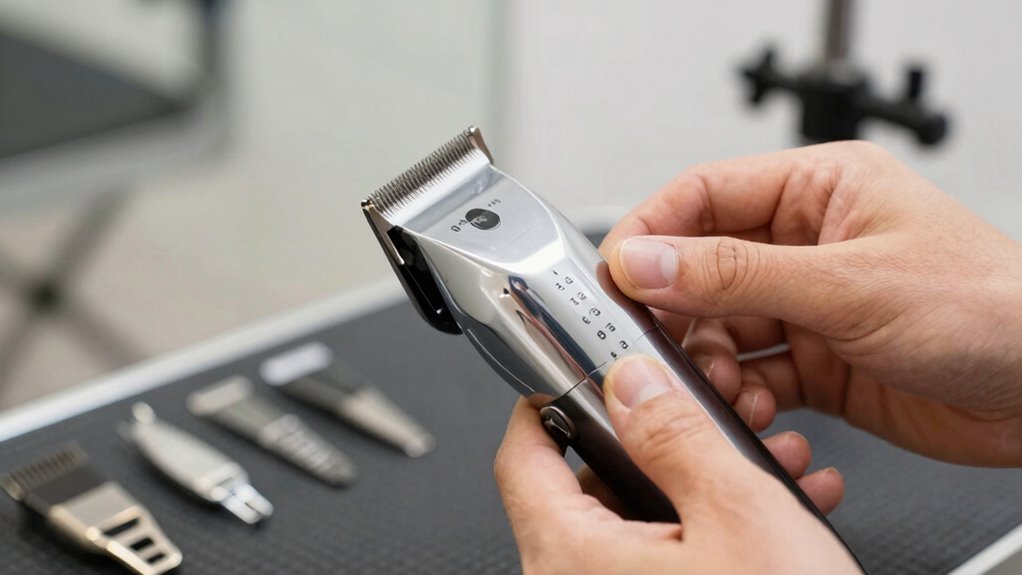
Attaching and changing your clipper blades quickly and safely is essential for efficient grooming sessions. Proper blade attachment guarantees grooming safety and helps prevent accidents. First, turn off and unplug your clippers before handling blades. Remove the blade guard or screw, then carefully slide or snap the new blade into place, ensuring it’s secure. Use blade maintenance tools like a brush to clean blades regularly and check for damage. When changing blades, handle them by the edges to avoid cuts and avoid forcing parts that don’t fit. Regular maintenance keeps blades sharp and in good condition, extending their lifespan. Being aware of device safety and following the manufacturer’s instructions can further prevent mishaps. Following these steps makes blade changes quick, safe, and effective, minimizing grooming interruptions and ensuring your dog’s comfort.
Signs Your Clippers Are Overheating and How to Prevent Hot Blades

If your clippers start to feel unusually hot or emit a burning smell, it’s a clear sign they are overheating. Overheating can compromise dog grooming safety and damage your grooming tools. To prevent hot blades, regularly pause grooming to let the clippers cool down and avoid pushing them beyond their limits. Proper grooming tool maintenance, such as cleaning vents and applying clipper oil, helps regulate heat. Keep blades sharp and replace dull ones promptly, as dull blades generate more heat. Using a cooling spray or gel during grooming also reduces overheating risk. Monitoring your clippers closely and taking proactive steps ensures safe, comfortable grooming sessions for your dog while extending the lifespan of your tools. Additionally, understanding clipper maintenance is essential to avoid accidents and ensure effective grooming. Incorporating sound cooling techniques can further help in maintaining optimal operating temperatures and prolonging your clippers’ lifespan. Regularly checking clipping environment can also assist in preventing overheating by ensuring proper airflow and temperature control around your grooming area. Recognizing the signs of overheated blades early can save you time and prevent discomfort for your pet.
Tips for Keeping Your Clippers and Blades Clean and Sharp
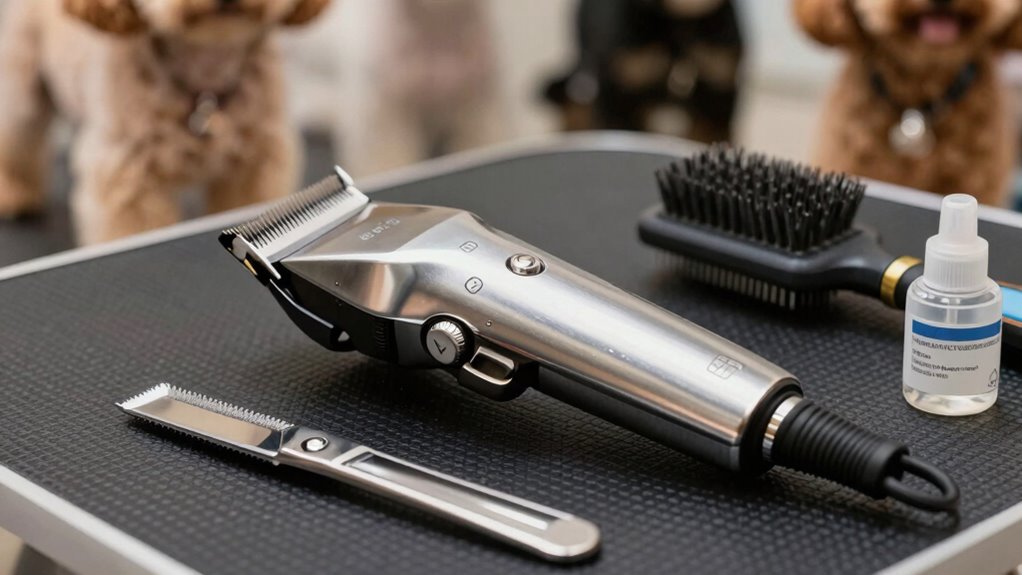
Keeping your clippers and blades clean and sharp is essential for effective grooming and preventing overheating. Regularly remove hair, dirt, and debris with a brush or blade cleaner to maintain ideal performance. Sharp blades cut more efficiently, reducing strain on the motor and preventing burnouts. Properly lubricate blades with clipper oil after each use to minimize friction and wear. Good dog nutrition supports healthier coat growth, making grooming easier and less stressful for your pet. Additionally, understanding canine behavior helps you groom calmly and patiently, avoiding sudden movements that can dull blades or cause accidents. Using the correct soil for coat health can also promote a shinier, healthier coat, easing grooming sessions. Maintaining blade sharpness is crucial to ensure smooth cuts and prevent unnecessary tugging or discomfort during grooming. Regular maintenance, including checking for affiliate disclosures, ensures your equipment remains in top condition. Consistent maintenance ensures your clippers last longer, work smoothly, and keep your dog comfortable during grooming sessions. Proper storage and handling also help in maintaining blade integrity, preventing rust and damage. Keeping equipment in top shape benefits both your grooming experience and your dog’s well-being. Incorporating essential oils for skin conditions into grooming routines can also soothe your pet’s skin and promote a healthy coat.
Common Mistakes to Avoid During At-Home Dog Grooming
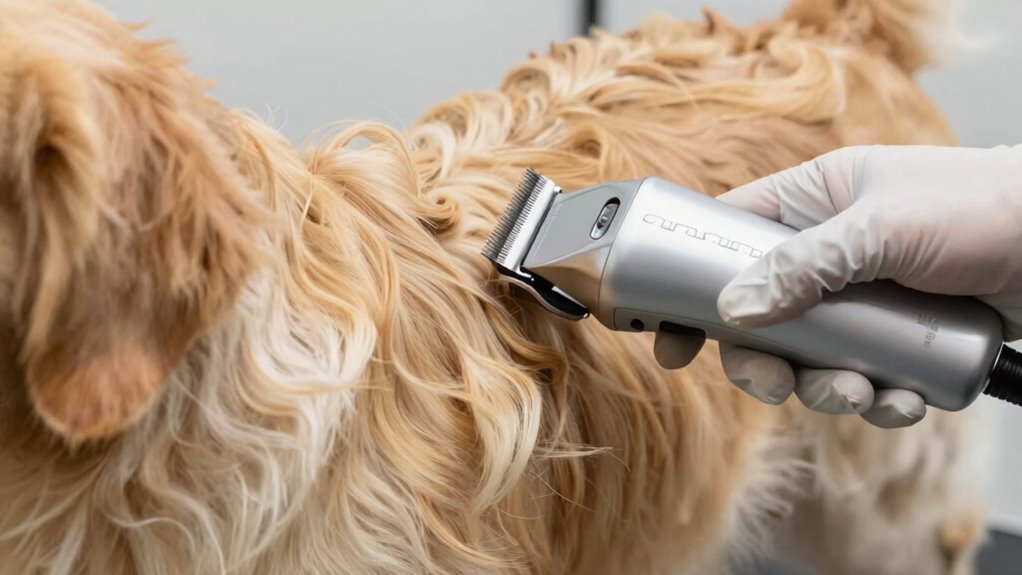
Many pet owners make mistakes during at-home grooming that can cause discomfort or damage to their dogs. Using the wrong blade sizes, ignoring your dog’s coat type, or rushing through the process can lead to poor results. Staying attentive and patient helps guarantee a safe and effective grooming session. Additionally, understanding the importance of well-sourced name coverage can help ensure the grooming process is based on reliable information, reducing the risk of errors. Recognizing the specifics of Gold IRA markets can also inform better choices when selecting grooming tools and techniques tailored to your dog’s unique needs. Being aware of best grooming practices ensures you use the appropriate techniques for your dog’s coat and health. Selecting the right styling products for your dog’s coat type can significantly improve grooming outcomes and comfort. Paying attention to coat types and their grooming requirements, such as whether your dog has a short, long, or curly coat, helps you choose the best techniques and tools for a stress-free grooming experience.
Using Wrong Blade Sizes
Choosing the wrong blade size can quickly turn grooming into a frustrating experience and even harm your dog’s coat. Many dog grooming myths suggest you should always use the same blade for every grooming session, but that’s not true. Using an inappropriate blade can cause uneven cuts or pulled hair, leading to discomfort. It’s essential to select the right blade size for your dog’s coat type and grooming goal. Proper clipper maintenance, including cleaning and oiling blades regularly, ensures they stay sharp and function correctly. Always double-check the blade number before starting, and avoid rushing the process. Understanding coat types is crucial for selecting the appropriate blade, ensuring a comfortable grooming experience. Knowing clipper blade numbers helps in choosing the most suitable blade for different grooming needs. Additionally, familiarizing yourself with blade number charts can assist in making informed decisions during grooming. Using the correct blade size not only makes grooming easier but also keeps your dog comfortable and safe during at-home grooming sessions.
Ignoring Coat Types
Are you aware that ignoring your dog’s coat type can lead to uneven grooming and discomfort? Different coat types, such as wiry, curly, or straight, require specific grooming techniques and blade choices. Failing to recognize these differences can make grooming more challenging and may result in skin irritation or uneven cuts. For example, a thick or double coat needs a different approach than a fine or short coat. Overlooking your dog’s coat type can cause you to choose the wrong blades, increasing grooming challenges and risking hot blades or uneven results. To avoid these issues, always assess your dog’s coat before starting. Understanding your dog’s coat type ensures a smoother grooming process and keeps your pet comfortable and happy.
Rushing the Grooming Process
Rushing through your dog’s grooming can lead to mistakes that cause discomfort or injury. Prioritizing grooming safety means taking your time and using the right grooming tools carefully. Avoid rushing the process, as hurried movements increase the risk of nicks or cuts, especially around sensitive areas. Make sure your grooming tools are sharp and suitable for your dog’s coat type to prevent pulling or uneven cuts. Stay patient, and don’t skip steps like brushing thoroughly beforehand or checking for skin issues. Rushing can also cause you to overlook signs of distress or discomfort from your dog. Remember, a calm and deliberate approach ensures a safer grooming experience and better results for your pet’s coat and overall well-being.
When to Seek Professional Grooming Help and How to Transition
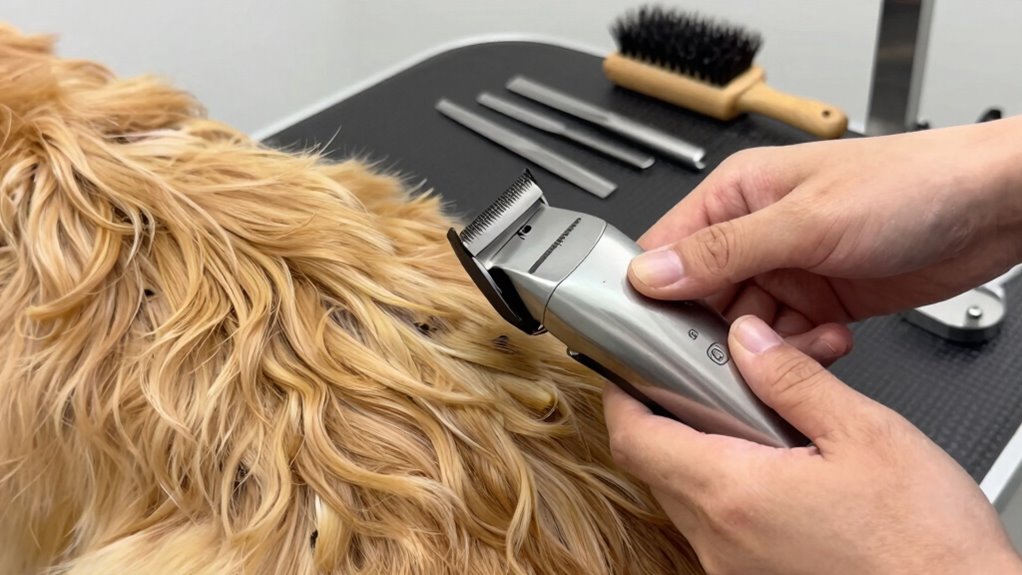
Knowing when to seek professional grooming help is essential to guarantee your dog stays healthy and comfortable, especially if you’re new to grooming or facing specific challenges. If your dog shows signs of agitation, aggressive dog behavior, or resistance during grooming, it’s time to consult a professional. They understand grooming safety and can handle tricky coat types or sensitive areas without risking injury. Moving from home grooming to professional help can be smooth if you gradually introduce your dog to grooming sessions, pairing them with positive experiences. Professionals can also advise you on maintaining your dog’s coat between visits. Remember, prioritizing your dog’s comfort and safety ensures a stress-free grooming process and healthier coat management.
Quick Tips for a Safe and Comfortable Grooming Experience
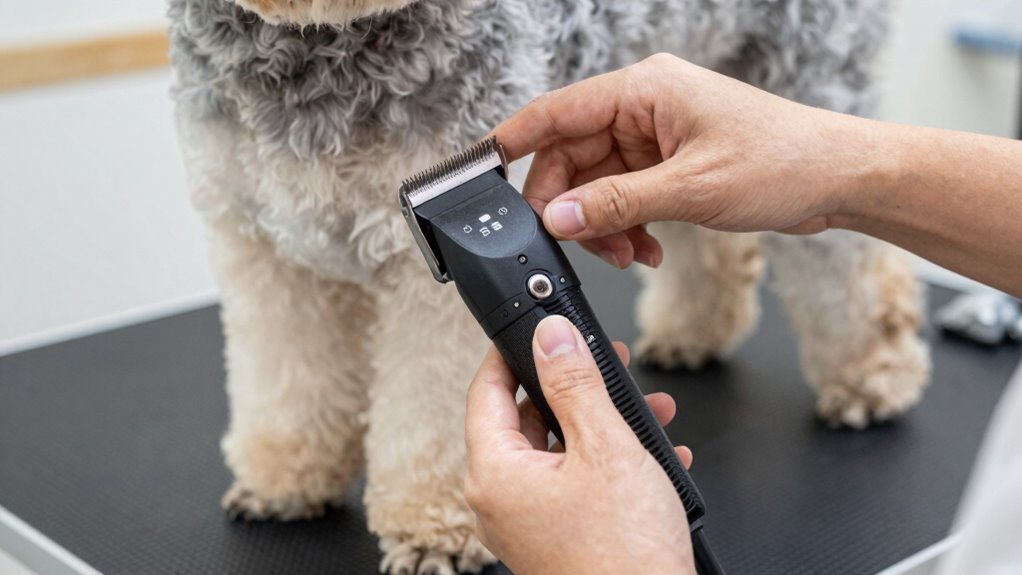
To guarantee a safe and comfortable grooming experience for your dog, it’s important to prepare both yourself and your pet beforehand. Verify your dog is well-fed with proper dog nutrition, which helps maintain calmness and energy. Familiarize yourself with your dog’s canine behavior; gentle handling and patience ease stress. Create a calm environment, perhaps with soft music or treats. Use the right blade number for your dog’s coat type to prevent hot blades. Regularly check your tools for safety. During grooming, stay attentive to signs of discomfort.
| Preparation | During Grooming | Post-Grooming |
|---|---|---|
| Proper dog nutrition | Observe canine behavior | Gentle praise and treats |
| Calm environment | Keep tools at safe temperatures | Regularly clean tools |
| Patience and calm | Take breaks if needed | Monitor for skin issues |
Frequently Asked Questions
How Often Should I Replace or Sharpen My Dog Grooming Blades?
You should replace or sharpen your dog grooming blades every 6 to 12 months, depending on usage and coat type. Regular blade maintenance is essential to keep your clippers performing well. Follow a consistent sharpening schedule and inspect blades for dullness or damage. Proper sharpening and timely replacements ensure smooth grooming sessions, prevent hot blades, and extend the life of your equipment. Stay attentive to your blades’ condition for the best grooming results.
Can I Use Human Hair Clippers for My Dog?
You shouldn’t use human hair clippers on your dog because they aren’t designed for clipper compatibility with pet coats. Human hair clippers often lack the power and blade precision needed for thick or coarse dog hair, which can cause discomfort or uneven cuts. Plus, using the wrong clippers might overheat or damage the blades. Always choose pet-specific clippers to guarantee a safe, effective grooming session for your dog.
What Safety Precautions Should I Take When Grooming at Home?
When grooming at home, you should wear safety gear like gloves and safety glasses to protect yourself and your dog. Keep your workspace clean by regularly cleaning your clippers and surrounding area to prevent infections. Always check your tools for damage before use, and make certain your dog is comfortable and secure. Following these routines helps prevent injuries and makes grooming safer and more effective for both of you.
Are There Specific Blades for Sensitive or Allergy-Prone Dogs?
While some blades can be harsh, you can choose hypoallergenic blades or sensitive skin clippers for your allergy-prone dog. These blades are designed to minimize irritation, making grooming safer and more comfortable. Don’t forget to check for blades labeled specifically for sensitive skin, ensuring your pet’s comfort. Using the right blades helps prevent allergic reactions, giving your dog a gentle grooming experience and peace of mind for you.
How Do I Properly Store My Clipper Blades to Ensure Longevity?
To guarantee your clipper blades last, follow proper storage best practices and focus on blade maintenance. After each use, clean the blades thoroughly and apply a light coat of blade oil to prevent rust. Store them in a dry, airtight container or a blade case to protect against moisture and damage. Avoid leaving blades in humid areas, and periodically check for signs of wear to keep them sharp and effective.
Conclusion
Remember, grooming your dog at home is like performing open-heart surgery with kitchen scissors—if you forget to choose the right blade, avoid hot blades, and ignore coat types, you might end up with a shaved porcupine instead of a stylish pup. So, arm yourself with knowledge, stay cool, and don’t be afraid to call in a pro when things get hairy. After all, a happy, well-groomed dog is worth every snip—and every second of your patience.