To prevent jams and mold in your automatic fish feeder, choose foods that are low in moisture and have consistent size and shape, like small pellets or granular types. Store the food in airtight, cool, dark containers to keep it dry and fresh. Avoid sticky or bulky foods that can clog the dispenser, and regularly clean your feeder to prevent mold buildup. Keep environmental conditions stable—if you want to learn more, you’ll find tips to keep your feed fresh and trouble-free.
Key Takeaways
- Choose dry, low-moisture foods like flakes or small pellets to minimize clumping and jamming in automatic feeders.
- Opt for uniformly shaped, small-sized pellets for consistent flow and reduced risk of blockages.
- Store fish food in airtight, cool, dark containers to prevent moisture buildup and mold growth.
- Regularly clean feeder components to remove residue and prevent mold accumulation.
- Maintain stable water temperature and environment to reduce moisture absorption and spoilage of stored food.
Why Choosing the Right Fish Food Is Key for Automatic Feeders

Choosing the right fish food is essential for the proper functioning of your automatic feeder. The quality of the food directly impacts fish nutrition, helping keep your fish healthy and active. When selecting food, consider how it aligns with your feeding schedules, guaranteeing it releases at the right times without overfeeding or underfeeding. Some foods are designed specifically for automatic feeders, with consistent sizes and moisture content that prevent clogging. Poor-quality or inappropriate food can cause jams, disrupt feeding routines, and lead to health issues for your fish. Additionally, selecting appropriate food types helps reduce the risk of mold growth and ensures your automatic feeder operates smoothly, providing reliable nutrition and maintaining an optimal environment for your aquatic pets.
Common Problems: Food Jamming and Mold in Fish Feeders
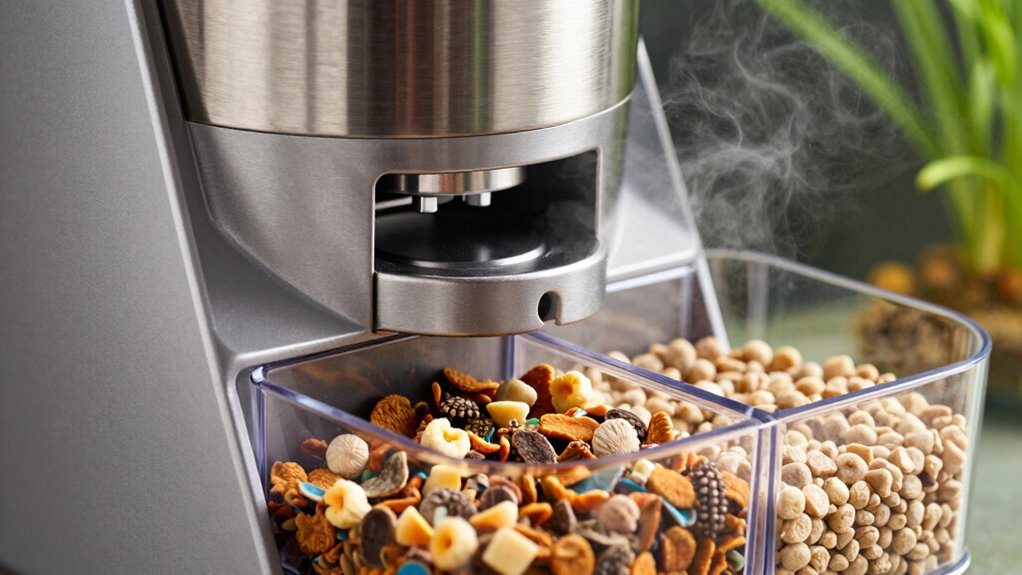
Food jamming and mold can cause serious issues in your fish feeder. Using the right type of food and storing it properly can help prevent these problems. Implementing simple mold prevention strategies keeps your feeder running smoothly and your fish healthy. Choosing appropriate food types that are less prone to clumping can further reduce the risk of jamming.
Food Compatibility and Jam
Have you ever noticed your fish feeder getting clogged or the feed turning moldy? Food compatibility plays a big role in preventing these issues. Some fish foods, like flakes or pellets, can cause jamming if they’re too bulky or sticky for your feeder’s mechanism. Also, incompatible foods can degrade water quality, harming your aquarium plants and fish. When the feed doesn’t match your feeder’s design, it’s more likely to stick or block the outlet. To avoid this, use foods specifically made for automatic feeders, such as uniform pellets or granules. Keep in mind that poor water quality from spoiled or incompatible food can encourage mold growth. Regularly cleaning your feeder and choosing the right food type helps prevent jamming and keeps your aquarium environment healthy. Additionally, selecting energy-efficient cloud servers for managing your aquarium’s automated systems can contribute to sustainable and secure operation. Proper food storage also helps maintain food freshness and prevents spoilage that leads to mold. Moreover, understanding your feeder’s mechanical design can help you select compatible foods that won’t cause obstructions or jams. Ensuring your feeder is regularly maintained can further reduce the risk of clogs and spoilage. Furthermore, selecting appropriate feeding routines can reduce leftover food and minimize mold development.
Mold Prevention Strategies
Regular maintenance and proper handling are key to preventing mold growth and food jams in your fish feeder. Poor water quality and irregular feeding schedules create ideal conditions for mold to develop. To keep your feeder mold-free, stick to consistent feeding times and avoid overfeeding, which can leave leftover food that fosters mold. Store food in airtight containers to prevent moisture buildup. Regularly clean and dry all parts of your feeder, especially the dispensing mechanisms. Maintain excellent water quality by testing and managing parameters like pH and ammonia levels, reducing mold spores’ spread. Ensuring proper air circulation can also help prevent excess humidity that promotes mold growth. Additionally, controlling humidity levels around your aquarium can significantly reduce mold development in your feeder and tank environment. Keep food dry and airtight to stop moisture from fueling mold. Follow a strict feeding schedule to prevent leftover food. Clean your feeder thoroughly at least once a week. Monitoring water quality helps create an environment less hospitable to mold. Incorporating proper ventilation strategies can further reduce humidity and mold risk around your setup.
What Makes a Fish Food Less Likely to Jam?
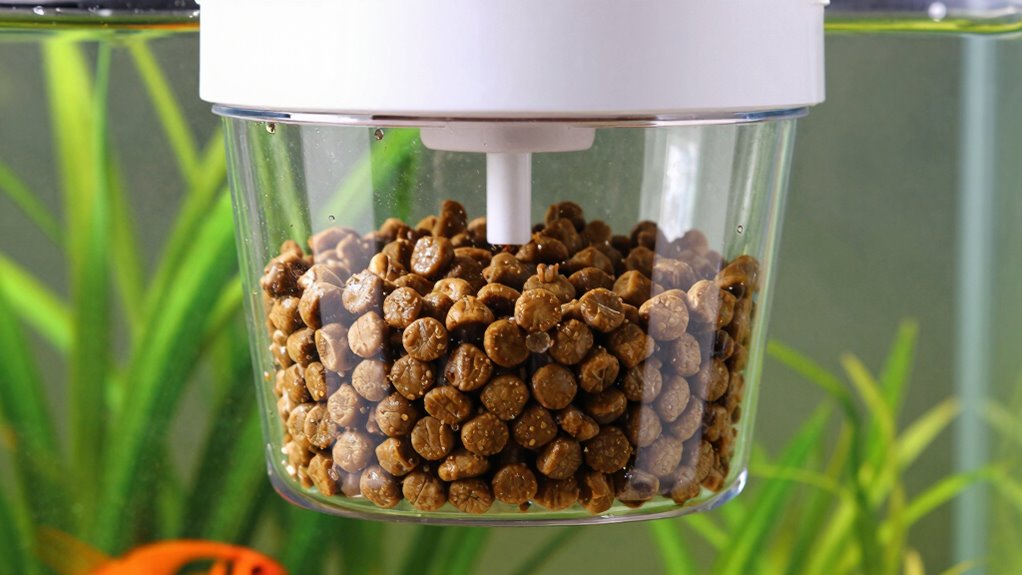
Choosing fish food with proper composition helps prevent jams, as it flows more easily through your feeder. Store your food in cool, dry conditions to maintain its quality and reduce clumping. Proper storage methods can also help preserve the natural food texture, preventing it from becoming overly moist or hard. Additionally, selecting quality ingredients can minimize the risk of blockages caused by impurities or low-grade components. Ensuring the food has a consistent particle size can further decrease the likelihood of jams. Regularly inspecting your fish food for signs of deterioration, such as discoloration or crumbling, is also crucial to prevent mold growth and ensure optimal freshness. Maintaining proper storage conditions is essential to prevent mold growth and keep the food fresh longer. By focusing on these factors, you can keep your feeder running smoothly and avoid frustrating blockages.
Proper Food Composition
Ensuring that fish food is less likely to jam starts with understanding its composition. The right formulation promotes healthy fish nutrition and aligns with your feeding schedules. To prevent jamming, look for foods with these qualities:
- Low moisture content to avoid clumping and ensure smooth dispensing
- Proper binding agents that hold particles together without becoming sticky
- Balanced particle size to prevent clogging in automatic feeders
- Stable ingredients that resist mold and breakdown over time
- Incorporating quality control measures during production can further enhance food stability and reduce the risk of jamming.
Choosing foods with these features keeps your feeding routine seamless and your fish healthy. When the food’s composition is optimized, you reduce waste and maintenance, making automatic feeding more reliable and stress-free. Proper food composition isn’t just about nutrition—it’s about creating a system that works effortlessly for you and your fish.
Optimal Storage Conditions
Proper food composition plays a vital role in preventing jams, but how you store that food is equally important. To keep fish food fresh and clog-free, focus on temperature control and humidity management. Store your fish food in a cool, dry place away from direct sunlight. Use airtight containers to prevent moisture and pests from contaminating the food. Proper storage minimizes mold growth and keeps the food dry, reducing the chance of clumping. Here’s a quick guide:
| Storage Condition | Effect | Best Practice |
|---|---|---|
| Temperature Control | Prevents spoilage, jams | Keep below 75°F (24°C) |
| Humidity Management | Stops mold, clumping | Use airtight, moisture-proof containers |
| Light Exposure | Causes deterioration | Store in dark areas |
| Air Circulation | Keeps food fresh | Avoid sealed, airtight containers for long-term storage |
Additionally, selecting food types that resist moisture and ensuring proper food formulation can significantly reduce the risk of jams and mold. Ensuring proper food formulation can also enhance how well the food resists moisture absorption and spoilage.
Are Flake and Granular Foods More Reliable for Automatic Feeders?
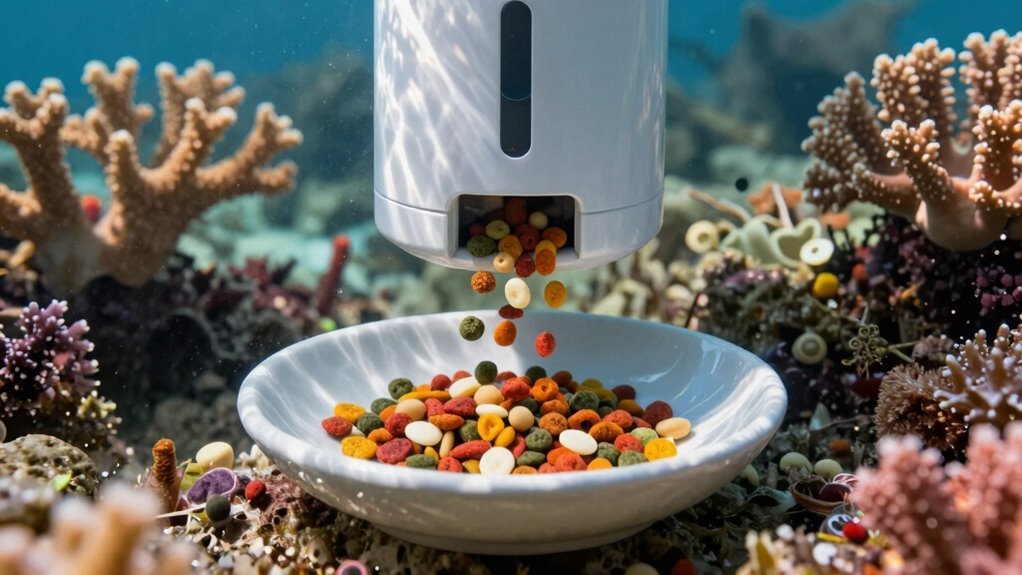
Are flake and granular fish foods more reliable for automatic feeders? Generally, yes, but it depends on your setup. Flake and granular foods tend to flow more smoothly through dispensers, reducing jams, especially if you keep your water temperature stable. If your aquarium has lively plants, consistent feeding is essential to prevent overgrowth or debris buildup. The right food type minimizes clumping, keeping your feeder functioning properly. Proper storage practices help prevent mold growth and extend the shelf life of your fish food. Additionally, selecting foods with consistent texture can further reduce clogging issues. Choosing foods with a stable composition can help avoid clumping and jamming, ensuring your feeder operates smoothly. Using high-quality, reliable fish foods can also contribute to a more consistent feeding schedule. Incorporating halal-certified fish foods can also be beneficial for those seeking compliant options, ensuring your fish’s diet aligns with your dietary preferences. With reliable foods, you can confidently maintain your fish’s diet, even when you’re away. Remember, choosing foods that don’t clump or jam ensures your automatic feeder works seamlessly, giving your fish consistent nutrition and peace of mind.
How Pellet Size and Shape Affect Feeder Performance

Pellet size and shape play a crucial role in how well your automatic feeder performs. Smaller pellets tend to flow more smoothly through the dispenser, reducing the risk of jams caused by pellet density or shape irregularities. Uniform pellet shapes ensure consistent feeding, preventing blockages that can disrupt your fish’s schedule. Shape consistency helps the feeder’s mechanism dispense food evenly, avoiding clogs that often happen with uneven or irregularly shaped pellets. When choosing pellets, consider those with a uniform size and shape to optimize feeder reliability. Additionally, a balanced pellet density ensures the food isn’t too compact or too loose, both of which can cause feeding issues. Ultimately, selecting pellets with consistent shape and appropriate density enhances your feeder’s performance and keeps your fish well-fed.
Best Storage Tips to Keep Fish Food Fresh and Mold-Free
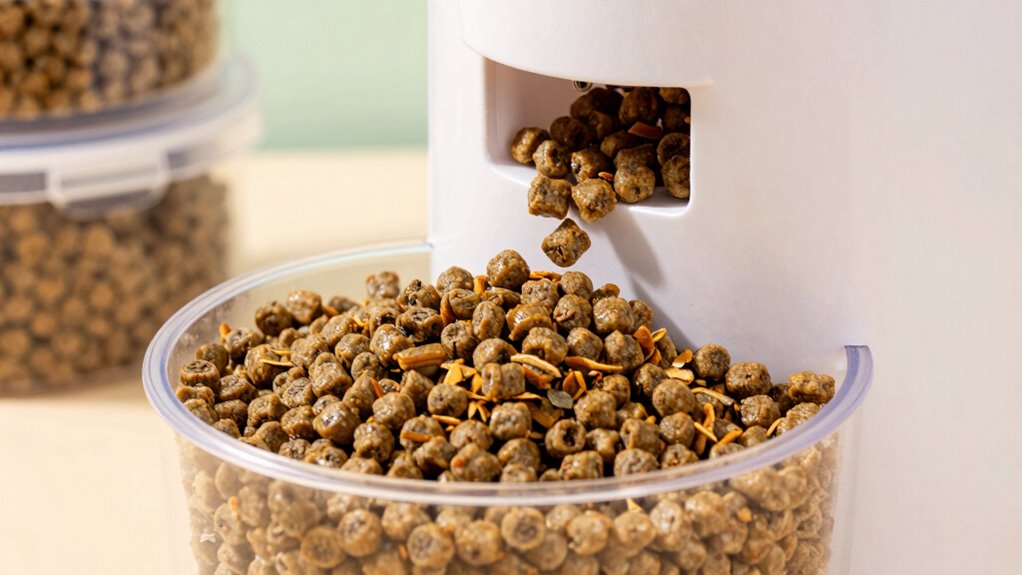
To keep fish food fresh and mold-free, storing it in airtight containers is essential. Proper storage preserves vibrant fish food colors and ensures the nutrients stay intact. Keep your feeding schedules consistent by avoiding exposure to moisture and air, which can cause mold growth. Store fish food in a cool, dark place away from direct sunlight to slow down spoilage. Use clear containers so you can easily monitor the level and freshness. Avoid overfilling containers to prevent crushing the food. Regularly check for any signs of mold or clumping, and discard compromised portions immediately. These simple steps help maintain the quality of your fish food, keeping your aquatic friends healthy and happy. Proper storage is crucial to preventing spoilage and guaranteeing ideal feeding routines.
Preventing Mold Growth on Fish Food in Your Feeder
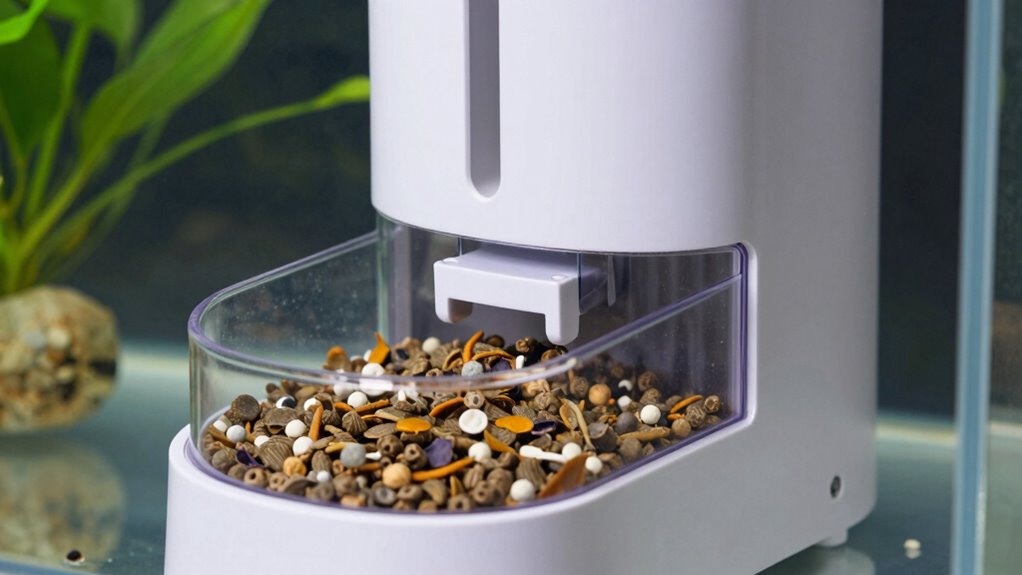
Maintaining proper conditions in your fish feeder is key to preventing mold growth on the food. Guarantee the water temperature stays consistent; fluctuations promote mold development. Keep the feeder in a cool, dry spot away from direct sunlight, which encourages mold. Incorporate aquarium plants nearby to help stabilize humidity levels. Visualize the environment with this table:
| Environment Factor | Effect on Mold | Your Action |
|---|---|---|
| Water Temperature | High temps | Use a temperature control |
| Humidity | Excess moisture | Keep feeder dry and ventilated |
| Aquarium Plants | Stabilize humidity | Place plants nearby |
Regular Maintenance: Cleaning and Caring for Your Automatic Fish Feeder
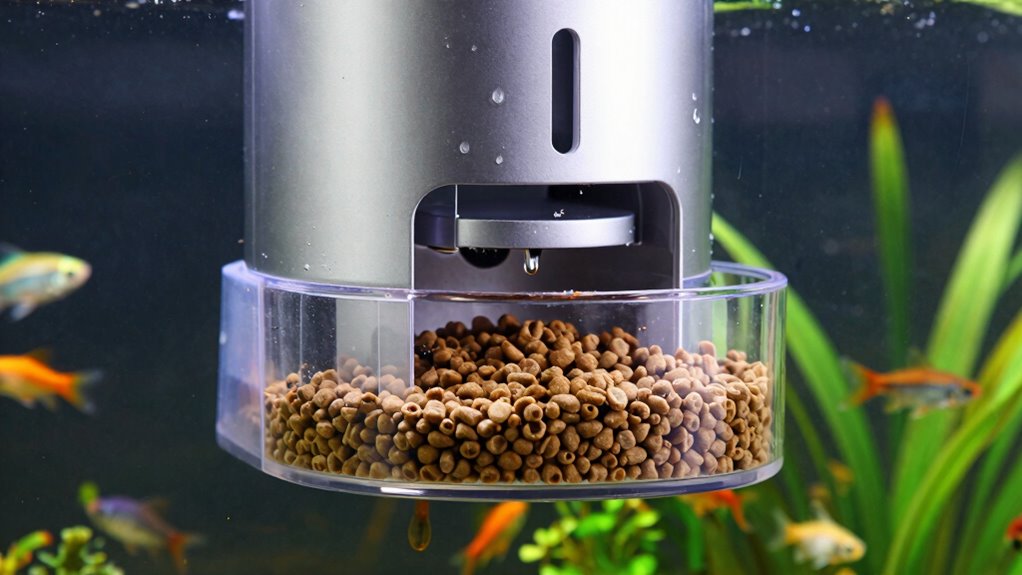
Regular maintenance is essential to keep your automatic fish feeder functioning properly and to prevent issues like clogging or mold growth. You should regularly clean the feeder’s components, especially after using certain foods, to guarantee smooth operation. When caring for your feeder, check for any buildup that could affect your fish’s health and your aquarium decorations. Proper upkeep helps maintain ideal fish health and keeps your aquarium looking its best.
- Keep your feeder free of debris to avoid clogging and mold.
- Disassemble and clean parts regularly to prevent mold growth.
- Inspect for cracks or damage that could affect food delivery.
- Maintain a clean feeding environment to support vibrant aquarium decorations.
Choosing the Best Fish Food for Your Aquarium Setup
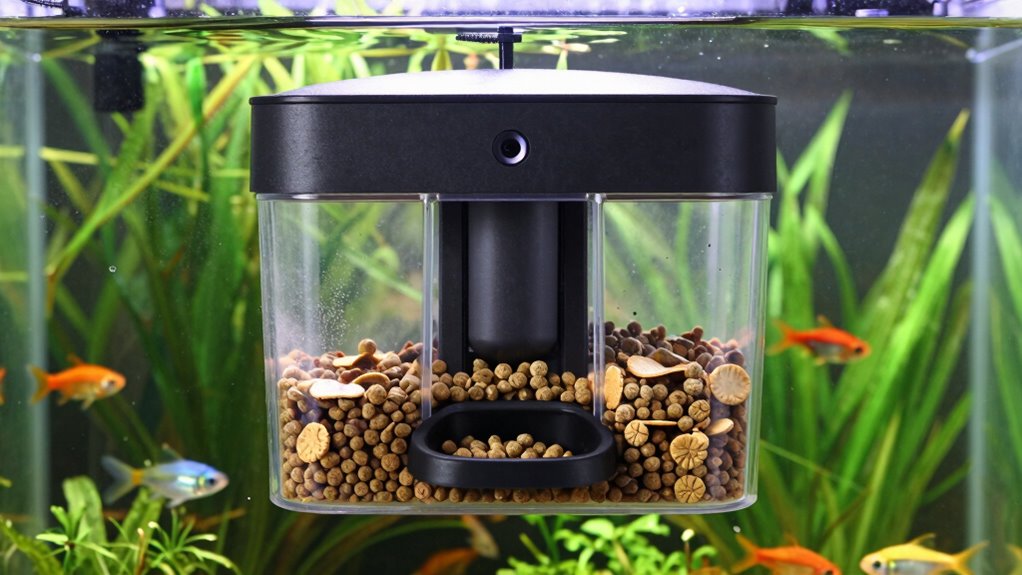
Choosing the right fish food is essential for ensuring your aquarium fish stay healthy and active. The type of food you select impacts not only fish behavior but also the health of your aquarium plants. For herbivorous fish, consider algae wafers or specialized plant-based flakes that won’t harm your plants or clog your automatic feeder. Carnivorous species thrive on high-protein pellets, which promote active behavior and vibrant coloration. Be mindful of portion sizes to prevent overfeeding, which can cause mold and jam your feeder. Additionally, choose foods that break apart easily to avoid clogging the feeding mechanism. By selecting appropriate food types, you support a balanced ecosystem where fish remain lively, and aquarium plants flourish without interference.
Frequently Asked Questions
How Often Should I Clean My Automatic Fish Feeder?
You should clean your automatic fish feeder at least once a month to keep it functioning properly. Follow your feeding schedule and perform regular maintenance tips, like removing leftover food and wiping down parts, to prevent jams and mold buildup. If you notice any issues, wash it more often. Regular cleaning ensures your fish get fresh food and the feeder works smoothly, supporting a healthy feeding routine.
Can I Mix Different Types of Fish Food in One Feeder?
Wondering if you can mix different types of fish food in one feeder? It’s possible, but you should consider fish food compatibility and feeder mixing tips. Mixing flakes with pellets can cause jamming or uneven feeding, so keep foods similar in size and type. Always test small quantities first, and clean your feeder regularly to prevent mold and make certain of smooth operation. Wouldn’t your fish appreciate a well-balanced, jam-free meal?
What Are Signs That My Fish Food Has Gone Bad?
You’ll notice fish food spoilage when it develops an off smell or becomes sticky or clumpy. Mold indicators include fuzzy or powdery growth on the surface. If your fish food looks discolored or has mold patches, it’s time to toss it. Don’t take chances, as feeding spoiled food can harm your fish. Regularly check your supplies and store food in a cool, dry place to prevent spoilage and mold growth.
Is It Safe to Store Fish Food in the Freezer?
Yes, you can safely store fish food in the freezer for longer freshness and better preservation. Freezer storage helps prevent spoilage, mold, and pests, ensuring your fish get nutritious, clean food. Just make sure to use an airtight container or sealed bag to keep moisture out. Proper fish food preservation in the freezer keeps the food fresh, prevents clumping, and maintains its quality, so your fish stay healthy and happy.
How Do I Program My Feeder to Prevent Overfeeding?
To prevent overfeeding, you should set a proper feeding schedule on your automatic fish feeder. Program it to dispense small portions at regular intervals, supporting portion control. Avoid increasing feeding amounts if fish seem hungry, and stick to the recommended quantity. Regularly monitor your fish’s health and adjust the schedule if necessary. This guarantees your fish get enough food without overfeeding, keeping their environment healthy and clean.
Conclusion
Choosing the right fish food can reduce jamming and mold issues considerably—up to 60%, according to recent studies. By selecting food that’s less prone to clumping, storing it properly, and maintaining your feeder regularly, you’ll keep your fish happy and healthy. Remember, a well-maintained feeder not only prevents problems but also ensures consistent feeding. Invest a little time now, and you’ll enjoy a hassle-free aquarium experience for years to come.