
To prevent overheating, it is crucial to choose the right heater size based on your tank’s volume, typically using the watts-per-gallon rule of 3-5 watts. Proper placement, regular temperature checks, and reliable thermostats also help maintain a stable environment. Avoid oversizing or undersizing your heater, and always monitor for signs of malfunction. Keep exploring to learn more about selecting the perfect heater and keeping your aquarium safe and consistent.
Key Takeaways
- Use the watts-per-gallon rule (3-5W per gallon) to select appropriate heater wattage for your tank size.
- Properly size heaters to avoid overheating, underheating, and ensure stable water temperatures.
- Place heaters near water flow and avoid direct sunlight to promote even heat distribution and prevent hotspots.
- Regularly monitor water temperature with a reliable thermometer and adjust heater settings as needed.
- Choose heaters with adjustable thermostats and verify their function periodically to prevent malfunction and overheating.
What Size Heater Do I Need for My Aquarium?
Choosing the right size heater for your aquarium is essential to maintain a stable and healthy environment for your fish. When selecting a heater, consider fish compatibility since different species thrive at specific temperatures, and an undersized heater may struggle to maintain consistent warmth. Your aquarium decor can also influence heating needs; densely decorated tanks can affect water circulation, requiring a slightly larger heater to ensure even temperature distribution. Measure your tank’s volume accurately, as this determines the wattage needed to keep the water at the right temperature. Avoid overestimating, as too large a heater can cause overheating, stressing your fish. Proper heater sizing is crucial for avoiding temperature fluctuations that can harm aquatic life. Accurate tank volume measurement ensures your heater provides the correct warmth without wasteful energy use. Additionally, understanding the watts-per-gallon guideline can help you select the most appropriate heater wattage for your specific tank size. Using data-driven comparisons can further assist in choosing the right heater to match your aquarium’s requirements. Conducting temperature stability tests can help verify that your chosen heater maintains consistent water temperature, promoting a healthy aquatic environment. Precise sizing ensures your aquatic habitat remains comfortable, supporting happy, healthy fish and a visually appealing setup.
How Does the Watts-Per-Gallon Rule Help You Choose the Right Heater?
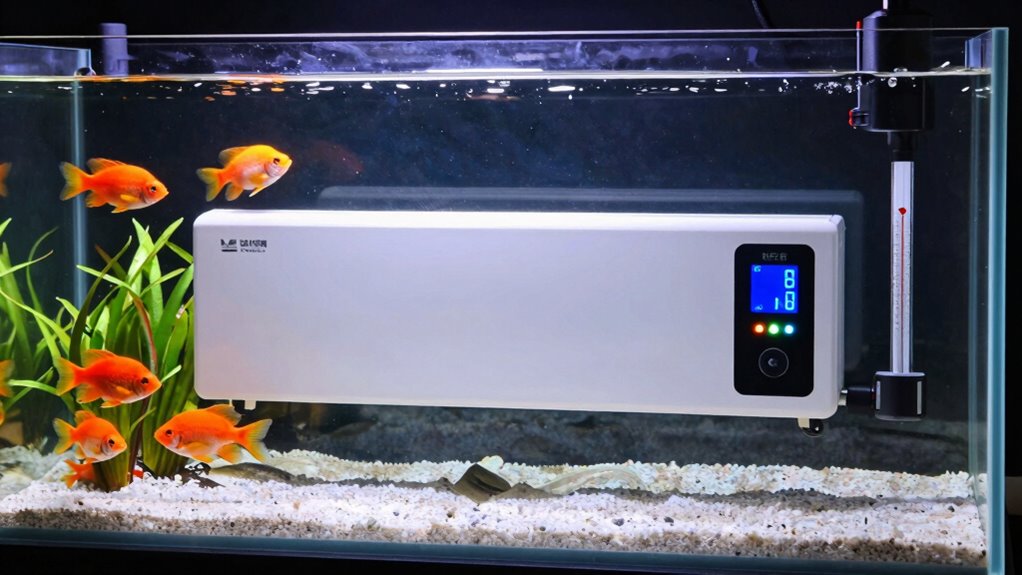
The watts-per-gallon rule provides a straightforward way to estimate the right heater size for your aquarium. By using this rule, you can better manage temperature regulation and ensure your fish stay comfortable. To apply it effectively:
The watts-per-gallon rule helps you choose the right heater size for reliable temperature control.
- Determine your aquarium’s size in gallons.
- Multiply that number by the recommended watts (usually 3-5 watts per gallon).
- Adjust based on factors like room temperature or if you need precise control.
- Remember that sound design skills can help create an environment that minimizes stress for your aquatic life, especially when ensuring stable temperatures. Proper heater placement is essential; position it near a water flow to ensure even heat distribution. This rule helps you select a heater that maintains consistent temperatures without overheating, simplifying the setup process and reducing the risk of temperature fluctuations that could harm your aquatic life. Additionally, understanding thermal regulation principles can further improve temperature stability and overall aquarium health. Developing an awareness of temperature fluctuations can also aid in troubleshooting issues before they become serious.
What Factors Affect Your Aquarium’s Heating Needs?
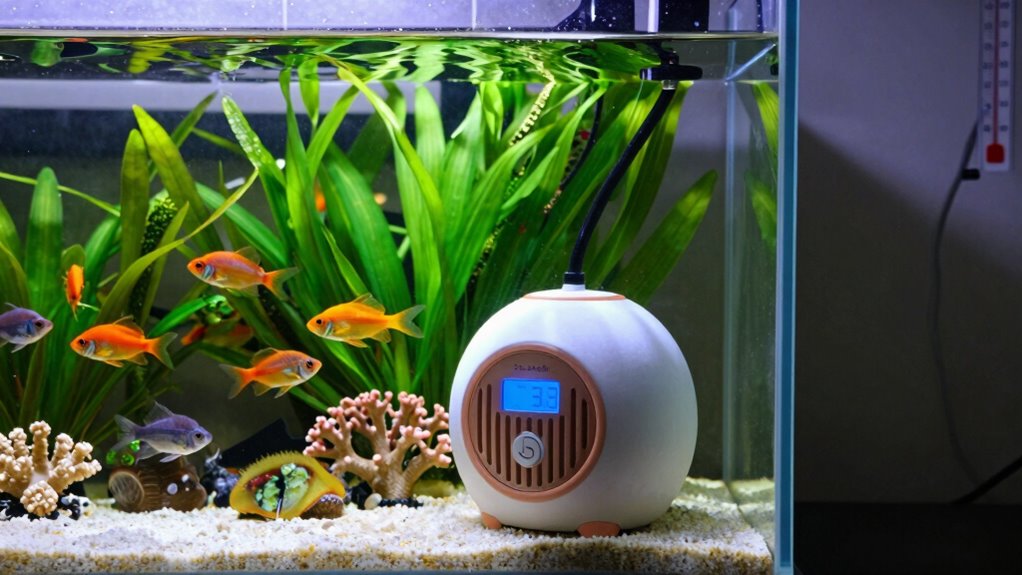
Several factors influence how much heating your aquarium requires, and understanding these can help you select the right equipment. Aquarium lighting plays a role because intense or prolonged lighting can raise water temperatures slightly, increasing your heater’s workload. Fish nutrition is also important; healthy, well-fed fish generate less waste and heat, reducing the need for additional heating. Additionally, the size of your tank, ambient room temperature, and the presence of plants or equipment can impact heating needs. For example, tanks in cooler rooms or with minimal insulation may need higher wattage heaters. Incorporating smart home technology like temperature sensors and automation systems can help monitor and maintain stable temperatures more effectively. Using temperature regulation techniques such as using insulating covers or heaters with automatic shut-off features can further help prevent overheating. Proper heat distribution within the tank ensures consistent temperatures and avoids hotspots that could harm your aquatic life. Understanding aquarium heater types can also guide you in choosing the most suitable heating device for your specific setup. Additionally, maintaining optimal water flow promotes even heat distribution and prevents temperature gradients that could stress aquatic organisms. By considering these factors, you can better maintain stable temperatures and prevent overheating or under-heating, ensuring a healthy environment for your aquatic life.
How to Calculate the Correct Aquarium Heater Wattage

To figure out the right heater wattage, you need to contemplate your room temperature, tank size, and the temperature you want to maintain. Larger tanks or cooler rooms require more power to keep the water at the right level. By understanding these factors, you can select a heater that efficiently keeps your aquarium comfortable. Additionally, considering deep-sky imaging techniques can help ensure your equipment functions optimally in different environmental conditions. Knowing how to properly size your heater can also prevent overheating and ensure the longevity of your aquatic environment. Properly managing user privacy settings further contributes to a secure and personalized experience while maintaining your aquarium setup. Regularly checking your heater’s performance and adjusting as needed can also help prevent infection risks, ensuring a healthy environment for your aquatic life. Being aware of water chemistry is essential for maintaining a stable environment and avoiding issues caused by improper heating.
Room Temperature Considerations
Have you ever wondered how room temperature affects your aquarium’s heater size? If your room stays warmer, your heater needs to work less, so you might choose a lower wattage. Conversely, cooler rooms demand a more powerful heater to maintain proper water temperature. To determine the right wattage, consider these factors:
- Room temperature range – Warmer rooms reduce heater size needs.
- Aquarium decor – Plants and ornaments can influence heat distribution.
- Fish behavior – Some species are more sensitive to temperature changes, requiring precise control.
Tank Size and Volume
Wondering how to determine the right heater size for your aquarium? The key is understanding your tank’s size and volume. Larger tanks require more wattage to maintain stable temperatures, while smaller ones need less. Measure your aquarium’s volume in gallons or liters to select an appropriate heater. Keep in mind that the right wattage also supports your aquarium decor and influences fish behavior; stable temperatures reduce stress and promote healthy activity. For example, a 20-gallon tank typically needs a 100-watt heater, while a 50-gallon tank may need around 200 watts. Always choose a heater rated slightly above your calculated needs to account for temperature fluctuations and tank accessories. Proper sizing ensures efficient heating, keeps your fish comfortable, and maintains a healthy environment. Understanding wattage requirements is essential for effective aquarium setup and ongoing maintenance.
Desired Temperature Range
Determining the correct heater wattage starts with knowing the ideal temperature range for your aquatic inhabitants. This ensures temperature stability, which is crucial for their health. To calculate the right wattage:
- Identify the desired temperature range for your species.
- Measure your tank’s current temperature and volume.
- Use these factors to select a heater wattage that maintains consistent temperature without overheating.
- Remember that temperature stability is essential for preventing stress and health issues in your fish. Consulting wiring basics can help ensure safe and effective heater installation. Proper heater placement is essential to promote temperature stability, so position the heater near the water flow for even heat distribution. Remember, choosing a heater with appropriate wattage helps prevent temperature fluctuations that stress your fish. Monitoring the temperature regularly ensures your setup maintains the ideal range, keeping your aquarium healthy and stable. Additionally, being aware of heating element durability can help you select a heater that offers long-term reliability and safety. Regular maintenance and inspections contribute to the overall aquarium safety, ensuring your aquatic environment remains healthy.
Common Mistakes When Choosing Aquarium Heaters and How to Avoid Them
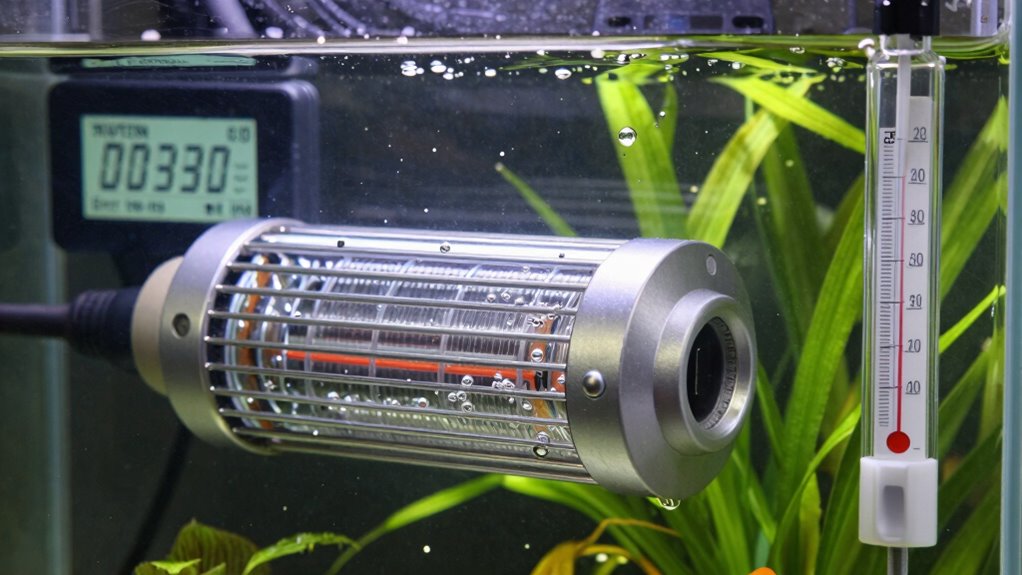
Choosing the wrong aquarium heater can lead to stressful situations for both you and your fish. One common mistake is ignoring fish compatibility; some species need specific temperature ranges, so selecting a heater without considering this can cause health issues. Another mistake is not matching the heater size to your tank’s volume, which can result in under- or overheating. Additionally, neglecting your aquarium decor’s impact, like hiding spots or plants, might interfere with heater placement or function. Always verify the heater’s wattage against your tank size and consider the needs of your fish. Avoid choosing a heater based solely on aesthetics or price—quality and proper sizing matter. Proper research prevents costly mistakes and keeps your aquatic environment stable and safe.
How Can Overheating Harm Your Fish, and How Do You Prevent It?

Overheating your aquarium can be just as harmful as having too little heat. Excess heat raises fish stress levels, making them more vulnerable to disease and weakening their immune system. To prevent this, keep a close eye on the temperature and avoid sudden fluctuations. Here are three ways overheating can harm your fish and how to prevent it:
Overheating stresses fish, weakens immunity, and can lead to health issues or death. Keep temperature steady to protect your aquarium.
- Increased stress – Overheated water causes fish stress, leading to erratic behavior and weakened immunity.
- Health risks – High temperatures can cause oxygen depletion and promote harmful bacteria growth. Maintaining proper thermal stability is essential for healthy aquatic life.
- Death – Prolonged overheating can be fatal, especially for sensitive species.
Use a reliable thermometer and an adjustable heater to maintain steady, appropriate temperatures, ensuring your fish stay healthy. Regularly monitoring temperature fluctuations can help you catch issues early and keep your aquarium environment stable.
Tips for Setting and Maintaining a Stable Aquarium Temperature
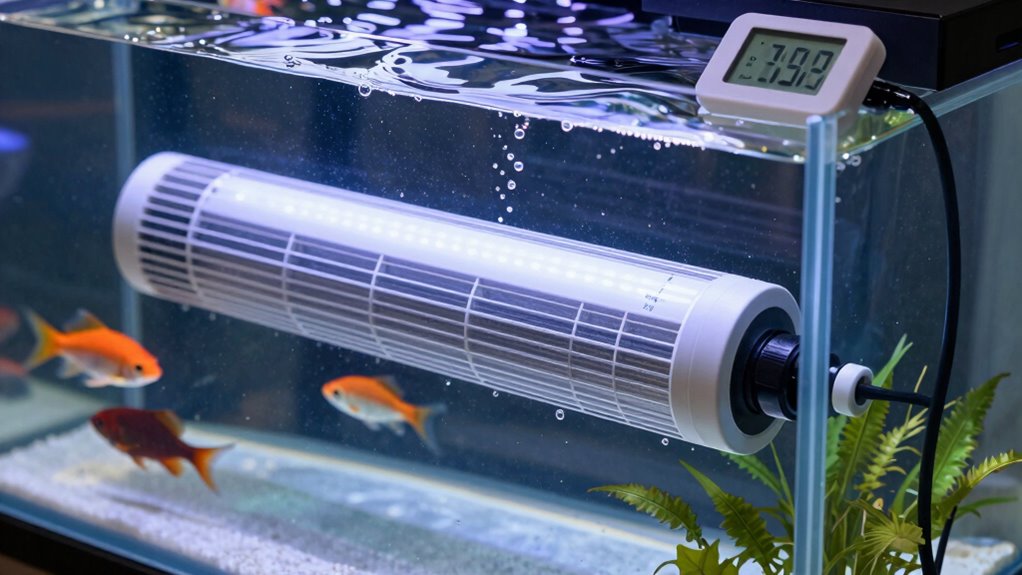
Ever wonder how to keep your aquarium’s temperature steady and safe for your fish? Maintaining consistent temperature is key to good aquarium maintenance and fish health. Use a reliable thermometer to monitor water temperature daily. Set your heater to the recommended level for your specific fish species, avoiding sudden changes. Avoid placing heaters near water flow sources or direct sunlight, which can cause temperature fluctuations. Regularly check for equipment malfunctions and clean your heater to ensure proper function. If you notice temperature swings, consider using an adjustable heater with a built-in thermostat for better control. Consistent temperature helps prevent stress and disease, supporting your fish’s well-being. By staying vigilant and proactive, you create a stable environment that promotes healthy, thriving fish.
What Are the Best Types of Aquarium Heaters for Different Tanks?
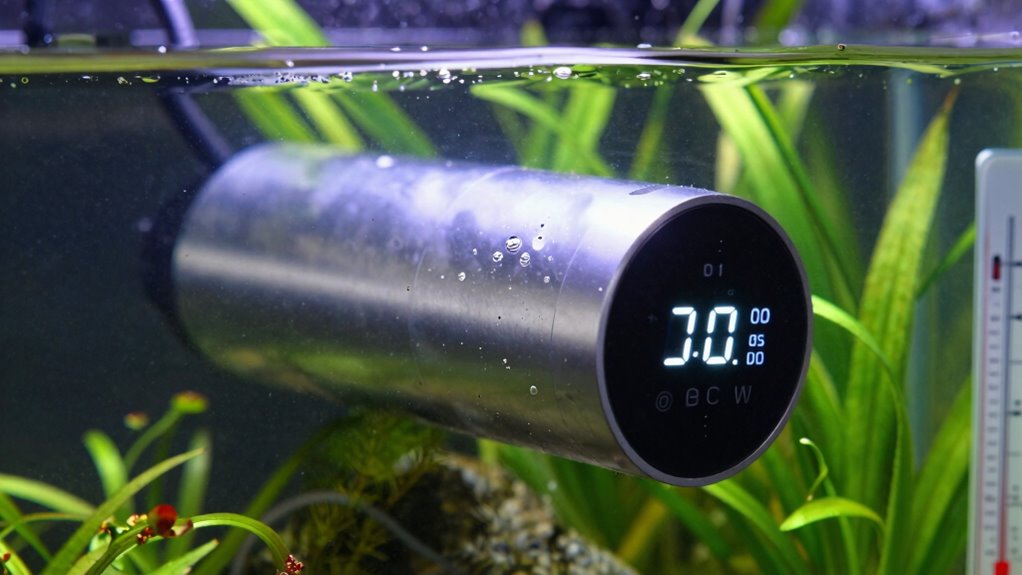
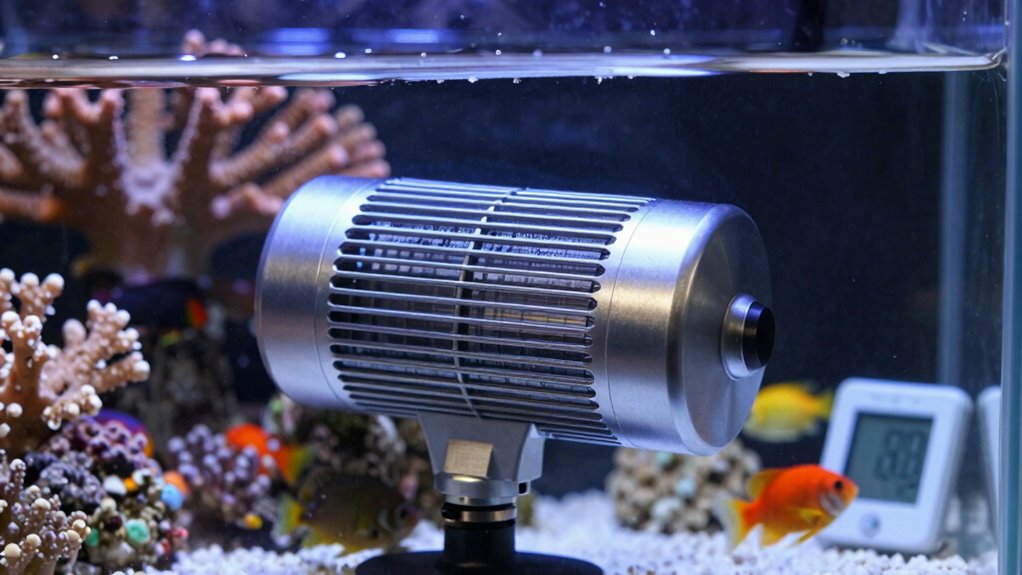
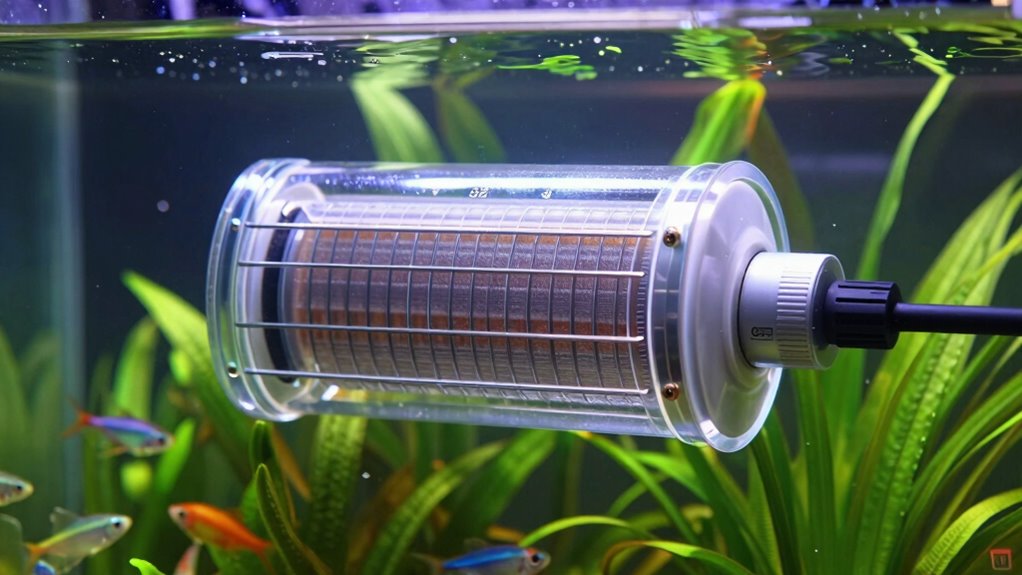
Selecting the right aquarium heater depends on the size and type of your tank, as well as the specific needs of your fish. For small tanks (up to 20 gallons), stick with adjustable submersible heaters that offer precise control and good heater placement. For larger tanks, consider a titanium or canister heater, which provides better energy efficiency and durability. If you keep sensitive species, a fully submersible heater with reliable temperature regulation is essential.
Here are the best types for different tanks:
- Submersible heaters – ideal for small to medium tanks, easy to place and maintain.
- Hang-on-back heaters – suitable for tanks with limited space, with good energy efficiency.
- Inline heaters – perfect for large tanks, offering consistent heating and perfect heater placement.
How to Monitor and Adjust Your Heater for Safety and Efficiency
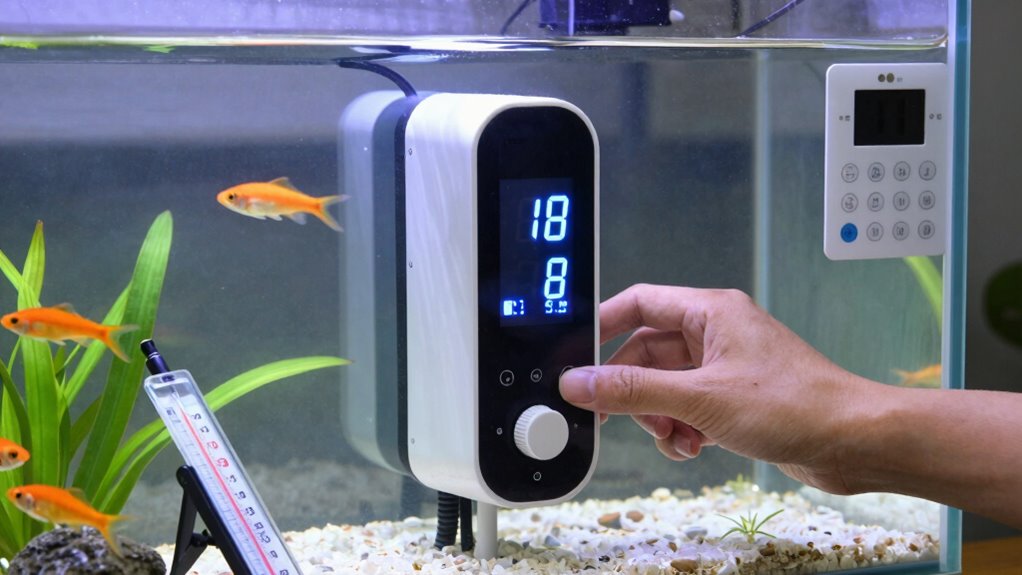
To keep your aquarium safe and running efficiently, you need to regularly check the water temperature. Use reliable thermometers to get accurate readings and make sure they’re placed correctly. If needed, adjust your heater settings to maintain a consistent, healthy environment for your fish.
Regular Temperature Checks
How often should you check your aquarium’s temperature? Regular checks ensure temperature stability and help prevent overheating or chilling. You should monitor your tank’s temperature at least once daily, especially during seasonal changes or after adjusting your heater. Here are three key tips:
- Use a reliable thermometer to verify temperature accuracy.
- Adjust your heater as needed to maintain consistent water temperature.
- Perform heater maintenance periodically to prevent malfunctions.
Consistent temperature checks help spot issues early, avoiding stress or harm to your fish. Proper heater maintenance also prolongs device life and maintains temperature stability. By staying vigilant, you ensure your aquarium remains a safe, healthy environment for your aquatic life.
Use Reliable Thermometers
Ever wonder if your thermometer is giving you accurate readings? Using reliable thermometers is essential for maintaining a safe, stable environment. Choose models with precise temperature sensors designed for aquarium use. Regularly check and compare your thermometer’s reading against a known accurate device to guarantee proper heater calibration. Inaccurate thermometers can lead to overheating or under-heating, risking fish health. Avoid cheap, generic models that may provide false data. Instead, invest in a high-quality, digital thermometer for consistent measurements. By monitoring with a dependable thermometer, you’ll catch temperature fluctuations early and can make necessary adjustments. Accurate readings help you maintain ideal conditions, prevent accidents, and promote a healthy, thriving aquarium environment.
Adjust Heater Settings
Monitoring and adjusting your heater settings regularly is vital for maintaining a safe and efficient aquarium environment. To do this effectively:
- Check heater placement to ensure it’s away from direct water flow and glass edges, preventing uneven heating and damage.
- Verify power cord safety by inspecting for wear or fraying, and keep cords out of reach of curious fish or water splashes.
- Use a reliable thermometer to confirm the water temperature matches your desired setting, adjusting the heater dial gradually to avoid sudden changes.
Consistently monitoring and fine-tuning your heater helps prevent overheating or underheating. Proper placement and power cord safety are essential for avoiding accidents, while regular adjustments ensure your aquatic life stays comfortable and healthy.
Troubleshooting Aquarium Heating Problems: When to Call a Professional
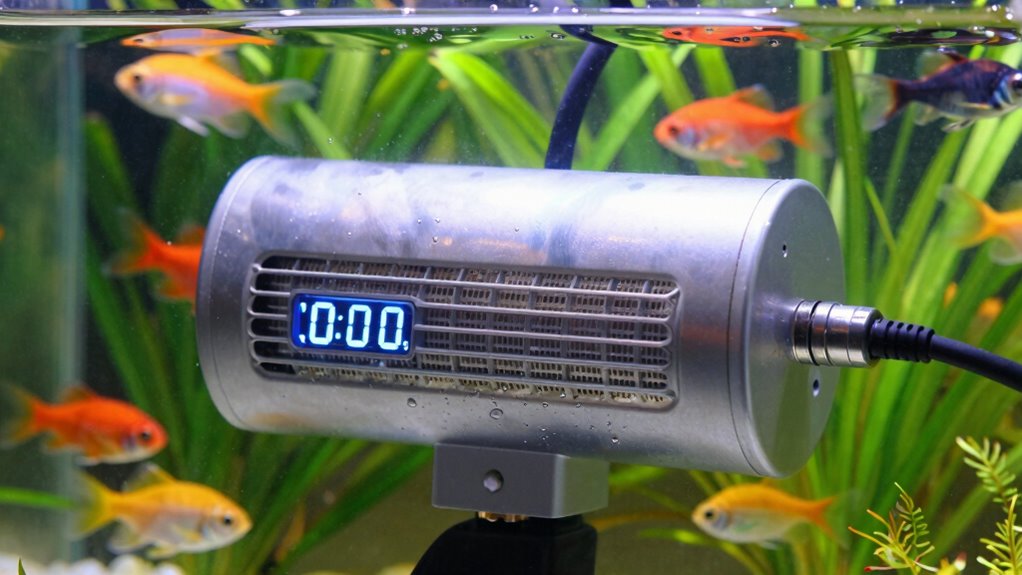
When your aquarium heater isn’t working properly, it’s important to recognize when professional help is needed rather than attempting to fix the issue yourself. If you notice unusual fish behavior, such as erratic swimming or lethargy, it could signal temperature problems that you can’t fix alone. Excessive algae growth may also indicate temperature fluctuations or faulty heating, which can harm your aquarium’s ecosystem. If troubleshooting steps like adjusting the heater or checking the thermostat don’t resolve the problem, it’s time to call a professional. They can diagnose electrical issues, replace faulty components, or recommend a new heater. Ignoring these signs risks stressing your fish or damaging your tank’s environment, so don’t hesitate to seek expert assistance when needed.
Frequently Asked Questions
How Often Should I Replace My Aquarium Heater?
You should replace your aquarium heater every 1 to 2 years to guarantee heater maintenance and temperature stability. Over time, heaters can wear out, leading to inconsistent temperatures that stress your fish. Regularly check for signs of malfunction, such as failure to heat or overheating. If you notice these issues or the heater is more than two years old, it’s time for a replacement to keep your tank environment safe and stable.
Can Multiple Small Heaters Be Better Than One Large One?
Think of multiple small heaters as a team of tiny fireflies lighting up your tank evenly. They can be better than a single large one because they distribute heat more evenly, reducing hotspots, and allow you to place heaters in different areas for ideal heater placement. Plus, they enhance energy efficiency, saving power and preventing overheating. This approach keeps your aquatic world cozy and balanced, like a gentle, all-around glow.
What Are the Signs of a Failing Aquarium Heater?
You’ll notice heater malfunctions if your aquarium experiences inconsistent temperature fluctuations or if the heater stops working altogether. Signs include the water being too cold or too hot despite the heater being on, strange noises, or visible damage like cracks or leaks. If you observe these issues, it’s vital to replace or repair your heater promptly to prevent harm to your aquatic life. Regularly monitor your tank’s temperature to catch problems early.
How Does Room Temperature Affect Aquarium Heating?
Did you know room temperature can fluctuate by as much as 10°F daily? This impacts your aquarium’s heater, making it work harder or less efficiently. Room temperature affects aquarium heating by causing temperature fluctuations that stress fish. To keep things stable, guarantee proper heater placement away from drafts or direct sunlight, and consider a reliable thermostat. This way, your tank maintains a consistent, healthy environment despite external temperature changes.
Are There Eco-Friendly Heater Options Available?
Yes, eco-friendly options are available for aquarium heaters. Look for models with energy-efficient features or those that use alternative energy sources, like solar-powered heaters. These options reduce your carbon footprint and save energy. You can also choose heaters with adjustable thermostats to prevent overheating and conserve power. Investing in eco-friendly heaters helps you maintain a healthy aquatic environment while supporting sustainable energy practices.
Conclusion
Keeping your aquarium’s temperature steady is like tending a delicate flame—you want it to glow just right, not burn out or flicker cold. By understanding wattage, avoiding common pitfalls, and regularly monitoring your heater, you’ll create a cozy haven for your aquatic friends. Think of it as conducting a symphony where every note (or degree) counts. With care and attention, your tank’s warmth will harmonize perfectly, ensuring your underwater world thrives in comforting balance.