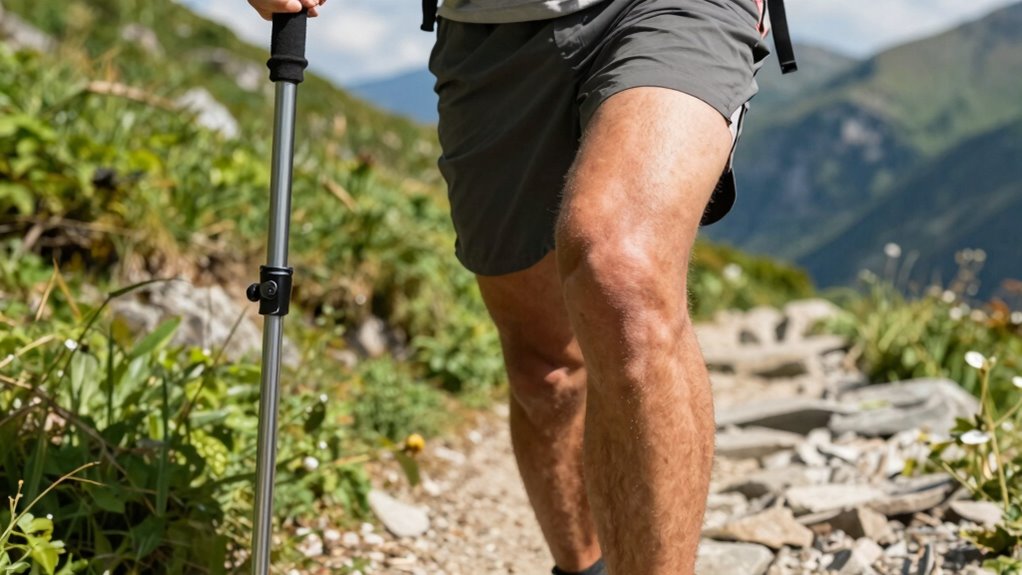

To choose trekking poles that truly reduce knee pain, focus on adjustable poles with shock absorption features, like built-in dampers or suspension systems. Opt for lightweight, durable materials such as aluminum, and select ergonomic handles made of cork or foam for comfort and grip. Properly sizing your poles—elbows at a 90-degree angle—ensures ideal support. Using the correct technique and features is key, so explore more tips to find the perfect pair for your hikes.
Key Takeaways
- Choose poles with adjustable length to maintain proper posture and reduce knee strain on different terrains.
- Opt for models with built-in shock absorption or suspension systems to cushion impact and protect knees.
- Select lightweight materials like aluminum or carbon fiber to minimize arm fatigue and knee stress during prolonged hikes.
- Ensure ergonomic handles with moisture-absorbing materials (cork, foam) for a comfortable grip and controlled movements.
- Use correct technique: plant poles slightly ahead, with elbows at 90°, to evenly distribute weight and lessen knee load.
Why Use Trekking Poles to Prevent Knee Pain
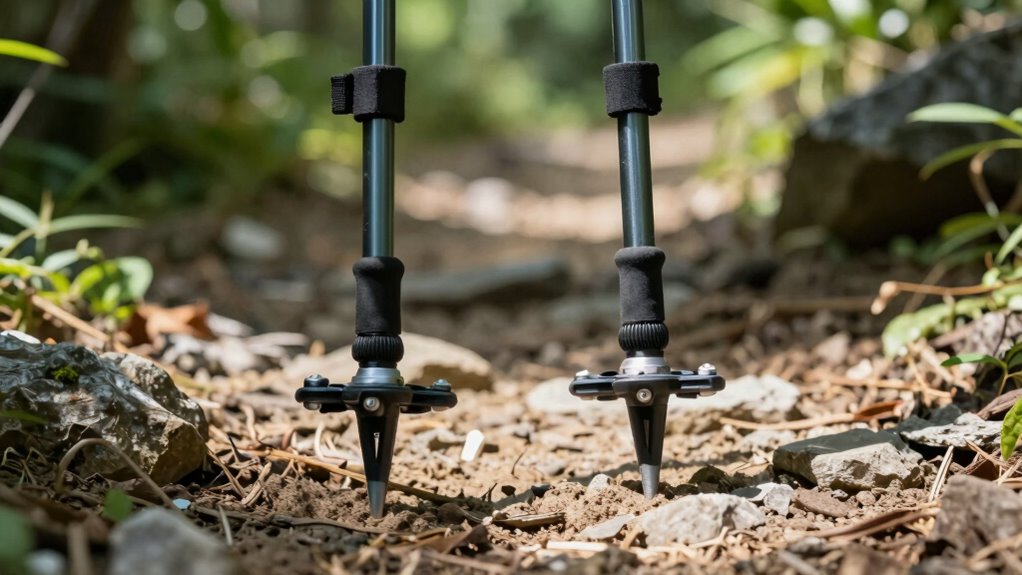
Trekking poles can be a game-changer if you’re looking to prevent knee pain during hikes. They enhance knee injury prevention by distributing weight more evenly across your body, reducing the strain on your knees. When you use trekking poles properly, you gain improved hiking stability, especially on uneven terrain or steep inclines. This added stability helps you maintain better balance, preventing slips or awkward movements that could lead to injury. By engaging your upper body, trekking poles offload some of the impact that would otherwise hit your knees directly. As a result, your knees experience less fatigue and stress over long distances. Additionally, understanding the importance of Free Floating in certain environments can help you adapt your technique for optimal support. Proper technique, including correct pole length and placement, is essential for maximizing benefits and reducing injury risk. Using ergonomically designed handles can further enhance comfort and control during your hike. Incorporating the right technique and equipment can also prevent common hiking injuries and improve overall safety. Moreover, selecting the appropriate trekking pole material can influence durability and weight, further aiding in injury prevention. Overall, incorporating trekking poles into your hike supports your joint health and makes challenging trails more manageable.
Features of Trekking Poles That Help Protect Your Knees

Trekking poles come with features that can considerably protect your knees during hikes. Technologies like shock absorption help reduce impact, while adjustable lengths ensure a comfortable fit. Ergonomic grips keep you steady and minimize strain, making your trek safer and easier. Additionally, some poles incorporate outdoor wisdom to optimize their performance and durability in various terrains. Incorporating pinball machine technology can also inspire innovations in pole design, enhancing stability and shock absorption for outdoor use. Paying attention to ergonomic design can further improve comfort and reduce fatigue during long hikes. Understanding impact mitigation principles can help you select poles that better protect your joints over extended use, especially when considering joint health strategies for active hikers.
Shock Absorption Technology
Because your knees endure significant impact on uneven terrain, shock absorption technology in trekking poles plays a crucial role in protecting them. This shock technology helps dampen the force transmitted to your knees with each step, reducing strain and fatigue. By absorbing some of the impact, these poles provide added knee protection, especially on downhill sections or rough trails. Look for trekking poles with built-in shock absorbers or suspension systems designed to compress under pressure. This feature is particularly beneficial if you have knee issues or want to prevent injury. Effective shock technology not only enhances comfort but also helps you maintain better control and stability during your hike. Additionally, adjustable shock settings can customize the level of absorption to better suit different terrains and personal preferences. Proper shock absorption systems are often engineered with quality materials to ensure durability and long-term performance. Investing in poles with proper shock absorption can make a significant difference in reducing knee pain on challenging terrains, especially when combined with connected fitness technology that tracks your activity and adapts to your needs.
Adjustable Length Features
Adjustable length features in trekking poles are essential for maximizing your hiking experience and protecting your knees. By easily changing the pole length, you can adapt to different terrains and ensure proper posture. An ergonomic design allows you to quickly adjust the poles, maintaining ideal comfort and support. When set correctly, adjustable poles help distribute your weight evenly, reducing strain on your knees and minimizing the risk of injury. You can shorten them for steep ascents or extend them for downhill sections, maintaining a natural arm swing and proper alignment. This flexibility ensures your knees are less stressed throughout your hike, especially on varying terrain. With adjustable length features, you gain more control, comfort, and protection, making your trek safer and more enjoyable.
Ergonomic Grip Design
An ergonomic grip design plays a crucial role in reducing knee strain by providing a comfortable and secure hold on your trekking poles. When your handgrip feels comfortable, you naturally maintain proper form, preventing unnecessary wrist and arm tension that can transfer to your knees. Look for grip materials like foam, cork, or rubber, which offer excellent handgrip comfort and absorb sweat, enhancing control. A well-designed ergonomic grip fits the natural shape of your hand, reducing fatigue during long hikes. This secure hold ensures you can push down or lift with less effort, minimizing impact on your knees. Investing in trekking poles with high-quality grip materials and ergonomic design helps protect your joints and makes your trekking experience more enjoyable.
How to Choose the Right Pole Length for Knee Support
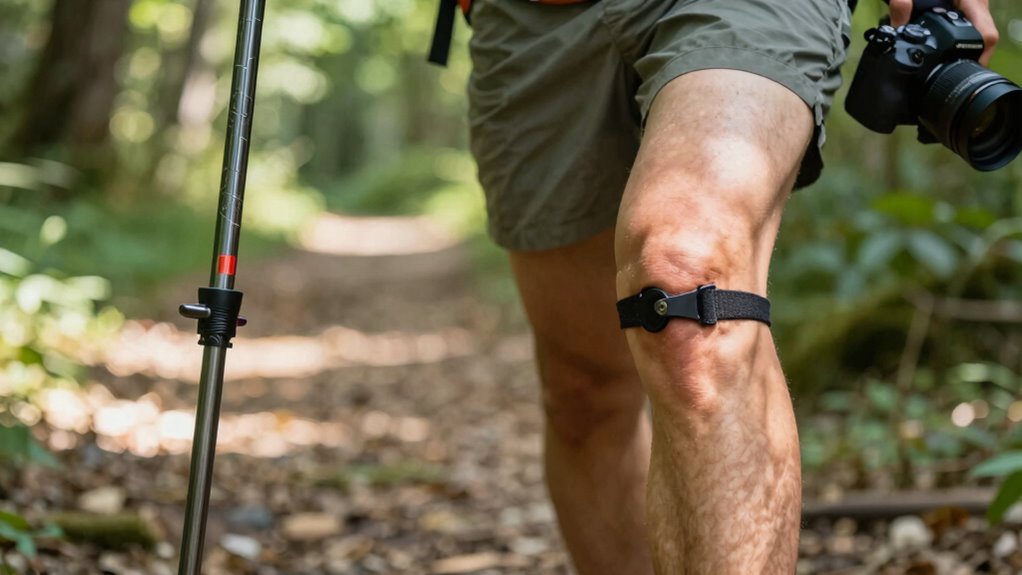
Choosing the right trekking pole length is essential for providing proper knee support and reducing strain during hikes. When selecting your pole length, aim for a position where your elbows are bent at about a 90-degree angle. This ensures ideal knee support and stability. Keep in mind that a too-long pole can cause you to lean forward, increasing knee pressure, while a too-short pole may not provide enough support. To find the perfect fit, consider your height, terrain, and walking style. Adjustable poles are especially useful for customizing length based on different trail conditions. Remember, the right pole length helps maintain proper posture, minimizes knee pain, and enhances overall comfort during your trek. Matching your pole length to your height is essential for optimal ergonomic support, which can significantly reduce knee strain. Additionally, selecting poles with ergonomic design features can further improve comfort and reduce fatigue on long hikes. Properly fitted trekking poles also help prevent injuries by promoting correct walking mechanics. Choosing the appropriate pole grip can further enhance comfort and reduce hand fatigue during extended hikes. Incorporating proper technique while using your poles can maximize these benefits and protect your knees even more.
Why Adjustable Trekking Poles Make a Difference
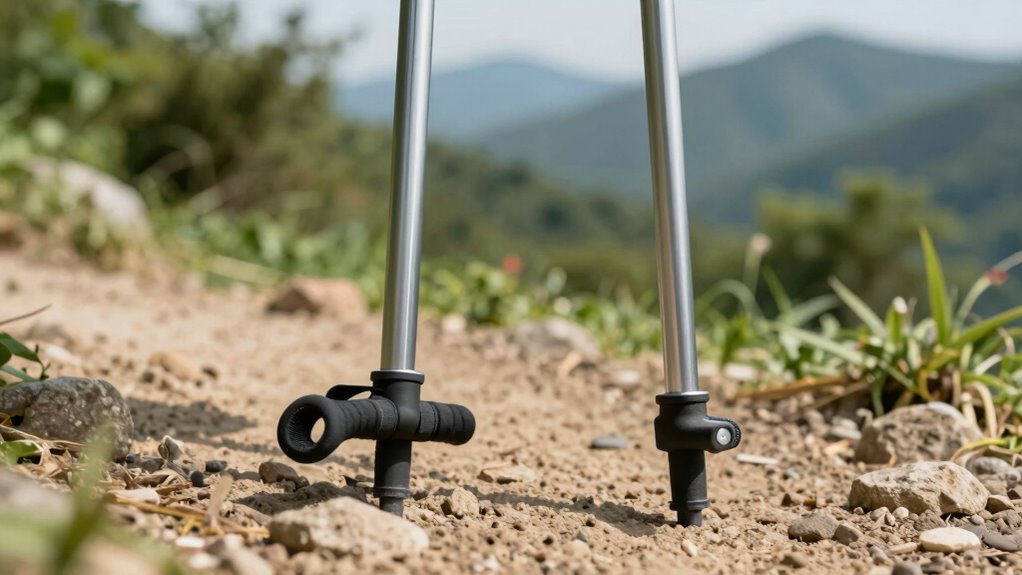
Since trail conditions and terrain can vary greatly, having trekking poles that adjust easily makes a significant difference. Adjustable poles let you customize their length for different sections, ensuring ideal support and reducing strain on your knees. An ergonomic grip keeps your hands comfortable, decreasing fatigue over long hikes. Plus, adjustable poles often feature shock absorption, which helps cushion impact and minimize joint stress, especially on uneven terrain. When you can quickly modify pole length, you maintain proper posture and balance, preventing awkward movements that could lead to knee pain. This flexibility allows you to adapt to changing conditions, making your hike smoother and more comfortable. Incorporating ergonomic design in your trekking poles further enhances comfort and reduces the risk of repetitive strain injuries. Proper stability features in your poles also contribute to better control and safety during your hikes. Additionally, choosing poles with lightweight construction can reduce fatigue and improve maneuverability. Overall, adjustable trekking poles enhance stability, comfort, and knee protection, making them an essential choice for hikers seeking pain relief. Using advanced materials in the construction of these poles can further improve durability and performance.
Which Handle Type Is Best for Knee Comfort?
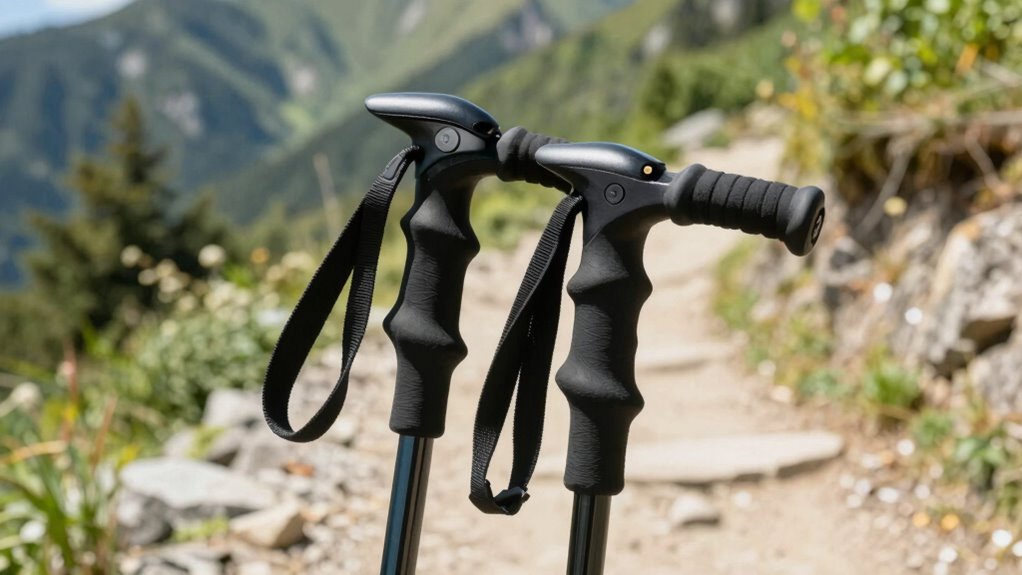
The handle type of your trekking poles directly impacts your comfort and knee health during hikes. Choosing the right handle can reduce strain and improve grip. Consider handle materials like cork, foam, or rubber—each offers different benefits for cushioning and moisture absorption. Grip texture also matters: textured surfaces provide better control, especially on uneven terrain, reducing the need to grip tightly and easing knee stress. Soft, ergonomic handles conform to your hand, preventing fatigue. Look for handles that feel comfortable in your palm and suit your hiking style. A well-chosen handle minimizes unnecessary wrist and knee movement, supporting a natural arm swing. Additionally, understanding handle materials and their properties can help you select the most suitable grip for your needs, ensuring a more comfortable hike. Using ergonomic handle design can further enhance comfort by reducing hand fatigue and promoting proper wrist alignment, which indirectly benefits your knee health. Selecting handles with appropriate grip texture can also improve control and reduce hand fatigue, contributing to overall comfort on long hikes. Focusing on handle shape and size can help prevent hand cramps and improve overall stability, leading to a smoother hiking experience and less knee discomfort.
How to Use Trekking Poles Correctly to Reduce Knee Strain
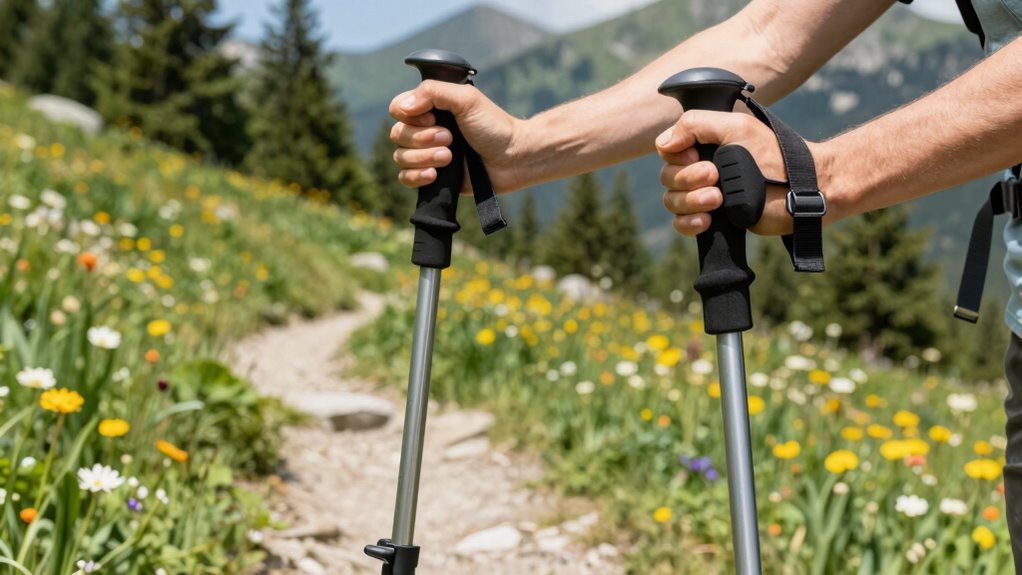
To effectively reduce knee strain while using trekking poles, it’s essential to learn proper technique. Maintain a proper gait by syncing your steps with the poles, ensuring your foot placement is deliberate. Place the poles slightly ahead and angled outward, planting them firmly on the ground with each step. This stabilizes your stride and shifts some weight off your knees. Use a slight bend in your elbows and push back on the poles as you ascend or descend. Keep your movements smooth and controlled to prevent unnecessary stress. Being mindful of your ergonomic posture can further enhance comfort and reduce injury risk. Here’s a quick guide:
| Step Phase | Foot Placement | Pole Position |
|---|---|---|
| Start | Heel strikes first | Poles planted slightly ahead |
| Mid-step | Roll onto midfoot | Push back with arms |
| Finish | Toe pushes off | Lift poles smoothly |
Practicing proper gait and foot placement minimizes knee strain effectively.
Best Materials for Durable Trekking Poles Supporting Knees

Choosing trekking poles made from durable materials guarantees they can withstand rugged terrain and heavy use, providing reliable support for your knees. The best materials balance material durability with handle comfort, ensuring your poles last and feel good in your hands. Aluminum is popular for its strength and lightweight nature, making it resistant to bending or breaking. Carbon fiber offers excellent shock absorption and high strength-to-weight ratio but can be more fragile. Tungsten tips increase durability on tough surfaces, while rubber or cork handles enhance comfort and grip. Additionally, look for poles with reinforced joints or locking mechanisms for extra support. Selecting the right material ensures your trekking poles stand up to demanding hikes while reducing strain on your knees.
Common Mistakes When Choosing Trekking Poles and How to Avoid Them
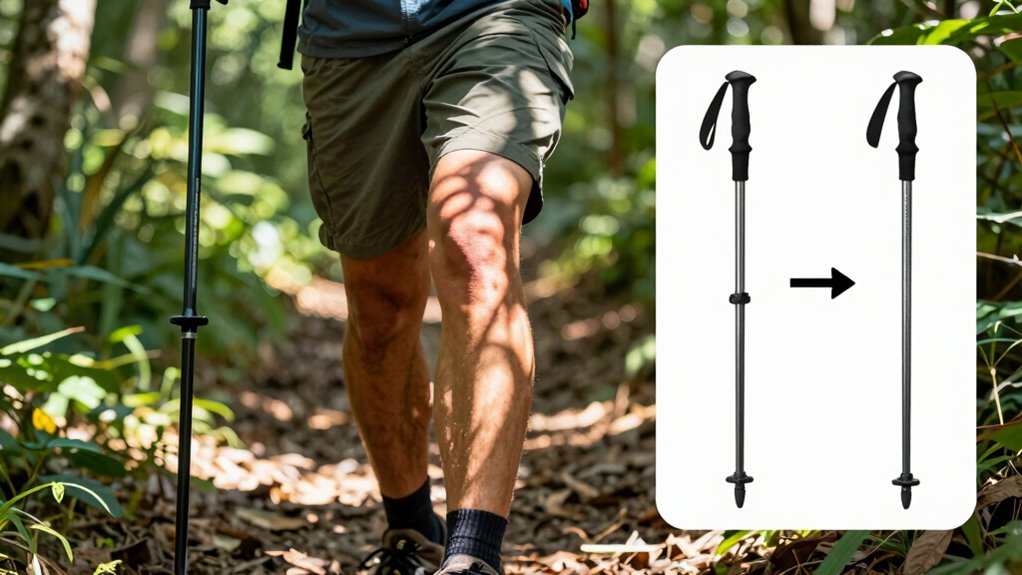
Many hikers make the mistake of selecting trekking poles based solely on price or appearance, without considering how well they suit their specific needs. One common error is ignoring strap placement; poor placement can cause discomfort or reduce control, especially when adjusting your grip. Additionally, overlooking pole weight can lead to fatigue during long hikes—heavier poles tire your arms and knees faster. Opting for cheap, bulky options might seem cost-effective but can compromise stability and support, increasing knee strain. Instead, choose lightweight poles with comfortable, adjustable straps that fit well and distribute pressure evenly. Avoid sacrificing quality for appearance or price; well-chosen poles will improve your hike and help reduce knee pain, making your trek safer and more enjoyable.
Finding the Best Trekking Poles for Your Hiking Needs
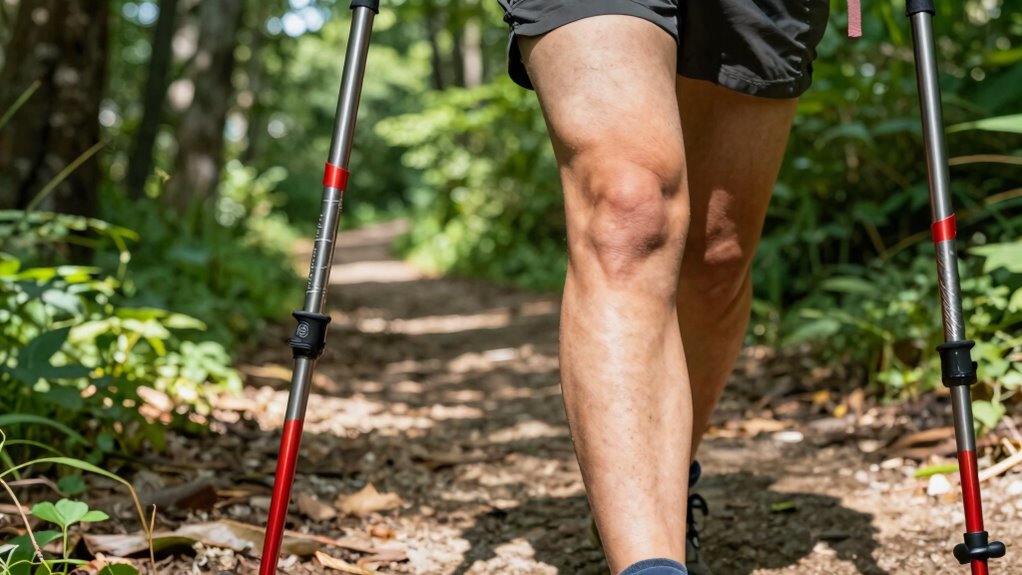
Selecting the right trekking poles depends on understanding your specific hiking needs and terrain. To find the best pair, consider factors like weight, adjustability, and grip comfort. Think about how often you’ll hike and the terrain’s difficulty. Confirm your chosen poles are compatible with your backpack straps for easy access. Look for features that make Trekking pole maintenance simple, such as rust-resistant materials and quick-lock mechanisms. If you hike on uneven trails, shock absorption can reduce knee strain. For longer hikes, lightweight materials like carbon fiber help prevent fatigue. Also, check if the poles fit well with your backpack, so they don’t interfere with your gear. Making an informed choice ensures you get a pair that supports your knees and enhances your hiking experience.
Frequently Asked Questions
Can Trekking Poles Prevent All Types of Knee Injuries?
Trekking poles can markedly aid in knee injury prevention, especially on uneven terrain, but they won’t prevent all knee injuries. You might still experience strains or ligament issues beyond what poles can address. Remember, trekking poles have limitations—they help reduce impact but can’t eliminate every risk. To protect your knees fully, use proper technique, strengthen supporting muscles, and avoid overexertion alongside using the right trekking poles.
Are There Specific Brands Recommended for Knee-Friendly Trekking Poles?
You should consider brands like Black Diamond, Leki, and Cascade Mountain Tech, which many users review positively for knee-friendly features. Check user reviews to see which models offer adjustable lengths, shock absorption, and ergonomic grips, as these factors can help reduce knee strain. Prioritize lightweight, durable options, and guarantee the poles suit your height and terrain. Picking the right brand based on reviews helps you find a pair that genuinely supports knee health.
How Often Should I Replace My Trekking Poles for Optimal Knee Support?
You should replace your trekking poles when they show signs of significant wear or damage—think of it as preventing a minor hiccup from turning into a major knee disaster. Follow a maintenance schedule of inspecting them after every few hikes, and typically, replacement frequency ranges from one to three years depending on usage. Staying proactive guarantees your poles continue supporting your knees effectively, avoiding unnecessary strain or injury.
Do Trekking Poles Help With Knee Pain During Downhill Hikes?
Yes, trekking poles help with knee pain during downhill hikes by providing better downhill stability and reducing joint pressure. They allow you to distribute weight more evenly and take some strain off your knees, especially on steep descents. By planting poles firmly, you maintain balance and control, which minimizes the impact on your joints. Using poles correctly can markedly improve comfort and prevent knee discomfort during challenging downhill sections.
What Additional Gear Can Enhance Knee Protection When Using Trekking Poles?
Adding shock absorption features to your trekking poles can substantially protect your knees, as they cushion impacts during rough terrain. Ergonomic grips also help by reducing strain and improving control, preventing unnecessary stress on your joints. Investing in shock-absorbing tips or pads and choosing poles with ergonomic grips enhances your knee protection, especially on downhill hikes. These upgrades work together to minimize pain and boost comfort, making your hikes safer and more enjoyable.
Conclusion
Choosing the right trekking poles can make all the difference in protecting your knees and enhancing your hike. By selecting the proper length, handle, and material, you’ll reduce strain and prevent pain on tough trails. Remember, isn’t your comfort and health worth the investment? With the right pair, every step becomes easier and more enjoyable. So, are you ready to find the trekking poles that’ll support you on every adventure?