Choosing between faucet, under-sink, and countertop water filters depends on your household needs and preferences. Faucet filters are quick and easy to install but have limited capacity. Under-sink systems provide higher filtration power and longer-lasting filters, but may require professional setup. Countertop units are portable and simple to use but might have lower capacity. Each offers unique advantages and limitations—continue exploring to find the best fit for your kitchen.
Key Takeaways
- Faucet filters are quick, easy to install, and cost-effective but have limited capacity and filtration efficiency.
- Under-sink systems offer higher capacity, multi-stage filtration, and better removal of heavy metals and contaminants.
- Countertop units are portable, simple to set up, and ideal for basic filtration needs with lower capacity.
- Installation complexity varies: faucet filters are easiest, under-sink may require plumbing skills, countertop units are most straightforward.
- Consider water quality, filtration needs, space, and maintenance when choosing between faucet, under-sink, or countertop filters.
Which Type of Kitchen Sink Water Filter Is Right for You?
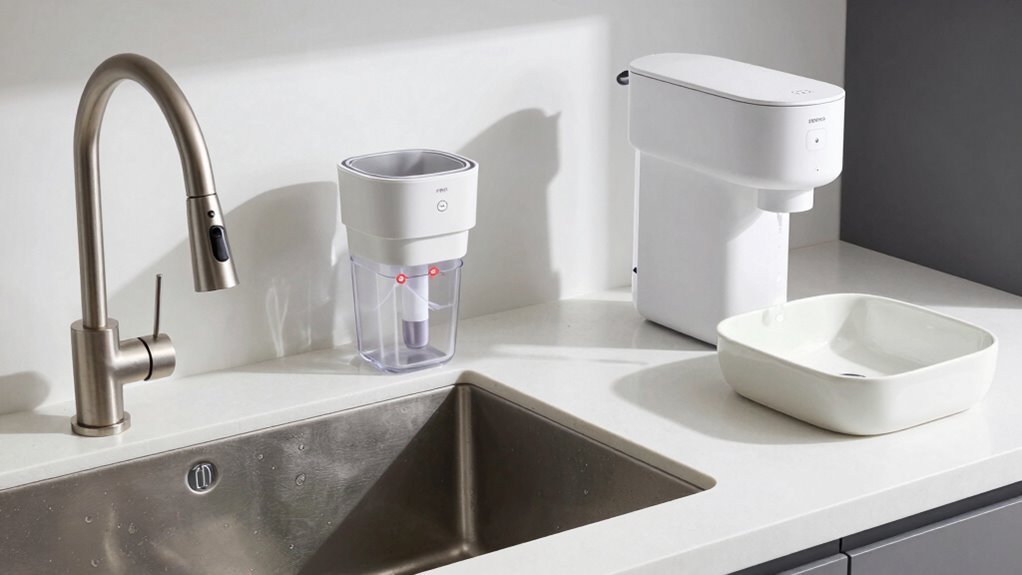
Choosing the right kitchen sink water filter depends on your specific needs and water quality concerns. Consider the filter material, as it determines what contaminants are removed—carbon filters excel at reducing chlorine and odors, while reverse osmosis filters tackle heavy metals and impurities. Water flow is also essential; some filters may slow down water pressure, so you’ll want one that provides adequate flow for everyday use. If you need quick access to filtered water, a faucet-mounted filter might be best. For those seeking extensive purification, under-sink systems offer higher capacity and better filtration stages. By understanding your water quality and how much water you use daily, you can select a filter that balances effective filtration with ideal water flow, ensuring clean, fresh water whenever you need it. European cloud innovation is also contributing to the development of advanced filtration technologies that promote sustainability and efficiency. Additionally, evaluating filtration technology can help you choose a system that aligns with your environmental and health priorities, especially as new innovations make these systems more energy-efficient.
How Do Faucet, Under-Sink, and Countertop Water Filters Work?
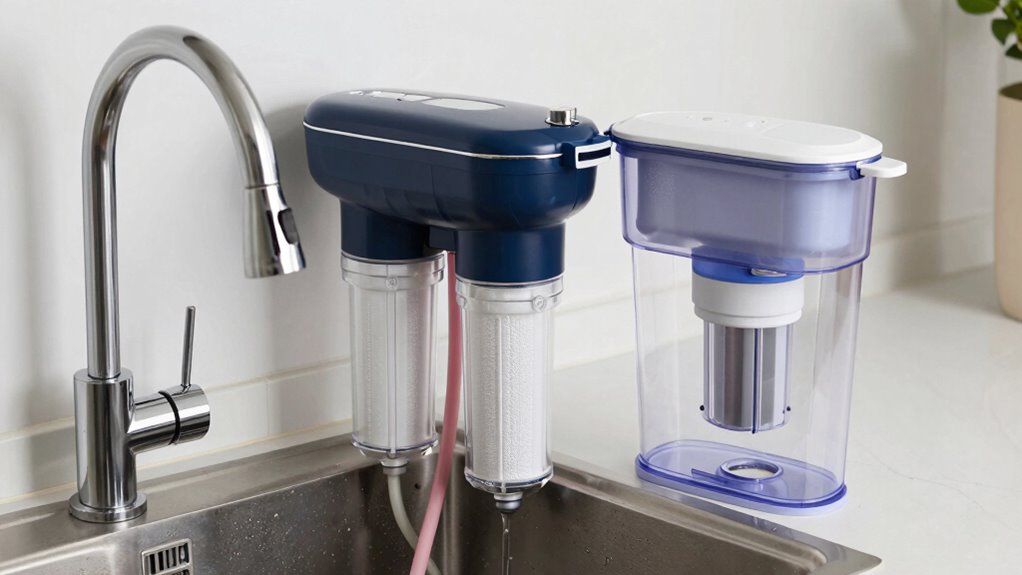
Faucet, under-sink, and countertop water filters all work by passing tap water through specific filtration media to remove contaminants. The filtration mechanisms vary depending on the type but typically include activated carbon, reverse osmosis membranes, or ion exchange resins. Activated carbon effectively reduces chlorine, sediment, and organic compounds, improving taste and odor. Reverse osmosis systems use a semi-permeable membrane to eliminate dissolved solids, heavy metals, and other impurities, providing high-level water purification. Under-sink filters often combine multiple filtration methods to target a broad range of contaminants. Countertop units rely on simple filtration mechanisms that are easy to install and maintain. Overall, these systems ensure cleaner, safer water by physically trapping or chemically transforming harmful substances through their filtration mechanisms.
What Should You Consider When Choosing a Water Filter?
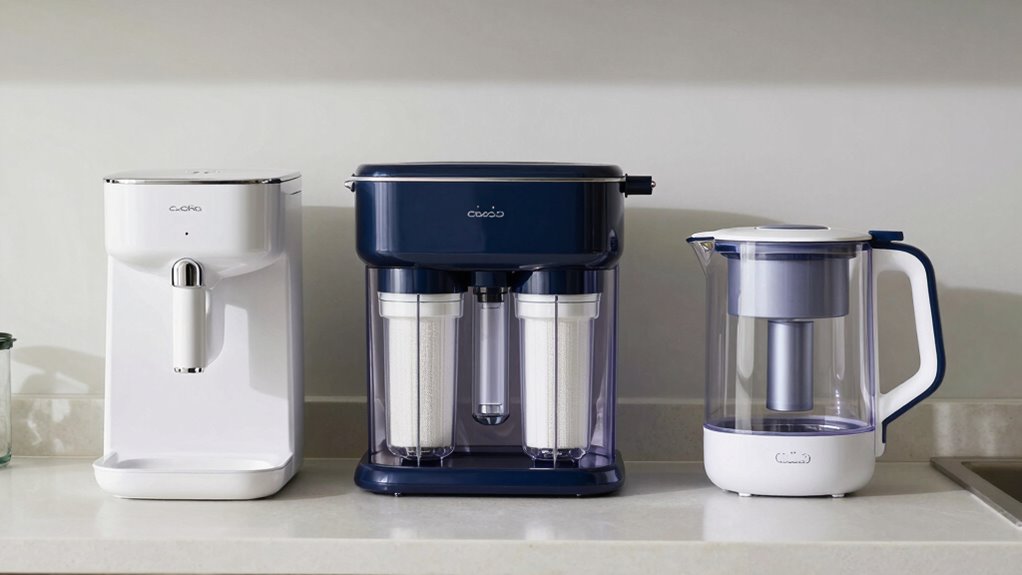
When choosing a water filter, you need to consider how effective it is at removing contaminants and which type best suits your needs. Think about the installation process and how much effort maintenance will require over time. Also, weigh the costs upfront and for replacements to find a solution that fits your budget. Additionally, understanding the emerging trends in nanotechnology can help you select filters that utilize the latest advancements for improved filtration performance. Recognizing the importance of filter technology can guide you toward options that offer better precision in contaminant removal.
Filter Effectiveness and Types
Understanding the effectiveness of different water filters is essential to ensuring you get clean, safe water for your home. Filtration technology varies widely, from activated carbon to reverse osmosis, each targeting specific contaminants. To choose the right filter, consider your water quality testing results, which reveal the pollutants in your water supply. For example, if your water has high levels of lead or pesticides, you’ll need a filter designed to remove those substances. Some filters excel at reducing chlorine and sediment, improving taste and clarity, while others focus on removing bacteria or heavy metals. Knowing the capabilities of each filter type helps you select one that effectively addresses your specific needs, ensuring safer, better-tasting water for your household.
Installation and Maintenance Needs
Choosing a water filter involves more than just considering its effectiveness; you also need to think about installation and ongoing maintenance. Some filters, like faucet-mounted options, are quick to install and require minimal effort, while under-sink models might need professional setup. Consider the filter lifespan, which affects how often you’ll need to replace cartridges. A longer lifespan reduces replacement frequency but may come with higher upfront costs. Establishing a maintenance schedule is essential to guarantee your filter continues performing at its best. Regular checks and timely replacements prevent buildup and maintain water quality. Make sure you’re comfortable with the installation process and maintenance tasks involved, so you won’t be caught off guard or neglect your filter’s upkeep. This way, your water stays clean and safe over time. Understanding consumer preferences can help you choose a filter that best fits your lifestyle and needs. Additionally, considering local water quality can influence which type of filter will be most effective for your specific situation. Being aware of filter lifespan and how it impacts your long-term costs can also assist in making an informed decision. To further ensure optimal performance, water treatment methods tailored to your area can enhance your overall water quality. Moreover, assessing the total-cost of ownership helps you make a more cost-effective choice over the lifetime of the filter.
Cost and Replacement Frequency
Cost is a major factor to contemplate because water filters vary widely in price, from affordable models to more expensive systems with advanced features. When evaluating options, consider the filter lifespan, which determines how often you’ll need to replace the unit or its components. Longer-lasting filters may have higher upfront costs but can reduce overall replacement expenses over time. Keep in mind that replacement costs can add up quickly, especially if the filter needs frequent changing. Some models require regular cartridge swaps, while others feature more durable filters with extended lifespans. Balancing initial investment with ongoing expenses helps ensure you select a system that fits your budget and provides consistent water quality without excessive replacement costs. Additionally, understanding the concept of Free Floating filtration can help you choose a system that effectively maintains water purity with minimal maintenance. Recognizing the total cost of ownership is essential when comparing different water filter options to avoid unexpected expenses down the line.
Advantages and Disadvantages of Faucet Water Filters
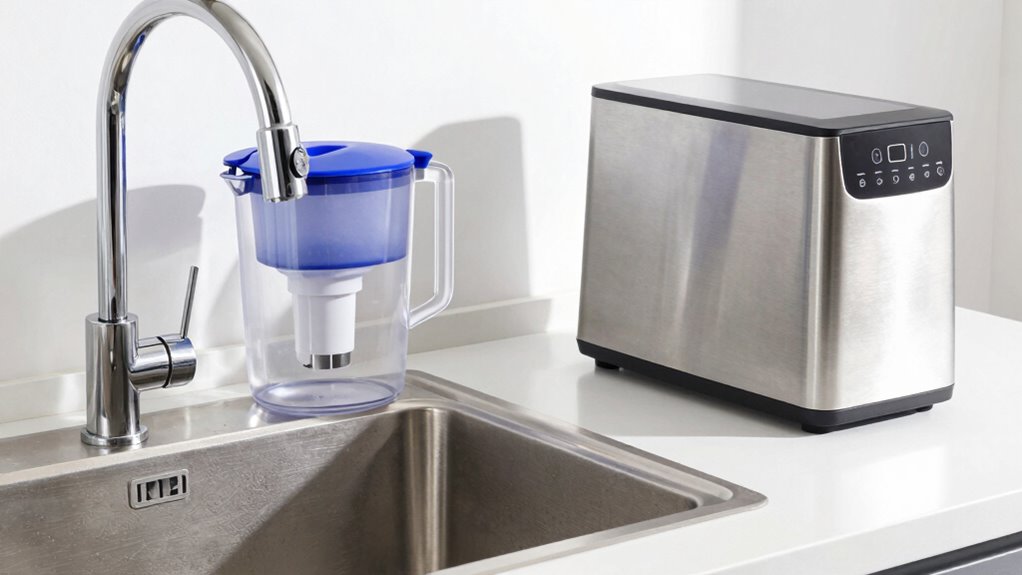
Faucet water filters are easy to install, so you can set them up without much hassle. They’re a cost-effective way to improve your water quality, saving you money over bottled options. However, keep in mind their filtration capacity is limited, which might require more frequent replacements. Additionally, understanding filtration efficiency can help you determine whether a faucet filter meets your specific water quality needs, especially since some models are better suited for removing certain contaminants. Being aware of the types of contaminants a filter can remove is essential for choosing the right model for your home. Considering modern filtration technology can further enhance your water purification experience by providing more comprehensive removal of impurities. Moreover, evaluating the filter lifespan helps ensure you select a model that offers durability and consistent performance over time.
Easy Installation Process
Installing a faucet water filter is generally straightforward, making it a convenient option for quick access to cleaner water. Most units attach directly to your existing faucet, so you won’t need extensive tools or modifications. Before starting, check plumbing compatibility to guarantee the filter fits your faucet type. Once installed, you’ll find that replacing the filter is simple, often just a quick twist or pull. Keep in mind, the efficiency of installation depends on your faucet’s design. Here are some key points:
- Compatibility issues may require adapters
- Clear instructions simplify setup
- Minimal tools needed for installation
- Regular filter replacement maintains performance
Cost-Effective Solution
Choosing a water filter that attaches directly to your faucet can be an economical way to improve your drinking water without breaking the bank. These filters often come as budget options, making them accessible for many households. Plus, most models feature DIY installation, so you won’t need to pay for professional help or tools. They’re typically affordable upfront, and replacements are usually inexpensive. Additionally, some models incorporate filtration technology that effectively removes common contaminants like chlorine and sediments. These filters are also designed for easy maintenance, which helps ensure consistent performance over time. Moreover, many faucet filters utilize trusted brands known for quality and reliability, giving consumers added confidence in their purchase. However, keep in mind that while they’re cost-effective initially, some models may need frequent filter changes, which can add up over time. Still, for those prioritizing affordability and ease of setup, faucet water filters provide a practical solution. They allow you to enjoy clean water with minimal investment, making them a popular choice for budget-conscious consumers. Additionally, clutter-free spaces can make maintenance easier, ensuring your filter stays in good condition.
Limited Filtration Capacity
While faucet water filters are easy to use and affordable, they often have limited filtration capacity, which can restrict the types of contaminants they remove. This means you might not get thorough purification, especially if your water has multiple pollutants. The filtration capacity is usually designed for small volumes, so heavy use can quickly deplete the filter’s effectiveness. Additionally, a lower water flow rate can result in longer filtering times, which may be inconvenient. Here are some key points to consider:
- Limited capacity means frequent filter replacements
- Not suitable for large families or high water demand
- May not remove all contaminants, especially heavy metals or chemicals
- Water flow rate can decrease as the filter gets clogged
Understanding the filtration capacity of your water filter is essential to ensure it meets your household’s needs.
Being aware of maintenance requirements helps prolong the lifespan and effectiveness of your filter.
Choosing a filter with appropriate filter lifespan can help avoid unexpected replacements and maintain water quality.
Additionally, considering the filtering ability of the device ensures it aligns with your water quality concerns and household needs.
Pros and Cons of Under-Sink Water Filtration Systems
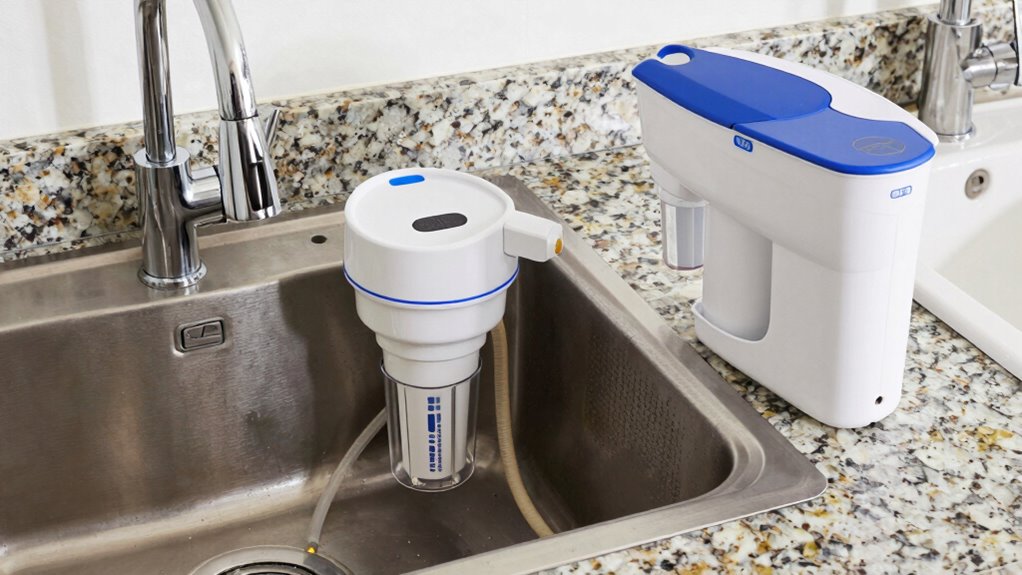
Under-sink water filtration systems offer a convenient way to improve water quality directly at the point of use, but they also come with some drawbacks you should consider. One key factor is their filtration capacity, which varies depending on the model and filter type. Larger capacity filters last longer but can be more expensive. Installation complexity can also be a challenge; some systems require plumbing skills or professional help, adding to the overall cost.
| Pros | Cons |
|---|---|
| Better filtration capacity | Installation can be complex |
| Space-efficient design | Higher upfront costs |
| Hidden installation for aesthetics | Maintenance and filter replacement can be costly |
Are Countertop Water Filters a Good Choice for Your Kitchen?
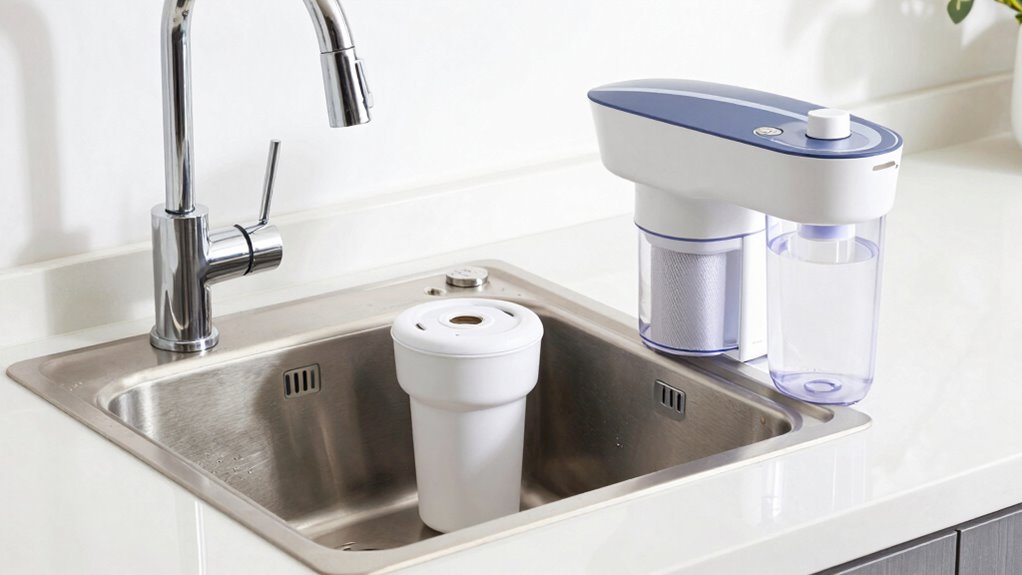
Countertop water filters are an excellent option if you want an easy, affordable way to improve your tap water without the hassle of complex installation. They use advanced filtration technology to effectively remove contaminants and improve water quality. These devices are compact, portable, and simple to operate, making them perfect for quick upgrades. Plus, they typically require minimal maintenance and don’t need plumbing modifications.
Consider these benefits:
- Easy installation without tools or professional help
- Effective water purification for everyday use
- Compatible with most standard faucets
- Cost-efficient and space-saving design
Countertop filters provide reliable filtration technology that ensures cleaner, better-tasting water. If convenience and affordability are your priorities, they’re a smart choice for your kitchen.
How to Install and Maintain Your Kitchen Water Filter
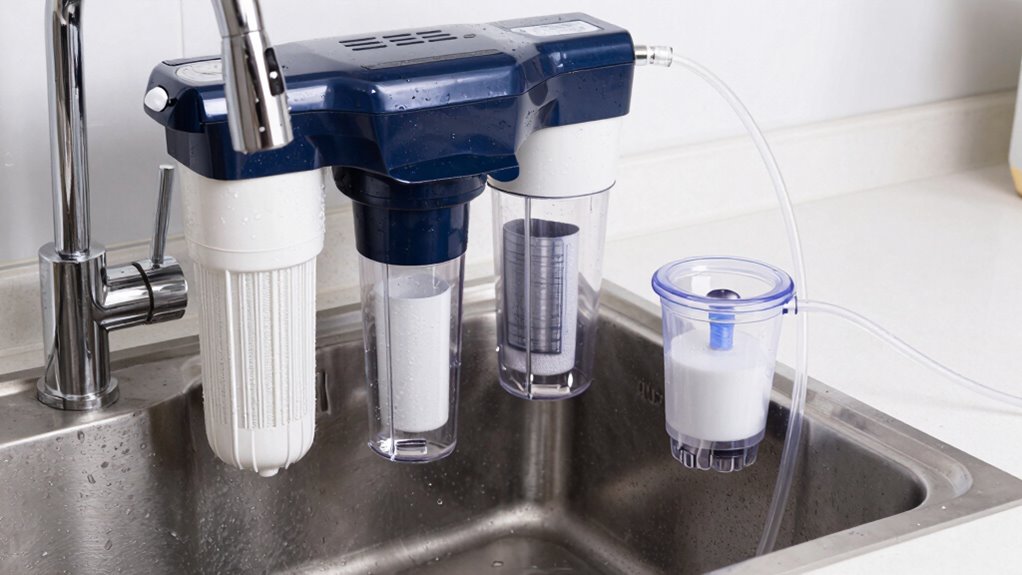
Installing your kitchen water filter is straightforward and can be done in just a few simple steps. First, turn off the water supply and gather your installation tools, including wrenches and Teflon tape. Check your water pressure; high pressure may require additional adjustments or a pressure regulator. Attach the filter to your faucet or under-sink connection, ensuring all fittings are tight to prevent leaks. Follow the manufacturer’s instructions for proper setup. Once installed, turn the water back on and check for leaks. To maintain your filter, replace cartridges regularly as recommended. Keep an eye on water pressure, as a drop may indicate the filter needs servicing. Proper installation and upkeep ensure your filter functions efficiently and provides clean, fresh water.
Frequently Asked Questions
How Long Do Kitchen Sink Water Filters Typically Last Before Replacement?
Your kitchen sink water filter typically lasts between 2 to 6 months before needing replacement. Keep an eye on filter lifespan and replacement indicators like reduced water flow or taste changes. Regularly checking these signs guarantees your filter functions effectively. Remember, the actual lifespan varies based on usage, water quality, and filter type, so staying attentive helps maintain clean, fresh-tasting water.
Can These Filters Remove Specific Contaminants Like Lead or Chlorine?
Yes, your kitchen sink water filter can remove specific contaminants like lead and chlorine. Its filter effectiveness depends on the type of filter and its design, which target particular impurities. For maximum contaminant removal, choose a filter certified for lead and chlorine reduction. Regularly replacing the filter ensures it maintains its ability to effectively remove these contaminants, keeping your water safe and clean.
Are There Any Health Risks Associated With Using Water Filters?
Think of your water filter as a trusted guardian, protecting your health safety. While most filters are safe and effective, poor maintenance or using the wrong type can pose health risks, like bacterial growth or filter breakdown. To guarantee filter effectiveness, regularly change filters and choose reputable brands. Proper care minimizes health risks, making your water safer and your guardian reliable. Always follow manufacturer instructions for ideal safety.
How Do I Know When My Filter Needs Replacement or Maintenance?
You’ll know it’s time to replace or maintain your filter when you notice changes in water flow or taste, which are clear maintenance indicators. Check your filter’s lifespan—most filters last 3 to 6 months—and follow the manufacturer’s recommendations. Regularly inspect for leaks or reduced pressure, and replace the filter according to these signs to guarantee peak water quality and filter performance.
Do All Water Filters Affect the Taste and Odor of Tap Water?
A spoonful of sugar helps the medicine go down, and good filters do the same for your tap water. Not all water filters affect taste and odor, but many improve taste and reduce odors by removing impurities. If you notice a metallic or foul smell, your filter might need maintenance. Using a quality filter can enhance taste improvement and odor reduction, making your water more enjoyable and safe to drink.
Conclusion
Choosing the right kitchen sink water filter depends on your needs and setup. For example, if you prioritize convenience, a faucet filter might suit you best, but for better filtration and capacity, an under-sink system could be ideal. Consider your space, budget, and water quality concerns. By evaluating these factors, you can select a filter that guarantees clean, safe water—just like Sarah did when she upgraded to an under-sink filter and noticed a clear difference in taste and clarity.