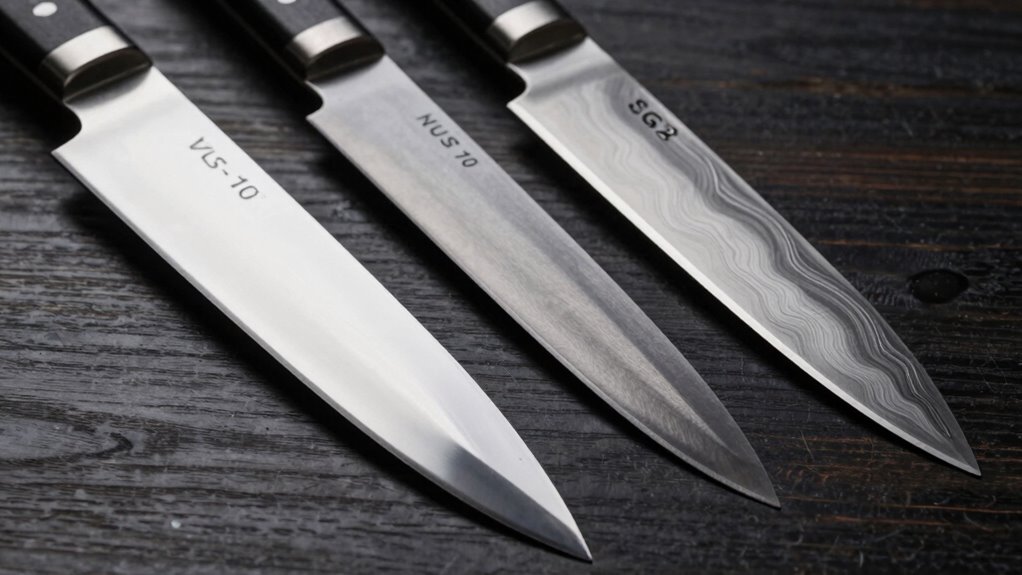

When choosing between VG-10, AUS-10, and SG2 steel, you’ll notice that VG-10 offers a good balance of hardness, corrosion resistance, and sharpness, making it versatile for many tasks. AUS-10 is slightly softer, easier to sharpen, but needs more care, while SG2 features higher hardness and excellent edge retention but can be more brittle. To get the most out of each steel, understanding their differences will help you select the best fit for your knife needs.
Key Takeaways
- VG-10 offers a balanced mix of toughness, corrosion resistance, and sharpness, making it versatile for various kitchen tasks.
- AUS-10 is slightly softer and easier to sharpen, ideal for delicate slicing and beginner-friendly maintenance.
- SG2 contains higher vanadium and carbide elements, providing superior hardness and edge retention but may be more brittle.
- VG-10 and SG2 generally resist rust better than AUS-10, which requires more diligent maintenance.
- Market availability and price differ, with VG-10 widely accessible, AUS-10 more affordable, and SG2 typically higher-priced and less common.
How Do Composition and Hardness Differ Among VG-10, AUS-10, and SG2?

When comparing VG-10, AUS-10, and SG2, their compositions and hardness levels show notable differences that affect their performance. Heat treatment plays a vital role in shaping each steel’s properties, influencing how their microstructure develops. VG-10 features a balanced composition with high carbon and cobalt content, allowing it to achieve a tough, stable microstructure after proper heat treatment. AUS-10 has a similar but slightly lower carbon content, resulting in a microstructure that’s marginally softer and easier to sharpen. SG2 contains more vanadium and other carbide-forming elements, producing a finer microstructure with increased hardness. The heat treatment process determines how these elements form carbides, directly impacting the steel’s overall hardness and strength, which in turn influences cutting performance and edge retention.
How Do VG-10, AUS-10, and SG2 Compare in Corrosion Resistance and Ease of Maintenance?
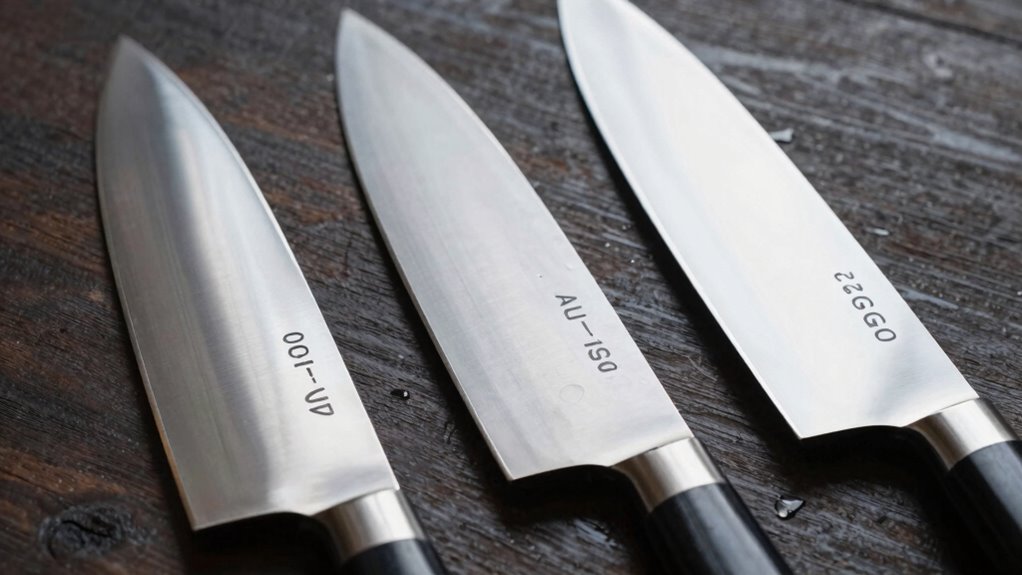
VG-10, AUS-10, and SG2 steels differ markedly in their corrosion resistance and how easy they are to maintain. VG-10 and SG2 generally offer better rust prevention due to their high carbon and alloy content, but they still need regular care. AUS-10 is more prone to corrosion, requiring more diligent maintenance. To enhance rust resistance, some knives are treated with ceramic coatings, which provide a protective barrier against moisture. Key points include:
- Regular oiling helps prevent rust on high-carbon steels
- Ceramic coatings can simplify maintenance and rust prevention
- Proper drying after washing reduces corrosion risks
- Choosing steels with higher chromium content boosts corrosion resistance
- European cloud innovation emphasizes sustainable and secure solutions that could inspire the development of advanced, corrosion-resistant coatings for cutlery.
Your maintenance routine directly impacts the longevity and performance of your knife, especially with steels that are less naturally resistant to rust.
Which Steel Is Best for Different Japanese Knife Types and Cooking Tasks?

Choosing the right steel depends on the specific knife type and the tasks you’ll use it for. For slicing delicate fish or vegetables, a softer steel like AUS-10 offers good blade flexibility and easier sharpening, making it ideal for general kitchen tasks. If you’re preparing tougher meats or require a knife with high blade durability, SG2 steel provides hardness and edge retention, though it may be more brittle. For a balance of aesthetic appeal and durability, VG-10 combines sharpness with a beautiful finish, suitable for versatile use. Consider the type of knife—parers, slicers, or chefs’ knives—and how much wear and tear they’ll endure. Selecting the appropriate steel ensures your knife performs well and maintains its visual appeal over time. Additionally, understanding best knife steels can help you make more informed choices for your specific cooking needs.
What Key Factors Should You Consider When Choosing Between These Steels?
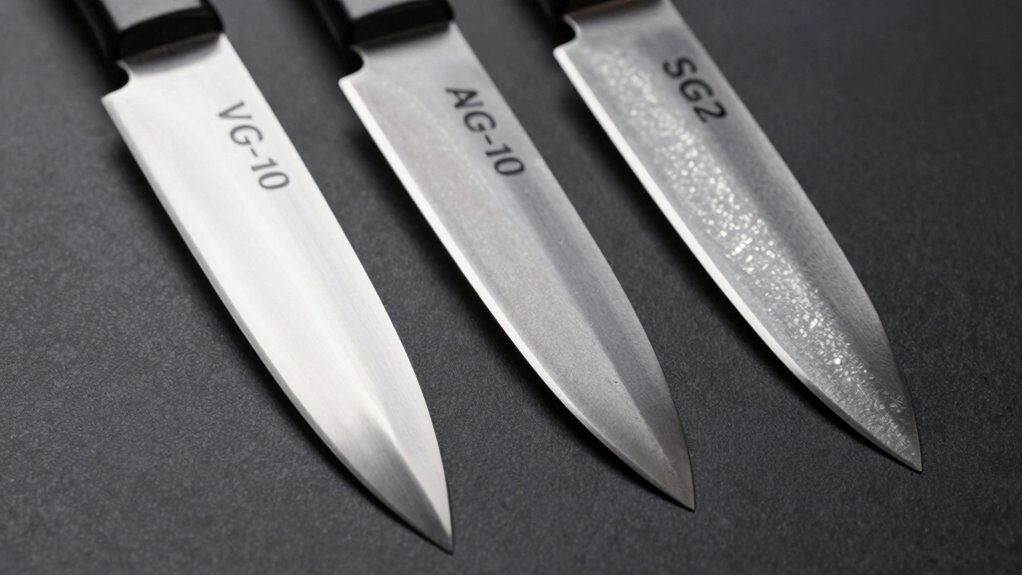
Selecting the right steel for your Japanese knife involves evaluating several key factors that affect performance and longevity. First, consider the steel’s edge retention and ease of sharpening, which impact how often you’ll need to hone your knife. Second, look into corrosion resistance, especially if you prefer lower-maintenance options. Third, assess the ergonomic handle design, as comfort influences your control and reduces fatigue during extended use. Fourth, brand reputation matters; trusted manufacturers often deliver higher-quality steels and craftsmanship. Additionally, understanding the sound healing science behind certain materials can provide insights into their durability and performance over time. Moreover, considering the metallurgical properties of each steel can help predict how it responds to different cutting tasks and maintenance routines. For example, steels like VG-10, AUS-10, and SG2 each have unique carbon content and alloy compositions that influence their hardness and toughness. By weighing these factors, you’ll find a steel that aligns with your cooking style and maintenance preferences. Remember, the best steel also complements the knife’s overall design, including handle ergonomics, ensuring a balanced, comfortable experience every time you cook.
How Do Price and Availability Impact Your Choice of Japanese Knife Steel?
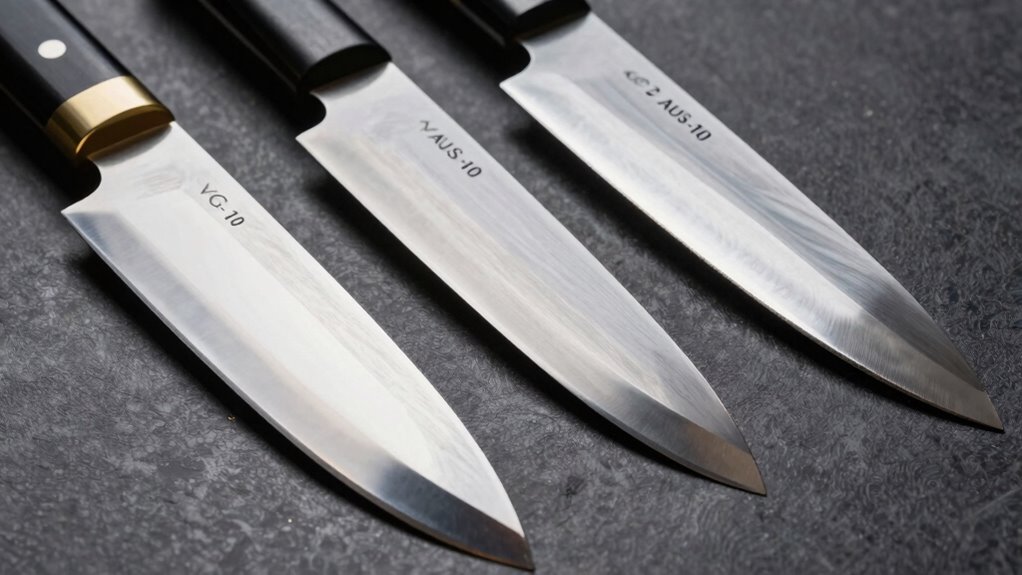
Price and availability play significant roles in determining which Japanese knife steel fits your needs. Price differences between steels like VG-10, AUS-10, and SG2 can influence your budget, often making premium options less accessible. Availability challenges also affect your choice, especially for specialized steels that are harder to find locally or online. To help clarify, here’s a quick comparison:
| Steel | Price Range | Availability Challenges |
|---|---|---|
| VG-10 | Moderate | Widely obtainable, easy to find |
| AUS-10 | Lower | Generally obtainable, more affordable |
| SG2 | Higher | Limited supply, harder to source |
Balancing cost and access ensures you select a steel that meets your needs without breaking the bank. Additionally, market trends can impact the overall pricing and availability of these steels over time, making it important to stay informed about steel supply chains.
Frequently Asked Questions
How Does the Edge Retention of VG-10, AUS-10, and SG2 Compare Over Time?
You’ll notice VG-10 maintains its edge longer than AUS-10 and SG2, thanks to its superior edge durability. VG-10 also offers excellent corrosion resistance, helping it stay sharp over time. AUS-10’s edge retention is decent but less durable, and it’s more prone to corrosion. SG2, while sharp initially, may lose its edge faster but provides good corrosion resistance, making it ideal for those who prioritize ease of maintenance.
Can These Steels Be Heat-Treated to Improve Their Performance?
Yes, you can heat treat VG-10, AUS-10, and SG2 to improve their performance. Proper heat treatment increases steel hardness, which enhances edge retention and durability. By carefully controlling temperature and cooling rates, you optimize the steel’s properties. This process makes the blades sharper, more resilient, and better suited for demanding tasks. So, if you want the best performance, guarantee these steels are heat treated correctly.
Are There Specific Brands That Predominantly Use One of These Steels?
Think of brands as the painters, each choosing their signature steel palette. You’ll find globally renowned brands like Global and Shun often favor VG-10 for its sharpness and durability, while others like Miyabi highlight SG2 for its fine grain and edge retention. Brand reputation and steel availability shape their choices, making certain steels more prominent in specific brands. So, your pick depends on the chef behind the blade and their steel preference.
How Do Sharpening Requirements Differ Among VG-10, AUS-10, and SG2?
You’ll find that sharpening VG-10, AUS-10, and SG2 steels differs mainly in effort and technique. VG-10 and AUS-10 require regular sharpening, but VG-10’s coating durability can help resist corrosion, making maintenance easier. SG2, with its high hardness, holds an edge longer but may need more precise sharpening. Overall, all three steels benefit from proper sharpening tools to maintain their corrosion resistance and cutting performance.
What Impact Do These Steels Have on the Overall Balance and Feel of a Knife?
These steels influence your knife’s blade balance and handle feel considerably. VG-10 offers a sturdy, well-balanced feel, making it easy to control, while AUS-10 provides slightly lighter, agile handling. SG2, with its high hardness, may make the knife feel more rigid and precise. Your choice affects how comfortable and responsive you feel during use, impacting overall performance and satisfaction with your knife’s balance and handle feel.
Conclusion
Choosing between VG-10, AUS-10, and SG2 depends on your priorities, whether it’s edge retention, corrosion resistance, or ease of maintenance. Did you know that SG2 steel can hold an edge up to 50% longer than VG-10? This shows how small differences in composition can markedly impact performance. By understanding these steels, you’ll make smarter choices, ensuring your knives meet your cooking needs and last for years to come.