
To find out if your pans work with induction cooktops, grab a magnet and check the bottom of your cookware. If the magnet sticks firmly, your pan is likely induction-compatible. If it doesn’t, the cookware probably won’t work on induction unless you use an adapter or replace it with a ferromagnetic material. Want to know more about testing methods and choosing the right cookware? Keep going for detailed tips.
Key Takeaways
- Use a magnet to test the bottom of your cookware; if it sticks firmly, it’s induction-compatible.
- Non-magnetic materials like aluminum or copper won’t attract the magnet, indicating incompatibility.
- Cast iron and certain stainless steels are magnetic and suitable for induction cooking.
- For pans that don’t pass the magnet test, consider using an induction adapter or replacing them.
- Always verify cookware labels and perform a quick magnet test before purchasing or using with an induction cooktop.
Why You Need to Check If Your Pans Are Induction Compatible
If you want your induction cooktop to work efficiently, it’s essential to check if your pans are induction compatible. Using incompatible cookware can lead to poor heat transfer and uneven cooking, wasting time and energy. Plus, selecting the right pans enhances your kitchen aesthetics by creating a sleek, modern look that complements your appliances. Durable cookware ensures your pots and pans withstand frequent use without warping or peeling, maintaining their appearance and performance over time. When you choose induction-compatible cookware, you also prevent the frustration of discovering your pans don’t work after investing in a new cooktop. Properly selected pans contribute to a tidy, attractive kitchen while improving cooking efficiency and longevity. So, always verify compatibility before making a purchase. Additionally, understanding the technology behind induction cooking can help you select the most suitable cookware for your needs.
How Induction Cooking Works and What Pans Need to Work
Induction cooking uses electromagnetic fields to generate heat directly in your cookware, making it a fast and energy-efficient method. Because heat is produced only when suitable pans are in contact with the cooktop, it enhances kitchen efficiency and reduces energy waste. To guarantee cooking safety, your pans must contain ferromagnetic material, like cast iron or certain stainless steels, which reacts to the magnetic field. If your pans aren’t compatible, they won’t heat up, and you might risk mishandling hot cookware or damaging the stove. Proper pans create a safe cooking environment by preventing accidental burns and ensuring consistent heat transfer. Understanding what pans work with induction helps you maximize safety and efficiency, making your kitchen safer and more effective. Proper cookware is essential for optimal performance and safety in induction cooking.
How to Quickly Test If Your Pans Are Suitable for Induction
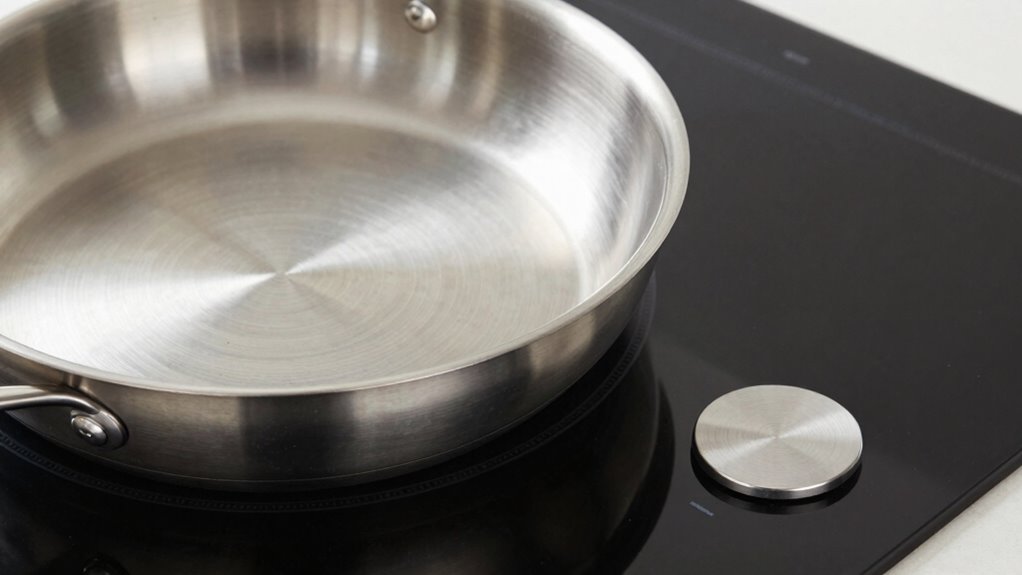
To see if your pans work with induction, try sticking a magnet to the bottom. If it clings firmly, your pan likely has a magnetic base suitable for induction cooking. If not, it probably won’t work on an induction stove. Additionally, choosing free floating cookware options can enhance versatility and ease of use with different stove types.
Magnetic Base Test
Wondering whether your pans work with induction? The magnetic base test is a quick way to find out. Simply place a magnet on the bottom of your cookware. If it sticks firmly, your pan likely has a magnetic layer suitable for induction cooking. This test helps confirm compatibility, so you won’t risk damage to your stove or cookware. Plus, using the right pans makes cookware maintenance easier, as induction-compatible pots and pans tend to heat more efficiently and evenly. If the magnet doesn’t stick, it’s best to avoid using that cookware on an induction cooktop. This simple test saves you time and prevents unnecessary wear and tear, keeping your kitchen safe and your cookware in top condition. Remember to check your cookware’s material composition regularly to ensure it remains suitable for induction use.
Use a Magnet
Ever wonder if your pans are compatible with induction? A simple magnet test reveals their magnetic properties, which depend on the metal composition. To check:
- Place a magnet on the bottom of your pan.
- If it sticks firmly, your pan likely has ferromagnetic materials suitable for induction.
- If it doesn’t, it probably lacks the necessary magnetic properties.
- Remember, not all metals work; stainless steel and cast iron usually do, while aluminum and copper often don’t unless specially coated or layered.
This quick test helps you identify whether your cookware will work with induction cooktops. The key is the metal composition, which determines the magnetic response. Keep a magnet nearby to save time and avoid purchasing incompatible pans.
Step-by-Step: How to Perform the Induction Compatibility Test at Home

Performing an induction compatibility test at home is simple and quick. First, identify your cookware materials—ferrous metals work best with induction. Next, perform a magnet test: if a magnet sticks firmly to your pan, it’s compatible. Here’s a quick step-by-step:
| Step | Action |
|---|---|
| 1 | Place a magnet on the bottom of the cookware. |
| 2 | Check if the magnet stays firmly attached. |
| 3 | If it does, your cookware is induction-ready. |
| 4 | If not, consider new cookware with ferrous metals. |
This test helps you quickly determine if your existing pans will work with induction cooktops without guesswork.
Interpreting Your Test Results: Is Your Cookware Compatible?

Once you’ve completed the magnet test, interpreting your results is straightforward. Your magnet’s ability to cling indicates the magnetic properties of your cookware, revealing if it’s compatible with induction cooking. Here’s how to evaluate your results:
- Magnet sticks firmly – your cookware likely has ferromagnetic material and is compatible.
- Magnet weakly sticks – the material may be partially compatible but might not heat efficiently.
- Magnet doesn’t stick – your cookware probably lacks magnetic properties, making it unsuitable.
- Material identification – metals like cast iron and certain stainless steels are magnetic, while aluminum and copper are not.
Understanding these outcomes helps you determine if your cookware is induction-ready. Focus on magnetic properties and material composition to ensure your pans will work effectively. Testing for magnetic compatibility is a simple way to confirm whether your cookware is suitable for induction cooking.
How to Identify Non-Magnetic Materials and Why It Matters
How can you tell if a material is non-magnetic, and why is this important for induction cooking? To identify non-magnetic materials, check their magnetic properties using a simple magnet. If the magnet doesn’t stick, the material is likely non-magnetic. This method is a quick way to verify material identification, especially for cookware. Knowing whether your pans are magnetic is vital because induction cooktops rely on magnetic properties to generate heat. Non-magnetic pans won’t work efficiently, meaning you’ll need to find cookware with the right material identification—such as cast iron or certain stainless steels—that respond to magnetic fields. Recognizing these properties ensures your cookware is compatible, saving you time and avoiding frustration during meal prep.
What to Do if Your Pans Aren’t Compatible With Induction
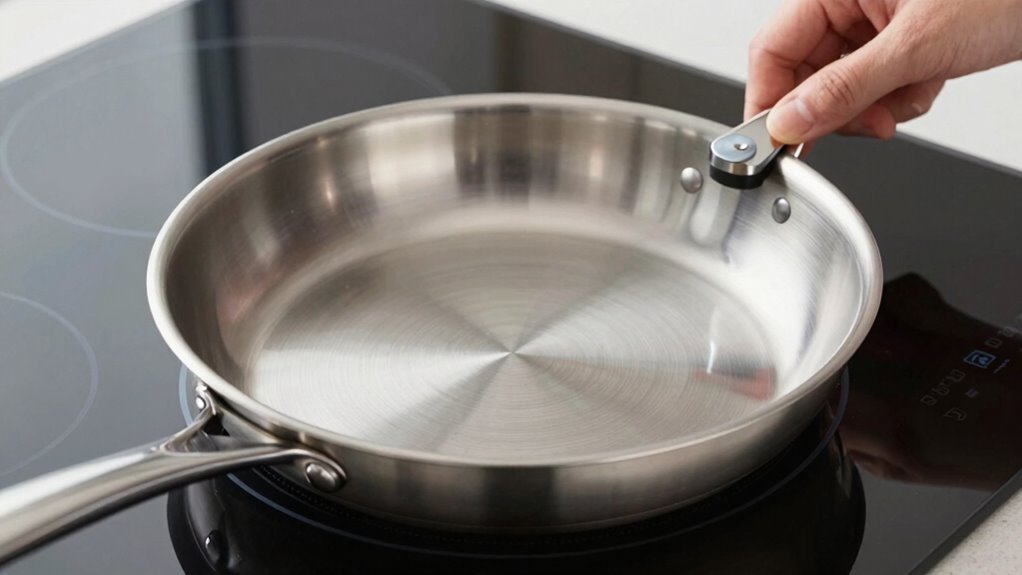
If your pans aren’t compatible with induction cooktops, you don’t have to replace all your cookware. Instead, consider these options to improve induction compatibility:
- Use a magnetic induction disc—place it between your pan and the cooktop to create a compatible surface. This is a quick and affordable solution that can be used with various types of cookware.
- Switch to alternative cookware made from ferromagnetic materials like cast iron or certain stainless steels. Many modern brands produce cookware specifically designed for induction, ensuring better performance.
- Invest in induction-compatible cookware sets designed specifically for induction cooking, which often feature a magnetic base for optimal heat transfer.
- Explore induction adapters, which work with non-magnetic pans to make them suitable for induction cooktops. These are especially useful if you want to utilize existing cookware without purchasing new items.
- Incorporate smart kitchen solutions that optimize energy use and integrate with home automation systems to make your cooking more efficient and connected. Energy-efficient options can help reduce power consumption and improve overall cooking experience. Additionally, understanding the magnetic properties of your cookware can help you determine compatibility more accurately. Checking the magnetic attraction of your pans with a magnet is a simple way to assess their suitability for induction cooking.
These solutions let you keep your existing cookware or adapt your setup without a full replacement, ensuring your kitchen remains efficient and versatile.
Tips for Choosing Affordable Induction-Safe Cookware
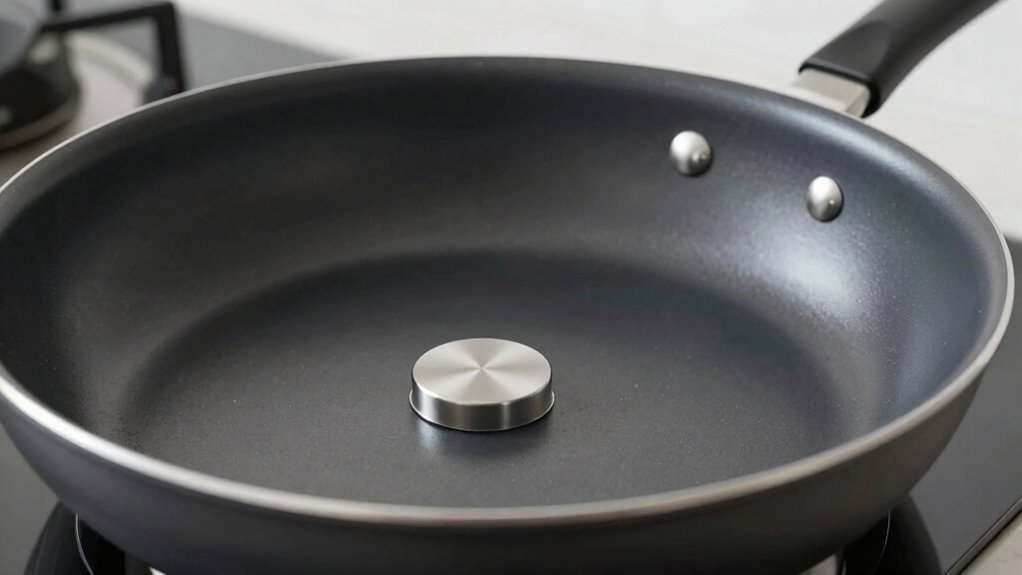
When selecting affordable induction-safe cookware, start by checking the material to guarantee it’s compatible with induction stoves. Balance price and quality by comparing features and durability, so you get the best value. Also, consider brand reliability to make sure you’re choosing trusted products that will last. For added assurance, look for cookware made from magnetic materials, which are essential for proper induction functionality. Additionally, verifying the cookware’s compatibility testing methods can help confirm it will work effectively on your stove.
Material Compatibility Tips
Are you unsure which materials are best for affordable induction-safe cookware? Understanding material properties helps you choose wisely. Always check cookware labeling to confirm compatibility. Here are tips to guide you:
- Look for ferromagnetic materials like cast iron or magnetic stainless steel, which work well with induction.
- Avoid non-magnetic metals such as aluminum or copper unless they’re layered with a magnetic base.
- Test with a magnet—if it sticks, your cookware should work on induction.
- Read product descriptions carefully to verify if the cookware is labeled as induction-compatible.
- Remember to consider the warranty considerations, as some reconditioning processes may affect the durability or performance of your cookware over time.
Pricing and Quality Balance
Balancing price and quality is essential when selecting affordable induction-safe cookware. First, verify the cookware has proper induction compatibility by checking for a magnetic base. This simple step helps avoid wasting money on pans that won’t work. When evaluating options, look for cookware testing results or reviews that highlight durability and heating performance. Affordable options can still offer good quality if they pass basic tests for even heat distribution and sturdy construction. Avoid overly cheap sets that may warp or degrade quickly. Instead, compare prices across trusted brands known for reliable testing. Remember, investing a little more upfront can save you money later on replacements. By focusing on induction compatibility and testing outcomes, you can find cookware that balances affordability with lasting quality. Additionally, reviewing market reputation can provide insight into the overall reliability of the brand and its products.
Brand Reliability Checks
Checking the reliability of a brand can save you from purchasing low-quality induction cookware that might warp or degrade quickly. To assess a brand’s reputation, start with these steps:
- Read customer reviews online to spot recurring issues or praise.
- Look for brands with consistently high ratings for durability and performance.
- Check if reputable review sites or consumer reports endorse the brand.
- Investigate how the brand handles warranty claims and customer service.
- Consider the brand’s reputation for producing induction-safe cookware with consistent quality, and verify if they offer detailed product information to ensure compatibility and safety. Additionally, examining their adherence to industry standards can provide further assurance of their reliability and safety practices. Incorporating nanotechnology advancements into cookware manufacturing can also enhance durability and safety features, further supporting consumer confidence. Being aware of industry certifications and standard compliance can help confirm that the cookware meets safety regulations and quality benchmarks.
Common Mistakes When Testing or Buying Induction Cookware (And How to Avoid Them)
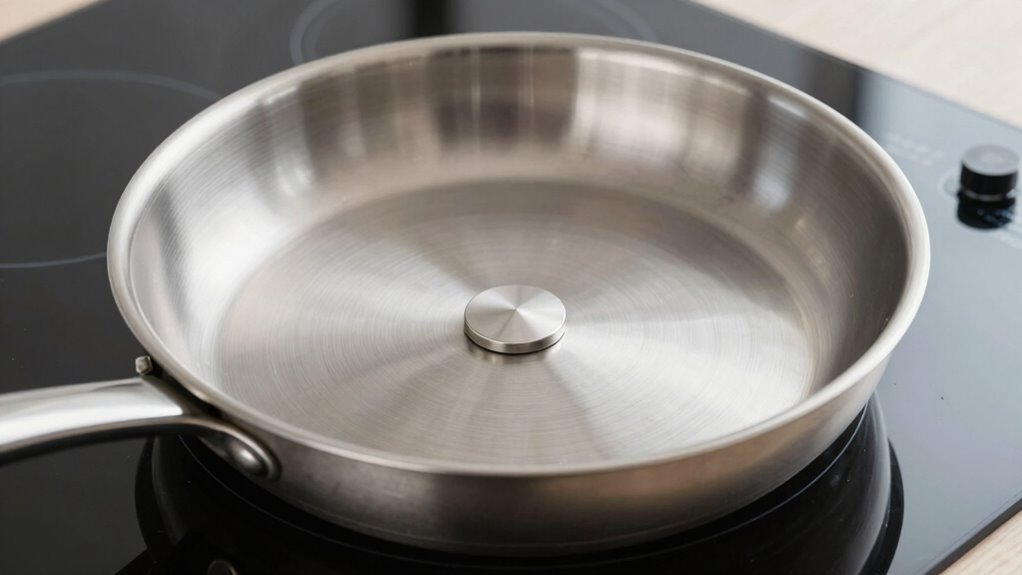
When testing or buying induction cookware, one common mistake is assuming that all pots and pans labeled as “induction-compatible” will work perfectly without verifying their magnetic properties. Many fall for induction myths, believing the cookware label alone guarantees compatibility. To avoid this, don’t rely solely on labels; perform a quick test with a magnet. If it sticks firmly, your cookware is likely induction-ready.
| Mistake | Consequence | How to Avoid It |
|---|---|---|
| Relying solely on cookware labels | Buying incompatible pans | Test with a magnet before purchase |
| Ignoring induction myths | Misunderstanding cookware needs | Educate yourself on true compatibility |
| Overlooking magnetic strength | Poor heat transfer or uneven cooking | Use a strong magnet test |
| Not checking pan material | Incompatible or inefficient use | Confirm magnetic properties |
FAQs About Induction Compatibility and Troubleshooting
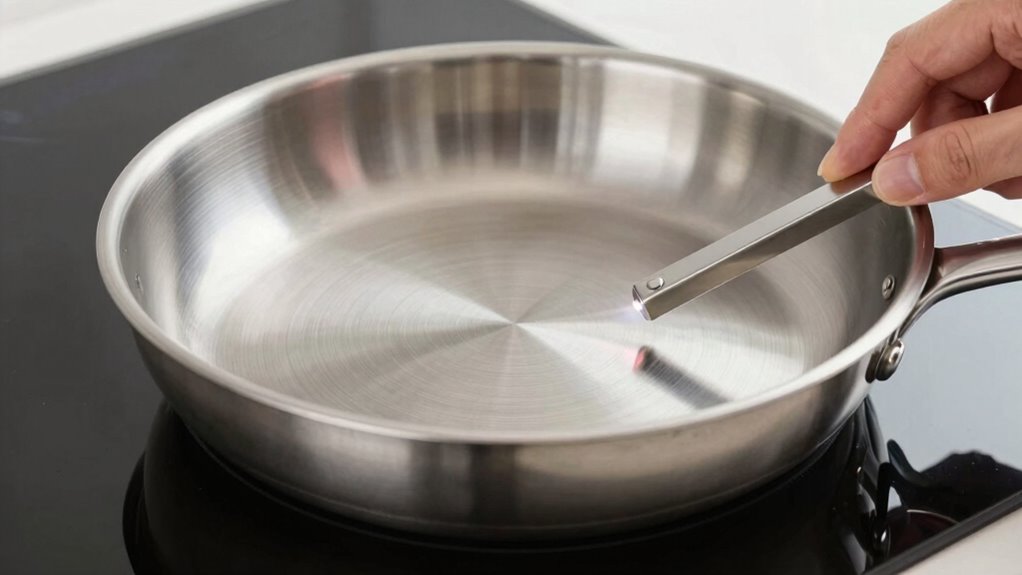
If you’re unsure whether your cookware is compatible with induction, it’s important to understand the common questions and solutions that come up during troubleshooting. Here are some FAQs to help:
- How can I check induction safety? Use a magnet—if it sticks, your cookware should work. Magnetic properties are key to compatibility.
- Why isn’t my pan heating? It might be incompatible or need cookware maintenance, like cleaning the bottom. Regularly inspecting the cookware surface can help identify issues early.
- Can I use my existing pots? Only if they have a magnetic base designed for induction. Ensuring your cookware has the correct induction-compatible materials is essential.
- What should I do if my induction stove doesn’t recognize my cookware? Try removing and repositioning it, or test with a magnet again.
- To ensure safe and effective cooking, regularly maintain your cookware by inspecting for damage or warping, which can affect induction performance. Knowing these tips helps guarantee your cookware maintenance is up to date and makes troubleshooting quicker. This keeps your induction experience safe and effective.
Frequently Asked Questions
Can I Use Aluminum or Copper Pans on Induction Cooktops?
You can’t use aluminum or copper pans on induction cooktops unless they have a magnetic base. Material compatibility depends on the magnetic properties of the cookware, which are essential for induction heat transfer. Aluminum and copper are non-magnetic, so they won’t work unless they include a magnetic layer. To check, see if a magnet sticks to your pan’s bottom—if it does, you’re good to go.
Do All Stainless Steel Pans Work With Induction Stoves?
Not all stainless steel pans work with induction stoves. To check induction compatibility, do a magnetic test: if a magnet sticks firmly to the bottom, your pan is induction-compatible. If it doesn’t, the pan won’t work on an induction cooktop. Be sure to verify this before using your stainless steel cookware, as only magnetic stainless steel will heat efficiently on induction stoves.
How Does a Non-Magnetic Pan Affect Cooking Performance?
A non-magnetic pan won’t work well with induction stoves because it lacks the magnetic properties needed to generate heat efficiently. This affects heat conduction, making your cooking less responsive and potentially uneven. You might notice longer cooking times or hot spots. To guarantee peak performance, choose pans with good magnetic properties, like certain stainless steel or cast iron, which provide better heat conduction and compatibility with your induction cooktop.
Can I Convert My Existing Cookware for Induction Use?
Yes, you can convert your existing cookware for induction use with some simple steps. First, check your cookware’s compatibility by testing for magnetic properties or using a magnet. If it sticks, your pans are suitable for induction adaptation. If not, consider adding a magnetic base or opting for new induction-compatible cookware. This way, you make sure your current pots and pans work efficiently on induction stoves.
What Are the Signs That a Pan Is Not Heating Properly on Induction?
You notice your pan isn’t heating evenly or responds slowly when you turn on the induction stove. These signs indicate it’s not working properly on induction. Uneven heating can cause hot spots, while a slow response suggests poor magnetic conductivity. If your pan shows these issues, it likely isn’t compatible or needs replacement with a better induction-compatible piece. Keep an eye out for these clues to make certain of efficient cooking.
Conclusion
Knowing if your pans are induction-compatible can save you time and money—over 70% of households switch to induction cooking for its efficiency. By quickly testing your cookware at home, you can avoid costly replacements and enjoy faster, safer cooking. Remember, proper testing guarantees your pans work seamlessly, making your kitchen more efficient. Stay informed, and you’ll be cooking with confidence in no time!