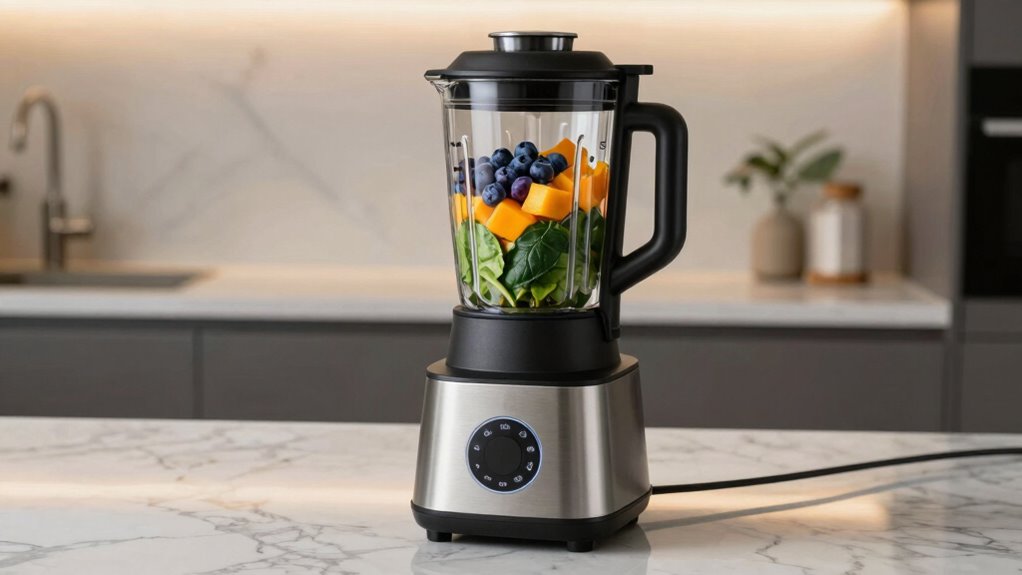

When choosing a high-end blender, focus on specs like motor power combined with cooling features to prevent overheating, and blade design for efficient and durable cutting. Also, consider container size and shape for better circulation and ease of use. Speed range and RPM matter for precision and smooth textures, while a good power-to-weight ratio boosts durability. Keep these factors in mind to get a blend that performs great over time—you’ll discover more behind these essentials.
Key Takeaways
- Motor cooling features like ventilation or fans prevent overheating during high-power blending tasks.
- Blade design, including material and geometry, ensures efficient, consistent cutting and longer lifespan.
- Container size and shape optimize ingredient circulation, reduce spillage, and improve blending quality.
- Control settings with multiple speeds and preset programs allow precise, versatile blending outcomes.
- RPM and power-to-weight ratio determine blending smoothness, durability, and the motor’s ability to sustain high speeds.
How Blender Motor Power Affects Performance

The motor power of a blender directly influences how effectively it can handle tough ingredients and produce smooth results. A powerful motor can blend fibrous vegetables, nuts, and ice with ease, saving you time and effort. However, higher motor power often generates more heat, so good motor cooling becomes essential to prevent overheating and maintain performance over time. Additionally, increased motor strength can lead to higher noise levels, which might be disruptive during use. High-end blenders balance these factors well, offering strong motors that stay cool and operate quietly. This motor cooling is achieved through advanced designs such as improved ventilation or cooling fans, which help dissipate heat efficiently. This ensures consistent blending without sacrificing comfort or durability. Many high-quality models also incorporate noise reduction features to minimize disturbance during operation. To further enhance performance, some models include automatic shut-off features that activate if overheating is detected. Incorporating thermal management techniques can further prolong the lifespan of the motor and improve overall reliability. In short, a high motor power enhances performance but requires thoughtful design to manage heat and noise effectively.
Blade Design and Material: What Makes Blending More Durable and Efficient
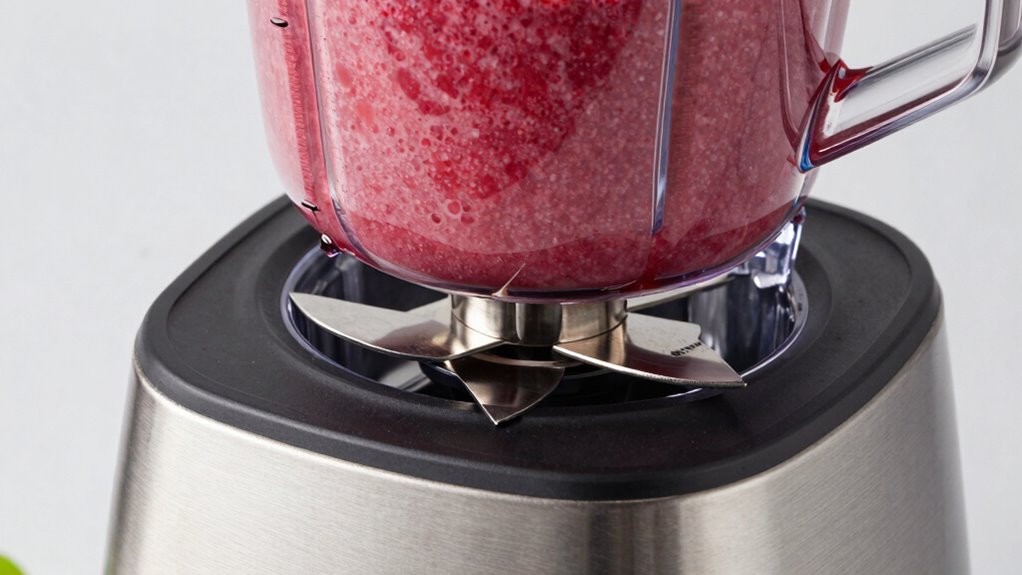
Choosing the right blade design and material is essential for making your blender more durable and efficient. Sharp blades ensure smooth, consistent blending by cutting ingredients cleanly. Material durability affects how well blades withstand wear and tear over time. High-quality stainless steel resists corrosion and chipping, extending the lifespan of your blades. Design optimization: Blade angles and edge geometry enhance blending power and reduce air pockets, resulting in smoother textures. Properly designed blades can also improve the cutting efficiency of the blender, leading to faster and more uniform results. Blade longevity in blades can also influence how well the blades handle different types of ingredients and textures.
Choosing the right blade design and material enhances blender durability and blending efficiency.
Investing in blades with superior sharpness and durable materials helps you achieve better results and prolongs your blender’s performance.
Why Container Size and Shape Matter for Smooth Blends
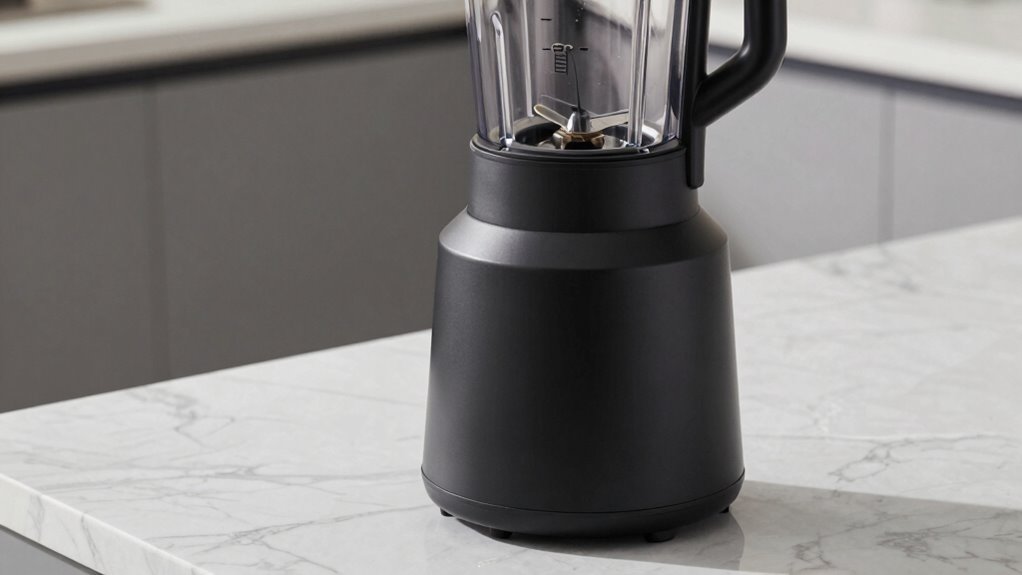
Blade design and material crucially impact how well your blender performs, but the container’s size and shape also play a vital role in achieving smooth, consistent blends. The container capacity determines how much you can blend at once, influencing efficiency and convenience. An appropriate size ensures your ingredients move effectively, preventing overfilling or underfilling. The shape of the container, combined with an ergonomic design, directs ingredients toward the blades, reducing trapped air and uneven textures. A well-designed shape promotes better circulation, resulting in smoother blends. Additionally, considering the container’s shape and size helps optimize the flow of ingredients, minimizing the need for stopping and stirring during blending. Proper container design also reduces ingredient spillage and cleanup time, making the blending process more efficient. Selecting a container with the right capacity and shape aligned with blade design and material enhances performance, making it easier to achieve professional results with less effort and mess. Moreover, choosing the right container can also impact noise levels during operation, making the process more pleasant.
Control Settings and Speed Range: Boosting Versatility and Precision
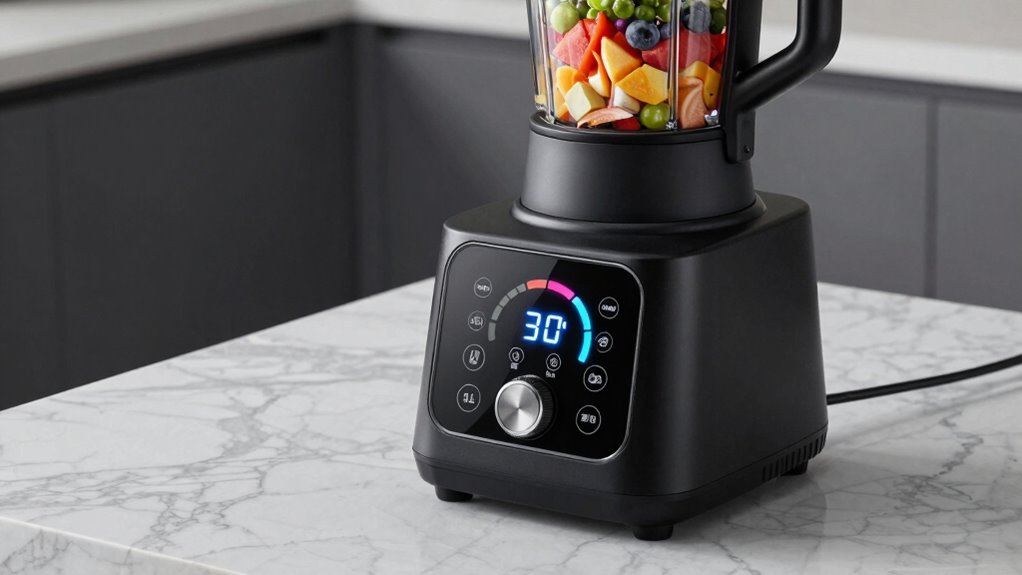
Control settings and a wide speed range markedly enhance a blender’s versatility and precision. An intuitive user interface makes it easy to adjust speeds and settings, giving you better control over your blending tasks. Many high-end models include preset programs that simplify common functions like smoothies, soups, or nut butters, saving you time. To maximize your blender’s potential, look for:
- Multiple speed options for fine-tuning textures
- Pulse and turbo functions for quick bursts of power
- Customizable preset programs to suit varied recipes
- The ability to detect and correct passive voice in your writing ensures clearer communication. Furthermore, user-friendly controls are essential for achieving consistent results and reducing frustration during use. These features allow you to switch seamlessly between tasks, ensuring consistent results. With precise control and versatile settings, you can tackle a wider variety of ingredients and textures with confidence. Additionally, advanced control features can help optimize blending performance based on specific ingredients or textures. Incorporating precision engineering in the control system can further elevate your blending experience by providing more accurate adjustments. A well-designed control interface also minimizes user error, leading to more reliable and repeatable outcomes.
Motor Speed (RPM) and Power-to-Weight Ratio: Ensuring Durability and Reliability

High-end blenders are designed to handle demanding tasks, and their motor speed, measured in RPM, plays a crucial role in this performance. A higher motor speed means more powerful blending and smoother textures. Equally important is the power-to-weight ratio, which ensures the motor can sustain high RPM without overheating or wearing down quickly. This balance guarantees durability and reliability over time. To visualize this, consider the following:
| Blender Model | Motor Speed (RPM) | Power to Weight Ratio |
|---|---|---|
| Model A | 35,000 RPM | High |
| Model B | 28,000 RPM | Moderate |
| Model C | 22,000 RPM | Lower |
A superior power-to-weight ratio supports consistent performance, reducing risk of motor failure and extending your blender’s lifespan. Motor durability is also enhanced when the internal components are designed to handle sustained high speeds, ensuring long-term reliability even under heavy use. Additionally, the quality of internal components is vital for performance consistency, preventing overheating and maintaining optimal functioning during prolonged operation. Proper component design further contributes to the blender’s ability to operate efficiently at high speeds.
Frequently Asked Questions
How Do High-End Blenders Compare in Noise Levels During Operation?
You’ll find high-end blenders generally operate quieter thanks to better sound insulation and noise comparison features. They often include insulated motors and quieter blade designs, reducing noise levels during blending. While some models produce minimal sound, others still generate noticeable noise, especially at high speeds. Overall, investing in models with enhanced sound insulation makes a significant difference, allowing you to blend without disturbing your surroundings or household.
What Maintenance Practices Extend the Lifespan of Premium Blender Components?
To extend your blender’s lifespan, regularly sharpen blades and guarantee proper motor cooling. Sharpen blades frequently to maintain cutting efficiency and prevent strain on the motor. Keep the motor cool by avoiding prolonged operation and clearing vents of dust and debris. Consistently inspecting and maintaining these components helps prevent overheating, reduces wear, and keeps your premium blender performing at its best longer.
Are There Specific Brands Known for Superior Durability Beyond Specs?
You should consider brands known for superior durability, like Vitamix and Blendtec, because their reputation for quality and longevity is well-established. These brands use high-grade materials in their blades and containers, ensuring they withstand daily use. By choosing a blender with a strong brand reputation and premium material quality, you’ll enjoy longer-lasting performance and fewer replacements, making your investment worthwhile over time.
How Does Warranty Coverage Vary Among Top-Tier Blender Models?
Think of warranty coverage like a safety net—some models offer a longer warranty length, giving you peace of mind, while others might have coverage exclusions that leave gaps. Top-tier blenders typically include extended warranties, sometimes up to 5 years, covering parts and repairs. Always read the fine print to understand what’s included and what’s excluded, so you know exactly what’s protected if your blender faces issues down the line.
Can High-End Blenders Handle Frozen Ingredients More Efficiently?
Yes, high-end blenders handle frozen ingredients more efficiently. They’re designed with powerful motors and specialized blades that improve frozen ingredient processing, ensuring smoother blends and better blending efficiency. You’ll notice less chunkiness and quicker results. These models often have preset programs tailored for frozen items, making your smoothies, ice creams, or frozen drinks consistently creamy and well-blended, saving you time and effort in the kitchen.
Conclusion
Don’t let wattage alone scare you away from choosing a high-end blender. Focus on the key specs like blade design, container shape, control options, and RPM to get the best performance. These features guarantee durability, versatility, and smooth results. Even if you’re concerned about complexity, remember that a well-designed blender makes your blending easier and more efficient. Trust these specs to guide you toward a machine that truly meets your needs.