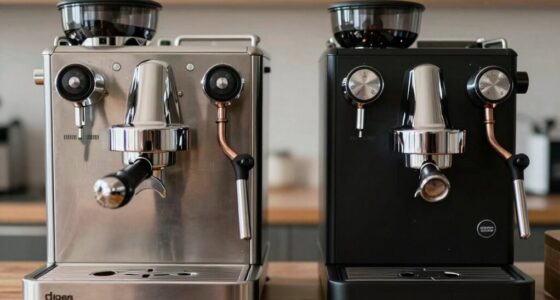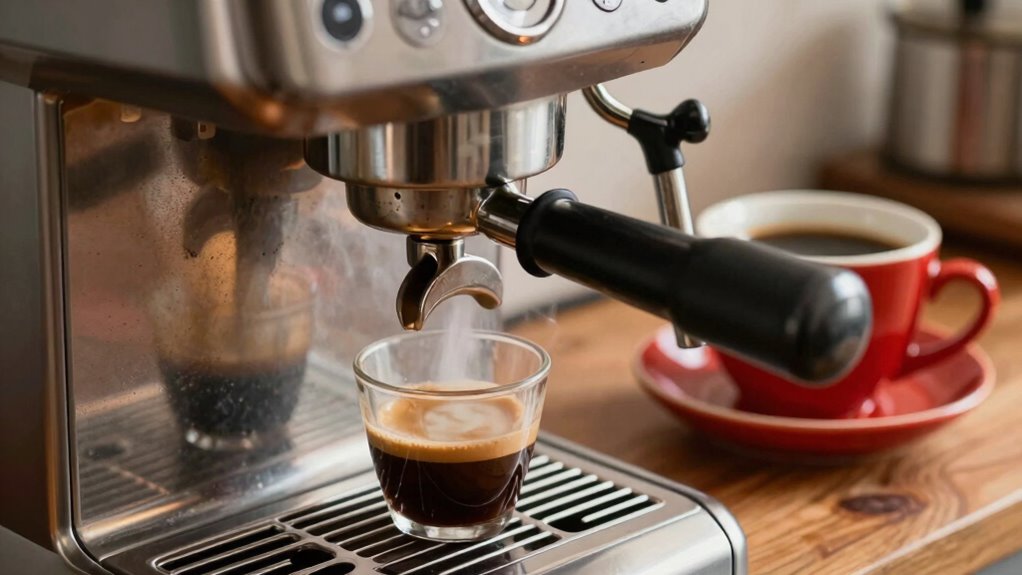

If your espresso tastes off, it’s likely due to stale beans, mineral buildup, or poor maintenance. You might also be facing issues with inconsistent temperature or water quality. Regularly clean and descale your machine, store beans properly, and use filtered water for better flavor. Adjust grind size and tamp pressure for consistent results. Keep up with maintenance routines—these steps can make a big difference. If you want to uncover more tips, stay tuned for the full guide.

Turn the school run and nap time into listening time
- Thousands of audiobooks, podcasts and originals
- Listen on your phone, tablet or Echo — also offline
- Cancel anytime
Key Takeaways
- Stale or improperly stored coffee beans can lead to dull or flat flavors in your espresso.
- Mineral buildup from water and oils inside the machine causes off-flavors and inconsistent extraction.
- Poor water quality or unfiltered water can negatively impact taste and cause mineral deposits.
- Inconsistent temperature or incorrect grind size and tamp pressure affect flavor extraction.
- Lack of regular cleaning and descaling allows residue and deposits that spoil espresso flavor.
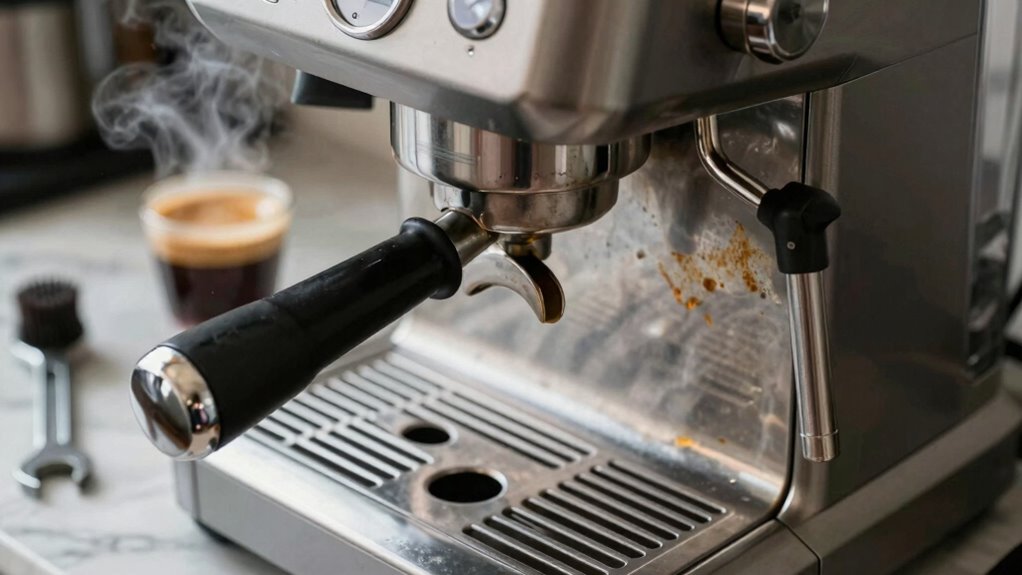
Have you ever brewed a fresh shot of espresso only to find it tastes off? It’s frustrating, especially when you’re craving that rich, bold flavor. Often, the culprit comes down to issues with your machine’s internal cleanliness or the quality of your coffee beans. One common reason for off-tasting espresso is stale coffee bean freshness. If your beans have been sitting on the shelf for too long or aren’t stored properly, they lose their oils and aromatic compounds. Using fresh, properly stored beans makes a significant difference in flavor. When your beans are past their prime, no amount of machine maintenance can fully fix the dull, flat taste. So, always buy coffee beans in small quantities and store them in airtight containers away from light and heat to preserve their freshness.
Beyond your beans, another frequent cause of off-flavors is mineral buildup and residue inside your espresso machine. Over time, minerals from water and coffee oils accumulate in the brew path, affecting taste and machine performance. That’s where descaling procedures come into play. Regular descaling is essential for maintaining *ideal* flavor and preventing nasty, off-putting tastes. You should descale your machine every few months, depending on your water hardness and usage. Use a descaling solution recommended by your machine’s manufacturer, and follow the instructions carefully. This process clears out mineral deposits that can cause bitterness or a metallic taste, ensuring your espresso remains clean-tasting. Skipping descaling can lead to clogged filters and inconsistent extraction, which directly impacts flavor quality. Additionally, water quality can significantly influence the buildup of minerals and affect taste, so using filtered or bottled water can help maintain optimal flavor. Proper water filtration can also prevent mineral accumulation in your machine and prolong its lifespan. Ensuring your machine heats properly and maintains a steady temperature is vital—fluctuations can cause undesirable sour, bitter, or flat flavors. Temperature stability ensures the extraction process is consistent and effective, leading to better flavor. Also, consider your grind size and tamp pressure—if the grind is too coarse or too fine, or if you tamp unevenly, the espresso won’t brew *at its best*, leading to off-flavors. Regularly checking and adjusting these brewing variables can help you dial in the perfect shot. Additionally, paying attention to the machine maintenance schedule can prevent many flavor issues before they arise.
espresso machine descaling solution
As an affiliate, we earn on qualifying purchases.
As an affiliate, we earn on qualifying purchases.
Frequently Asked Questions
How Often Should I Descale My Espresso Machine?
You should descale your espresso machine every 1 to 3 months, depending on your water quality. Even if you use water filtration, minerals can build up and affect taste. Regular descaling keeps your machine running smoothly, ensuring better flavor and extending its longevity. Don’t wait for problems to brew; staying ahead of scale buildup is like hitting two birds with one stone—better tasting coffee and a longer-lasting machine.
Can Water Quality Affect Espresso Taste?
Yes, water quality considerably affects your espresso’s taste. Water mineralization can cause off-flavors if minerals are too high or too low. Using filtration systems helps remove impurities and balance mineral levels, ensuring a cleaner, more flavorful shot. Poor water quality can also lead to scale buildup, affecting your machine’s performance. Regularly testing and filtering your water guarantees consistent, delicious espresso every time.
What’s the Ideal Cleaning Schedule for My Machine?
You should clean your espresso machine at least once a week, even if it seems unnecessary. Ironically, neglecting cleaning can dull your coffee bean freshness and ruin milk frothing techniques. Regular descaling and cleaning remove buildup, ensuring each shot tastes fresh. If you use your machine daily, consider more frequent cleanings. This routine keeps flavors vibrant and prevents residue from interfering with your milk frothing, maintaining perfect espresso quality.
Does Grind Size Impact the Flavor?
Yes, grind size impacts flavor profoundly. If your grind isn’t consistent, your espresso extraction becomes uneven, leading to off-flavors. Finer grinds extract more flavor but can cause over-extraction if too fine, while coarser grinds may result in weak taste. Also, using fresh coffee enhances flavor, so make certain your grind size matches your brewing method and that you’re using fresh beans for the best taste.
How Do I Troubleshoot Brewing Pressure Issues?
To troubleshoot brewing pressure issues, start by checking the pressure gauge calibration to guarantee accurate readings. Next, examine your portafilter tamping—make sure you’re tamping evenly and with appropriate pressure. If pressure remains inconsistent, clean or replace the group head gasket and check for blockages in the machine’s water flow. Adjusting tamping technique and verifying gauge accuracy often resolve most pressure problems.
coffee bean storage airtight container
As an affiliate, we earn on qualifying purchases.
As an affiliate, we earn on qualifying purchases.
Conclusion
When your espresso tastes off, it’s like trying to enjoy a symphony with a few out-of-tune instruments—you know something’s wrong. But with these seven simple fixes, you can bring harmony back to your brew. Regular cleaning, descaling, and proper maintenance are your best tools. Don’t let a stubborn off-flavor ruin your coffee moments. Instead, take charge and turn your machine into a reliable partner, so every cup feels just right—like a perfectly played melody.
water filter for espresso machine
As an affiliate, we earn on qualifying purchases.
As an affiliate, we earn on qualifying purchases.
As an affiliate, we earn on qualifying purchases.
Halloween Picks
halloween
As an affiliate, we earn on qualifying purchases.