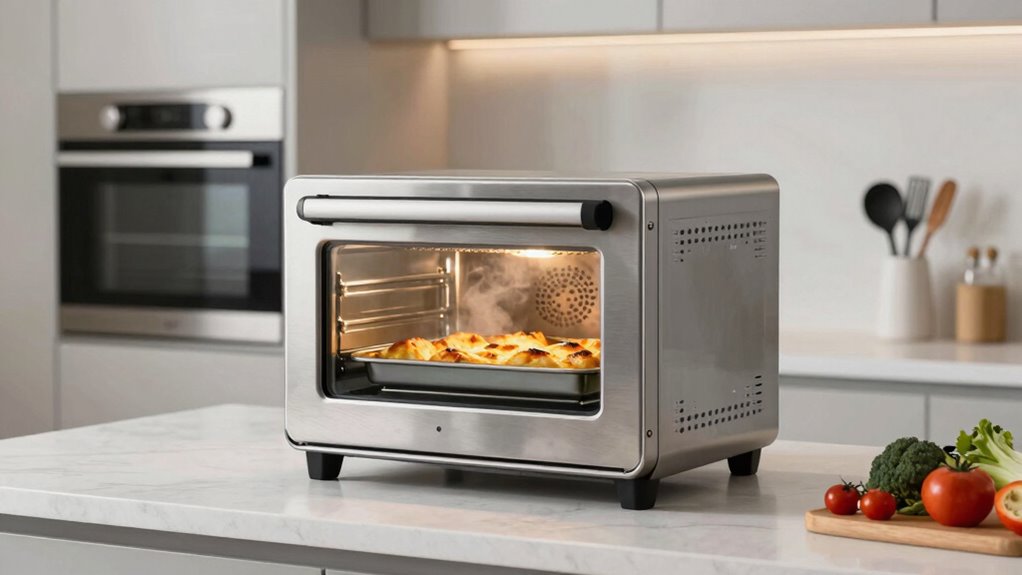

Choose a countertop oven when space is limited, like in small kitchens or apartments, and you want something portable and easy to move. They heat quickly, use less energy, and are perfect for everyday tasks like reheating, baking, or toasting small meals. If you mostly cook for yourself or small groups, a countertop oven saves effort and space. Keep exploring to discover more ways the smaller model can fit your lifestyle perfectly.

Turn the school run and nap time into listening time
- Thousands of audiobooks, podcasts and originals
- Listen on your phone, tablet or Echo — also offline
- Cancel anytime
Key Takeaways
- For small meals, quick reheating, or limited space, countertop ovens are more practical and efficient.
- When energy savings and faster heating are priorities, countertop models typically consume less power.
- Countertop ovens excel for everyday, casual cooking tasks without needing the capacity of a full oven.
- Limited kitchen space makes countertop ovens a better fit, especially in apartments or secondary cooking areas.
- For occasional large meals or complex baking, a full oven’s capacity and versatility are more suitable.
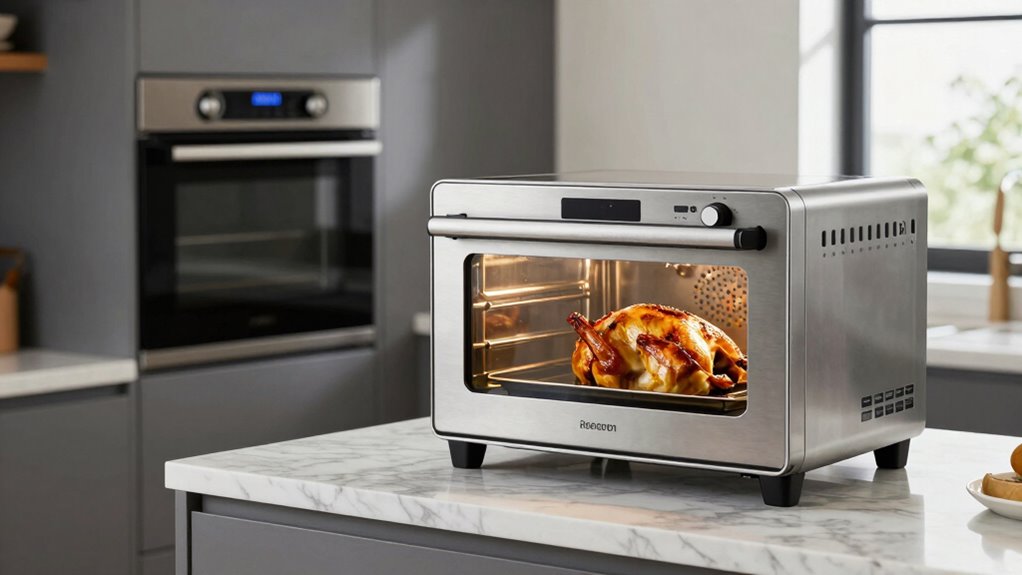
When deciding between a countertop oven and a full-sized oven, understanding their differences can help you choose the best fit for your cooking needs. Both appliances serve unique purposes, but the decision often hinges on factors like energy efficiency and cooking versatility. A countertop oven is typically smaller and more compact, making it ideal for quick, everyday tasks. It heats up faster than a full oven, which can save you energy—especially if you’re only cooking small meals or reheating leftovers. Since it consumes less power overall, a countertop oven often proves to be a more energy-efficient choice for casual use, helping you cut down on electricity bills over time.
Countertop ovens are compact, energy-efficient, and perfect for quick, everyday cooking tasks.
However, when it comes to cooking versatility, a full-sized oven generally takes the lead. It offers a larger capacity, allowing you to prepare multiple dishes simultaneously or cook larger items like turkeys or big roasts. This makes it well-suited for family dinners, holiday gatherings, or when entertaining guests. If your cooking style involves baking multiple trays of cookies or roasting large batches of vegetables, a full oven provides the space and flexibility needed. That said, a countertop oven can still handle a surprising variety of tasks, including baking, broiling, toasting, and even roasting smaller portions. Some models come with convection features or multiple rack positions, broadening their utility. Additionally, their size and portability make them particularly convenient for small kitchens or secondary cooking needs. For those interested in modern tech integrations, some models include smart features that can enhance usability and control.
Size and convenience also play a role in your choice. Countertop ovens are portable and occupy minimal space, making them perfect for small kitchens, apartments, or even for use as a secondary oven. They’re easy to move around, stored away when not in use, and can be a handy device for quick meals. Full ovens, on the other hand, are built into your kitchen cabinetry, offering a permanent solution that blends seamlessly into your kitchen design. They’re better suited for serious cooks who need to prepare complex meals regularly or want a dedicated, high-capacity appliance. Additionally, some models include smart features, making modern full ovens even more appealing for tech-savvy users.
Ultimately, if your cooking needs are simple and focused on efficiency, a countertop oven might be the smarter choice. It saves energy, offers good versatility for everyday tasks, and is convenient to use. But if you require more extensive cooking capabilities, larger capacity, and don’t mind the extra space, a full-sized oven provides unmatched versatility and capacity. Knowing how each appliance aligns with your lifestyle can help you make an informed decision, ensuring your kitchen setup perfectly matches your culinary habits.
compact countertop oven for small kitchens
As an affiliate, we earn on qualifying purchases.
As an affiliate, we earn on qualifying purchases.
Frequently Asked Questions
Can a Countertop Oven Replace a Full-Sized Oven Entirely?
A countertop oven can’t fully replace a full-sized oven, especially if you have a large family or often cook big meals. However, if your kitchen space is limited, it’s a great option for smaller tasks and quick cooking. It heats up faster and uses less energy, making it perfect for everyday snacks or side dishes. For extensive baking or large batches, a full oven remains the better choice.
Are Countertop Ovens Energy-Efficient Compared to Full Ovens?
Countertop ovens are generally more energy-efficient than full-sized ovens because they use less power for smaller cooking tasks. Their smaller size means lower power consumption, leading to energy savings, especially when you’re only cooking for one or two people. If you want to cut down on energy use and save on utility bills, a countertop oven is a smart choice for quick, small meals.
How Do Cleaning Requirements Differ Between the Two?
You’ll find cleaning maintenance easier with a countertop oven since it has a smaller surface area and fewer components to clean, making surface durability less of a concern. Full ovens require more effort for cleaning, involving deeper scrubbing and more extensive maintenance. Countertop ovens often have removable parts that simplify cleaning, whereas full ovens may need special cleaners and regular maintenance to keep them in good condition.
Do Countertop Ovens Have the Same Cooking Versatility?
Countertop ovens offer great cooking versatility, especially for quick meals, thanks to their fast cooking speed. They’re highly space-efficient, fitting easily on counters without sacrificing much functionality. While they may not handle huge batches like full ovens, they excel at roasting, baking, toasting, and reheating smaller portions. If you need a versatile, space-saving appliance that speeds up everyday cooking, a countertop oven is a smart choice.
What Is the Typical Lifespan of a Countertop Oven?
Like a trusty vintage typewriter, a countertop oven typically lasts about 5 to 8 years. You’ll find it’s a durable appliance that offers great kitchen portability, making it perfect for small spaces or extra cooking needs. Proper maintenance, like regular cleaning and avoiding overuse, extends its lifespan. While it may not match the durability of full-sized ovens, it’s a reliable tool for quick, everyday meals.
energy-efficient countertop oven with convection
As an affiliate, we earn on qualifying purchases.
As an affiliate, we earn on qualifying purchases.
Conclusion
When choosing between a countertop oven and a full oven, consider your cooking needs and space. Did you know that countertop ovens use up to 50% less energy than full-sized ovens? This makes them perfect for quick meals or small batches, saving you time and electricity. If you often cook for one or two people, the smaller option might be your best bet. Ultimately, pick what fits your lifestyle and kitchen best for efficient, convenient cooking.
small toaster oven with baking and broiling functions
As an affiliate, we earn on qualifying purchases.
As an affiliate, we earn on qualifying purchases.
portable countertop oven for apartment
As an affiliate, we earn on qualifying purchases.
As an affiliate, we earn on qualifying purchases.
Halloween Picks
halloween
As an affiliate, we earn on qualifying purchases.




![Every Parent Dreads That Call From School… 📞😱 [Litterbox Comics]](https://geistforlife.com/wp-content/uploads/2026/10/every-parent-dreads-that-call-from-school-litterbox-comics-featured-260x140.jpg)
