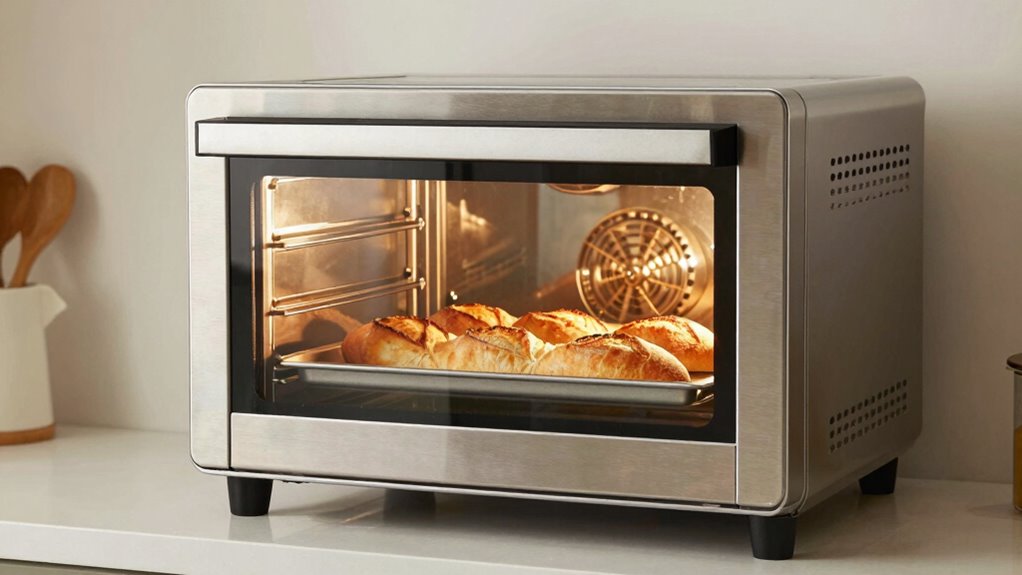
A countertop convection oven uses a fan to actively circulate hot air around your food, which helps it cook faster and more evenly. This airflow creates a crispy exterior and prevents hot spots, making baked goods, roasted vegetables, and meats turn out perfect. By understanding how convection hot air moves, you can improve your cooking results markedly. Stay with us to discover how this technology can elevate your culinary experience even further.
Key Takeaways
- Convection uses a fan to circulate hot air evenly around food for faster, more uniform cooking.
- It creates airflow that promotes even browning, crispiness, and moisture retention.
- Convection technology reduces cooking times compared to traditional ovens.
- It ensures consistent temperatures, preventing hot spots and uneven results.
- Convection is ideal for baking, roasting, and reheating, enhancing flavor and texture.
What Is a Countertop Convection Oven and Why Use One?
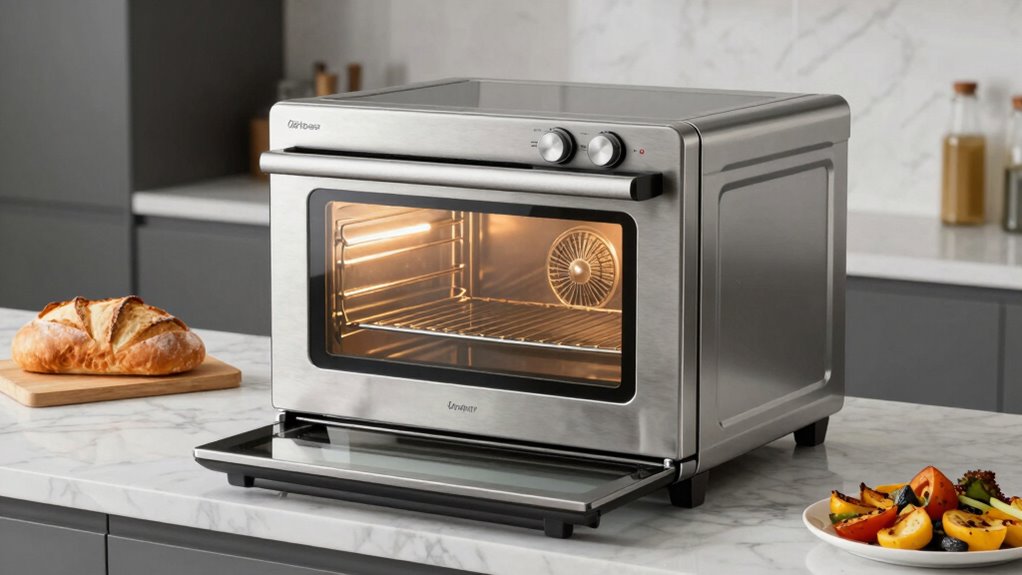
A countertop convection oven is a compact, versatile appliance that combines traditional baking with convection technology. It offers quicker cooking times and even heat distribution, making meal prep more efficient. When you use one, you might need to adjust recipes slightly—recipe modifications can include lowering cooking temperatures or reducing cooking times to prevent over-baking. Its small size helps save valuable kitchen space, fitting comfortably on countertops without cluttering your workspace. This makes it ideal for small kitchens, apartments, or anyone wanting extra cooking capacity without a full-sized oven. Plus, its multi-functionality allows you to bake, toast, broil, or roast, making it a practical addition to your culinary tools. Overall, a countertop convection oven enhances your cooking versatility while optimizing your kitchen space. Additionally, understanding convection technology can help you make the most of its features and improve your cooking results. Learning about heat circulation can further improve your baking outcomes and ensure even cooking. Gaining knowledge about airflow patterns can help you better utilize the appliance for consistent results, ensuring perfectly cooked meals every time. Recognizing how energy efficiency impacts your appliance use can lead to more sustainable cooking practices and lower utility bills.
How Does a Convection Oven Circulate Hot Air to Cook Faster?
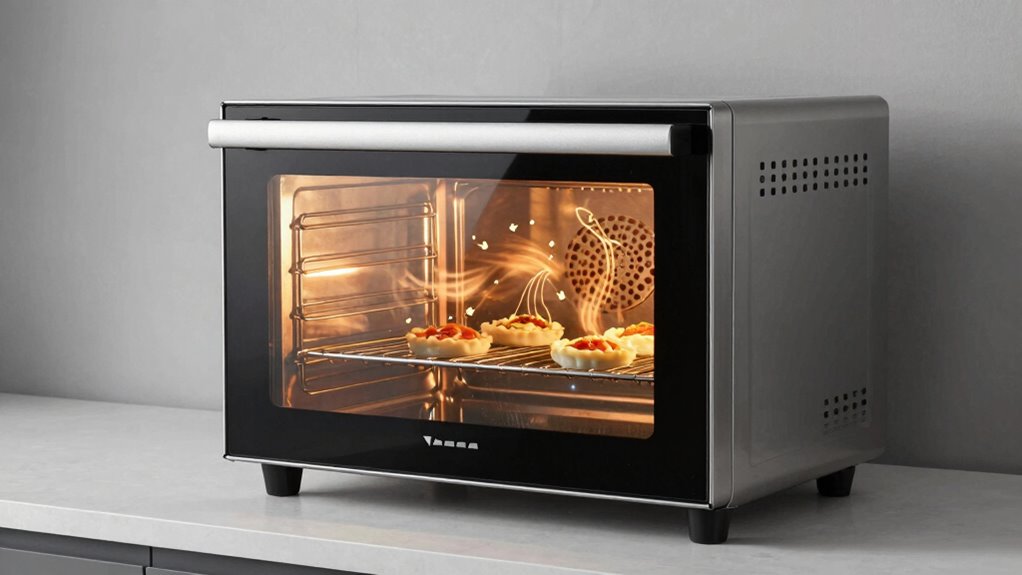
A convection oven uses a fan to actively circulate hot air around your food, ensuring it cooks evenly on all sides. This constant airflow helps distribute heat more uniformly, reducing cold spots. As a result, your dishes cook faster than in traditional ovens. Additionally, smart appliances integrated with convection technology can optimize cooking times and settings for even better results. Proper ventilation considerations are also important to prevent heat buildup and ensure safe operation. Incorporating air circulation features can further enhance cooking efficiency and consistency.
Fan-Driven Air Circulation
Fan-driven air circulation is the key to how convection ovens cook food faster. The fan creates airflow dynamics that evenly distribute hot air around your food, promoting consistent cooking. You’ll notice three main effects: 1. Faster cooking times due to rapid heat transfer. 2. Crispier exteriors while maintaining moist interiors. 3. Reduced hot spots, thanks to improved airflow distribution. While the fan noise varies between models, it generally remains unobtrusive. The movement of air ensures heat reaches every surface efficiently, minimizing the need for constant temperature adjustments. This circulating hot air accelerates cooking by keeping the temperature uniform throughout the oven cavity. Fan-Driven Air Circulation is the key to optimizing cooking performance in convection ovens. Additionally, understanding hot air flow patterns helps in positioning food correctly for optimal results.
Even Heat Distribution
The movement of hot air inside a convection oven guarantees that heat is evenly distributed throughout the cooking chamber. This circulation helps prevent hot spots, which can cause uneven cooking and burnt or undercooked sections. Unlike traditional ovens, where heat may gather in one area, convection ovens continuously move air around your food, ensuring consistent temperatures everywhere. As a result, your dishes cook more uniformly, reducing the risk of uneven cooking. This even heat distribution makes convection ovens ideal for baking, roasting, and anything that benefits from consistent heat. By avoiding hot spots, you get more reliable results and less need to rotate or monitor your food constantly. Overall, this feature enhances both the quality and efficiency of your cooking experience. Heat distribution is a fundamental aspect that contributes to the effectiveness of convection cooking. Additionally, air circulation systems are designed to optimize this process, making convection ovens a versatile choice for many culinary tasks. Proper air flow is essential for maximizing the benefits of convection technology, ensuring your food cooks as evenly as possible. The temperature control within convection ovens also plays a critical role in maintaining precise heat levels for optimal cooking outcomes. Moreover, the integration of smart sensors can further enhance cooking accuracy and consistency.
Faster Cooking Times
Ever wonder how convection ovens cook food faster than traditional models? It’s all about how they circulate hot air efficiently. The fan and exhaust system create a continuous flow of hot air around your food, which accelerates heat transfer. This process enhances baking versatility, allowing you to achieve even browning and crispy textures in less time. To maximize this benefit, consider these key points: 1. The rapid air circulation reduces cooking times by evenly distributing heat. 2. Less temperature fluctuation means you spend less time monitoring. 3. Compact countertop space allows you to cook multiple dishes quickly without overcrowding. Additionally, the efficient heat distribution helps in reducing energy consumption and ensures consistent results every time.
Benefits of Using a Countertop Convection Oven at Home
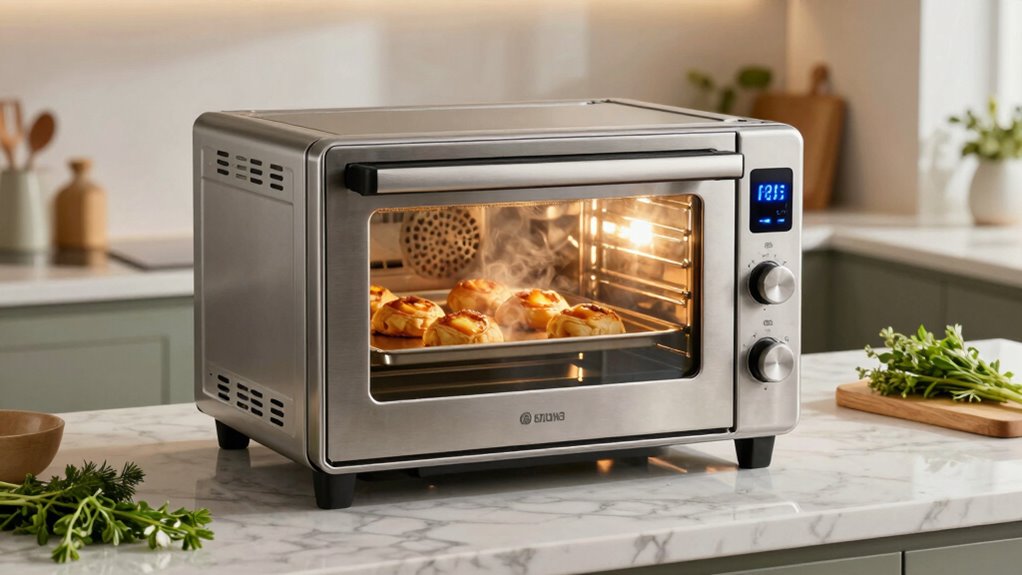
Using a countertop convection oven at home can considerably cut down your cooking times, so you get meals on the table faster. It also distributes heat evenly, ensuring your food cooks thoroughly without hot spots. Plus, it’s energy-efficient, helping you save on electricity while still delivering great results. Additionally, understanding art care can enhance your appreciation of beautifully crafted kitchenware and cookware that complements your convection oven. Recognizing the latest kitchen technology can help you choose the most efficient and innovative appliances to upgrade your cooking space. Incorporating power tools and heavy-duty equipment into your kitchen setup can further streamline your culinary projects and maintenance tasks. Being aware of proper kitchen ventilation can also improve your cooking environment by reducing heat and humidity buildup. Understanding leasing costs and financial considerations can help you make smarter choices when upgrading or maintaining kitchen appliances.
Faster Cooking Times
Countertop convection ovens cook food faster than traditional ovens by circulating hot air evenly around your dishes. This efficient heat transfer shortens cooking times, saving you time in the kitchen. With convection, you can:
- Reduce baking times for cookies and pastries, making your baking techniques more efficient.
- Quickly roast meats and vegetables, enhancing flavor and texture without lengthy wait times.
- Use specialized oven accessories, like wire racks and baking pans, to optimize airflow and speed.
This faster cooking capability allows you to experiment with recipes and baking techniques you might have avoided due to time constraints. Whether you’re preparing a quick dinner or experimenting with new dishes, a countertop convection oven streamlines the process and delivers delicious results quickly.
Even Heat Distribution
The even heat distribution in a countertop convection oven guarantees your food cooks uniformly, eliminating hot spots that can cause uneven baking or roasting. This heat consistency enhances your baking precision, ensuring cakes, bread, and pastries rise properly and cook through evenly. With consistent temperatures, you won’t have to worry about undercooked centers or burnt edges. The fan circulates hot air around your food, maintaining a steady temperature across the entire cooking chamber. This means every part of your dish reaches the same level of doneness at the same time. Whether you’re roasting vegetables or baking delicate desserts, the reliable heat distribution helps you achieve professional‑quality results effortlessly. It’s a key benefit that elevates your home cooking and baking experiences. Heat circulation technology is a crucial feature that maximizes the oven’s efficiency and cooking performance. Additionally, this even heat distribution is especially important for consistent cooking, ensuring your dishes turn out perfect every time. Proper heat circulation also contributes to energy efficiency, reducing cooking times and saving energy over the long run. Incorporating precise temperature control further optimizes cooking results and saves energy.
Energy Efficiency Benefits
Because they heat food quickly and efficiently, countertop convection ovens help you save energy and reduce utility bills. Their efficient design minimizes electricity use while delivering fast, consistent results. To maximize these benefits, consider:
- Using the oven for multiple dishes to optimize energy consumption per cooking session.
- Preheating only when necessary, avoiding unnecessary energy waste.
- Choosing models with energy-saving features that reduce overall power use. These practices lower your energy savings, which not only cuts costs but also reduces your environmental impact. By using a countertop convection oven, you contribute to a more sustainable lifestyle while enjoying faster cooking times. Overall, these ovens support eco-friendly choices without sacrificing performance or convenience.
Which Foods Cook Best in a Convection Oven?
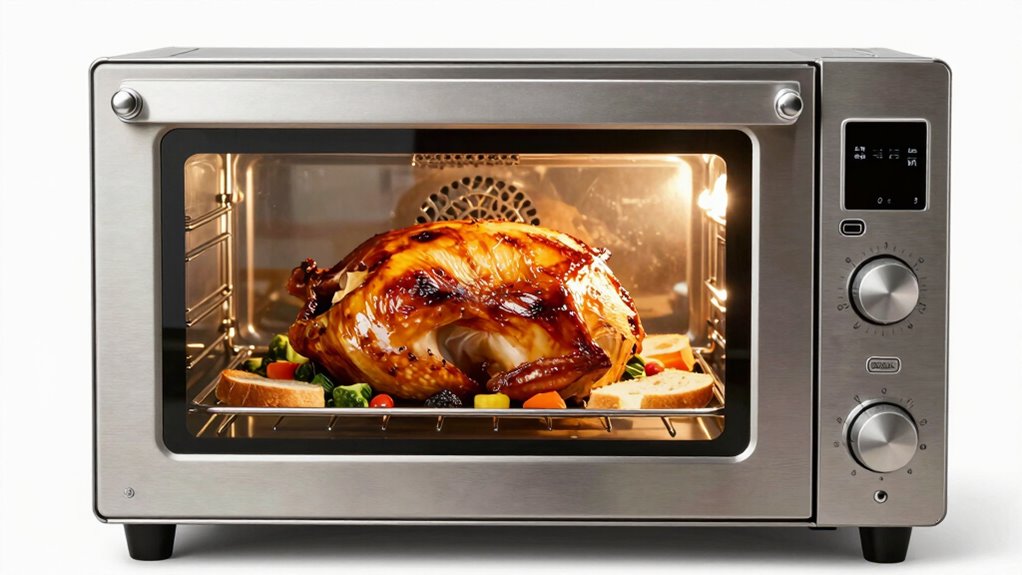
Convection ovens excel at cooking foods that benefit from quick, even heat and crispy textures. They’re ideal for pizza baking, giving you a crisp crust and evenly melted toppings. Vegetable roasting also benefits, as the hot air helps vegetables develop a caramelized exterior while staying tender inside. To understand this better, consider the table below:
| Food Type | Why It Works |
|---|---|
| Pizza | Crispy crust, even cheese melting |
| Roasted Vegetables | Even cooking, caramelized edges |
| Baked Chicken | Juicy inside with crispy skin |
| Cookies | Uniform browning, crisp edges |
| Fries | Crispy exterior, fluffy interior |
Use your convection oven to enhance texture and flavor in these foods!
How to Use Your Countertop Convection Oven for Perfect Results

To achieve perfect results in your countertop convection oven, understanding how to set it up and operate it properly is key. First, recognize that convection ovens are versatile for both baking versus roasting, but they require different adjustments. Second, avoid common convection oven myths, like the belief that you should always lower baking temperatures—often unnecessary. To optimize your cooking:
- Use the convection setting for roasting meats and vegetables to ensure even browning.
- Switch to bake mode when baking delicate items like cakes or cookies for gentler heat.
- Adjust cooking times slightly shorter than traditional recipes, as convection circulates heat more efficiently.
Mastering these steps helps you leverage your oven’s strengths for perfectly cooked dishes every time.
Key Features to Look for When Buying a Countertop Convection Oven

When choosing a countertop convection oven, focusing on its key features guarantees you get a model that meets your cooking needs. Look for a device with fast cooking speed to save time and handle a variety of dishes efficiently. Heat consistency is equally important; a good convection oven distributes heat evenly, preventing hot spots and ensuring perfect results every time. Check the oven’s wattage and fan strength, as higher wattage often translates to quicker, more uniform cooking. Adjustable temperature controls and multiple cooking modes add versatility, allowing you to customize settings for different recipes. Additionally, consider the size and capacity to match your space and cooking volume. Prioritizing these features ensures you select an oven that performs reliably and helps you achieve consistent, delicious results.
Troubleshooting Common Issues With Convection Ovens
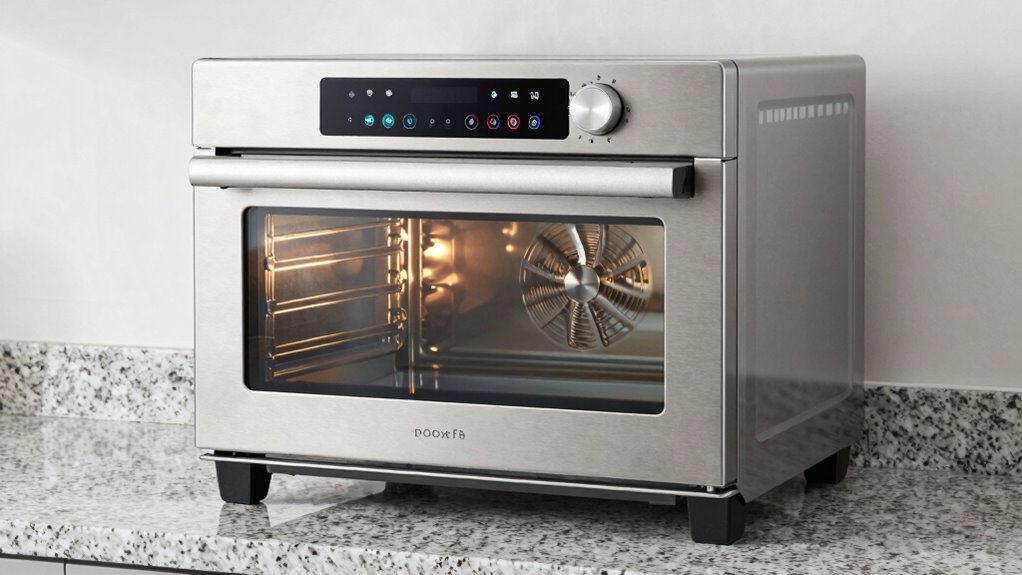
If your convection oven isn’t working properly, you might notice common issues like uneven cooking or temperature fluctuations. These problems can be frustrating, but many are simple to fix with some basic troubleshooting. Let’s look at how to address common convection oven problems and correct temperature inconsistencies.
Common Convection Problems
Are you experiencing issues with your convection oven not heating properly or cooking unevenly? Common problems include strange convection noise, improper heat distribution, and size-related issues. To troubleshoot:
- Check for excessive convection noise, which may indicate a fan problem or debris blocking airflow.
- Ensure the oven size matches your cooking needs; a smaller oven may struggle to circulate hot air evenly.
- Verify that the fan is functioning correctly, as a malfunctioning fan causes uneven cooking and noise.
Addressing these issues often involves cleaning the fan, adjusting oven placement, or consulting the manufacturer for repairs. Understanding how oven size impacts airflow and noise can help you prevent future problems and optimize your convection cooking experience.
Fixing Temperature Inconsistencies
Temperature inconsistencies in your convection oven can be frustrating, but many issues stem from simple causes you can address. Temperature fluctuations often result from calibration issues, where the oven’s internal thermometer isn’t accurate. To fix this, start by checking your oven’s temperature against a reliable thermometer. If you notice a discrepancy, consult your user manual to recalibrate the oven’s thermostat or contact a professional for calibration. Additionally, ensure the oven isn’t overloaded, as overcrowding can hinder air circulation and cause uneven heating. Regularly cleaning the interior and heating elements helps maintain consistent temperatures. Keep in mind that older models may naturally have more fluctuations, so knowing your oven’s quirks can help you better manage temperature accuracy and achieve more consistent cooking results.
Convection vs. Traditional Oven Settings: What’s the Difference?
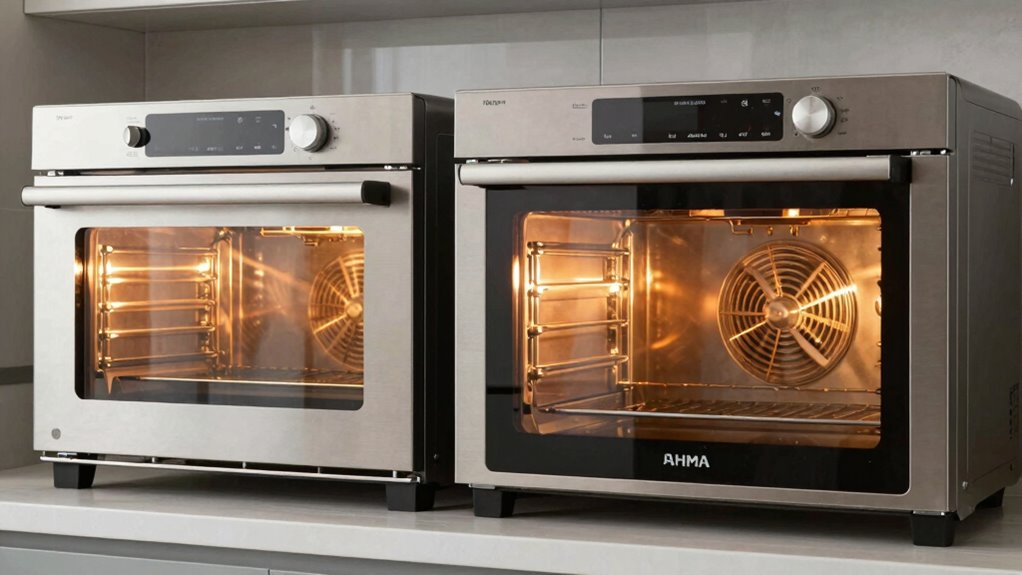
Convection oven settings differ markedly from traditional oven modes because they use a fan and exhaust system to circulate hot air around food, resulting in faster and more even cooking. This impacts how you approach baking vs. roasting, as convection excels at browning and crisping. Unlike convection vs. microwave, which heats quickly but unevenly, convection provides consistent heat distribution. When choosing between settings, consider:
- For baked goods needing gentle heat, stick to traditional modes.
- For roasting meats or vegetables, convection speeds up cooking and enhances browning.
- When replacing microwave heating, convection offers a more thorough, even heat, especially for reheating or crisping leftovers.
Understanding these differences helps you optimize your countertop convection oven’s potential and select the best setting for each task.
Do You Need a Convection Oven? Pros and Cons Explained
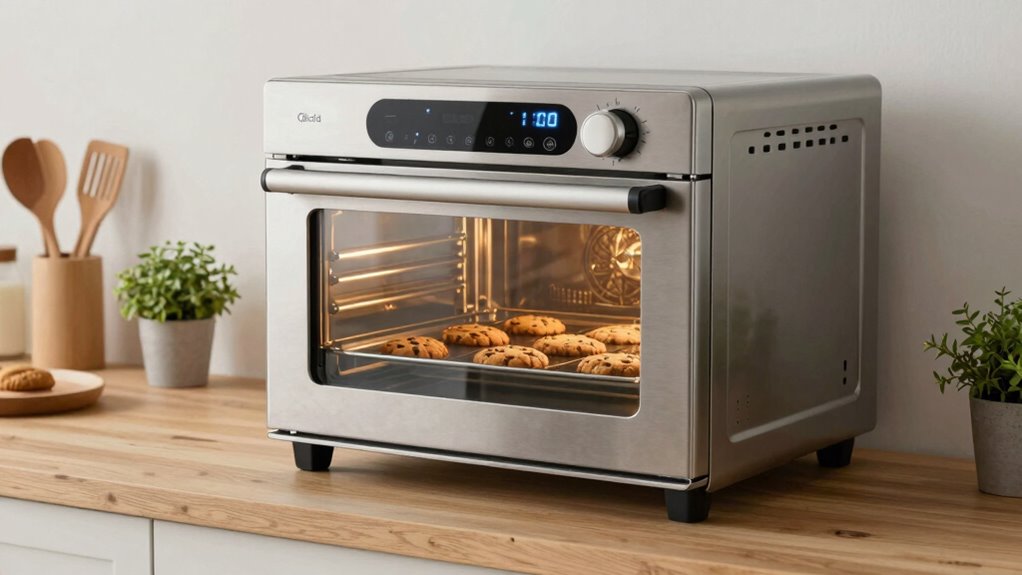
Deciding whether a convection oven is right for you depends on your cooking habits and priorities. If you value faster cooking speed and flavor enhancement, a convection oven can be a game-changer. It circulates hot air, reducing cooking time and creating more evenly cooked dishes with better taste. However, if you prefer gentle baking or delicate baking tasks, it might not be ideal, as convection can sometimes dry out food. Consider this table to evaluate:
| Benefits | Drawbacks | Best For |
|---|---|---|
| Faster cooking times | May dry out some foods | Roasting, baking cookies |
| Even heat distribution | Not suitable for all recipes | Crispy vegetables, meats |
| Flavor enhancement | Learning curve | Roasts, casseroles |
| Energy efficiency | Adjusting recipes needed | Quick meal prep |
| Consistent results | Potential for overcooking | Reheating leftovers |
Tips for Cleaning and Maintaining Your Countertop Convection Oven
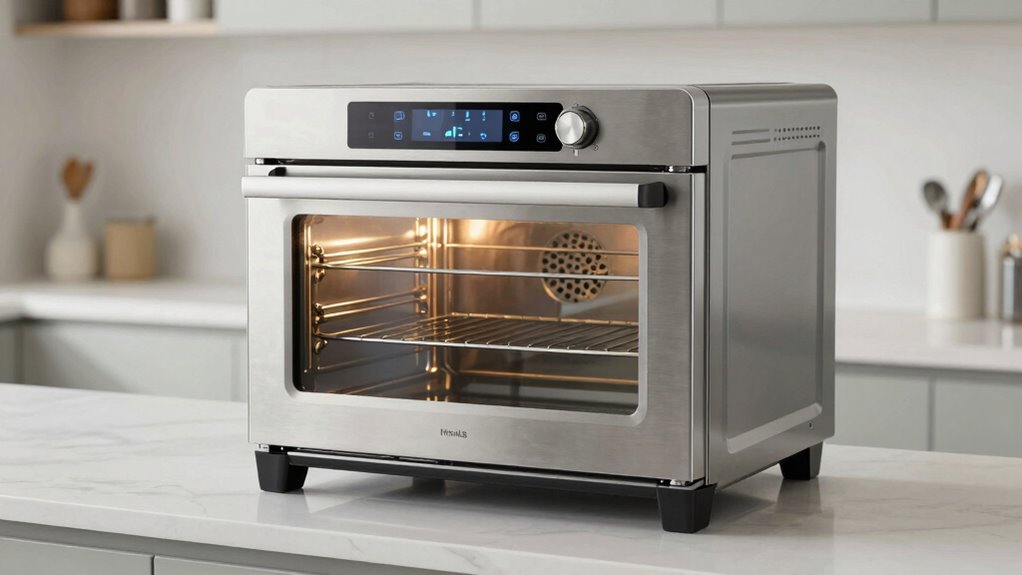
Keeping your countertop convection oven in top shape guarantees it continues to cook efficiently and produces delicious results. Regular cleaning and maintenance routines are essential. Here are some cleaning tips to keep it spotless:
- Wipe down the interior and exterior with a damp cloth after each use to prevent grease buildup.
- Remove and clean the crumb tray and accessories regularly to avoid odors and fire hazards.
- Use a gentle brush or toothbrush to clean vents and fan blades, ensuring proper airflow.
For maintenance routines, check the door seal for damage and replace if needed. Avoid abrasive cleaners that can scratch surfaces. By following these simple steps, you ensure your oven remains in prime condition, extending its lifespan and maintaining peak performance.
Frequently Asked Questions
Can a Countertop Convection Oven Replace a Full-Sized Oven?
A countertop convection oven can replace a full-sized oven for many tasks, especially if you have limited space. Its oven capacity is smaller but sufficient for everyday cooking, and the convection feature speeds up cooking times. You’ll find it convenient for baking, roasting, and reheating. However, for large meals or multiple dishes at once, a full-sized oven might still be necessary to meet your needs efficiently.
How Energy-Efficient Are Countertop Convection Ovens?
Think of your countertop convection oven as a smart, efficient traveler. It uses less energy, leading to energy savings and a smaller environmental impact. Because it heats faster and focuses heat more precisely, it consumes less power than larger ovens. You’ll notice lower utility bills and a greener footprint. This compact marvel helps you cook efficiently while doing your part for the planet, making it an eco-friendly choice in your kitchen.
Are Convection Ovens Safe for All Types of Cookware?
Yes, convection ovens are generally safe for most cookware, but you should always check for compatibility. Metal, glass, and ceramic dishes usually work well, but avoid non-stick or thin plastic containers, as they may warp or melt. Safety considerations include avoiding aluminum foil touching the heating elements, and ensuring lids are oven-safe. Always follow your oven’s manufacturer instructions to prevent accidents and damage.
How Do I Prevent Food From Drying Out in a Convection Oven?
Imagine your dish wrapped in a gentle, steamy hug— that’s how you prevent food from drying out in a convection oven. Use baking tips like covering your food with foil or adding a bit of broth to boost moisture retention. Also, avoid overcooking and keep an eye on the time. These simple tricks help keep your dishes juicy and flavorful, even with the powerful airflow of convection baking.
What’s the Typical Lifespan of a Countertop Convection Oven?
A countertop convection oven typically lasts 3 to 5 years with proper oven maintenance. To extend its lifespan, regularly clean the interior and check the convection technology components for wear. Avoid overuse and make sure you follow the manufacturer’s guidelines. Proper maintenance keeps the convection fan and heating elements in good shape, ensuring efficient performance and prolonging the oven’s life.
Conclusion
In conclusion, a countertop convection oven can speed up your cooking by up to 25% and deliver evenly browned, crispy results. With nearly 60% of home cooks now using convection for their favorite recipes, it’s clear these appliances are a game-changer. Whether you’re baking, roasting, or reheating, mastering your convection oven will save you time and improve your dishes. So, give it a try—your kitchen efficiency will thank you!