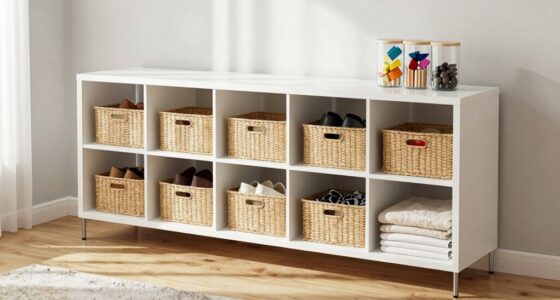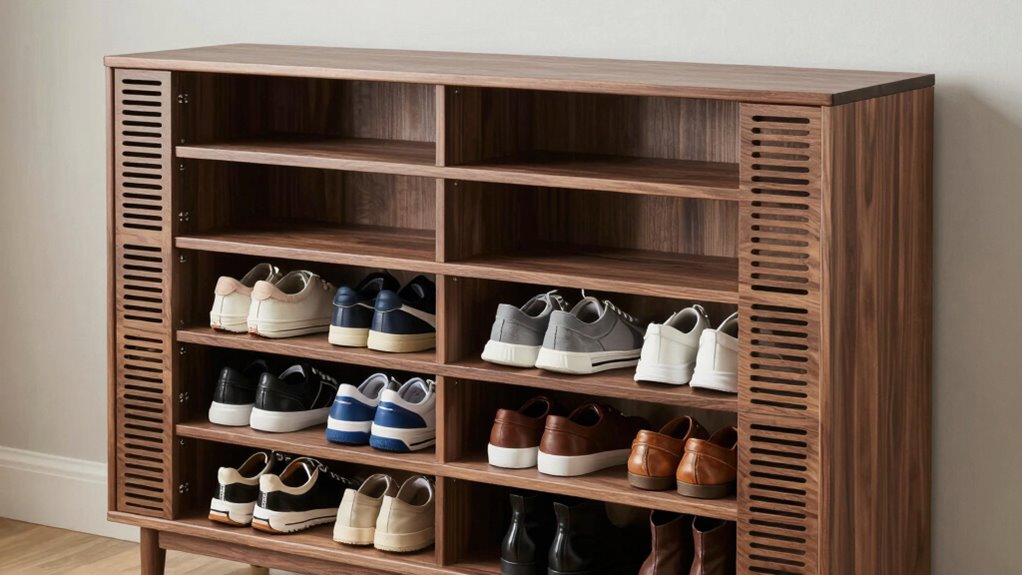
Choosing the right shoe cabinet involves selecting a depth of 12-16 inches to comfortably fit most footwear, including boots. Good ventilation, such as slatted doors or perforated panels, helps keep shoes fresh and odor-free by allowing moisture to escape. Typically, a standard cabinet holds 12 to 24 pairs, but this depends on size and shelf arrangement. To guarantee you get the best fit for your space and shoes, learn how proper measurements and features can enhance your storage solutions.
Key Takeaways
- Standard shoe cabinets are typically 12-16 inches deep, accommodating most footwear, including taller shoes like boots.
- Proper ventilation, via perforated panels or breathable materials, prevents moisture buildup and extends shoe lifespan.
- Most cabinets hold 12-24 pairs, depending on shelf design, shoe size, and cabinet dimensions.
- Accurate measurement of available space and shoe sizes ensures optimal capacity and easy access.
- Durable materials with ventilation features enhance longevity and maintain shoes in good condition.
What’s the Right Depth for Your Shoe Cabinet?
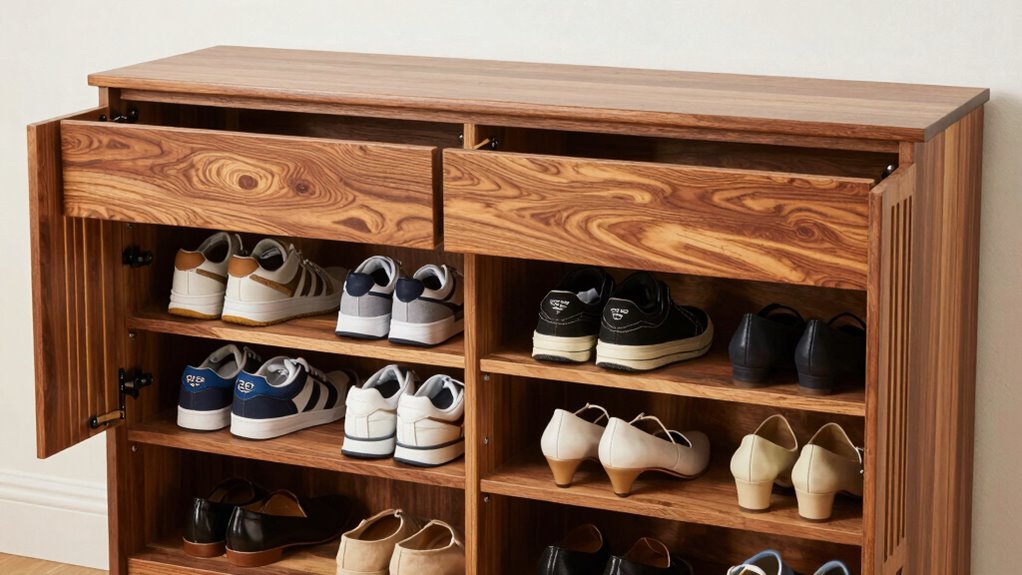
Choosing the right depth for your shoe cabinet is essential to guarantee it fits your footwear comfortably while maximizing storage space. The depth determines how easily you can access shoes and how many pairs you can store. Generally, a depth of about 12 to 16 inches works well for most shoes, allowing enough room for shoe height without wasting space. Keep in mind that deeper cabinets tend to be heavier, which can affect ease of installation and mobility. If your cabinet is too shallow, your shoes might not fit comfortably, especially taller styles like boots. Balancing depth with weight is key—opt for a sturdy, well-constructed cabinet that can support the weight of your footwear collection without risking damage or instability.
Why Good Ventilation Keeps Shoes Fresh and Odor-Free
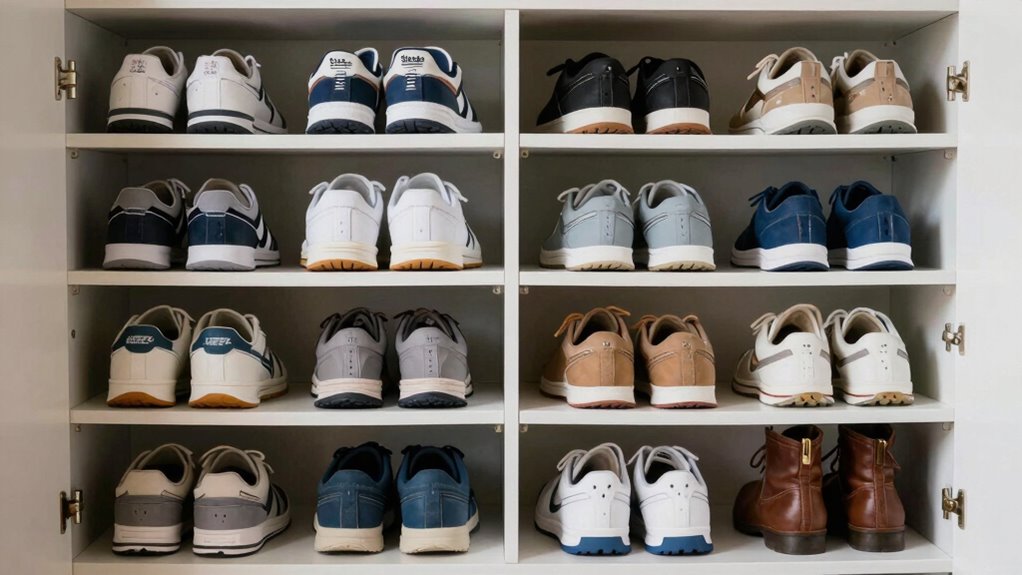
Good ventilation is essential for keeping your shoes fresh and odor-free because it allows moisture and sweat to escape, preventing mold and bacteria growth. The shoe material greatly impacts how well your shoes breathe; leather and mesh allow better airflow, while synthetic materials may trap moisture. Proper airflow also preserves your cabinet aesthetics by reducing unpleasant odors and mold buildup that can stain or damage footwear. A well-ventilated cabinet helps maintain a healthy environment inside, keeping your shoes dry and fresh longer. This not only extends their lifespan but also ensures they stay appealing and odor-free. Good ventilation is a simple but effective way to protect your footwear investment, keeping your shoes clean, fresh, and ready to wear whenever you need them. Additionally, airflow management plays a crucial role in preventing moisture accumulation and maintaining shoe quality over time, especially when considering the material breathability of your footwear. Furthermore, incorporating ventilation techniques can significantly improve overall shoe preservation.
How Many Pairs Can a Typical Shoe Cabinet Hold?
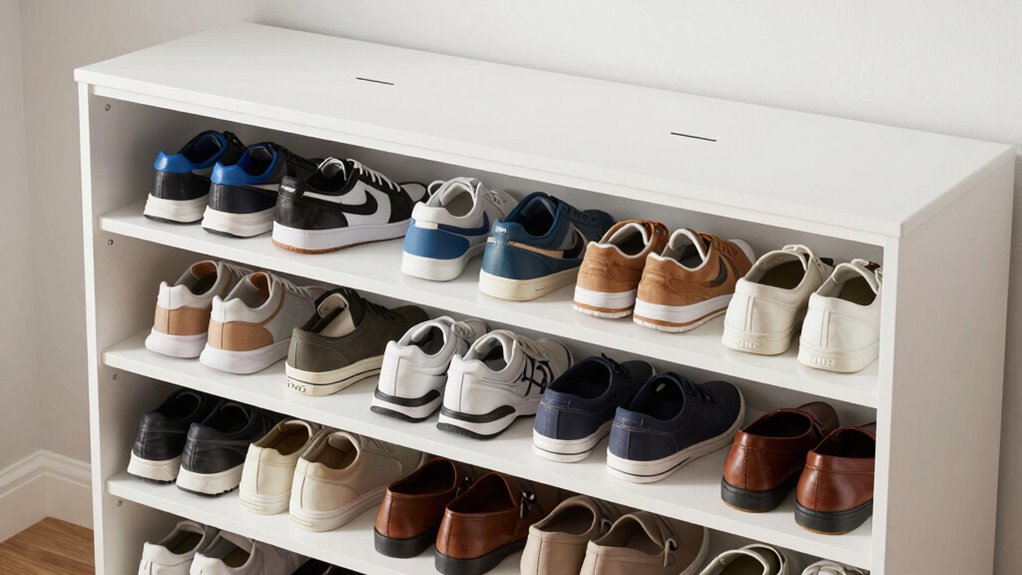
The capacity of a shoe cabinet varies widely depending on its design and size. Typically, a standard cabinet can hold between 12 to 24 pairs of shoes, but this depends on how you organize them. Your shoe size influences how many shoes fit — larger sizes take up more space, reducing capacity. The material of your shoes also matters; stiff leather or heavy boots may need more room than lightweight sneakers. Shelving height and depth play critical roles, so if your cabinet has adjustable shelves, you can optimize space based on your shoe collection. Keep in mind that overstuffing can damage shoes and make access difficult. To maximize capacity, consider how your shoes’ size and material affect their storage needs. Additionally, understanding Free Floating can help you make informed decisions when organizing and maintaining your shoe storage space.
How to Choose the Perfect Shoe Cabinet Size for Your Shoes and Space
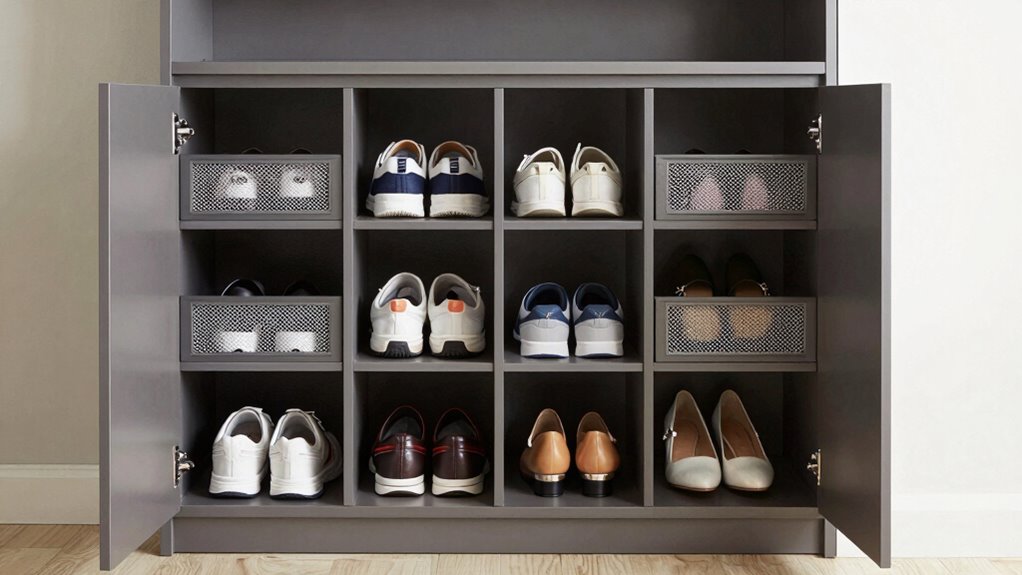
Start by evaluating how many pairs of shoes you need to store and what types they are. Then, measure the space where you plan to place the cabinet to guarantee a proper fit. Combining these insights will help you choose a size that suits both your storage needs and your available space. Additionally, consider the storage capacity of different shoe cabinets to ensure they can accommodate your collection comfortably. Remember to account for ventilation to prevent odors and moisture buildup, which is crucial for maintaining shoe quality over time. Knowing the types of shoes you own can also influence the design, such as opting for taller compartments for boots or wider sections for sneakers. Selecting a design feature like adjustable shelves or specialized compartments can further optimize your organization and make accessing your shoes more convenient.
Assess Your Storage Needs
Before choosing a shoe cabinet, it is vital to evaluate how many shoes you need to store and the available space in your home. Consider these factors to determine the right size:
- The total number of shoes you regularly wear.
- The types of footwear, which influence the height and depth needed.
- Your preferred shoe material and color options for aesthetic cohesion.
- The cabinet’s ventilation to prevent odor buildup and maintain shoe quality.
- The European cloud innovation in storage solutions can offer advanced ventilation systems that enhance airflow and keep shoes fresh. Incorporating modern ventilation technology can further improve odor control and extend the lifespan of your shoes. Additionally, assessing the storage capacity helps ensure you select a cabinet that accommodates your entire collection comfortably without overcrowding. For example, if you have a large shoe collection, opt for a taller, wider unit with adjustable shelves. Keep in mind that your choice of material and color options should complement your space and style, ensuring both functionality and visual harmony. Furthermore, considering ergonomic design can improve ease of access and overall usability of your shoe storage. Taking these considerations into account will help you select a properly sized shoe cabinet that fits your needs and space efficiently.
Measure Available Space
To choose the right size for your shoe cabinet, measuring the available space accurately is key. Start by noting the height, width, and depth of the area where you plan to place it. Consider the shoe height—ensure the cabinet compartments can accommodate taller boots or heels. Also, check the cabinet weight—if you need to move it easily, opt for a lightweight model. Use this table to guide your measurements:
| Space Dimensions | Important Factors |
|---|---|
| Width & Depth | Fit shoes comfortably, avoid crowding |
| Height | Accommodate shoe height, including boots |
| Cabinet Weight | Ease of placement or relocation |
Accurate measurement guarantees your new shoe cabinet fits perfectly and meets your storage needs. Additionally, ensuring proper ventilation in the cabinet helps prevent moisture buildup and keeps shoes in good condition, which is essential for preventing mold and odors. Proper airflow can extend the lifespan of your shoes and maintain a fresh environment inside the cabinet, especially when considering moisture control. Incorporating ventilation features like small vents or breathable materials can significantly improve air circulation within the cabinet.
Tips to Maximize Storage in Small Spaces

When space is limited, maximizing your storage options is essential. To improve shoe organization and optimize space, consider these strategies:
- Use vertical storage solutions like stacking shelves or tall cabinets to make the most of height.
- Incorporate slim, pull-out drawers for discreet shoe storage in tight corners.
- Install wall-mounted racks or hooks to keep frequently worn shoes accessible while freeing up floor space.
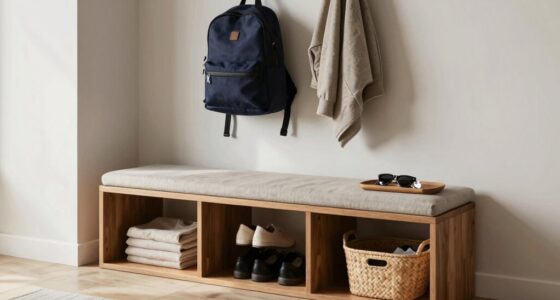
- Choose multi-functional furniture, such as ottomans with hidden compartments, to combine seating and storage.
- Be mindful of storage organization principles to ensure your shoes are both accessible and well-maintained over time.
- Consider using materials with good airflow like breathable mesh or perforated shelving to keep shoes fresh and prevent odors.
- When selecting shelving, consider the depth of shoe cabinets to ensure they accommodate your footwear comfortably without wasting space.
What Materials and Features Help Ventilate and Last Longer?
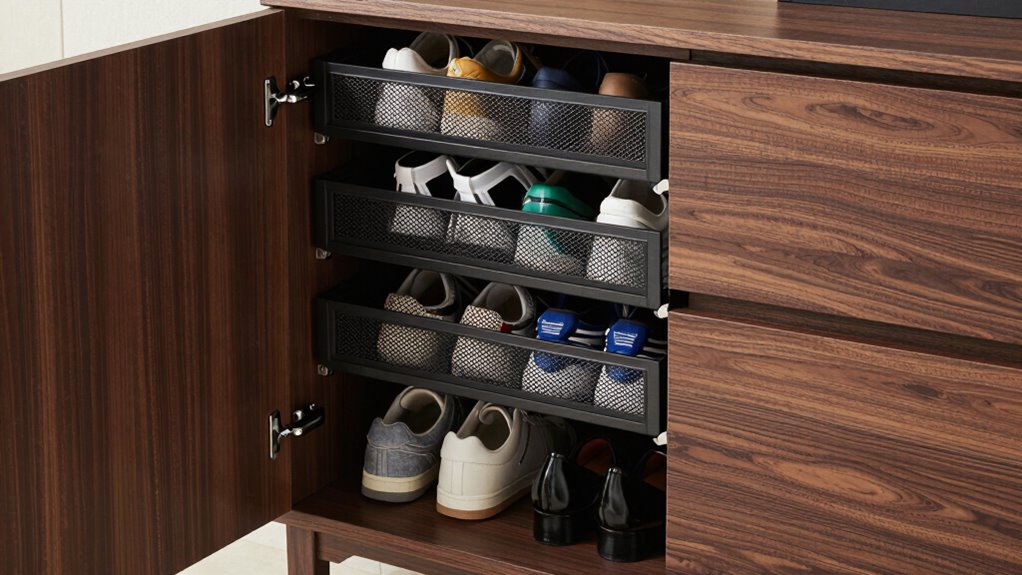
Choosing the right materials can make your shoe cabinet last longer and stay ventilated. Breathable options like mesh or perforated panels help air circulate and prevent odors. Look for durable, corrosion-resistant features to keep your cabinet in great shape over time.
Breathable Material Options
Breathable materials are essential for keeping shoe cabinets fresh and preventing musty odors. Using breathable fabric or natural materials ensures proper airflow, extending the lifespan of your shoes. Here are key options to consider:
- Linen or Canvas – Lightweight, natural fabrics that promote ventilation.
- Bamboo Fiber – Eco-friendly, naturally antimicrobial, and highly breathable.
- Hessian or Jute – Durable natural materials that allow air circulation while resisting moisture.
- Mesh Panels – Incorporate breathable fabric sections for enhanced airflow and quick drying.
Choosing cabinets with these materials helps maintain a dry environment, reduces odor buildup, and preserves your shoes longer. Opt for natural options when possible, as they combine durability with effective ventilation.
Durable and Corrosion-Resistant Features
To make certain your shoe cabinet withstands daily use and environmental challenges, look for materials and features that are both durable and resistant to corrosion. Choosing high-quality metals like stainless steel or aluminum helps ensure longevity, as they resist rust and degradation over time. Incorporate ventilation features such as slatted doors or perforations, which improve airflow and reduce moisture buildup. Essential durability considerations include sturdy hinges and reinforced joints that handle frequent opening. To prevent corrosion, avoid materials prone to rust, and opt for protective coatings or powder finishes. Here’s a quick overview:
| Material | Durability Considerations | Corrosion Prevention |
|---|---|---|
| Stainless Steel | High resistance to wear | Coated to prevent rust |
| Aluminum | Lightweight, strong | Anodized surface |
| Powder-Coated Metal | Scratch-resistant | Protective coating |
| Plastic (UV-resistant) | Impact-resistant | No corrosion risk |
| Wood with Sealant | Durable with proper care | Less prone to corrosion |
Common Mistakes to Avoid When Picking a Shoe Cabinet
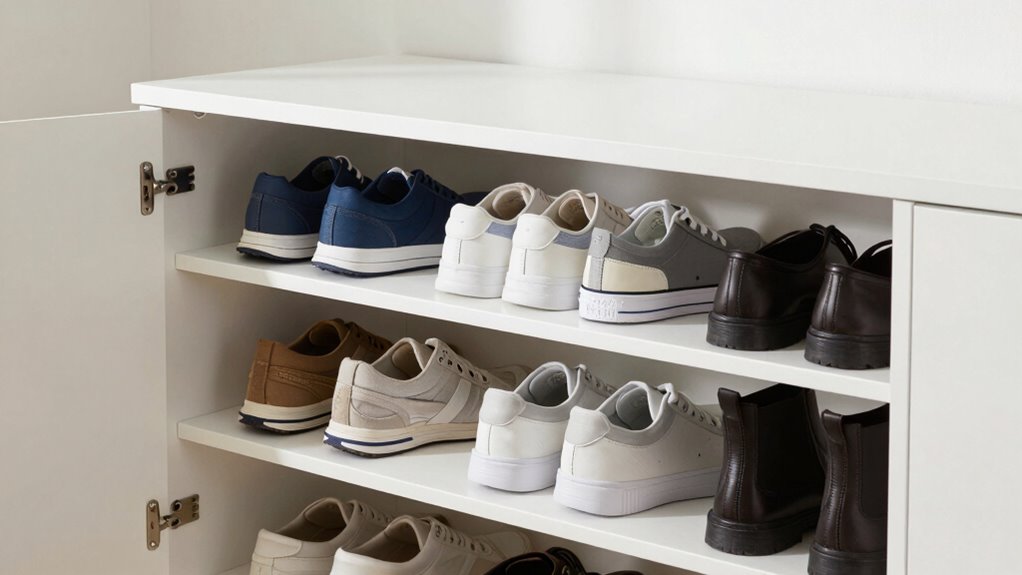
When selecting a shoe cabinet, many people overlook important details that can lead to problems later on. First, don’t ignore the shoe material; choosing the wrong material can affect durability and appearance. Second, prioritize cabinet aesthetics—ensure it complements your space and style. Third, avoid buying a cabinet that’s too shallow or narrow, which limits shoe storage and causes clutter. Fourth, don’t overlook ventilation—poor airflow can lead to odors and damage. By focusing on these aspects, you reduce the risk of dissatisfaction and future replacements. Remember, a well-chosen cabinet balances material quality and visual harmony, ensuring your shoes stay organized and in good condition. Avoid these common mistakes for a functional, stylish addition to your home.
How to Measure Your Space and Shoe Collection for the Best Fit

Measuring your space and shoe collection accurately is essential to choosing a cabinet that fits perfectly and keeps your shoes organized. Start by measuring the available space’s width, depth, and height, ensuring you account for door clearance and ventilation needs. Next, assess your shoe size and how many pairs you typically own; this helps determine the cabinet’s capacity. Consider your personal style—whether you prefer a sleek, minimalist look or something more spacious—and choose a size that complements your decor. Lay out your shoes or use a rough count to estimate how many will fit comfortably. By combining these measurements with your shoe size and style preferences, you’ll select a shoe cabinet that maximizes storage without overcrowding your space.
Frequently Asked Questions
What Are the Best Materials for Odor-Resistant Shoe Cabinets?
You should choose materials like bamboo, cedar, or plastic for odor-resistant shoe cabinets. Bamboo and cedar naturally control odors and offer good durability, making them ideal for long-term use. Plastic also provides excellent odor control, is easy to clean, and resists moisture. These materials help prevent bad smells, ensuring your shoes stay fresh, while also offering the durability needed for everyday use in your cabinet.
How Often Should I Clean and Maintain My Shoe Cabinet?
Think of your shoe cabinet as a trusted friend—you need to check in regularly. You should clean it every 1-2 months, depending on usage, and follow simple cabinet maintenance tips like wiping down surfaces and checking for odors. A consistent shoe cleaning schedule prevents dirt buildup and keeps your shoes fresh. Staying proactive helps your cabinet stay organized, odor-free, and in top shape—making your space more inviting every day.
Can Adjustable Shelves Improve Shoe Storage Flexibility?
Yes, adjustable shelving can substantially improve your shoe storage flexibility. By customizing shelf heights, you can easily accommodate different shoe sizes and types, making your cabinet more versatile. This feature allows you to optimize space, prevent clutter, and organize your shoes more efficiently. With adjustable shelving, you gain better control over your storage layout, ensuring your shoe cabinet adapts to your needs as your collection grows or changes over time.
Are There Eco-Friendly Options for Ventilated Shoe Cabinets?
Yes, you can find eco-friendly ventilated shoe cabinets made from sustainable materials like bamboo or reclaimed wood. Look for cabinets with eco-friendly coatings that protect the wood without harmful chemicals. These options promote sustainability and improve ventilation, helping your shoes stay fresh longer. By choosing eco-conscious materials and finishes, you support environmentally responsible choices while keeping your footwear organized and well-ventilated.
How Do I Prevent Mold and Mildew in My Shoe Storage?
To prevent mold and mildew in your shoe storage, focus on moisture control and mold prevention. Keep the area dry by ensuring proper ventilation, use silica gel packs or moisture absorbers, and avoid storing wet shoes. Regularly clean and wipe down shelves, and consider using antifungal sprays if needed. These steps help maintain a dry environment, reducing mold growth and keeping your shoes fresh and in good condition.
Conclusion
Choosing the right shoe cabinet isn’t just about fitting your shoes—it’s about protecting them. Think of it as giving your footwear a cozy, well-ventilated home where they can breathe and stay fresh. By considering depth, ventilation, and capacity, you’ll create a space that works for your shoes and your home. Don’t let clutter win—design your perfect shoe storage today and let your shoes be the stars they deserve to be.