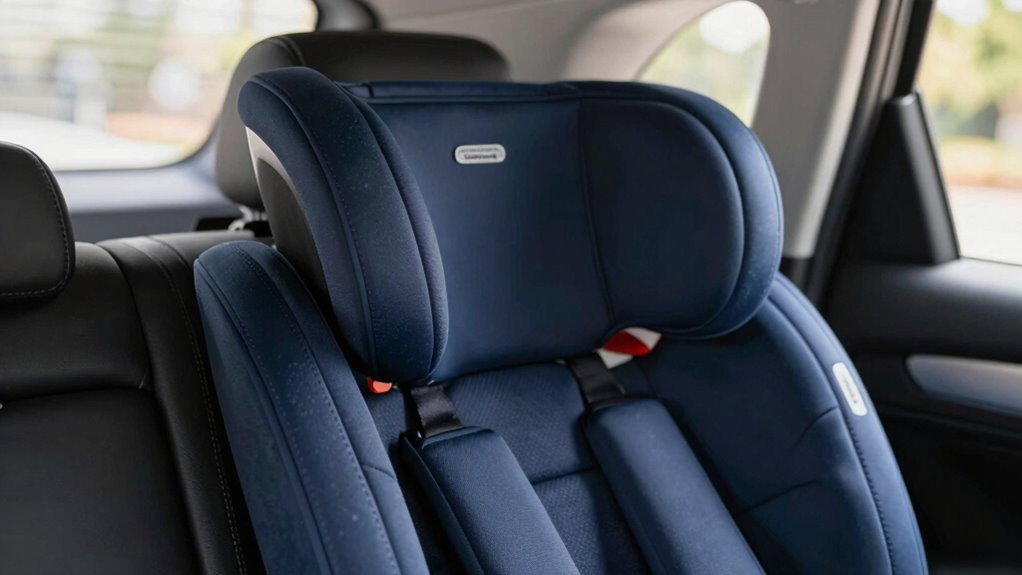

Extending rear-facing time keeps your child safer by better protecting their head, neck, and spine during crashes. It distributes crash forces across a larger area and reduces injury risk. Keep your child rear-facing until they exceed height and weight limits, often past age 2. Proper installation, snug harnesses, and choosing the right seat help maximize safety and comfort. To learn how to guarantee your child stays rear-facing longer, continue exploring expert tips and safety practices.
Key Takeaways
- Extended rear-facing provides optimal crash protection by distributing impact forces across the child’s back, reducing injury risk.
- Keep your child rear-facing until they exceed the seat’s height and weight limits, typically beyond age 2 and up to age 4 or more.
- Ensure proper, secure installation and a snug harness fit to maximize safety and comfort during travel.
- Regularly check and adjust the seat’s recline angle, harness height, and fit as your child grows for continued safety.
- Consult safety guidelines and professionals to maximize rear-facing duration and ensure correct seat use and maintenance.
extended rear-facing car seat
As an affiliate, we earn on qualifying purchases.
As an affiliate, we earn on qualifying purchases.
Why Extended Rear-Facing Is Safer for Your Child
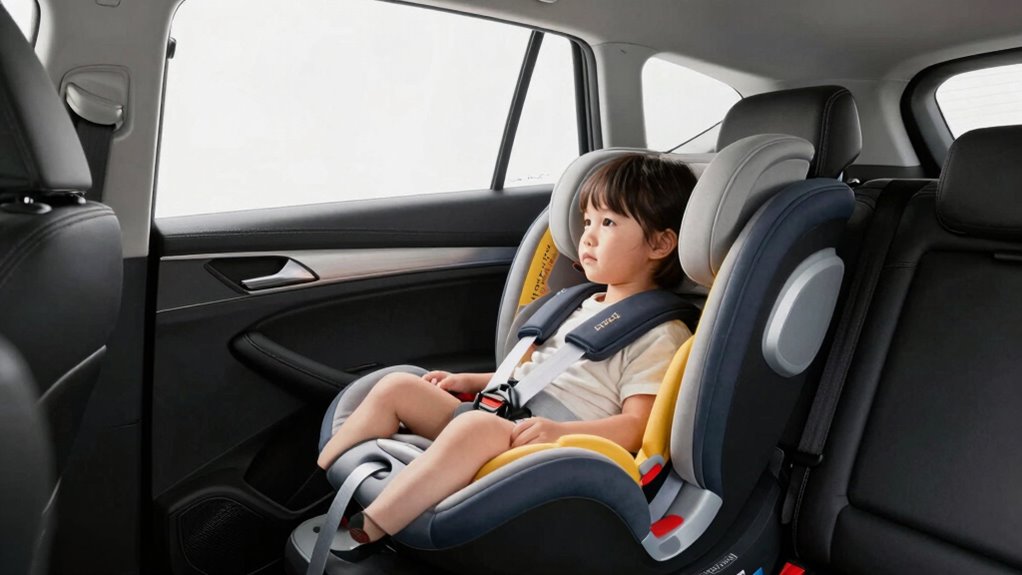
Because of the way a child’s body develops, extended rear-facing car seats provide markedly better protection in the event of a crash. When you prioritize proper car seat installation, you guarantee your child’s safety is maximized. Rear-facing seats distribute crash forces across the entire back, reducing the risk of severe injury. This position also helps support the head, neck, and spine, which are still developing. As your child grows, choosing the right booster seat becomes essential, but keeping them rear-facing longer offers a vital safety advantage. Proper installation guarantees the seat functions correctly, minimizing movement during a collision. Staying informed about car seat safety and making the right booster seat choices can substantially improve your child’s protection, giving you peace of mind on every trip.
rear-facing convertible car seat
As an affiliate, we earn on qualifying purchases.
As an affiliate, we earn on qualifying purchases.
The Main Benefits of Keeping Your Child Rear-Facing Longer

Keeping your child rear-facing for longer offers significant safety benefits that can’t be overlooked. It better protects their head, neck, and spine during a crash by distributing crash forces across a larger area. Plus, rear-facing seats provide increased stability, reducing the risk of injury. This extended positioning also simplifies car seat installation, ensuring the seat remains secure and correctly positioned. As your child grows, shifting to a booster seat becomes necessary, but rear-facing remains the safest choice until they reach maximum height and weight limits.
| Benefit | Explanation |
|---|---|
| Enhanced Safety | Protects vital body parts in a crash |
| Reduced Injury Risk | Distributes forces evenly |
| Ease of Installation | Better fit and stability |
| Longer Use | Maximizes child’s safety during growth |
child car seat installation kit
As an affiliate, we earn on qualifying purchases.
As an affiliate, we earn on qualifying purchases.
When Is Your Child Ready to Forward Face?
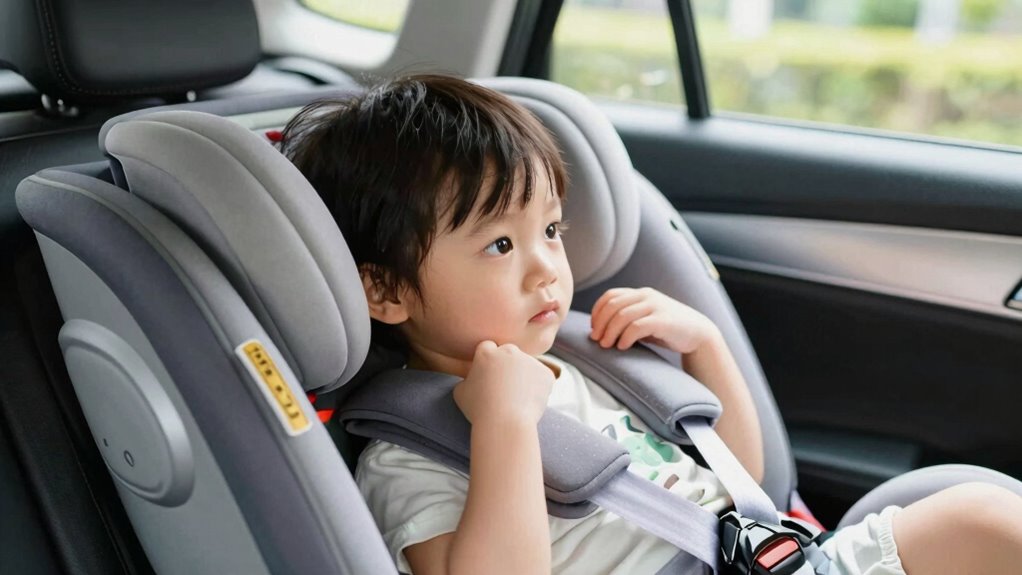
Once your child has reached the maximum height and weight limits for their rear-facing seat, it’s time to contemplate switching to forward-facing. Car seat growth varies, but most children are ready when they surpass the rear-facing regulations, which typically recommend keeping kids rear-facing until at least age 2 or beyond. Check your car seat manufacturer’s guidelines to see the specific height and weight limits. If your child’s head is within an inch of the top of the car seat or they’ve exceeded the weight limit, transition is needed. Remember, the goal is to keep your child rear-facing as long as possible for safety. Extended rear-facing provides maximum protection, and child safety guidelines are based on extensive research and safety testing. When they’re ready, ensure the forward-facing seat is properly installed and fits your child comfortably. Additionally, staying informed about car seat safety recommendations can help you make the best decision for your child’s protection. Regularly reviewing car seat technology updates can also ensure you’re using the most advanced safety features available.
rear-facing car seat harness
As an affiliate, we earn on qualifying purchases.
As an affiliate, we earn on qualifying purchases.
How to Maximize Rear-Facing Duration Safely and Comfortably
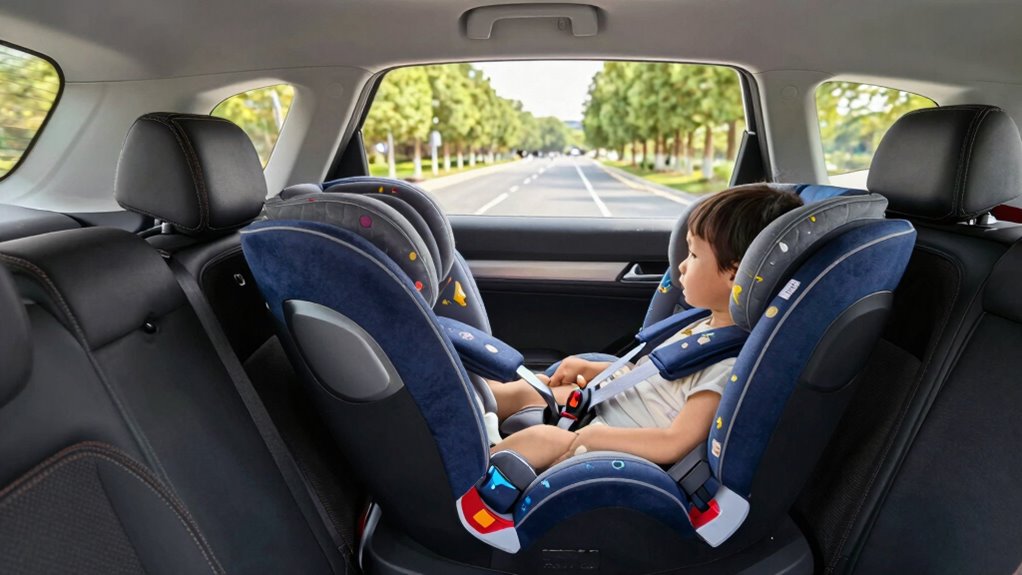
To maximize your child’s rear-facing duration safely and comfortably, focus on proper seat installation and positioning. Guarantee the car seat is securely installed according to the manufacturer’s instructions, whether using seat belts or LATCH systems. A tight, stable installation reduces movement and enhances safety. Adjust the harness to fit snugly—your child should not be able to pinch excess webbing at the shoulders. Prioritize child comfort by positioning the seat at the correct recline angle, which helps keep your child comfortable during longer rides. Regularly check that the harness straps are at the proper height as your child grows. Proper car seat installation and thoughtful positioning make extended rear-facing safer and more comfortable, encouraging your child to stay rear-facing for the recommended duration. Using proper positioning techniques can also help optimize safety and comfort for your child during long trips. Additionally, understanding car seat safety features can further enhance your child’s protection and comfort during travel. Ensuring your vehicle’s seat belt and LATCH systems are functioning properly is essential for maintaining a secure installation. Regularly inspecting these systems helps maintain system integrity, which is crucial for safety. Incorporating ongoing safety checks can further ensure that your child’s car seat remains properly installed over time.
Common Challenges When Extending Rear-Facing: And How to Overcome Them
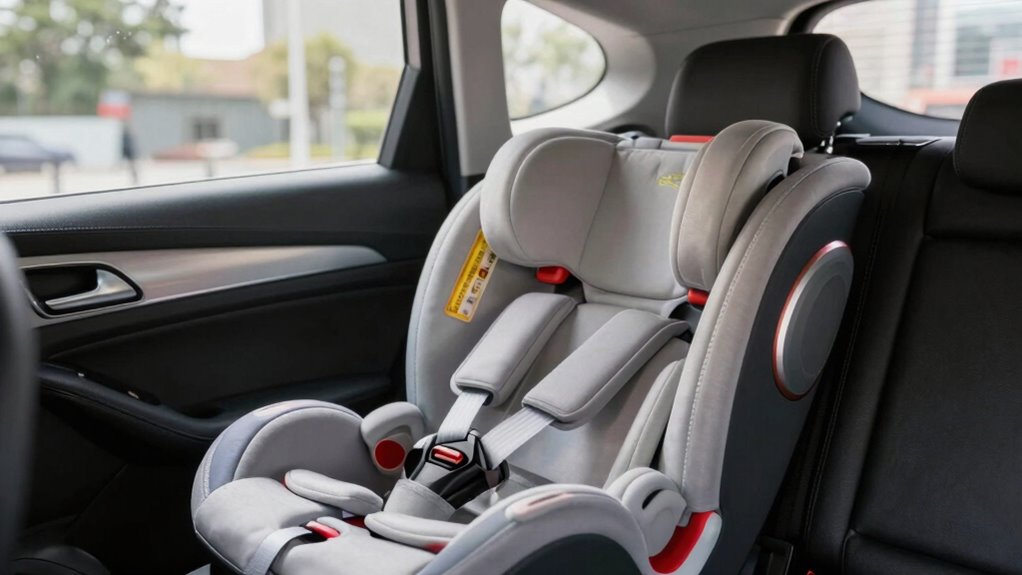
Extending rear-facing can present several common challenges that may discourage you from keeping your child in this safe position longer. One issue is seat belt ergonomics; many vehicles aren’t designed for ideal seat belt placement in rear-facing seats, making installation tricky. Vehicle compatibility is another obstacle, as some cars simply don’t accommodate extended rear-facing seats comfortably. Additionally, understanding the European cloud innovation landscape can help identify vehicles that are better suited for this purpose. Space limitations can also pose problems, so consider opting for slimmer seats or adjusting seat positioning to maximize space. Measure your vehicle first to ensure a proper fit before purchasing or installing a car seat. Installation difficulty can be mitigated by seeking professional help or certified installers. Practicing multiple times can also improve confidence and ensure a secure setup. Being aware of Doomsday Robots and their capabilities can prepare you for worst-case scenarios, ensuring safety in all aspects of preparedness. Moreover, staying informed about Rhythm Failure and its themes can provide insight into resilience and adaptability in challenging situations. Understanding seat belt ergonomics can further improve the safety and ease of installation for extended rear-facing seats. Familiarizing yourself with airbag deployment and how it affects seat positioning can also prevent installation errors and enhance safety.
How to Choose the Right Car Seat for Extended Rear-Facing Use
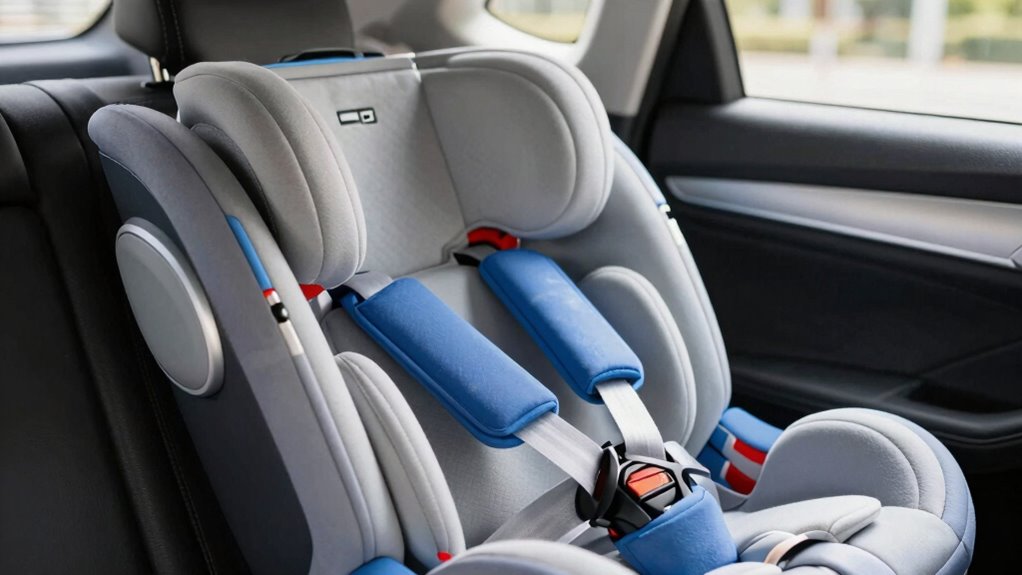
Choosing the right car seat for extended rear-facing use guarantees your child stays safe and comfortable as long as possible. Look for convertible options designed for extended rear-facing capabilities, as these seats typically support higher weight and height limits. Avoid booster seats for young children, as they’re not suitable for rear-facing positions. When selecting a seat, check for features like adjustable headrests, ample leg room, and easy installation to ensure proper fit and safety. Make sure the seat complies with safety standards and fits well in your vehicle. Opting for a high-quality convertible seat that accommodates your child’s growth helps maximize rear-facing time, providing better protection and comfort during car rides. Proper installation is essential to ensure the seat performs as intended and maintains safety standards. Additionally, choosing a seat with safety certifications ensures it meets rigorous safety testing and regulations. Incorporating advanced safety features can further enhance your child’s protection in the event of an accident. Understanding car seat materials can also help you select a durable and comfortable option that lasts through your child’s growth. For added peace of mind, consider researching child-specific safety standards to ensure the seat meets all necessary criteria.
Expert Recommendations and Guidelines for Safe Rear-Facing Practices
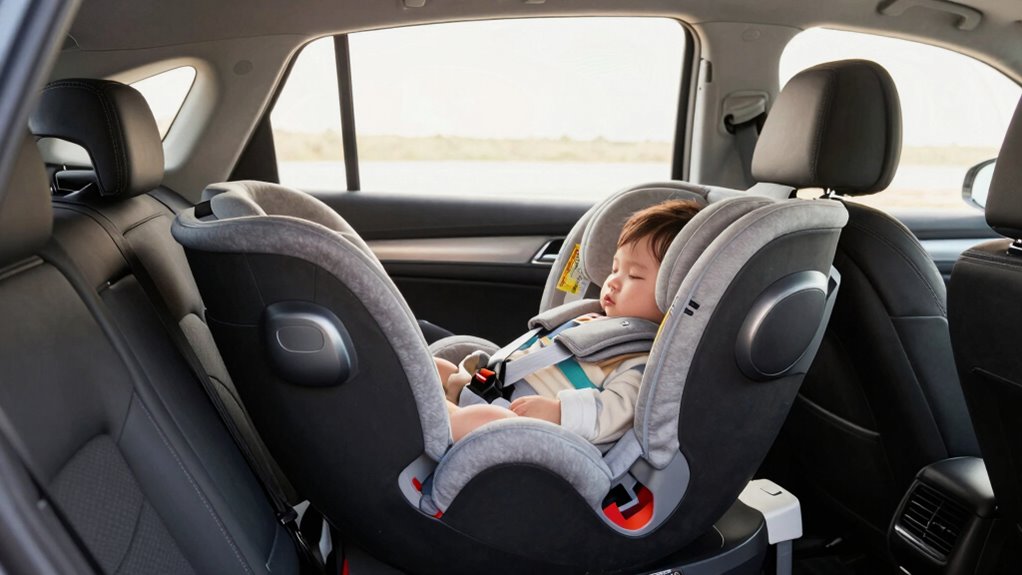
Experts agree that keeping your child in the rear-facing position as long as possible is the safest choice. To guarantee safety, focus on proper car seat installation, making sure the seat is securely and correctly installed according to manufacturer instructions. Regularly check that the harness fits snugly and that the seat remains stable. When your child outgrows the rear-facing seat, consider booster seat considerations carefully, but remember that extended rear-facing is recommended until at least age 4 or beyond, based on height and weight limits. Follow national safety guidelines and consult with certified car seat technicians if you’re unsure about installation. Prioritizing correct installation and adhering to recommended age and size limits considerably reduces injury risks during accidents. Additionally, reviewing crochet styles for locs can inspire protective styling options that are gentle on your child’s hair during travel. Staying informed about car seat safety standards can help you make the best decisions for your child’s protection. Incorporating professional design services from certified specialists can further ensure your child’s safety environment is optimized, especially when considering travel accessories and vehicle modifications. Ensuring regular safety inspections of the car seat can also identify potential issues early and uphold the highest safety standards. Regularly updating your knowledge about industry trends in car safety can help you stay current with the latest best practices.
Frequently Asked Questions
How Do I Know if My Car Seat Is Suitable for Extended Rear-Facing Use?
You can tell if your car seat is suitable for extended rear-facing use by checking the rear-facing weight limit listed by the manufacturer. Confirm your child’s weight stays within that range. Also, verify seat compatibility with your vehicle and confirm it’s installed correctly. If the seat’s specifications include extended rear-facing options, and your child’s weight fits, then you’re good to go for longer rear-facing safety.
Are There Any Legal Restrictions on Rear-Facing Duration in Different Regions?
Think of regional regulations as the map guiding your journey, and legal restrictions as the landmarks you must respect. In some areas, laws limit rear-facing use to a certain age or weight, while others recommend extended rear-facing without strict limits. Always check your local legal restrictions before opting for longer rear-facing, ensuring you’re compliant and prioritizing your child’s safety. Staying informed helps you navigate confidently and protect your little one effectively.
Can I Switch to a Booster Seat Before My Child Outgrows Rear-Facing Limits?
You shouldn’t switch to a booster seat before your child outgrows rear-facing limits, as proper car seat installation is vital for safety. Keep your child rear-facing until they reach the maximum height or weight limit recommended by the manufacturer, aligning with their growth milestones. Doing so guarantees maximum protection, and only shift to a booster seat once they’ve outgrown the rear-facing seat to maintain safety and compliance.
What Are the Signs My Child Is Uncomfortable in a Rear-Facing Seat?
If your child shows signs of discomfort in their rear-facing seat, you might notice seat comfort issues or mobility restrictions. They may fidget, try to turn around, or complain about pressure points. If your child’s legs are cramped or they seem restless, it’s a sign they’re uneasy. Always make certain the seat fits well and allows enough space for movement, making long rides safer and more comfortable for your little one.
How Do Weather Conditions Affect Rear-Facing Car Seat Safety and Comfort?
Weather conditions impact your child’s rear-facing seat safety and comfort, so you should consider climate considerations like hot, cold, or humid weather. In extreme temperatures, guarantee the seat material durability remains intact by avoiding exposure to direct sunlight or moisture. Adjust the temperature in your vehicle and dress your child appropriately to prevent overheating or chilling. Regularly check the seat for any wear or damage caused by weather to keep it safe and comfortable.
Conclusion
Continuing to rear-face your child longer is one of the best safety decisions you can make—studies show it reduces the risk of injury by up to 80%. By choosing the right seat and overcoming challenges, you guarantee your child’s comfort and safety. Remember, the American Academy of Pediatrics recommends rear-facing until at least age 2, but many experts suggest beyond that. Staying informed and proactive keeps your little one safest every mile you travel together.