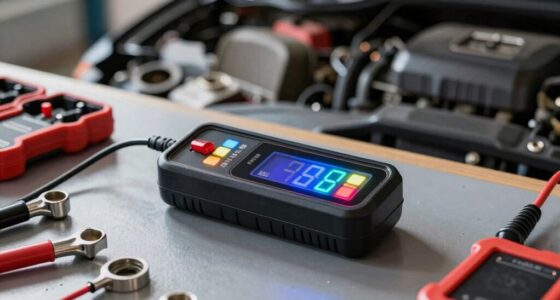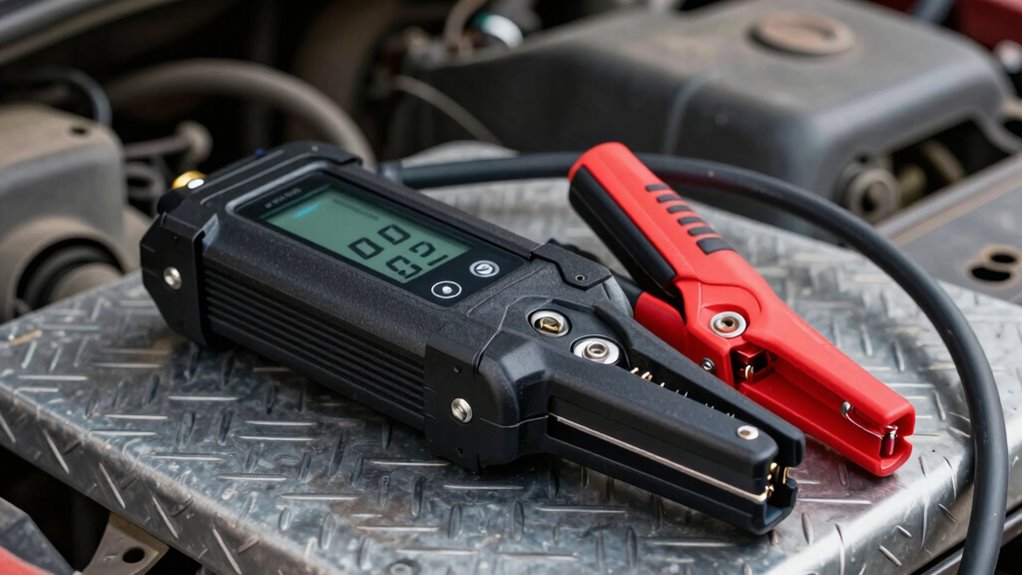

Peak amps on a truck jump starter show the maximum current it can provide briefly, but they don’t reveal how well it performs over time or in tough conditions. This number can be misleading for your truck’s actual starting power, especially since it doesn’t account for battery chemistry or long-term reliability. To choose the right device, consider other specs like Cold Cranking Amps and capacity—continue exploring to find out what truly matters.
Key Takeaways
- Peak Amps indicate short burst current but don’t reflect sustained power needed for reliable truck starts.
- High Peak Amps can be exaggerated and may not correlate with actual starting capacity over time.
- Battery chemistry impacts longevity and performance, which Peak Amps alone cannot reveal.
- Cold Cranking Amps (CCA) are more relevant for cold weather truck startups than Peak Amps.
- Overall device reliability depends on factors like cycle life, safety features, and proper maintenance, not just Peak Amps.
What Does “Peak Amps” Mean on a Jump Starter?
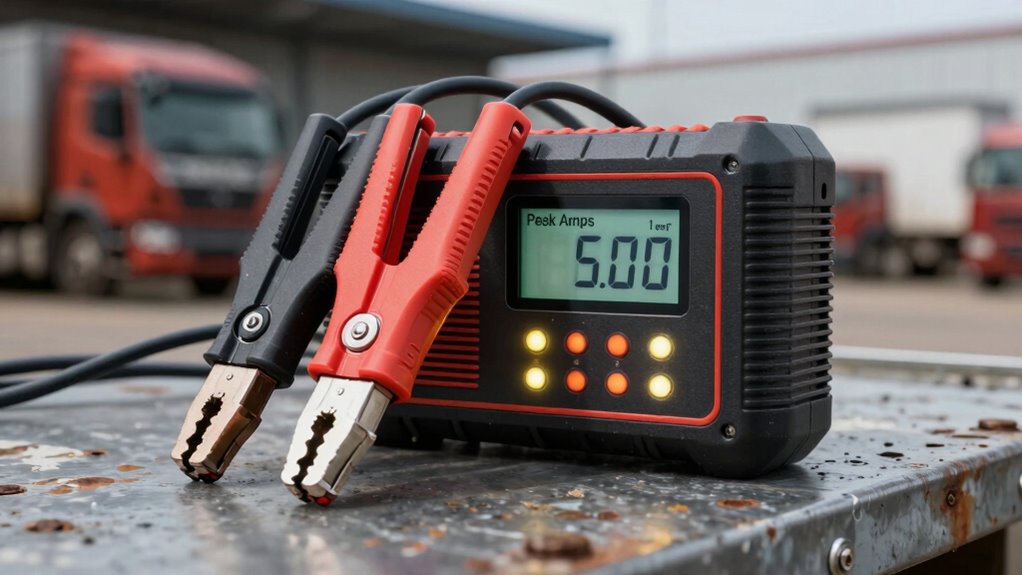
Have you ever wondered what “Peak Amps” really signifies on a jump starter? It refers to the maximum current the device can deliver in a short burst, which is essential for starting a truck. However, Peak Amps doesn’t tell you about the battery chemistry inside the jump starter, which affects its durability and performance over time. When cold weather hits, your truck’s battery becomes less efficient, and you need a jump starter with enough Peak Amps to overcome these conditions. Keep in mind that Peak Amps are often exaggerated and don’t reflect the actual, sustained power needed to start your engine reliably. Understanding this helps you choose a jump starter suited for cold climates and ensures you’re prepared for tough conditions. Additionally, considering the overall construction of the jump starter can help determine its longevity and reliability in demanding environments. Recognizing the battery type can also impact how well the jump starter performs and lasts over multiple uses. Furthermore, looking into the battery chemistry can provide insight into how the device will perform in extreme temperatures and over time. A well-designed thermal management system can also enhance performance and lifespan in challenging conditions.
Why Peak Amps Can Be Misleading for Your Truck’s Starting Power
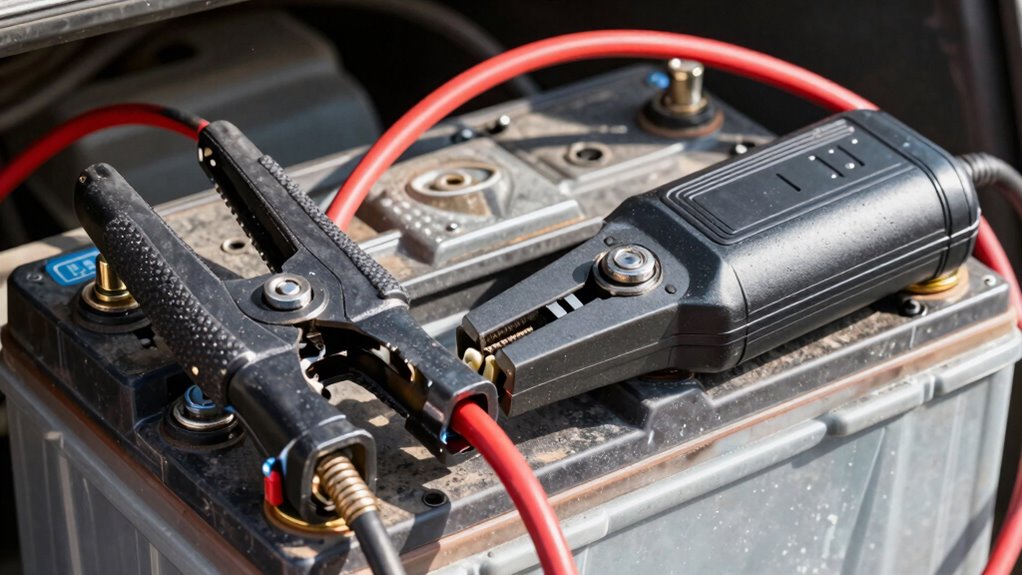
While Peak Amps can seem impressive, they often overstate a jump starter’s real-world starting power. The number doesn’t account for the battery chemistry, which affects how well the jump starter performs over time. If the battery chemistry isn’t designed for repeated charging cycles, the jump starter’s ability to deliver high current decreases quickly. Charging cycles, or how often you recharge the battery, also impact performance. A jump starter with a high Peak Amp rating but poor battery chemistry or limited charging cycles may lose capacity fast, leaving you stranded. battery chemistry plays a crucial role in the longevity and consistent performance of your jump starter. Additionally, factors like maintenance and sanitation can influence the overall reliability and readiness of your device when needed. Regular battery maintenance can help prolong the lifespan and ensure consistent power output. So, don’t rely solely on Peak Amps. Instead, consider the durability of the battery chemistry and how many charging cycles it can handle to ensure reliable starting power when you need it most.
Key Specs That Show a Jump Starter’s True Power
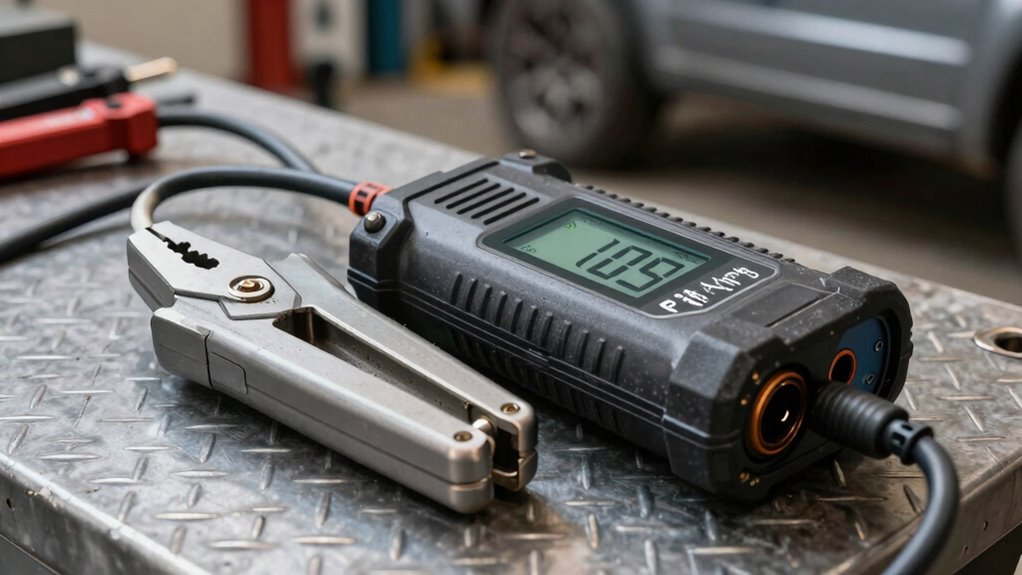
To accurately gauge a jump starter’s true power, you need to look beyond peak numbers and focus on key specifications like Cold Cranking Amps (CCA), Cranking Amps (CA), and Reserve Capacity (RC). CCA indicates how well the battery chemistry performs in cold conditions, helping you start your truck reliably in winter. CA reflects the continuous current the jump starter can deliver, while RC shows how long it can supply power during emergencies. Safety features, such as protected circuits and built-in overload prevention, ensure safe operation. These specs reveal the actual capacity and dependability of your jump starter, giving you confidence in its performance. Understanding these key specs helps you choose a device that’s powerful enough but also safe and suited for your truck’s needs. Battery chemistry plays a crucial role in overall performance and longevity of the jump starter. Additionally, considering performance ratings provides a clearer picture of how the device will perform under different conditions.
A thorough review of performance metrics can help you select a jump starter that meets your specific requirements for reliability and durability.
Furthermore, evaluating durability features can ensure the device remains reliable over time and in various environments.
How to Choose a Jump Starter That Fits Your Truck’s Needs
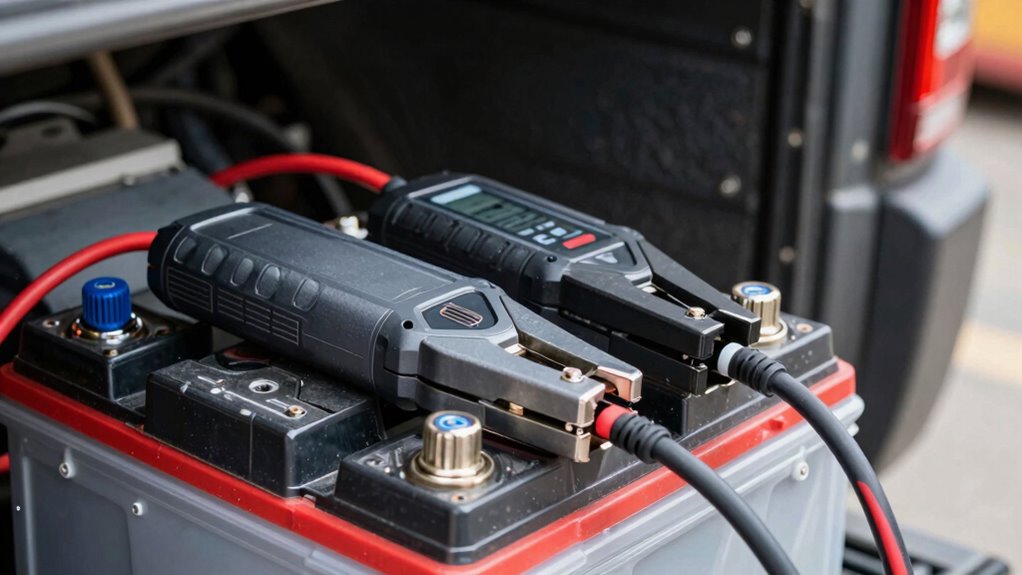
Choosing the right jump starter for your truck starts with understanding its specific power needs and usage scenarios. Consider your truck’s battery size and typical usage to determine the necessary capacity. A larger battery may require a jump starter with higher amps, but don’t overlook safety precautions—always follow manufacturer instructions to prevent accidents. Regular battery maintenance, like checking connections and keeping terminals clean, guarantees your jump starter works reliably when needed. Think about portability if you need to carry it around or storage space if it’ll stay in your truck. Also, choose a model with safety features such as overload protection and spark-proof clamps. By matching the jump starter’s specs to your truck’s requirements, you ensure safe, effective, and reliable starts every time. Incorporating smart safety features can further enhance protection during use and help monitor your vehicle’s overall health. Additionally, understanding peak amps helps you select a jump starter that can handle your truck’s starting demands more effectively.
Tips for Picking the Best Jump Starter Beyond Peak Amps
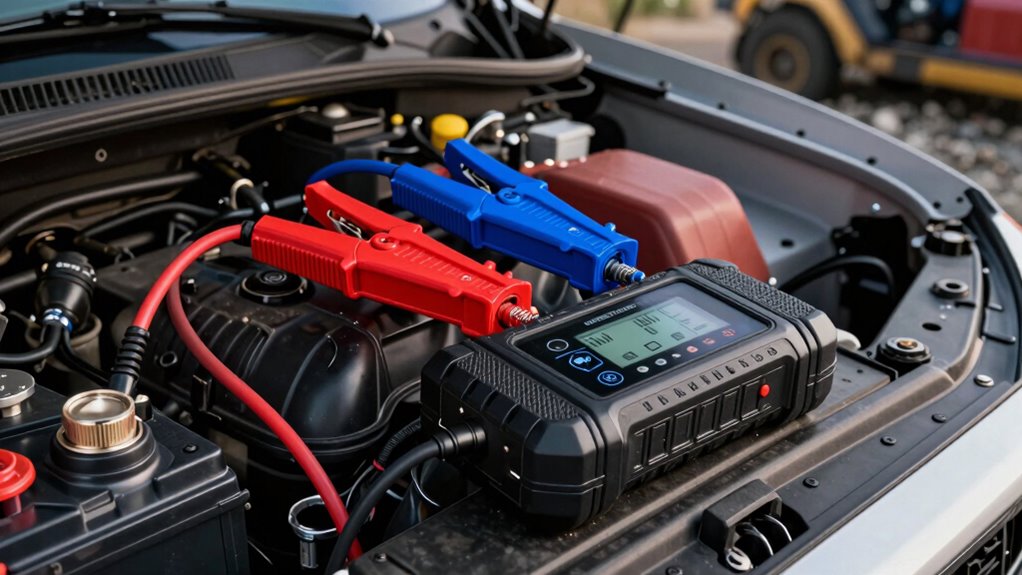
Beyond peak amps, several factors influence how well a jump starter performs and how safe it is to use. One key consideration is battery chemistry; lithium-ion batteries are lighter, more durable, and recharge faster than traditional lead-acid types, making them a reliable choice. Additionally, look at portability features—compact size, lightweight design, and built-in handles or cases enhance ease of use, especially if you need to carry it around often. Safety features like surge protection, spark-proof clamps, and overcharge prevention are also essential. These aspects ensure your jump starter not only provides reliable power but also minimizes risks during operation. Paying attention to battery chemistry helps you select a device that’s safe, efficient, and convenient for your trucking needs. Furthermore, understanding charge capacity can help you better match a jump starter to the demands of your vehicle’s battery. Recognizing performance indicators beyond peak amps can also give you a clearer picture of a jump starter’s overall effectiveness and longevity. For example, evaluating cycle life can indicate how many times a device can be used before its performance diminishes. Additionally, considering maintenance requirements can ensure you keep your jump starter in optimal condition for long-term use.
Frequently Asked Questions
How Does Cold Weather Affect a Jump Starter’s Performance?
Cold weather can considerably reduce a jump starter’s performance because it slows down your battery’s chemical reactions, lowering battery efficiency. You might notice it’s harder to start your truck, even if the jump starter shows high peak amps. In freezing temperatures, your jump starter needs to deliver more power, but cold weather hampers its ability to do so effectively. Always choose a jump starter rated for cold conditions for reliable performance.
What Safety Features Should I Look for in a Jump Starter?
Think of your jump starter as a trusty steed—safety features are its armor. Look for safety certifications like UL or CE to guarantee reliability. Anti-slip clamps prevent accidents during connection, adding extra security. These features protect you from sparks, short circuits, and shocks. Always choose a model with these safety elements to keep your vehicle and yourself safe, ensuring peace of mind in any emergency.
Can a Jump Starter Damage My Truck’s Electrical System?
A jump starter can damage your truck’s electrical system if it’s not compatible or if you don’t follow proper charging safety. Always check your truck’s battery compatibility before using a jump starter, and verify you connect it correctly. Avoid overcharging or using a faulty unit, as these issues can cause electrical surges. Follow the manufacturer’s instructions carefully to protect your truck’s electronics and prevent damage.
How Long Does a Typical Jump Starter Battery Last?
Think of your jump starter battery as a loyal friend, lasting through many adventures. Typically, it offers 300 to 500 charging cycles, which translates to about 3 to 5 years of reliable use. With proper care, like avoiding deep discharges and storing it well, you can maximize its longevity. Regular maintenance and mindful usage help guarantee your trusty companion is always prepared when you need it most.
What Maintenance Is Required to Keep a Jump Starter Ready?
To keep your jump starter ready, regularly inspect the battery for corrosion, leaks, or swelling. Follow storage guidelines by keeping it in a cool, dry place and fully charging it every few months if unused. Also, verify the terminals are clean and tight. Proper maintenance prevents deterioration, extends the device’s lifespan, and ensures it’s reliable when you need it most.
Conclusion
Don’t rely solely on “peak amps” when choosing a jump starter—you might be fooled into thinking it’s more powerful than it really is. The truth is, real starting power depends on factors like cranking amps and build quality. Do your research, compare specs, and pick a model that matches your truck’s needs. Remember, a reliable jump starter isn’t just about numbers; it’s about consistent performance when you need it most.