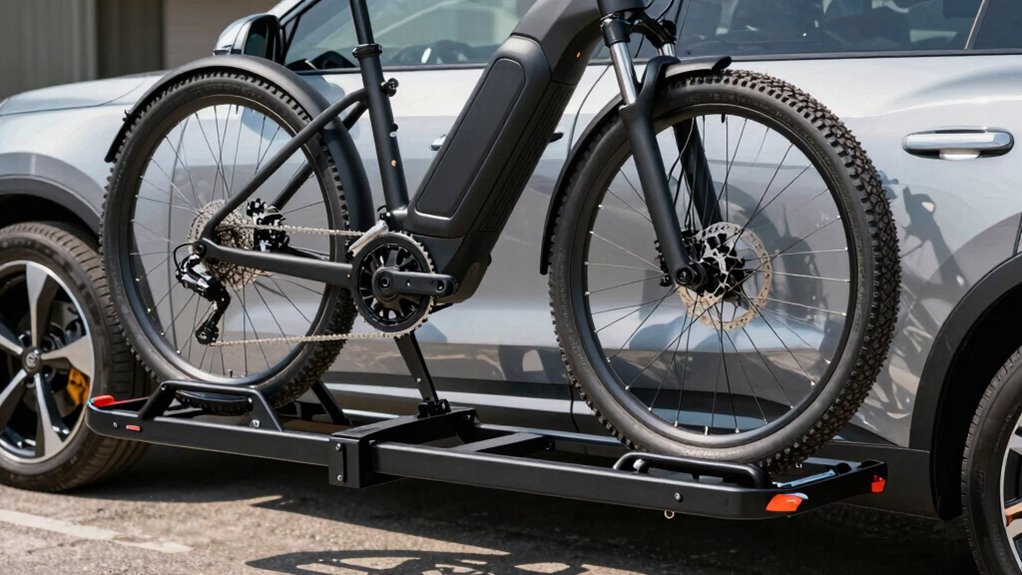
To keep you safe, always respect your hitch rack’s weight limit, typically between 70-150 lbs depending on the model. Exceeding this can cause structural damage, instability, or even accidents if bikes fall or detach during transit. E-bike weight varies with battery size and tires, so it’s essential to double-check your rack’s capacity before loading. Staying within recommended limits ensures safe transport and prolongs your rack’s life—continue to find out how to load properly and avoid overload risks.
Key Takeaways
- Always verify the hitch rack’s maximum weight capacity before loading your e-bike to prevent damage and accidents.
- Exceeding weight limits can cause structural failure, bike detachment, and safety hazards during transit.
- Consider your e-bike’s total weight, including battery and tires, to ensure compatibility with the rack’s limits.
- Choose racks designed for heavy e-bikes with high weight capacities (up to 150 lbs) for safe transport.
- Regularly inspect and properly secure your e-bike to avoid wobbling and ensure stability during travel.
Why Overloading Your Hitch Rack Is Dangerous

Overloading your hitch rack might seem like a quick way to carry more bikes, but it considerably increases the risk of accidents. Different hitch rack materials, such as steel or aluminum, have weight limits designed for safety, and exceeding them can cause structural failure. Additionally, e-bike frame types vary—step-through, diamond, or fat tires—each with different handling and weight distribution. Overloading can strain the rack’s components, leading to bending or breakage, especially when tough materials aren’t built for extra weight. This strain is compounded when weight limits are exceeded, which can cause bikes to shift, fall, or detach during transit. Ignoring these limits puts your safety and others’ at risk, and it could damage your vehicle, bikes, or both. Properly assessing the weight capacity of your hitch rack material and understanding the impact of different e-bike weights can help prevent accidents and ensure a safer journey. Additionally, considering the horsepower of electric dirt bikes and their weight can help you choose an appropriate rack that can handle your specific e-bike models safely. Being aware of manufacturer guidelines and adhering to recommended weight limits is essential for reliable and secure transport. Furthermore, regular inspections of the rack’s components for wear and tear are crucial to maintaining safety over time.
How E-Bike Weight Affects Hitch Rack Performance
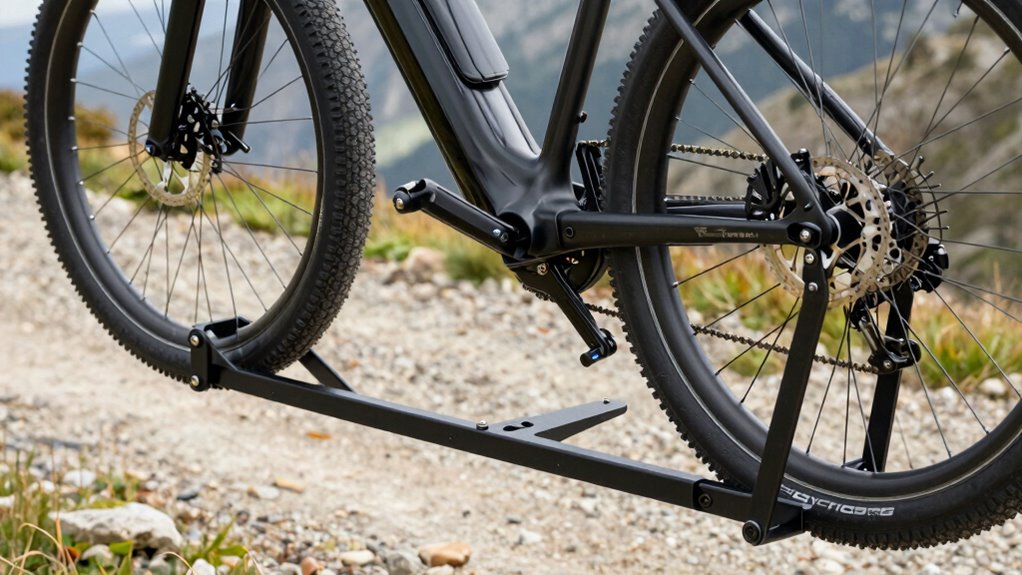
Your e-bike’s weight plays a vital role in how well your hitch rack performs. Exceeding weight limits can damage the rack and reduce its durability, risking safety on the road. To keep things secure, always follow safe loading practices and stay within your rack’s recommended weight capacity. Recognizing the importance of support breakfast and personal branding can also influence how you choose and invest in equipment, ensuring you make informed decisions. Understanding clean-home systems can help you maintain your gear and prevent unnecessary wear. Additionally, being aware of lifevest advisors can provide valuable insights into safe and reliable investment strategies for your gear and accessories. Properly managing your e-bike’s weight can also help prevent issues like overdiagnosis, which, while more relevant in medical contexts, highlights the importance of accurate assessment and appropriate measures to ensure safety and longevity.
E-Bike Weight Limits
E-bike weight limits substantially influence how well a hitch rack performs, especially since many models are designed to handle a specific maximum weight capacity. Your bike’s battery capacity directly affects its overall weight, so heavier batteries mean higher weight limits. Additionally, tire size plays a role; larger tires add to the bike’s weight and size, impacting how securely it fits on the rack. Exceeding the weight limit can strain the hitch and compromise stability, risking damage to your bike or vehicle. Always check your e-bike’s total weight, including battery and tires, and compare it to the rack’s capacity. Properly matching these factors ensures safe, reliable transport without risking damage or safety hazards. Proper weight distribution can also influence the overall weight and balance of your setup, so consider them when planning your outdoor space. Furthermore, understanding the hitch rack capacity helps prevent overloading and ensures safety during transport. Being aware of manufacturer guidelines is essential to maintain safety and avoid voiding warranties. Additionally, regularly inspecting your rack and bike for any signs of wear or damage can help maintain system integrity and secure transport.
Hitch Rack Durability
Since heavier e-bikes put more stress on hitch racks, their durability becomes a crucial factor in safe transportation. A sturdy rack can withstand the added weight without bending or breaking, ensuring your bike stays secure. Regular hitch rack maintenance is essential to identify wear and tear early, preventing sudden failures during trips. If your rack isn’t designed for heavy loads, consider alternative transport options like enclosed bike carriers or truck beds. Investing in a durable hitch rack means you’ll have peace of mind, knowing it can handle the weight without compromising performance. Remember, a well-maintained rack not only prolongs its lifespan but also keeps your e-bike safe throughout every journey. Also, choosing the right luggage and bags can help distribute weight more evenly and improve overall travel safety. Prioritizing hitch rack durability is key to ensuring safe and reliable transport, especially with heavier e-bikes. Don’t overlook durability; it’s key to safe, reliable transport. Additionally, understanding the importance of weight limits can help prevent overloading and potential damage to your rack. Proper load distribution also plays a vital role in maintaining rack integrity and safety during transit, especially when considering the impact of fabric decorating markers or other accessories on weight balance.
Safe Loading Practices
Because heavier e-bikes exert more force on hitch racks, it’s crucial to load them correctly to guarantee safe transportation. Proper mounting safety ensures the bike is secure and prevents accidents. Always check the weight capacity of your rack and confirm it matches your e-bike’s weight. Distribute the load evenly to avoid unnecessary stress on the rack. Regular rack maintenance, such as tightening bolts and inspecting for damage, keeps it in peak condition. Additionally, understanding product durability can help you select a rack that withstands heavier loads over time. Recognizing decoding slang can also aid in understanding user reviews and instructions related to bike accessories. Being aware of drone insights can enhance your overall knowledge of equipment safety and maintenance practices. Knowing how to interpret art care considerations can also improve your ability to care for and maintain your gear effectively. Familiarity with vacuum features can further assist in choosing accessories that support your maintenance routines.
What Factors Determine Your Hitch Rack’s Capacity
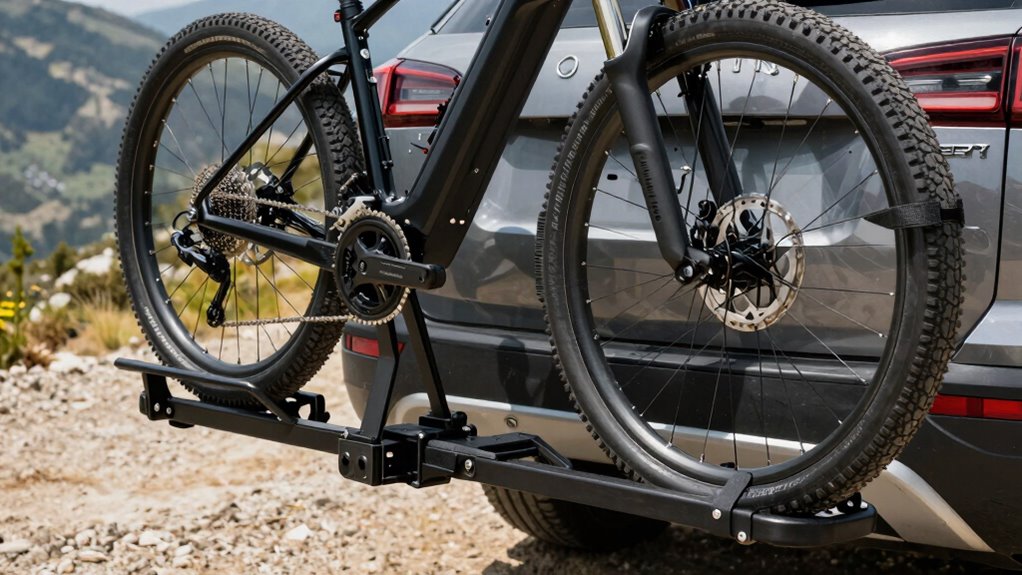
Several key factors influence your hitch rack’s capacity, and understanding them helps make certain you choose the right one for your needs. First, frame compatibility matters because some racks are designed for specific bike types or frame sizes, limiting what you can load. Next, proper rack installation is essential; an improperly mounted rack can reduce its weight capacity and compromise safety. Additionally, the hitch receiver size and class directly impact how much weight your rack can support—smaller hitches usually have lower limits. Always check the manufacturer’s specifications for maximum weight limits, and ensure your bike’s weight doesn’t exceed the rack’s capacity. Considering these factors guarantees safe, secure transport while protecting your bike and vehicle.
How to Check Your Hitch Rack’s Weight Limit
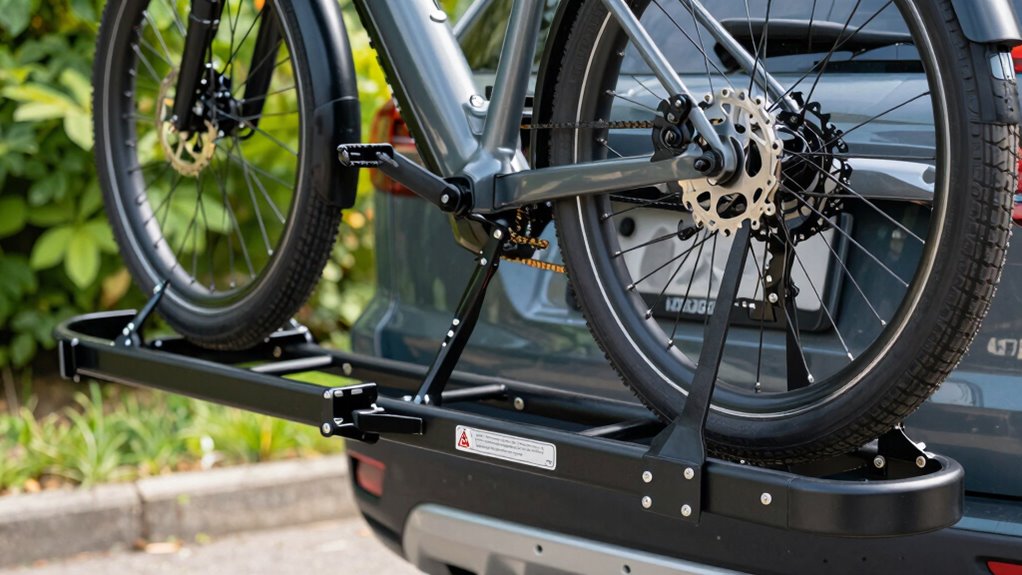
To guarantee your hitch rack can safely carry your bikes, you need to check its weight limit carefully. Start by reading the manufacturer’s specifications, usually found on the bike accessories or the rack itself. Look for the maximum weight capacity, which indicates how much weight it can support per bike and overall. If you own an e-bike, double-check that your rack’s limit accommodates its weight. Ignoring this can compromise travel safety and lead to accidents or damage. Always verify the combined weight of your bikes before loading. If you’re unsure, consult the rack’s manual or manufacturer’s website. Properly checking the weight limit ensures secure transport, protects your bikes, and maintains safe travel conditions for you and other road users.
How to Load Your E-Bike Safely on a Hitch Rack
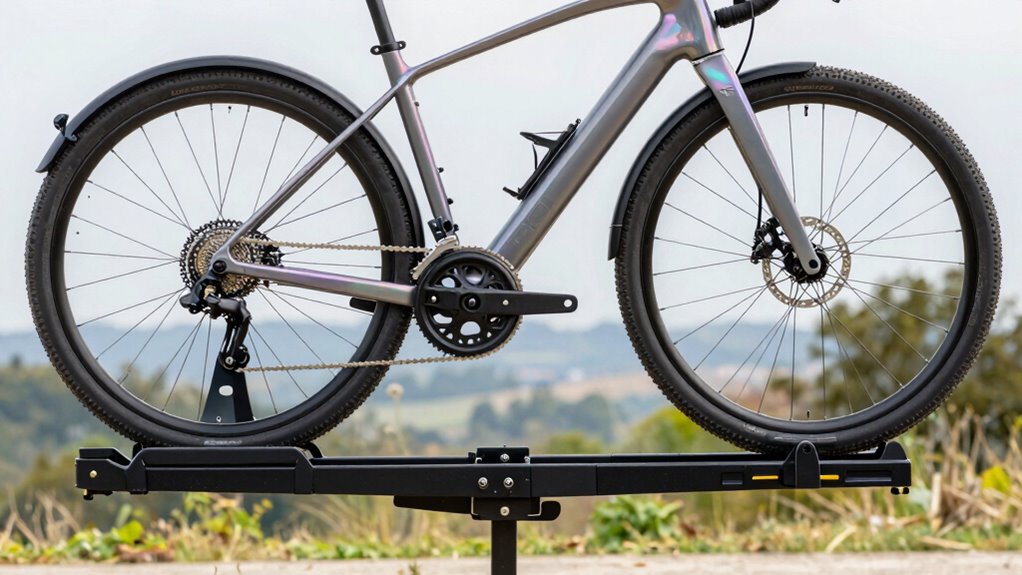
To load your e-bike safely, start by securing it properly to prevent any movement during transit. Make sure the load is balanced evenly to avoid straining the hitch and affecting stability. Finally, double-check that your hitch rack is compatible with your bike’s weight and size before hitting the road.
Secure the Bike Properly
Ensuring your e-bike is securely mounted on a hitch rack is essential for safe transportation. Use quality bike accessories, such as straps and clamps, to fasten your bike firmly in place. Check that the frame is stable and that wheels are snugly secured to prevent any movement during transit. Properly attaching the bike reduces the risk of it shifting or falling, which can cause accidents. Remember, road safety depends on how well the bike is secured; loose bikes pose hazards to you and other drivers. Always double-check all attachments before hitting the road. Taking these simple steps ensures your e-bike stays safe and protected, giving you peace of mind while maintaining the integrity of your bike accessories and promoting safer travels.
Balance the Load Evenly
After securing your e-bike firmly on the hitch rack, the next step is to balance the load evenly. An unbalanced load can cause instability during rack installation and while driving. Adjust the bike so that the weight is distributed equally on both sides, preventing sway. Confirm that accessories like bike baskets or racks don’t shift and add to uneven weight. Properly balanced bikes reduce stress on the hitch and extend the rack’s lifespan. Use the rack’s built-in mechanisms or adjust straps to secure the bike tightly. Remember, a balanced load enhances safety and handling. Here’s a simple guide:
| Aspect | Tips | Why It Matters |
|---|---|---|
| Side-to-Side | Distribute weight evenly on both sides | Prevents sway and improves stability |
| Front-to-Back | Position bike centered on the rack | Maintains balance during transit |
| Accessories | Secure or remove loose accessories | Avoid shifting or falling off |
| Tightening Straps | Use all straps firmly | Ensures the bike stays in place |
Check Hitch Compatibility
Before loading your e-bike onto a hitch rack, it’s essential to verify that your vehicle’s hitch receiver is compatible with the rack. Check the hitch’s size (e.g., Class I, II, III, or IV) to ensure it matches the rack’s specifications. Confirm that your hitch can support the weight of your e-bike, including any bike accessories like racks or locks. Proper compatibility guarantees a secure fit, preventing accidents during transit. Ensuring hitch compatibility is crucial for road safety and avoiding damage to your vehicle or bike. Always read the rack’s instructions and your vehicle’s manual before loading. Taking these precautions helps you load your e-bike safely and efficiently, giving you peace of mind on every ride.
Signs Your Hitch Rack Is Overloaded
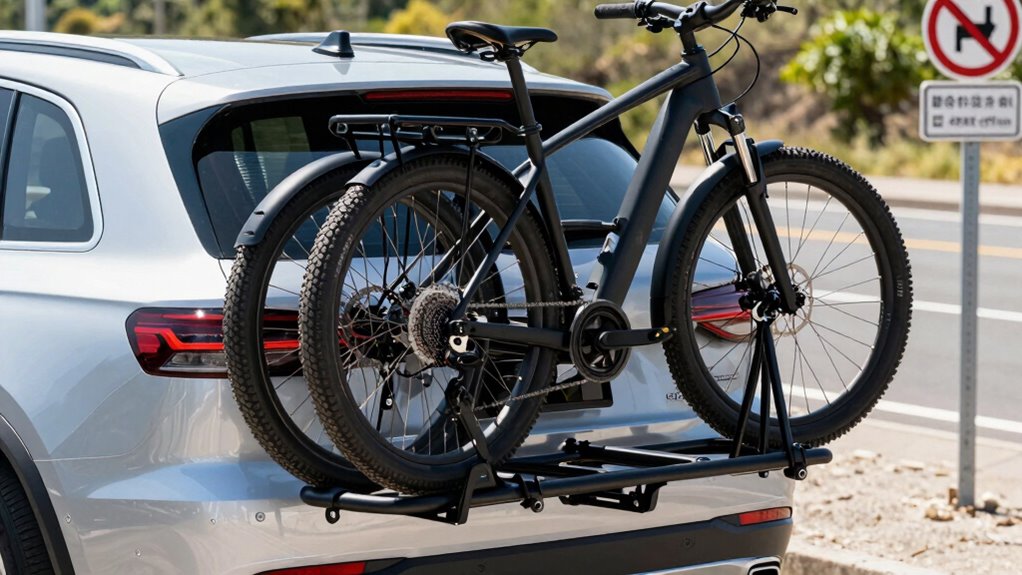
Your hitch rack can show signs of overload when you notice increased wobbling or instability while driving. This often indicates the rack or bikes are exceeding their weight limit. You might also see strain on the hitch receiver or difficulty securing bike rack accessories properly. Regular hitch rack maintenance helps prevent these issues but can’t fix overloading.
Here’s a quick guide to signs of overload:
| Symptom | Possible Cause | Action Needed |
|---|---|---|
| Excessive wobbling | Bikes too heavy or poorly secured | Reduce load, check fittings |
| Frame or hitch strain | Overweight bikes or rack load | Remove excess weight |
| Difficulty locking accessories | Overloading or damage | Adjust or replace accessories |
| Unusual noises | Strain on rack components | Inspect and tighten parts |
What Are the Risks of Overloading Your Hitch Rack?
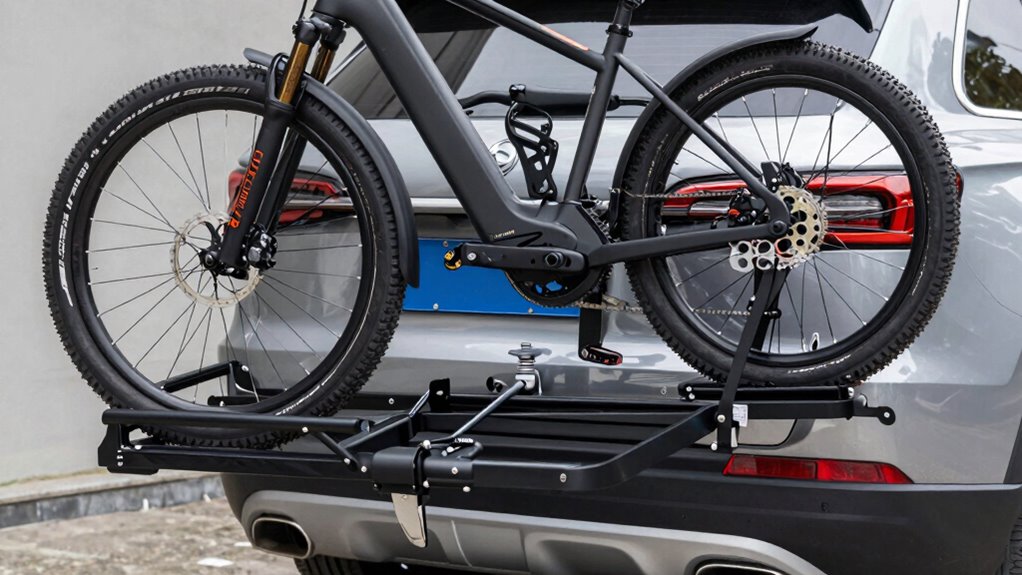
Overloading your hitch rack can lead to serious safety risks and costly damage. When you exceed the weight limit, your bike accessories might become unstable or fall off during transit, creating hazards for you and other drivers. This can compromise road safety, increasing the chances of accidents or injuries. Overloading also puts excessive stress on your hitch, rack, and vehicle frame, which can cause structural damage over time. Additionally, the added strain can lead to wear and tear, reducing the lifespan of your rack and bike accessories. Ignoring weight limits might seem harmless, but it profoundly increases the risk of mishaps, damage, and costly repairs. Always respect the weight capacity to ensure safe, secure transportation and protect your investment.
How to Choose the Best Hitch Rack for Your Heavy E-Bike
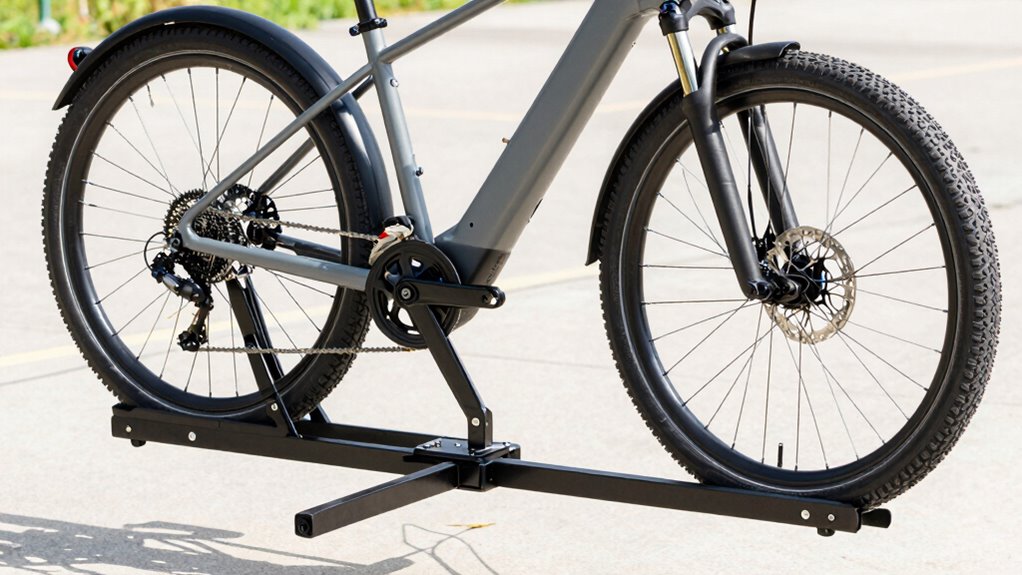
Choosing the right hitch rack for your heavy e-bike requires careful consideration of its weight capacity, compatibility, and security features. You need a rack that supports your bike’s weight and fits your vehicle’s hitch size. Look for racks with sturdy construction and reliable lock mechanisms. To assist your decision, compare options below:
| Feature | Compatibility | Weight Capacity | Security Features |
|---|---|---|---|
| Bike accessories | Hitch size (2″ or 1.25″) | Up to 70 lbs | Lockable arms |
| Rack installation | Frame vs. wheel mount | Up to 150 lbs | Anti-theft system |
| Durability | Compatibility with e-bikes | Supports heavy bikes | Security cable |
| Ease of use | Compatibility with bike types | Easy rack installation | Locking hitch pin |
| Features | Additional bike support | Weight limits | Secures bikes firmly |
Focus on these factors to find a rack that safely and securely transports your heavy e-bike.
Expert Tips for Safe E-Bike Transport and Rack Longevity

Ensuring safe transport and prolonging the life of your hitch rack starts with proper preparation and regular maintenance. Before each trip, check your e-bike’s tire pressure—well-inflated tires prevent wobbling and strain on the rack. Always prioritize battery safety by disconnecting or securing the battery if possible, avoiding damage or leaks during transport. Inspect the rack’s mounting points and straps to ensure they’re tight and in good condition. Regularly clean your rack to prevent corrosion, especially after exposure to rain or mud. Properly balanced loads reduce stress on the rack and vehicle. By following these tips, you’ll protect your e-bike and extend your rack’s lifespan, ensuring safe, worry-free journeys every time.
Frequently Asked Questions
Can I Modify My Hitch Rack to Hold Heavier E-Bikes?
You can attempt hitch rack modifications for weight capacity upgrades, but it’s risky. Check your rack’s manufacturer guidelines first, as some racks aren’t designed for heavier e-bikes. Reinforcing the frame or replacing certain parts might help, but it could void warranties or compromise safety. Consider consulting a professional or investing in a rack rated for heavier loads instead of risking structural damage or accidents.
Are There Legal Weight Limits for Hitch Rack Transportation?
In the age of chariots and horseless carriages, you must heed legal regulations when using hitch racks. Yes, there are weight restrictions you can’t ignore, set by local laws and manufacturer guidelines. Exceeding these limits risks fines, damage, or accidents. Always check your hitch rack’s weight capacity and your vehicle’s towing limits before hauling your e-bike. Staying within legal limits guarantees safe, hassle-free transport.
How Does Weather Affect the Weight Capacity of My Hitch Rack?
Weather impact can affect your hitch rack’s weight capacity by weakening its materials over time, especially in extreme conditions like snow, rain, or intense heat. These elements can cause rust, corrosion, or warping, reducing rack durability. Always check your rack’s condition after harsh weather and avoid heavy loads during or immediately after bad weather to guarantee safety and maintain its weight capacity.
What Are the Insurance Implications of Overloading My Hitch Rack?
Imagine your bike flying off the rack, causing a crash that damages your car and injures someone. Overloading your hitch rack can trigger liability concerns, potentially invalidating your insurance coverage. If an accident occurs, insurance claims may be denied, leaving you responsible for costly damages. Always respect weight limits to protect yourself from legal and financial headaches, ensuring your ride stays safe and your insurance stays valid.
Is It Safe to Use a Hitch Rack Beyond Its Rated Capacity Temporarily?
Using a hitch rack beyond its rated capacity isn’t safe, even temporarily. It jeopardizes rack durability and increases safety concerns, risking damage to your bike, your vehicle, or accidents on the road. Overloading puts undue stress on the rack and hitch, which can lead to failure. Always stick to the manufacturer’s weight limit to ensure safe, reliable transport and to protect everyone’s safety.
Conclusion
Remember, respecting your hitch rack’s weight limit is like balancing on a tightrope—it keeps you steady and safe. Overloading risks damaging your bike, rack, and even causing accidents. Always check your rack’s capacity, load your e-bike carefully, and watch for signs of strain. By doing so, you’ll guarantee smooth rides and longer rack life, just like a well-oiled machine working seamlessly. Stick to the limits, and enjoy worry-free adventures on your e-bike.