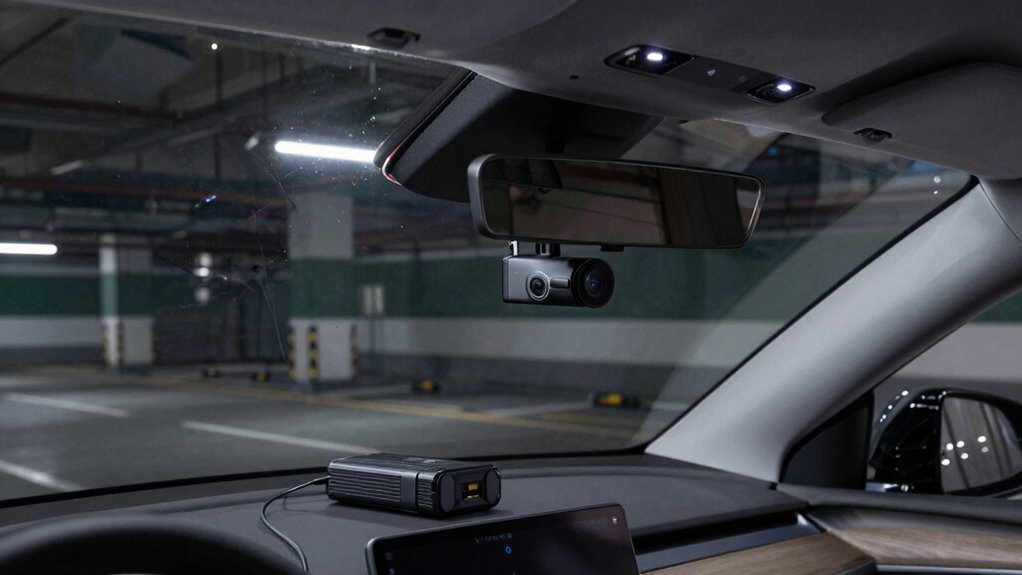

Hardwire kits supply your dash cam with steady power directly from your vehicle’s electrical system, allowing it to run during parking without draining your battery quickly. Using a dedicated battery or solar panel can also help, but prolonged parking mode use increases drain, speeding up battery wear. To keep your car’s battery healthy, consider power management options and troubleshooting tips. If you want to explore how to optimize your setup, there’s more to discover below.
Key Takeaways
- Hardwire kits provide continuous power to dash cams by connecting directly to the vehicle’s electrical system, enabling parking mode.
- Dedicated batteries and solar panels can supplement power, reducing strain on the car’s main battery during parking.
- Constant power draw from dash cams can accelerate car battery drain, especially if the battery is weak or old.
- Proper installation, power management, and regular maintenance help prevent excessive drain and extend battery life.
- Troubleshooting power issues involves checking wiring, fuses, firmware, and battery health to ensure reliable parking mode operation.
How Do Hardwire Kits Power Your Dash Cam When Your Car Is Parked?
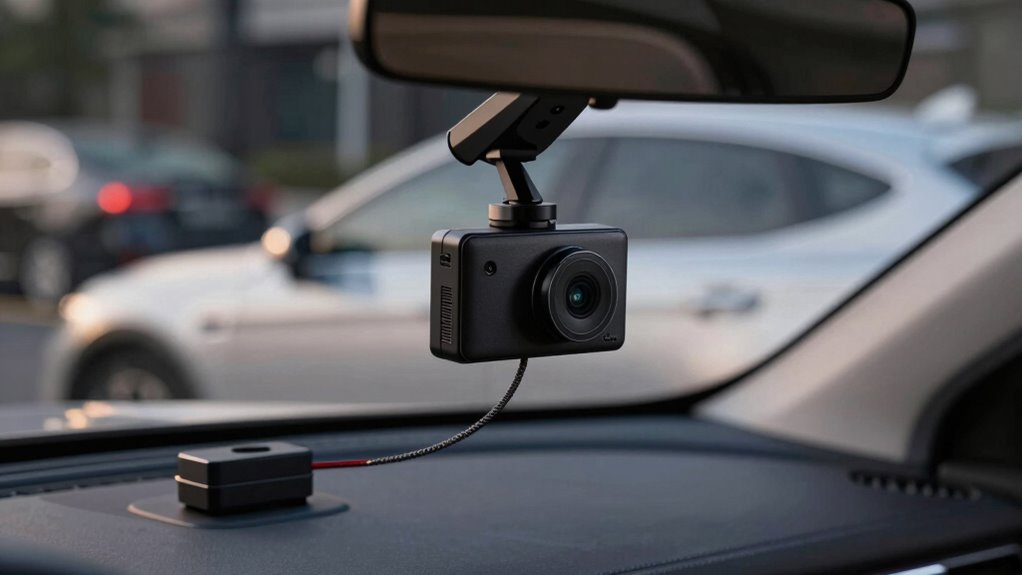
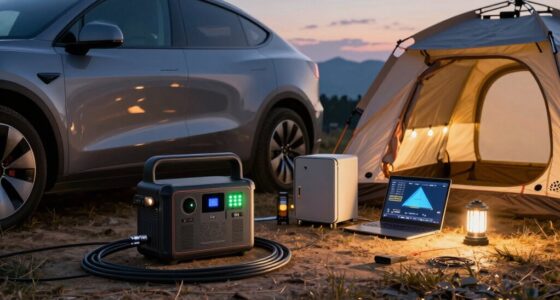
Hardwire kits connect your dash cam directly to your vehicle’s electrical system, allowing it to stay powered even when your car is parked. They work with power converters that regulate voltage, guaranteeing your dash cam receives a steady power supply. Some kits integrate solar power options, harnessing sunlight to supplement your vehicle’s energy and extend recording time. This setup keeps your dash cam active during parking mode without draining your car’s battery excessively. When installed correctly, the hardwire kit taps into a constant power source, like the fuse box, and uses a discreet connection to keep your camera running silently. This system is reliable, simple, and ensures your dash cam is always ready to record any activity around your parked vehicle. Additionally, understanding power management is essential to prevent battery drain and ensure optimal performance of your dash cam during extended parking periods.
Should You Use a Battery or a Hardwire Kit to Power Your Parking Mode Dash Cam?
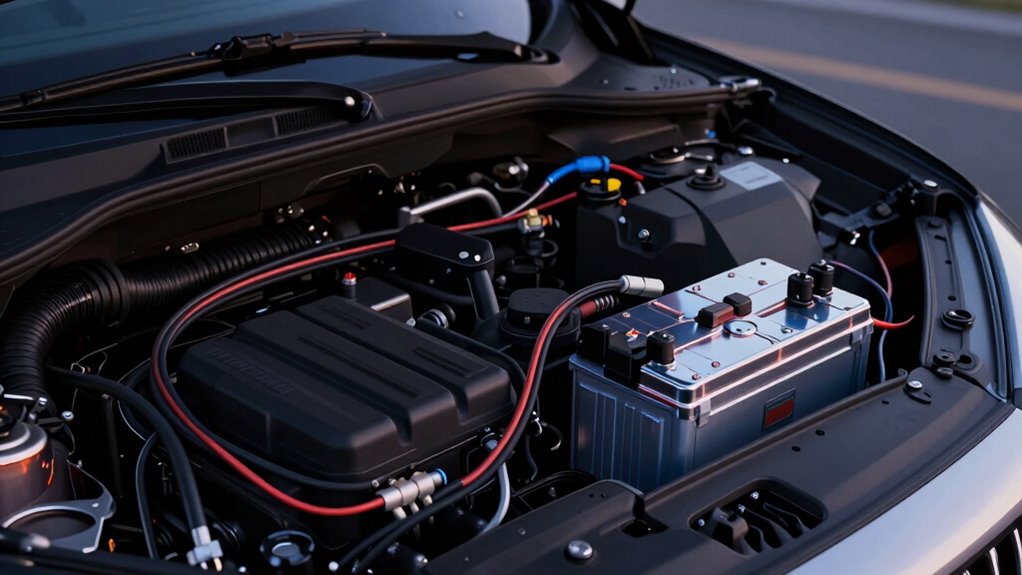
When choosing how to power your parking mode dash cam, you’ll need to decide between using a dedicated battery or a hardwire kit connected to your vehicle’s electrical system. A dedicated battery offers wireless charging options, making installation simple and reducing reliance on your car’s electrical system. Solar panels can also be a smart addition, providing eco-friendly power that keeps the battery charged without draining your vehicle’s main battery. Hardwire kits, on the other hand, tap directly into your car’s wiring, ensuring continuous power without the need for additional charging devices. Consider your usage habits and installation preferences. If you want minimal wiring and maximum portability, a battery with wireless charging or solar panels might suit you better. Hardwire kits are more reliable for long-term, constant power. Additionally, understanding the importance of power management can help you choose the most suitable solution for your dash cam setup. Making informed decisions about power sources can extend your device’s lifespan and ensure reliable operation. Proper installation techniques can also prevent potential electrical issues and optimize performance. Moreover, selecting appropriate battery capacity ensures your dash cam remains operational during extended parking periods. Implementing smart energy solutions can further enhance efficiency and reduce overall power drain.
Why Does My Car Battery Drain Faster When Using Parking Mode?
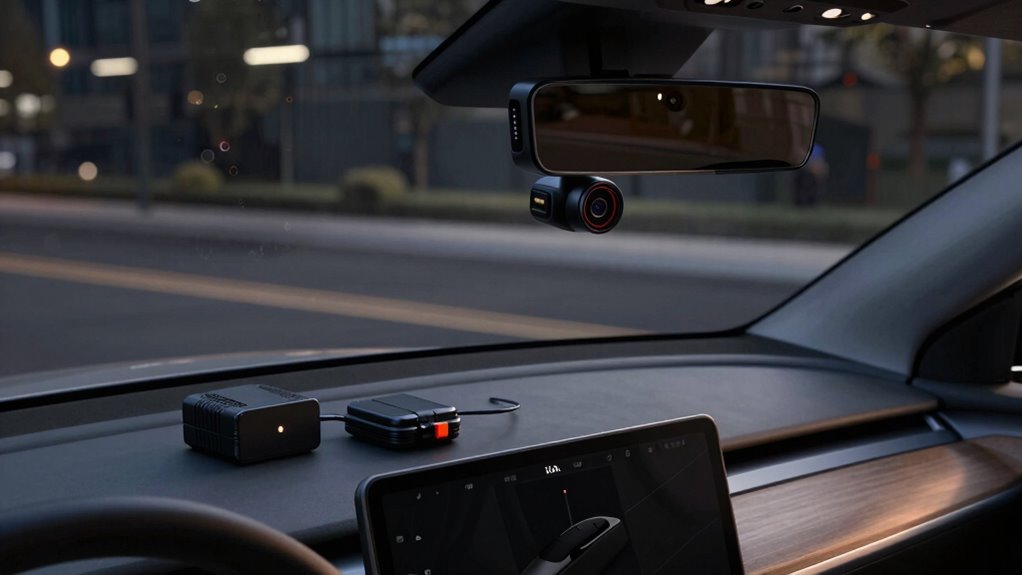
Using parking mode can cause your car battery to drain faster because dash cams draw power constantly to keep monitoring your vehicle, even when it’s off. This continuous power draw adds to the alternator load, which isn’t designed to handle such persistent parasitic drain. Over time, this extra load slowly depletes your battery’s stored energy, especially if your battery is already weak or old. When the dash cam is active in parking mode, it increases the parasitic drain, meaning your battery has to work harder to supply power. If your vehicle isn’t driven regularly or the battery isn’t in good condition, this ongoing drain can cause it to discharge faster than usual, leading to starting issues or dead battery problems. Additionally, vehicle electrical systems are sensitive to these continuous power demands, which can further impact overall battery health over time. Regularly inspecting your battery’s health and ensuring proper power management can help mitigate these issues. Installing a hardwire kit that includes a power regulator can also help regulate power flow and reduce unnecessary drain.
How Can I Extend the Battery Life of My Parking Mode Dash Cam?
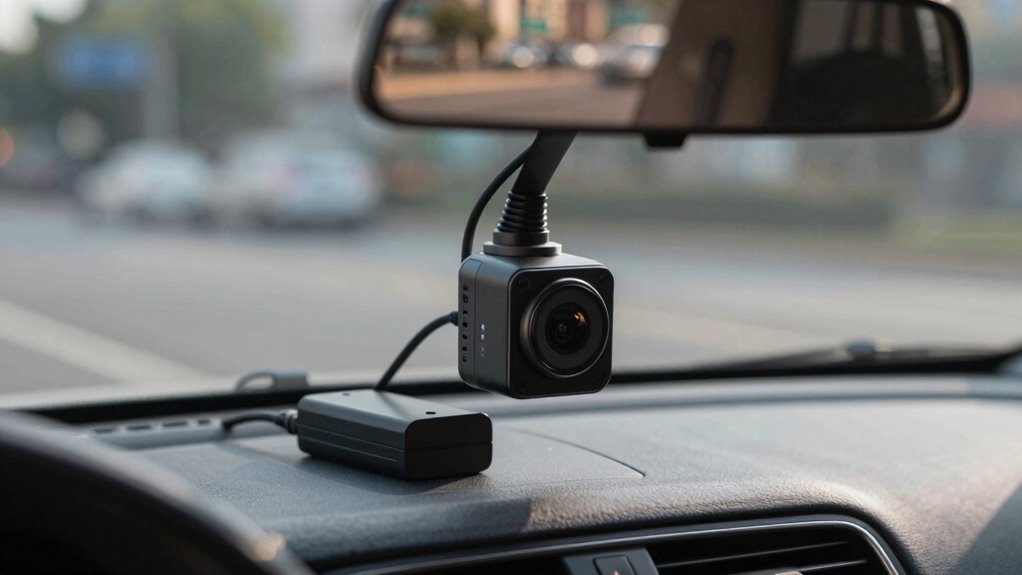
To extend the battery life of your parking mode dash cam, you can take steps to minimize its power consumption without sacrificing security. One effective method is enabling power saving features within the dash cam’s settings, such as reducing the recording resolution or disabling unnecessary functions when parked. You might also consider solar charging options, which can help maintain the battery’s charge without relying solely on your vehicle’s power. Installing a solar panel designed for car batteries can provide a continuous trickle charge, especially when your car is parked for extended periods. Additionally, using filtration to prevent dust and debris buildup can help keep your dash cam functioning efficiently and reduce unnecessary power drain. Regularly checking connections and keeping components clean can further optimize power usage and prolong battery life. Understanding your vehicle’s electrical system can help you identify the best ways to reduce power drain and keep your dash cam operational when you need it most. These strategies help conserve energy, reduce drain on your car’s battery, and ensure your dash cam remains operational when you need it most.
Troubleshooting Power Issues in Parking Mode Dash Cams and Car Batteries
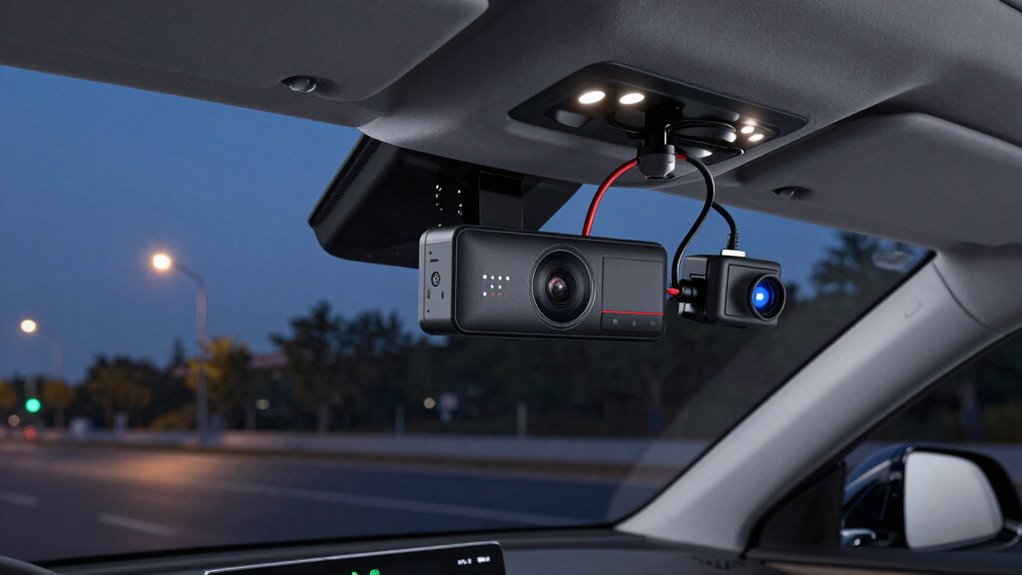
Power issues with parking mode dash cams and car batteries can be frustrating, but many problems stem from simple causes that you can troubleshoot quickly. First, check your alternative power sources, such as hardwire kits or portable batteries, to assure they’re functioning properly. Loose connections or blown fuses can also cause power loss, so inspect all wiring. Updating your dash cam’s firmware can resolve bugs that affect power management. If your camera still isn’t powering on, test the car battery’s health; a weak battery may not supply enough power. Regularly perform these checks and updates to keep your parking mode setup reliable. Additionally, understanding power management is crucial for diagnosing and preventing common drain problems. Keeping an eye on overall vehicle electrical systems can help identify hidden issues that may affect your dash cam’s operation over time. Monitoring battery drain and ensuring your electrical system is in good condition can prevent unexpected power failures. To improve reliability, consider integrating alternative power sources like backup batteries or solar chargers that can support your dash cam during long parking periods. Properly managing electrical load distribution can also help prevent drain issues and extend your vehicle’s battery life.
Frequently Asked Questions
What Are the Signs My Parking Mode Dash Cam Isn’T Working Properly?
If your parking mode dash cam isn’t working properly, you’ll notice issues like no footage when parked or the camera not powering on. Check the camera placement to guarantee it’s unobstructed and properly connected. Also, look at the power indicators; if they’re off or flickering, it’s a sign there’s a power problem. Address these signs quickly to keep your dash cam functioning and your vehicle protected.
Can Parking Mode Dash Cams Drain My Car’s Electrical System?
Your parking mode dash cam can be like a leaky faucet, slowly draining your car’s battery through power consumption. While most models are designed to prevent significant battery drain, constant use or faulty wiring can cause battery drain over time. Keep an eye on your car’s battery health, especially if you notice difficulty starting it after long periods of parking. Proper installation and monitoring help make sure your dash cam doesn’t become a silent energy thief.
Are There Safety Concerns With Hardwiring Dash Cams?
Yes, there are safety concerns with hardwiring dash cams. Poor electrical safety practices or low-quality wiring can lead to shorts, fires, or damage to your vehicle’s electrical system. To avoid this, make certain you use high-quality wiring and proper installation techniques. If you’re unsure, consult a professional to prevent potential hazards and ensure your dash cam operates safely without risking your vehicle’s electrical integrity.
How Do I Know if My Car’s Electrical System Supports a Hardwire Kit?
You can determine if your car’s electrical system supports a hardwire kit by checking its electrical compatibility and fuse ratings. Look at your vehicle’s fuse box diagram and identify circuits that can safely power the dash cam without overloading. Confirm the fuse ratings match the kit’s requirements. If you’re unsure, consult your car’s manual or a professional to avoid electrical issues.
Are There Specific Brands Better Suited for Parking Mode Dash Cams?
Some brands are better suited for parking mode dash cams because of their compatibility and feature comparisons. Look for reputable brands like BlackVue, Thinkware, and Garmin, which offer models with reliable hardwire kits and smart power management. These brands prioritize brand compatibility, ensuring your dash cam works seamlessly with your vehicle’s electrical system. Comparing features like motion detection, parking mode, and power consumption helps you choose the best fit for your needs.
Conclusion
Using the right power source for your parking mode dash cam can make all the difference in avoiding battery drain and ensuring your camera works when parked. Did you know that a typical car battery can lose up to 50% of its capacity within just a month of inactive parking? By choosing the right hardwire kit or battery setup, you can keep your dash cam running smoothly without sacrificing your vehicle’s health. Stay proactive, and your car and camera will thank you.