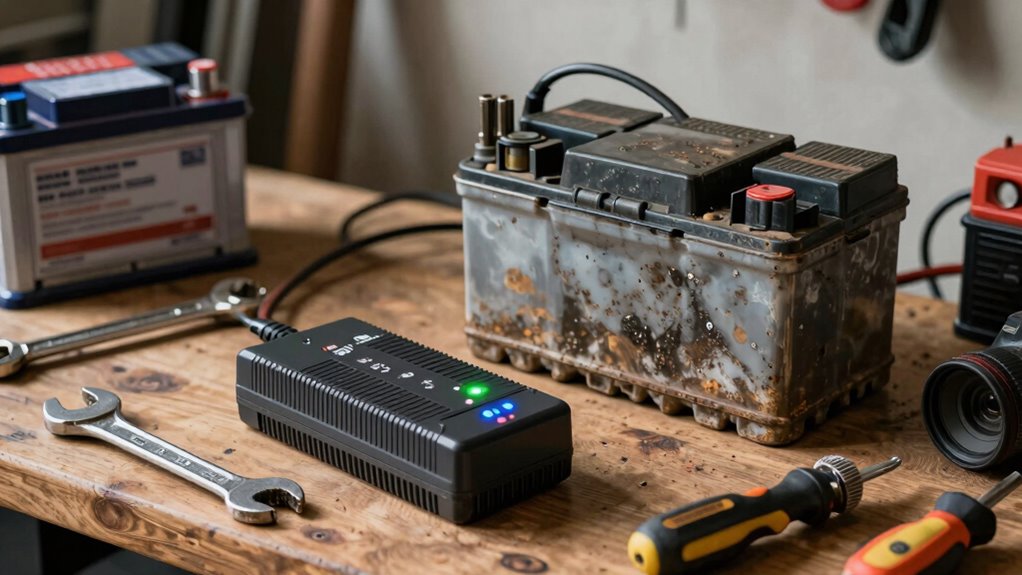

If you need to quickly recharge a drained battery, a charger is the right choice because it provides rapid power boosts. However, if you want to keep your battery healthy during long periods of inactivity, a maintainer is better since it delivers gentle, steady charges that prevent overcharging. Your choice depends on how often and in what conditions you’ll use the battery. Keep going to discover how to pick the best option for your needs.
Key Takeaways
- Use a charger for quick recovery of drained or dead batteries, and a maintainer for long-term, gentle charging during storage.
- Chargers deliver rapid power boosts; maintainers provide steady, low-current charges to prevent overcharging.
- Choose a charger for frequent use or emergency needs; prefer a maintainer for occasional or seasonal storage.
- Maintain a focus on proper wiring and safety practices to protect your battery regardless of device type.
- Regularly inspect and test batteries to ensure compatibility with your charger or maintainer, extending battery lifespan.
What Are Battery Chargers and Maintainers?
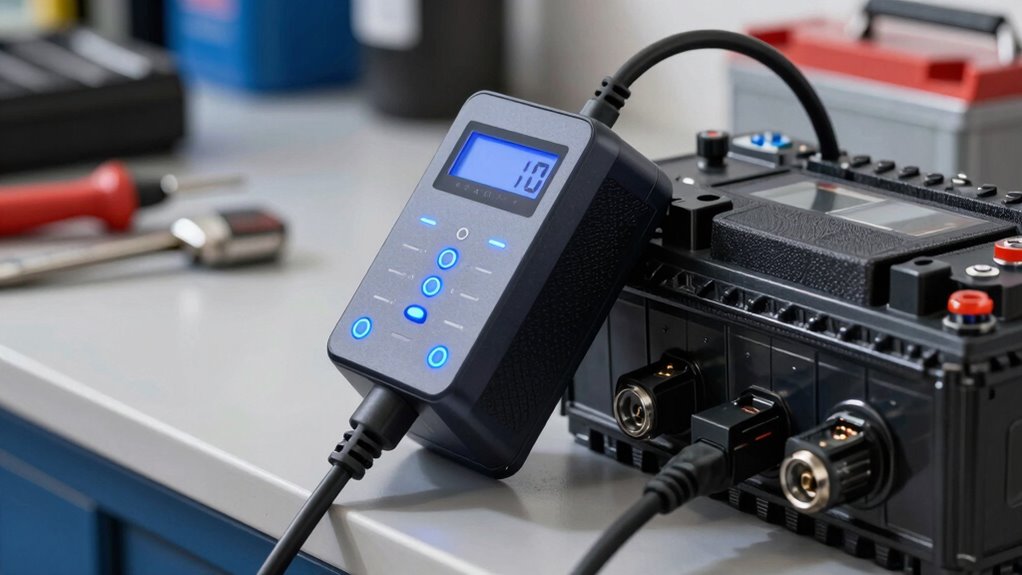
Have you ever wondered how to keep your vehicle’s battery healthy without overcharging it? That’s where battery chargers and maintainers come in. A battery charger provides a rapid boost of power, quickly restoring a drained battery by controlling the charging speed. It’s ideal for situations where you need to recharge your battery after it’s been drained. On the other hand, a maintainer provides a gentle, steady charge that helps extend your battery’s lifespan, especially during long periods of inactivity. Unlike chargers, maintainers prevent overcharging by automatically adjusting their output, which is often managed through automatic voltage regulation. Understanding these differences helps you choose the right device for your needs, ensuring your battery stays healthy without risking damage from excessive charging. Additionally, utilizing a charger with the appropriate power output ensures efficient and safe recharging tailored to your battery’s capacity. Properly managing battery health with the right equipment can save you time and money in the long run. Moreover, selecting the correct device can help avoid battery damage caused by improper charging practices. To further protect your battery, consider how long-term maintenance can be supported by the right equipment choices.
How Do Battery Chargers and Maintainers Differ?
While both battery chargers and maintainers are designed to keep your vehicle’s battery in good condition, they serve different purposes and operate in distinct ways. Battery chargers are built for rapid charging, providing a high charging speed to restore a depleted battery quickly—ideal when you’re in a hurry. Maintainers, on the other hand, deliver a gentle, steady charge over time, preventing overcharging and ensuring the battery stays healthy during long periods of inactivity. In terms of cost effectiveness, maintainers are usually more economical for long-term use because they use less energy and reduce wear on the battery. Maintainers also support sustainable practices in backyard design by minimizing energy consumption and chemical use. Proper wiring basics are important to ensure your charging system is safe and efficient, especially when integrating different charging devices. Chargers are more suitable for immediate needs, but maintainers excel at preserving battery health over extended periods without unnecessary expenses. Additionally, battery maintenance is crucial for extending the lifespan of your vehicle’s battery and avoiding unexpected failures. Regularly using a battery monitoring system can help you keep track of your battery’s health and optimize your charging strategy.
When Should You Use a Battery Charger or a Maintainer?
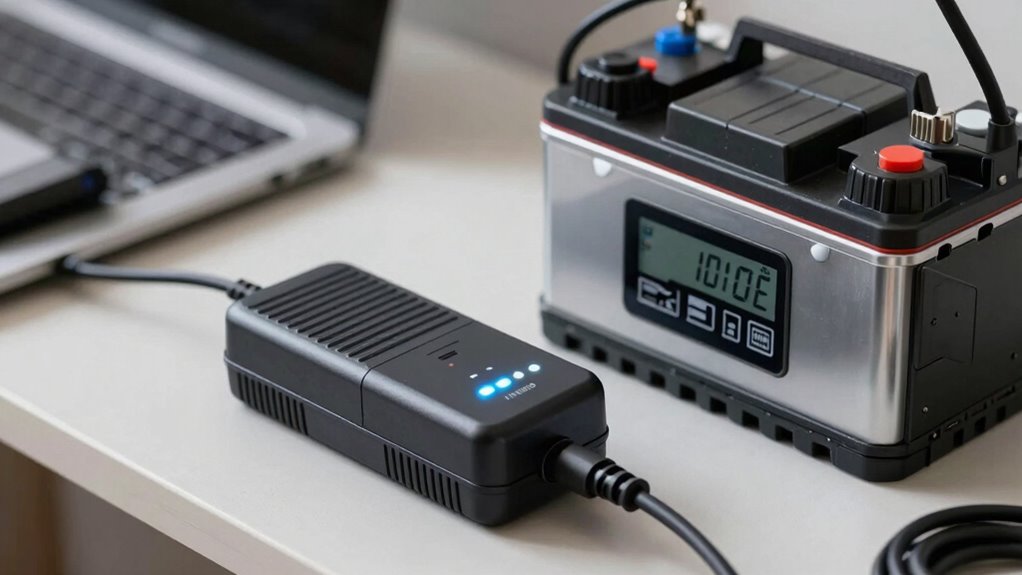
Knowing when to use a battery charger or a maintainer depends on your specific situation. If you’re dealing with seasonal storage, a maintainer is ideal to keep your battery healthy without overcharging, especially during long periods of inactivity. It guarantees your battery stays at peak charge without risking damage. On the other hand, if your battery has drained or is completely dead, a charger is necessary to restore power quickly. If you need reliable emergency power, a charger provides the rapid boost needed to get your vehicle or equipment running again. Use a charger for short-term fixes or when fully recharging is required. Maintain a maintainer for ongoing upkeep during downtime, so your battery remains ready when you need it most. Understanding your vehicle’s electrical system can help determine the best tool for the job. Additionally, understanding battery chemistry can influence whether a charger or maintainer is more appropriate for your needs. Recognizing battery capacity is also essential to select the correct power level for your charger or maintainer.
How to Choose the Right Battery Maintenance Device for Your Needs?

Choosing the right battery maintenance device begins with understanding your specific needs and usage patterns. If you want to maximize battery life extension, consider how often you’ll use the device and your storage conditions. For infrequent use, a maintainer can keep your battery healthy over time, especially during storage considerations. If you need quick charging or regular use, a charger might be more suitable. Think about the environment: temperature, space, and accessibility influence your choice. Here’s a quick guide:
| Usage Frequency | Storage Conditions | Desired Outcome |
|---|---|---|
| Occasional | Long-term | Battery life extension |
| Frequent | Short-term | Fast charging |
| Seasonal Storage | Infrequent use | Maintains readiness |
| Regular Use | Year-round | Overall battery health |
Additionally, understanding the difference between battery chargers and maintainers can help you select the most effective device for your situation. Recognizing the environmental factors that impact battery performance is also crucial in making the right choice. Choose accordingly to keep your batteries performing at their best!
Common Battery Maintenance Mistakes to Avoid?
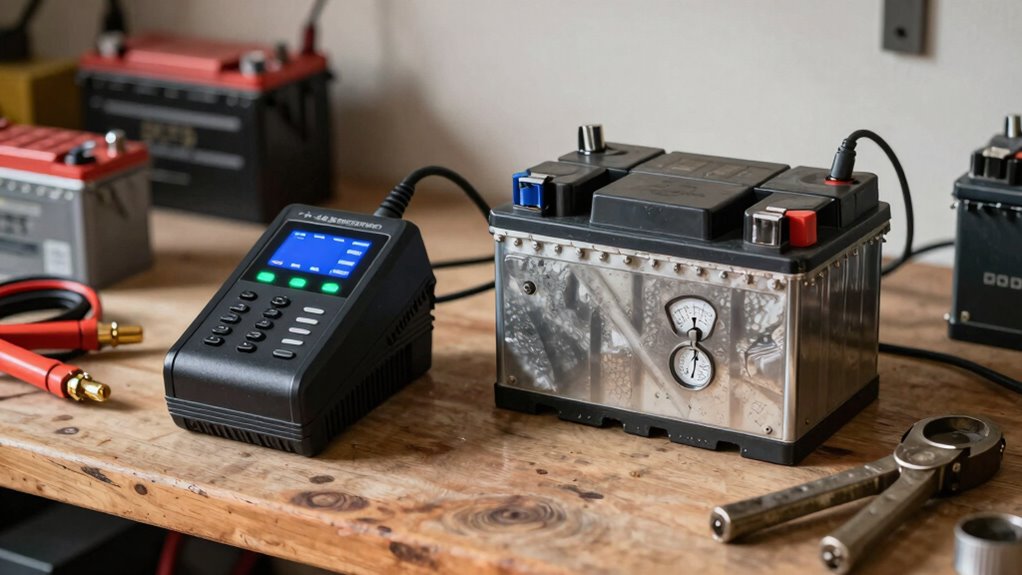
One of the most common mistakes in battery maintenance is neglecting regular inspections and testing. Skipping these steps can shorten your battery’s lifespan and lead to unexpected failures. It’s essential to check for corrosion, loose connections, and fluid levels periodically. Overlooking proper maintenance can also compromise toilet flushing safety, increasing the risk of overheating or damage. Using the wrong charger or charging at improper voltages can harm the battery and reduce its overall life. Always follow manufacturer guidelines for testing and maintenance routines. Rushing the process or ignoring warning signs like slow starts or swelling can also cause significant damage. Proper care guarantees your battery remains reliable, safe, and efficient, extending its lifespan and preventing costly replacements. Regular inspections and safe charging practices are key to long-term battery health, especially when considering battery storage techniques for seasonal or long-term use. Additionally, understanding the importance of battery chemistry can help you select the most suitable type for your needs. Being aware of battery capacity is also crucial for choosing the appropriate charger or maintainer for your specific application. Recognizing battery maintenance requirements ensures you can optimize performance and avoid premature failures.
Frequently Asked Questions
Can Using a Charger Damage My Battery if Left Connected Too Long?
Yes, leaving a charger connected too long can damage your battery. Overcharging risks include overheating and reduced battery longevity, which can shorten its lifespan. To protect your battery, use a charger with automatic shut-off or a maintainer designed to prevent overcharging. This way, you keep your battery healthy and extend its life without risking damage from overcharging. Always monitor charging times and follow manufacturer guidelines.
Are Battery Maintainers Suitable for All Types of Vehicle Batteries?
You wonder if battery maintainers suit all vehicle batteries. The answer is, it depends. You see, different batteries—lead-acid, AGM, lithium-ion—have unique chemistry, affecting charging compatibility. While maintainers work well with many types, some, like lithium-ion, need specific chargers. Check your battery’s specifications before hooking up a maintainer. Otherwise, you risk damage or reduced lifespan, turning a simple task into a costly mistake.
How Often Should I Use a Maintainer to Keep My Battery Healthy?
You should use a maintainer whenever your vehicle isn’t in use for extended periods, ideally every few weeks. This helps preserve your battery chemistry and prevents sulfation, especially for lead-acid batteries. Keep it connected through multiple charging cycles to guarantee peak health. Regular use minimizes capacity loss, extends your battery’s lifespan, and keeps it ready whenever you need it. Adjust frequency based on climate and battery type for best results.
Do Chargers and Maintainers Require Different Power Sources or Outlets?
Chargers and maintainers generally require similar power outlets, but their compatibility can differ. Chargers need a dedicated power source with appropriate voltage and amperage, while maintainers often work with lower, steady power inputs. Always check the power outlet requirements and confirm your device matches the charger or maintainer’s specifications. Proper compatibility guarantees safe operation and ideal battery health, so verify your unit’s compatibility before plugging in.
Is It Safe to Leave a Battery Connected to a Maintainer Unattended?
Yes, it’s safe to leave a battery connected to a maintainer unattended if it’s a quality, automatic model. These maintainers are designed for battery safety and proper maintenance routines, preventing overcharging and damage. However, always follow the manufacturer’s instructions, regularly check your setup, and verify your maintainer has safety features. Doing so keeps your battery safe and extends its lifespan while providing peace of mind during unattended maintenance.
Conclusion
Choosing between a battery charger and a maintainer depends on your needs. While chargers quickly restore power, maintainers gently keep your battery healthy over time. Rushing to charge without considering your battery’s condition can cause damage, just as neglecting regular maintenance can lead to unexpected failures. Balancing speed with care guarantees your battery’s longevity. Ultimately, understanding when to use each device helps you avoid costly mistakes and keeps your vehicle ready, whether you’re in a hurry or planning ahead.