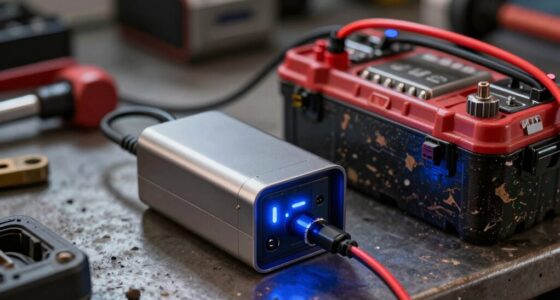
Choosing between compressor and thermoelectric 12V car fridges depends on your travel style and priorities. Compressor fridges offer superior cooling performance, are more energy-efficient, and handle hot environments well, making them ideal for extended trips or storing perishable food. Thermoelectric models are lightweight, portable, and easier to move but tend to consume more power and cool less effectively. To find out which fridge suits your needs best, explore the key differences more thoroughly.
Key Takeaways
- Compressor fridges are more energy-efficient, offering better cooling performance for longer trips and larger storage needs.
- Thermoelectric fridges are lightweight, portable, and ideal for short-term, outdoor activities despite higher energy consumption.
- Compressor units provide consistent temperatures and handle hot environments better, while thermoelectric models are quieter and simpler to operate.
- For extended use, compressor fridges save battery life and deliver reliable cooling; thermoelectric fridges drain vehicle batteries faster.
- The choice depends on travel duration, budget, portability needs, and desired cooling efficiency.
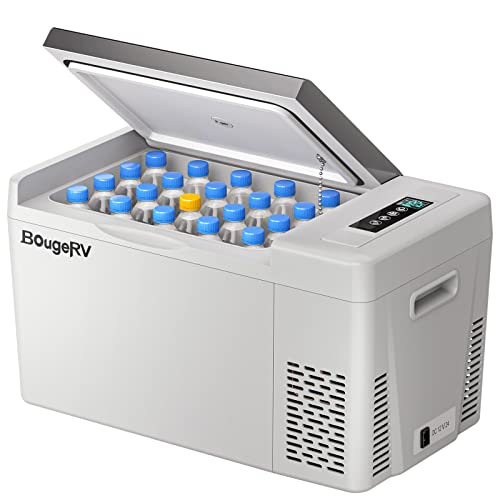
BougeRV 12v refrigerator 23 Quart, -8℉~50℉ Portable Freezer for Car, Grey
- Includes 2-Year Tech Support: Comes with support and accessories
- Fast Cooling Technology: Reaches 32℉ in 15 minutes
- Large Capacity Compact Size: 23 Qt, lightweight and portable
As an affiliate, we earn on qualifying purchases.
As an affiliate, we earn on qualifying purchases.
Which Car Fridge Is Right for Your Travel Needs?

Choosing the right car fridge depends on your travel style and cooling needs. You’ll want to take into account battery life, especially if you plan long trips without frequent access to power. A fridge with a longer battery life ensures your food stays cold without draining your vehicle’s battery quickly. Storage capacity is equally important; think about how much space you need for groceries, drinks, or snacks. If you’re traveling solo or on short trips, a smaller fridge might suffice. For family trips or extended adventures, a larger capacity keeps everything organized. Balance your needs between battery efficiency and storage size to find a fridge that offers reliable cooling and enough room for your essentials. Additionally, understanding battery management techniques can help you maximize your fridge’s efficiency and prolong its operation during your travels. Proper maintenance and care of your car fridge can further enhance its performance and lifespan, ensuring you get the most out of your investment. Being aware of the types of car fridges available can also help you make a more informed choice tailored to your specific needs. Moreover, selecting a fridge with energy-efficient features can significantly reduce power consumption during extended trips.
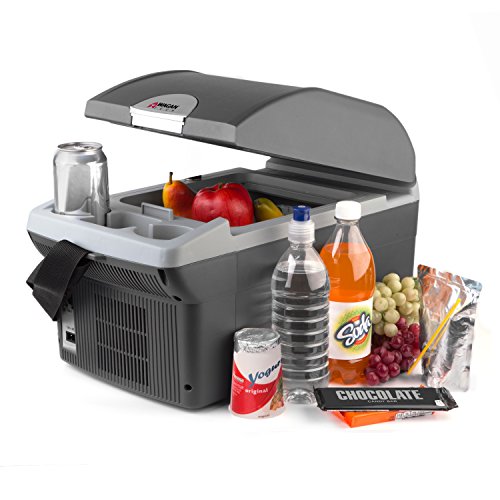
Wagan EL6214 Personal Thermoelectric Cooler/Warmer, 14 Liter Capacity, Portable Electric Car Cooler with 12/24V DC, 12V Small Fridge for Car, RV, and Camping Use, UL Listed
- Capacity: 14L portable cooler/warmer
- Versatile Use: Keeps food and drinks cold or warm
- Convenient Size: Holds 12 soda cans or water bottles
As an affiliate, we earn on qualifying purchases.
As an affiliate, we earn on qualifying purchases.
What Makes Compressor Fridges Better at Cooling?

Compressor fridges excel at cooling because they use a refrigeration cycle similar to standard household units, which allows you to quickly and effectively lower temperatures. This cycle provides superior temperature stability, keeping your food and drinks consistently cold even in hot environments. The compressor’s durability ensures reliable performance over time, making it a dependable choice for extended travels. When operating, imagine:
- A powerful compressor humming steadily, maintaining chill despite engine heat
- Cool air circulating evenly inside, preventing hot spots
- Thick insulation locking in cold, resisting temperature fluctuations
- Components built to withstand vibrations and rough conditions
Additionally, the refrigeration cycle used in compressor units is highly effective at removing heat and maintaining consistent temperatures, which is why they outperform thermoelectric systems in demanding conditions. These features mean your fridge stays colder longer and remains stable, giving you peace of mind on the road. Furthermore, the use of energy-efficient technology in compressor systems helps reduce power consumption, making them not only more effective but also more sustainable. Overall, compressor technology delivers consistent, long-lasting cooling that thermoelectric units can’t match.

EUHOMY 12 Volt Refrigerator, 19QT(18L) Compressor Electric Cooler APP Control, Car Fridge -4℉~68℉, Portable Refrigerator 12/24V DC 100-240V AC, Portable Freezer for Camping, Travel, Boat
- Versatile Power Options: AC and DC adapters included for multiple uses
- 2-Year Tech Support: Reliable customer service and assistance
- Large 19QT Capacity: Compact yet spacious for storage needs
As an affiliate, we earn on qualifying purchases.
As an affiliate, we earn on qualifying purchases.
Are Thermoelectric Fridges More Energy-Efficient and Portable?

Thermoelectric fridges are often praised for their portability and ease of use, making them a popular choice for road trips and camping. However, they tend to consume more energy than compressor models, which can impact battery life. Consider your needs carefully to determine if their convenience outweighs their higher energy use. Additionally, understanding cooling efficiency can help you choose the best option for your specific situation. Since indoor air quality plays a role in overall comfort and health, it’s essential to evaluate how each type of fridge might affect your vehicle’s interior environment during extended use, especially considering how air circulation impacts odor and temperature consistency. Proper ventilation can significantly influence air quality inside the vehicle, ensuring a healthier environment during prolonged trips. Being aware of energy consumption is crucial for optimizing battery life and ensuring reliable operation on the road.
Energy Consumption Differences
While thermoelectric car fridges are often praised for their portability, their energy consumption differs markedly from traditional compressor models. They tend to use more power, which impacts your battery efficiency over time. Thermoelectric units rely on electrical heat transfer, making them less efficient for long-term cooling. You might imagine:
- Draining your vehicle’s battery faster during extended trips
- Struggling to keep cool when your power supply is limited
- Facing higher energy bills if used frequently
- Relying heavily on your car’s electrical system for sustained operation
In contrast, compressor fridges typically consume less power for the same cooling capacity, making them more efficient for prolonged use. If you prioritize energy efficiency, understanding these differences helps you choose wisely.
Portability and Convenience
Among the various portable cooling options, thermoelectric car fridges stand out for their lightweight and easy-to-carry design. Their ergonomic design makes them simple to move and position, perfect for quick trips or camping. You won’t have to worry about heavy batteries or complicated setups, as these fridges typically run efficiently on your vehicle’s 12V power supply. While battery life can vary, thermoelectric fridges generally consume less energy, extending your unit’s operational time between charges or reboots. This convenience means you can keep your food and drinks cool without the bulk of compressor models. Additionally, thermoelectric fridges are often free-floating, making them versatile for various outdoor settings. Their energy efficiency and portability make them especially suitable for outdoor enthusiasts and travelers. Advances in portable refrigeration technology have improved their performance and reliability for outdoor use. Moreover, their compact size allows for easy storage when not in use. Overall, their portability and user-friendly design make thermoelectric fridges a practical choice for anyone prioritizing ease of use and mobility during outdoor adventures or road trips. For example, the use of innovative materials in thermoelectric modules can enhance durability and efficiency in outdoor conditions.
BougeRV 12v refrigerator 23 Quart, -8℉~50℉ Portable Freezer for Car, Grey
- Includes 2-Year Tech Support: Comes with support and accessories
- Fast Cooling Technology: Reaches 32℉ in 15 minutes
- Large Capacity Compact Size: 23 Qt, lightweight and portable
As an affiliate, we earn on qualifying purchases.
As an affiliate, we earn on qualifying purchases.
Comparing Features: Performance, Portability, and Cost

When choosing a 12V car fridge, you need to contemplate how well it cools and how efficiently it uses power. Price and portability also matter, especially if you’ll be moving your fridge frequently or on a budget. Let’s compare these features to find the best fit for your needs. Additionally, understanding the cooling technology can help you assess long-term performance and maintenance requirements. Using a passive voice detector can ensure your writing remains clear and direct, enhancing overall readability. Moreover, considering the energy efficiency of different models can lead to significant savings over time. A thorough evaluation of safety considerations, including proper wiring and installation, is essential to prevent hazards during operation. Recognizing the wiring basics involved in setup can further promote safe and reliable operation of your fridge.
Performance Efficiency and Cooling Power
Choosing a 12V car fridge means considering how well it balances performance efficiency and cooling power. You want a unit that cools effectively without gobbling up too much power. High cooling capacity ensures your food and drinks stay fresh, while low power consumption helps preserve your vehicle’s battery life.
Imagine:
- A compressor that quickly chills your groceries on hot days
- Thermoelectric models that operate quietly and efficiently
- A fridge that maintains consistent temperatures during long drives
- Minimal energy drain, so you don’t worry about battery drain
Price and Portability Considerations
Balancing performance with cost and portability is key when selecting a 12V car fridge. A thorough price comparison helps you understand which model offers the best value for your budget, especially when considering features like durability and cooling efficiency. Portability features, such as lightweight design, compact size, and sturdy handles, directly impact how easy it is to carry and fit the fridge in your vehicle. Thermoelectric models often excel in portability and tend to be more affordable, making them ideal for casual trips. Compressor fridges, while usually pricier, provide better cooling performance but may be bulkier and heavier. Ultimately, weighing your needs for portability and budget will guide you toward the right choice for your adventures. Additionally, understanding the affiliate disclosure can help you make informed purchasing decisions without unexpected costs.
Key Factors to Consider When Choosing a 12V Car Fridge

Selecting the right 12V car fridge depends on several key factors that can impact its performance and suitability for your needs. The power source guarantees compatibility with your vehicle and affects energy efficiency, while storage capacity determines how much food and drinks you can keep cold during trips. Consider the following:
- The size of the fridge, whether compact for minimal space or larger for extended trips
- The type of cooling system, like compressor or thermoelectric, based on noise levels and efficiency
- Battery draw, to avoid draining your vehicle’s power unexpectedly
- Insulation quality, which influences how long contents stay cold without power
- Additionally, understanding the water sources available on your trips can help you plan for emergency water needs and choose a fridge with appropriate features to support long journeys. Knowing about energy consumption can further help you select a model that balances performance with your vehicle’s power capacity.
Final Tips for Selecting Your Perfect Car Fridge

To find the perfect car fridge, you should prioritize features that align with your travel habits and preferences. Consider the brand reputation; choosing a reputable brand ensures better quality, reliability, and customer support. Check reviews and ratings to gauge real-world performance. Additionally, warranty coverage is essential—opt for models that offer extensive warranties to protect your investment. A good warranty provides peace of mind, especially for long trips or frequent use. Think about how you’ll use your fridge: if you travel often, durability and energy efficiency matter more. Make sure the product offers easy access to customer service in case issues arise. By focusing on brand reputation and warranty coverage, you can confidently select a fridge that meets your needs and lasts through all your adventures.
Frequently Asked Questions
How Long Can a 12V Car Fridge Run on a Single Battery Charge?
You can typically run a 12V car fridge for about 8 to 12 hours on a single battery charge, depending on its battery capacity and power consumption. If your fridge consumes 40 watts and your battery provides 50 amp-hours at 12 volts, expect roughly 10 hours of continuous use. To extend runtime, consider upgrading your battery or reducing the fridge’s power consumption with efficient settings.
Are There Any Maintenance Tips for Extending My Fridge’s Lifespan?
Oh, sure, neglect your battery maintenance and ignore temperature calibration, and your fridge’s lifespan will thank you—sarcastically. To extend it, regularly check and clean your battery terminals, ensure proper ventilation, and calibrate the temperature settings for efficiency. Proper battery maintenance prevents power issues, while temperature calibration keeps your food fresh longer. Follow these simple tips, and your fridge will last longer, proving that a little care goes a long way.
Can Thermoelectric Fridges Operate Efficiently in Extremely Hot Weather?
Thermoelectric fridges struggle to operate efficiently in extremely hot weather because their cooling relies on a temperature difference. To improve performance, you should guarantee good insulation to minimize heat gain, which helps the fridge stay cool. Additionally, if your setup is solar-compatible, use shade or supplemental cooling methods to keep the fridge cooler. These steps help maintain efficiency and prolong your fridge’s lifespan in hot conditions.
Do Compressor and Thermoelectric Fridges Require Different Installation Setups?
Think of installation like fitting puzzle pieces—you’ll find differences between compressor and thermoelectric fridges. Compressor models often need sturdier mounting and ventilation, while thermoelectric units are simpler to install, usually just requiring a basic power hookup. You’ll need to take into account installation differences, especially for airflow and secure placement. Pay attention to power hookup requirements; compressor fridges demand more robust wiring, whereas thermoelectric ones typically just need a straightforward 12V connection.
What Safety Precautions Should I Follow When Using a Car Fridge?
When using your car fridge, always guarantee proper electrical grounding to prevent shocks and electrical issues. Keep the fridge away from flammable materials to reduce fire risk, and never overload the power supply. Regularly inspect cords and connections for damage. Follow manufacturer instructions carefully, and avoid using the fridge if you notice sparks or burning smells. Prioritize safety to enjoy reliable, trouble-free cooling during your trips.
Conclusion
So, whether you choose a compressor or thermoelectric fridge, just remember: one’s the sleek, powerful sports car of cooling, and the other’s the humble bicycle. You could impress friends with rapid, cold drinks or politely sip lukewarm soda on long trips. Ultimately, pick what suits your adventure—because nothing says “glamping” like debating over your fridge’s cooling prowess while your snacks slowly warm. Cheers to making the smartest (or funniest) choice!