In your kitchen, chamber sealers are great if you often store liquids or large quantities, as they remove air from the entire chamber for a consistent seal. Edge sealers are more compact and easier to use for solid foods like nuts or sliced meats, but they might struggle with liquids. Choosing between them depends on your food types and space. Keep exploring to discover which sealer fits your needs best and how to maintain it for long-lasting freshness.
Key Takeaways
- Chamber sealers provide more consistent sealing and handle larger quantities, ideal for professional or serious home kitchens.
- Edge sealers are compact, affordable, and easy to operate, suitable for everyday solid food storage in home kitchens.
- Chamber sealers can seal liquids and marinated foods without mess, while edge sealers are less effective for liquids.
- Edge sealers require simple maintenance, like cleaning the sealing strip, making them user-friendly for regular use.
- Choosing between them depends on food types, volume needs, and budget considerations for your kitchen.
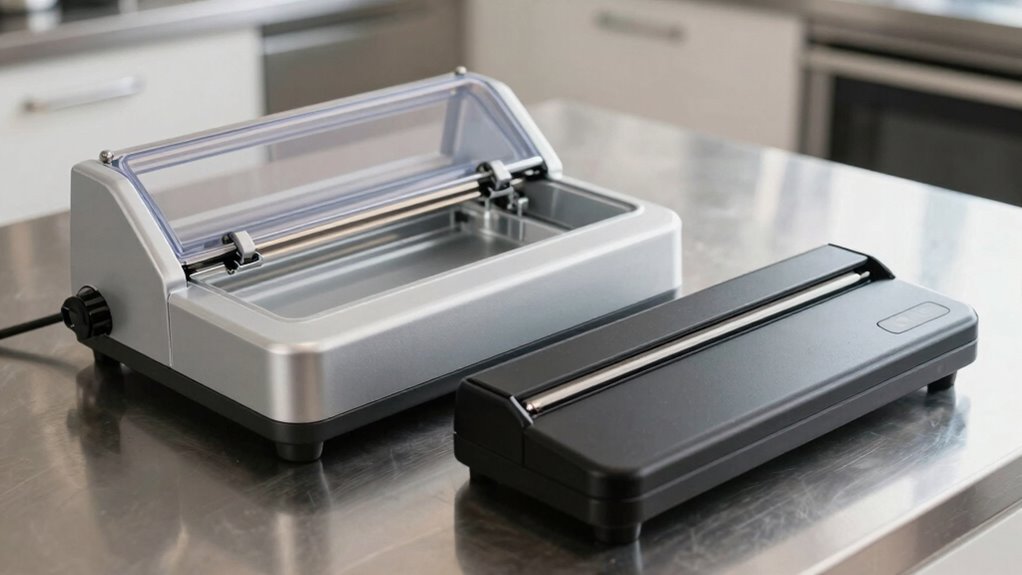
Ever wondered how vacuum sealers help you preserve food longer and reduce waste? These handy devices are game-changers in the kitchen, especially if you’re aiming to extend the freshness of your groceries and leftovers. When you use a vacuum sealer, you’re actively removing air from bags or containers, which slows down the growth of bacteria and mold. This process, known as food preservation, can considerably lengthen the shelf life of meats, vegetables, cheeses, and even dried goods. But to keep your investment working smoothly, equipment maintenance is key. Regularly cleaning the sealing surfaces and replacing worn-out gaskets ensures that your vacuum sealer continues to perform at its best, avoiding leaks that could compromise your food’s freshness.
Vacuum sealers extend food freshness by removing air, but regular cleaning and maintenance keep them working optimally.
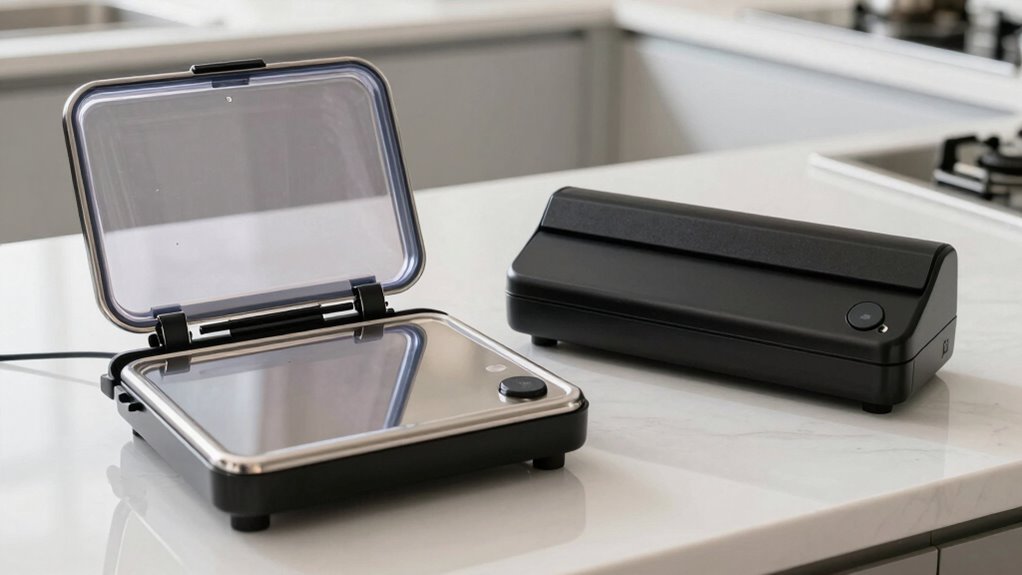
Understanding the difference between chamber and edge sealers helps you choose the right tool for your kitchen needs. Chamber sealers are often found in professional settings or serious home users because they offer more consistent sealing and can handle larger quantities at once. These machines are designed with a sealed chamber where the entire package is placed before the vacuuming process begins. Because the air is removed from the entire chamber, the seal tends to be more secure, making it ideal for sealing liquids or marinated foods without mess. Additionally, Chamber sealers tend to be more versatile for different types of food packaging, especially when sealing delicate or moist foods. They are also particularly effective at sealing liquids, which can be challenging for other types of vacuum sealers. They are also typically equipped with features that support professional-grade food preservation, making them suitable for more demanding tasks. However, chamber sealers tend to be more expensive and bulkier, so they might not fit comfortably into a typical home kitchen.
On the other hand, edge sealers, sometimes called external sealers, are smaller, more affordable, and easier to operate. You place the open end of a bag into the machine’s sealing strip, and the device pulls out the air before sealing the bag’s edge. These sealers are perfect if you mainly store solid foods like nuts, dried herbs, or sliced meats. They’re also more straightforward to maintain—simply keep the sealing strip clean and replace it when needed. While they might not be as effective at sealing liquids or large quantities, they do a great job conserving space and are user-friendly for everyday use. Proper equipment maintenance, including cleaning and inspecting parts regularly, also helps prevent malfunctions and prolongs the lifespan of your vacuum sealer. Additionally, choosing a high-quality sealing strip can make a significant difference in the durability and effectiveness of your device.
Both types of vacuum sealers can help you improve food preservation and cut down on waste. The choice comes down to your specific needs, how much food you typically seal, and your budget. Regardless of which you pick, remember that equipment maintenance plays a vital role in ensuring longevity and consistent performance. Regular cleaning, inspecting for worn parts, and following the manufacturer’s instructions will keep your sealer functioning efficiently, saving you time and money in the long run. With the right vacuum sealer and proper care, you’ll enjoy fresher food and less waste every day.

Gasbye Chamber Vacuum Sealer – 5.3QT Large Chamber, Replaceable 11.5" Sealing Bar with Double Seal, Perfect for Meats, Soups, Sauces & Liquids, Includes 30 Pre-Cut Vacuum Bags, Stainless Steel
[Removes Nearly All Air – Even from Ground Meat, Chunky Foods, and Liquids] Unlike traditional suction vacuum sealers…
As an affiliate, we earn on qualifying purchases.
As an affiliate, we earn on qualifying purchases.
Frequently Asked Questions
Can Vacuum Sealers Be Used for Liquids Safely?
Yes, vacuum sealers can be used for liquids safely, but you need to be cautious. They’re great for liquid sealing if you use a method like freezing liquids first or leaving a small opening during sealing to prevent moisture from contaminating the machine. This moisture protection helps guarantee a proper seal and prevents damage to your vacuum sealer. Always follow the manufacturer’s instructions for best results with liquids.
How Long Do Vacuum-Sealed Foods Typically Last?
Back in the day, folks relied on cool cellars, but now you can extend your food preservation game with vacuum sealers. Typically, vacuum-sealed foods last 1-3 years in the freezer, depending on the item. For ideal shelf life, vacuum sealing slows spoilage, keeping meats, fruits, and leftovers fresh longer. Just remember, proper storage and maintaining seal integrity are key to maximizing your food’s longevity.
Are Chamber Sealers More Energy-Efficient Than Edge Sealers?
Chamber sealers are generally more energy-efficient than edge sealers because they use less energy during sealing and vacuuming, thanks to their design. Their sealing efficiency is higher, as they can handle larger volumes and tighter seals without extra effort. If you’re concerned about energy consumption and want consistent sealing, chamber sealers are a smarter choice, especially for frequent or large-volume food preservation.
What Maintenance Is Required for Vacuum Sealing Machines?
You need to regularly clean your vacuum sealing machine’s sealing bar and gasket to maintain ideal sealing, preventing debris buildup that can interfere with sealing techniques. Check and replace worn parts as needed, and keep the interior dry. Regularly calibrate your machine to ensure consistent performance. Proper maintenance extends your sealer’s lifespan, guarantees airtight seals, and keeps it functioning efficiently.
Can Vacuum Sealers Be Used for Sous Vide Cooking?
Yes, you can use vacuum sealers for sous vide cooking, but it depends on the sealing machine type. Chamber sealers are ideal because they handle heat and moisture better, maintaining the integrity of your bags during long cooking times. Edge sealers might work, but they’re less dependable for guaranteeing a perfect, airtight seal for sous vide. Mastering vacuum sealing techniques ensures your food cooks evenly and stays fresh.

Mini Vacuum Sealer for Food, 3 in 1 Cordless Rechargeable Bag Heat Sealer for Dry/Moist Food Storage with 4 Snack Bags for Snacks Food Storage(Green)
【3 Modes for Daily Use】 "Vacuum Seal" mode: one-touch automatic vacuum and seal, suitable for food that is…
As an affiliate, we earn on qualifying purchases.
As an affiliate, we earn on qualifying purchases.
Conclusion
Now that you understand the differences between chamber and edge sealers, imagine the possibilities in your kitchen. Will you opt for the high-capacity chamber sealer, perfect for bulk storage, or the sleek edge sealer for everyday use? The choice is yours, but one thing’s certain — once you experience the freshness and convenience of a vacuum sealer, you’ll wonder how you ever cooked without it. Are you ready to transform your food storage game?

95Kpa Precision Pro Vacuum Sealer, with Double Heat Seal & Dual-Pump for Dry/Moist Food, 2X Strength, Food Vacuum Sealer Machine with Easy-Lock Handle, Built-in Cutter & Bag Storage, Stainless Steel
𝟗𝟓𝐤𝐏𝐚 𝐃𝐮𝐚𝐥-𝐏𝐮𝐦𝐩 𝐏𝐨𝐰𝐞𝐫: 125W high power with a dual-pump system delivers up to 95kPa of professional-grade suction for…
As an affiliate, we earn on qualifying purchases.
As an affiliate, we earn on qualifying purchases.

Chef Preserve Compact Vacuum Sealer for Food (Vacuum Sealer Machine + 30 Reusable Vacuum Bags) Powerful Handheld Vacuum Sealer Machine, Seal Meal Saver, Portable Food Sealer
💰REDUCE WASTE AND SAVE MONEY: Chef Preserve vacuum seals your food in less than 5 seconds, extends freshness,…
As an affiliate, we earn on qualifying purchases.
As an affiliate, we earn on qualifying purchases.