
Your OBD2 scanner can quickly reveal your vehicle’s health, including sensor functionality, calibration issues, and potential sensor drift that affect fuel economy and emissions. It detects trouble codes and provides real-time data on engine conditions, helping you spot problems before they become costly repairs. By monitoring systems like emission controls and engine parameters, you can catch issues early. Keep exploring to discover how your scanner keeps you informed and ahead of problems.
Listen free for 30 days with Audible
Thousands of audiobooks and originals — cancel anytime.
As an affiliate, we earn on qualifying purchases.
Key Takeaways
- Detects and displays diagnostic trouble codes (DTCs) indicating specific engine or sensor issues before visiting a mechanic.
- Provides real-time data on engine parameters, helping identify potential problems early.
- Reveals sensor calibration status and signs of sensor drift affecting performance and emissions.
- Monitors emission control systems to identify malfunctions that could cause test failures.
- Offers insights into sensor health and component status, enabling proactive maintenance and troubleshooting.
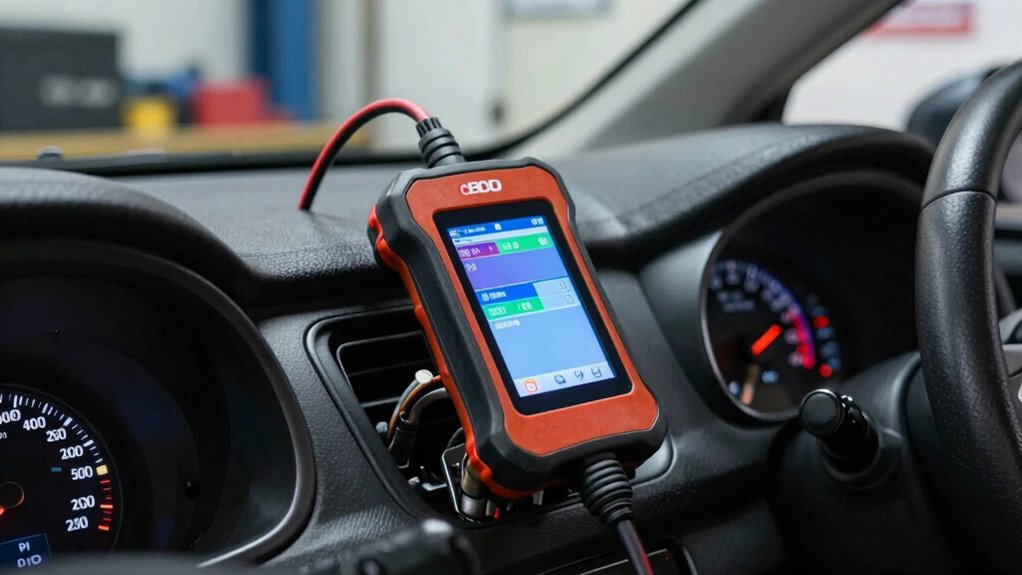
If you’re looking to keep your vehicle running smoothly and avoid costly repairs, understanding how an OBD2 scanner works can be a game-changer. When you connect the scanner to your car’s port, it taps into the onboard computer, revealing a wealth of information about your vehicle’s health. One of the key things it can tell you is whether sensors are functioning correctly, especially those involved in sensor calibration. Over time, sensors like the oxygen sensor or mass airflow sensor can drift out of calibration, leading to poor fuel economy and increased emissions. Your scanner can identify these issues early, so you can address them before they cause more significant damage or trigger expensive repairs.
Another vital aspect your OBD2 scanner covers is emission controls. Modern vehicles are equipped with systems designed to limit harmful emissions, such as the catalytic converter and evaporative emission control systems. When these systems aren’t working properly, your scanner will throw a trouble code, alerting you to potential problems. For example, a malfunctioning emission control sensor might not be regulating exhaust gases correctly, which can cause your vehicle to fail emissions testing or run inefficiently. Recognizing these issues early allows you to take targeted action, whether that means replacing a faulty sensor or conducting a more thorough inspection. Additionally, understanding sensor calibration can help you maintain optimal engine performance and fuel efficiency over time.
Your scanner also provides real-time data that can give you an instant snapshot of your engine’s condition, including information about the air-fuel ratio, engine temperature, and more. If certain sensors are reading out of range, it can signal that a sensor calibration has gone awry or that a component is failing. This proactive insight helps you decide whether a quick fix is enough or if you should visit a mechanic. Additionally, many scanners can monitor readiness status for emissions tests, letting you know if your vehicle is prepared for inspection without surprises. Furthermore, diagnostic trouble codes can pinpoint specific issues, saving you time and money by guiding your repairs more precisely. Being aware of sensor drift can also help you anticipate when maintenance might be needed before problems become severe. Regularly checking sensor health can ensure that your vehicle stays in top condition and avoids unnecessary breakdowns. Recognizing early signs of sensor malfunction can be crucial for preventing costly repairs down the line.
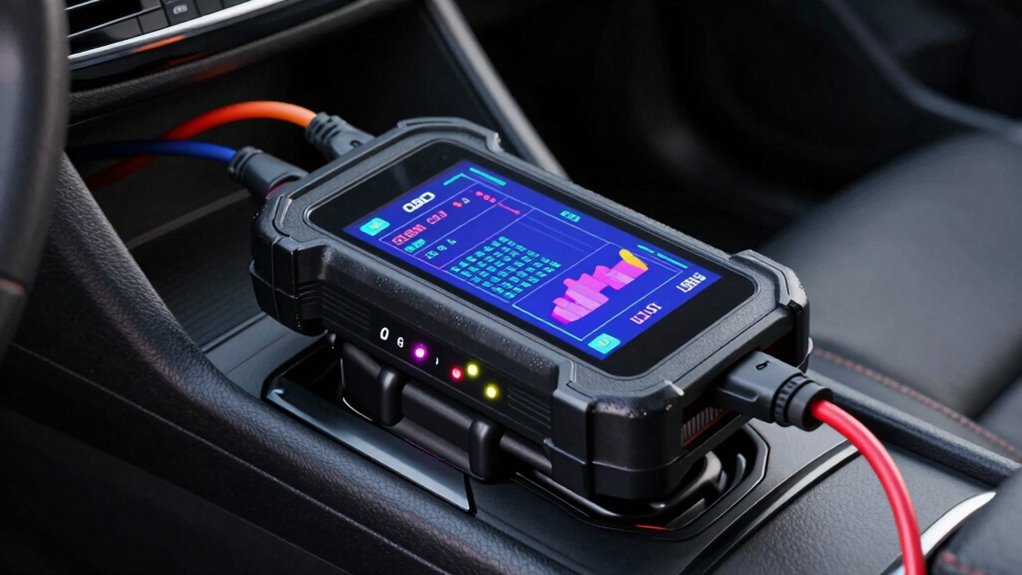
OBD2 scanner with real-time engine data
As an affiliate, we earn on qualifying purchases.
As an affiliate, we earn on qualifying purchases.
Frequently Asked Questions
Can an OBD2 Scanner Detect All Vehicle Issues Accurately?
An OBD2 scanner can’t detect all vehicle issues accurately because sensor accuracy varies, and some problems aren’t captured by standard codes. You need to interpret data carefully, as not all readings indicate a malfunction. While these scanners provide valuable insights, they’re best used as a starting point. Relying solely on them might miss complex issues, so a professional diagnosis is often necessary for a complete understanding.
How Often Should I Use My OBD2 Scanner for Maintenance?
You should use your OBD2 scanner regularly to keep your vehicle in top shape. Think of it as a health check-up—every few months or whenever you notice performance issues. This helps with maintenance scheduling and guarantees sensors stay calibrated. Frequent scans catch problems early, preventing costly repairs and maintaining your car’s efficiency. Consistent use keeps your vehicle running smoothly and extends its lifespan.
Do All Vehicles Support the Same OBD2 Codes?
Not all vehicles support the same OBD2 codes because of differences in vehicle compatibility. You should check your vehicle’s manual or manufacturer’s website to see which codes are supported. Also, remember that code interpretation can vary between scanners; some might provide detailed explanations, while others give basic info. Knowing your vehicle’s compatibility and understanding how codes are interpreted helps you use your scanner effectively for diagnostics.
Can I Reset My Check Engine Light With an OBD2 Scanner?
You can reset your check engine light with an OBD2 scanner, but it’s like a quick chat with the car’s quiet side—sometimes it needs more than a reset to truly heal. Before doing so, check your battery health and tire pressure, as these can influence engine performance. Resetting clears the warning, but if underlying issues persist, the light may return, signaling you to address the root cause.
What Are the Limitations of DIY OBD2 Diagnostics?
DIY OBD2 diagnostics have limitations, especially with sensor limitations and data interpretation. You might miss critical issues because not all sensors cover every problem, and understanding the diagnostic trouble codes requires some technical knowledge. While your scanner can reveal basic problems, complex engine or transmission issues often need expert analysis. Relying solely on DIY diagnostics might lead to missed or misinterpreted data, so use it as a helpful guide, not a definitive diagnosis.
vehicle diagnostic trouble code reader
As an affiliate, we earn on qualifying purchases.
As an affiliate, we earn on qualifying purchases.
Conclusion
By using your OBD2 scanner, you gain immediate insight into your vehicle’s health, saving you time and money. For example, imagine noticing a check engine light and discovering it’s related to a simple sensor issue, rather than a major repair. Armed with this knowledge, you can decide whether a quick fix or professional help is needed. Don’t wait for the repair shop—your scanner empowers you to stay ahead of potential problems.
As an affiliate, we earn on qualifying purchases.
emission system diagnostic scanner
As an affiliate, we earn on qualifying purchases.
As an affiliate, we earn on qualifying purchases.
Flea & tick season Picks
flea and tick prevention
As an affiliate, we earn on qualifying purchases.