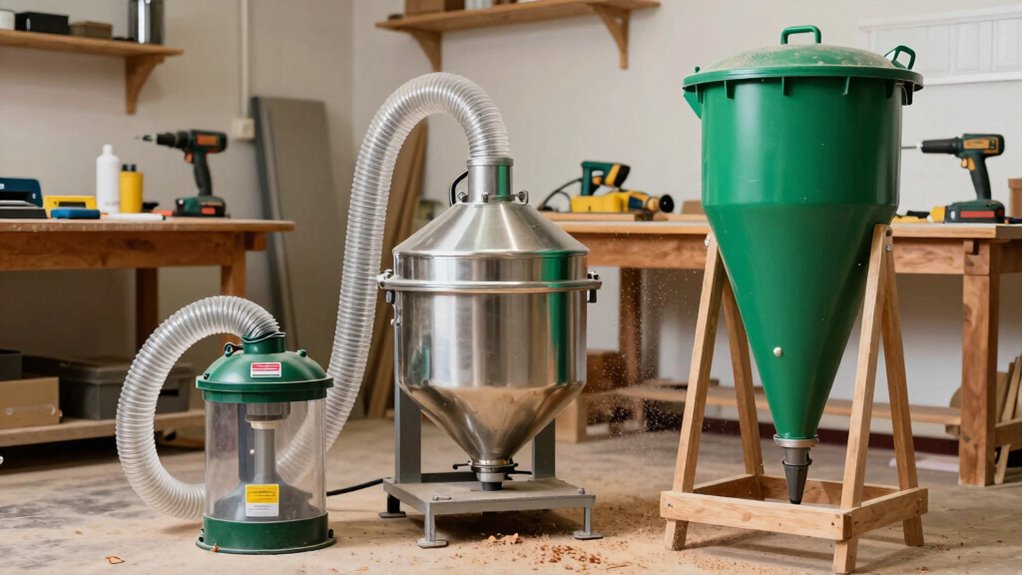

Shop vacuums are portable and great for quick cleanups and small debris, but they’re less effective for continuous dust removal. Dust collectors are larger, more powerful, and better suited for heavy-duty, frequent use, offering higher airflow. Cyclone systems use separation technology to reduce filter clogging, making them ideal for high dust output. Understanding these differences helps you pick the best system; exploring further reveals how to choose the right option for your workshop.
Key Takeaways
- Shop vacs are portable, affordable, and ideal for quick cleanups but lack the capacity for continuous dust collection.
- Dust collectors are larger, stationary systems that provide higher airflow for heavy-duty, frequent dust removal.
- Cyclone systems pre-separate larger particles, reducing filter clogging and enhancing overall dust collection efficiency.
- Filter technology (HEPA, cartridge) in dust collectors improves fine dust capture and air quality.
- Selection depends on workshop size, dust volume, space constraints, and budget, balancing performance with operational costs.
Why Dust Collection Matters in Your Workshop
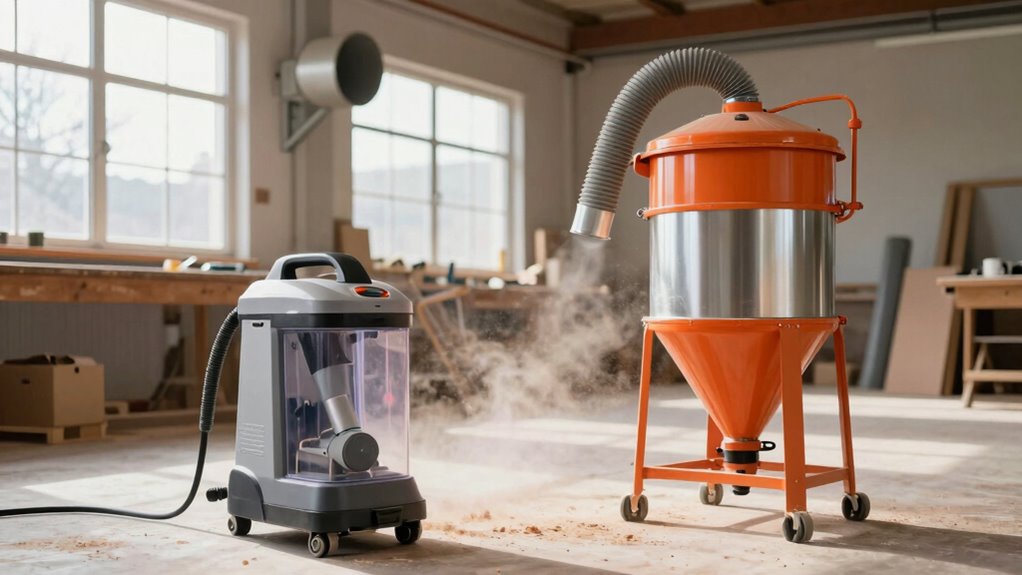
Dust collection is essential for maintaining a safe and healthy workshop environment. Poor air quality from airborne dust particles can cause respiratory issues and long-term health problems if not properly managed. By implementing effective dust collection, you remove hazardous dust before it becomes airborne, reducing health risks. Safety precautions, like wearing masks and eye protection, are important, but controlling dust at its source is even more effective. Proper dust collection also keeps your workspace cleaner, preventing dust buildup on tools and surfaces that can cause slips or fires. Investing in a good dust collection system isn’t just about cleanliness—it’s about protecting your health and safety. Understanding air quality testing helps you evaluate the effectiveness of your dust collection setup and make improvements. Additionally, choosing between different systems like a Shop Vac, dust collector, or cyclone depends on your specific workshop needs and the scale of dust you generate. Selecting the right system can also improve overall air circulation and dust removal efficiency, leading to a safer working environment.
How to Choose the Right Dust Collection System for Your Needs
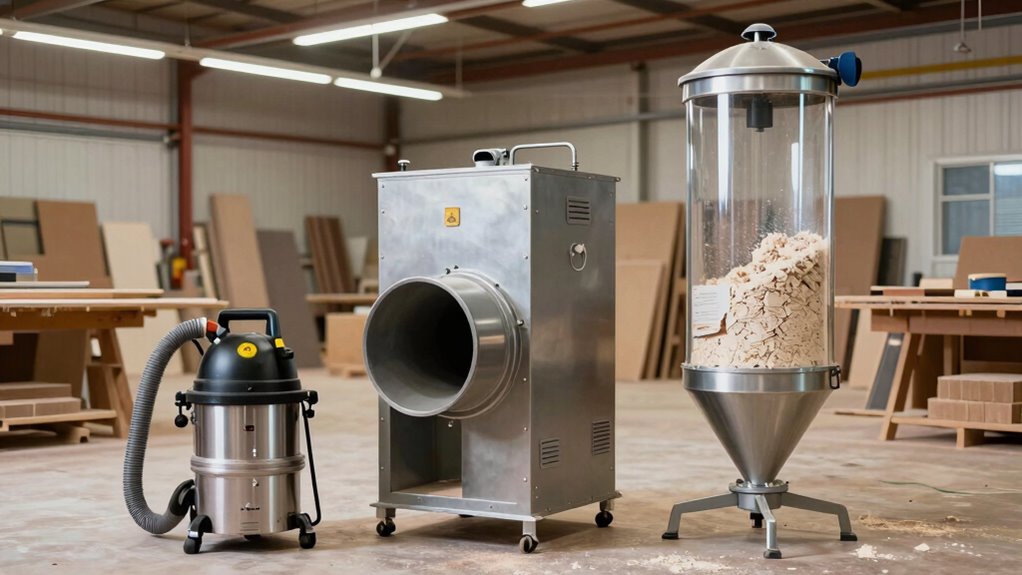
Choosing the right dust collection system starts with evaluating the specific needs of your workshop. Consider the types of tools you use and the volume of dust generated to determine the level of dust containment required. For small workshops with light dust, a shop vac with good air filtration might suffice. If you work with larger, more powerful tools, a dust collector or cyclone system offers superior dust containment and better air filtration, reducing airborne particles. Think about space constraints as well—compact units work well in tight areas, while larger setups provide more capacity. Prioritize systems that effectively capture dust at the source and improve air quality. Additionally, selecting a system with appropriate filter technology can significantly enhance dust removal efficiency. The air filtration capabilities of a system also play a crucial role in maintaining a healthy workspace environment. Understanding the energy efficiency of a system can also lead to long-term cost savings and sustainability benefits. Making an informed choice ensures your workspace stays cleaner, safer, and more comfortable.
What Are the Key Features to Look for in Dust Collectors
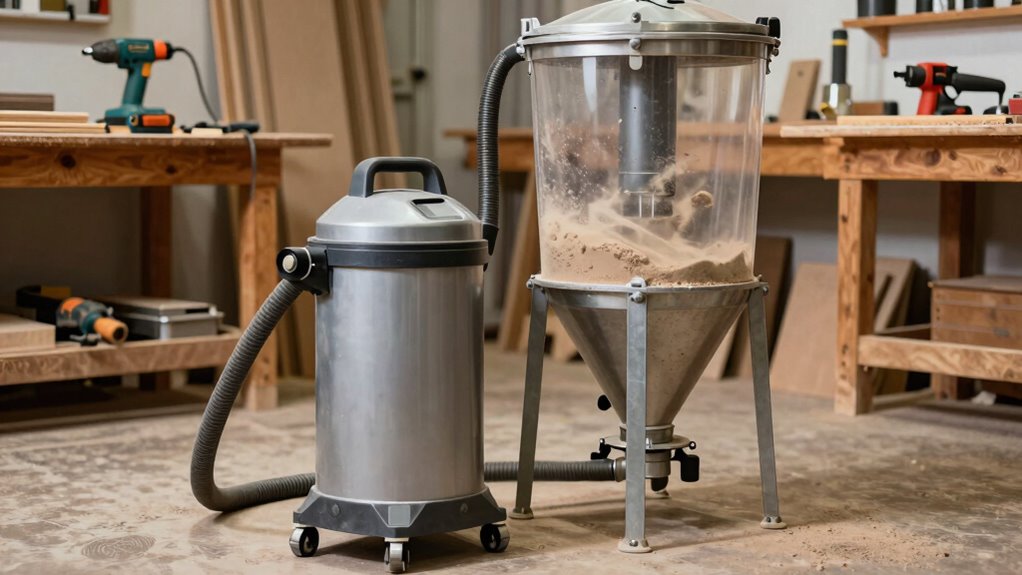
When selecting a dust collector, focusing on key features guarantees you get the best performance for your workshop. First, prioritize strong air filtration capabilities to effectively capture fine dust particles, protecting your health and maintaining a clean workspace. Look for high-efficiency filters, such as HEPA or MERV-rated options, to ensure ideal dust removal. Safety standards are equally important; choose a unit that complies with industry regulations, including proper grounding and safety certifications. Consider the collector’s CFM (cubic feet per minute) rating to match your tools’ airflow needs and prevent clogging. Durability and ease of maintenance are also essential. Additionally, understanding filter technology principles can help you critically evaluate product claims and avoid unnecessary expenditures. Moreover, being aware of airflow dynamics can assist in optimizing your dust collection setup for maximum efficiency. Being knowledgeable about dust particle sizes can further guide you in selecting the most appropriate filtration system. For optimal performance, it’s also beneficial to consider how filter media interacts with different types of dust, ensuring long-lasting effectiveness. By paying attention to these features, you’ll ensure your dust collector operates safely, efficiently, and reliably for years to come.
How Do Shop Vacuums Work: and When Are They Best?
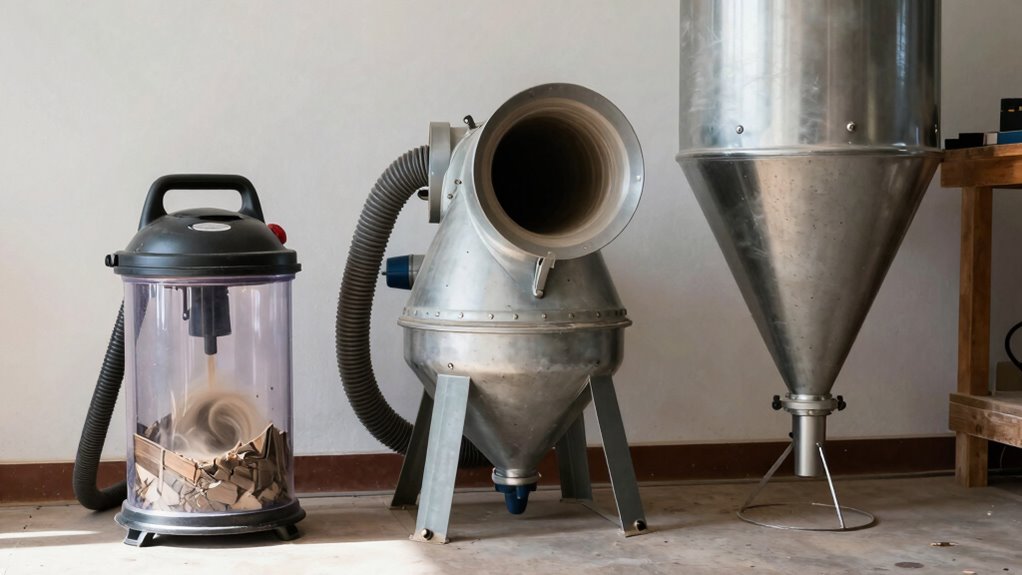
Shop vacuums operate by creating suction with a powerful motor that draws in debris through an adjustable nozzle or hose. Their effectiveness depends on strong suction power and efficient vacuum filtration to trap dust and particles. They are best suited for quick cleanup jobs, small workshops, or areas needing portable solutions. Here’s how they work:
- The motor generates high suction power, pulling debris into the tank.
- Debris passes through vacuum filtration, trapping dust and larger particles.
- The adjustable nozzle helps target specific areas or materials.
- When full, you simply empty the tank, making them convenient for frequent use.
- Their portability makes them ideal for small-scale cleaning tasks and accessing tight spaces.
- Proper maintenance of filters and seals can significantly improve their dust containment and overall performance.
- Additionally, regular filter cleaning extends the lifespan of the vacuum and maintains optimal dust extraction efficiency, especially when used regularly for various cleanup tasks.
- Choosing the right size and power rating can also enhance their effectiveness for different cleaning needs. Ensuring the vacuum has adequate airflow capacity is essential for optimal performance.
While shop vacuums excel at versatile, immediate cleanup, they’re not ideal for continuous large-scale dust collection. Use them when portability and quick action are priorities.
What Are the Benefits of Cyclone Dust Collection Systems?
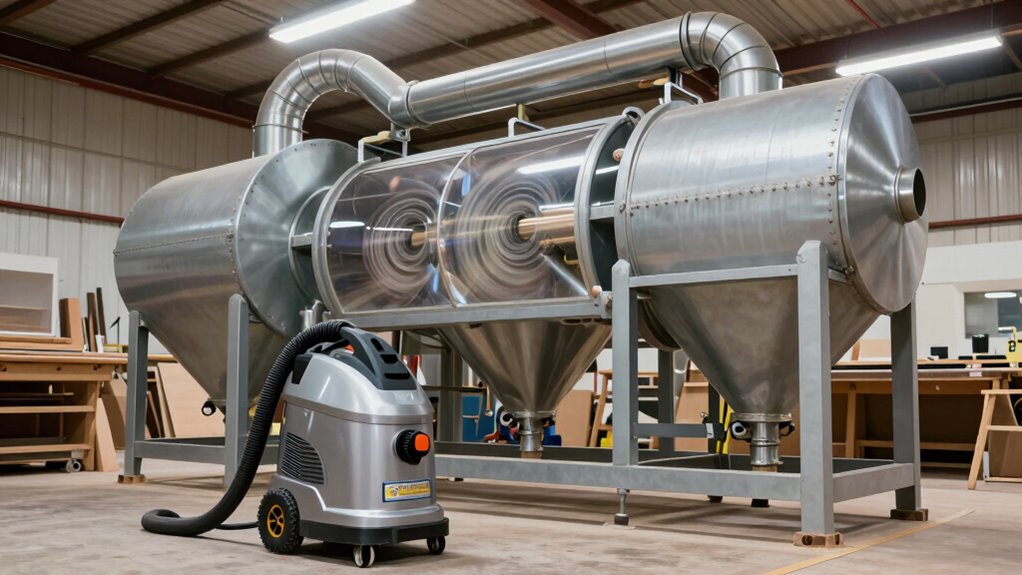
Cyclone dust collection systems offer a highly efficient way to manage dust and debris in your workshop. They separate larger particles before reaching the filter, reducing clogging and maintaining strong airflow. This process not only improves air filtration, helping you breathe cleaner air and protect your lungs, but also enhances overall safety by reducing airborne dust exposure. Cyclones also minimize dust buildup on surfaces, keeping your workspace cleaner and safer. By capturing more dust at the source, they support safety protocols and reduce health risks associated with airborne particles. Unlike traditional systems, cyclones require less maintenance because they don’t rely solely on filter media. Their design ensures consistent performance over time, making them a smart investment for long-term dust control. Sizing and load‑planning tools can help ensure your cyclone system is properly matched to your workshop’s needs, maximizing safety and efficiency. Additionally, understanding the benefits of cyclone systems can help you make informed decisions to improve your workshop environment. Properly designed cyclone systems also leverage dust separation efficiency, which is essential for optimal performance. Incorporating airflow dynamics into your planning can further optimize dust removal effectiveness. Overall, cyclone systems enhance your workshop’s safety, cleanliness, and efficiency.
Which Dust System Handles Fine Dust Most Effectively?
For effectively capturing fine dust particles, high-efficiency particulate air (HEPA) and cartridge filter systems stand out as your best options. These systems excel in air filtration, trapping tiny particles that can harm your health and contaminate your workspace. To maximize fine dust removal, consider:
HEPA and cartridge filters are top choices for effective fine dust particle removal.
- HEPA filters with a 99.97% efficiency at capturing particles 0.3 microns or smaller.
- Cartridge filters designed for high airflow and superior fine dust collection.
- Cyclone systems that pre-separate larger debris, reducing filter clogging.
- Proper sealing and maintenance to prevent dust escape during filtration.
- Understanding air filtration principles can help you choose the most effective system for your needs. Additionally, selecting systems with filter maintenance features can ensure consistent performance and longevity. Regularly inspecting your filters and understanding filter replacement schedules are essential for maintaining optimal dust collection efficiency. Incorporating filter cleaning methods can also help extend filter life and maintain filtration effectiveness over time.
How Much Do Dust Collection Solutions Cost? Budget Tips
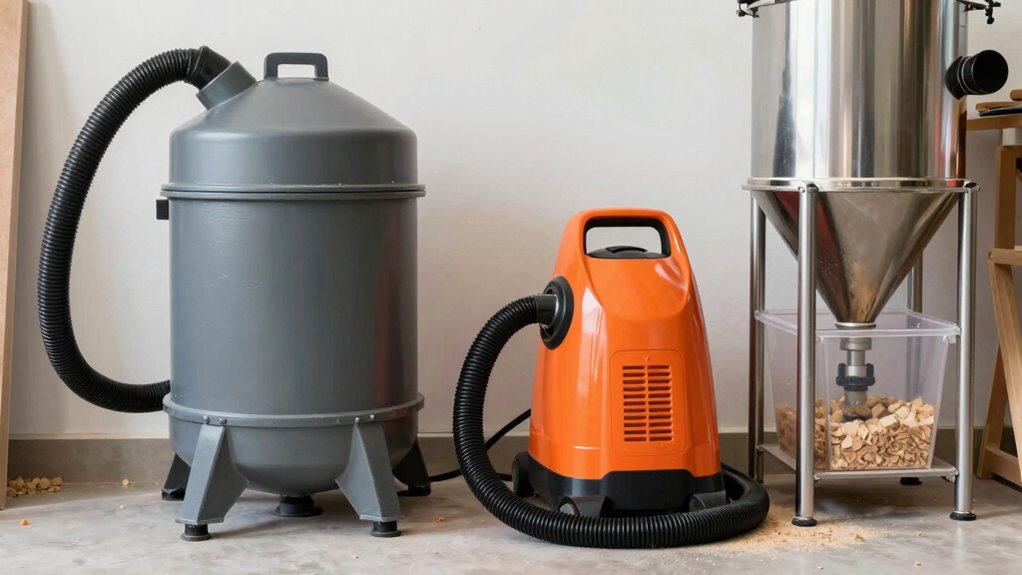
Understanding the costs of dust collection solutions is essential for making informed decisions that fit your budget. A thorough cost comparison helps you weigh upfront expenses against long-term value. Shop vacs tend to be the most affordable option, often costing under $100, but may lack the capacity for larger workshops. Dust collectors and cyclones are pricier, ranging from a few hundred to over a thousand dollars, depending on size and features. Budget tips include setting clear priorities—considering your workshop size and dust type—to avoid overspending. You can also look for used equipment or DIY solutions to save money. Remember, investing in a suitable dust collection system pays off through better air quality and reduced cleanup time, making it a worthwhile long-term investment.
Factors to Consider When Picking a Dust Collection System
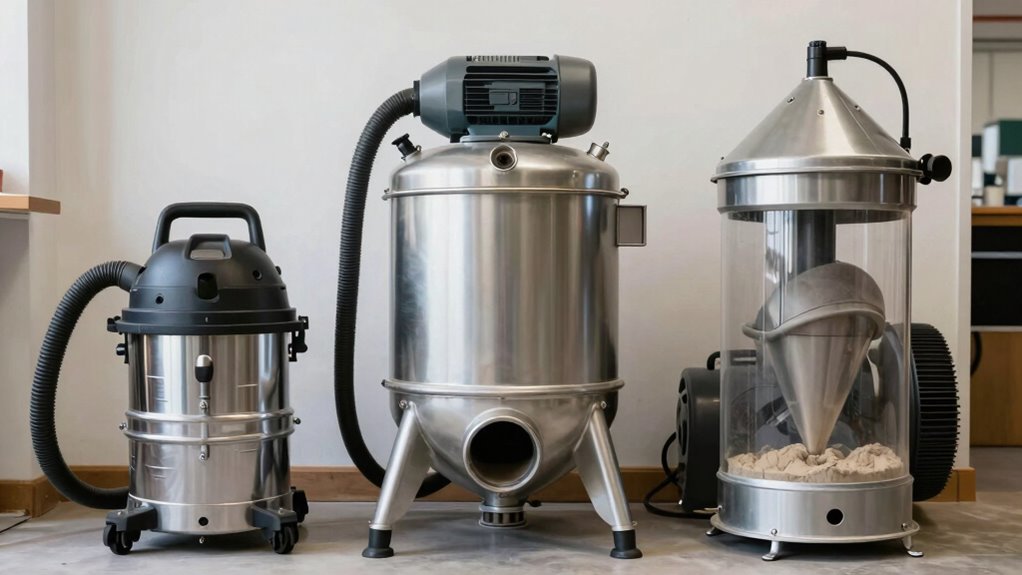
When choosing a dust collection system, you need to evaluate your budget and overall costs to find a solution that fits your financial limits. Think about the space you have available, since size and placement can impact performance and convenience. Additionally, assess the system’s power and performance to ensure it effectively handles your dust collection needs without wasting energy.
Budget and Cost
Choosing a dust collection system involves balancing your budget with the features you need. To make an informed decision, consider these factors:
- Initial cost comparison: Shop vacs are usually cheapest, while cyclones and dust collectors can be more expensive.
- Long-term affordability tips: Factor in maintenance and filter replacement costs, which can add up over time.
- Performance versus price: Sometimes paying more upfront yields better dust control and efficiency.
- Budget flexibility: Determine how much you’re willing to invest for features like increased airflow or larger capacity.
Space and Size
Selecting the right dust collection system requires careful consideration of your workspace’s size and available space. If you have limited room, a compact shop vac might suit your needs, but it offers less dust storage and airflow efficiency. Larger workshops may benefit from a dust collector or cyclone system, which can handle bigger dust loads and maintain better airflow, ensuring efficient dust removal. Consider how much space you need for dust storage and whether your system’s footprint fits comfortably without crowding your workspace. Keep in mind that bigger systems generally require more room, but they often provide superior airflow efficiency and dust capacity. Balancing these factors helps you pick a system that keeps your shop clean without overcrowding your workspace.
Power and Performance
Power and performance are critical factors that directly impact how effectively your dust collection system keeps your workspace clean. Higher power guarantees better airflow and suction, which is essential for capturing dust at the source. When evaluating systems, consider these key points:
- CFM (cubic feet per minute) ratings to gauge airflow capacity.
- Static pressure to understand resistance and system efficiency.
- Air filtration quality to improve air quality and ensure safety protocols are met.
- Reliability and durability for long-term performance and minimal downtime.
A system with adequate power not only improves dust removal but also enhances air filtration, reducing health risks. Prioritizing performance helps maintain a safer workspace and ensures your dust collection system performs at its best under demanding conditions.
Can You Combine Dust Collection Systems for Better Results?
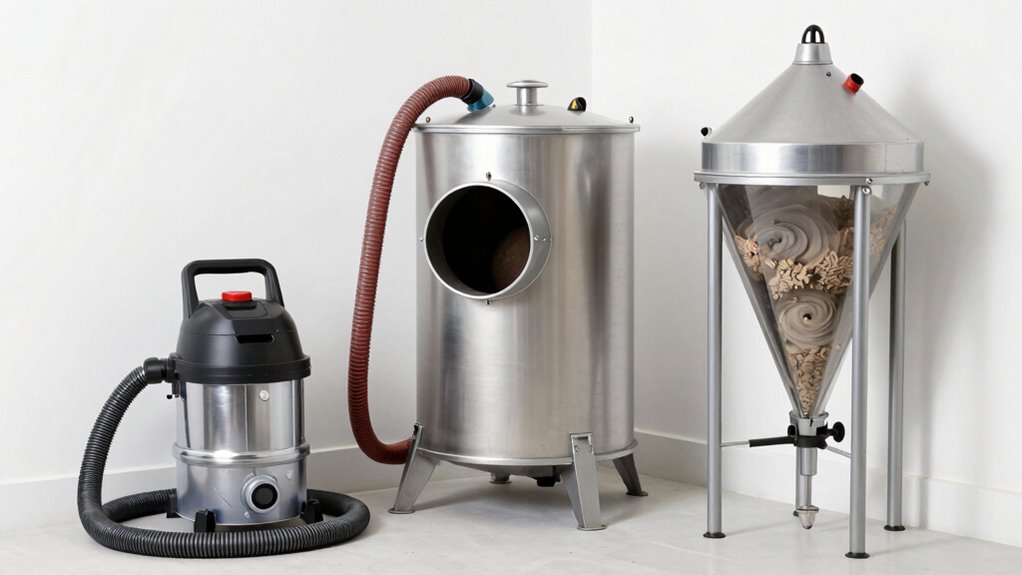
Combining dust collection systems can substantially enhance your workshop’s efficiency, especially when multiple tools generate dust simultaneously. Using a combination of shop vacs, dust collectors, and cyclones allows you to target specific tasks while maintaining ideal airflow and air filtration. This setup helps reduce dust buildup and improves overall air quality, which is crucial for safety protocols. By linking systems, you ensure better dust extraction across different machines, minimizing airborne particles and protecting your health. Keep in mind that proper ducting and system integration are essential to prevent airflow loss. Combining systems isn’t just about power—it’s about creating a safe, cleaner environment that boosts productivity and maintains the integrity of your tools and workspace.
Choosing the Right Dust Collector for Your Workshop Size and Use
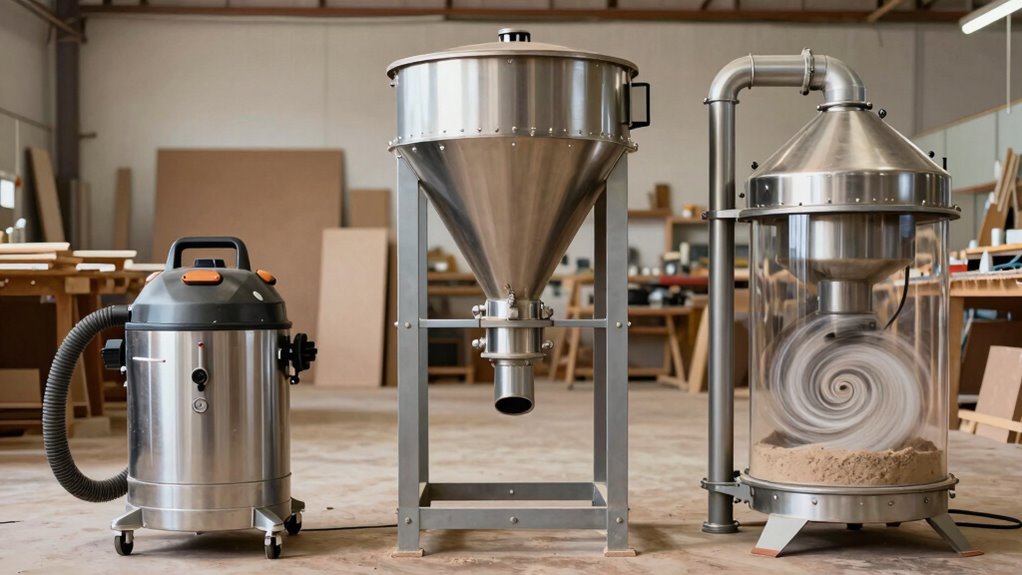
Selecting the right dust collector depends on your workshop’s size and how much dust you generate. You’ll need to take into account your space, the level of dust from your tools, and your budget. Making the right choice ensures effective cleanup without overspending or underperforming.
Workshop Size Compatibility
Choosing the right dust collector depends heavily on the size of your workshop and how you plan to use it. Larger workshops need more powerful systems to handle significant dust production, while smaller spaces benefit from compact units. Be aware of dust collection myths that bigger machines always mean better performance; instead, match your equipment to your workshop’s demands. Proper workshop organization also plays a role, ensuring hoses and fittings don’t hinder airflow or create Clogs. Here’s what to consider:
- Space available for the dust collector and accessories
- Frequency and scale of woodworking projects
- Storage capacity for dust and debris
- Potential to expand as your workshop grows
Matching your dust collection system to your workshop size maximizes efficiency and keeps dust under control.
Dust Production Levels
How much dust your workshop produces should guide your choice of a dust collector. If your projects generate high dust levels, you’ll need a system that effectively captures airborne particles to maintain good air quality. For light dust production, a smaller shop vac might suffice, but for frequent or heavy-duty tasks, a larger dust collector or cyclone is vital. Assess your dust output by observing the volume and frequency of sanding, cutting, or grinding activities. High dust levels can compromise air quality and pose health risks, so selecting a collector with appropriate airflow and filtration is essential. Matching your dust production to the right equipment ensures safe, clean conditions while preventing dust buildup and improving overall workshop safety.
Budget Considerations
Determining your budget is a crucial step in finding the right dust collector for your workshop. To make an informed choice, consider these factors:
- Price comparison – Evaluate different models within your budget, balancing cost and features.
- Brand reputation – Opt for brands known for durability and customer support, even if they cost a bit more.
- Workshop size – Larger workshops may require higher-capacity collectors, increasing your investment.
- Usage frequency – Heavy use justifies spending more on reliable, long-lasting equipment.
Frequently Asked Questions
How Often Should I Maintain or Replace Dust Collection Filters?
You should replace your dust collection filters when their lifespan ends or if you notice a decline in performance. Follow a regular maintenance schedule, typically checking filters every month and cleaning or replacing them every three to six months, depending on usage. Keeping filters clean guarantees ideal airflow and dust collection efficiency, preventing clogs and damage. Always monitor for signs of wear and replace filters promptly to maintain your system’s effectiveness.
Can Dust Collection Systems Be Used Outdoors Safely?
Think of your dust collector as a sturdy shield, capable of outdoor dust removal when weatherproofed. Yes, you can use weatherproof dust collectors outdoors safely, but guarantee they’re protected from rain and moisture to prevent damage. Weatherproof dust collectors are designed to withstand the elements, making them ideal for outdoor cleanup. Just keep an eye on weather conditions, and you’ll keep your system functioning efficiently while maintaining a safe environment.
What Safety Precautions Should I Take With Dust Collectors?
You should always wear respiratory protection, like a mask, to prevent inhaling harmful dust particles. Keep your dust collector well-maintained and guarantee proper grounding to avoid a dust explosion. Regularly clean filters and check for leaks, and operate the system in a well-ventilated area. Never bypass safety features, and stay alert to any unusual sounds or smells that could indicate a hazard.
Are There Eco-Friendly Dust Collection Options Available?
Did you know that over 80% of dust collection systems can be made more eco-friendly? You can choose biodegradable filters and opt for dust collectors made from sustainable materials, reducing your environmental impact. These options help cut down on waste and pollution, making your workshop greener. By selecting eco-friendly dust collection systems, you support sustainability while maintaining a clean workspace—it’s a smart move for both safety and the planet.
How Do Noise Levels Vary Among Shop Vacs, Dust Collectors, and Cyclones?
You’ll find that shop vacs tend to be noisier than dust collectors and cyclones, with sound levels often exceeding 80 decibels. Dust collectors usually operate quieter, around 70 decibels, while cyclones are generally similar or slightly quieter. To reduce noise, use soundproofing techniques like rubber mats or acoustic enclosures. Proper maintenance and selecting models with built-in sound dampening features can also help keep noise levels manageable during operation.
Conclusion
Choosing the right dust collection system can markedly improve your workshop’s safety and cleanliness. Did you know that proper dust collection can reduce airborne particles by up to 75%? By understanding your needs and options—shop vacs, cyclones, or traditional collectors—you’ll create a healthier workspace. Invest wisely, and you’ll enjoy cleaner air, less cleanup, and safer woodworking for years to come. Your workshop’s future cleanliness depends on making the right choice today.