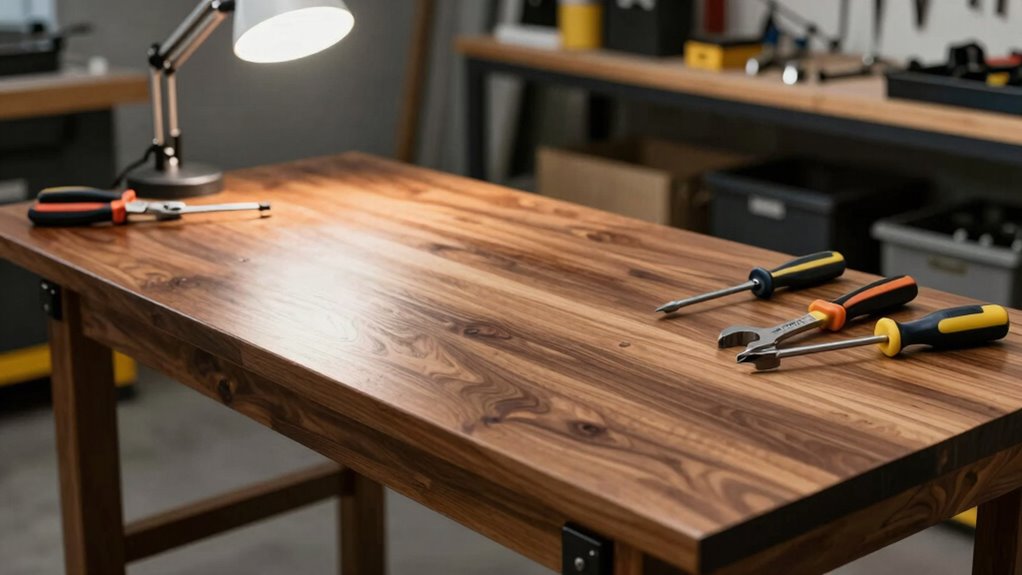

Choosing the right workbench height is essential for comfort, safety, and efficiency in your DIY or mechanic projects. Typically, a height of 34-36 inches works for most tasks, but customizing based on your body and work style can reduce fatigue and improve productivity. Whether you’re standing or sitting, your ideal height should support natural posture and easy tool access. For tips on finding and adjusting the perfect height, keep exploring these expert recommendations.

Turn the school run and nap time into listening time
- Thousands of audiobooks, podcasts and originals
- Listen on your phone, tablet or Echo — also offline
- Cancel anytime
Key Takeaways
- The ideal workbench height typically ranges from 34 to 36 inches, aligning with average adult height for ergonomic comfort.
- Adjust workbench height based on task type; lower for detailed work, taller for heavy-duty projects or sitting tasks.
- Measure elbow height when arms are relaxed to determine the most ergonomic work surface level for individual users.
- Use adjustable workbenches with features like levers or hydraulic systems to customize height for different tasks and users.
- Proper setup minimizes strain, enhances productivity, and reduces injury risk by maintaining natural body posture during work.
As an affiliate, we earn on qualifying purchases.
Why Workbench Height Matters for Comfort and Efficiency
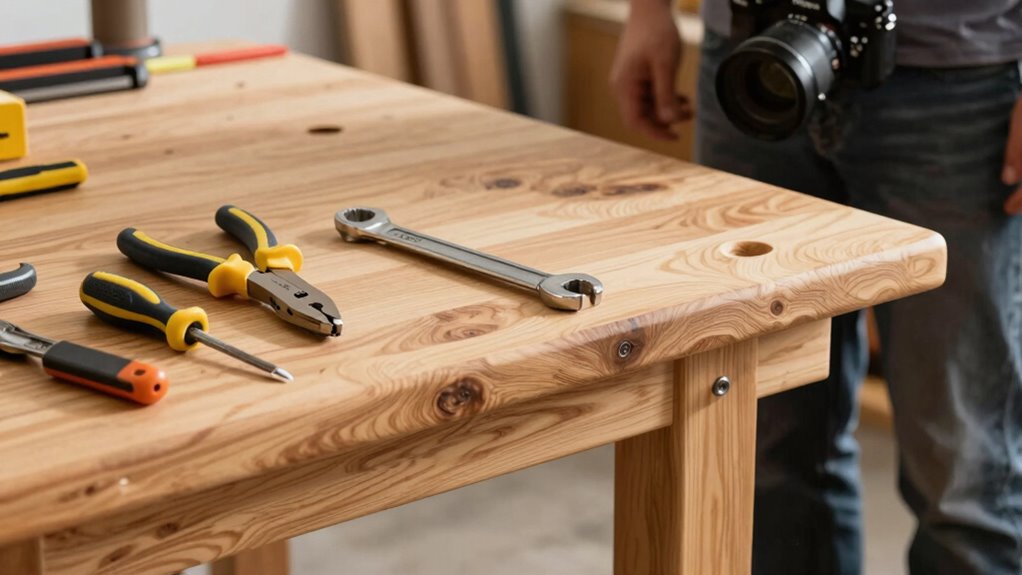
The height of your workbench directly impacts your comfort and productivity. When set correctly, it promotes ergonomic posture, reducing strain on your back, neck, and shoulders. If your workbench is too high or low, you’ll find yourself hunching or stretching awkwardly, which can cause fatigue and discomfort over time. Proper height also improves workspace organization, allowing you to move freely and access tools easily without unnecessary bending or reaching. This setup helps you stay focused and efficient, minimizing distractions caused by physical discomfort. Ultimately, a well-chosen workbench height supports your body’s natural alignment, making your DIY or mechanic tasks more comfortable and effective. Prioritizing ergonomic posture and workspace organization guarantees you work smarter, not harder. Additionally, considering the workbench height in relation to your specific tasks ensures optimal performance and reduces the risk of long-term injury. Paying attention to ergonomic principles when setting your workbench can further enhance comfort and prevent repetitive strain injuries.
As an affiliate, we earn on qualifying purchases.
What Are the Standard Workbench Heights for DIY and Mechanics
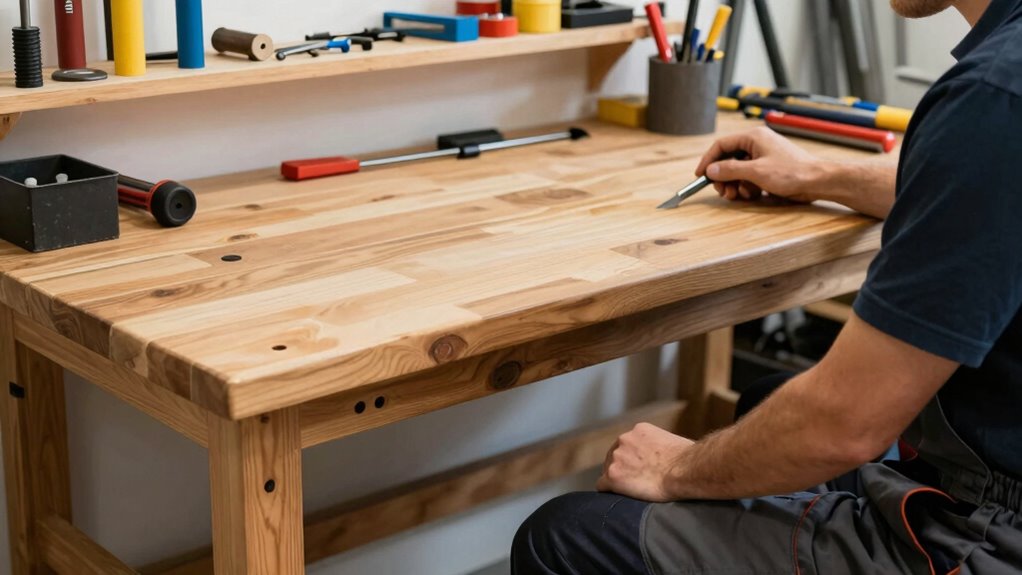
Choosing the right workbench height is essential for comfort and efficiency, whether you’re doing DIY projects or working as a mechanic. Standard workbench heights typically range from 34 to 36 inches, aligning with the average adult’s standing height. For detailed tasks, a slightly lower height around 30 inches can improve precision, while taller workbenches, around 38 inches, suit those who prefer to sit or use anti-fatigue mats. These standards influence workbench aesthetics, creating a clean, organized look that complements your workspace. Additionally, integrating smart storage solutions at these heights helps keep tools accessible without cluttering your work surface. Knowing these typical measurements allows you to choose a workbench that fits your needs, promotes good posture, and enhances overall workflow. Properly sizing your workbench ensures safety and comfort during prolonged use, especially when considering ergonomic principles for a healthier workspace. Considering standard measurements can also help in customizing your workspace to better suit specific tasks or individual preferences. Being aware of these measurement standards supports creating a versatile and comfortable working environment.
As an affiliate, we earn on qualifying purchases.
How to Find Your Ideal Workbench Height Based on Your Tasks
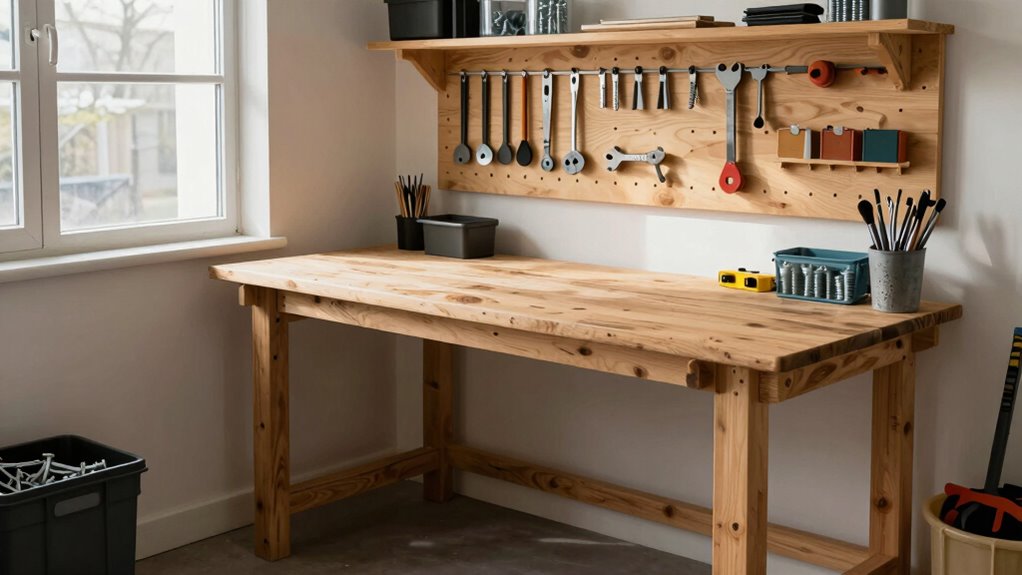
Your workbench height should match the tasks you’ll perform most often, whether it’s detailed assembly or heavy-duty work. Consider your height and comfort to avoid strain during long projects. Incorporating ergonomic principles into your workspace setup can further enhance comfort and productivity. Additionally, adjusting your workbench to the optimal height for your tasks can help prevent fatigue and improve overall work quality. Remember that personal factors such as your posture and reach also play a crucial role in determining the best height for your workbench. Ensuring your workspace is adjustable and customizable allows for better adaptation to different tasks and user preferences. Paying attention to workplace ergonomics can significantly reduce the risk of repetitive strain injuries and improve your overall efficiency.
Task Type Considerations
When selecting the right workbench height, considering the specific tasks you’ll perform is essential. Different tasks require different setups, so think about your material selection and how you’ll organize your workspace. For detailed, precision work like electronics or jewelry making, a lower height allows better control and comfort. If you’re handling larger materials or heavy-duty projects, a taller workbench reduces strain and improves leverage. Keep in mind that your workspace organization impacts efficiency—frequently used tools should be within easy reach, influencing your workbench height choice. Additionally, ergonomic design plays a crucial role in preventing discomfort over prolonged periods. By aligning your workbench with the task type, you ensure comfort, reduce fatigue, and enhance productivity. A well-designed workspace considers ergonomic principles, which are essential for maintaining health during extended work sessions. Proper workstation setup can also help prevent long-term musculoskeletal issues. Tailoring your setup helps you work smarter and makes your DIY or mechanic projects more enjoyable. Understanding the appropriate workbench height can also help prevent long-term musculoskeletal issues. Incorporating adjustable workbenches allows for greater flexibility and customization based on task requirements and user comfort.
User Height Factors
Determining the ideal workbench height depends heavily on your own height and the type of tasks you’ll perform. To maintain an ergonomic posture, your work surface should allow your elbows to stay close to a 90-degree angle when working. This reduces strain on your back, neck, and shoulders. Consider how easily you need to access tools; a height that positions your tools within comfortable reach minimizes unnecessary stretching or bending. If your tasks involve detailed work or precision, a slightly lower surface may help with control. Conversely, for heavy-duty tasks, a higher workbench can prevent unnecessary bending. Additionally, understanding ergonomic principles can help you optimize your workspace for safety and efficiency. Incorporating adaptive features such as adjustable surfaces can further enhance comfort for users of different heights. Being aware of personal comfort preferences can also make a significant difference in long-term usability.
Comfort and Efficiency
Choosing the right workbench height hinges on the specific tasks you’ll perform, as different activities demand different ergonomic setups. A proper height enhances comfort and boosts efficiency while reducing fatigue. To find your ideal height, consider your typical work posture and safety considerations. For detail work, a lower surface allows for better control, while heavy-duty tasks benefit from a higher workbench to avoid strain. Use this guide:
| Task Type | Ideal Workbench Height |
|---|---|
| Precision Work | Slightly below elbow level for ergonomic posture |
| Heavy Lifting | At or slightly above waist level for safety and strength support |
| Assembly/Finishing | At elbow height for comfort and efficiency |
| Maintenance/Repairs | Adjustable height to suit different positions |
Additionally, understanding ergonomic principles can help you optimize your workspace setup for prolonged comfort and productivity.
As an affiliate, we earn on qualifying purchases.
How to Customize Your Workbench Height for Your Body and Work Style
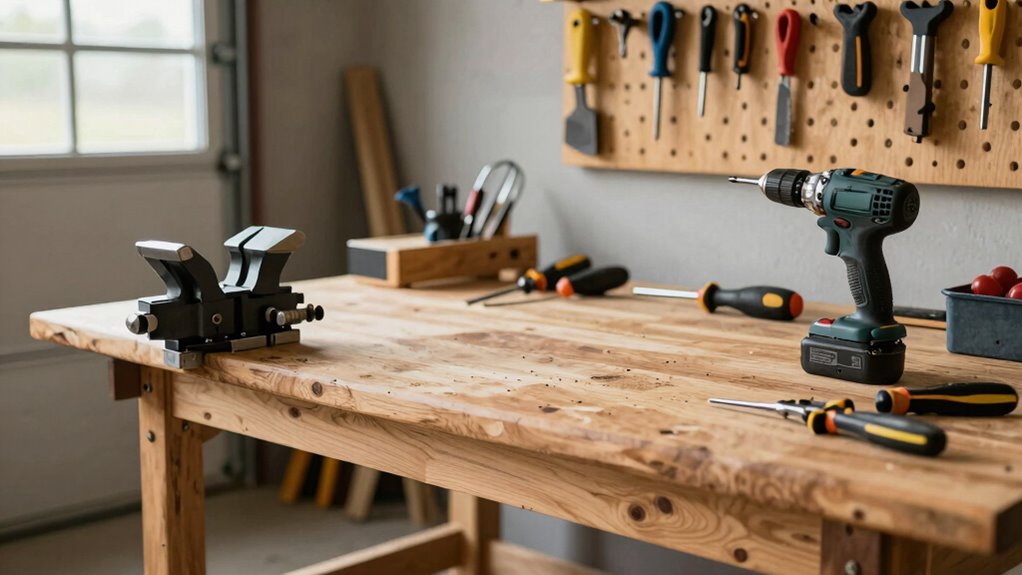
To customize your workbench height, start by measuring your comfortable working height and consider the type of tasks you’ll perform. Make adjustments based on ergonomic comfort to reduce strain and improve efficiency. Keep these factors in mind to create a setup that fits your body and work style perfectly. Additionally, ensuring your workspace is ergonomically safe can help prevent discomfort and injury during extended work sessions. Proper workbench height can also enhance precision and reduce fatigue over long periods of work. When selecting the right height, consider the adjustability of your workbench to accommodate different tasks and user preferences. Incorporating ergonomic principles into your setup can further optimize comfort and productivity. Moreover, choosing an ergonomically designed workspace can contribute significantly to overall comfort and safety during your projects.
Measure Your Working Height
Before setting your workbench height, it’s vital to measure your body and consider your work style. Stand naturally and note the height of your elbows when your arms are relaxed at your sides. This helps guarantee an ergonomic posture, reducing strain during prolonged work. Keep in mind how you organize your workspace—if you tend to work standing or sitting, your ideal height will differ. Use a tape measure or a straight edge to determine the distance from your elbow to the floor, which guides your bench height. Proper measurement ensures your work surface aligns with your natural working position, promoting comfort and efficiency. Remember, customizing your height supports good workspace organization and prevents fatigue or injury over time.
Adjust for Task Type
The type of task you’re performing considerably influences the ideal workbench height, as different activities require different postures and levels of precision. For tasks like detailed woodworking or electronics assembly, a lower workbench helps you work comfortably and maintain accuracy. Heavy-duty tasks, such as mechanics or welding, often benefit from a higher surface to reduce strain. Your choice of workbench materials impacts stability and durability, which are vital for specific tasks. Additionally, customized storage solutions can help organize tools and materials, making your workflow more efficient. Adjusting your workbench height based on the task ensures you maintain proper posture and reduce fatigue. Tailoring your setup to your work style allows you to work more effectively and comfortably over extended periods.
Consider Ergonomic Comfort
Adjusting your workbench height for ergonomic comfort starts with understanding your body’s natural posture and work style. By applying ergonomic principles, you can prevent strain and fatigue during long projects. Pay attention to your posture alignment—your back should stay straight, and your arms should move freely without reaching or hunching. When customizing your workbench, guarantee it allows your elbows to be at a comfortable 90-degree angle while working. Standing or sitting, your wrists should remain neutral, and your feet should be flat on the ground. Regularly check your posture and make small adjustments to your work surface to maintain comfort. Prioritizing ergonomic principles helps you work more efficiently and reduces the risk of discomfort or injury over time.
Tools and Features That Make Adjusting Your Workbench Height Easy
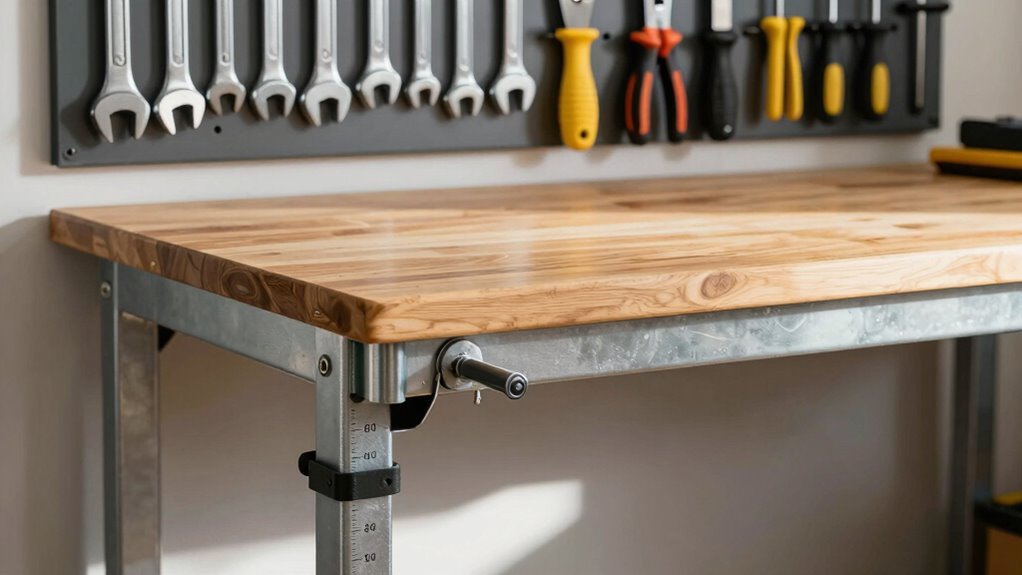
Modern workbenches come equipped with a variety of tools and features designed to make height adjustments quick and effortless. Adjustment tools like hand cranks, levers, or electronic controls allow you to change the work surface height smoothly without hassle. Many workbenches feature integrated height gauges, which provide precise measurements to set the ideal working level. These gauges often include clear markings or digital readouts, making it easy to remember and replicate your preferred height. Some models even offer pneumatic or hydraulic systems that enable effortless one-touch adjustments. By using these tools and features, you can quickly switch between different tasks or users, ensuring your workbench remains comfortable and ergonomic throughout your project.
Common Mistakes to Avoid When Setting Your Workbench Height
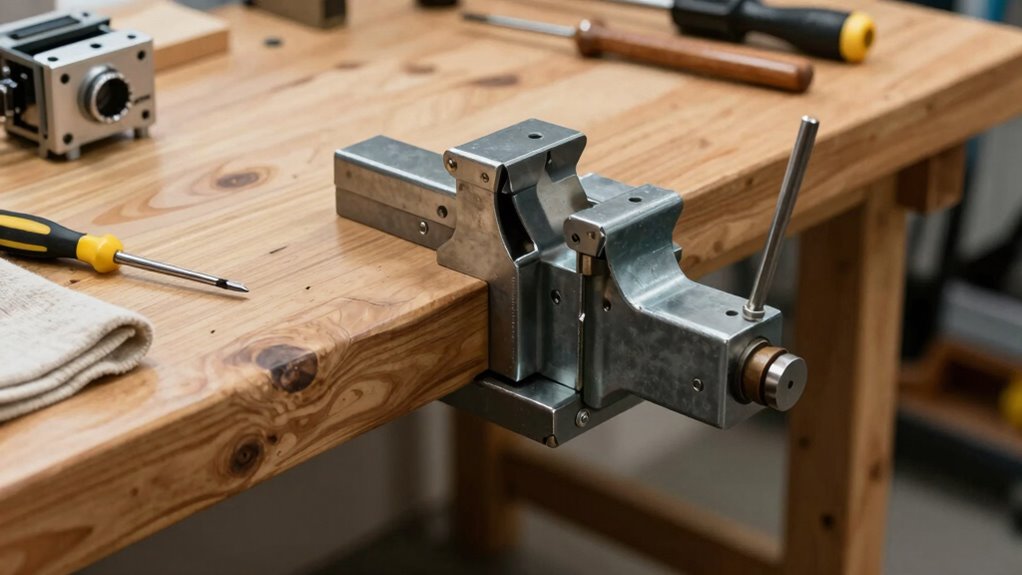
Many DIY enthusiasts make the mistake of setting their workbench height based solely on personal comfort without considering the specific tasks they’ll perform. This can lead to ergonomic pitfalls, causing strain or fatigue during long projects. One common error is relying on improper measurements, such as guessing or copying a friend’s setup, rather than using precise tools. Ignoring the nature of your work—whether detail-oriented or heavy-duty—can also result in a height that’s either too high or too low. This mismatch forces awkward postures, increasing the risk of injury and reducing efficiency. To avoid these mistakes, take accurate measurements based on your body and tasks, and consider adjustable options. Proper setup ensures safety, comfort, and better results in your DIY or mechanic projects.
Tips for Keeping Your Workspace Ergonomic and Versatile
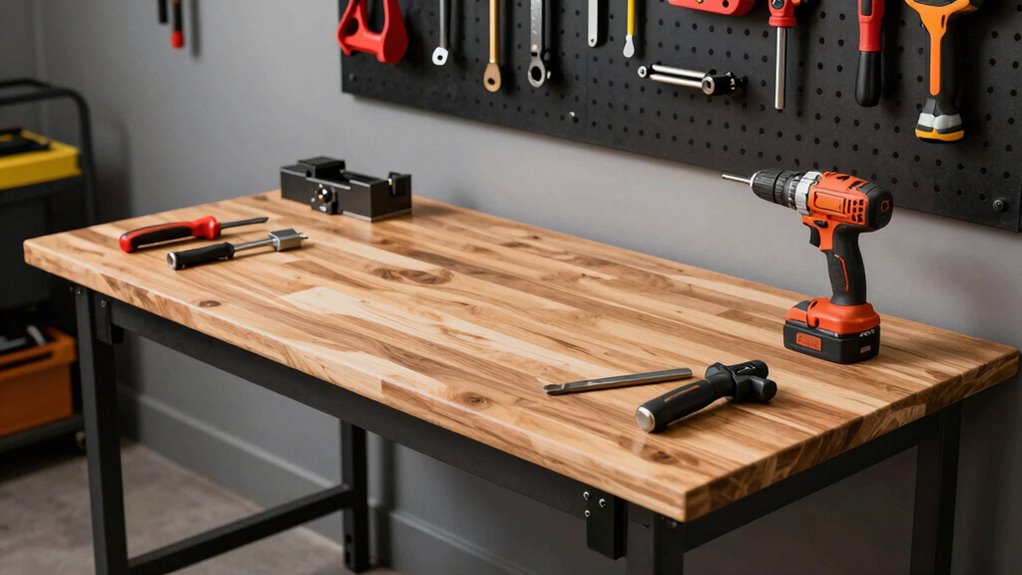
To keep your workspace ergonomic and versatile, focus on designing an area that adapts to different tasks and minimizes strain. Use ergonomic accessories like adjustable stools, anti-fatigue mats, and wrist supports to reduce fatigue and discomfort. Incorporate safety equipment such as goggles, gloves, and ear protection to guarantee safety during various projects. Arrange tools and frequently used items within easy reach to avoid unnecessary stretching or bending. Maintain proper lighting to prevent eye strain, and organize your workspace to promote good posture. Flexibility is key—add height-adjustable surfaces or modular storage to accommodate different tasks. Regularly reassess your setup, making adjustments as needed. A well-thought-out, ergonomic workspace improves efficiency, safety, and comfort during all your DIY and mechanic projects.
Frequently Asked Questions
Can Adjustable Workbenches Accommodate Multiple Users Comfortably?
Yes, adjustable workbenches can accommodate multiple users comfortably. They offer multi-user flexibility by allowing each person to customize the height for ergonomic adjustments, reducing fatigue and discomfort. With easy-to-use mechanisms, you can quickly change the height to suit different tasks and users. This adaptability guarantees everyone can work efficiently and comfortably, making adjustable workbenches a versatile choice for shared workshops or collaborative projects.
What Materials Are Best for a Durable, Adjustable Workbench Surface?
For a durable, adjustable workbench surface, you should choose materials with high material resilience. Heavy-duty plywood or hardwood like maple or oak offer excellent strength and resilience, resisting dents and scratches. If you prefer a smooth surface, consider a steel or aluminum top, which provides durability and easy cleaning. These materials guarantee your workbench withstands tough jobs while maintaining stability and longevity.
How Does Workbench Height Impact Safety During Heavy-Duty Tasks?
Getting your workbench height right is vital; it can be the difference between a safe job and a risky one. If it’s too high or low, you’ll strain your body and lose focus, increasing the chance of accidents. Maintaining an ergonomic posture helps prevent fatigue and injury, ensuring you work efficiently and safely. Remember, a well-adjusted workbench isn’t just comfortable — it’s essential for accident prevention during heavy-duty tasks.
Are There Portable Workbenches With Adjustable Heights for On-The-Go Work?
Yes, you can find portable solutions with adjustable features that suit on-the-go work. These workbenches often come with foldable legs and height settings, making them easy to transport and customize for different tasks. You’ll appreciate their versatility, as they let you work comfortably whether you’re in a garage, on-site, or at a remote location. Just look for models that prioritize portability and adjustable height for the best experience.
What Accessories or Attachments Improve Ergonomic Workbench Use?
You can improve ergonomic workbench use with various ergonomic accessories and attachment options. Installing adjustable height stools, anti-fatigue mats, and wrist supports helps reduce strain. Adding tool trays and magnetic strips keeps essentials within easy reach, minimizing unnecessary movement. Consider clamp-on lamps for better lighting and flexible arms for tool positioning. These accessories make your workspace more comfortable, efficient, and tailored to your needs, enhancing safety and productivity during your projects.
Conclusion
Getting your workbench height just right can make all the difference in comfort and efficiency. Don’t cut corners—take the time to find what works best for you, and customize as needed. Remember, a well-set-up workspace isn’t just about getting the job done; it’s about doing it safely and comfortably. When it comes to your DIY or mechanic projects, it’s better to be safe than sorry—so set your bench right the first time!
Cold & flu season Picks
humidifiers
As an affiliate, we earn on qualifying purchases.